



How to Practice Mudras for Meditation: A Guide
How to Practice Mudras for Meditation: A Guide
Table of Contents
- What You'll Need Before You Practice Mudras
- How to Prepare Your Body and Space for Hand Gestures
- Step-by-Step: How to Practice Mudras for Meditation
- Beginner Hand Mudras for Focus: Where to Start
- How Long to Hold Mudras During Meditation
- Benefits of Meditation Mudras for Body and Mind
- Common Mistakes and Troubleshooting Physical Discomfort
- Where Your Practice Lives
- Frequently Asked Questions
What You'll Need Before You Practice Mudras
You don't need much to practice mudras for meditation: a quiet corner, a cushion, and your own two hands.
Here's what to gather before you sit down:
- A cushion or folded blanket to lift your hips above your knees
- A quiet space where you won't be interrupted for 10-20 minutes
- Loose clothing that lets your shoulders and hands relax
- A small statue or focal object if you like having something to rest your gaze on
How to Prepare Your Body and Space for Hand Gestures
Preparation is where most beginners rush. If your spine slumps, your hands tense up within minutes; if your shoulders creep up, the gesture stops feeling natural.
Step-by-Step: How to Practice Mudras for Meditation
Learning to practice mudras takes about five minutes per gesture. The sequence below moves from concentration to energy, with finger position, palm orientation, starting duration, and breath pattern for each.
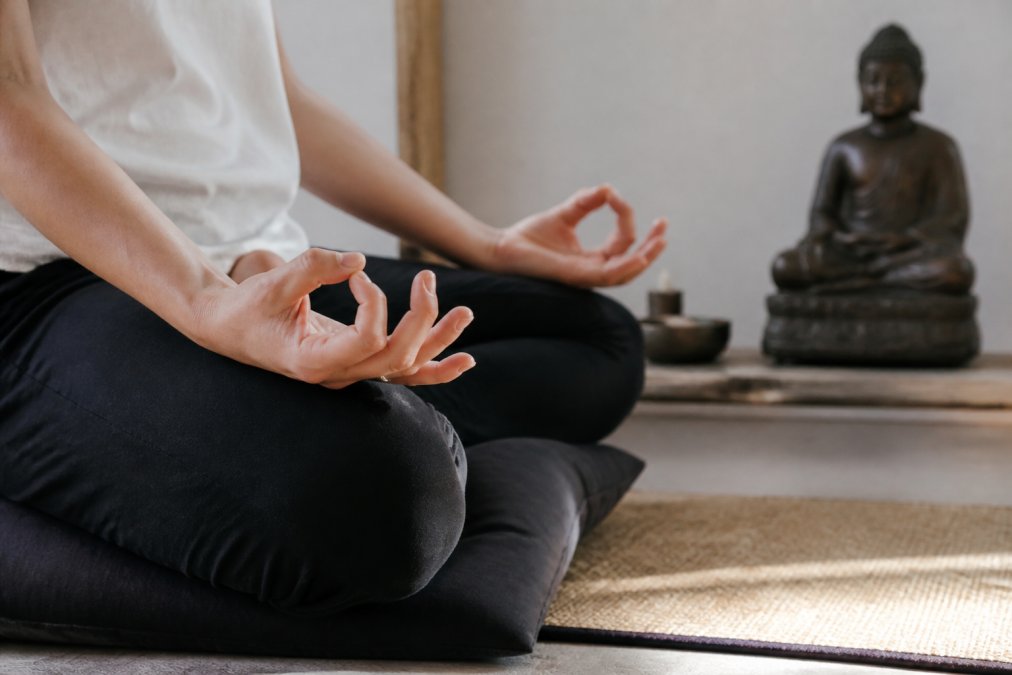
Step 1: Settle Into a Comfortable Seated Posture
Close your eyes and take five slow breaths before touching your hands. Let your weight sink into the cushion, roll your shoulders back once, then let them drop, a 30-second pause that signals the session has started.
Step 2: Gyan Mudra for Wisdom and Concentration
Touch the tip of your index finger to the tip of your thumb, keeping the other three fingers straight but relaxed, not splayed. Rest your hands palm-up on your knees. Gyan mudra is the classic gesture for wisdom and mental clarity, and the one most teachers start with.
- Contact point: index fingertip to thumb tip, light enough that you can feel your pulse
- Palm: facing up
- Start with: 5 minutes, building to 15 over a few weeks
- Breath: even inhale and exhale through the nose, no count needed at first
Step 3: Chin Mudra for Mental Clarity
Chin mudra looks identical to Gyan mudra, with one change: turn your palms face down. Palm orientation shifts the gesture from receptive to grounding.
- Contact point: index fingertip to thumb tip, same as Gyan
- Palm: facing down, resting on the knees
- Start with: 3 to 5 minutes as a beginner
- Breath: slightly longer exhale than inhale, roughly four counts in and six out
Step 4: Namaskar Mudra for Grounding and Inner Peace
Press your palms together at the center of your chest, fingers pointing up, with light pressure, like holding a small bird. Namaskar mudra closes a practice the way a bow closes a class, settling scattered energy.
- Contact point: full palm-to-palm, fingers aligned and pointing up
- Height: thumbs resting near the base of the sternum
- Start with: 1 to 3 minutes at the end of a session
- Breath: slow and unmeasured; let the exhale lengthen on its own
Step 5: Surya Mudra for Energy Flow
Fold your ring finger into your palm and hold it there with your thumb, keeping the other fingers extended. Surya mudra is the warming gesture, used when you feel sluggish or cold, and held for a shorter stretch than the others.
- Contact point: thumb pad pressing the middle joint of the folded ring finger
- Palm: facing up
- Start with: 3 to 5 minutes, and no more than 10 at a stretch
- Breath: natural, with a slightly firmer inhale
| Mudra | Finger Position | Palm | Starting Duration | Best For |
|---|---|---|---|---|
| Gyan | Index tip to thumb tip | Up | 5 min | Concentration |
| Chin | Index tip to thumb tip | Down | 3-5 min | Mental clarity |
| Namaskar | Palms pressed together | Vertical | 1-3 min | Grounding |
| Surya | Ring finger folded, thumb holds it | Up | 3-5 min | Energy flow |
How to Move Between Gestures
When combining mudras in one session, transition on an exhale: release the current gesture, rest both hands open on your knees for two or three breaths, then form the next one. That pause keeps the hands from cramping and marks the shift between phases.
Beginner Hand Mudras for Focus: Where to Start
Start with Gyan mudra alone for one week. Beginner hand mudras for focus work best when you build one habit before adding another.
A simple first month:
- Week 1: Gyan mudra only, 5 minutes daily
- Week 2: Gyan mudra, 10 minutes daily
- Week 3: Add Chin mudra for the final 3 minutes
- Week 4: Add Namaskar mudra to close each session
How Long to Hold Mudras During Meditation
Hold each mudra for 5 to 15 minutes as a beginner, building toward 20 to 30 minutes over several months. Shorter holds done daily beat long holds done once a week. If your hands ache, stop earlier than you think you need to, discomfort is a signal, not a hurdle to push through.
Signs it's time to release the gesture:
- Fingers feel numb or tingly
- Your shoulders have crept upward
- Your breath has become shallow
- You've lost track of the gesture entirely
Benefits of Meditation Mudras for Body and Mind
The benefits of meditation mudras fall into two groups: what happens in your mind and what happens in your body. Most guides stop at "improved focus and relaxation," leaving out the mechanism, the timeline, and the cases where a gesture may not be right for you.
The Mechanism, Stated Plainly
A mudra gives your attention one small, physical job: when thoughts drift, the touch of thumb and finger brings you back without effort. It isn't doing anything mystical to your nervous system; it gives your mind a stable anchor attached to your own hand, so you can never leave it behind.
What Practitioners Typically Notice, and When
A common pattern reported by regular practitioners:
- First few sessions: hands feel awkward, attention jumps between the fingers and the breath
- First two weeks: the gesture starts to feel automatic, and the hands settle faster
- Four to six weeks of daily practice: the mudra begins to function as a cue, and simply forming it produces a shift toward calm
These are typical ranges, not guarantees. Progress tracks consistency far more than session length.
The Physical Side
On the physical side, holding a gesture keeps your hands still, which gives the rest of your body permission to settle. The nerve endings in your fingertips stay engaged, keeping you alert rather than drowsy, a useful counter to the sleepiness that hits many beginners ten minutes into a sit.
When to Skip a Gesture or Check With a Doctor
Most mudra guides assume the gestures are universally safe. They are not universally comfortable, and for some people they require medical clearance first.
- Arthritis or joint disease in the hands, wrists, or thumbs
- Carpal tunnel syndrome or other nerve compression conditions
- Circulation problems such as Raynaud's phenomenon, where fingers go white or numb in the cold
- Recent hand, wrist, or forearm injury or surgery
- Diabetes with peripheral neuropathy, which can blunt the sensation that would normally tell you to release a gesture
An Honest Note on the Evidence
Research on meditation and mind-body practices is an active field, but studies specifically isolating hand mudras are limited. The National Center for Complementary and Integrative Health overview of meditation and mind-body practices is a useful starting point for understanding what meditation research does and doesn't support. The reasonable position is this: mudras are a low-risk adjunct to a meditation practice, they cost nothing, and the main benefit most people can count on is the one that comes from having a consistent anchor for attention.
Common Mistakes and Troubleshooting Physical Discomfort
The biggest mistake is treating discomfort as proof you're doing it wrong. Most hand strain comes from three fixable habits.
Where Your Practice Lives
A meditation corner doesn't need much space: a cushion, a low table, and one well-chosen object are enough. A single statue gives the space a center, something the eye rests on when it opens.
Frequently Asked Questions
Which mudra is best for meditation?
Gyan Mudra is the most widely used for meditation. Touch your thumb tip to your index finger tip, keep the other three fingers extended, and rest your hands on your knees with palms up. It supports concentration and mental clarity. Chin Mudra, with palms facing down, is a close alternative if you prefer a more grounding feel during longer sits.
How long should you hold a mudra during meditation?
Beginners can start with 5 to 10 minutes per hand gesture and build up gradually. Many practitioners work toward 20 to 30 minutes per mudra. If your hands feel strained, release the gesture and shake them out. Consistency matters more than duration, so a daily 10-minute practice beats an occasional hour-long session.
Can anyone practice mudras for meditation?
Most people can practice mudras safely. They involve gentle hand positions with no special equipment. If you have arthritis, carpal tunnel, or recent hand surgery, check with your doctor first and keep holds short. Pregnant practitioners often avoid Surya Mudra because it is associated with heating energy. Stop if you feel pain or numbness.
Are mudras effective for reducing stress?
Many practitioners report feeling calmer after combining mudras with slow, conscious breathing. The hand gestures give your mind a physical anchor, similar to counting breaths, which can quiet racing thoughts. Results vary by person. Pairing a mudra with Ujjayi breathing for 10 minutes is a practical way to test how it affects your own stress levels.
Building a meditation habit takes weeks of small, unglamorous sessions. The right setting makes those sessions easier to return to. HD Asian Art offers carefully curated Buddhist and Hindu statues, handpicked antique and contemporary pieces, and temple-inspired decor designed to bring peace and artistry to a personal sanctuary. Browse the collection and give your practice a focal point worth sitting beside.
