










-
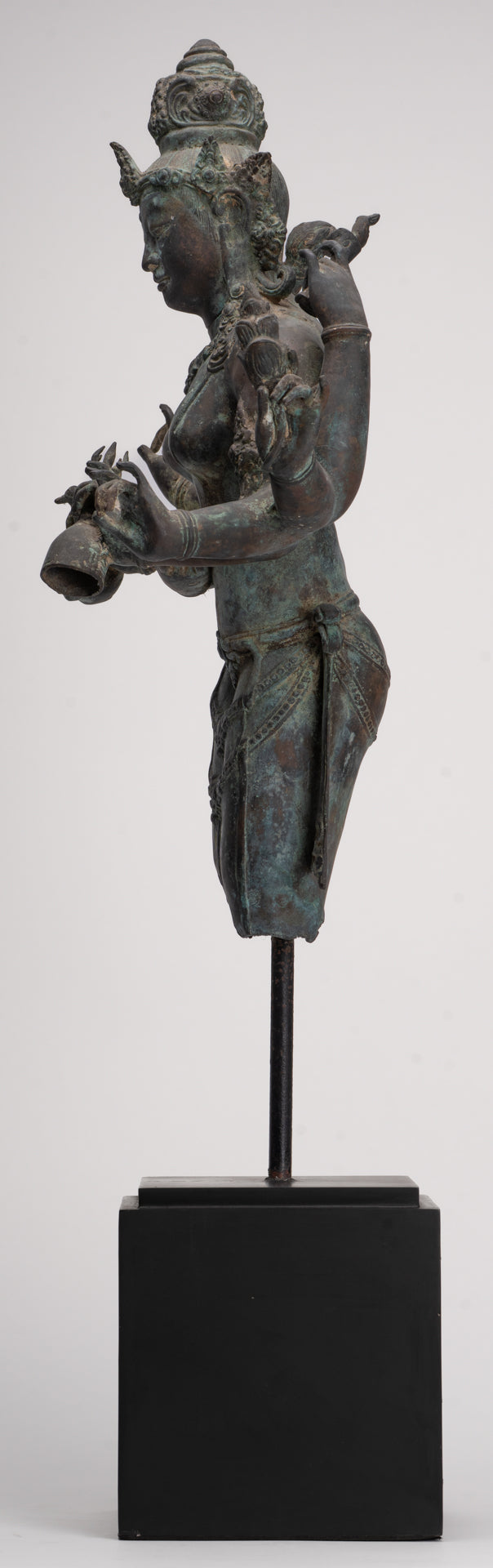
Parvati Statue - Antique Indonesian Style Bronze Javanese Parvati Torso - 72cm/29"
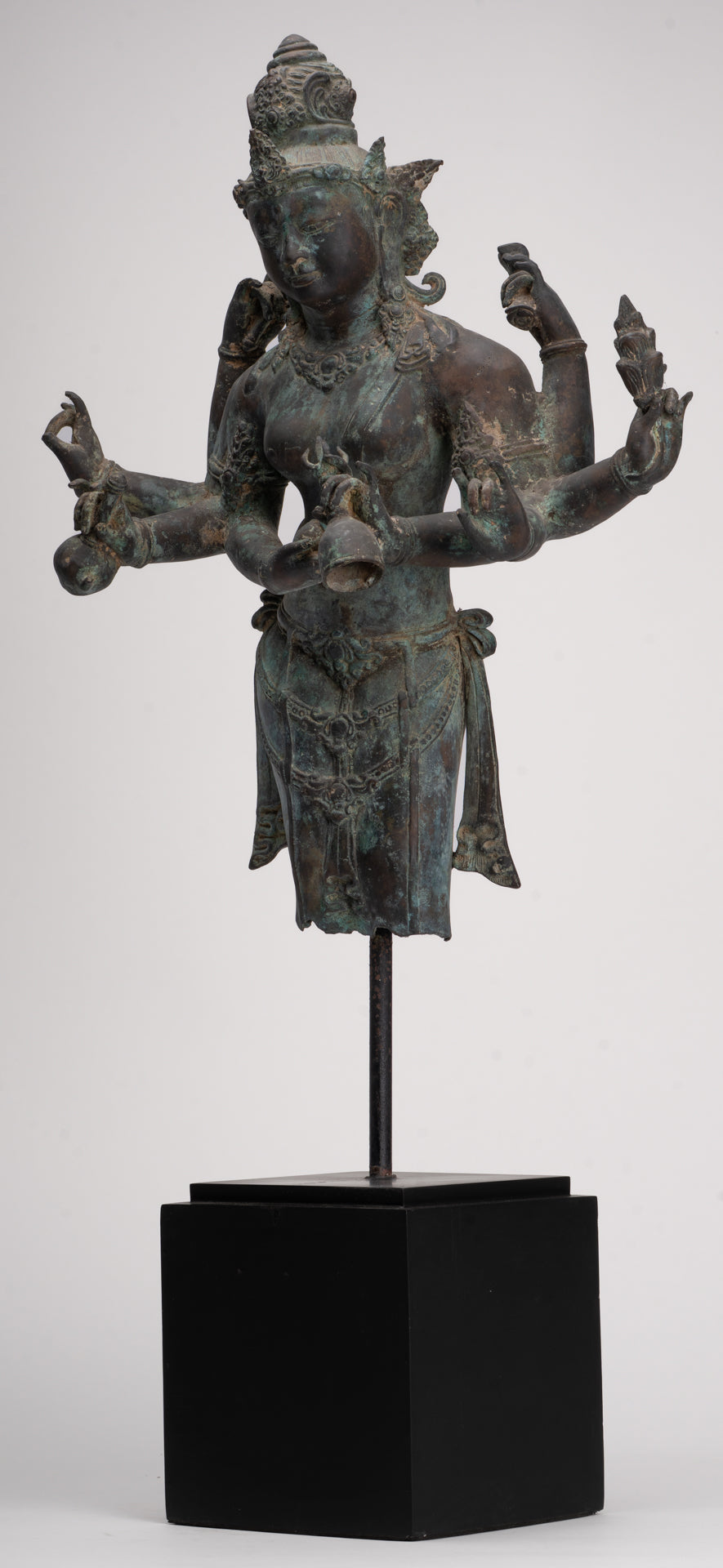
Measures (Height) 72cm/29"
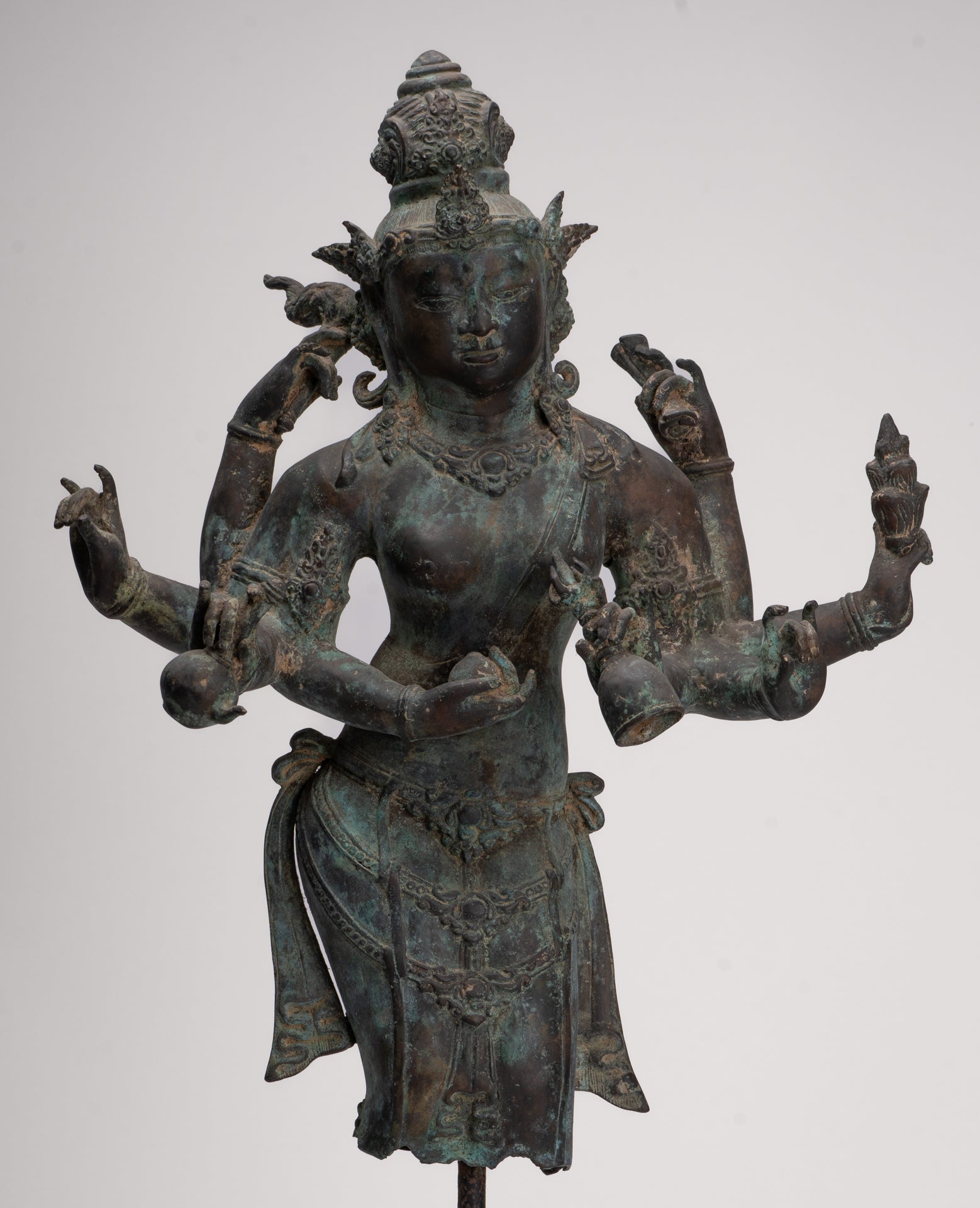
A superb Majapahit-style bronze sculpture of Parvati, the beloved Hindu goddess of devotion, fertility, beauty, prosperity, and divine feminine power. Presented with a serene, gently smiling expression and an elegant, elongated form, Parvati stands as a refined embodiment of sacred grace and royal authority.
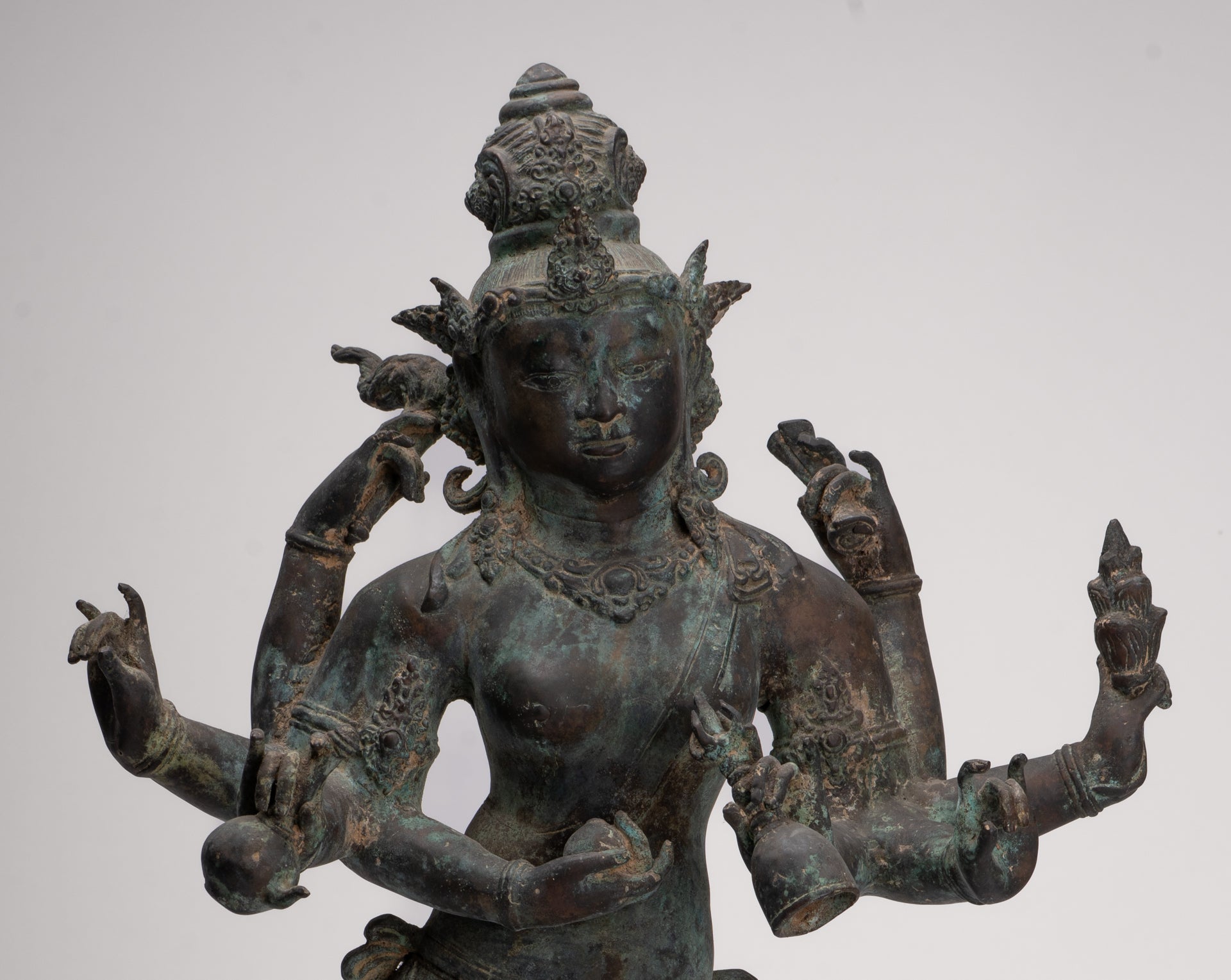
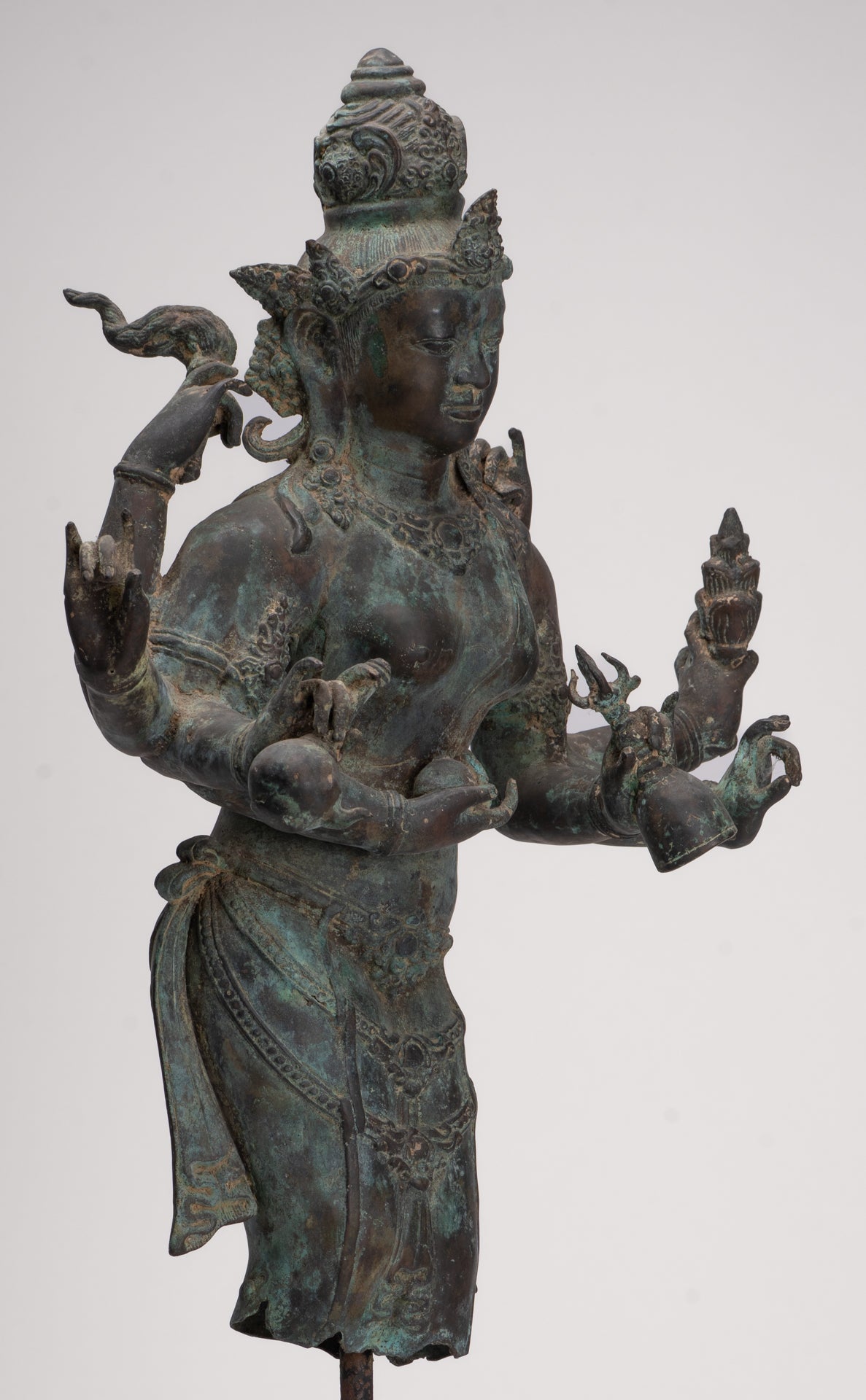
Here, a six-Armed Hindu Goddess holds a Kalasha, Lotus, Sutra, Pinda, Fly Whisk and Genta Bell. The goddess is portrayed with six arms, each conveying a distinct aspect of her spiritual identity. She holds a kalasha or sacred water vessel, a lotus bud, a ceremonial fly whisk, a sutra or sacred text, a pinda offering, and a genta bell. Two further hands are held in the Teaching Mudra, a gesture associated with the transmission of sacred knowledge, spiritual instruction, and the awakening of understanding.
Her elaborate tiered crown, cascading earrings, necklace, armlets, bracelets, and richly ornamented sarong speak to the sophisticated artistic traditions of Hindu Java. The figure’s poised stance and fine decorative detailing reflect the courtly elegance for which Majapahit sculpture is admired. A beautifully aged surface of dark bronze, warm brown tones, and areas of natural green verdigris gives the piece exceptional visual depth and an atmospheric sense of antiquity.
Parvati is the consort of Shiva and, within Hindu belief, represents the compassionate, nurturing, and creative force of the divine feminine. This impressive image is therefore more than a decorative work of art: it is a powerful devotional representation of spiritual harmony, wisdom, abundance, and protection.
A compelling focal point for a home shrine, meditation space, interior, or distinguished collection of Asian art, this Parvati sculpture brings together rich iconography, elegant craftsmanship, and the enduring spiritual heritage of Majapahit Java.
Iconography and symbolism
The numerous attributes held by Parvati enrich the image with layered devotional and ceremonial meaning:
-
Kalasha: The sacred vessel is associated with purity, abundance, fertility, life-giving water, prosperity, and divine blessing.
-
Lotus bud: A potent emblem of purity, awakening, beauty, and spiritual potential. As a closed bud, it can also evoke the promise of enlightenment yet to unfold.
-
Fly whisk: A symbol of royal dignity, honour, ceremonial service, and the removal of spiritual obstacles or impurities.
-
Sutra: The sacred text represents revealed wisdom, religious learning, spiritual discipline, and the transmission of divine teaching.
-
Pinda: The rounded offering signifies ritual devotion, nourishment, ancestral reverence, and the tangible offering of gratitude to the divine.
-
Genta bell: The ritual bell is associated with sacred sound, invocation, spiritual awakening, and the clearing of negative influences during worship.
-
Teaching Mudra: The paired teaching gesture communicates the sharing of sacred knowledge. It expresses Parvati’s role not only as a nurturing goddess, but also as a source of wisdom, guidance, and spiritual instruction.
Key features
-
Majapahit-style bronze sculpture of the Hindu goddess Parvati
-
Six-armed devotional representation with two hands in Teaching Mudra
-
Attributes include a kalasha, lotus bud, fly whisk, sutra, pinda, and genta bell
-
Serene facial expression with finely modelled eyes, nose, and gentle smile
-
Elaborate tiered crown and richly detailed celestial jewellery
-
Elegant, slender female form with refined East Javanese styling
-
Decorated sarong and ornamental sash panels with intricate relief work
-
Naturally aged bronze surface with deep brown, near-black, and green verdigris patination
-
A powerful representation of devotion, feminine divinity, abundance, wisdom, and protection
-
Suitable for a Hindu shrine, meditation room, contemplative interior, or Asian art collection
-
An exceptional statement piece for collectors of Hindu, Indonesian, Javanese, and Southeast Asian art
Frequently asked questions
Who is Parvati?
Parvati is one of the principal goddesses of Hindu tradition. She is the divine consort of Shiva and is widely revered as a manifestation of the sacred feminine. Her many aspects include love, fertility, marital devotion, motherhood, beauty, spiritual power, protection, and creative energy.
What does this sculpture represent?
This sculpture represents Parvati in a regal, multi-armed form. The additional arms distinguish her as a divine being capable of holding several sacred attributes at once. Together, these objects communicate her powers of blessing, spiritual teaching, abundance, ritual authority, purity, and compassionate protection.
Why does Parvati have multiple arms?
In Hindu iconography, multiple arms do not portray an ordinary physical form. They indicate divine capacity. A multi-armed deity can express several powers, qualities, gestures, and sacred responsibilities simultaneously. Here, Parvati’s many hands enable her to carry ritual and symbolic objects while also presenting the Teaching Mudra.
What is a kalasha?
A kalasha is a sacred ritual vessel, often filled with water and sometimes decorated with leaves or a coconut in Hindu ceremonies. It is a symbol of abundance, fertility, purity, prosperity, and the life-sustaining power of the divine.
What does the lotus bud signify?
The lotus is one of the most important symbols in Hindu and Buddhist art. It represents purity because it rises clean from muddy water. The bud specifically suggests potential, renewal, inner beauty, and the unfolding path toward spiritual realization.
What is the meaning of the fly whisk?
The fly whisk is a ceremonial emblem of royalty and sacred service. In a divine context, it affirms Parvati’s exalted status while symbolically clearing away distraction, impurity, and hindrance from the devotional space.
What is a sutra and why does Parvati hold one?
A sutra is a sacred religious text or teaching. Its presence identifies Parvati as a source of spiritual wisdom and instruction. It also complements the Teaching Mudra, emphasizing the goddess’s role in guiding devotees toward understanding and realization.
What is a pinda?
A pinda is a rounded ritual offering, often associated with nourishment, devotion, remembrance, and ceremonies for ancestors. In the sculpture, it expresses the reciprocal relationship between worshipper and deity: the devotee offers sustenance and reverence, while the deity bestows blessing and spiritual support.
What is a genta bell?
A genta is a hand bell used in Hindu ritual and ceremonial worship. Its sound marks sacred space, calls attention to the divine, and supports concentration during prayer or offering. In iconography, it may evoke wisdom, sacred vibration, and spiritual awakening.
What is the Teaching Mudra?
The Teaching Mudra is a hand gesture associated with instruction, the communication of sacred truth, and the turning of spiritual knowledge into lived understanding. With two hands shown in this gesture, Parvati appears as a compassionate teacher as well as a divine mother and protector.
Is Parvati associated only with Shiva?
Parvati is inseparable from Shiva in much Hindu theology, where the two express complementary cosmic principles. Shiva is often associated with consciousness or stillness, while Parvati represents shakti—the active, creative, energising power that allows creation and transformation to occur.
What is Majapahit art?
Majapahit refers to a major Hindu-Buddhist kingdom that flourished in Java, Indonesia, from the late 13th to early 16th centuries. Its artistic legacy is celebrated for refined religious imagery, sophisticated decorative detail, elegant proportions, and a distinctive synthesis of Hindu and Buddhist visual traditions.
What characteristics make this a Majapahit-style image?
The work displays the qualities strongly associated with East Javanese and Majapahit visual culture: a composed face, tall crown, sumptuous jewellery, slender proportions, layered textile ornament, and a rich ensemble of ritual attributes. Its dignified balance between ornament and serenity is especially characteristic of the tradition.
What is the significance of the bronze patina?
The varied dark brown, black, and green surface is a natural-looking bronze patina. Patina develops through time, handling, oxidation, and environmental exposure, creating the deep tonal variation that gives antique and aged bronze sculpture much of its visual character. It also brings out the relief decoration and modelling of the figure.
How should a bronze Parvati sculpture be displayed?
Display the sculpture in a stable, dry location away from direct sunlight, high humidity, and abrupt temperature changes. For a devotional setting, place it on a clean, elevated surface such as an altar, shelf, plinth, or cabinet. Its front-facing composition makes it particularly effective as a central shrine image or as a focal piece in a meditation space.
How should the sculpture be cared for?
Avoid aggressive cleaning, polishing, or chemical treatments, as these may remove or alter the surface patina. Dust gently with a soft, dry brush or microfibre cloth. Handle the sculpture carefully with clean, dry hands and support it securely from below rather than lifting it by its arms, attributes, or crown.
Is this suitable as a gift?
Yes. This Parvati sculpture would make a meaningful gift for a collector of Asian art, a practitioner of Hindu spirituality, or anyone drawn to symbolism of wisdom, devotion, feminine strength, love, and prosperity. Its elaborate iconography makes it especially suitable for a significant occasion, housewarming, anniversary, or spiritual milestone.
SATISFACTION GUARANTEE - We have been offering SE Asian Art for many years and are proud of the reputation we have developed for fair and honest listings. However, if for any reason, whatsoever, you are unhappy with your purchase please just let us know and we will provide a full refund. We want you to be 100% happy with your purchase.
-
-
The majority of orders will be shipped with DHL. This is a secure, express and fully tracked service.
Items less than 2Kg we typically ship using Royal Mail.
Once we receive your order we try to ship all orders the same or next working day.
Large and/or fragile pieces requiring palletising, specialist crating and/or extra packaging may take a little longer. Palletised shipments will be delivered curbside.
All orders over 35 GBP will be shipped free of charge.

-
We genuinely hope that all purchases delight.
However, if they do not, regardless of reason, we will refund all orders upon receipt of the unwanted item. Just notify us within 14 days of receiving your order that you wish to make a return and send the piece back to us with 30 days of delivery.


