





-
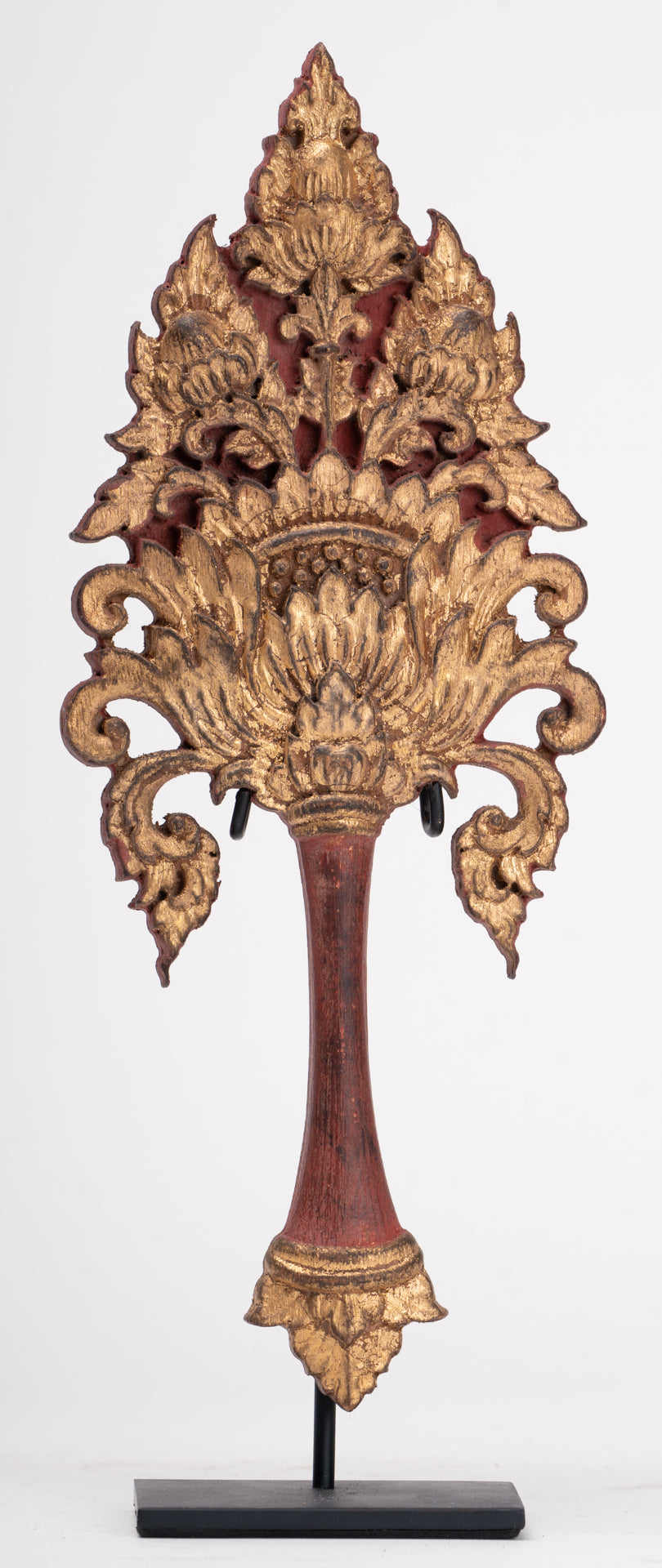
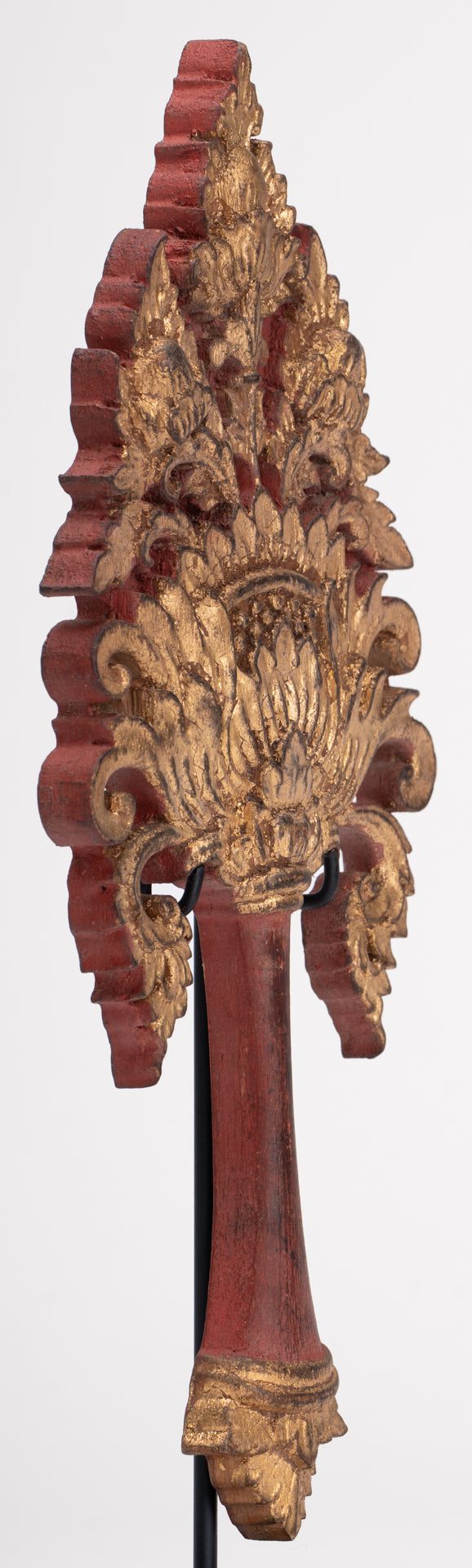
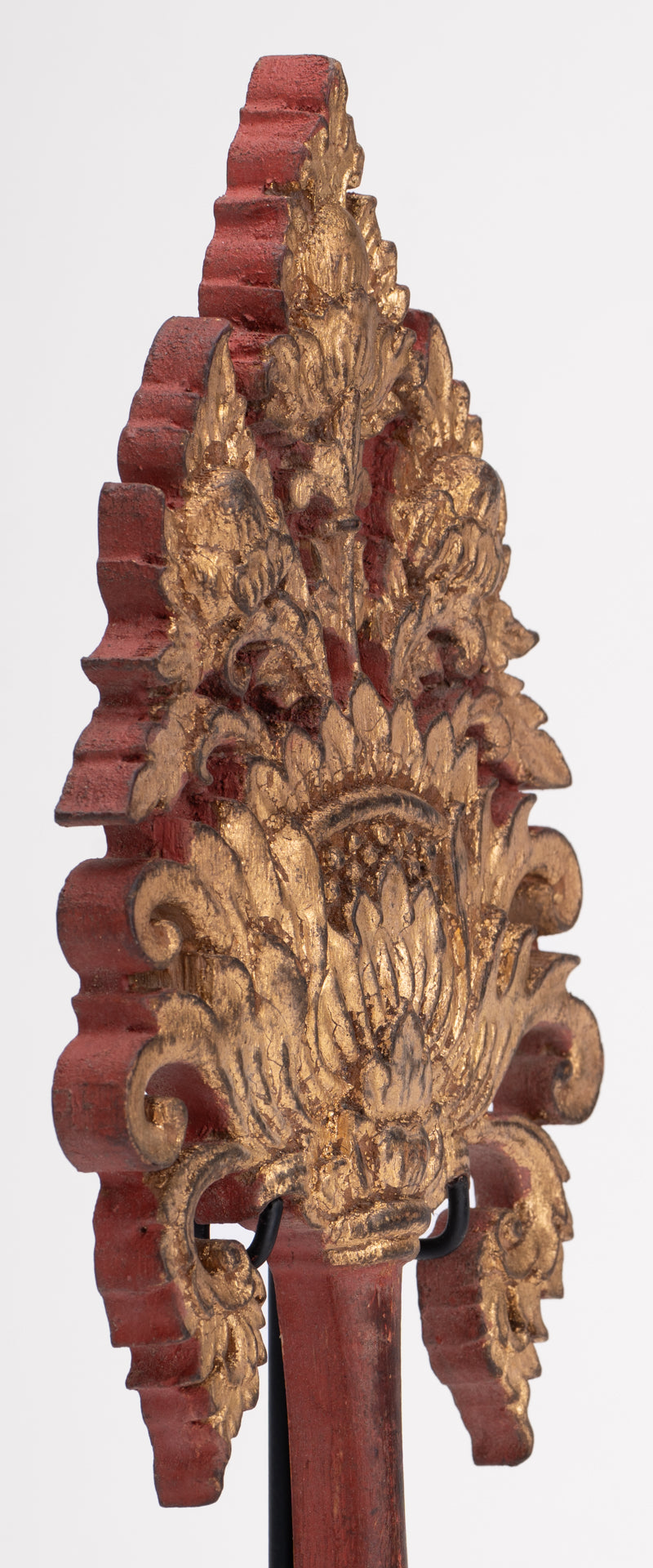
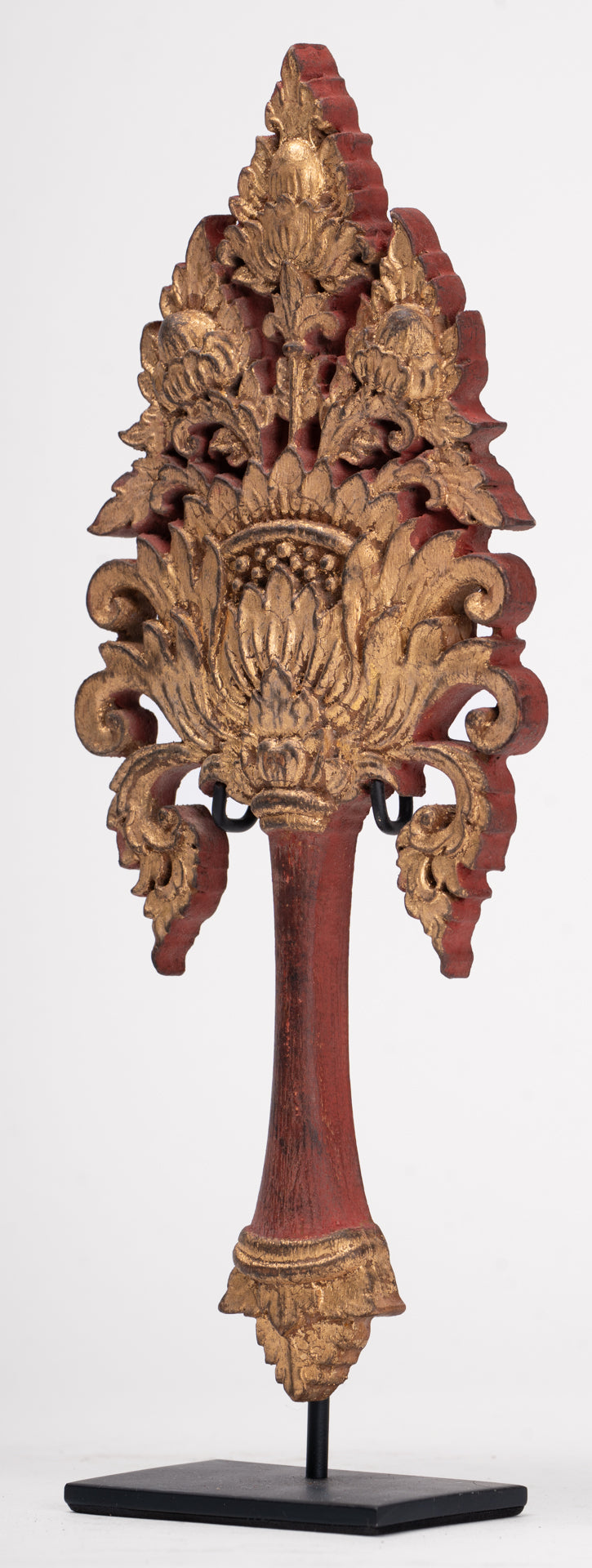
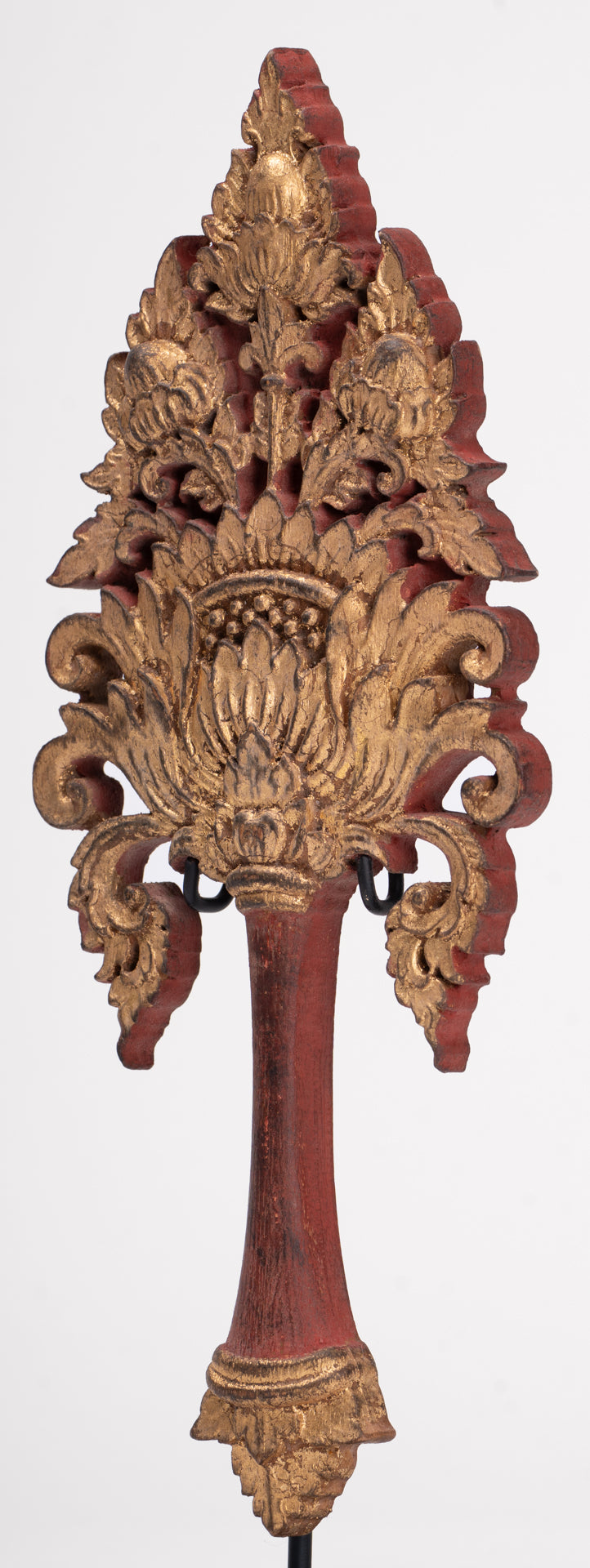
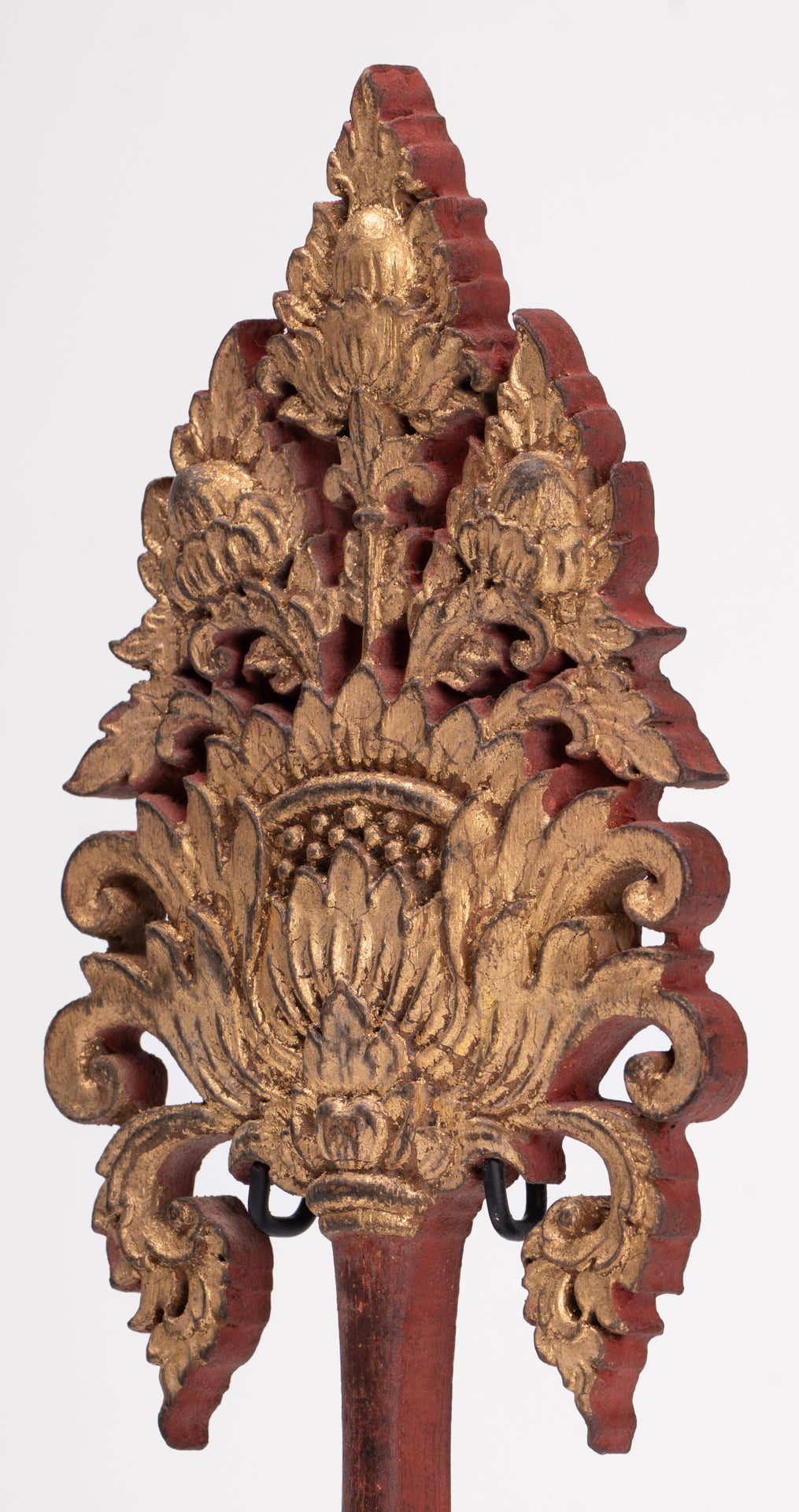
Antique Thai Style Wood Devotional Buddha Fan - 28cm/11"
Measurements - Height 28cm (11")
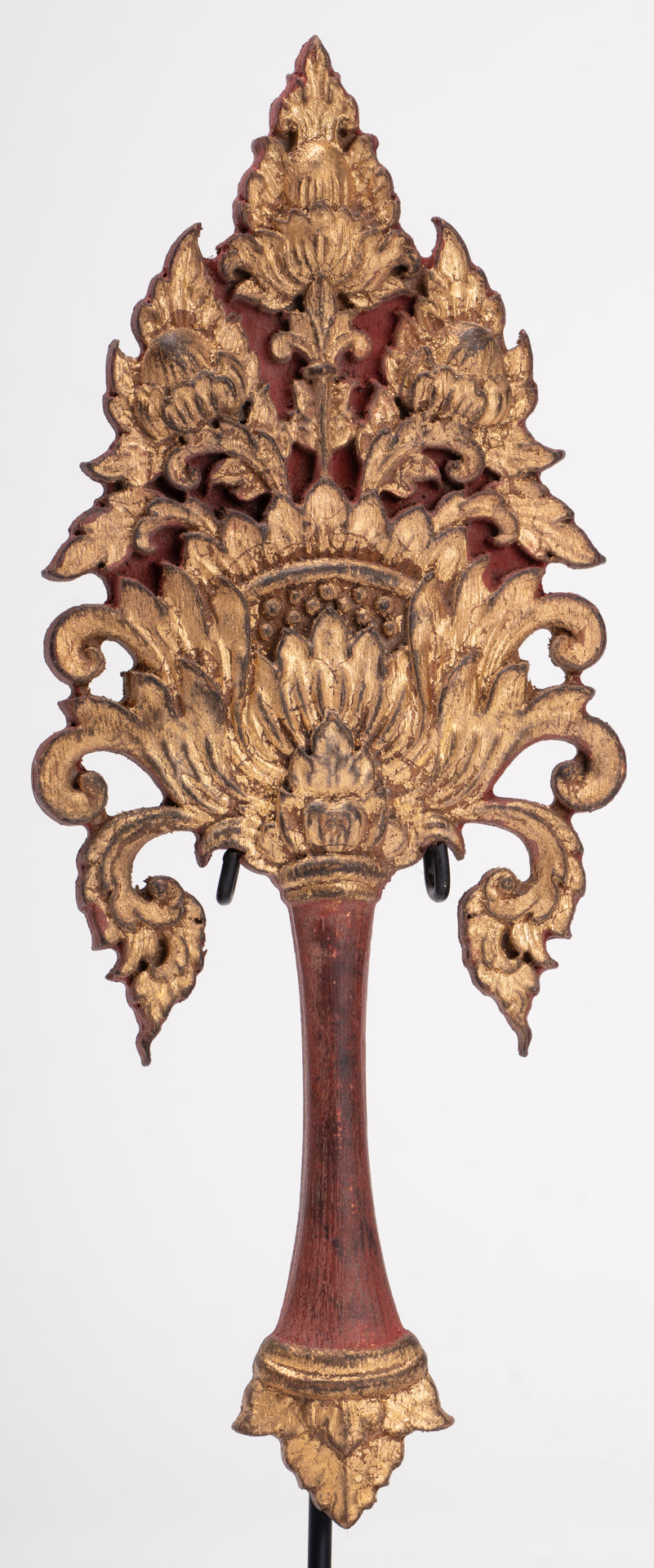
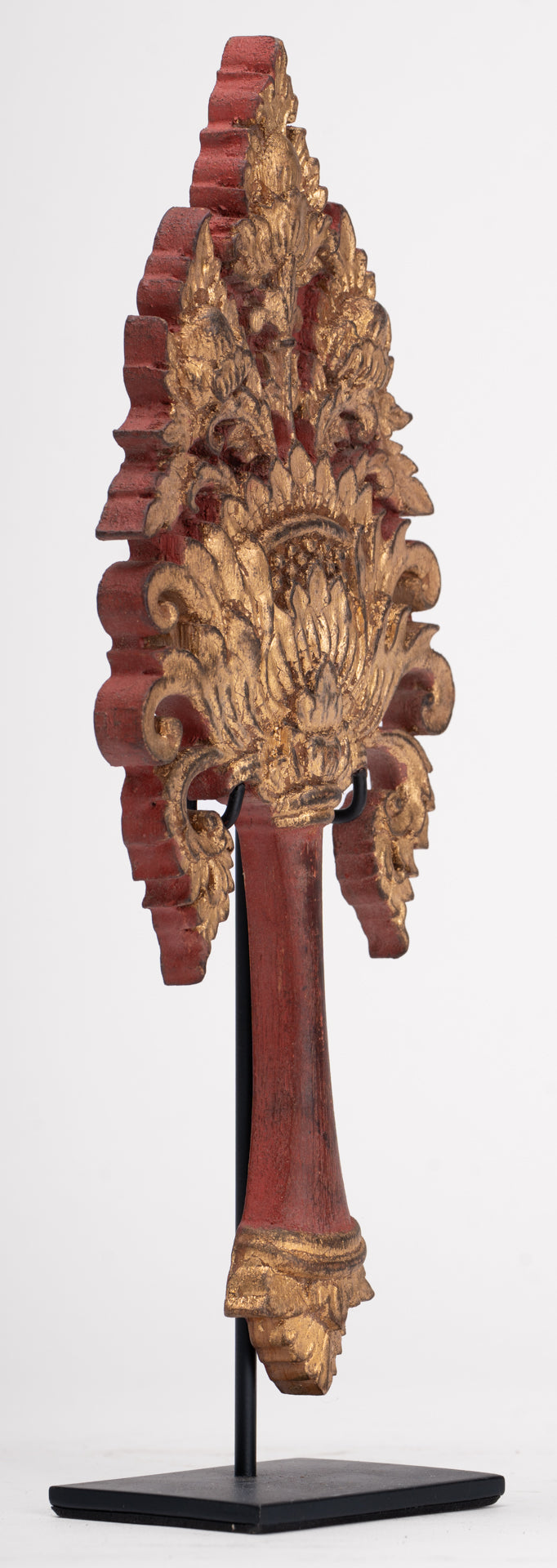
An antique Thai‑style wooden monk’s ceremonial fan, finely carved and finished in traditional red and gold, then mounted for display as a sculptural object.
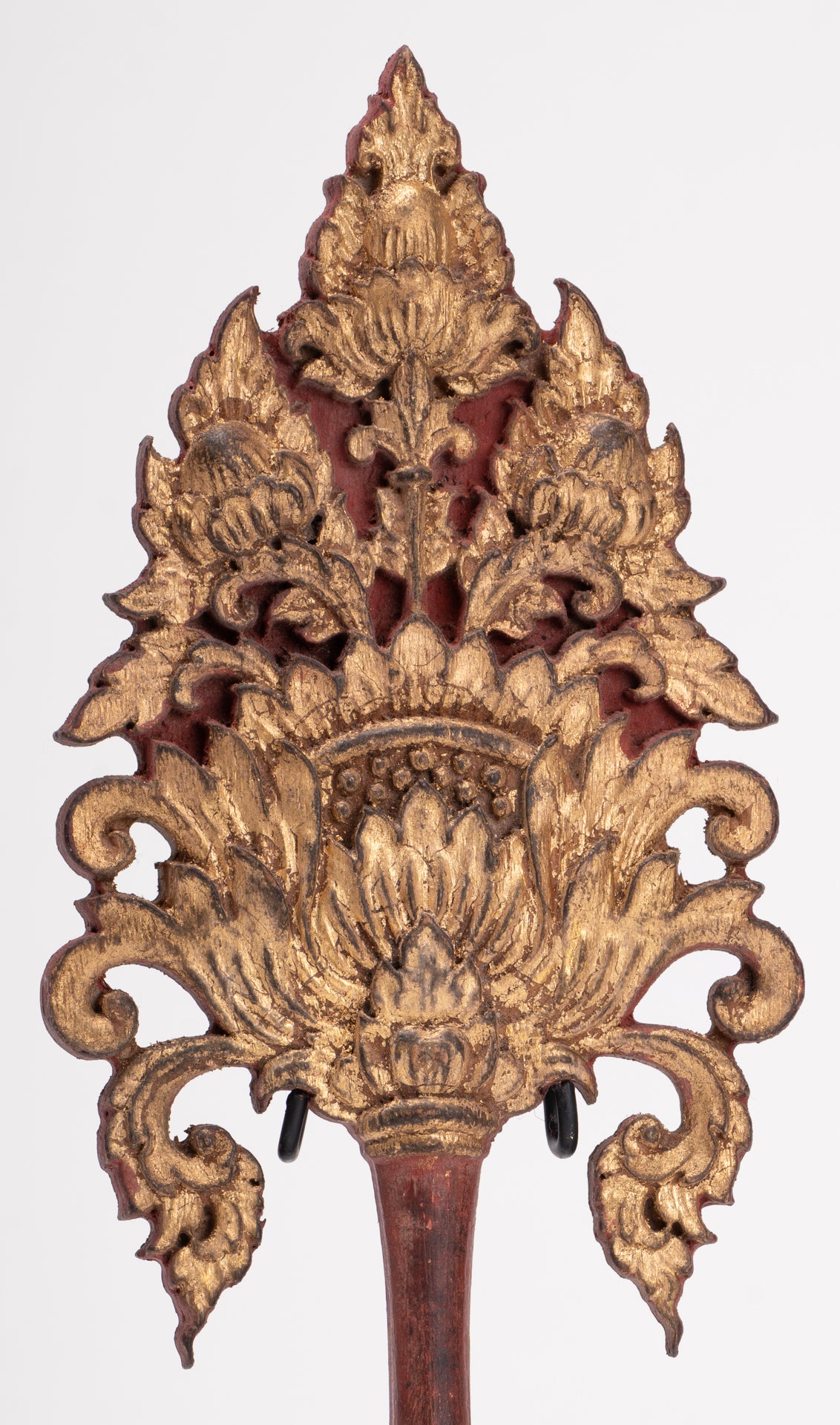
The blade of the fan is shaped like a stylised lotus or flame, with layered foliage and scrolling motifs picked out in gold leaf against a warm cinnabar ground, giving the piece depth, texture and a quietly luminous presence.
In Buddhist practice, such fans are often placed before a Buddha statue as symbolic offerings, representing the cooling of heat, suffering and worldly desire and inviting an atmosphere of peace and serenity. In Thai tradition these ceremonial fans—known as phatyot—play an important role in consecration rites, where they may be used in rituals to “open the eyes” of an image, marking the moment a statue is ritually awakened as a living focus for devotion.
For depictions of the Laughing Buddha, the fan further suggests good fortune, the warding off of misfortune and the granting of wishes, echoing wider East and Southeast Asian symbolism in which the fan sweeps away troubles and invites blessings.
Monks in Thailand employ fans like this during important ceremonies, both as instruments of blessing and as emblems of dignity and status. Historically, elaborately crafted fans were associated with honour and could be presented on significant monastic or royal occasions, functioning as marks of respect and veneration.
Placing a fan in front of a Buddha sculpture today remains a quiet act of reverence and gratitude, a simple yet eloquent gesture by the practitioner.
With its graceful outline, layered carving and warm, time‑softened patina, this traditional ceremonial fan brings a distinctive touch of Thai sacred culture to any interior.
It is an ideal accent for a home, office or meditation space, where its subtle colour and contemplative presence can serve as a gentle reminder to cool the heat of everyday concerns and cultivate calm, clarity and devotion.
Key Features
-
Antique Thai‑style wooden monk’s ceremonial fan (phatyot)
-
Blade carved in the form of a stylised lotus or flame, symbolising purity and enlightenment
-
Richly layered foliage and scrolling motifs picked out in gold leaf over a warm cinnabar‑red ground
-
Finely carved and finished on both blade and handle, then mounted for display as a sculptural object
-
Associated with Buddhist rituals and consecration rites, including “opening the eyes” of Buddha images
-
Symbolises the cooling of heat, suffering and worldly desire, inviting calm and serenity
-
Linked to notions of good fortune, warding off misfortune and granting wishes, especially with Laughing Buddha imagery
-
Historically used by monks as instruments of blessing, dignity and status, and as marks of honour on monastic or royal occasions
-
Warm, time‑softened patina that highlights the carving and gives the piece a quiet, contemplative presence
-
Ideal accent for home, office or meditation space, bridging sacred Thai culture and refined interior design
FAQs – Thai‑Style Monk’s Ceremonial Fan
1. What is the significance of a monk’s ceremonial fan in Thai Buddhism?
In Thai Buddhism, monk’s ceremonial fans—often called phatyot—are important ritual objects used during formal ceremonies, blessings and consecration rites. They serve both a practical and symbolic role: practically, they can shield the monk’s face during chanting to focus attention on the recitation rather than the individual; symbolically, they represent spiritual authority, dignity and the cooling of the fires of greed, anger and delusion. Elaborate fans like this one were traditionally reserved for significant occasions and high‑ranking monks, making them potent emblems of honour and respect.2. Why is the fan shaped like a lotus or flame and decorated in red and gold?
The blade’s lotus/flame silhouette fuses two key Buddhist symbols. The lotus stands for purity and awakening—the flower that rises unstained from muddy water—while the flame suggests wisdom and the radiance of enlightenment. The combination evokes both the clarity and warmth of the awakened mind. The use of gold leaf over a cinnabar‑red ground is quintessentially Thai: gold signals the precious, incorruptible nature of the Dharma, and the red ground adds depth and warmth, allowing the carved foliage and scrolls to glow with a quiet, inner luminosity.3. How are such fans used in relation to Buddha statues?
Ceremonial fans are often placed in front of or beside a Buddha statue as part of a shrine arrangement, functioning as symbolic offerings. In certain Thai rituals, a fan may be used in ceremonies to “open the eyes” of a new image, marking the moment when a statue is ritually awakened as a living focus for devotion. In everyday practice, placing a fan near a Buddha image is a subtle act of reverence—a way of cooling the “heat” of worldly concerns and inviting an atmosphere of peace, gratitude and mindful presence around the altar.4. What is the connection between fans and good fortune or wish‑fulfilment?
Across East and Southeast Asia, fans are often seen as objects that can “sweep away” troubles and invite blessings. In depictions of the Laughing Buddha (Budai), for instance, the fan is sometimes used as a magical implement for granting wishes or dispelling misfortune. A ceremonial fan like this one, with its auspicious lotus/flame form and gold decoration, naturally carries similar associations: it suggests the clearing of obstacles, the softening of difficulties and the circulation of fresh, benevolent energy in a space.5. Was this fan meant to be used or purely decorative?
The level of carving, the durable wooden construction and the traditional red‑and‑gold finish all indicate that this fan was designed for ceremonial use rather than as a purely decorative souvenir. That said, it has now been thoughtfully mounted for display as a sculptural object, allowing it to function as both a historical ritual artefact and a refined piece of wall or pedestal art. The mounting respects its original form while making it easy to integrate into a contemporary interior or collection.6. How should I display a ceremonial fan respectfully in my home or workspace?
The fan is best displayed upright and clearly visible, ideally near or in relation to a Buddha image or quiet contemplative area. A console, niche, low plinth or side table in a living room, office or meditation room works well. Keeping the surroundings simple and uncluttered allows the carved lotus/flame outline and gold‑on‑red palette to stand out. Even without formal ritual use, giving it a dedicated place and occasionally pausing in front of it with a sense of appreciation is a respectful way to honour its origins.7. How do I care for the gilding, lacquer and wood?
The original gilding and red ground are part of the fan’s historic character and should be handled gently. Dust it with a soft, dry cloth or a natural‑bristle brush, avoiding water, chemical cleaners or metal polishes, which can loosen gold leaf and damage the lacquer. Keep it away from direct strong sunlight and extremes of humidity to prevent cracking or flaking. In most indoor environments, simple, regular dusting and stable conditions are enough to preserve its warm, time‑softened patina.8. Can non‑Buddhists own and display a ceremonial fan like this?
Yes. Many non‑Buddhist collectors display Thai ritual objects with sincere appreciation for their artistry, history and contemplative atmosphere. The key is to treat the fan with respect: display it thoughtfully rather than as a casual novelty, avoid placing it directly on the floor or in inappropriate areas, and, if it is near a Buddha image, maintain a clean, uncluttered setting. Whether you approach it as art, as a symbol of calm, or as part of a personal spiritual practice, a mindful attitude honours the tradition it comes from.SATISFACTION GUARANTEE - We have been offering SE Asian Art for many years and are proud of the reputation we have developed for fair and honest listings. However, if for any reason, whatsoever, you are unhappy with your purchase please just let us know and we will provide a full refund. We want you to be 100% happy with your purchase.
-
-
The majority of orders will be shipped with DHL. This is a secure, express and fully tracked service.
Items less than 2Kg we typically ship using Royal Mail.
Once we receive your order we try to ship all orders the same or next working day.
Large and/or fragile pieces requiring palletising, specialist crating and/or extra packaging may take a little longer. Palletised shipments will be delivered curbside.
All orders over 35 GBP will be shipped free of charge.

-
We genuinely hope that all purchases delight.
However, if they do not, regardless of reason, we will refund all orders upon receipt of the unwanted item. Just notify us within 14 days of receiving your order that you wish to make a return and send the piece back to us with 30 days of delivery.


