



-
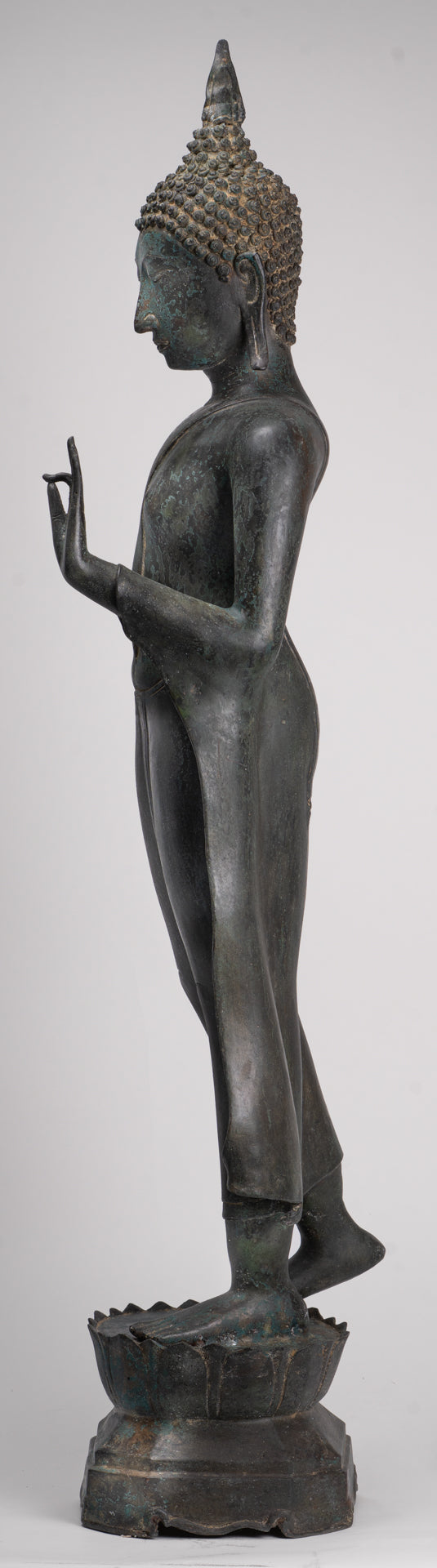
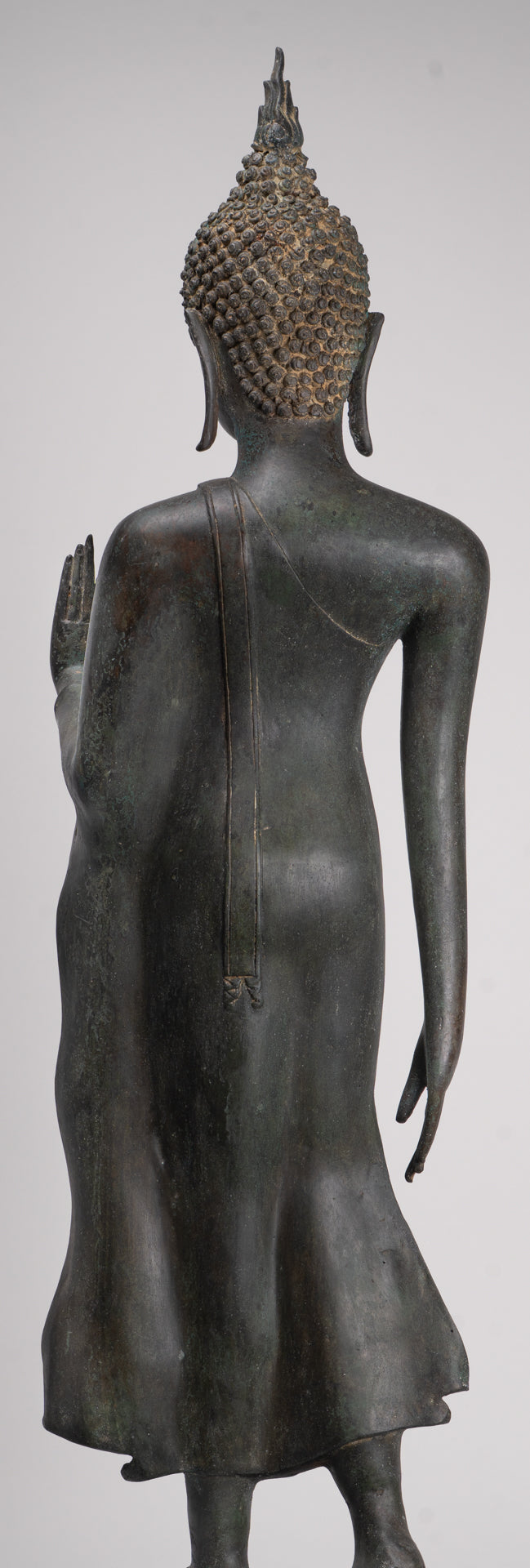
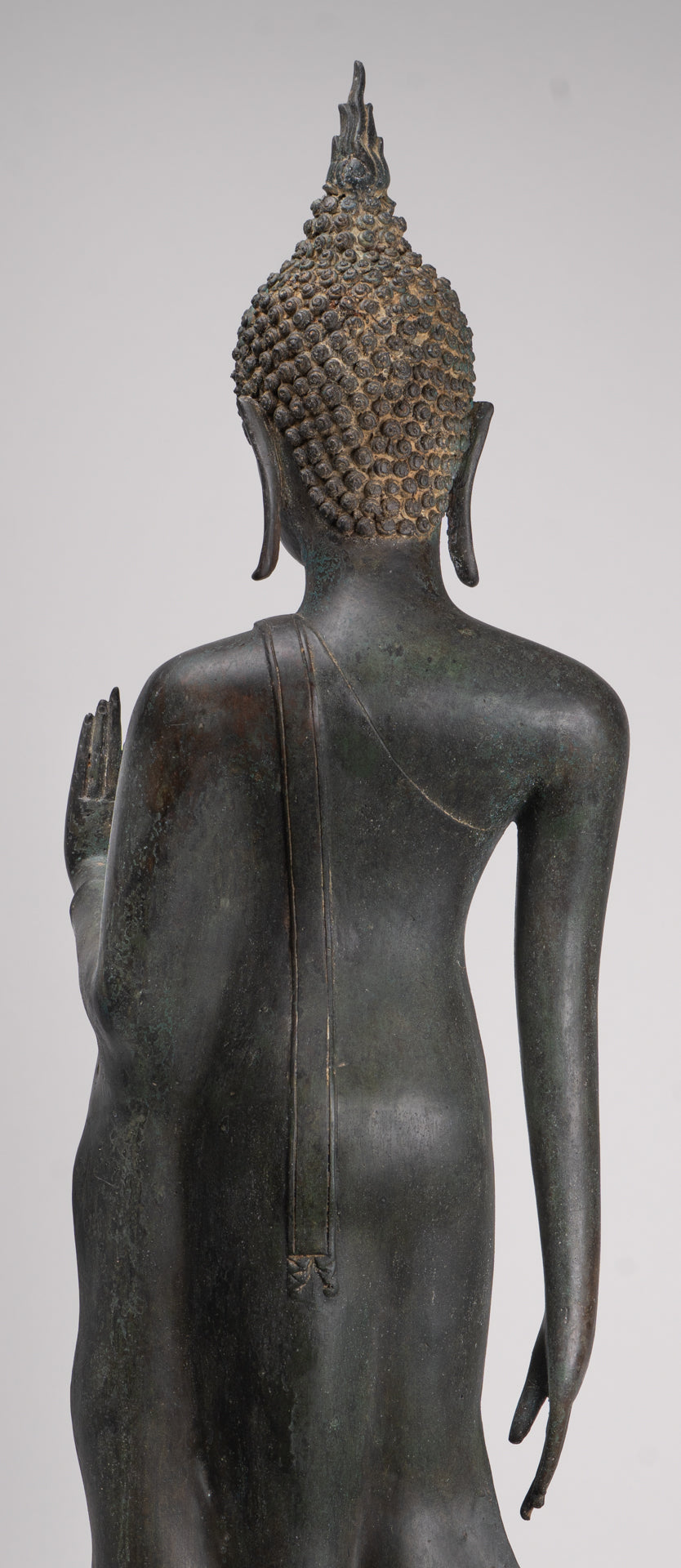
Antique Thai Style Sukhothai Bronze Protection Walking Buddha Statue - 117cm/47"
Measures (Height) 117cm/47"
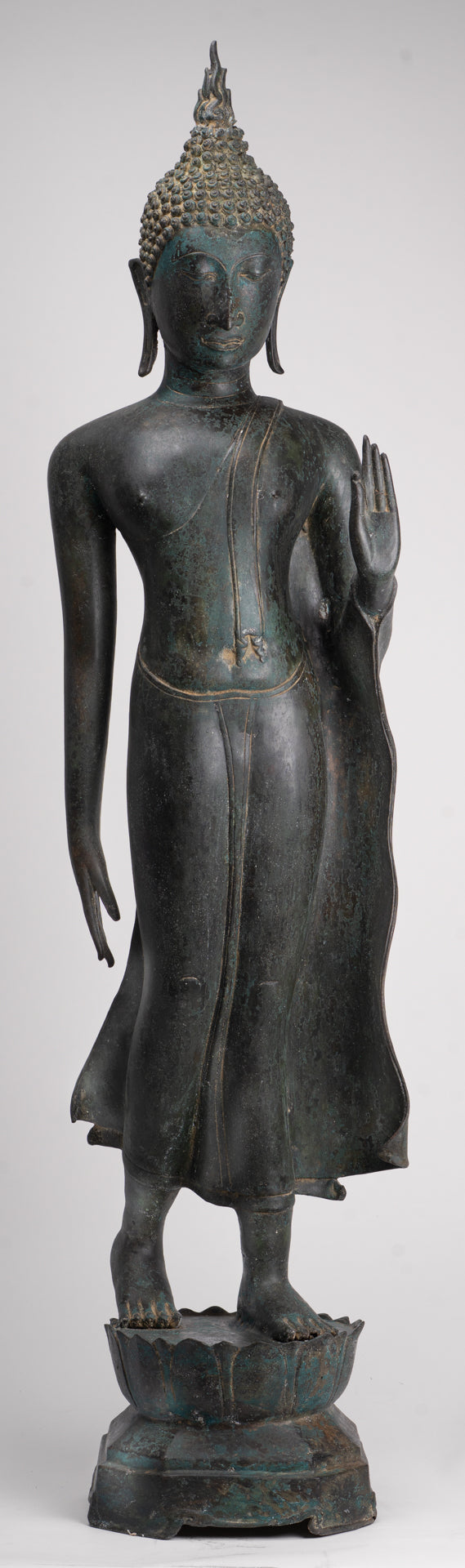
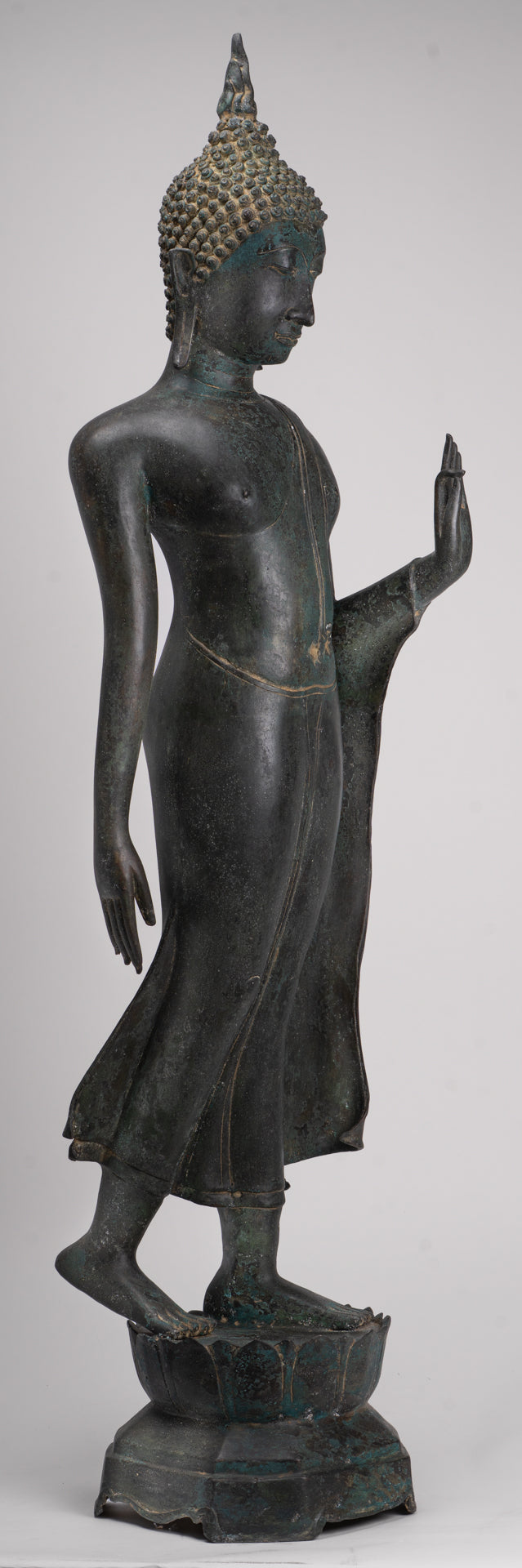
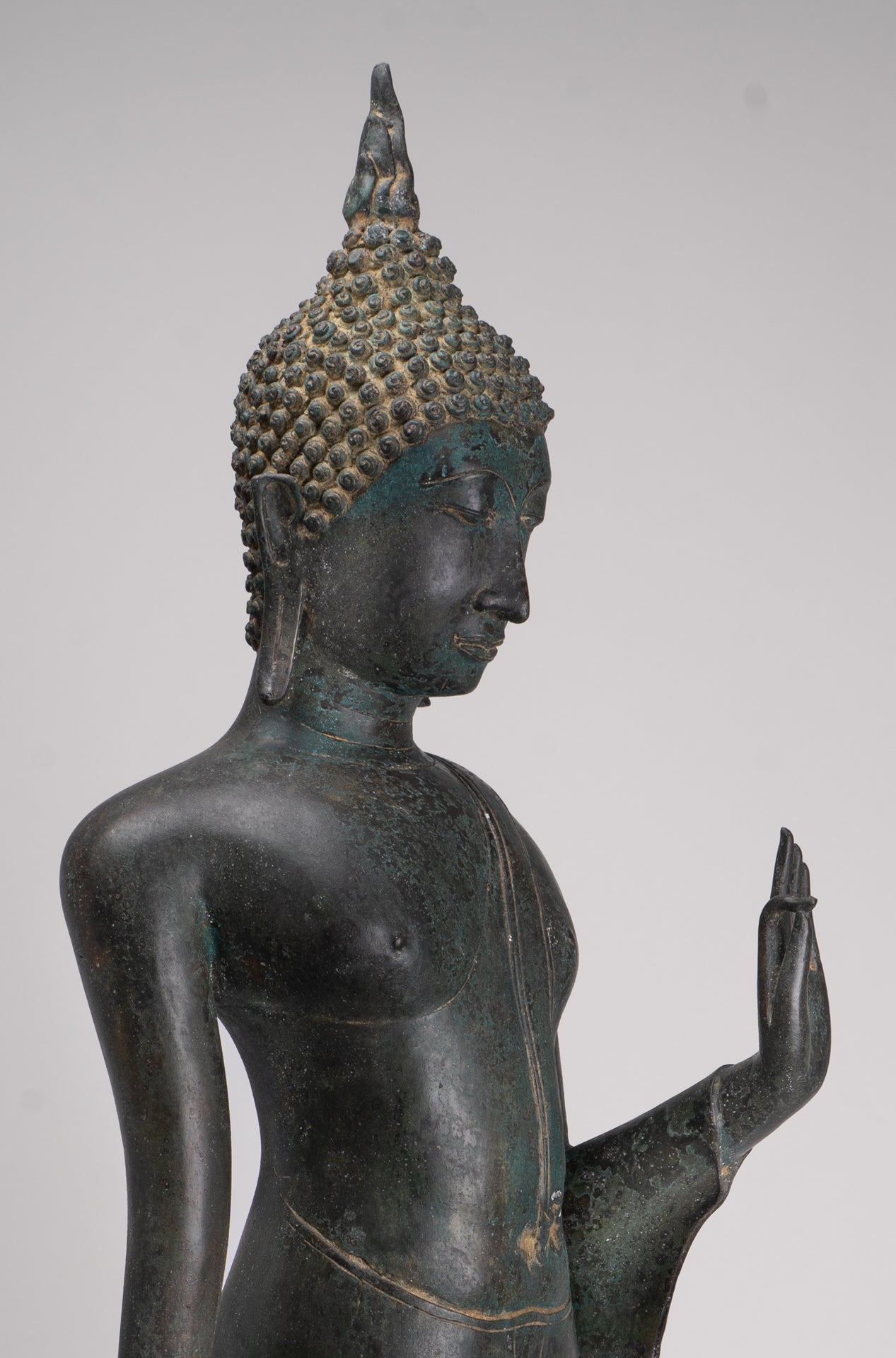
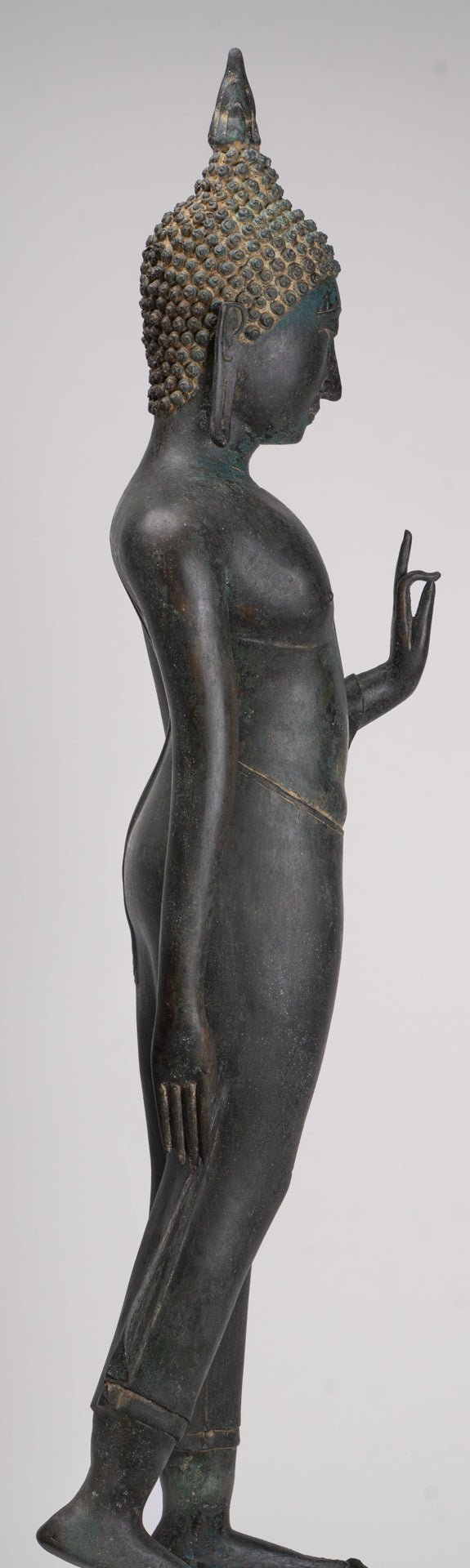
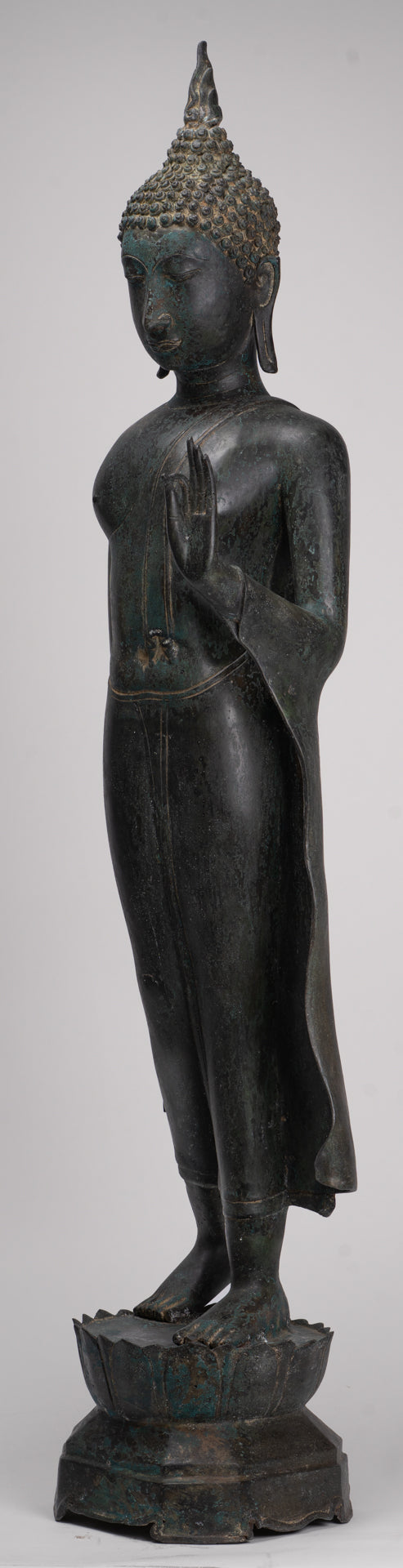
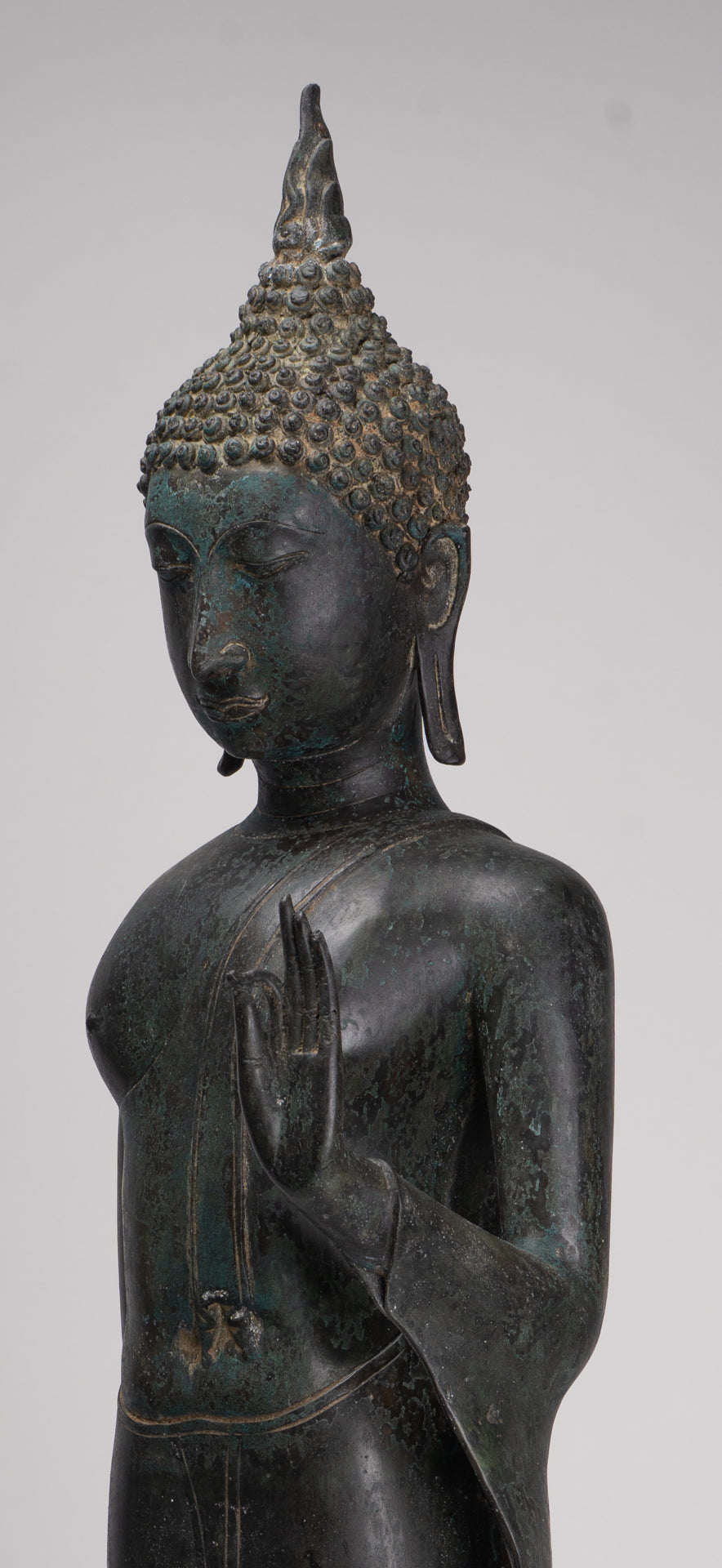
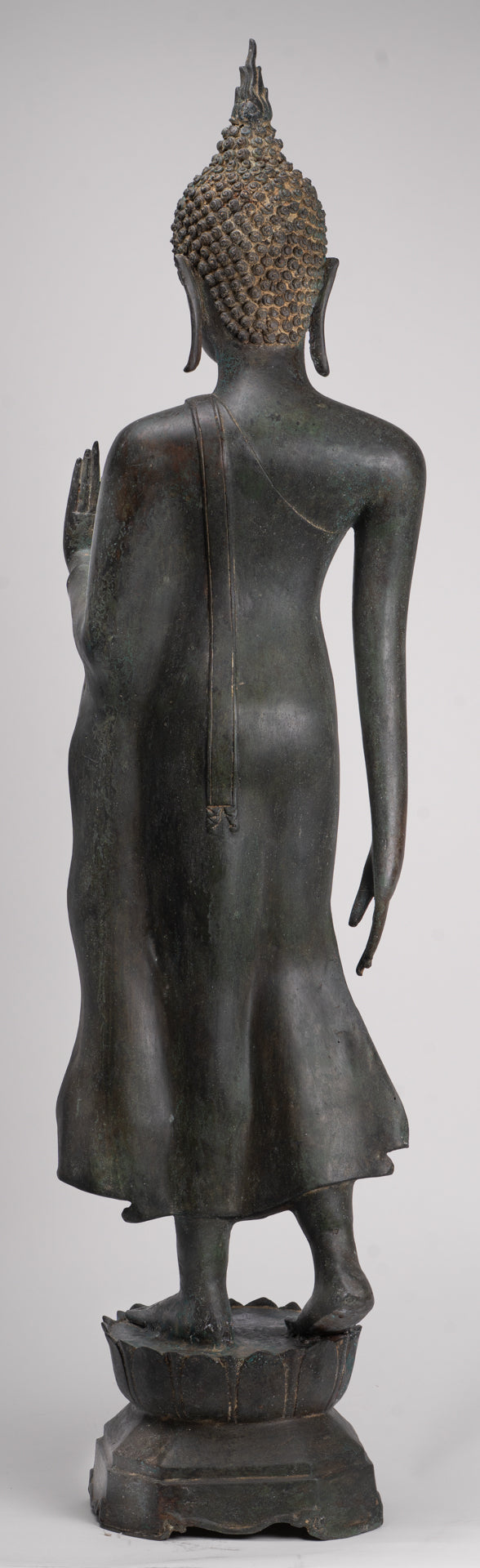
An antique Thai Walking Buddha from Thailand, in the graceful Sukhothai style.
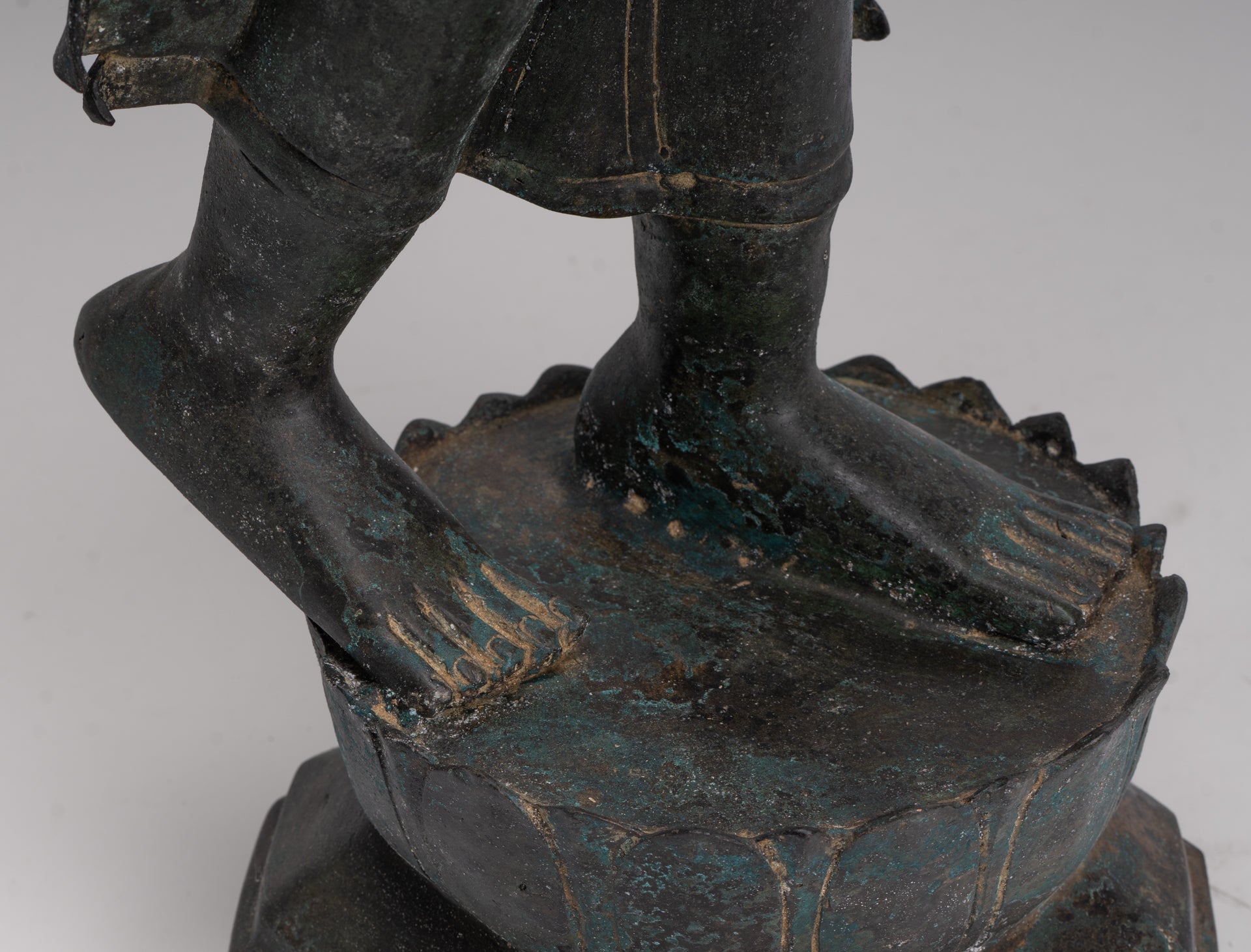
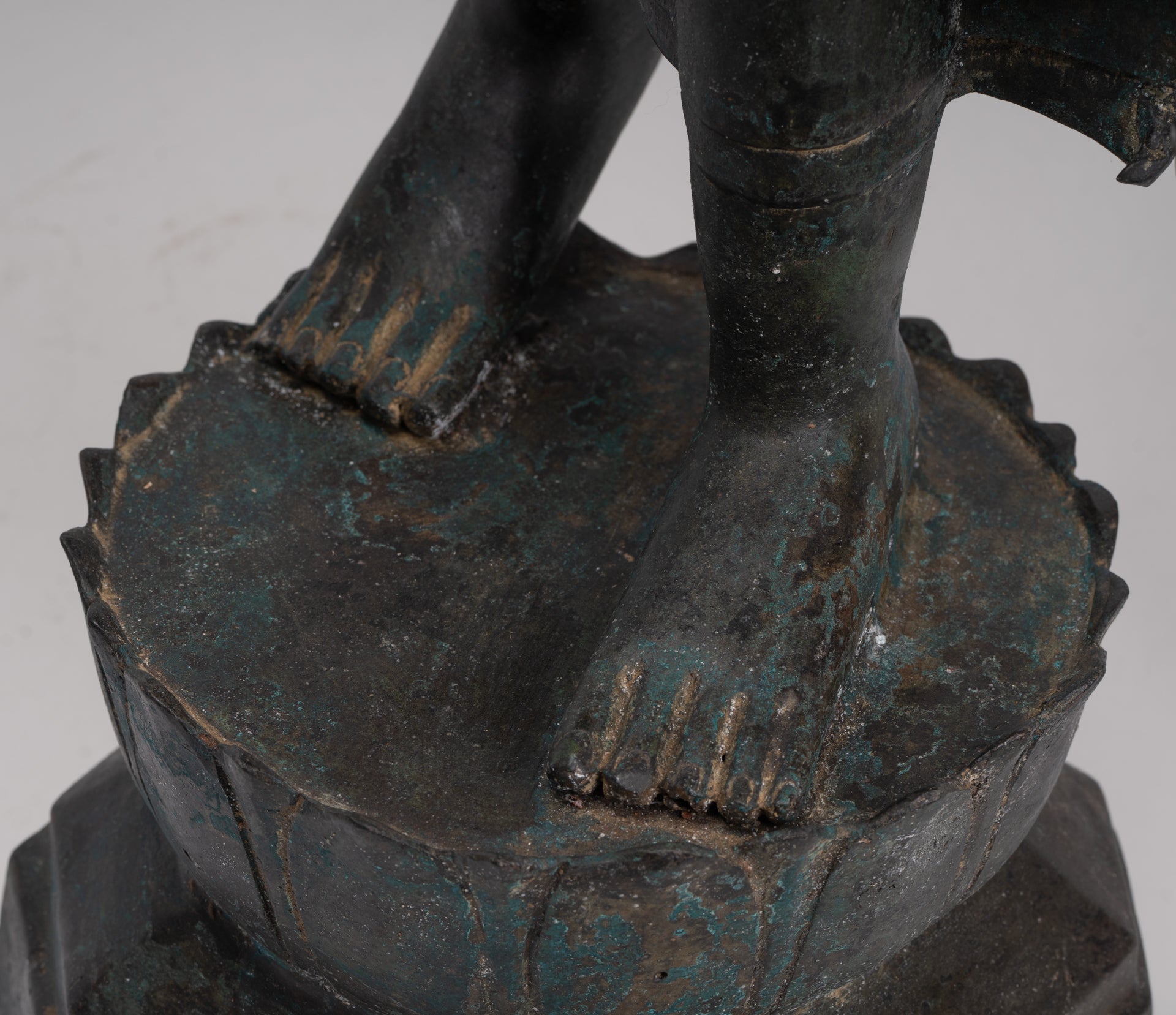
This elegant sculpture depicts the Buddha striding forward after his enlightenment, balanced lightly on a circular lotus base. The lotus, rising pure from muddy water, symbolises spiritual purity, compassion and the capacity to bring joy to all beings. It also suggests that awakening is possible in the midst of everyday conditions, not apart from them.
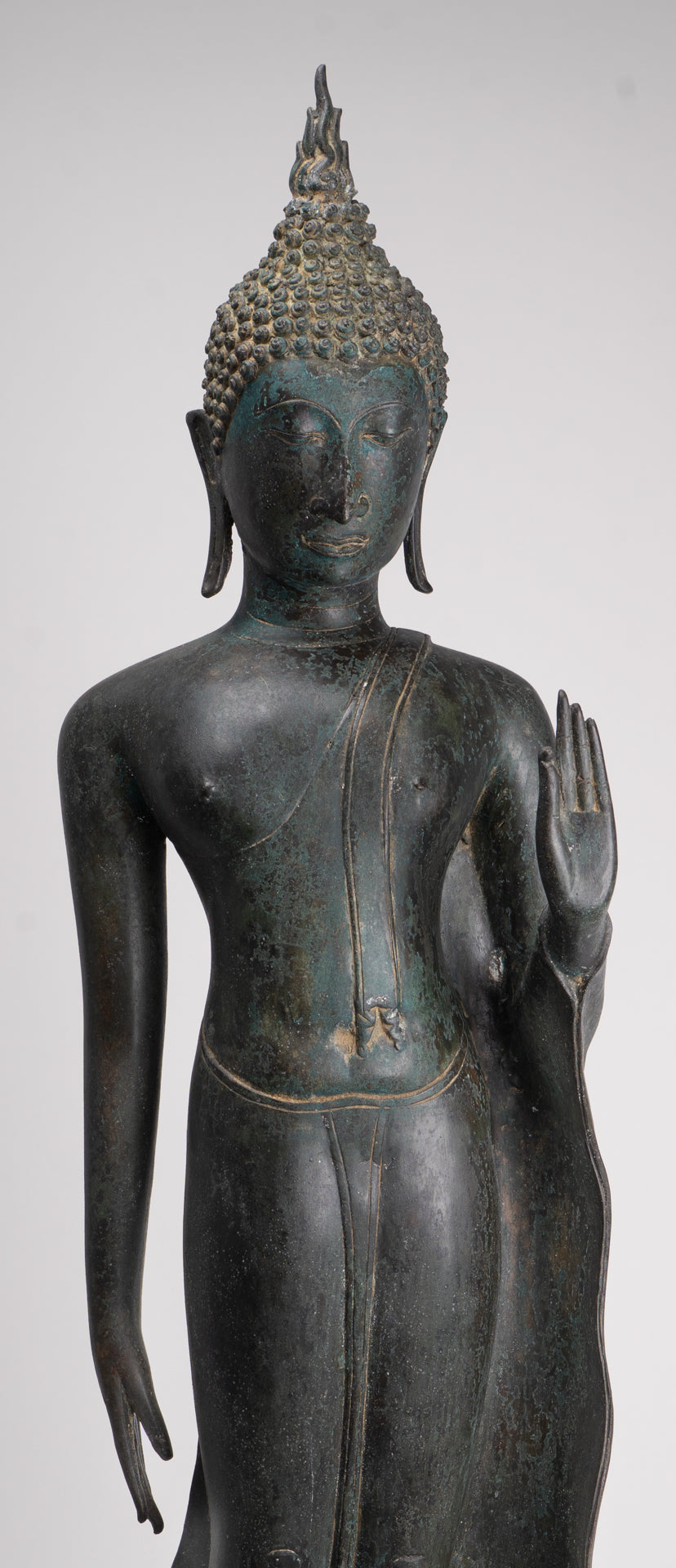
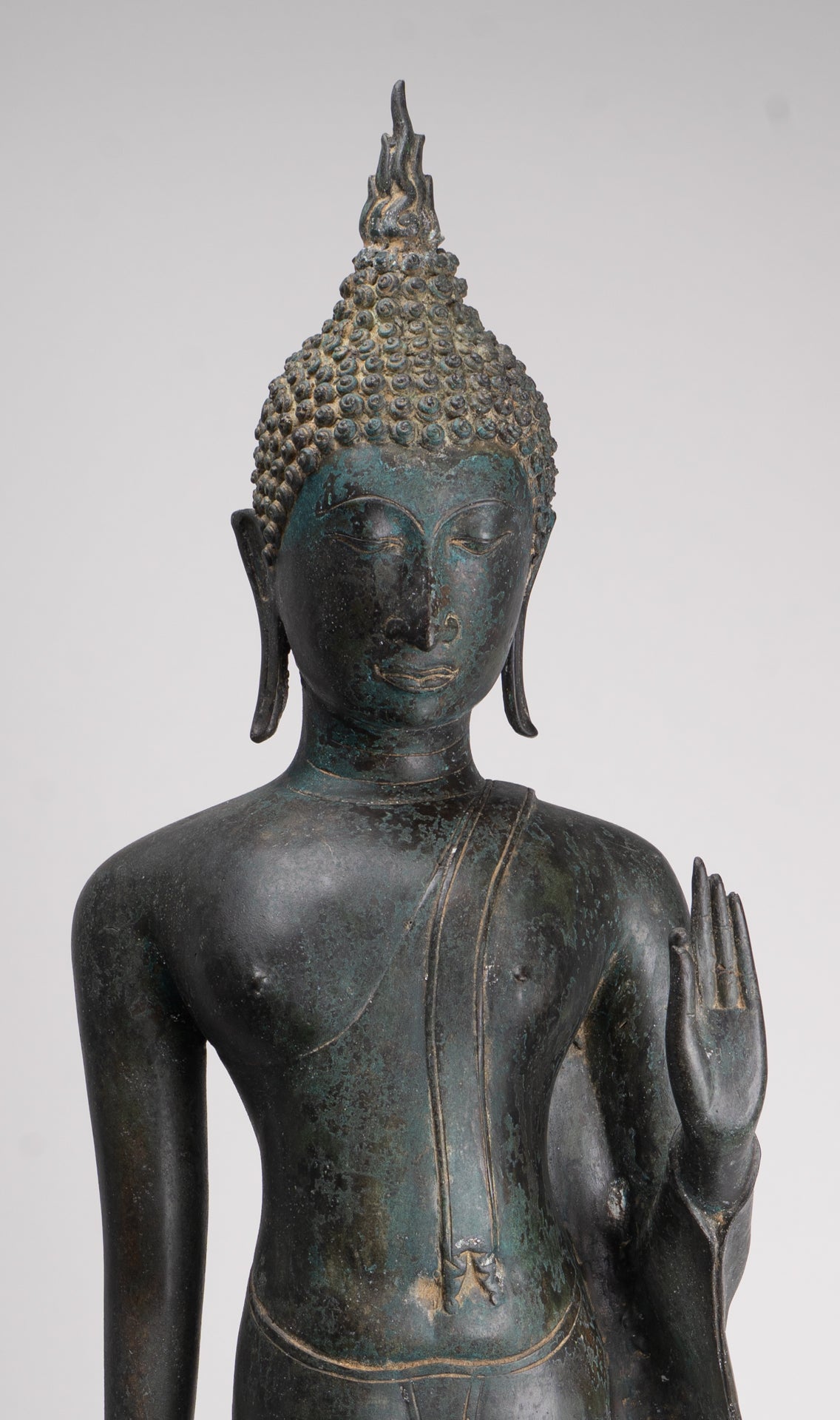
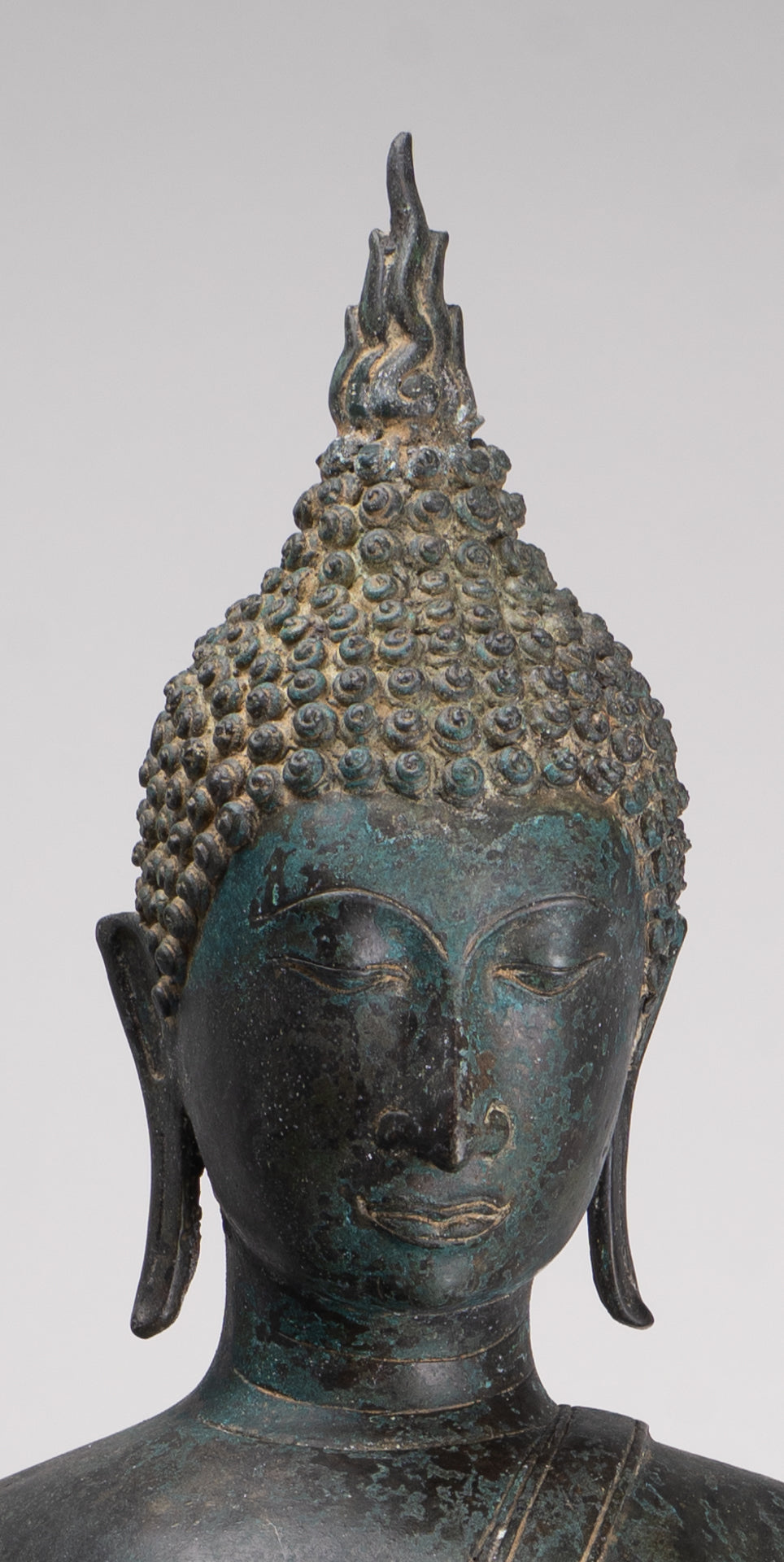
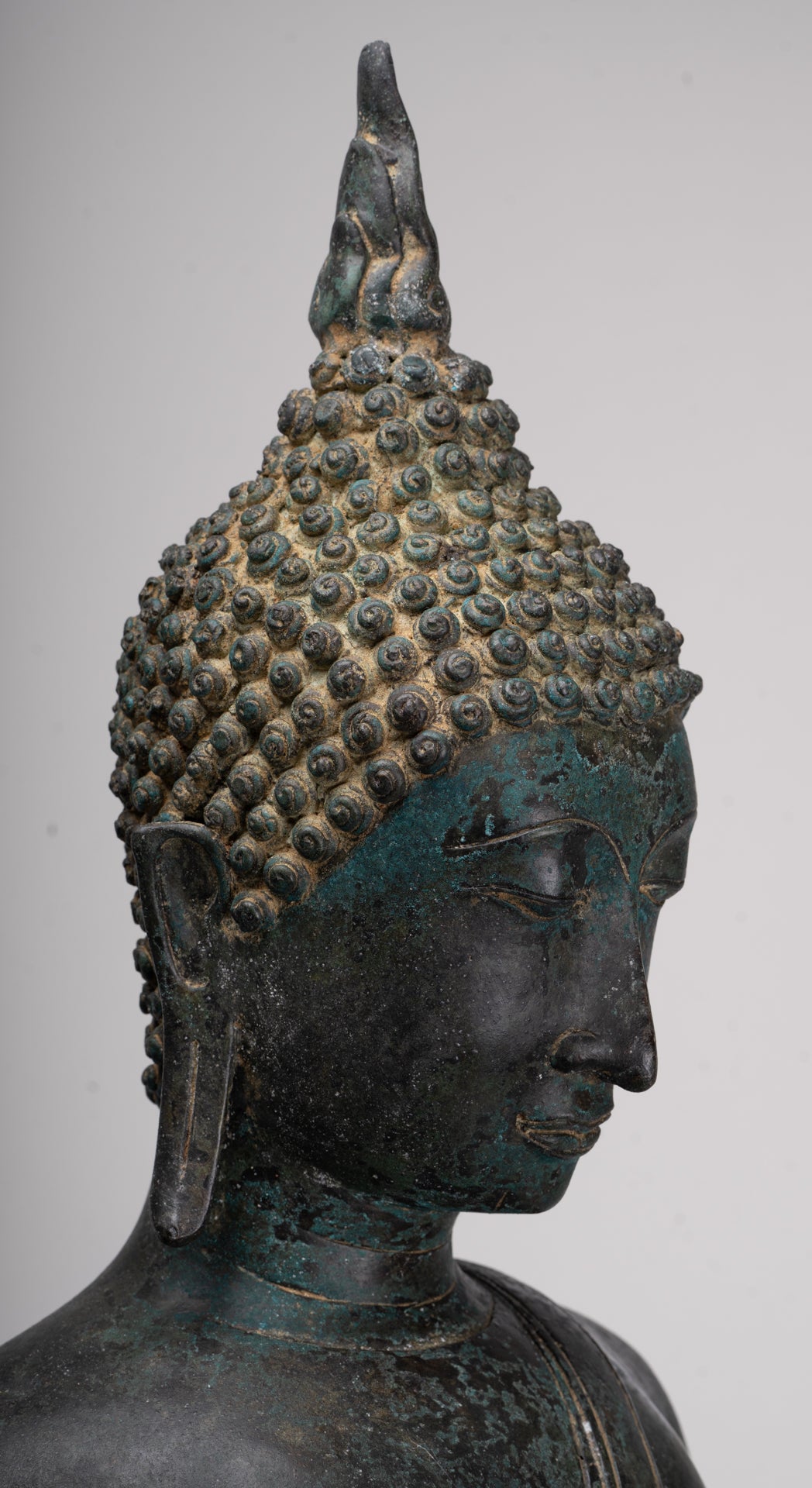
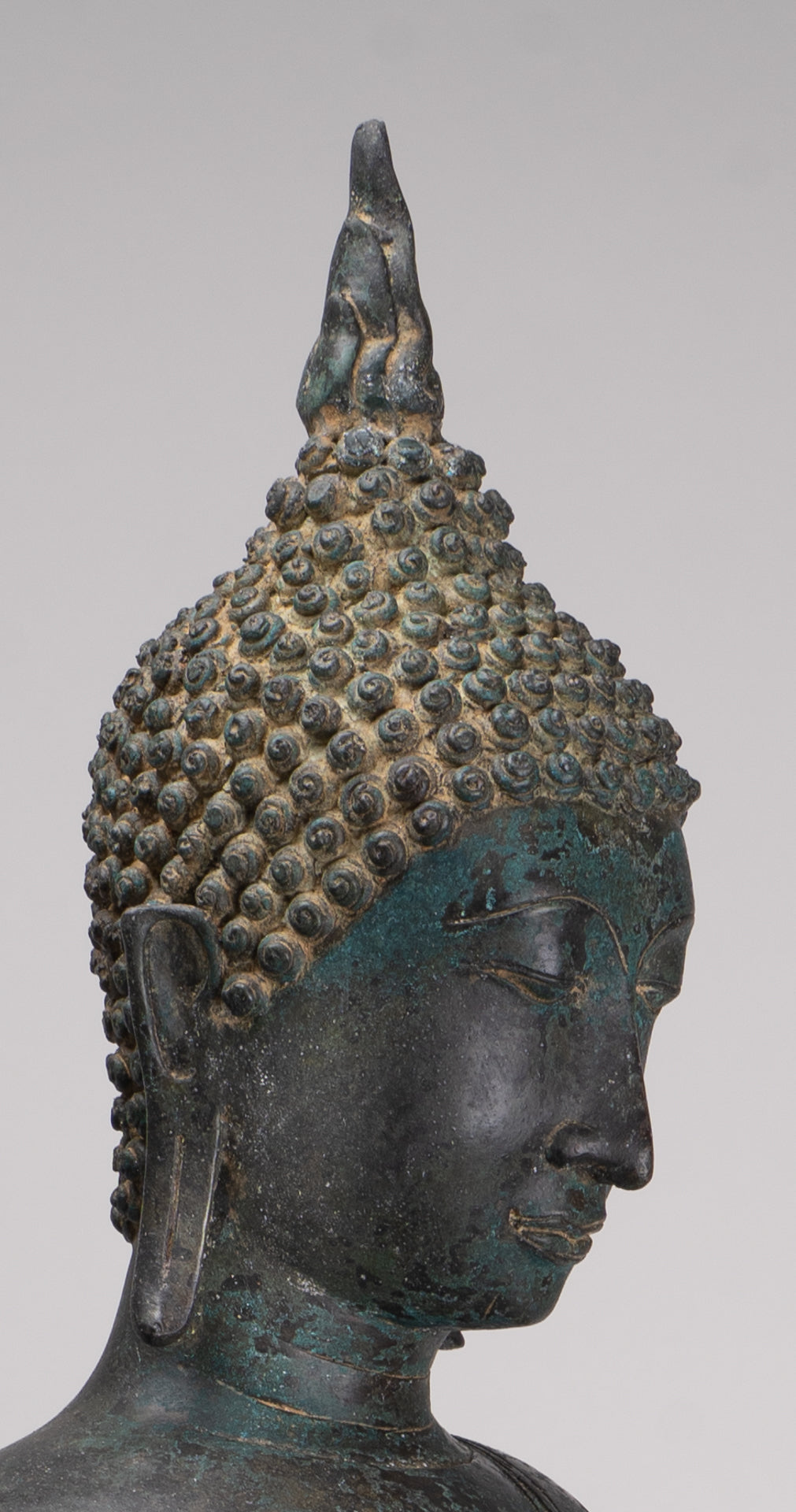
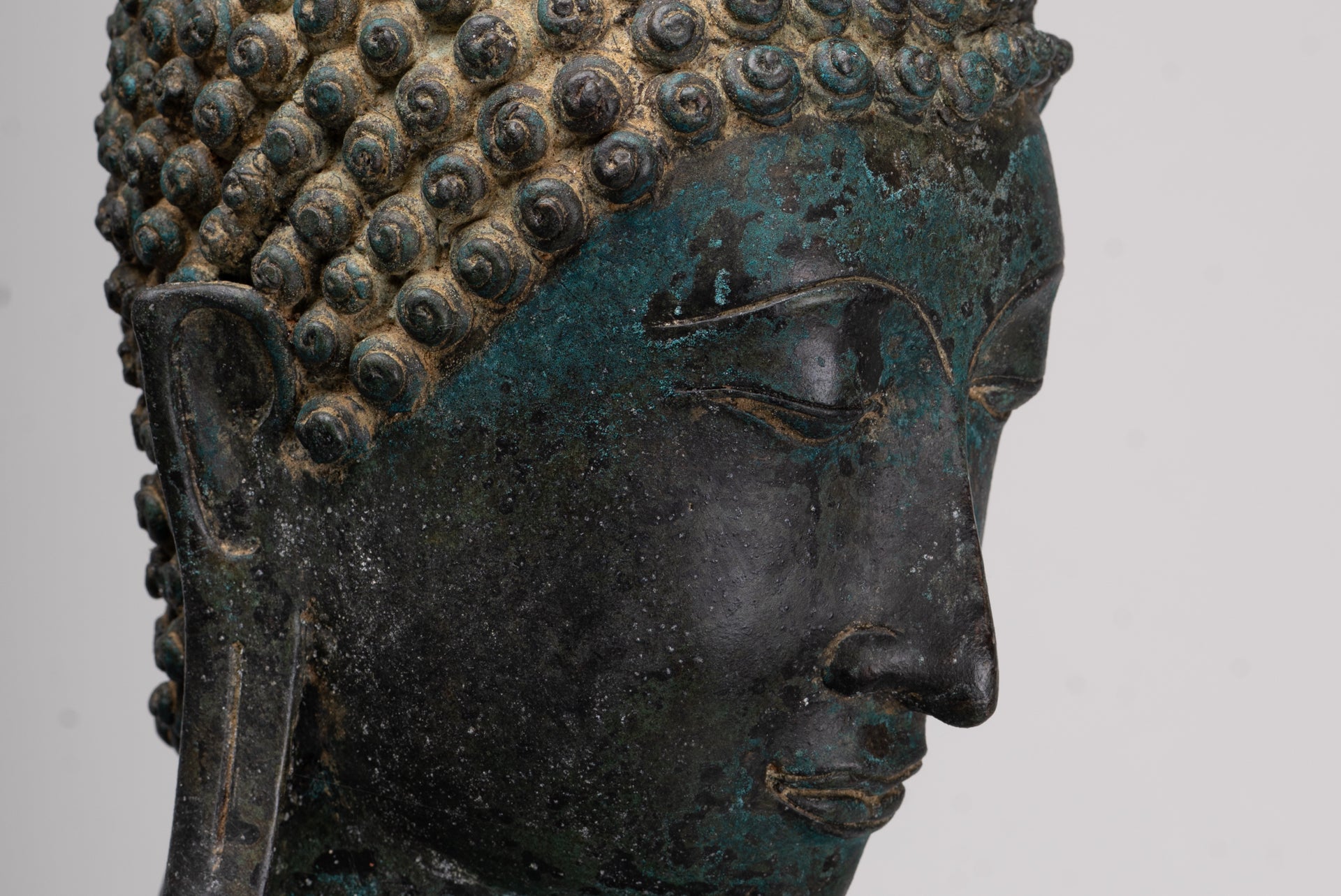
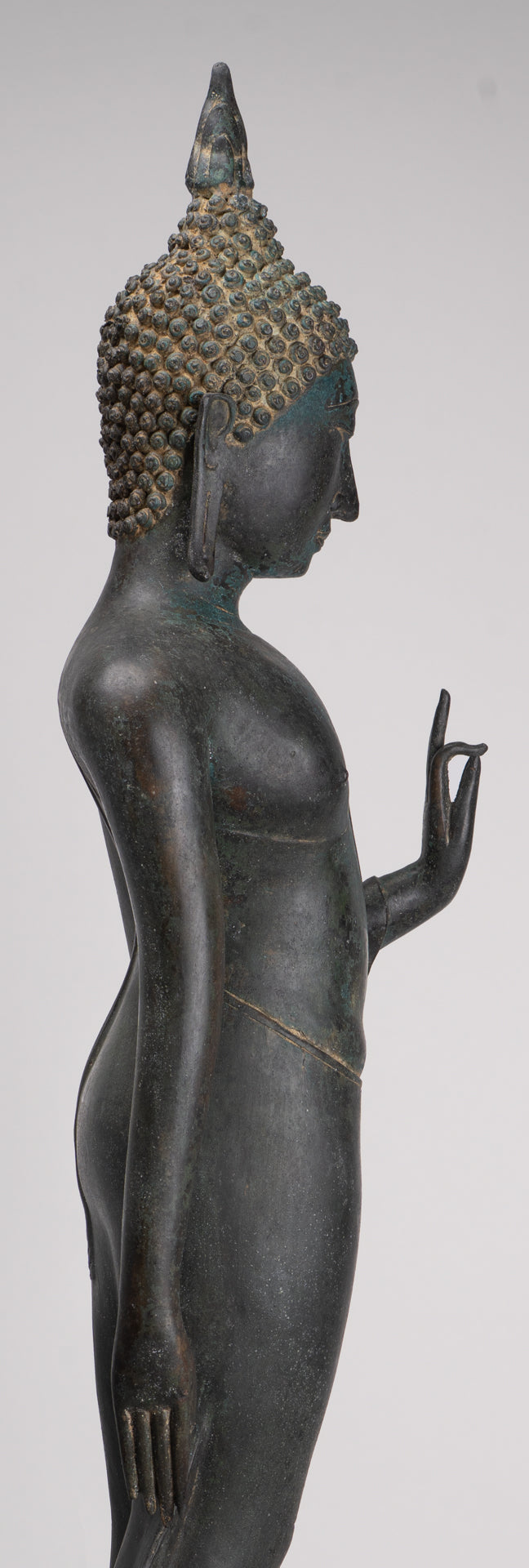
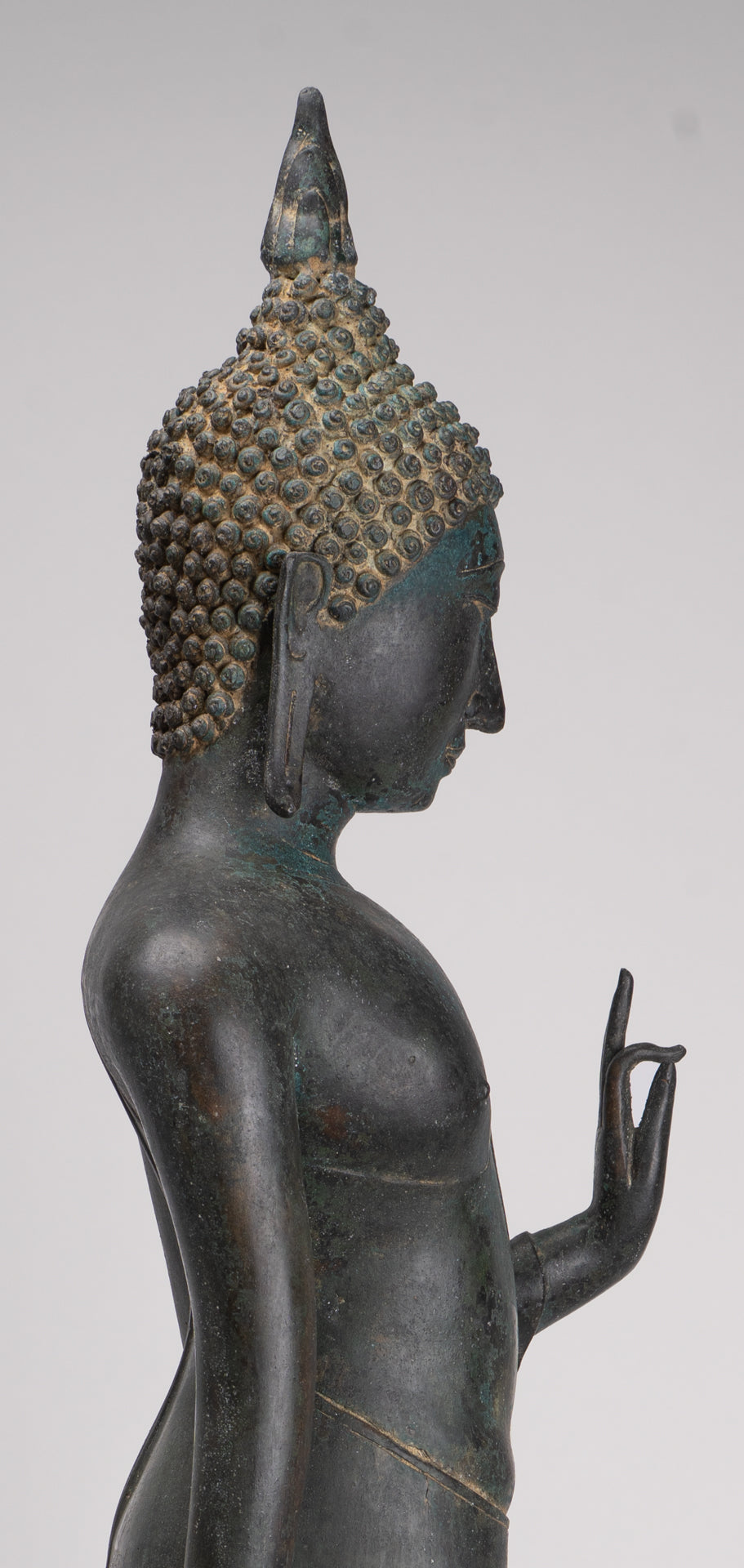
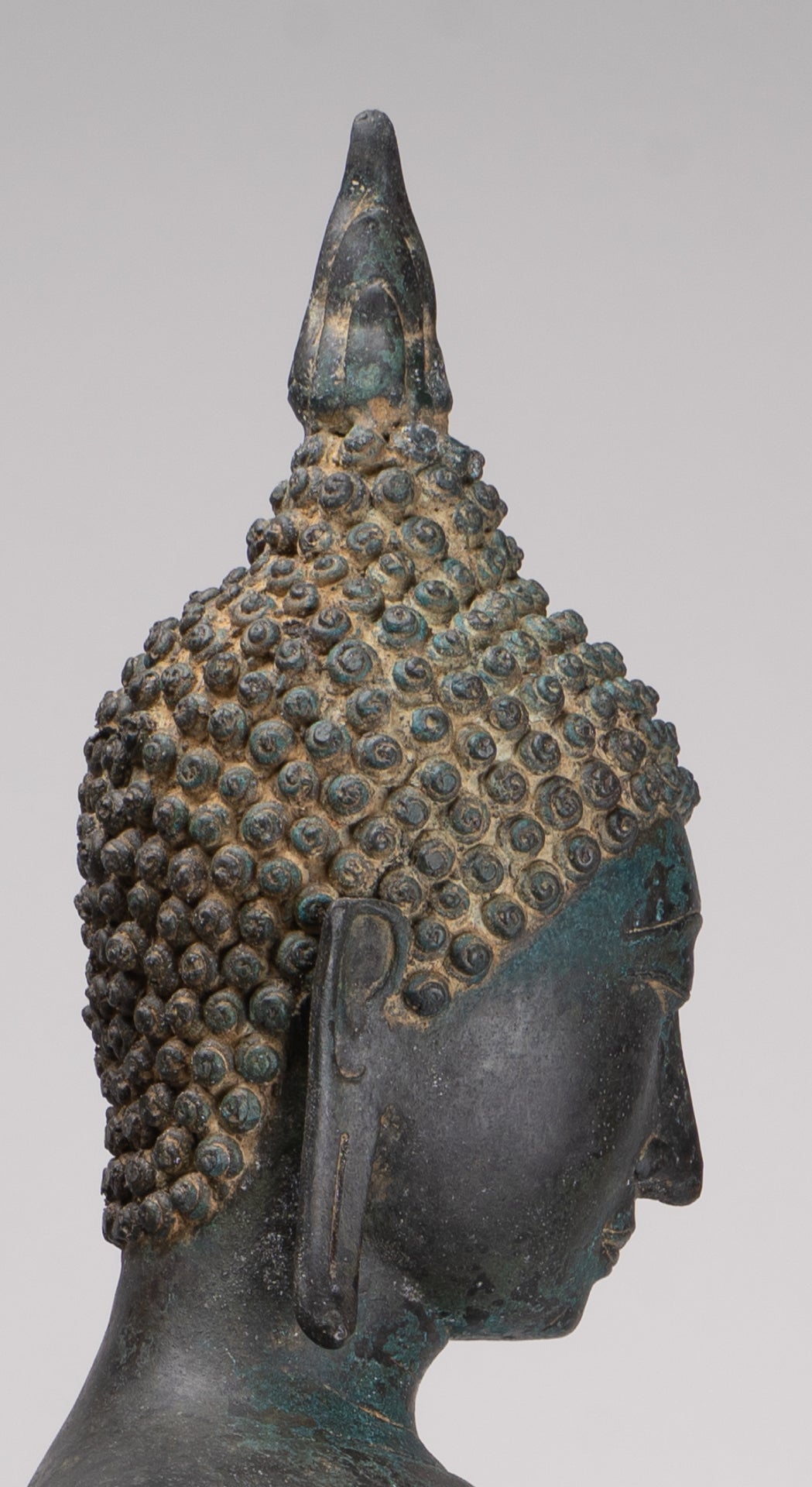
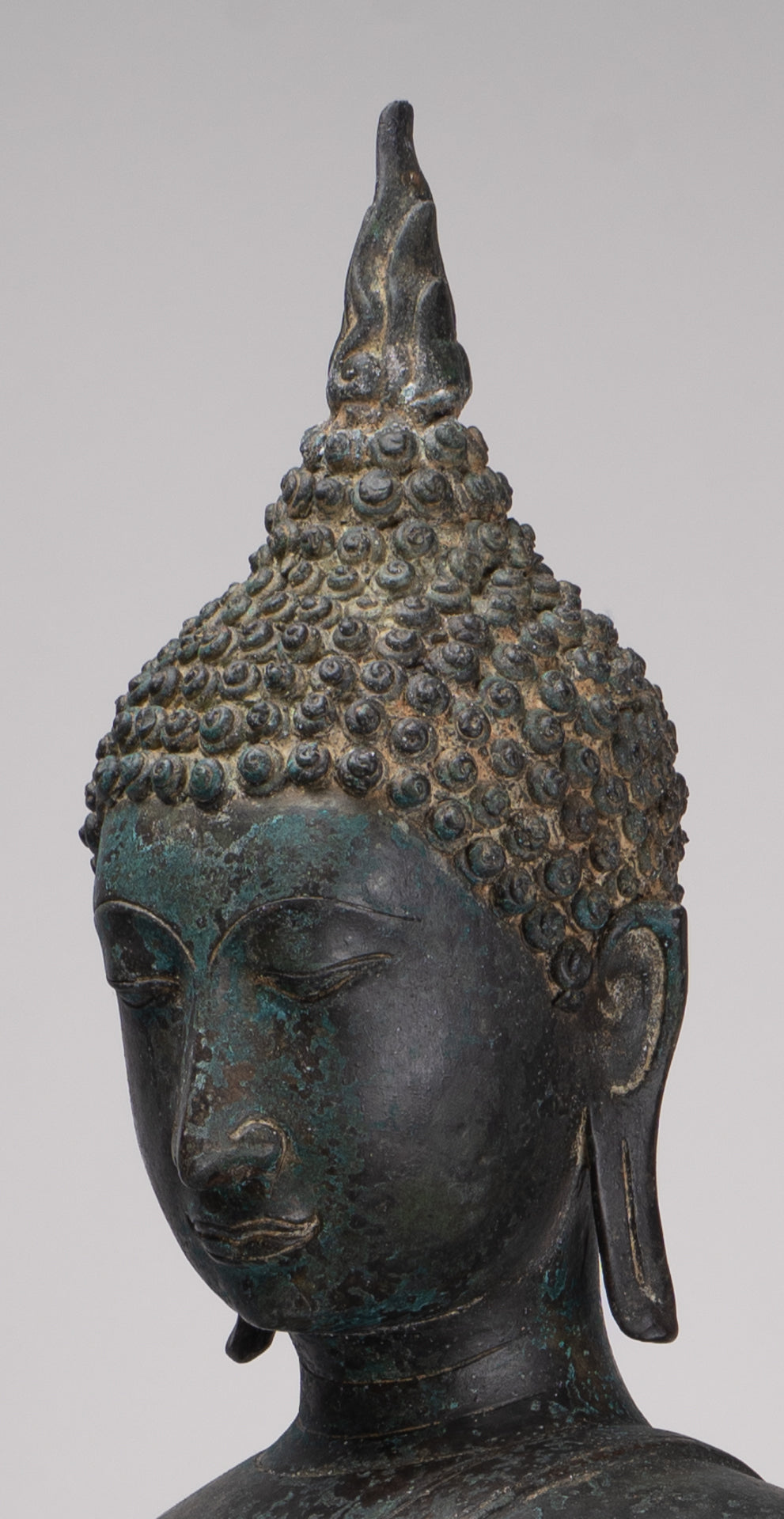
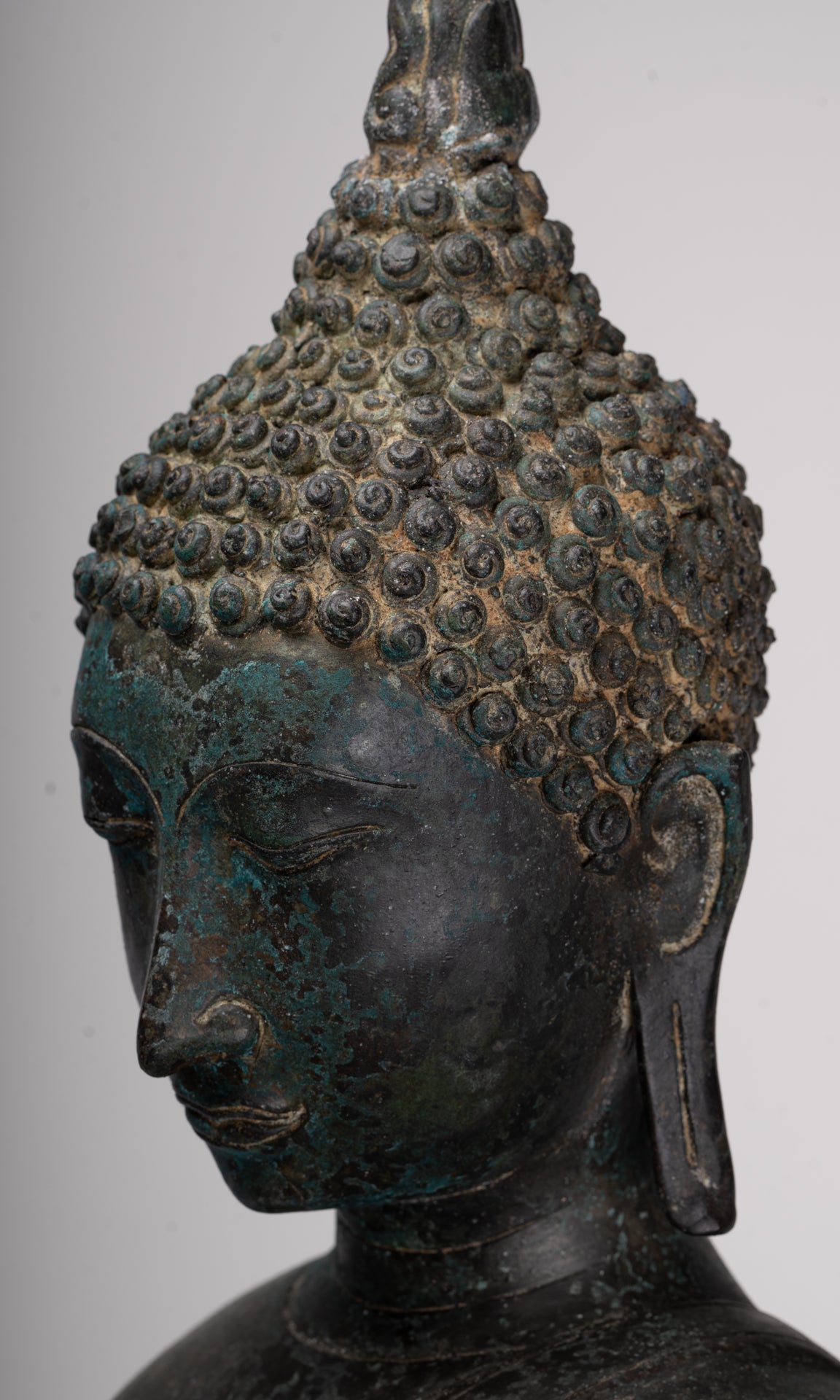
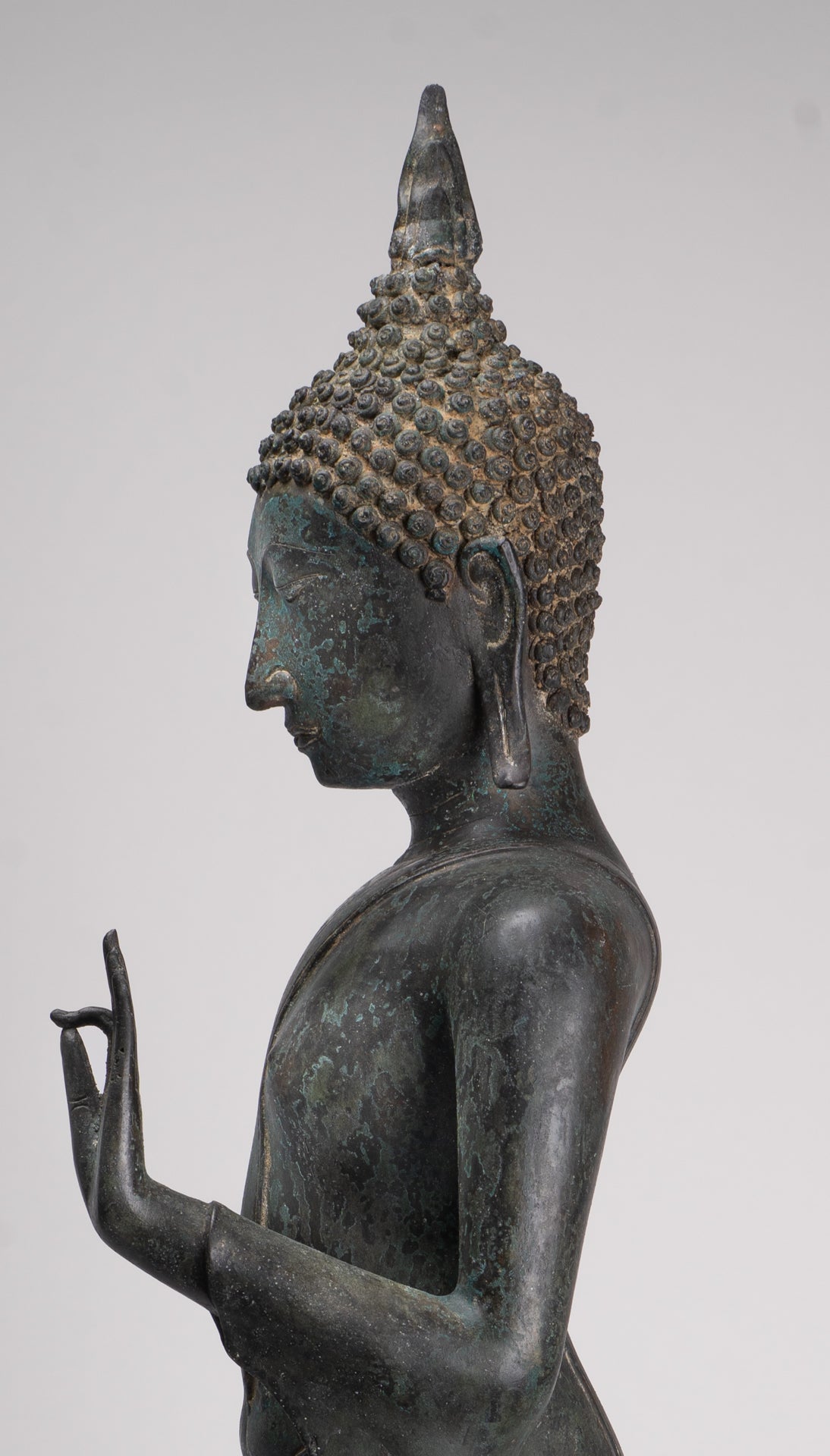
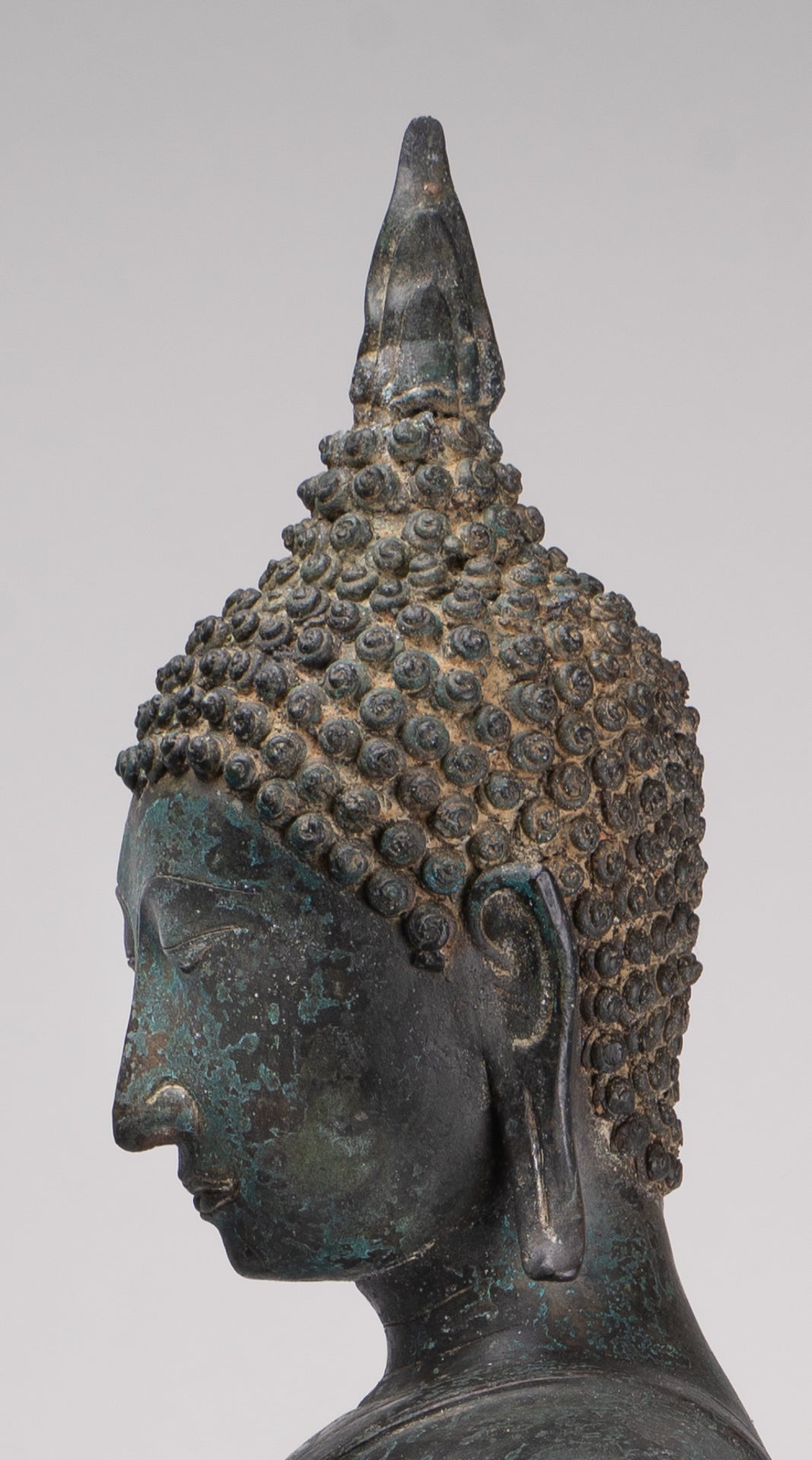
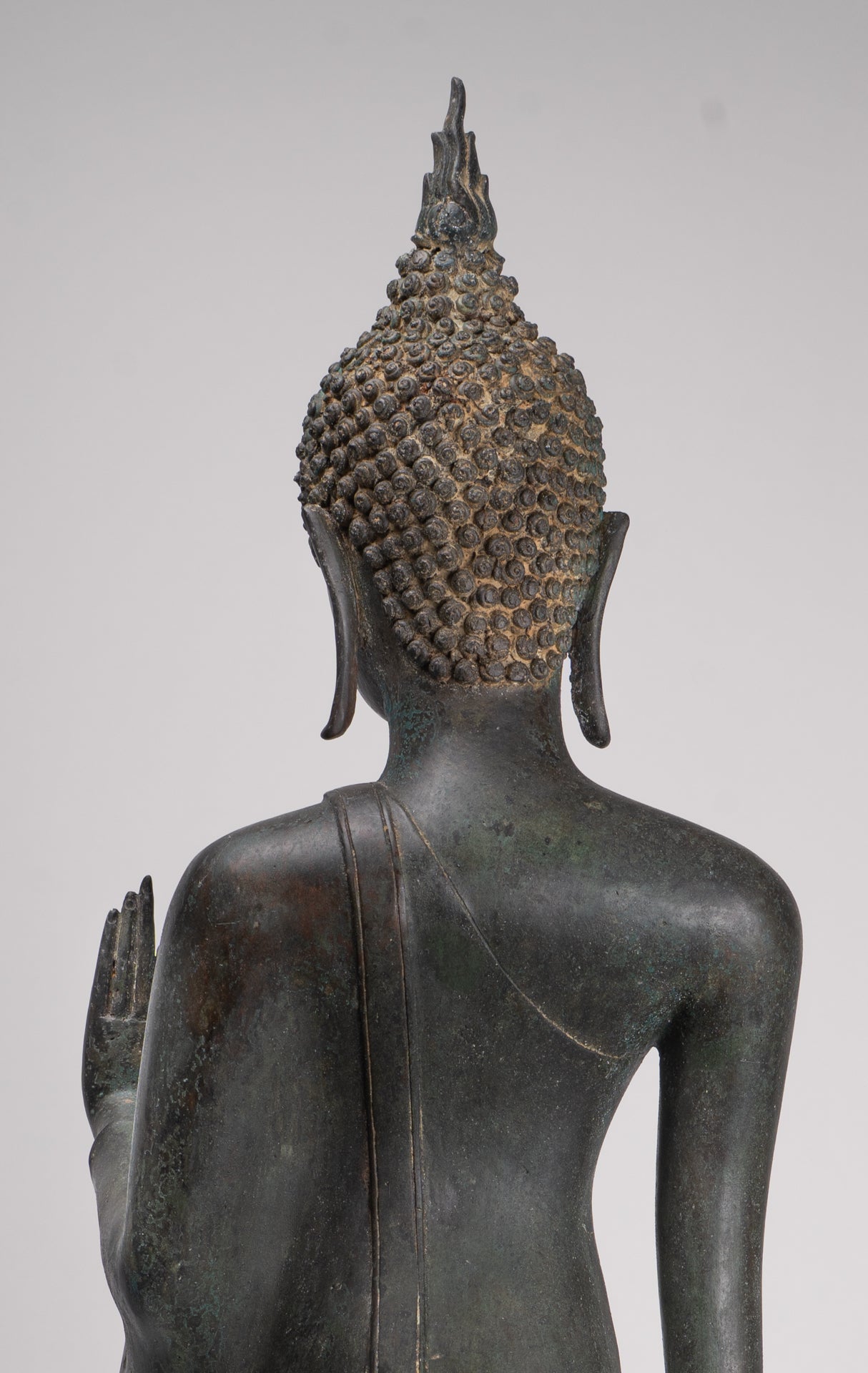
Characteristic of the Sukhothai period, the Buddha’s large flaming ushnisha rises prominently from the crown of the head, a symbol of his fully awakened wisdom and advanced spiritual development. His hair is rendered in tight curls, enhancing the sense of refined, idealised beauty that defines the best Sukhothai work.
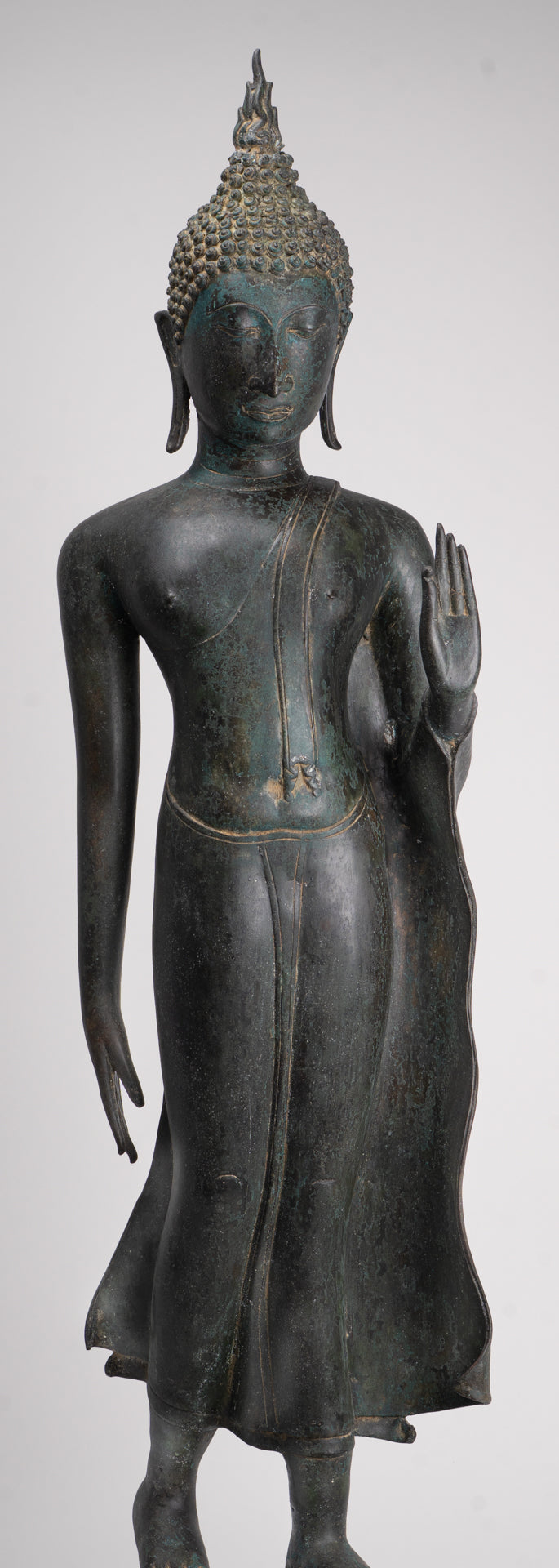
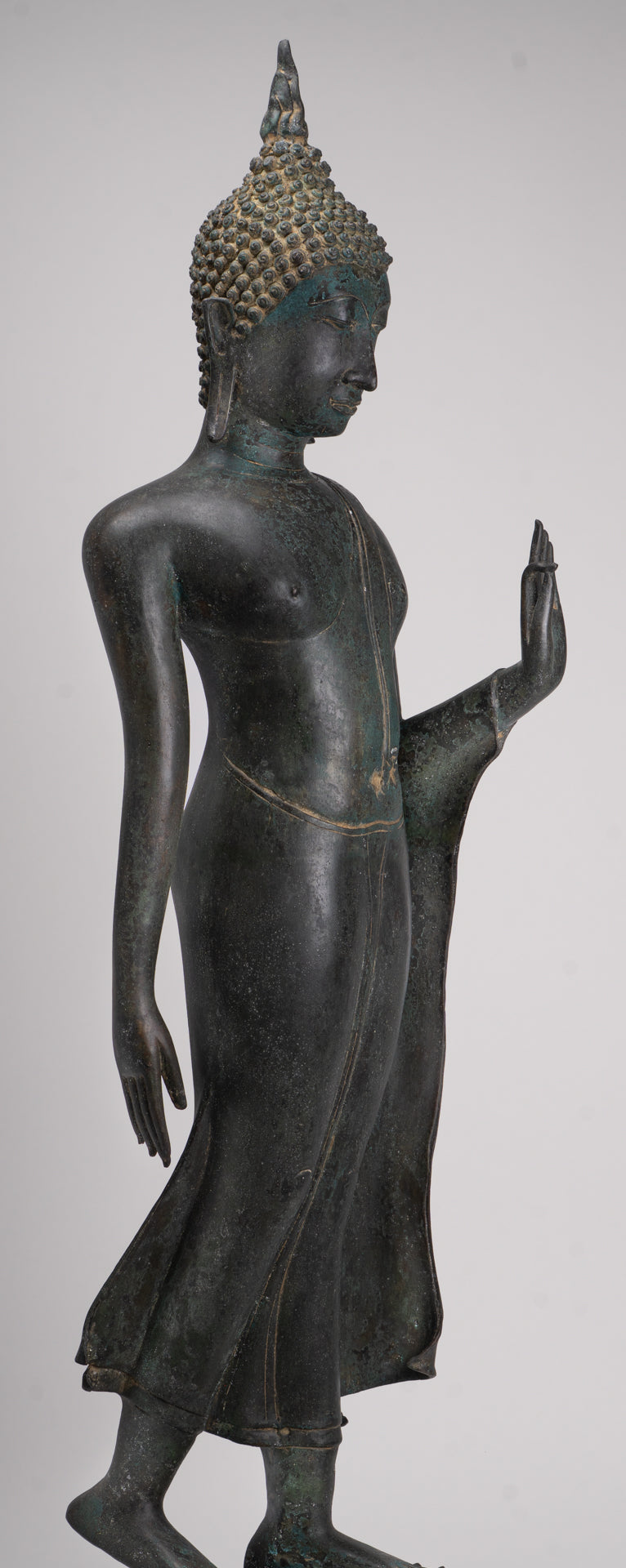
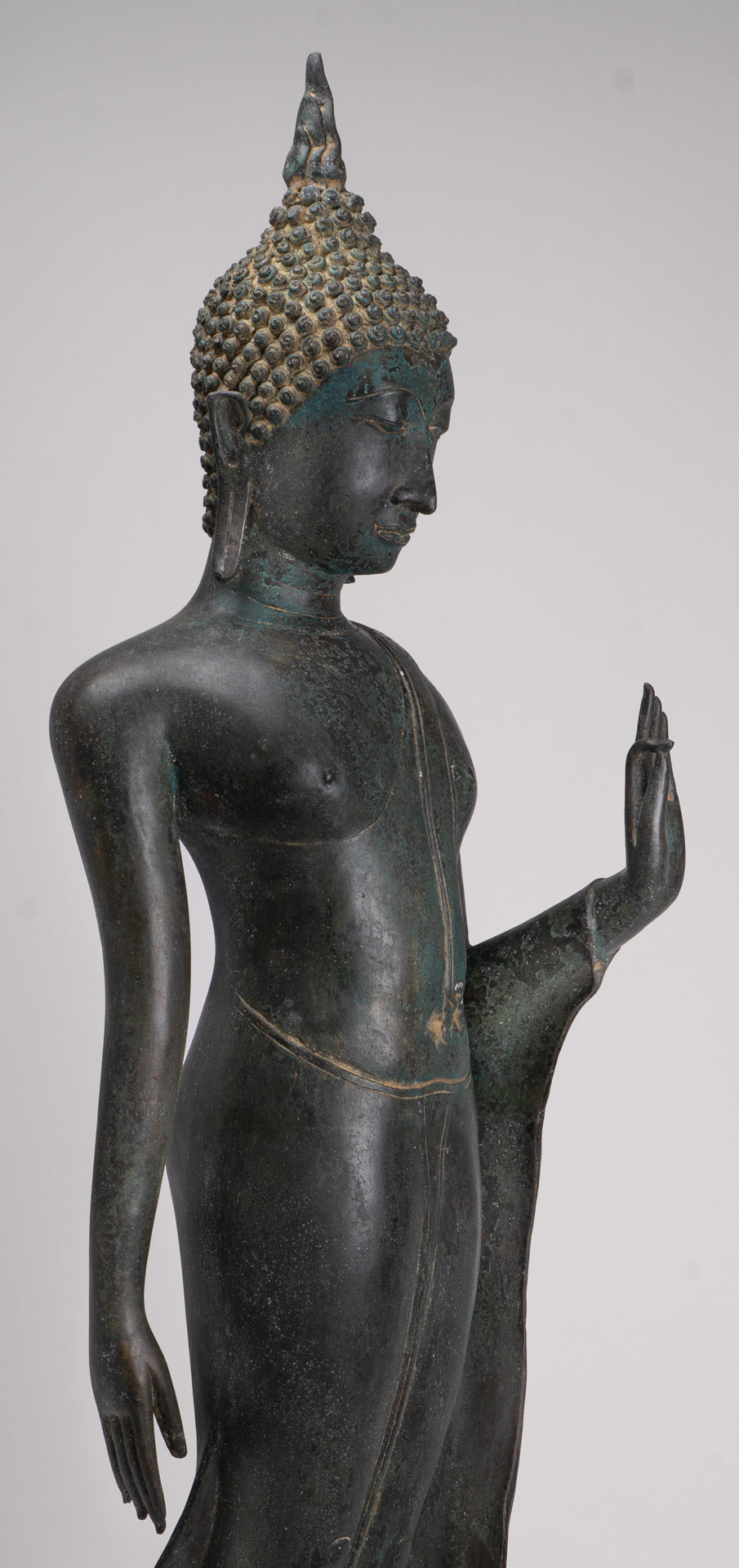
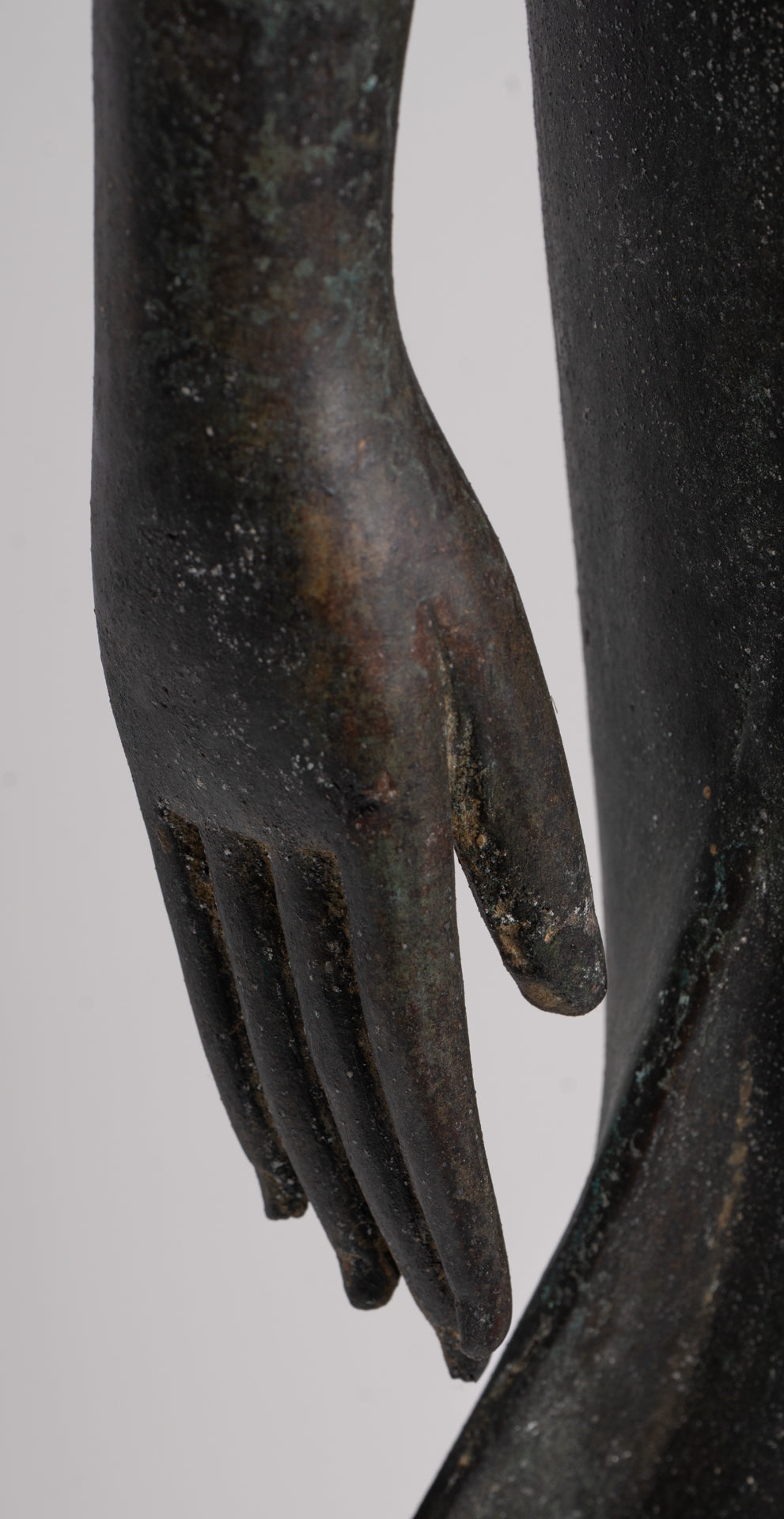
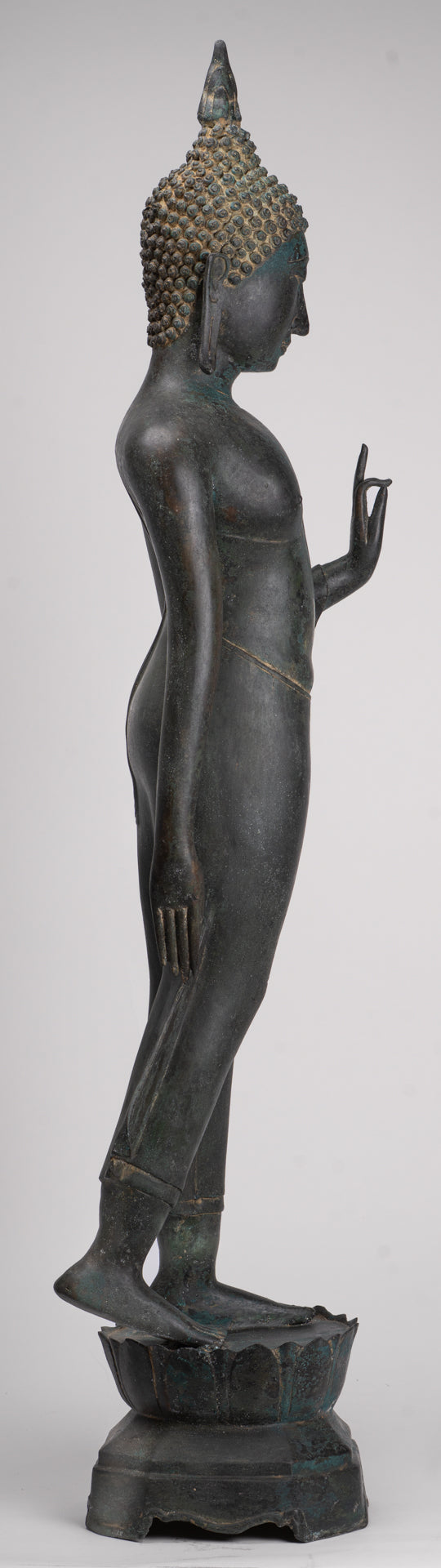
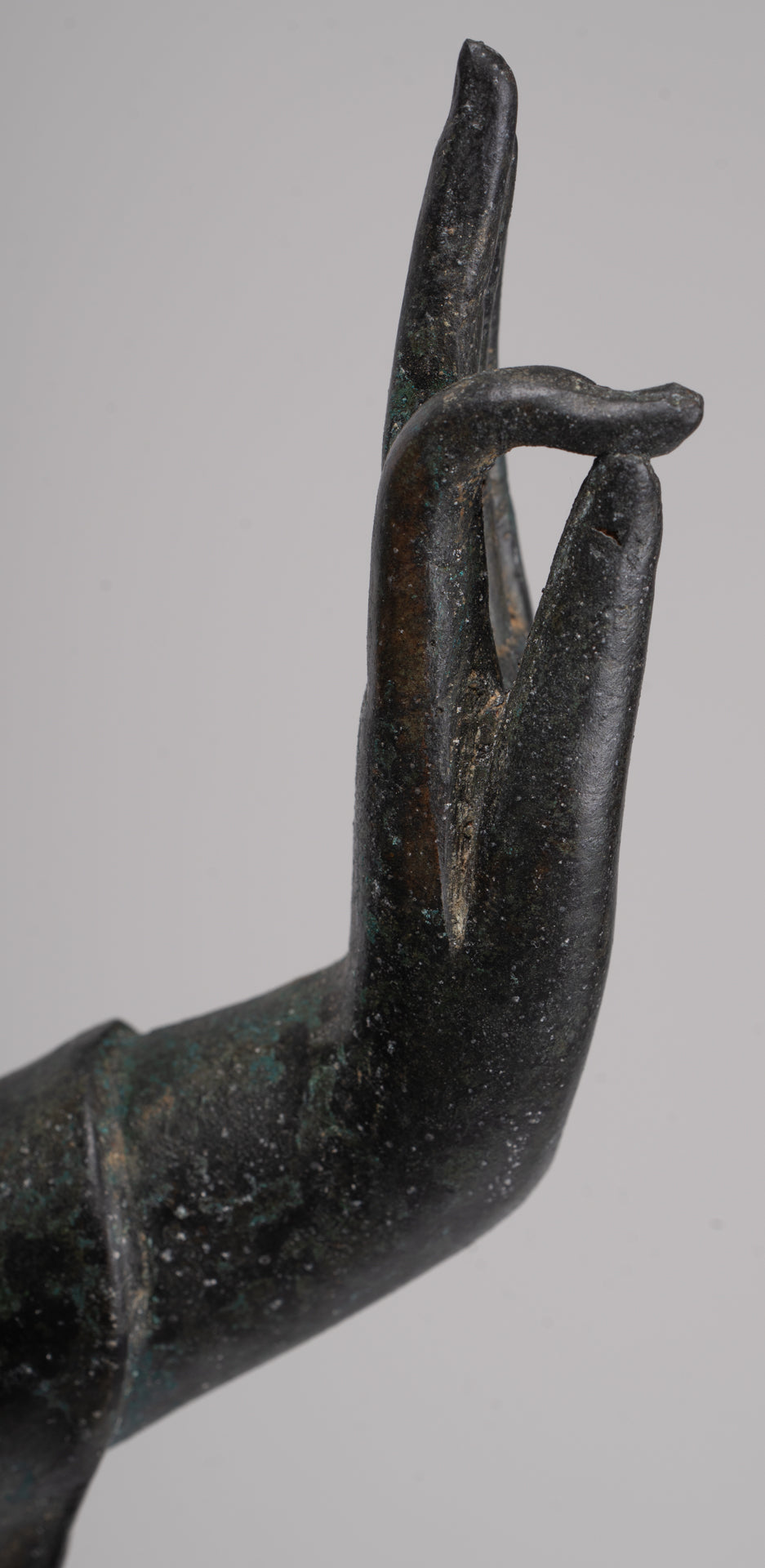
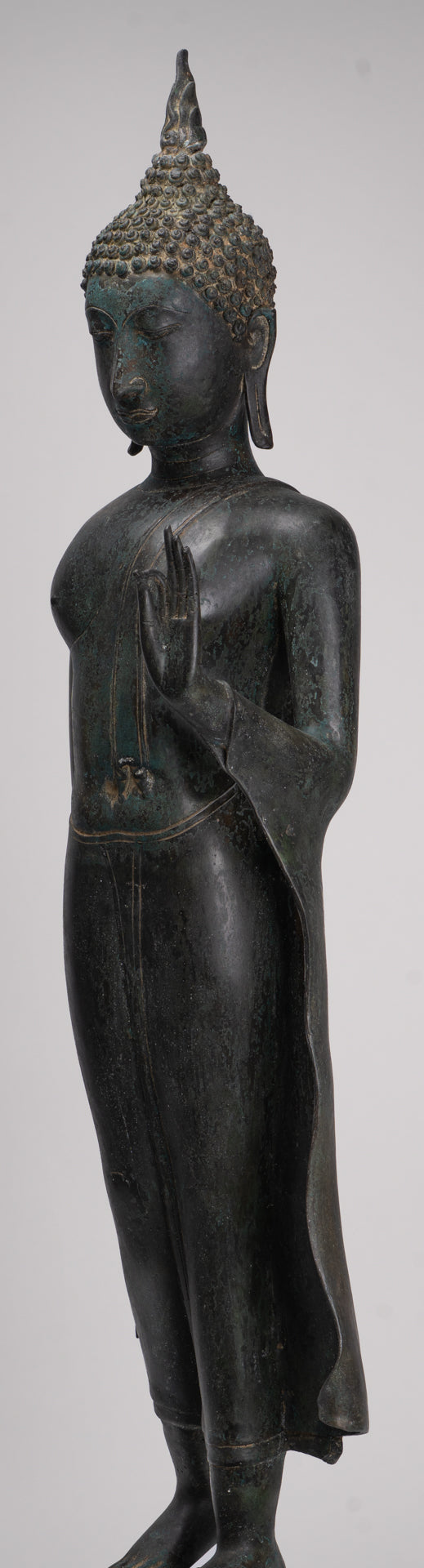
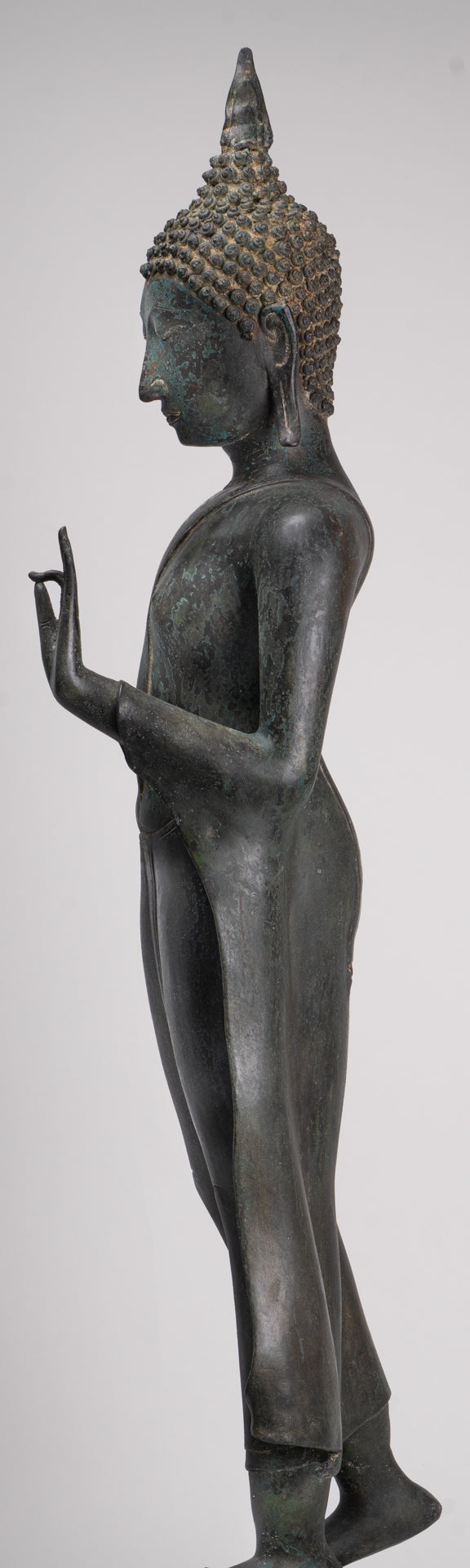
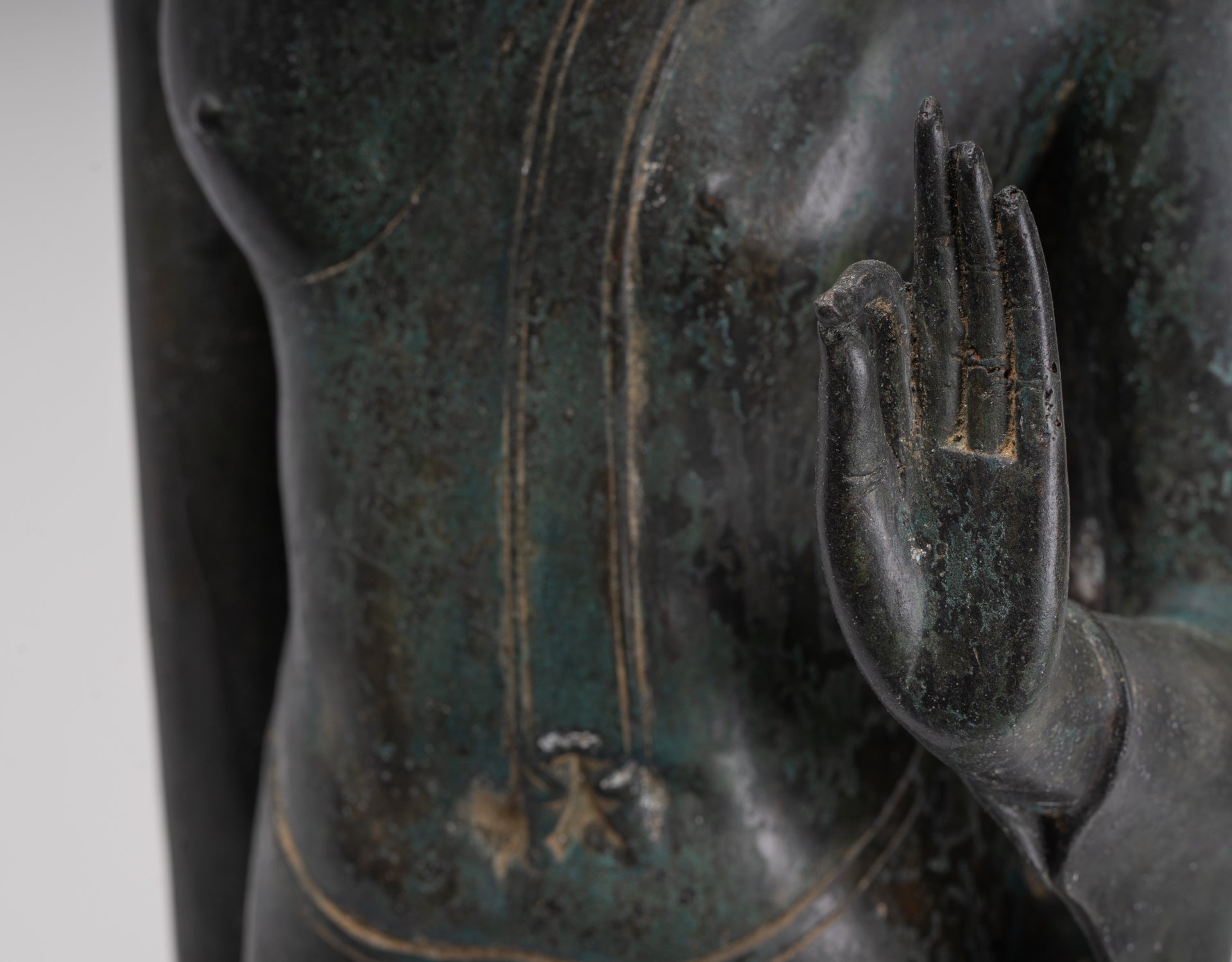
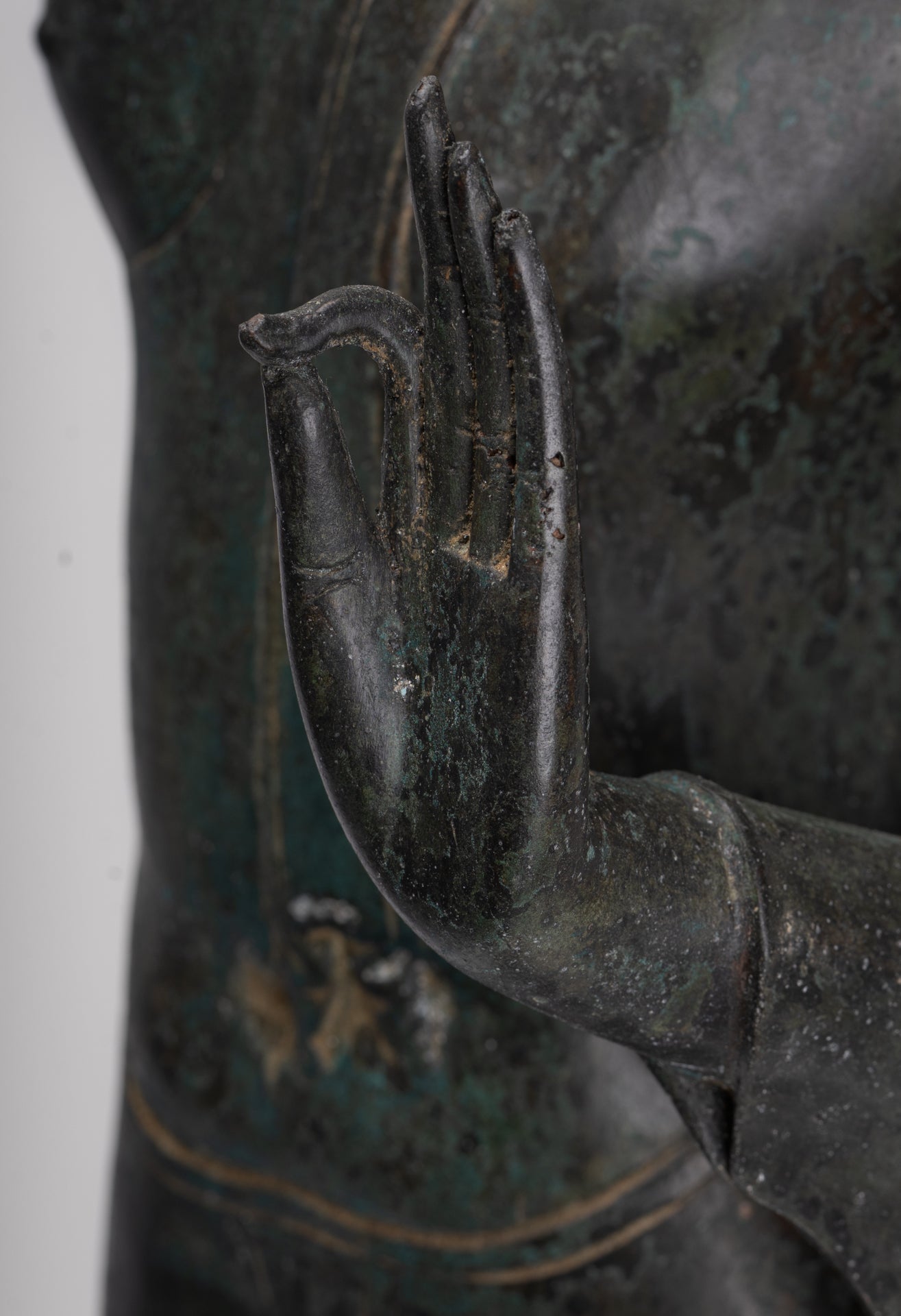
Here the Walking Buddha is shown as a serene, upright figure draped in simple monastic robes. His left leg moves forward with effortless grace, while the body remains poised and centred. The left hand extends slightly forward, palm open and relaxed, as if offering blessing with each step; the right hand falls naturally by his side. The overall impression is one of purpose, composure and quiet confidence.
The Walking Buddha represents the Buddha engaged in mindful walking—a form of meditation as central to the path as seated practice. Every step is taken with full awareness, grounding the mind in the rhythm of the body. This image reminds practitioners that mindfulness, concentration and insight can be cultivated not only in stillness but also in movement. Enlightenment is shown as dynamic, lived and continuous, rather than confined to a single dramatic moment.
His balanced posture evokes the Middle Way, the core Buddhist teaching of avoiding extremes and finding harmony between renunciation and engagement, effort and ease. The gentle forward motion of the figure becomes a visual metaphor for the spiritual journey: steady, attentive, always unfolding. Each step hints at the impermanence of all things: nothing is static, and progress is made one mindful movement at a time.
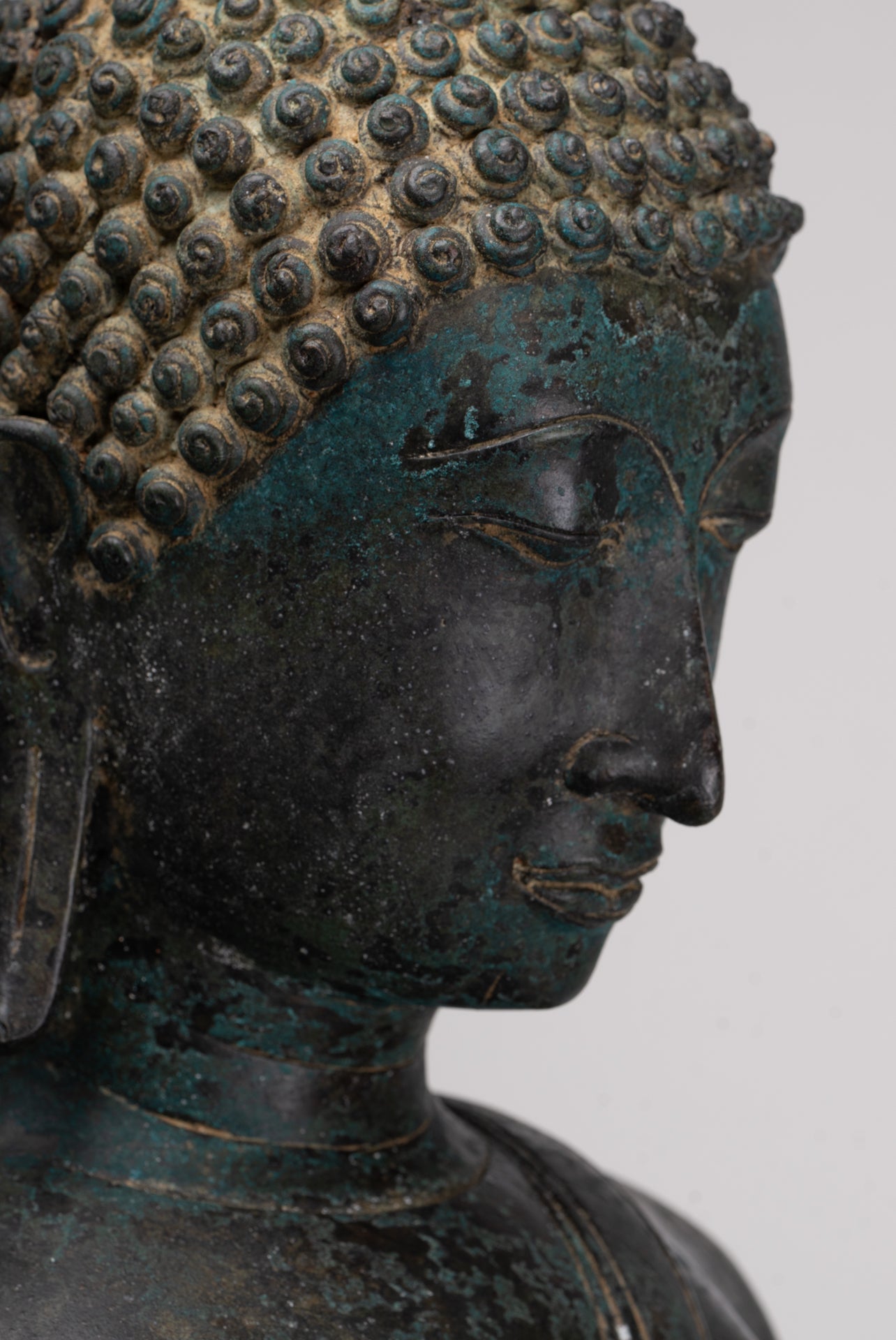
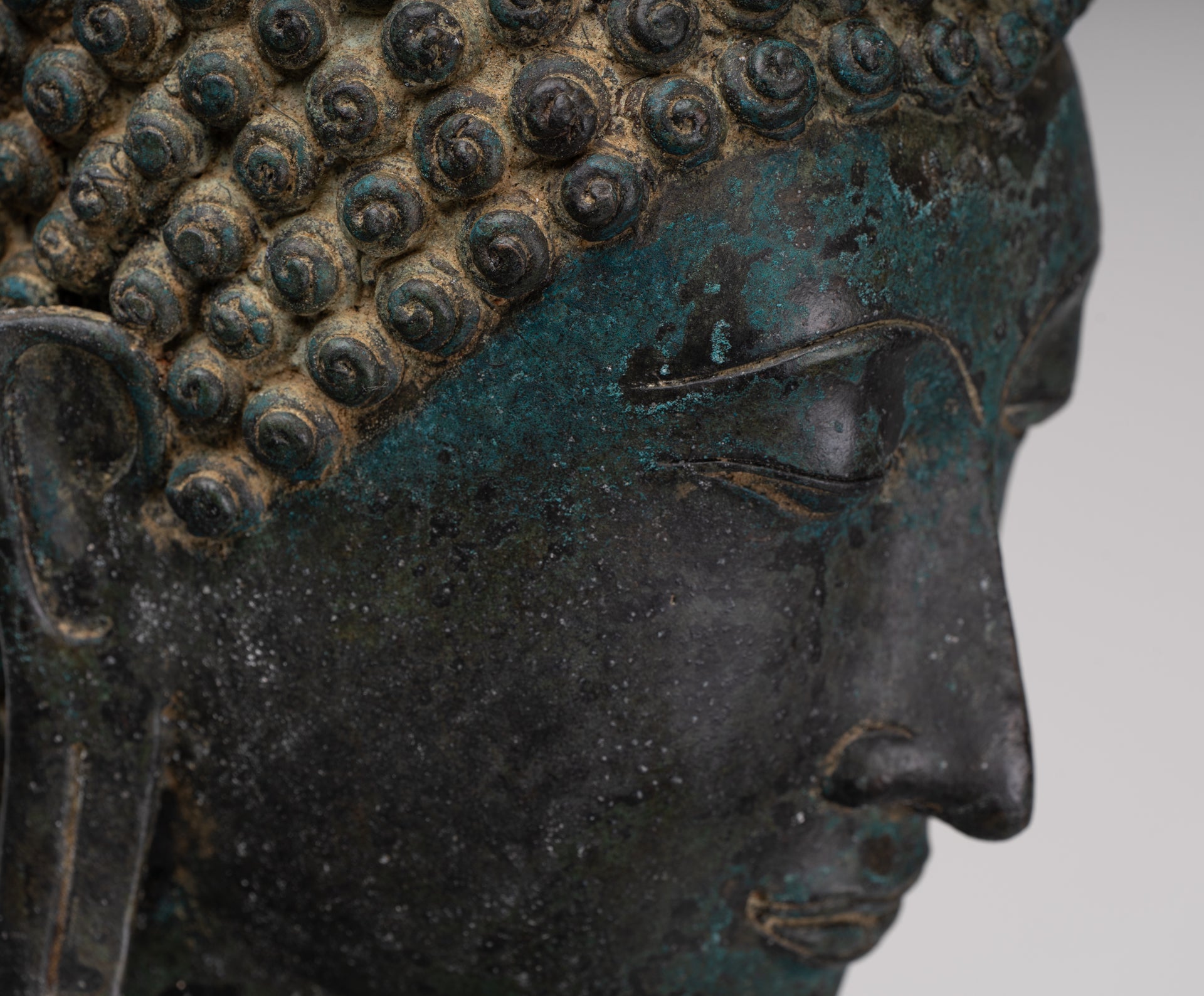
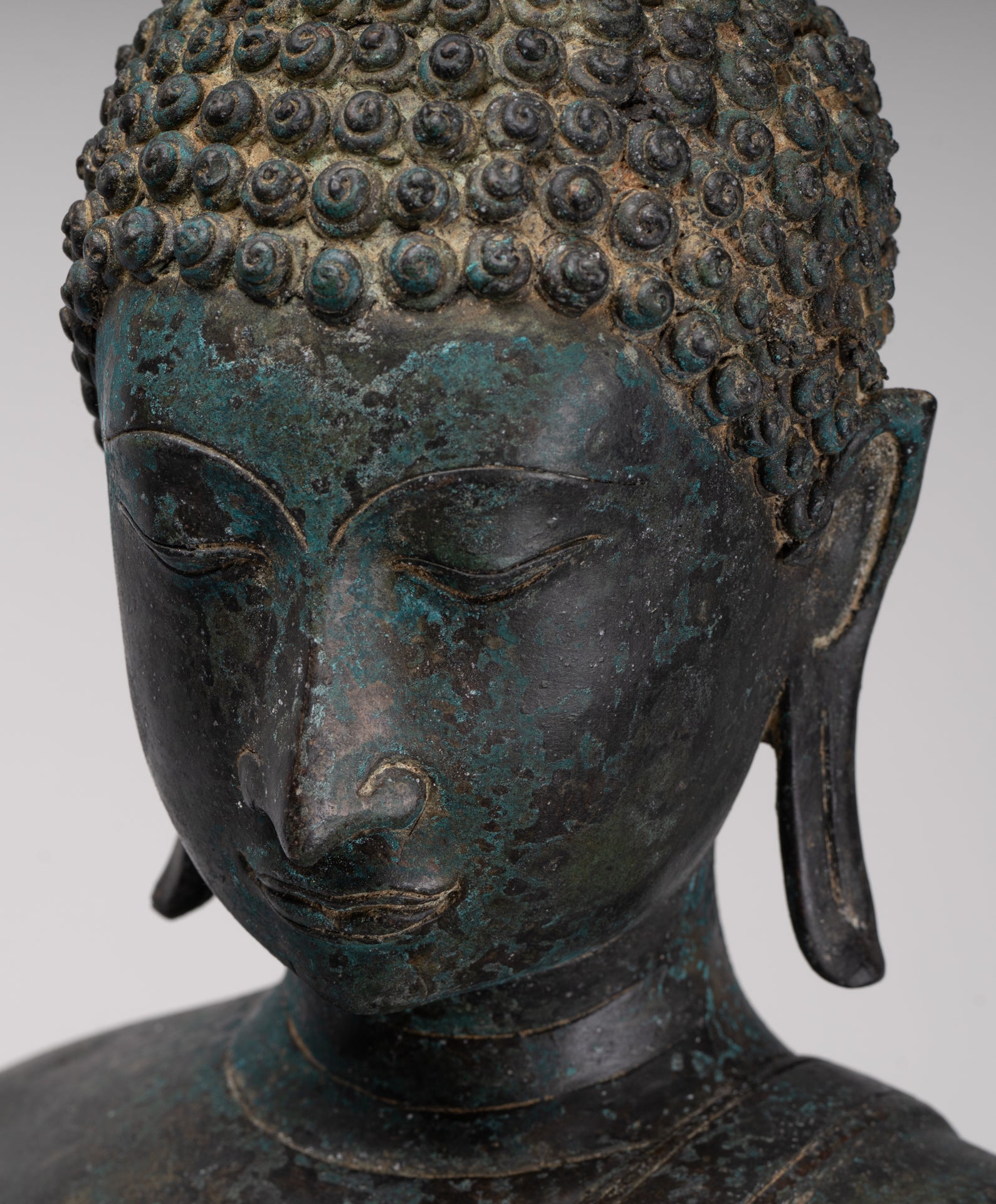
The Buddha’s face is beautifully composed, with downcast introspective eyes beneath a firm, single arched brow and an aquiline nose. The features are naturalistic yet idealised, conveying warmth, compassion and inner stillness. Graceful “beauty lines” are visible on his neck. His elongated earlobes, stretched from the heavy jewellery he once wore as a prince, recall the life he left behind when he renounced worldly privilege in search of truth.
The robe clings lightly to the body in classic Sukhothai fashion, suggesting the form beneath without heaviness. It is draped to leave the right shoulder bare, while a fold of cloth falls behind the left wrist in an elegant, fluid line. The lower hem reaches to the ankles, fully covering the under‑garment and creating a long, continuous vertical that emphasises the sense of uplift and forward momentum.
The left hand’s open, gentle gesture subtly recalls the Abhaya mudra—the “gesture of fearlessness”—conveying reassurance, protection and a quiet invitation to let go of anxiety. Rather than dramatic display, the protection offered here is understated and continuous, accompanying each step of the Buddha’s walk.
The Walking Buddha has become one of the most distinctive images of Thai Buddhist art, and this antique example captures its spirit with great sensitivity. Traditional in appearance yet remarkably fresh and modern in feeling, the sculpture offers a powerful reminder that awakening is not separate from life’s movement but discovered within it.
Provenance: Ex‑private New York collection. A Certificate of Authenticity can be provided upon request. To ensure safe transit, the Buddha will be professionally packed and crated in wood at no additional cost, so it arrives ready to take its place in your home.
This refined Sukhothai‑style Walking Buddha is the perfect traditional focal point for a living room, office or dedicated meditation area, bringing an atmosphere of serenity, balance and timeless elegance to any interior or sacred space.
Key Features
-
Large antique Thai Walking Buddha – A graceful, full‑height image inspired by the celebrated Sukhothai style of Thailand.
-
Impressive statement scale – Measures 117cm / 47" high, making it an exceptional focal point for a large interior, reception area, meditation studio, gallery or sacred space.
-
Classic Walking Buddha pose – The Buddha moves forward in the distinctive Thai leela or walking attitude, capturing spiritual serenity in motion.
-
Mindful movement symbolism – Represents the possibility of cultivating mindfulness, concentration and insight not only in stillness, but through every step of daily life.
-
Sukhothai flame ushnisha – A tall flame‑shaped finial rises from the crown, symbolising enlightened wisdom, spiritual energy and advanced attainment.
-
Gentle protective gesture – The open, extended left hand subtly recalls Abhaya mudra, offering reassurance, calm and freedom from fear.
-
Elegant, flowing robe – The lightly clinging monastic robe leaves the right shoulder bare and falls in a fluid line behind the left wrist, enhancing the sense of effortless forward movement.
-
Refined Sukhothai facial features – Downcast eyes, a single arched brow, aquiline nose, elongated earlobes and softly composed mouth express compassion and inner stillness.
-
Lotus pedestal – The circular lotus base symbolises purity, compassion and awakening amid the challenges of worldly life.
-
Documented provenance – From an ex‑private New York collection; a Certificate of Authenticity can be provided upon request.
-
Professional crated shipping included – The Buddha will be securely packed and wood‑crated at no additional cost for safe transit.
Frequently Asked Questions
Q: What is a Walking Buddha?
A: A Walking Buddha is an image of the Buddha shown in motion, usually mid‑stride with one hand raised or extended in a gesture of reassurance. It is one of the most distinctive forms of Thai Buddhist sculpture and is particularly associated with the Sukhothai period.Q: What does “leela” mean?
A: In Thai art, the Walking Buddha is often called the Leela Buddha, meaning the graceful or elegant Buddha. The term captures the figure’s unique sense of weightless poise: the Buddha appears to move forward with calm purpose rather than physical effort.Q: What does the Walking Buddha represent?
A: The image represents the Buddha actively moving through the world while remaining fully mindful and centred. It reminds us that spiritual practice does not happen only in formal meditation; calm awareness, compassion and insight can be cultivated through daily actions and every step we take.Q: Is the Walking Buddha associated with a particular event in the Buddha’s life?
A: There are several interpretations. In some Thai traditions, the image is linked to the Buddha’s return from Tavatimsa Heaven after teaching his mother, Queen Maya; in others, it represents mindful walking after enlightenment or the Buddha’s compassionate movement among beings.Q: Why is the Walking Buddha important in Thai art?
A: Fully freestanding Walking Buddha images are a notable innovation of Thai Sukhothai art. Earlier Buddhist sculpture more often showed the Buddha seated, standing or reclining, while Sukhothai artists developed this striking image of enlightened movement and spiritual grace.Q: What is the Sukhothai style?
A: The Sukhothai style is one of the most influential traditions of Thai Buddhist art, developing from around the 14th century. It is recognised by flowing curves, elongated and graceful proportions, smooth robe treatment, an oval face, tightly curled hair and a flame‑like ushnisha.Q: Why does the Buddha have a flame‑shaped ushnisha?
A: The ushnisha is the raised form at the crown of the Buddha’s head, representing enlightenment and exceptional spiritual wisdom. In Sukhothai images, it often rises into a dramatic flame‑shaped finial, symbolising radiant wisdom, energy and spiritual illumination.Q: What does the open hand gesture mean?
A: The gently extended hand recalls the Abhaya mudra, or gesture of fearlessness. It offers a message of reassurance, protection and calm, inviting the viewer to release anxiety and approach life with greater trust.Q: Why is the Buddha shown with one foot forward?
A: The forward step captures a fleeting moment of motion and gives the statue its extraordinary sense of grace. In Sukhothai art, the lifted heel, poised balance and subtly curving body were deliberately designed to make the Buddha appear almost weightless—calmly progressing rather than merely standing still.Q: What does the lotus base represent?
A: The lotus is a symbol of purity, compassion and enlightenment. It rises from muddy water yet opens into an unblemished flower, representing the possibility of awakening within ordinary life and difficult conditions.Q: Why are the Buddha’s eyes downcast?
A: The lowered gaze communicates meditative awareness and inward composure. The Buddha is shown fully present in the world, yet undistracted by it—an ideal balance of mindfulness, compassion and serenity.Q: What do the long earlobes mean?
A: The elongated earlobes refer to Siddhartha Gautama’s former life as a prince, when heavy earrings stretched his ears. In Buddhist iconography, they become a symbol of renunciation: outer wealth is relinquished in favour of wisdom, compassion and lasting inner freedom.Q: What are the “beauty lines” on the neck?
A: The graceful lines visible on the neck are a traditional ideal of Buddha imagery. They emphasise refinement, vitality and perfected form, contributing to the sense of harmony and idealised beauty that characterises Sukhothai sculpture.Q: What does the stated provenance mean?
A: The listing records the piece as coming from an ex‑private New York collection, meaning it was previously held by a private collector in New York. This ownership history contributes to the object’s collecting record.Q: Is a Certificate of Authenticity available?
A: Yes. A Certificate of Authenticity can be provided upon request. If you require particular information on the certificate—such as the title, measurements, condition, provenance statement or invoice details—it is sensible to request this before purchase.Q: Is this suitable for a meditation room or yoga studio?
A: Very much so. The Walking Buddha is especially appropriate for a meditation room, yoga studio, therapy practice or contemplative workplace because it expresses mindfulness in movement. It can be a daily reminder to bring calm attention into action, rather than seeking peace only in stillness.Q: Is it appropriate for non‑Buddhists to display the statue?
A: Yes. The Walking Buddha is widely appreciated as an image of balance, inner peace and mindful progress. It should be displayed respectfully on a clean, stable and elevated surface, allowing its spiritual symbolism and artistic qualities to be appreciated.Q: Where should I display a 117cm / 47" Walking Buddha?
A: This large‑scale figure is best placed where its full vertical silhouette can be seen clearly: an entrance hall, living room, stair landing, reception area, gallery‑style alcove, meditation room or sheltered studio. Allow open space around the sculpture so its forward stride, robe line and flame ushnisha can be fully appreciated.Q: What support does the statue need?
A: Confirm the overall weight, base diameter and floor‑loading requirements before installation. Use a level, robust and weight‑bearing floor or plinth, and position the Buddha away from busy walkways where its projecting hand or flame finial could be knocked.Q: Can it be displayed outdoors?
A: Indoor display is recommended unless the product specification expressly confirms suitability for protected outdoor use. Exposure to rain, frost, harsh sunlight, airborne pollution and changing humidity can affect an antique sculpture’s surface and long‑term condition.Q: How should I care for the sculpture?
A: Dust gently with a soft, dry cloth or a soft natural‑bristle brush, especially around the flame ushnisha, hands, robe edges and lotus base. Avoid abrasive products, strong chemical cleaners, furniture sprays or polishes unless the material and conservation requirements have been confirmed.Q: How will the Buddha be shipped?
A: The sculpture will be professionally packed and secured in a wooden crate at no additional cost. This provides important protection for the tall flame finial, extended hand, lotus base and other vulnerable areas during transit.Q: What should I prepare before delivery?
A: Before delivery, check access through doorways, lifts, staircases and corridors; prepare the final display location; and arrange suitable assistance for moving and positioning the statue. Keep the crate and packing materials until the Buddha has been inspected and safely installed.SATISFACTION GUARANTEE - We have been offering SE Asian Art for many years and are proud of the reputation we have developed for fair and honest listings. However, if for any reason, whatsoever, you are unhappy with your purchase please just let us know and we will provide a full refund. We want you to be 100% happy with your purchase.
-
-
The majority of orders will be shipped with DHL. This is a secure, express and fully tracked service.
Items less than 2Kg we typically ship using Royal Mail.
Once we receive your order we try to ship all orders the same or next working day.
Large and/or fragile pieces requiring palletising, specialist crating and/or extra packaging may take a little longer. Palletised shipments will be delivered curbside.
All orders over 35 GBP will be shipped free of charge.

-
We genuinely hope that all purchases delight.
However, if they do not, regardless of reason, we will refund all orders upon receipt of the unwanted item. Just notify us within 14 days of receiving your order that you wish to make a return and send the piece back to us with 30 days of delivery.


