




-
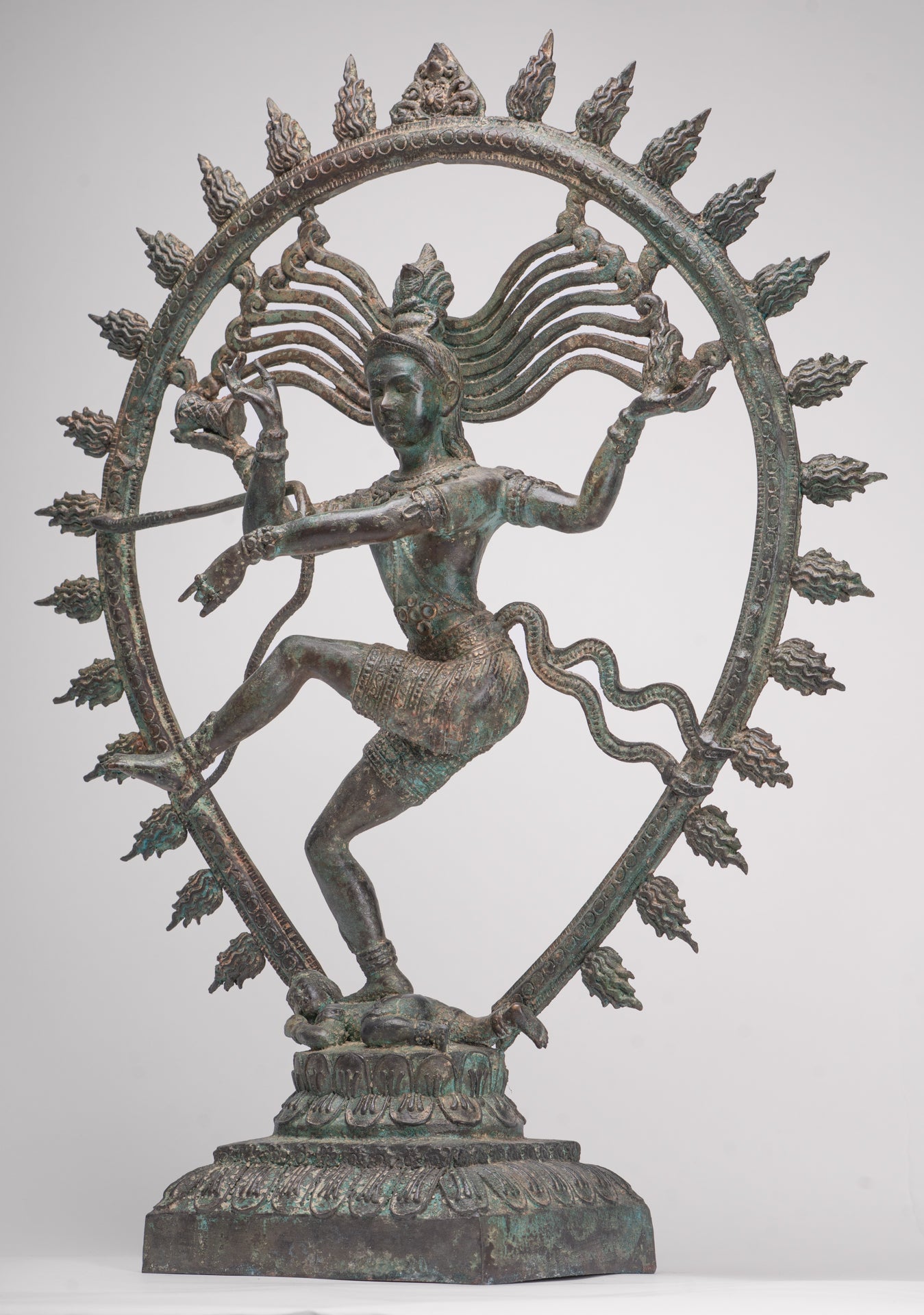
Nataraja Statue - Antique Indian Style Bronze Dancing Shiva statue as Lord Nataraja - 66cm(26") Tall
Measures (Height) 66cm/26"
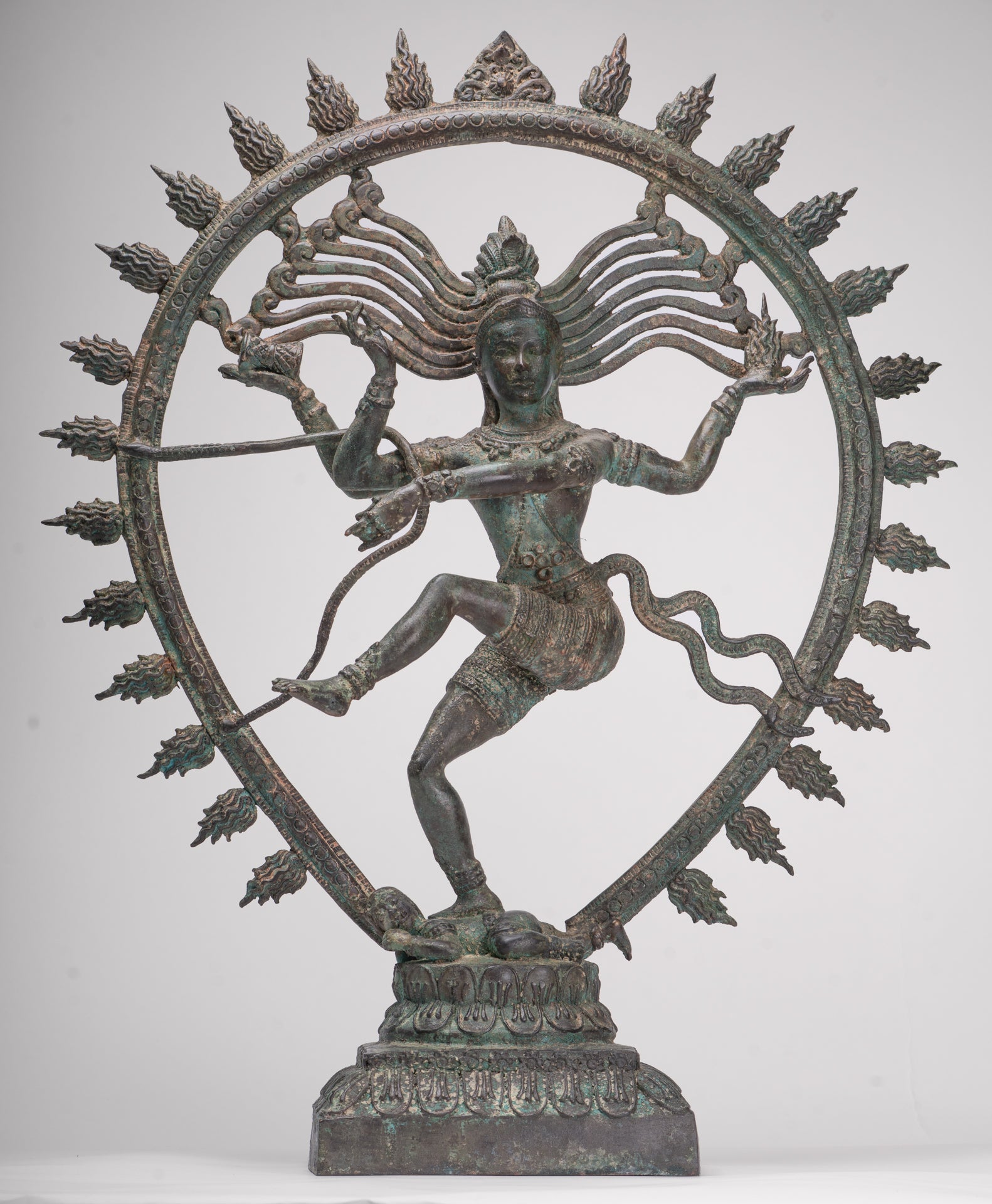
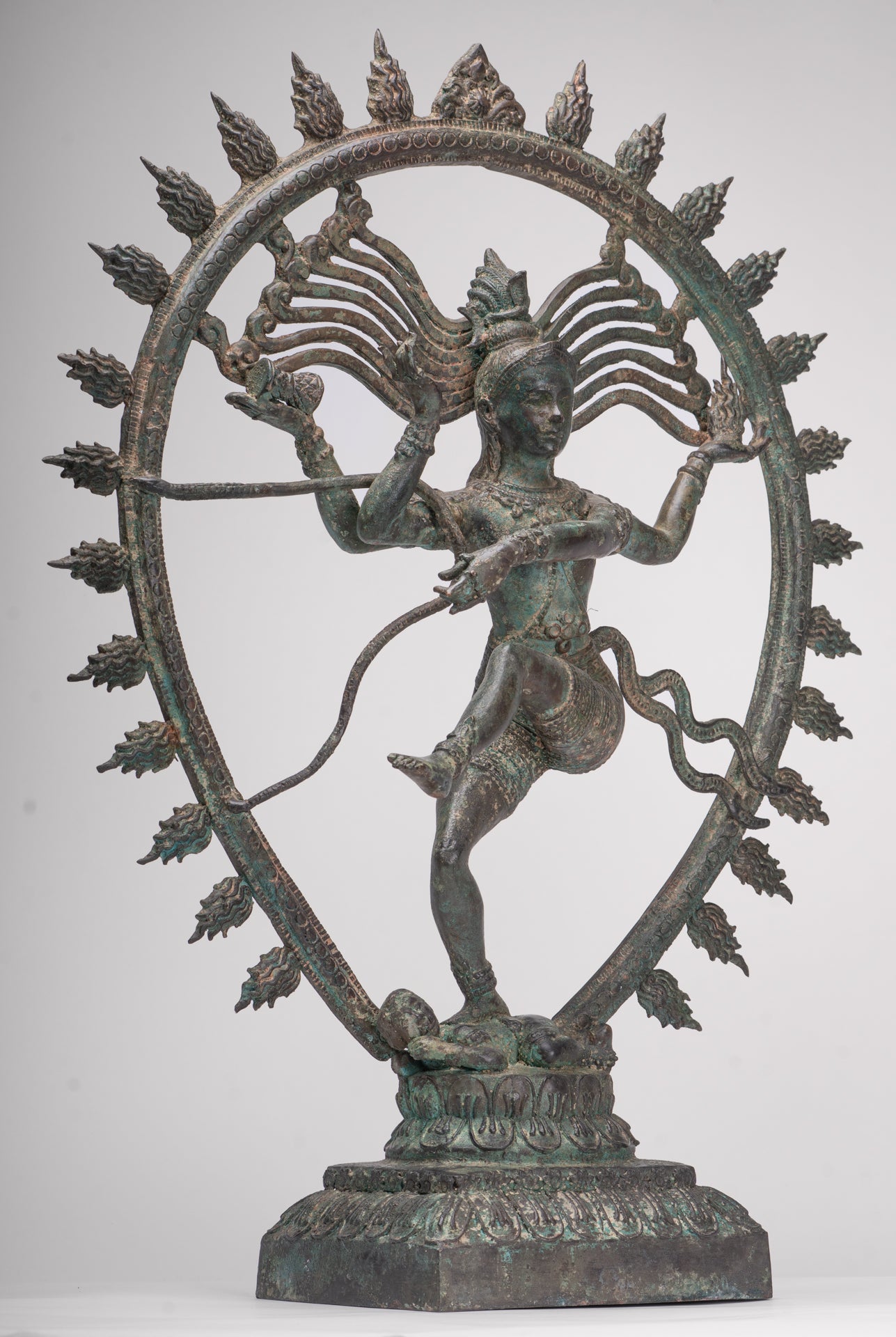
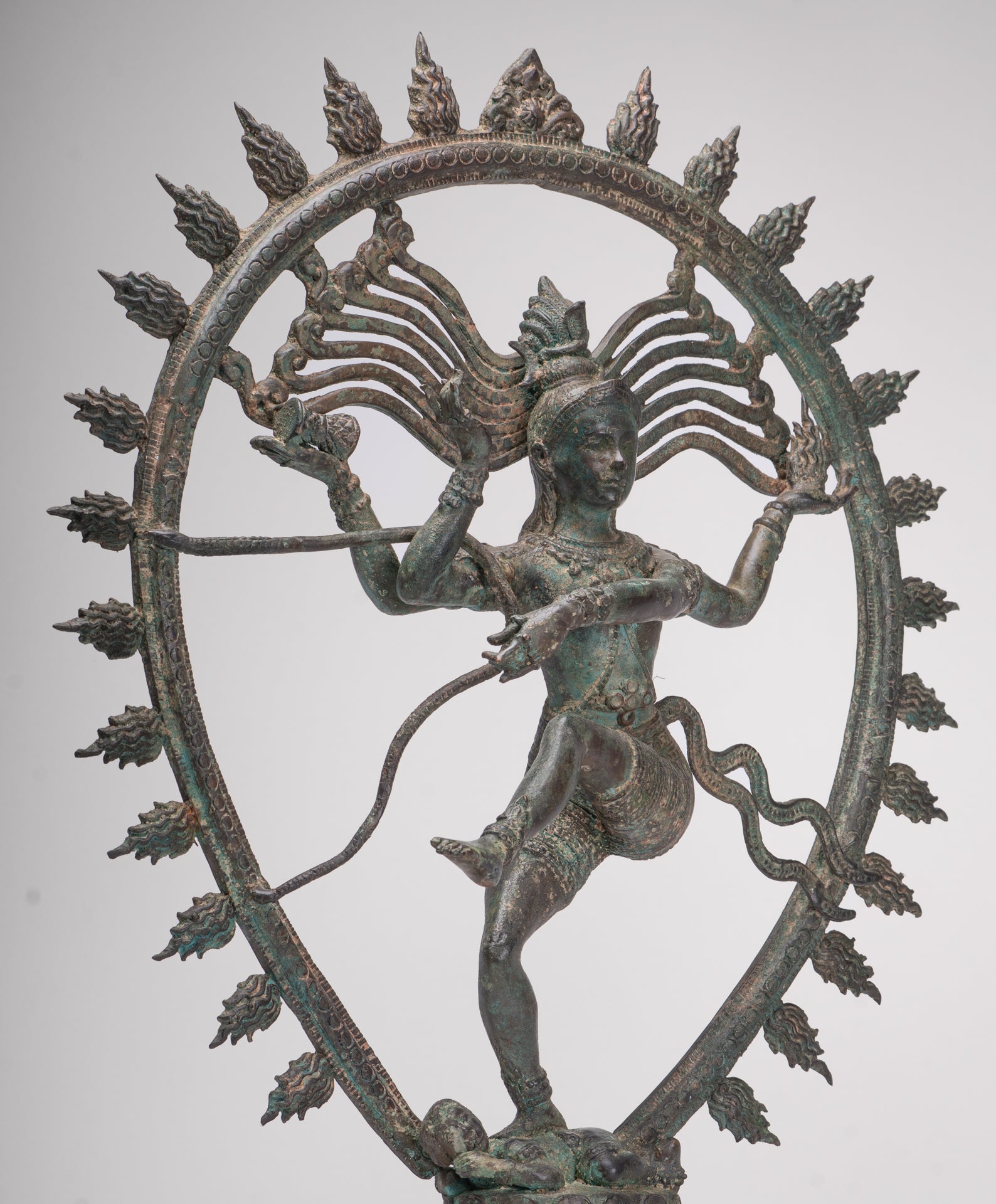
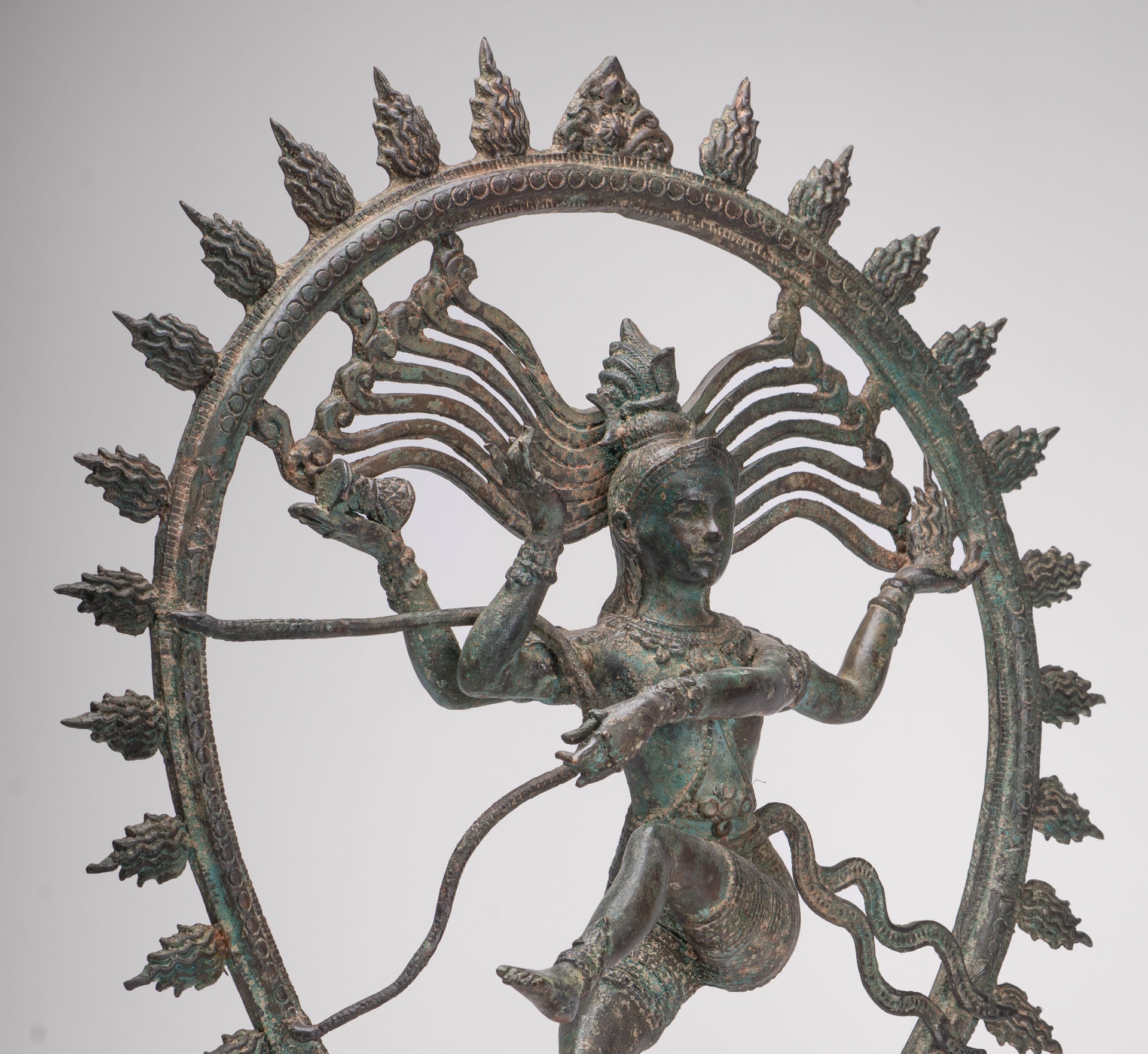
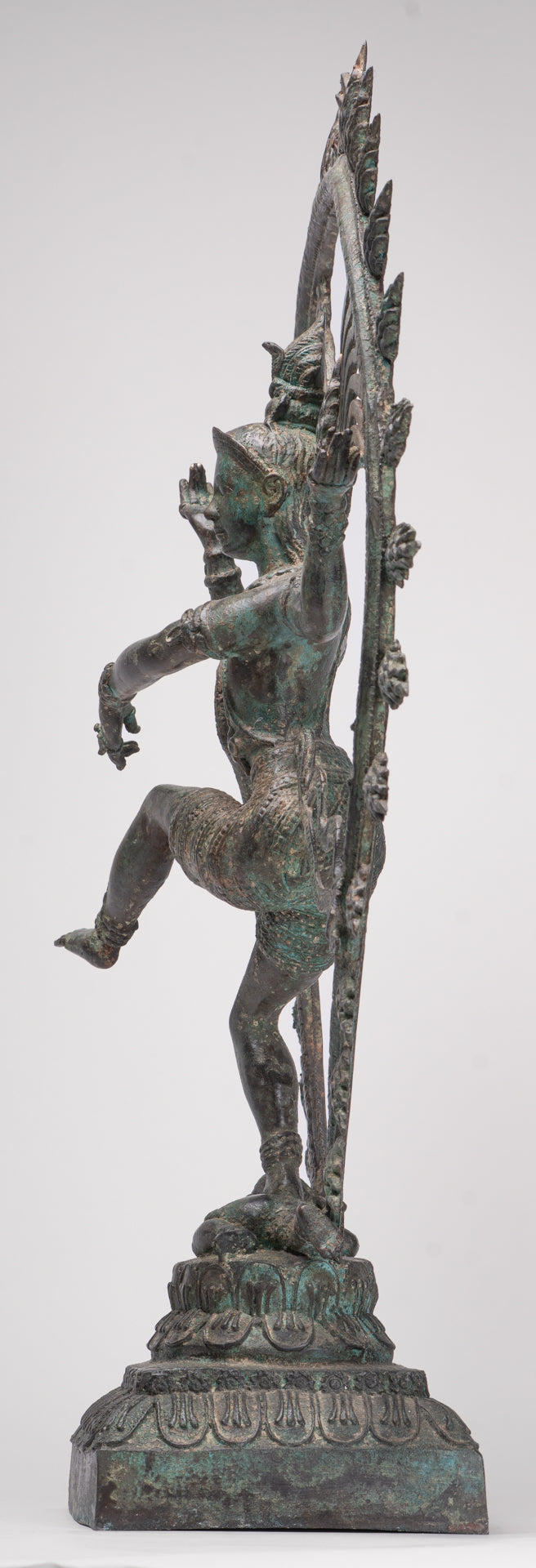
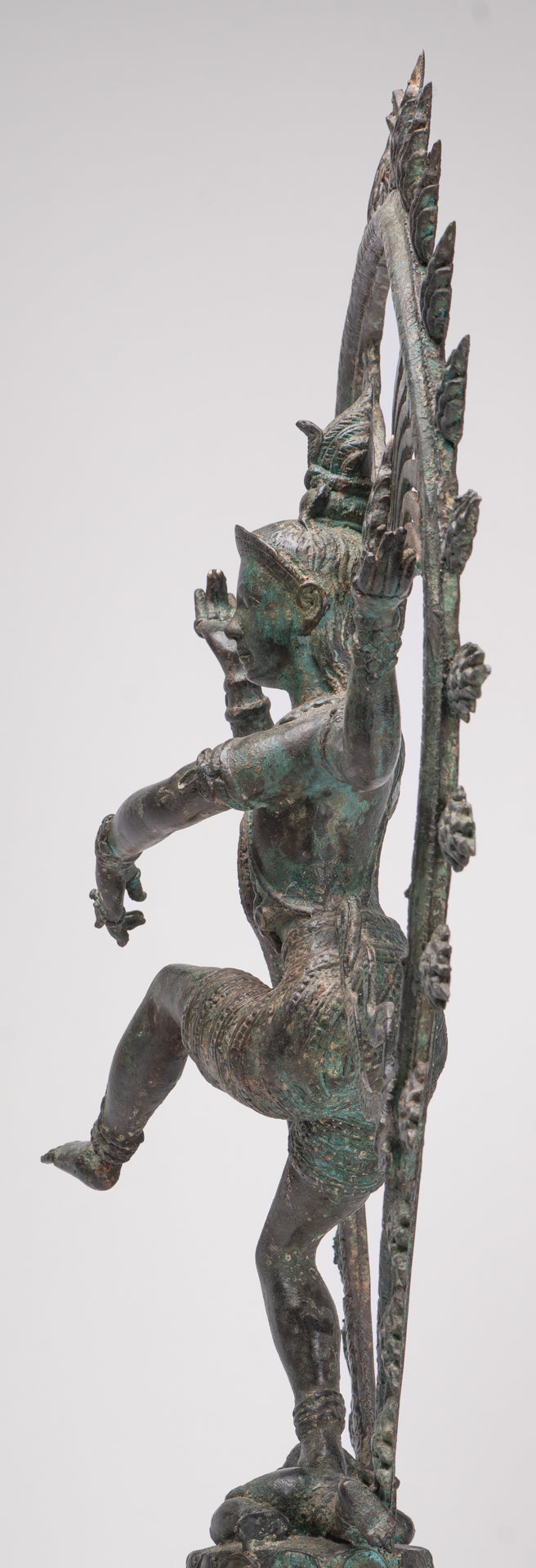
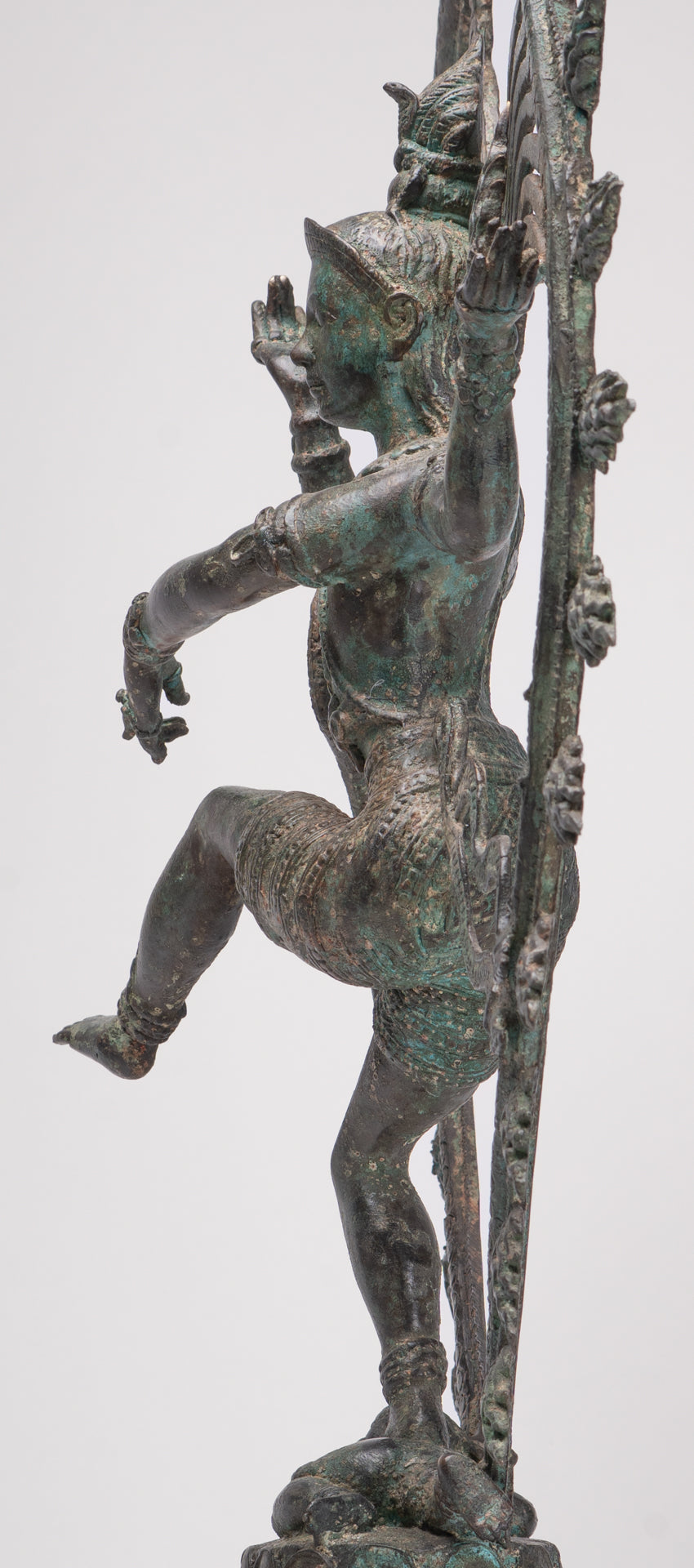
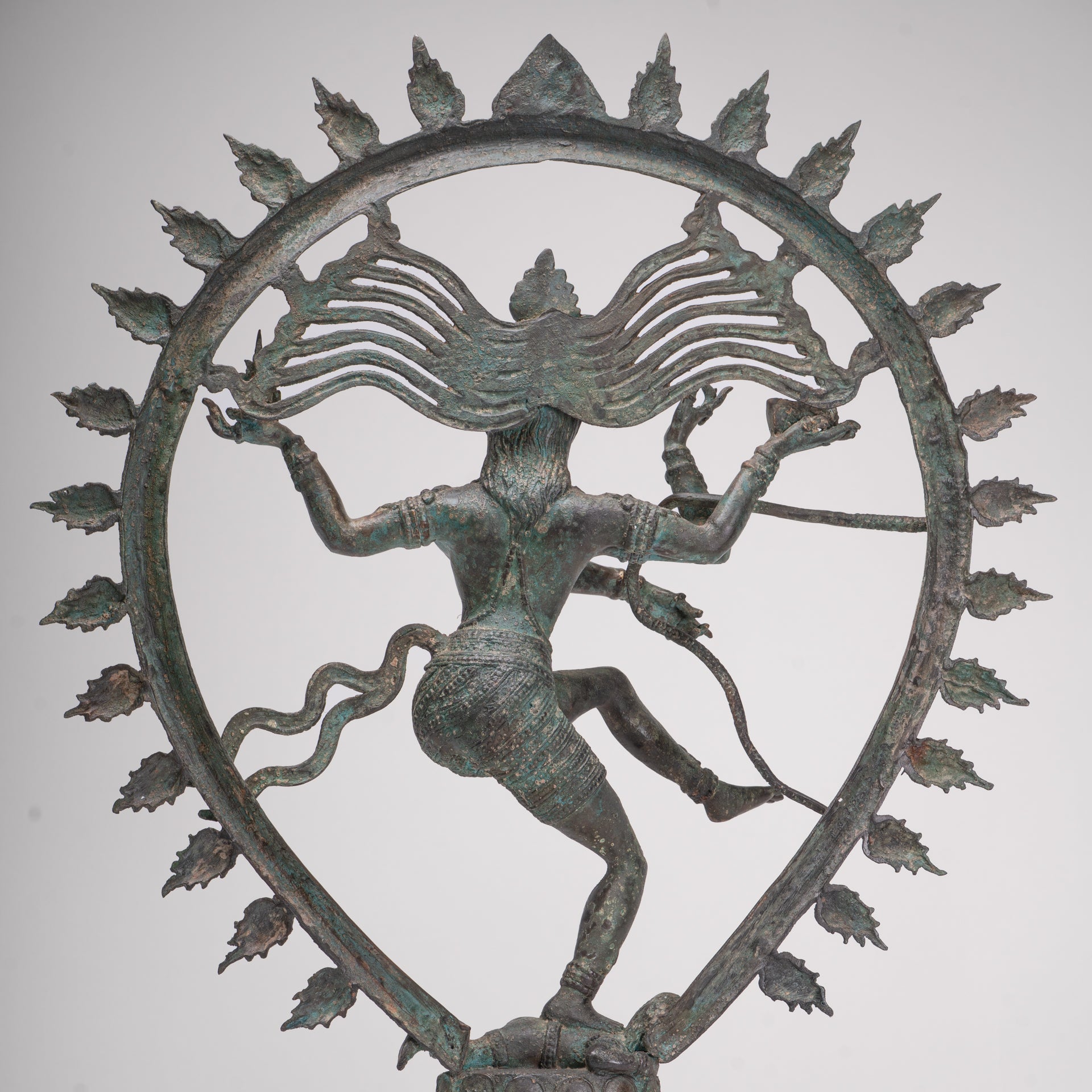
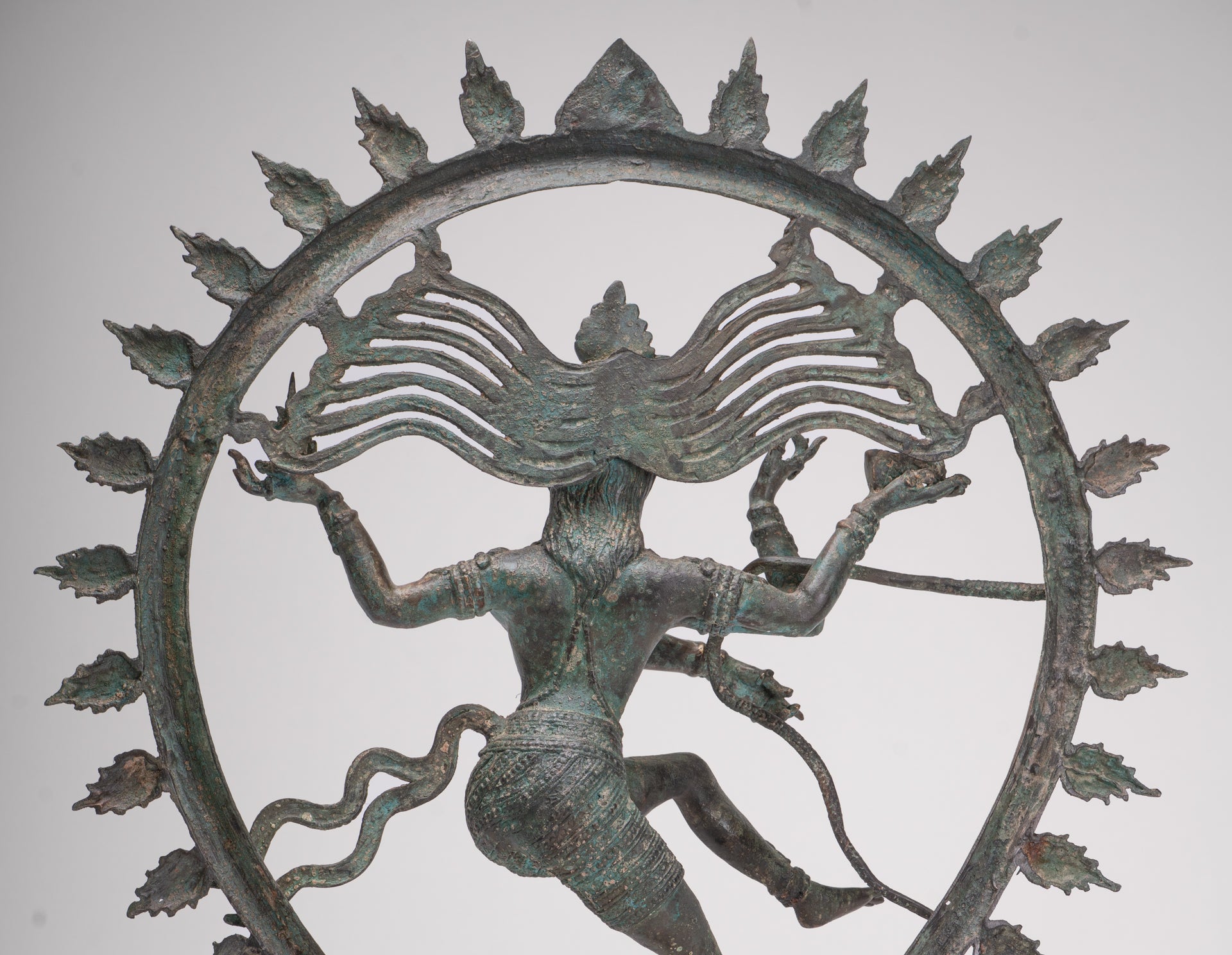
An antique Indian style dancing Shiva, depicted as Lord Nataraja in refined 10th‑century Chola style.
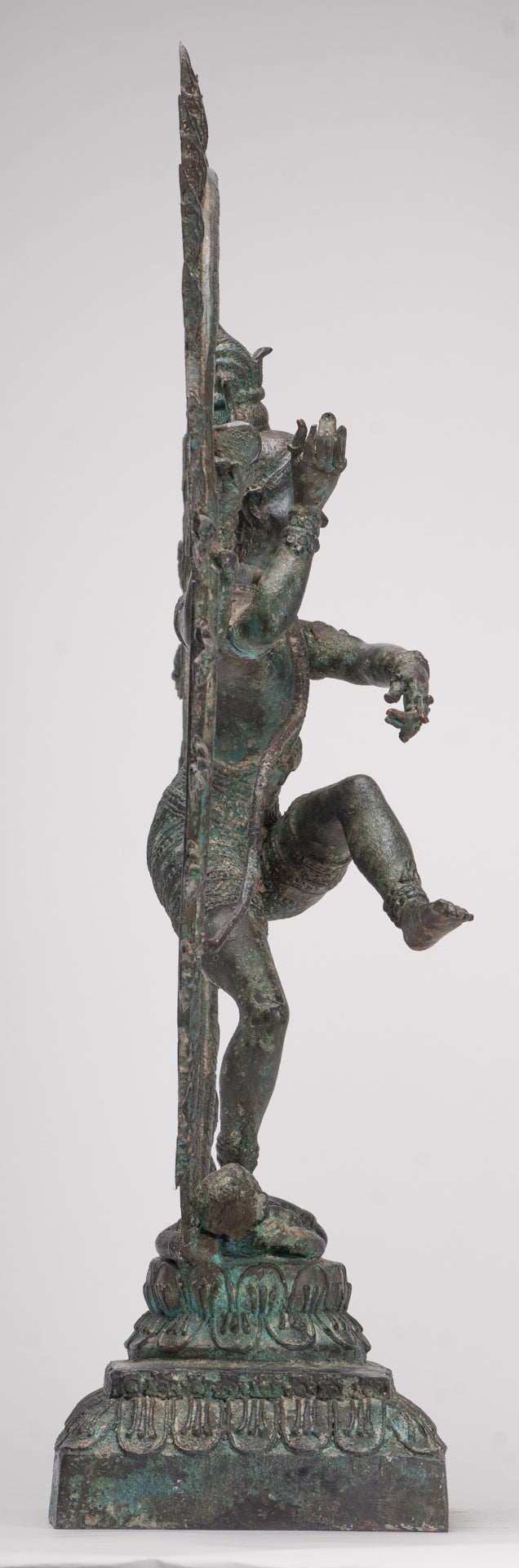
Here Shiva appears as the divine dancer and Lord of the dramatic arts, his body perfectly balanced within the circle of flame. With poised limbs and harmonious proportions, the sculpture captures the classical Nataraja pose in which Shiva’s dance sustains the endless cycles of creation, preservation and dissolution. In the Indian tradition, dance is not only a form of yoga but an image of the very act of cosmic creation; as Lord of Yoga, Shiva is the source of this primordial rhythm.
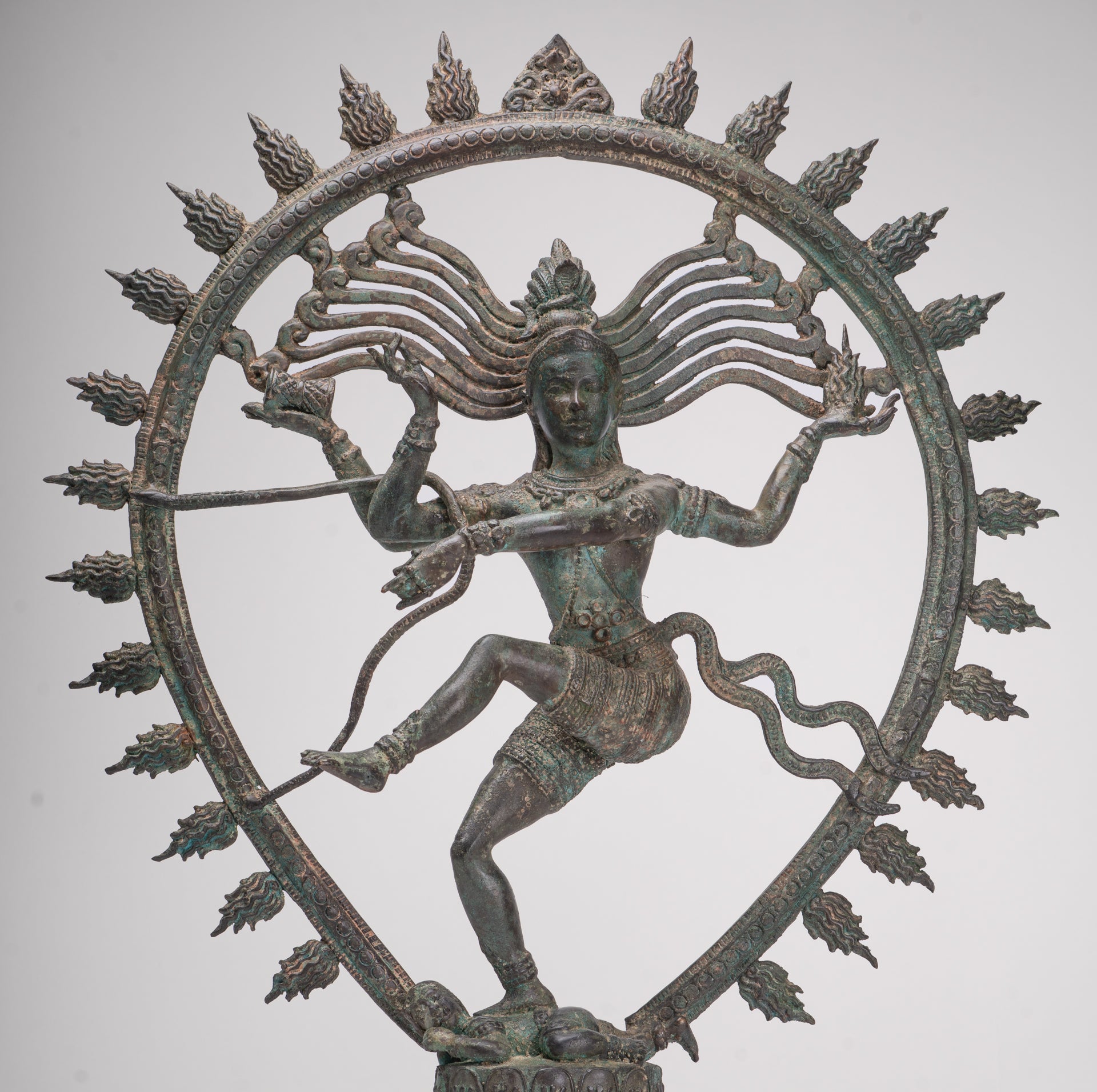
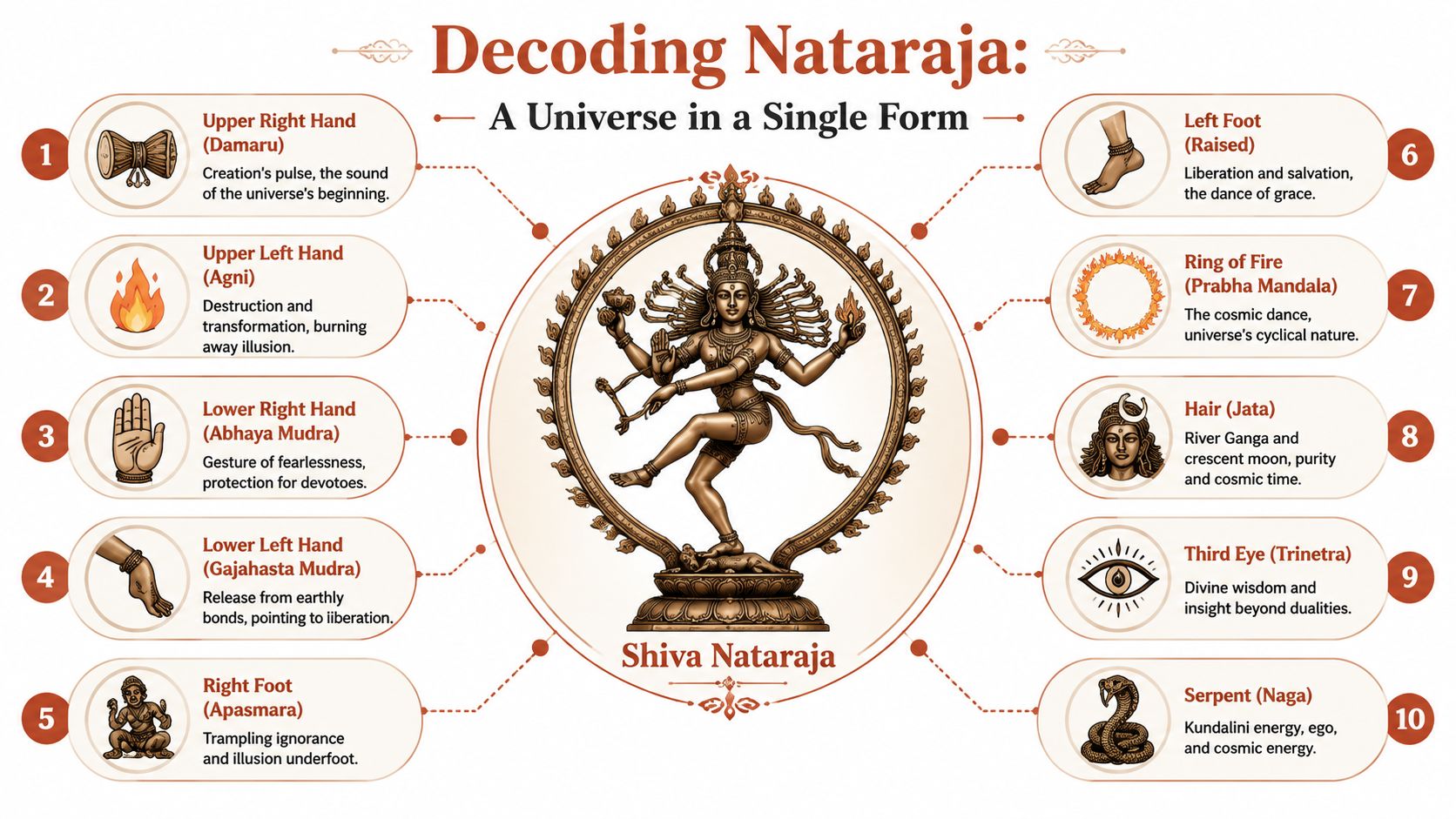
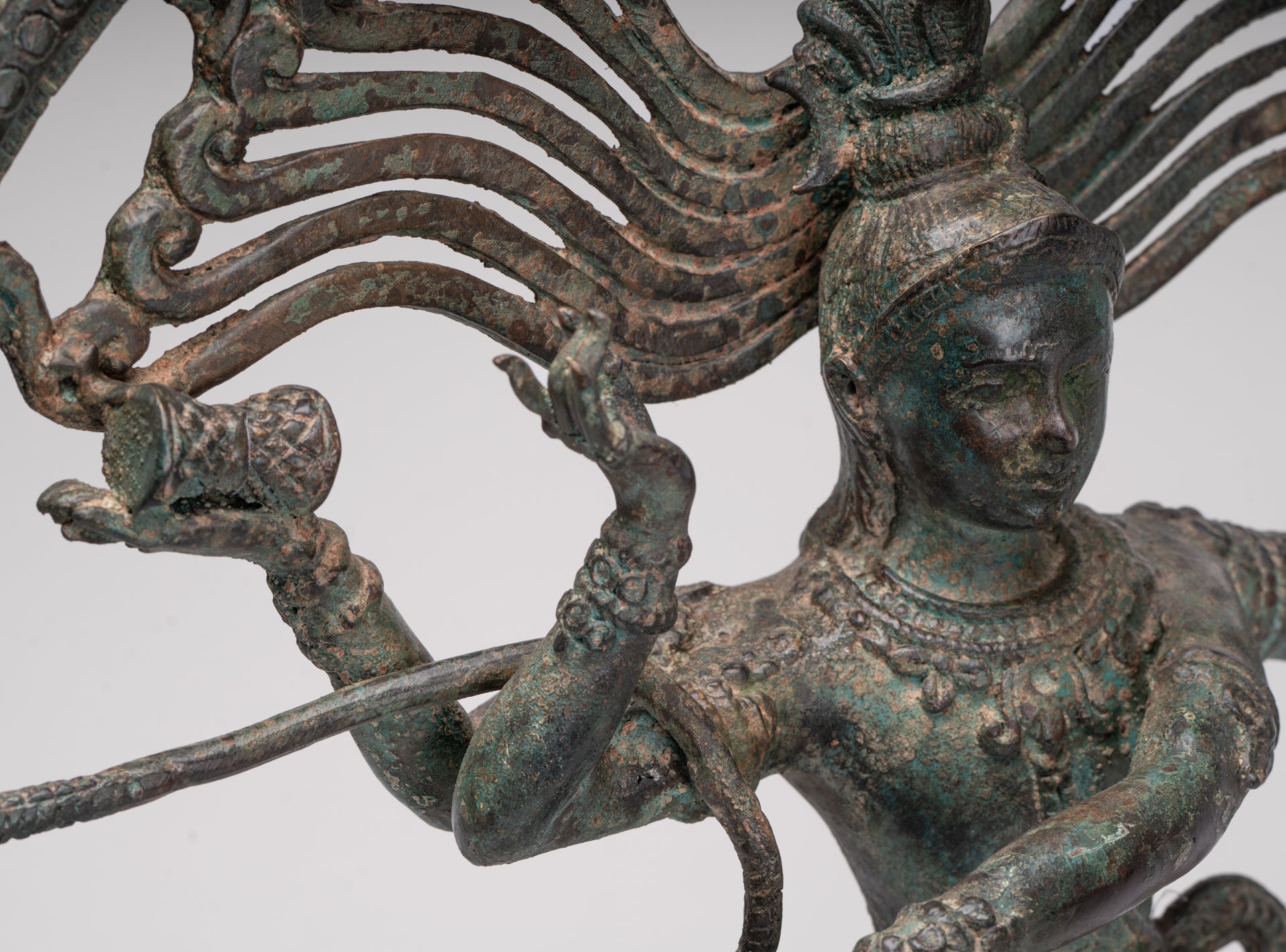
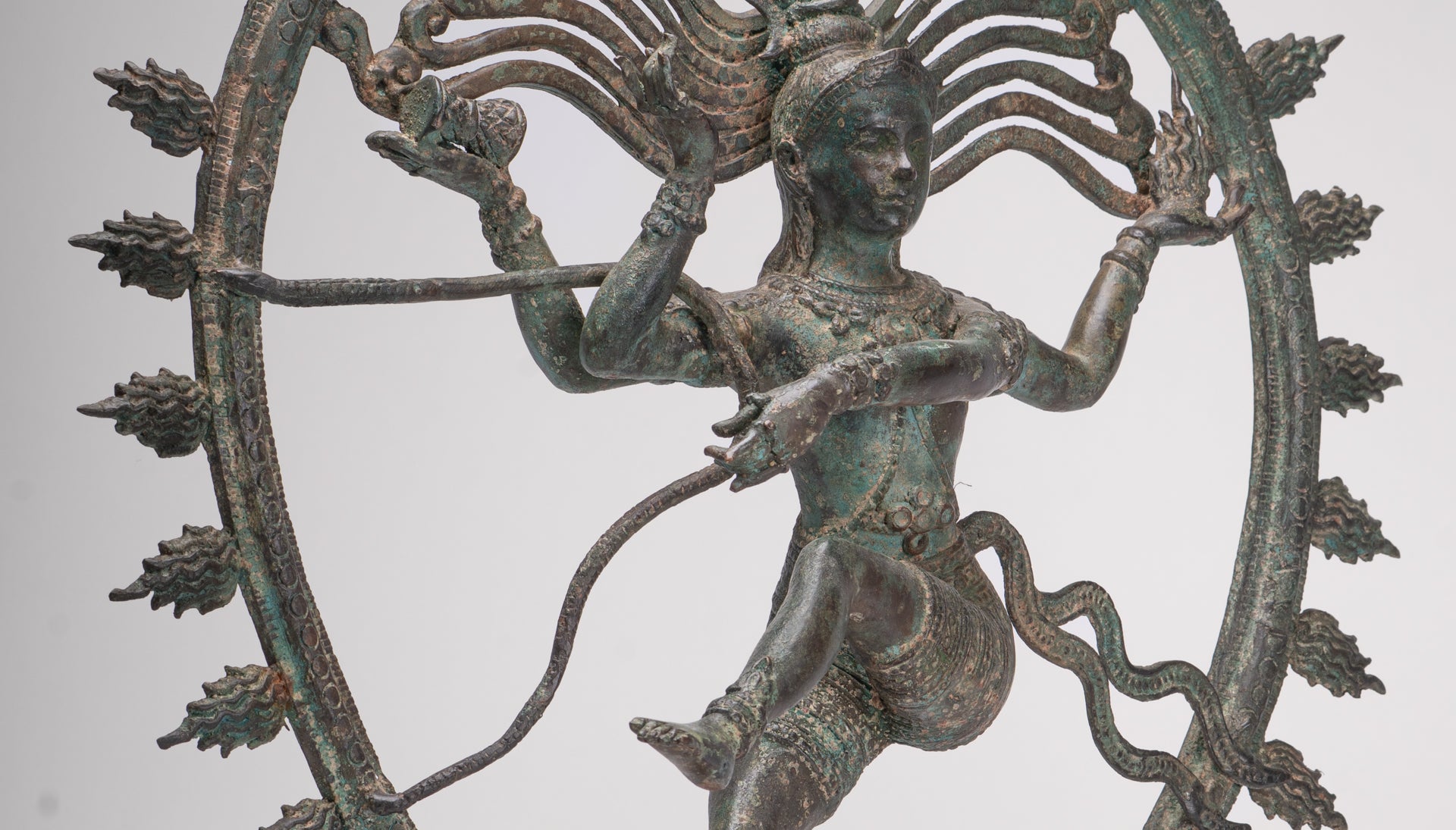
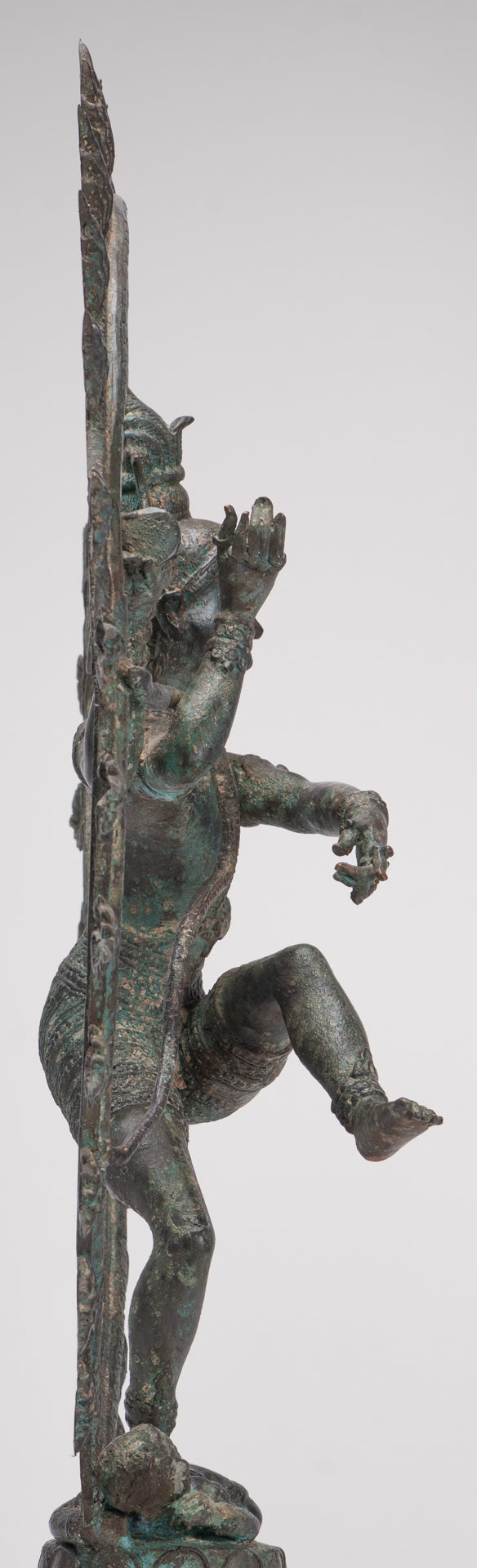
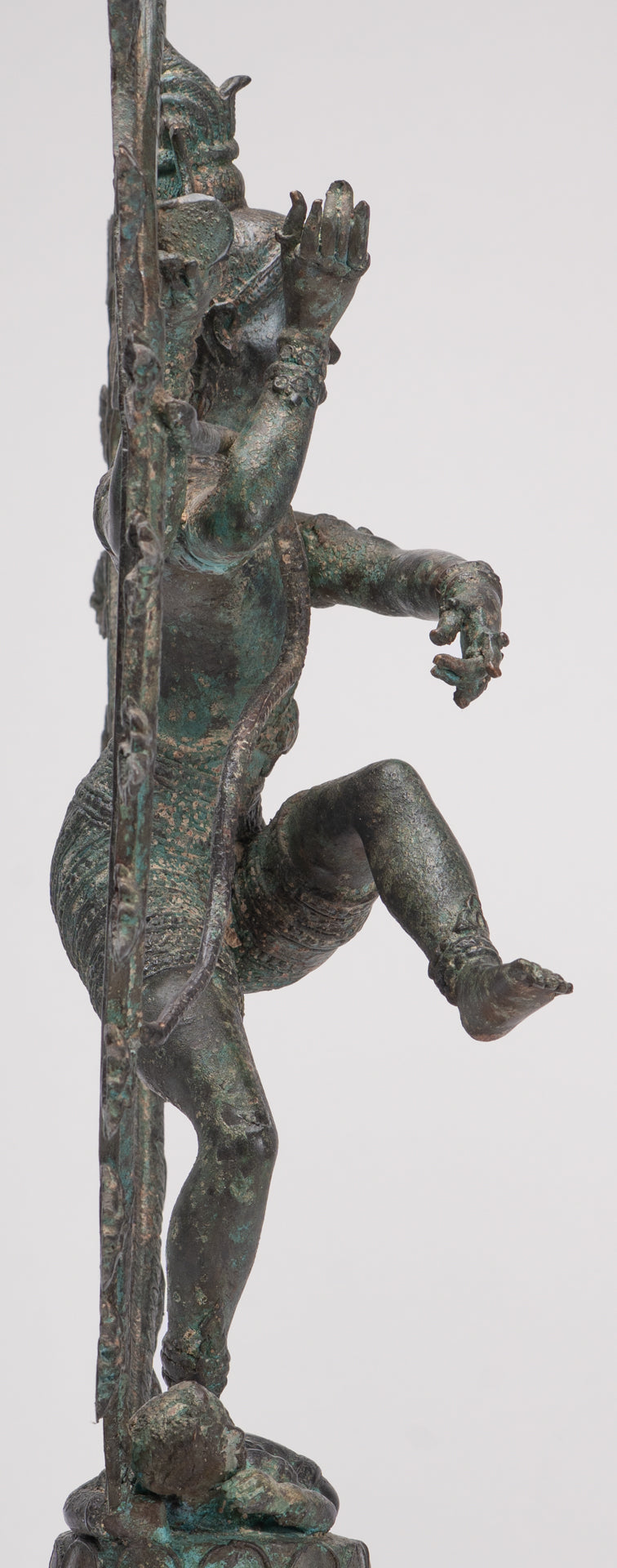
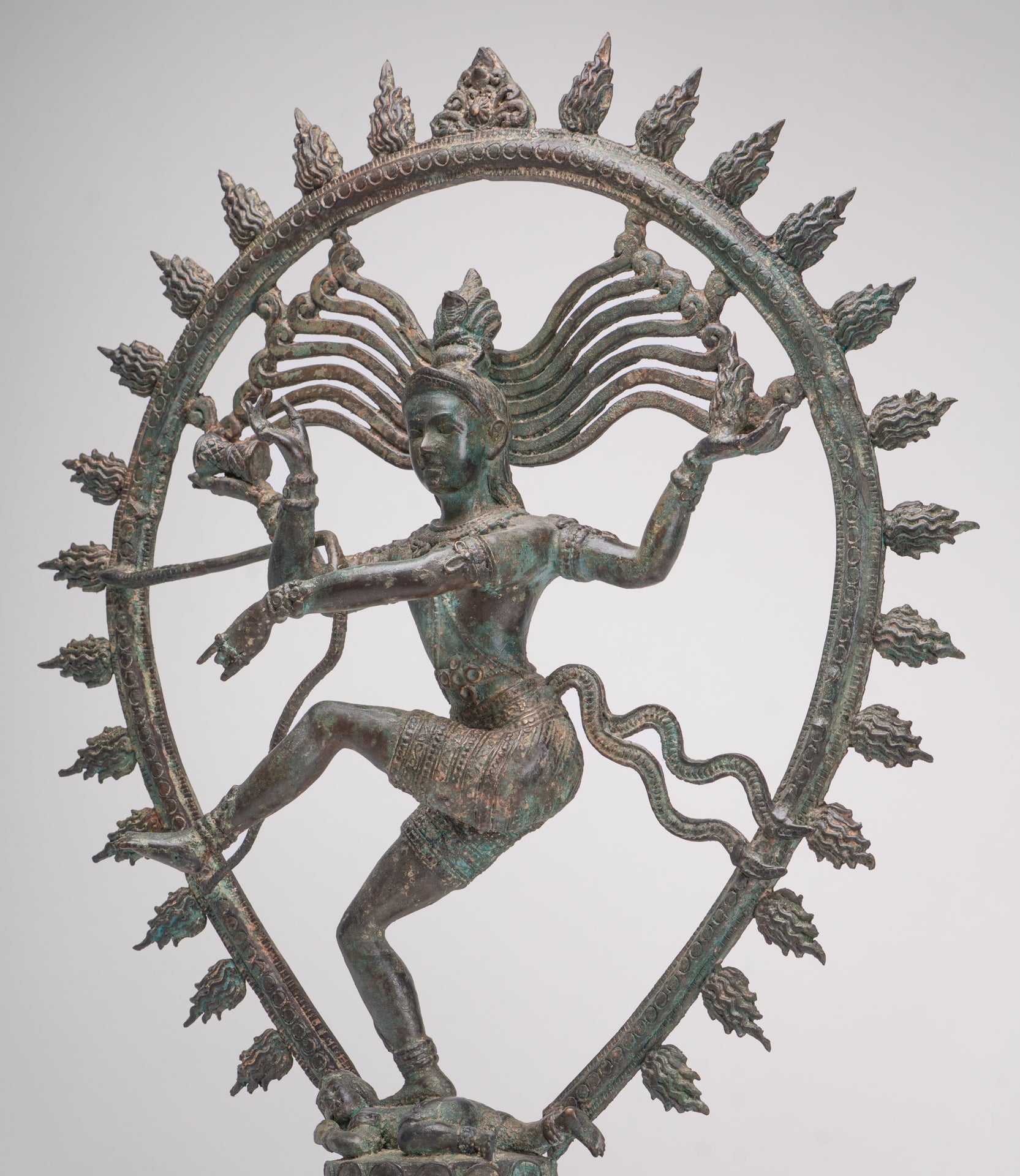
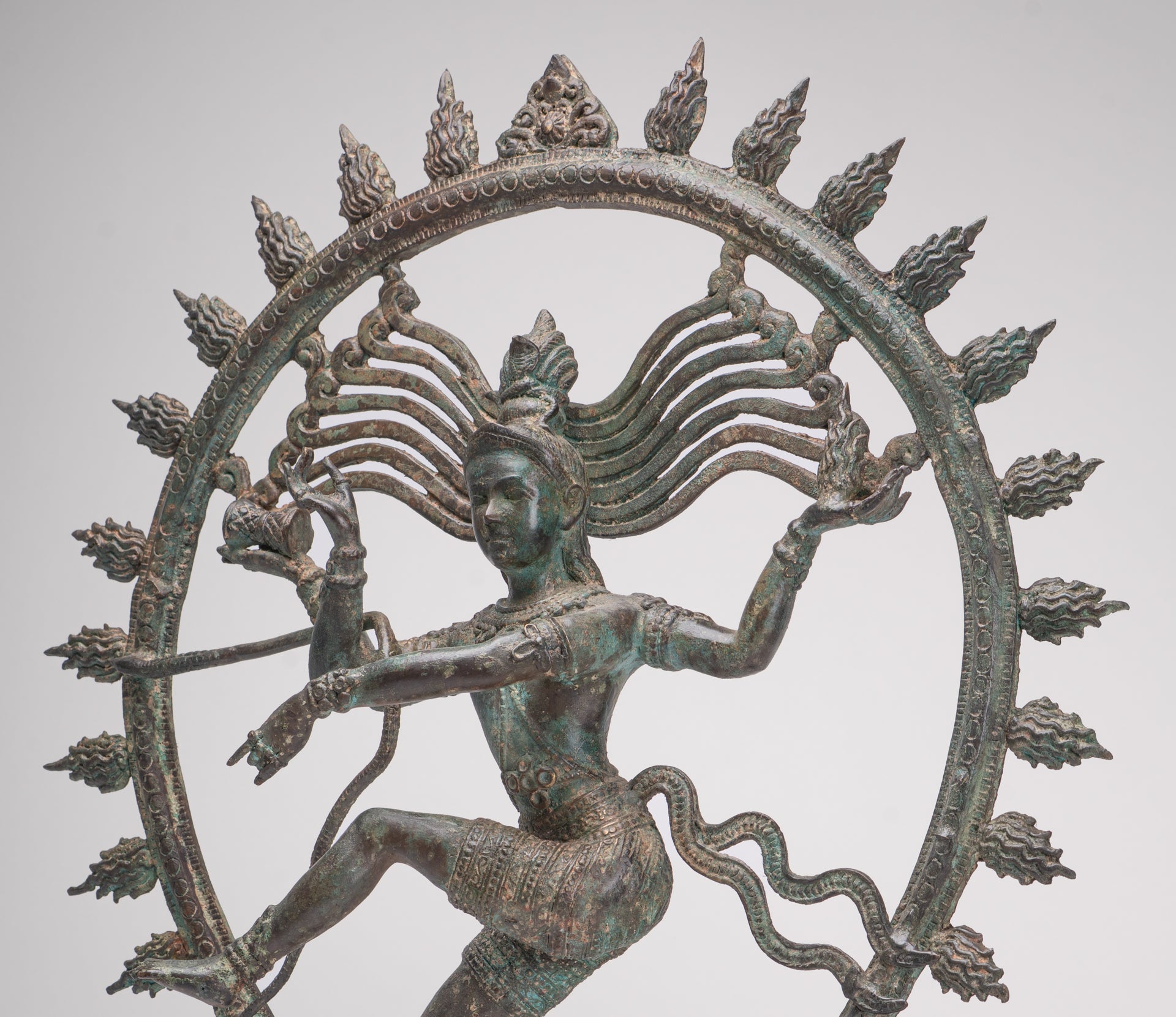
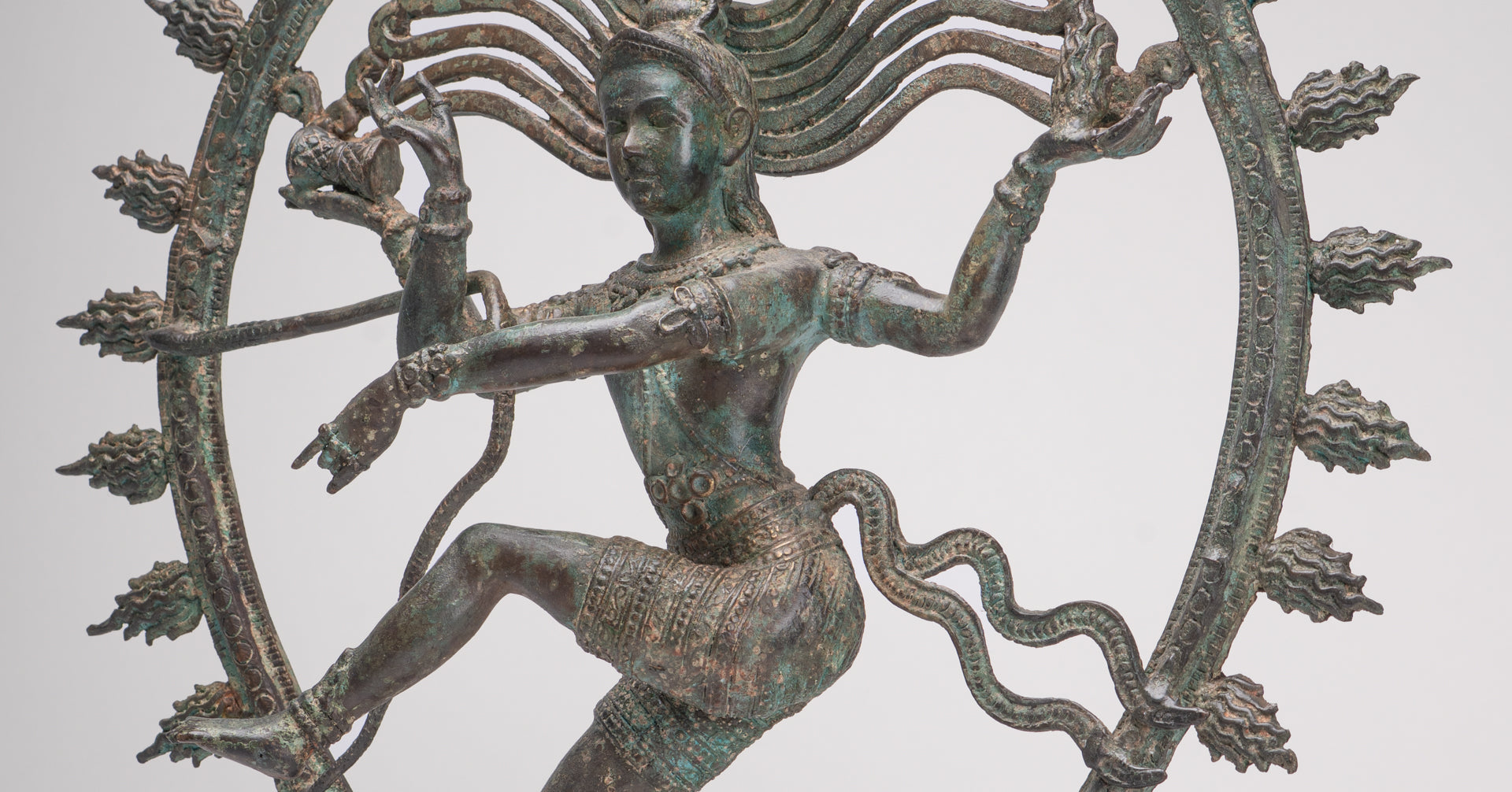
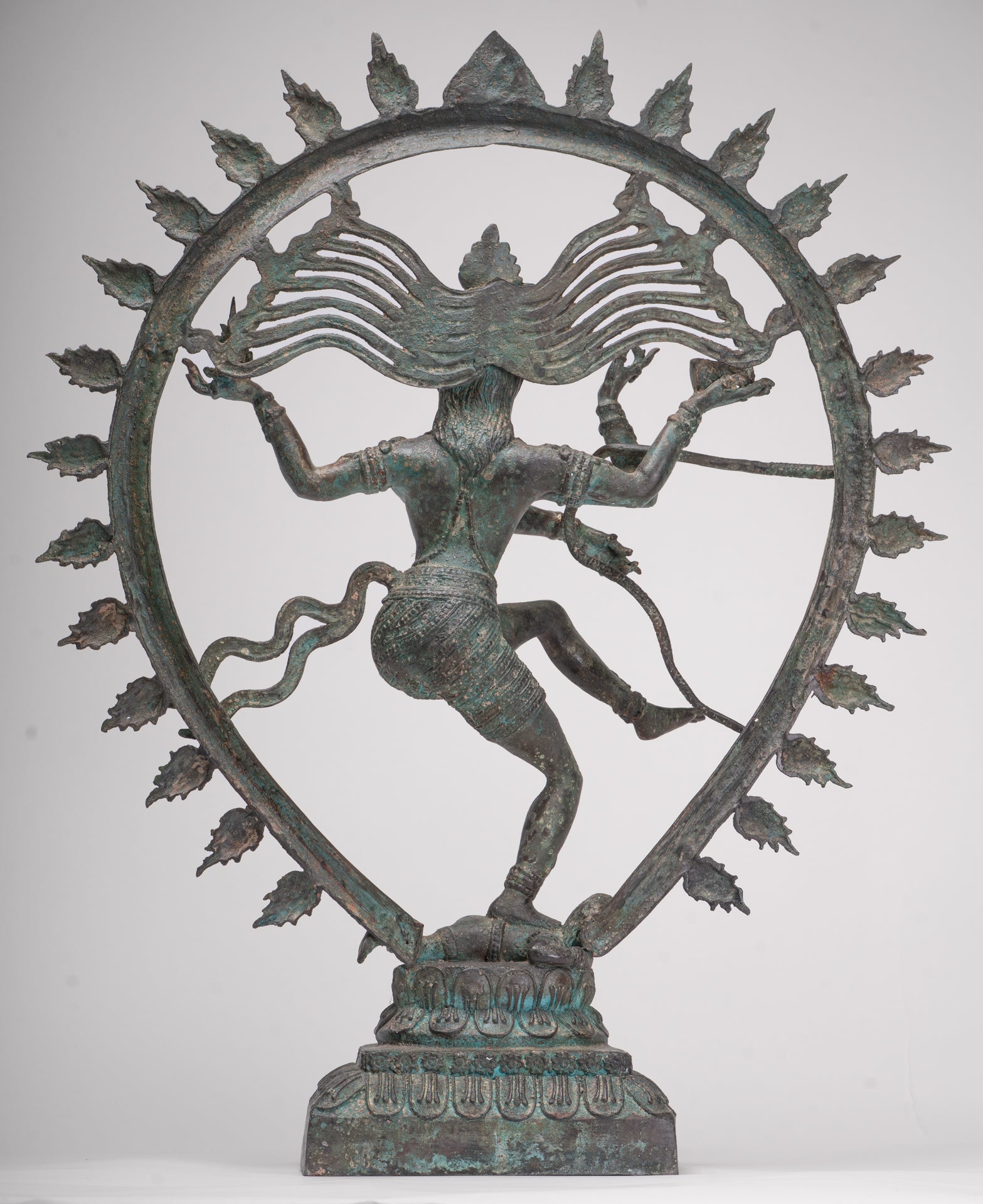
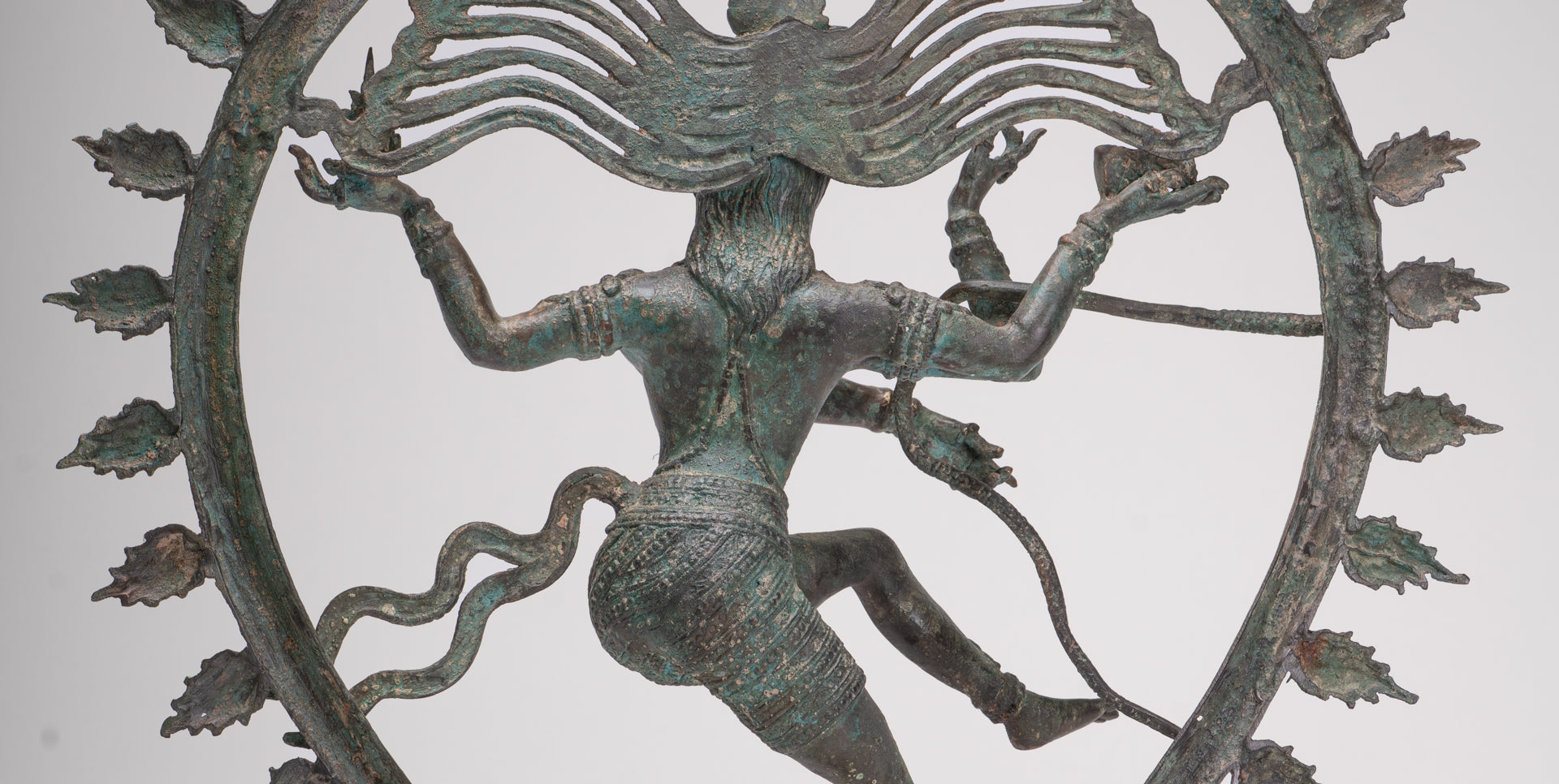
The Tamil sculptors of the Chola dynasty (mid‑ninth to early fourteenth centuries) gave Shiva the Dancer his most complete and enduring form, a vision that has become emblematic of Indian civilization. This piece follows that lineage closely. Shiva dances in a Natya Shastra based posture, his upper right hand holding the drum (damaru), whose beat signifies the first sound at the birth of the universe. His lower right hand makes a gesture of reassurance, offering protection and fearlessness.
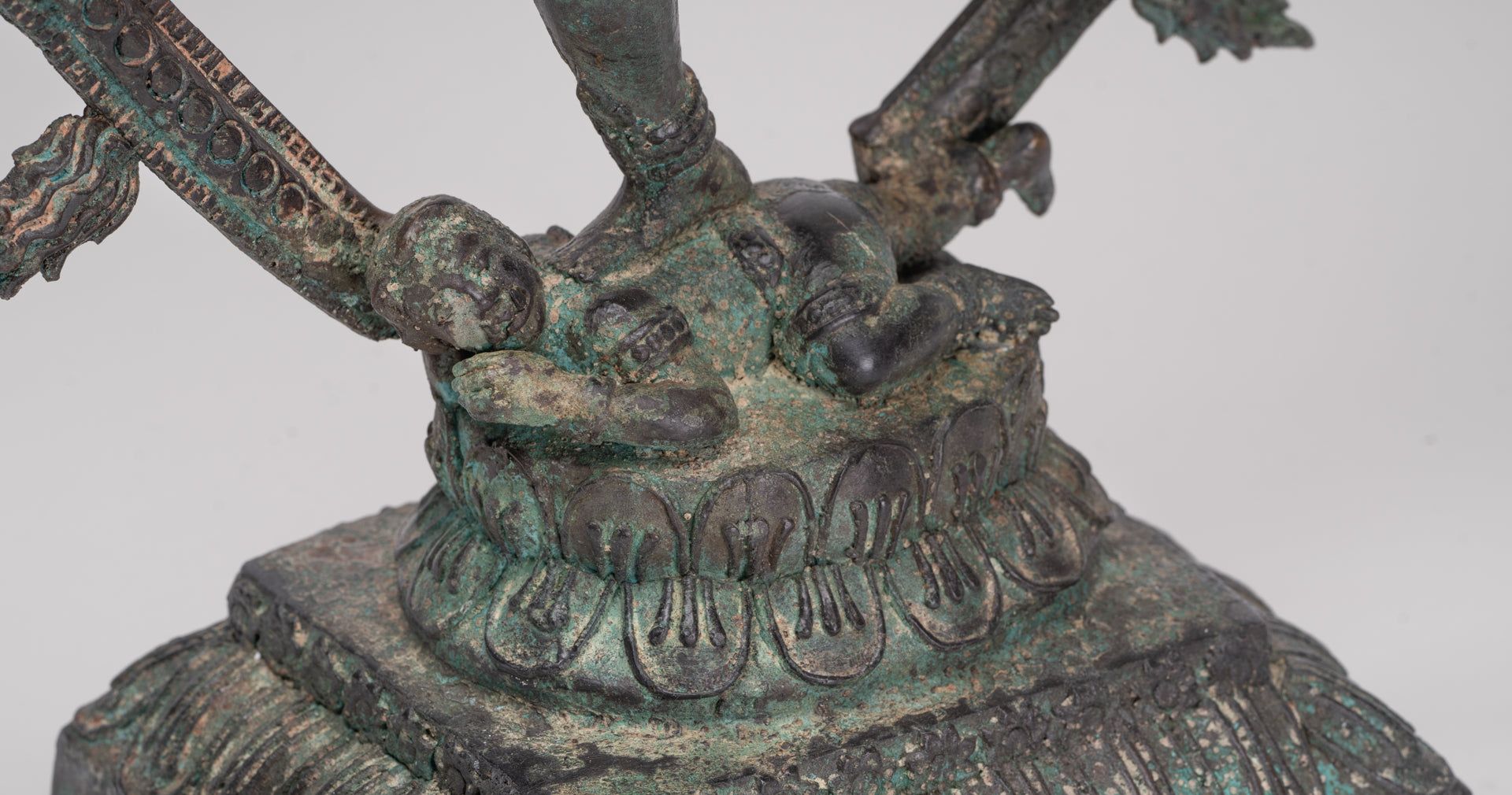
In his upper left hand Shiva holds agni, the flame of destruction and transformation, while the lower left arm sweeps gracefully across the body, pointing toward the raised left foot—the refuge of the soul and symbol of liberation. Beneath his right foot lies the dwarf‑demon Apasmara (Muyalaka), embodiment of ignorance, crushed under the weight of divine awareness. Together, these elements map a complete path from delusion to enlightenment.
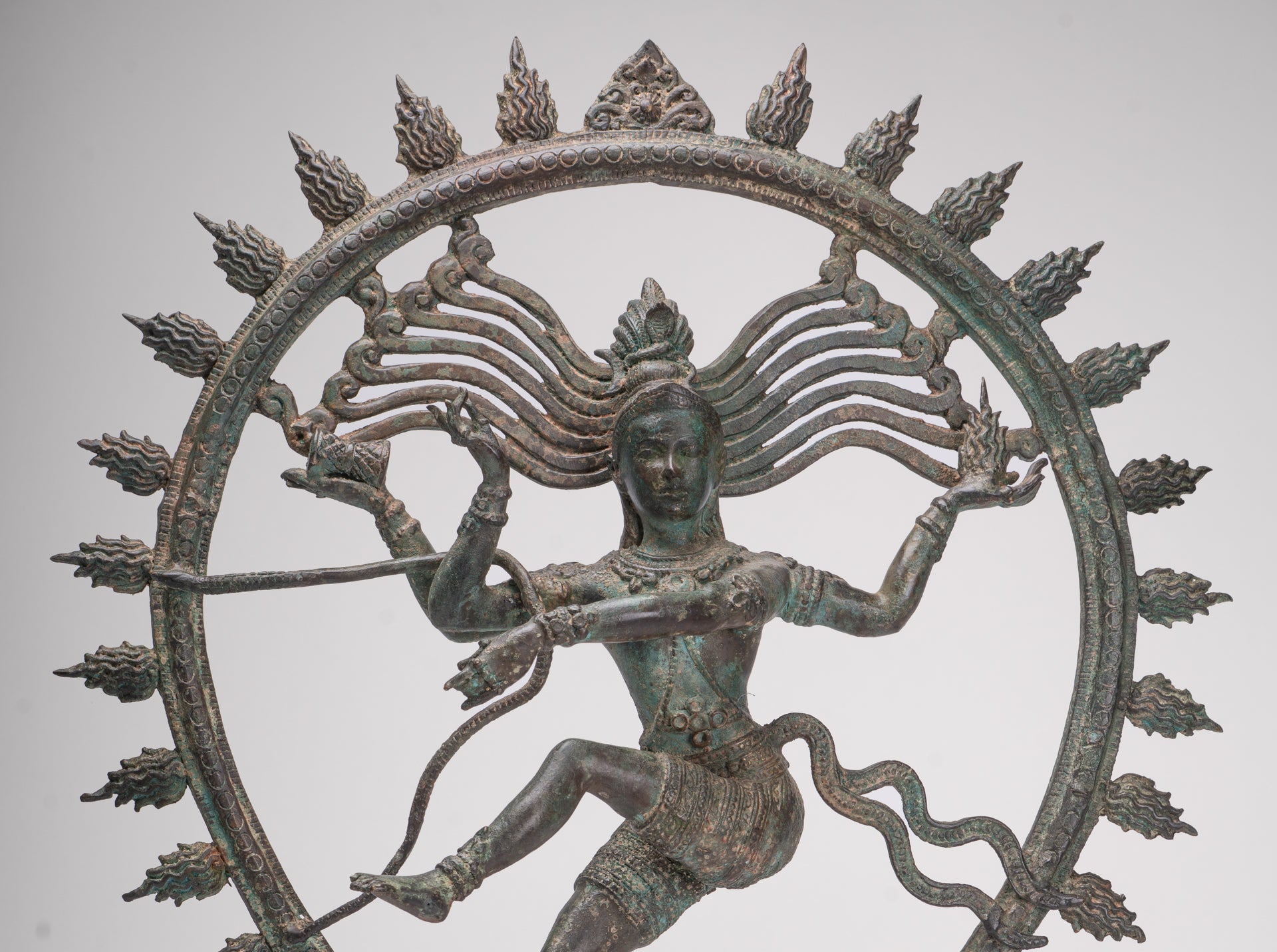
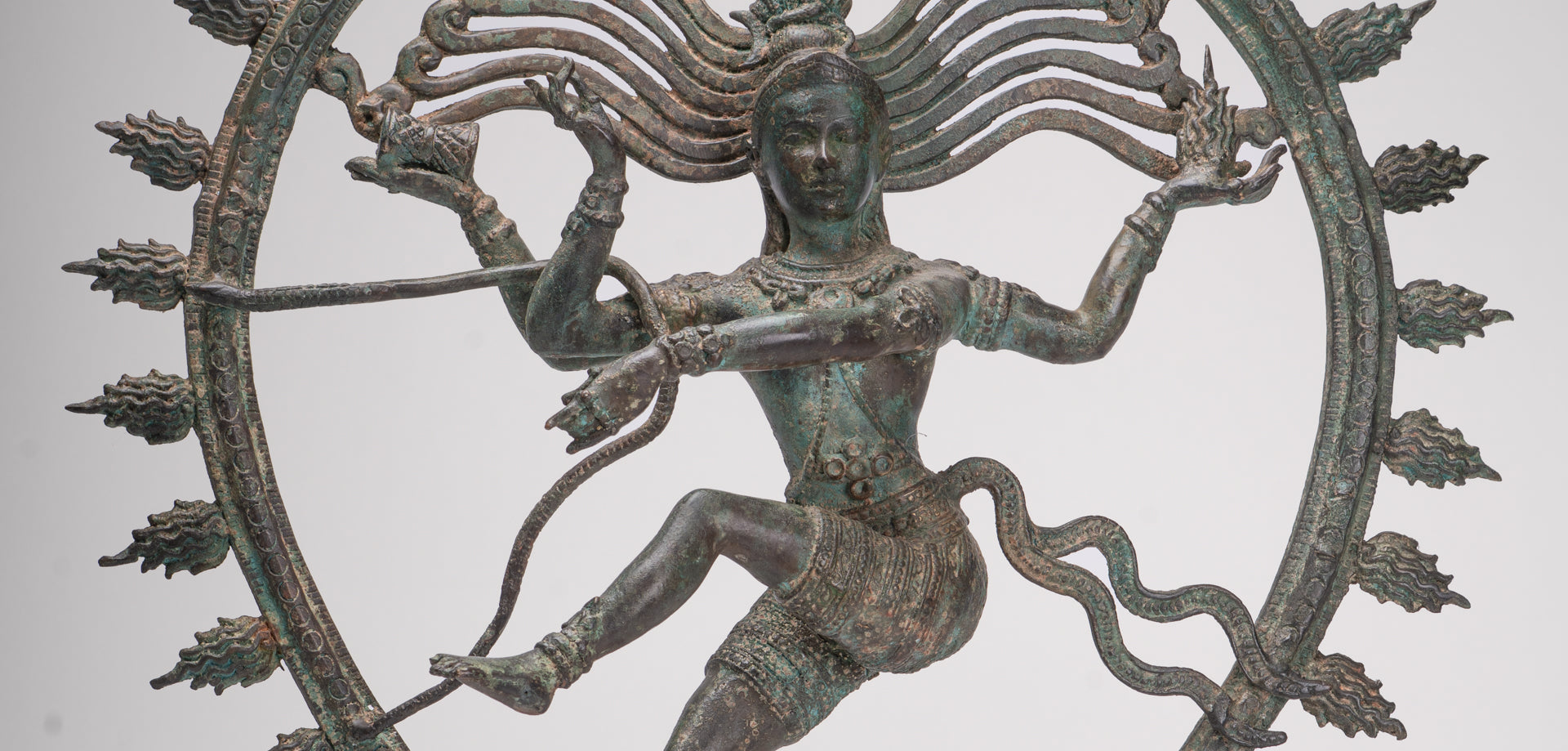
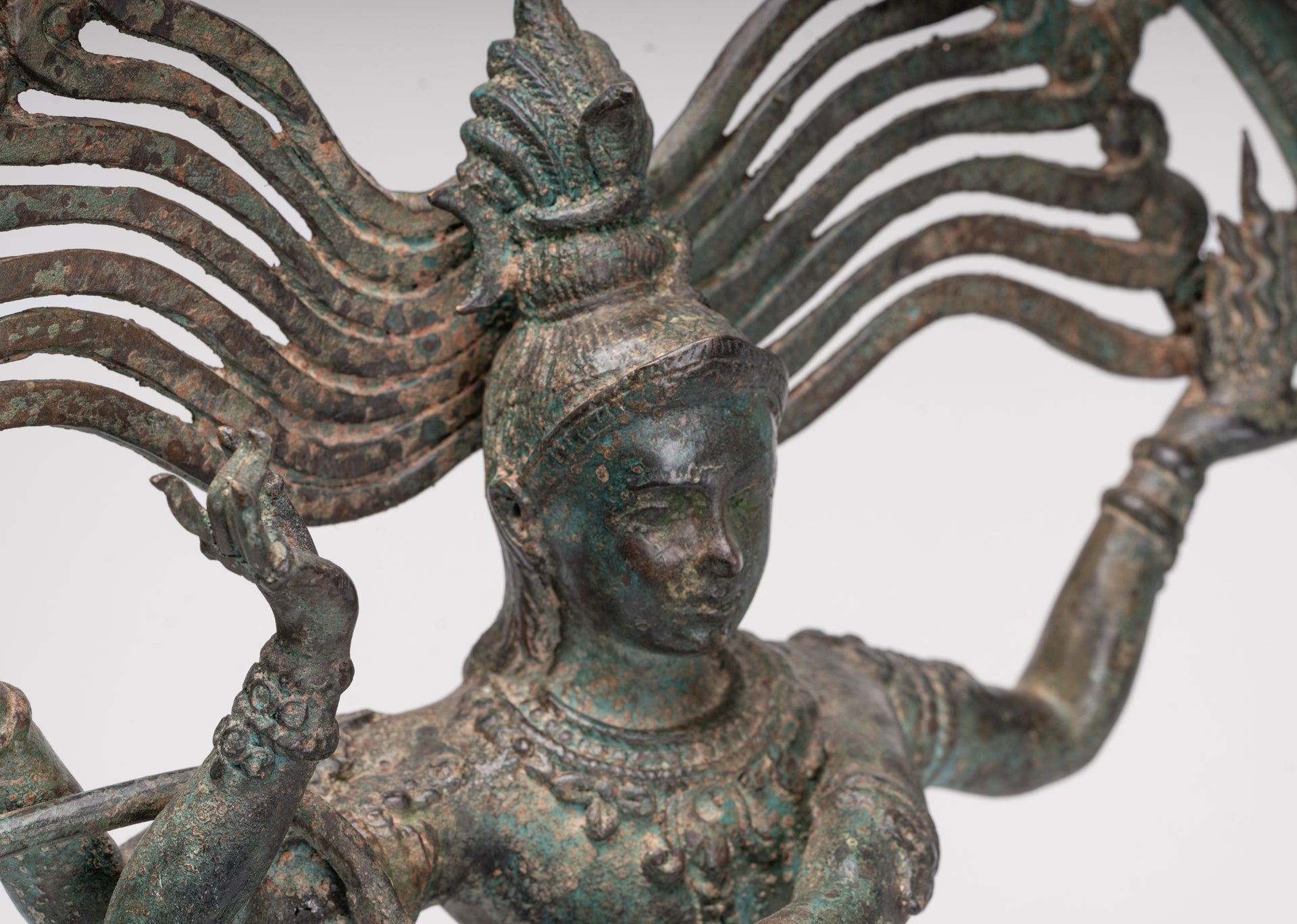
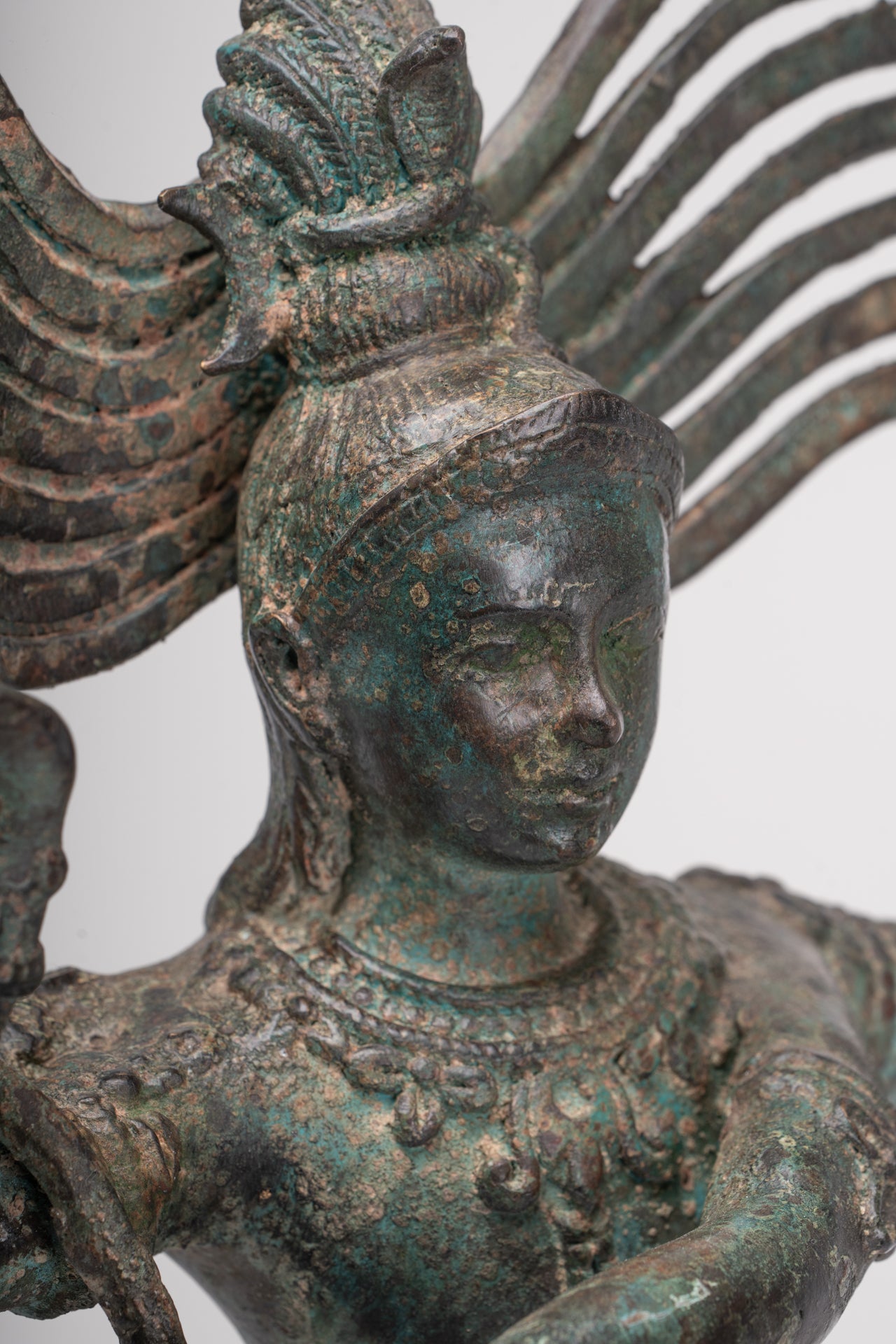
Shiva’s body is richly adorned: fingers, ankles, neck, face, head, elongated earlobes and garments are all carefully detailed and bejewelled. His broad shoulders and proud, composed visage are echoed by the explosive rhythm of his flying locks, which arc outward with the motion of the dance. The wavy strands recall the sacred Ganges flowing from his hair, underlining Shiva’s intimate connection with water as a life‑giving force.
Behind him rises an aureole with beaded border and flaming rim, crowned by a decorative finial that proclaims his divinity. Emerging from a lotus pedestal, this ring of multi‑tongued flames represents the universe itself—its primordial origin and its eventual dissolution by fire. The lotus, in turn, speaks of purity, compassion and the joy that arises from spiritual awakening.
Shiva stands upon a rectangular double‑lotus base, lifting his left leg in elegant suspension while firmly subduing Apasmara below. The contrast between the energetic sweep of the dance and the sculptural stillness of the pedestal gives the work great visual tension and power. His hair is piled in a tripartite chignon, discreetly ornamented, and he wears only essential sacred adornments: a necklace, diamond‑shaped earrings, the yajnopavita (sacred Brahmanical thread) and a single bangle on each wrist—details that emphasise both asceticism and majesty.
On his forehead shines the trilochana, Shiva’s third eye, the eye of wisdom that sees beyond māyā—the illusions and dualities of ordinary life—and is said to be the source of his untamed transformative energy. As destroyer and renewer, Shiva is regarded as limitless, transcendent and unchanging, as well as patron god of yoga, meditation and the arts. He forms part of the sacred Hindu Trimurti alongside Brahma and Vishnu.
Traditional in appearance yet timeless in impact, this Nataraja will add a commanding, contemplative presence to any home, workspace or sacred setting—a finely wrought embodiment of Shiva’s divine unity, rendered with compelling grace and authority.
To aid with safe transport your Shiva Nataraja will be packed in a wood crate before shipping, with DHL. The cost of wood crating, packing and shipping (with DHL) is included.
Key Features
-
Large Chola‑style Nataraja – An antique Indian‑style bronze of Shiva as Lord Nataraja, inspired by the refined 10th‑century Chola tradition of South India.
-
Impressive statement height – Measures 66cm / 26" high, creating a commanding centrepiece for a home, office, studio, altar or collection.
-
Cosmic dance of Shiva – Nataraja embodies Shiva’s eternal dance of creation, preservation, transformation, concealment and liberating grace.
-
Classic four‑armed iconography – Holds the damaru drum of creation and agni fire of transformation; the lower right hand offers fearlessness, while the lower left directs attention to the raised foot of refuge.
-
Victory over ignorance – Shiva subdues Apasmara (Muyalaka), the dwarf representing ignorance, delusion and forgetfulness.
-
Flaming cosmic aureole – A beaded, flame‑rimmed prabhamandala frames the dance, representing divine radiance, the cosmos & the ceaseless cycles of time.
-
Double‑lotus pedestal – Shiva rises from a rectangular double‑lotus base, symbolising purity, compassion and awakening.
-
Exceptional ornamental detail – Fine jewellery, sacred yajnopavita thread, diamond‑shaped earrings, crown, chignon, flying locks and flowing sash are crisply rendered.
-
Third eye of wisdom – The trilochana symbolises Shiva’s cosmic knowledge and vision beyond illusion.
-
DHL crated shipping included – The Nataraja will be professionally packed in a wood crate for secure DHL delivery, with crating, packing and shipping included.
Frequently Asked Questions
Q: Who is Nataraja?
A: Nataraja means “Lord of the Dance” and is one of Shiva’s most celebrated forms. He is shown dancing within a circle of fire, expressing the cosmic rhythm through which the universe is created, sustained, transformed and renewed.Q: What does Shiva’s cosmic dance represent?
A: The dance expresses the five divine activities of Shiva: creation, preservation, destruction, concealment and grace. It presents change not as chaos, but as an essential rhythm through which life, time and spiritual liberation unfold.Q: What is the Chola style?
A: The Chola style refers to the highly sophisticated South Indian bronze tradition that flourished under the Chola dynasty, from roughly the late 9th to the 13th century. Chola artists created Nataraja images of exceptional elegance, technical mastery and fluid movement, making this form a global symbol of Indian art.Q: What does the drum in Shiva’s upper right hand mean?
A: The hourglass‑shaped damaru represents the primordial sound of creation. Its beat signifies rhythm, vibration, time and the first emergence of the universe from stillness.Q: What does the fire in Shiva’s upper left hand represent?
A: The flame, known as agni, signifies destruction and transformation. In Nataraja imagery, destruction is not simply negative: it clears away what is exhausted, false or obstructive, allowing renewal to take place.Q: What is the meaning of Shiva’s raised right hand?
A: The raised lower right hand makes the abhaya mudra, the gesture of fearlessness. It offers reassurance and protection—an instruction not to fear the constant changes symbolised by the cosmic dance.Q: Why does Shiva’s lower left hand point to his raised foot?
A: The lower left hand sweeps across the body and points towards the raised left foot. The foot symbolises refuge, grace and liberation, indicating the way beyond ignorance and suffering.Q: Who is Apasmara beneath Shiva’s foot?
A: Apasmara, also called Muyalaka, is the dwarf‑like figure representing ignorance, forgetfulness, ego and illusion. Shiva subdues him underfoot to show that spiritual wisdom must continually overcome the forces that cloud understanding.Q: Why does Shiva not destroy Apasmara completely?
A: In symbolic interpretations, Apasmara is held down rather than annihilated because ignorance must be continually recognised and overcome. The image reminds us that wisdom is an ongoing discipline, not a single achievement.Q: What does the ring of flames represent?
A: The flaming halo is the prabhamandala, representing the boundaries of the Hindu cosmos and Shiva’s radiant energy. Its many flames evoke the universe in continual transformation, encompassing both creation and eventual dissolution.Q: What does the lotus base signify?
A: The double lotus pedestal represents purity, compassion and spiritual awakening. It provides a serene foundation beneath the immense energy of Shiva’s dance, showing that liberation can emerge even from the changing conditions of worldly life.Q: What is the meaning of Shiva’s third eye?
A: Shiva’s third eye, the trilochana, represents cosmic knowledge and insight beyond ordinary perception. It sees through maya—illusion, duality and false appearance—and is associated with the transformative energy of awakened consciousness.Q: Why is the River Ganges associated with Shiva’s hair?
A: In Hindu tradition, the River Goddess Ganga descended from heaven with such force that Shiva received her in his matted locks, softening her fall to earth. The flowing hair therefore connects Shiva with water, life, renewal and his power to contain overwhelming cosmic energy.Q: What is the yajnopavita thread?
A: The yajnopavita is the sacred Brahmanical thread worn across the body. It represents ritual responsibility, learning and spiritual discipline, while also creating an elegant visual line across Shiva’s torso.Q: Why is Shiva so richly adorned if he is also an ascetic?
A: Nataraja unites apparent opposites: Shiva is both an ascetic yogi and a divine king. The restrained but detailed ornaments, crown and jewellery show his majesty, while the simplicity of the sacred thread, bangle and flowing hair preserve his connection with renunciation and meditation.Q: Is this sculpture suitable for a meditation, yoga or dance space?
A: Yes. Nataraja is especially meaningful for spaces devoted to yoga, meditation, dance, music and creative practice. His image encourages balance between stillness and movement, discipline and freedom, action and awareness.Q: Is it appropriate for non‑Hindus to display Nataraja?
A: Yes. Nataraja is appreciated worldwide as a profound image of artistic beauty and cosmic transformation. It should be displayed respectfully in a clean, stable and considered location, whether valued for devotional, cultural or aesthetic reasons.Q: Where should I display a 66cm / 26" Nataraja?
A: This is a substantial sculpture best displayed as a focal point on a strong console, pedestal, sideboard, altar or gallery shelf. Leave enough clear space around the figure to appreciate the complete silhouette of the flaming aureole, raised leg and flowing hair.Q: How should I care for the sculpture?
A: Dust carefully with a soft, dry cloth or natural‑bristle brush, paying special attention to the flame tips, hands, drum, crown and projecting details. Avoid water immersion, chemical cleaners, abrasive pads and commercial metal polish, which may damage the aged surface.Q: Can it be displayed outdoors?
A: Indoor display is recommended. Extended exposure to rain, frost, direct sun and changing humidity can alter the patina, accelerate corrosion and affect delicate details in the aureole and ornaments.Q: How will the Nataraja be shipped?
A: The sculpture will be professionally packed and placed in a wood crate for safe transport by DHL. The cost of crating, packing and DHL shipping is included in the price.Q: What should I prepare before delivery?
A: Before delivery, check that doorways, hallways and staircases provide adequate access, and prepare a stable final display location. Because of the sculpture’s height and delicate flame aureole, arrange appropriate assistance for unpacking and positioning, and retain the crate until the piece has been inspected and safely installed.SATISFACTION GUARANTEE - We have been offering SE Asian Art for many years and are proud of the reputation we have developed for fair and honest listings. However, if for any reason, whatsoever, you are unhappy with your purchase please just let us know and we will provide a full refund. We want you to be 100% happy with your purchase.
-
-
The majority of orders will be shipped with DHL. This is a secure, express and fully tracked service.
Items less than 2Kg we typically ship using Royal Mail.
Once we receive your order we try to ship all orders the same or next working day.
Large and/or fragile pieces requiring palletising, specialist crating and/or extra packaging may take a little longer. Palletised shipments will be delivered curbside.
All orders over 35 GBP will be shipped free of charge.

-
We genuinely hope that all purchases delight.
However, if they do not, regardless of reason, we will refund all orders upon receipt of the unwanted item. Just notify us within 14 days of receiving your order that you wish to make a return and send the piece back to us with 30 days of delivery.


