


-
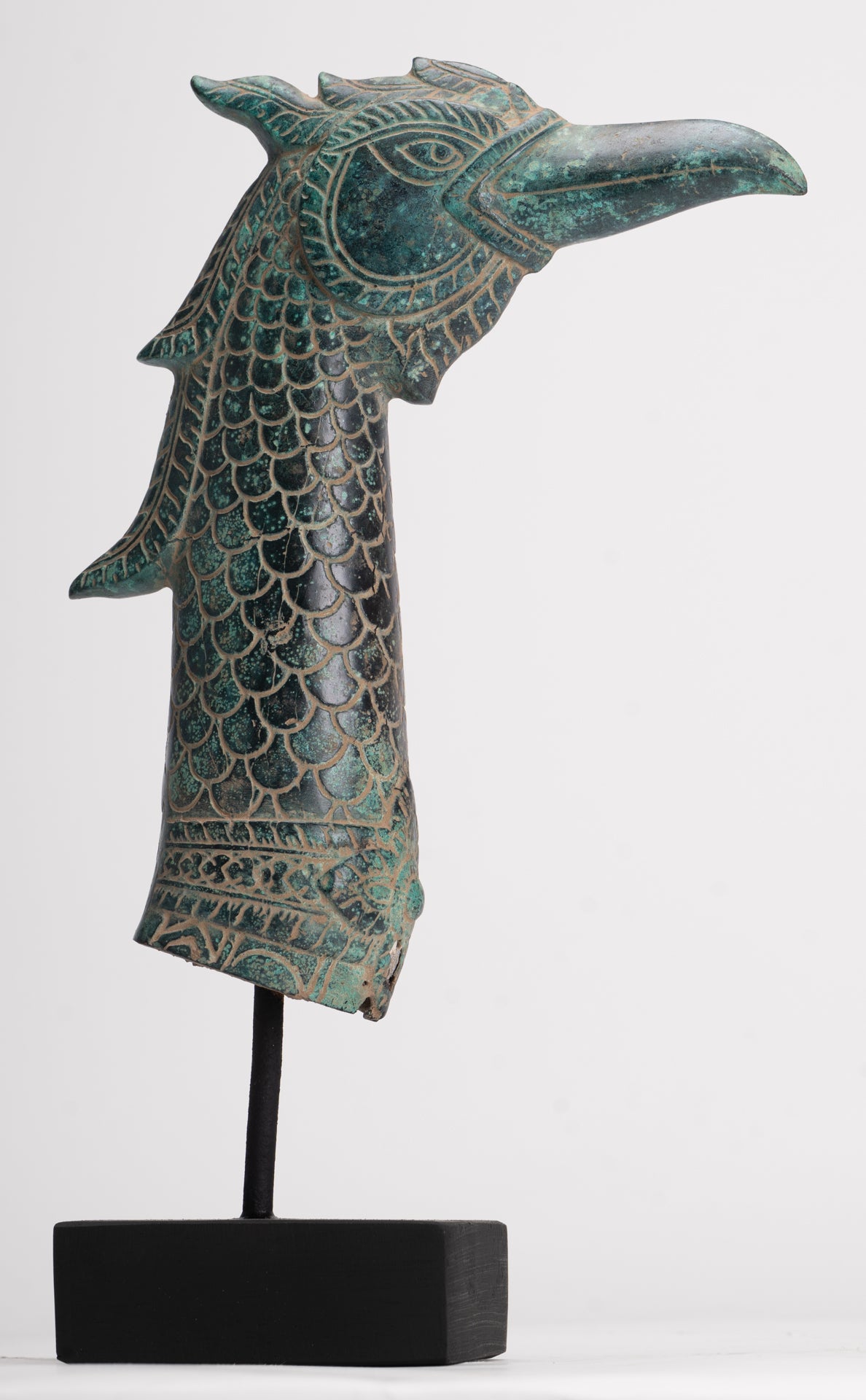
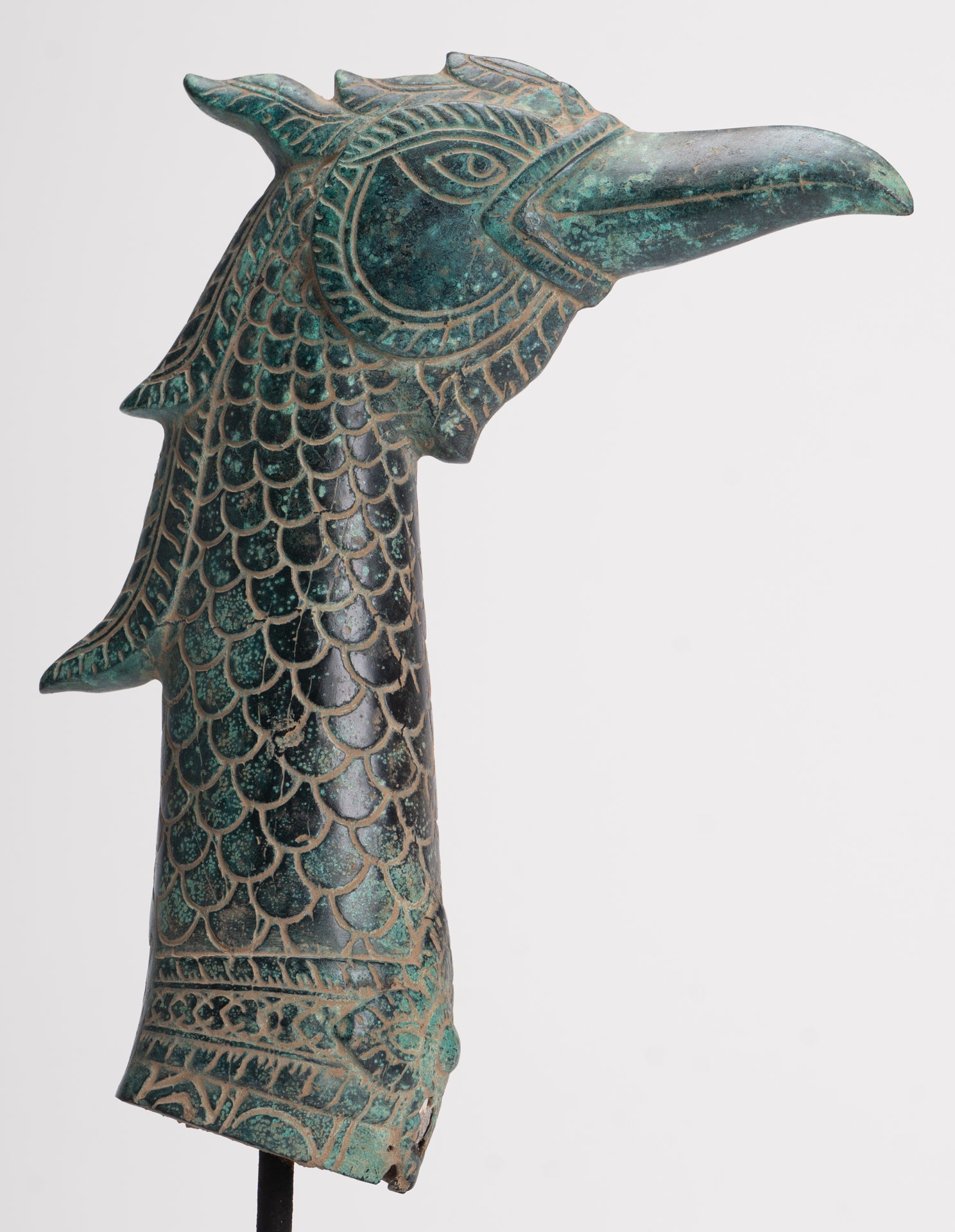
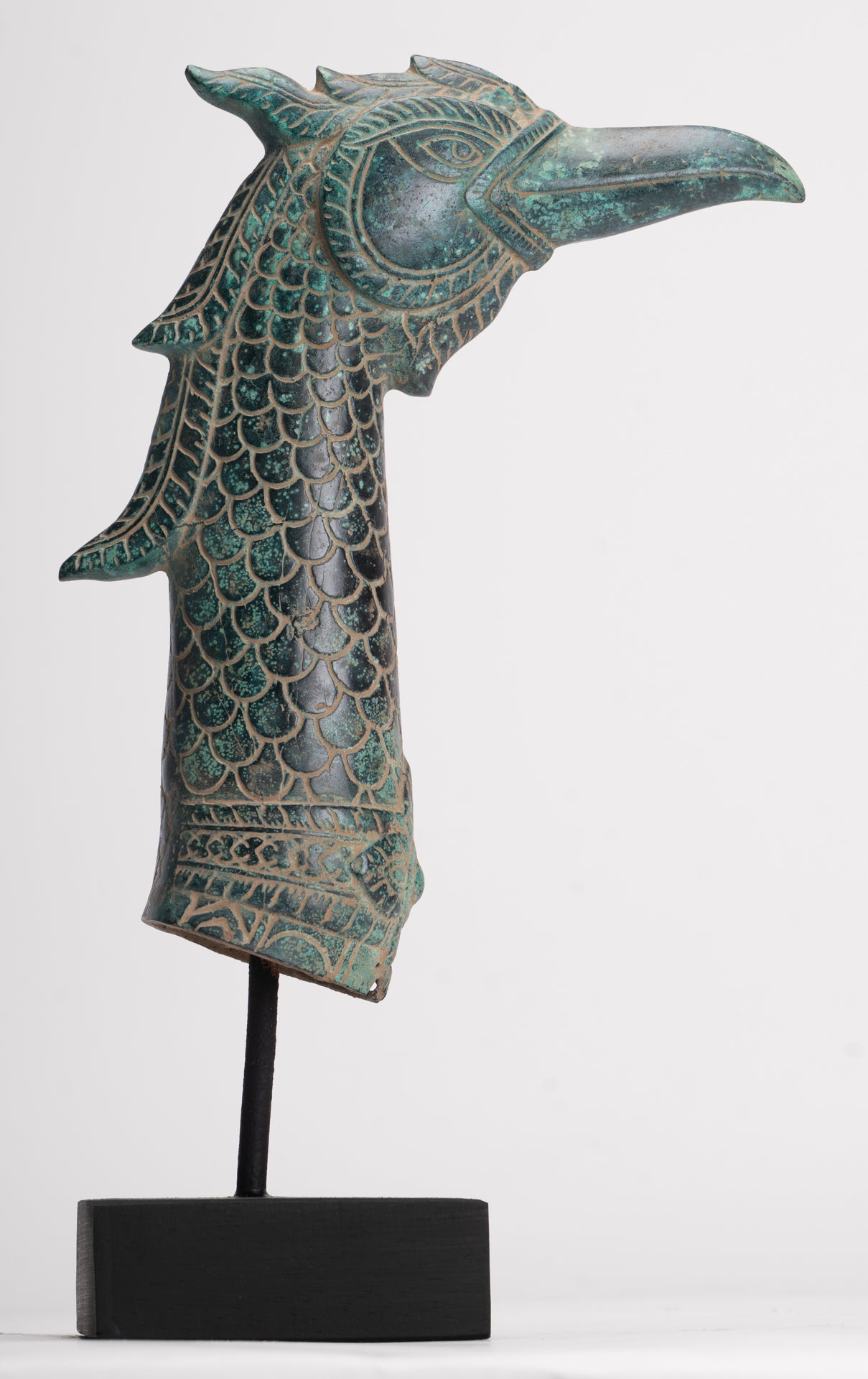
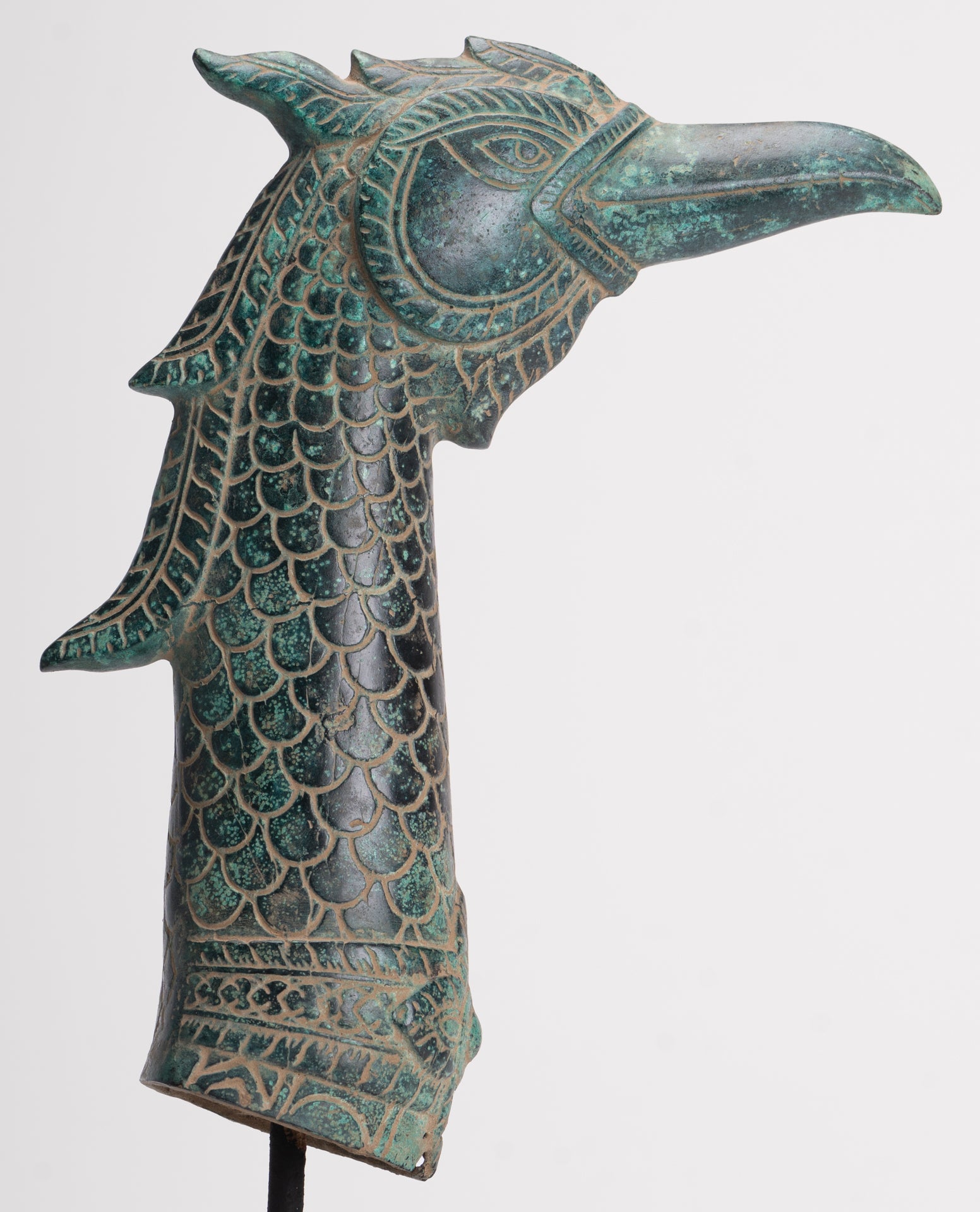
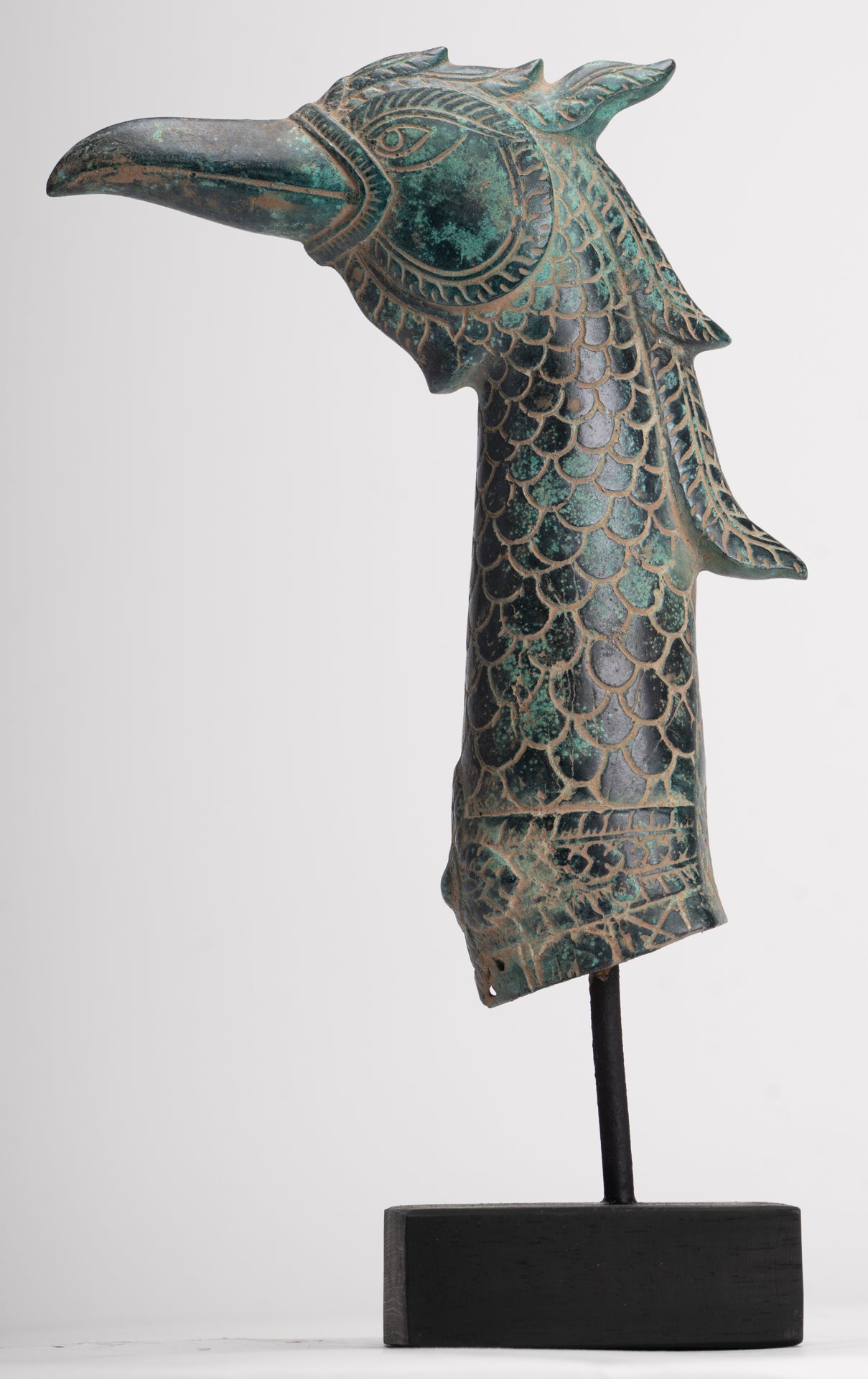
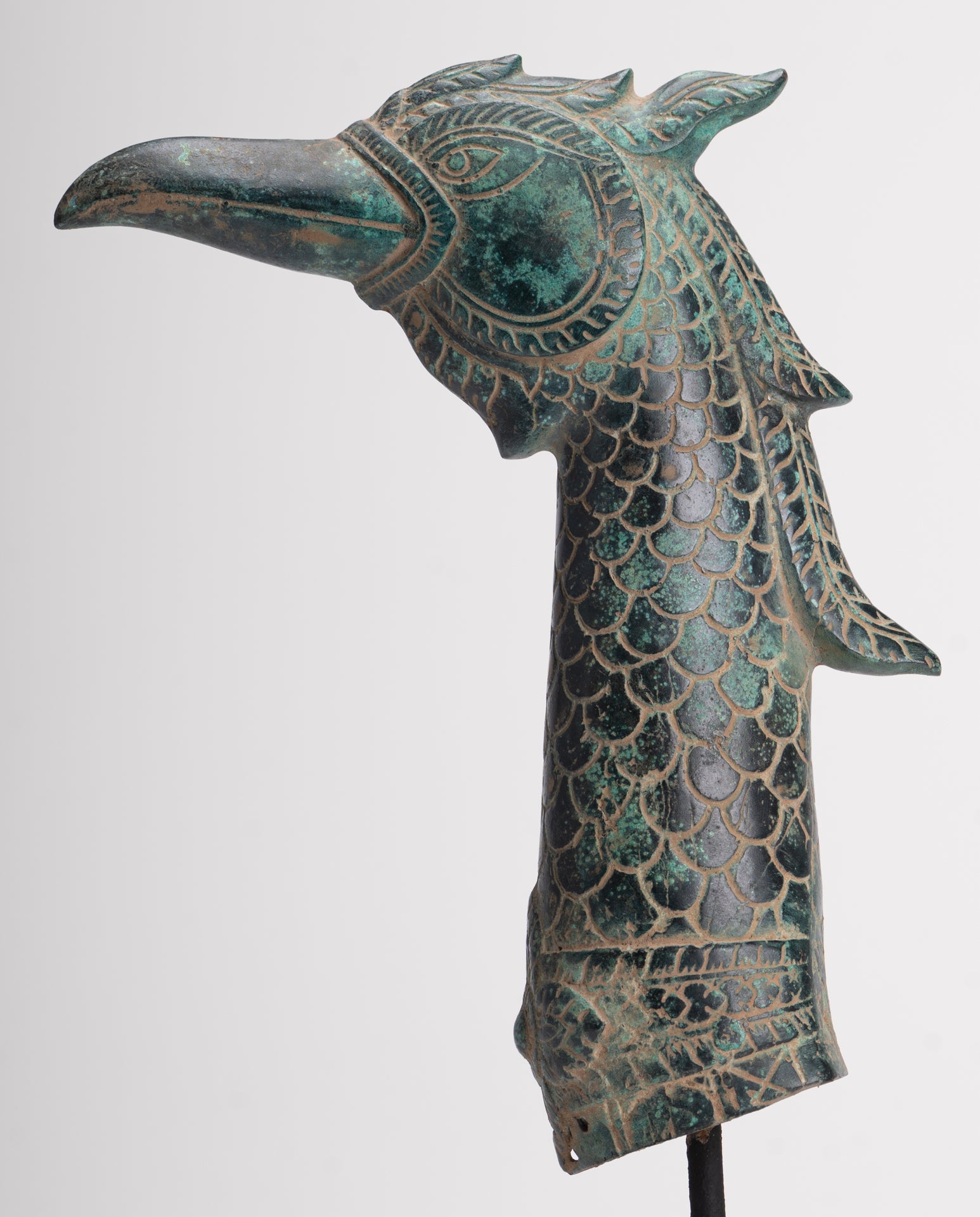
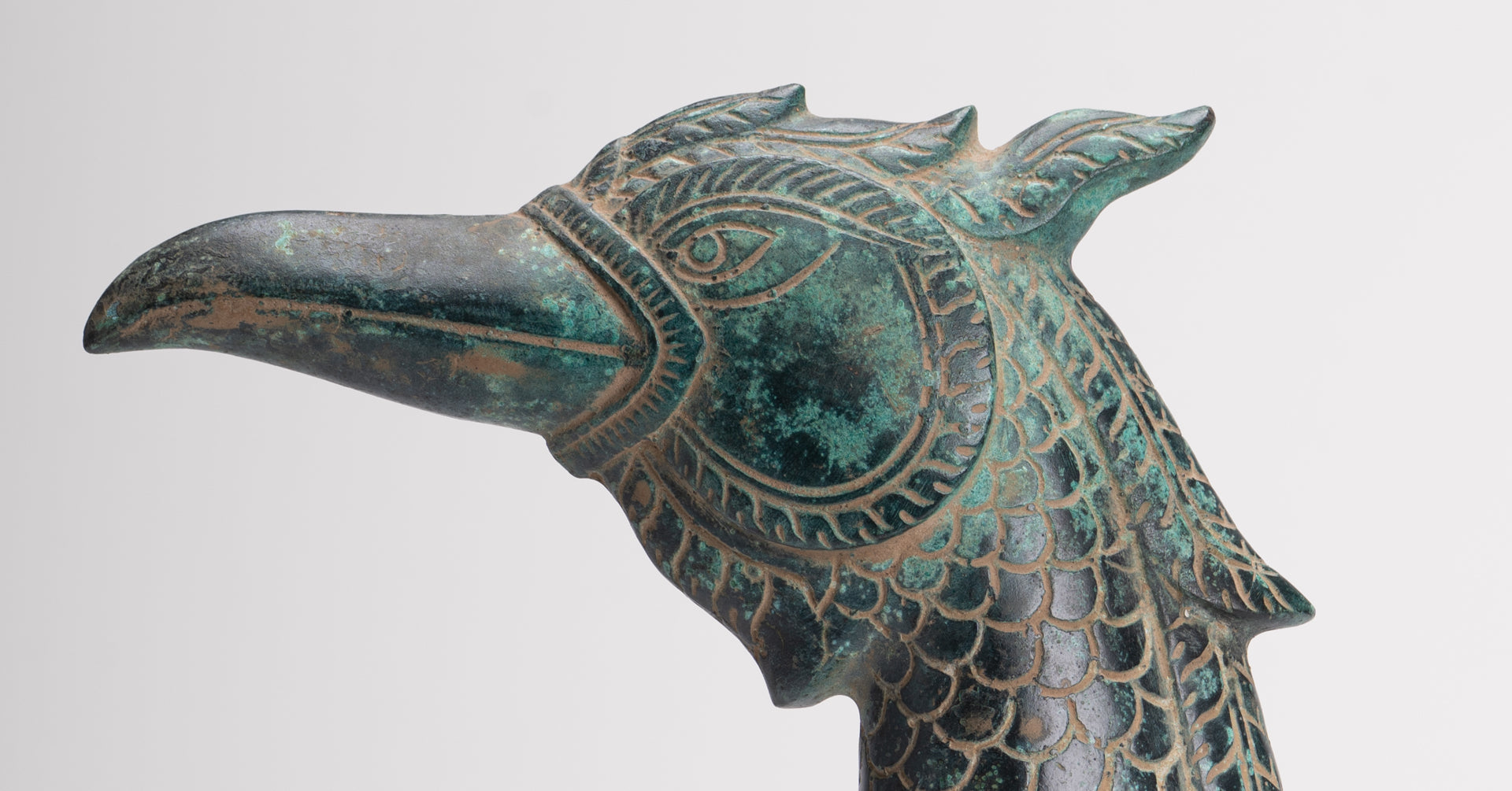
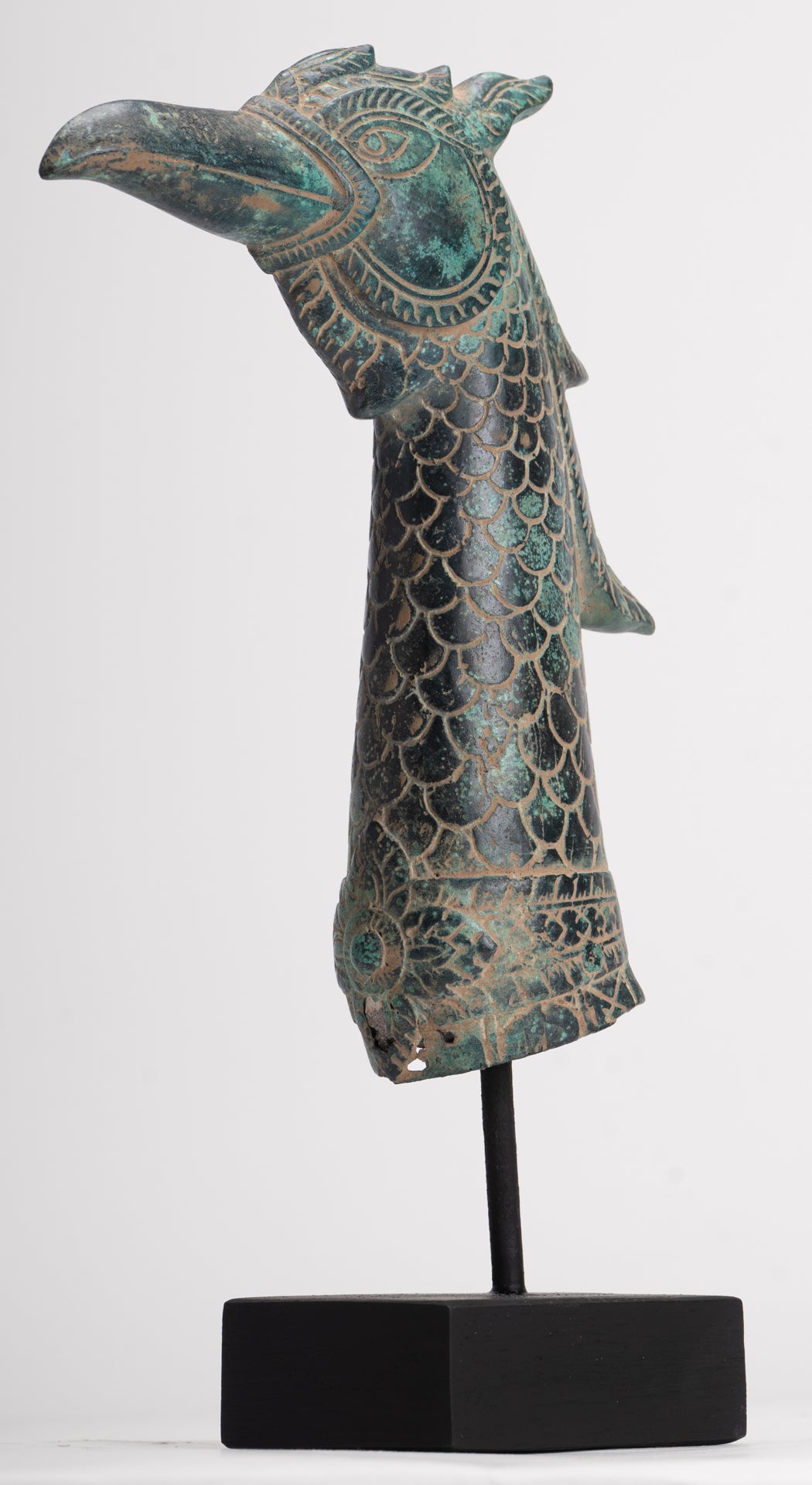
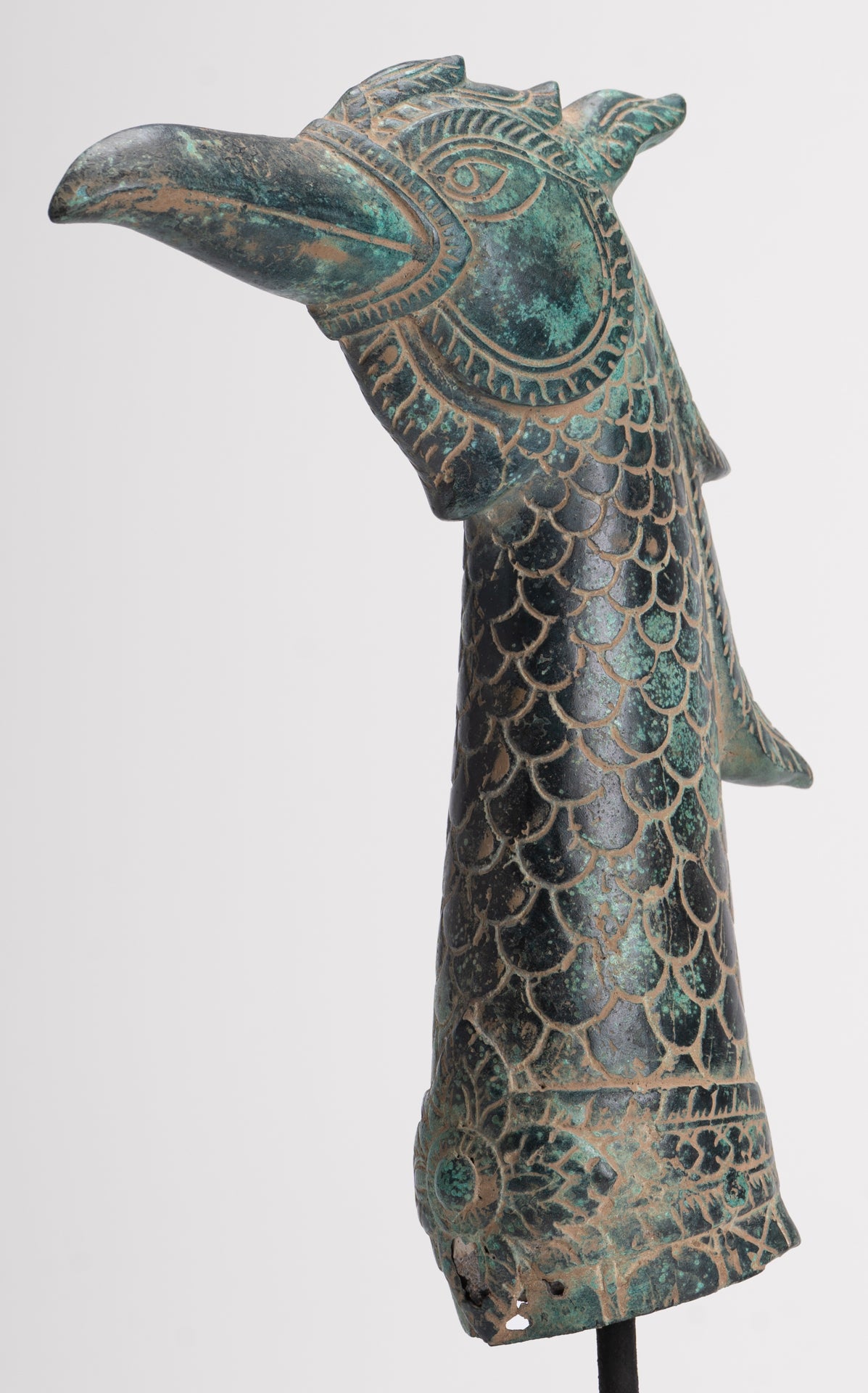
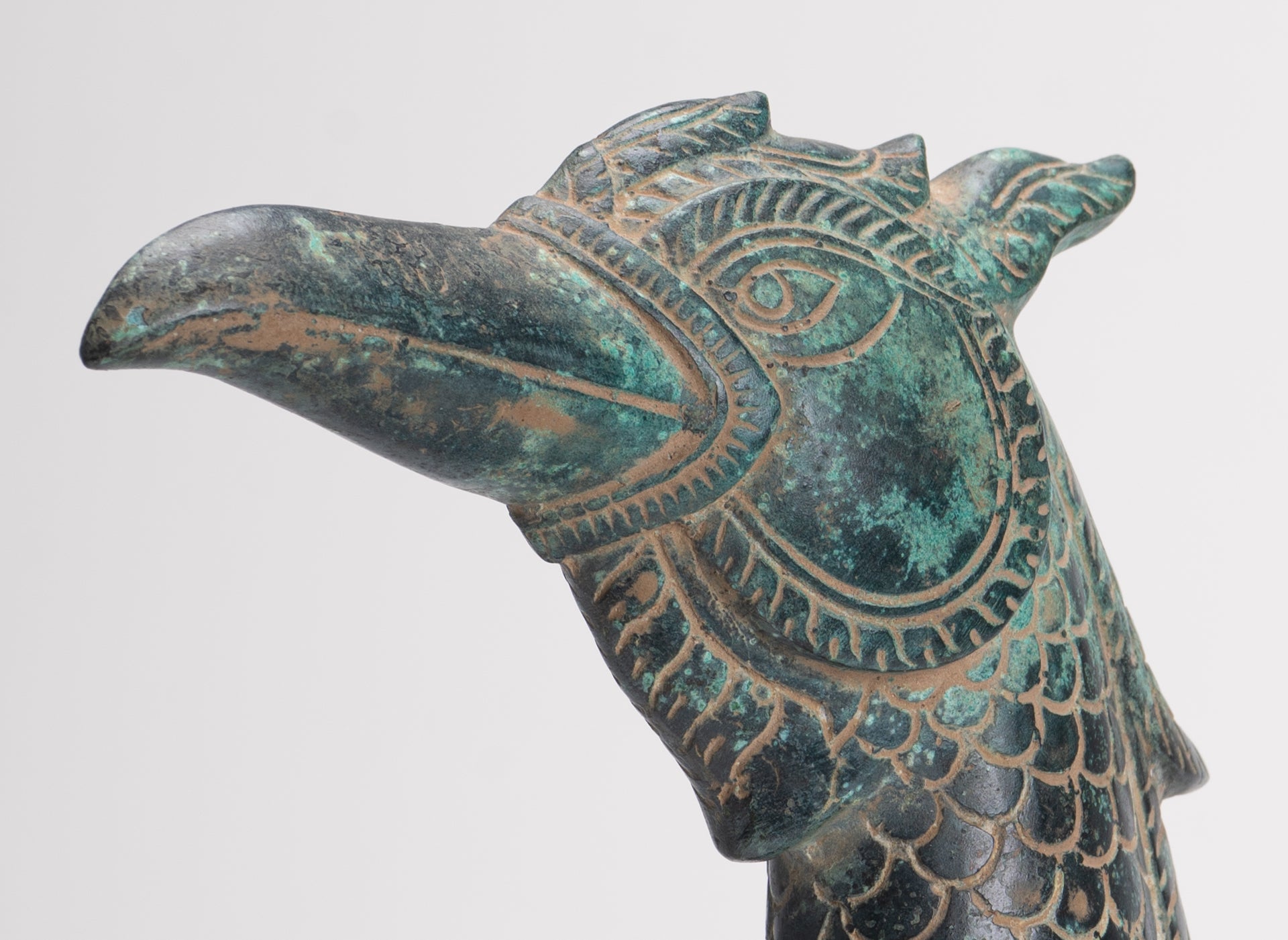
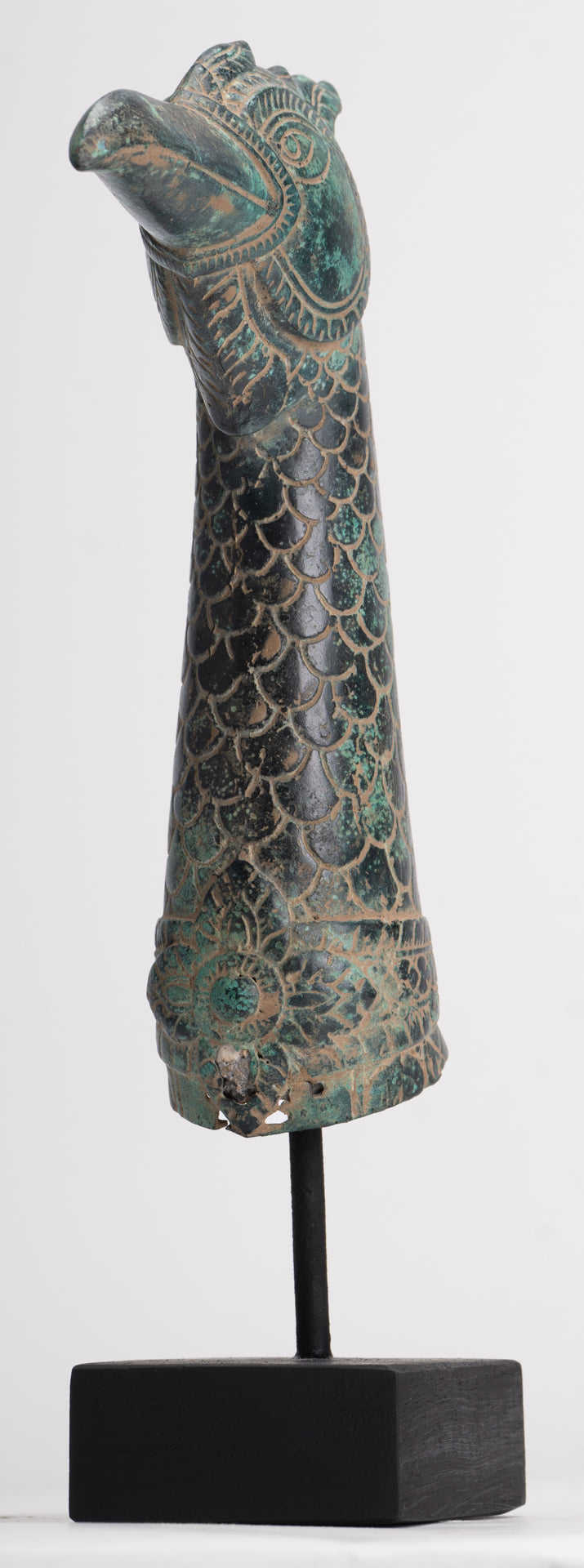
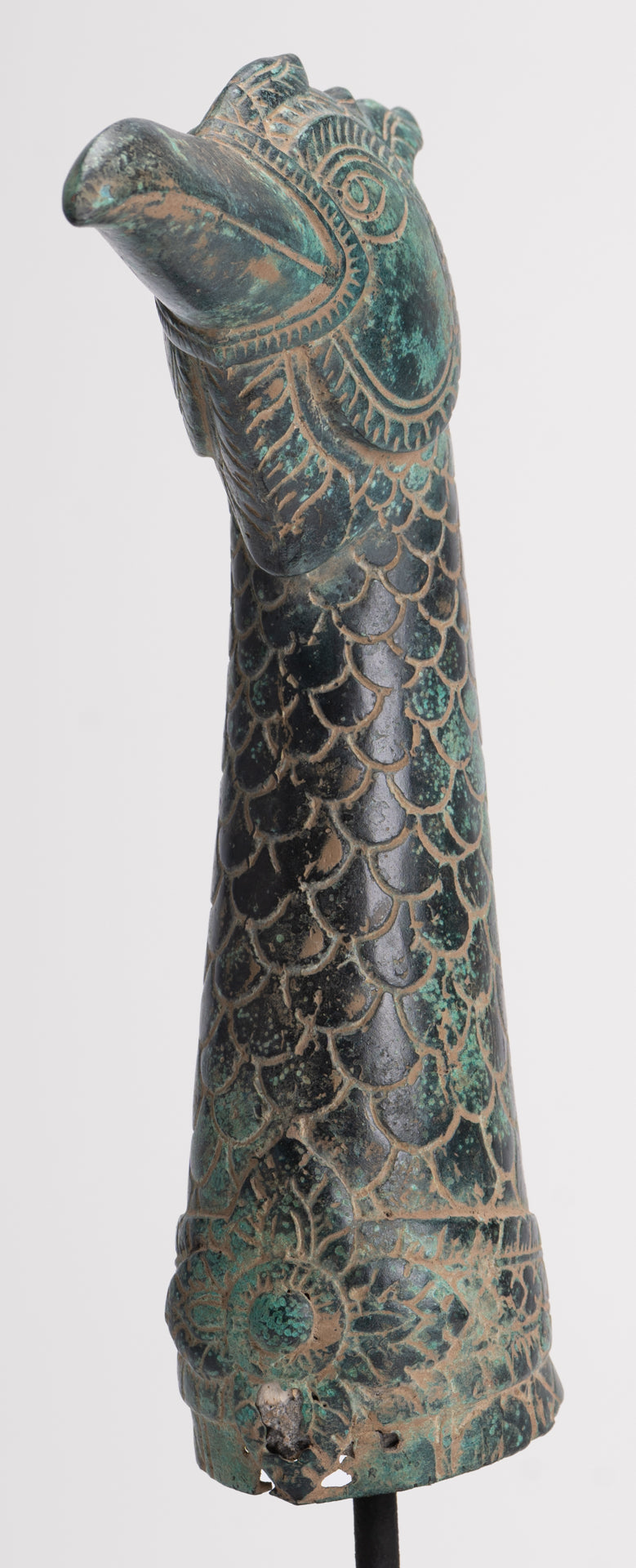
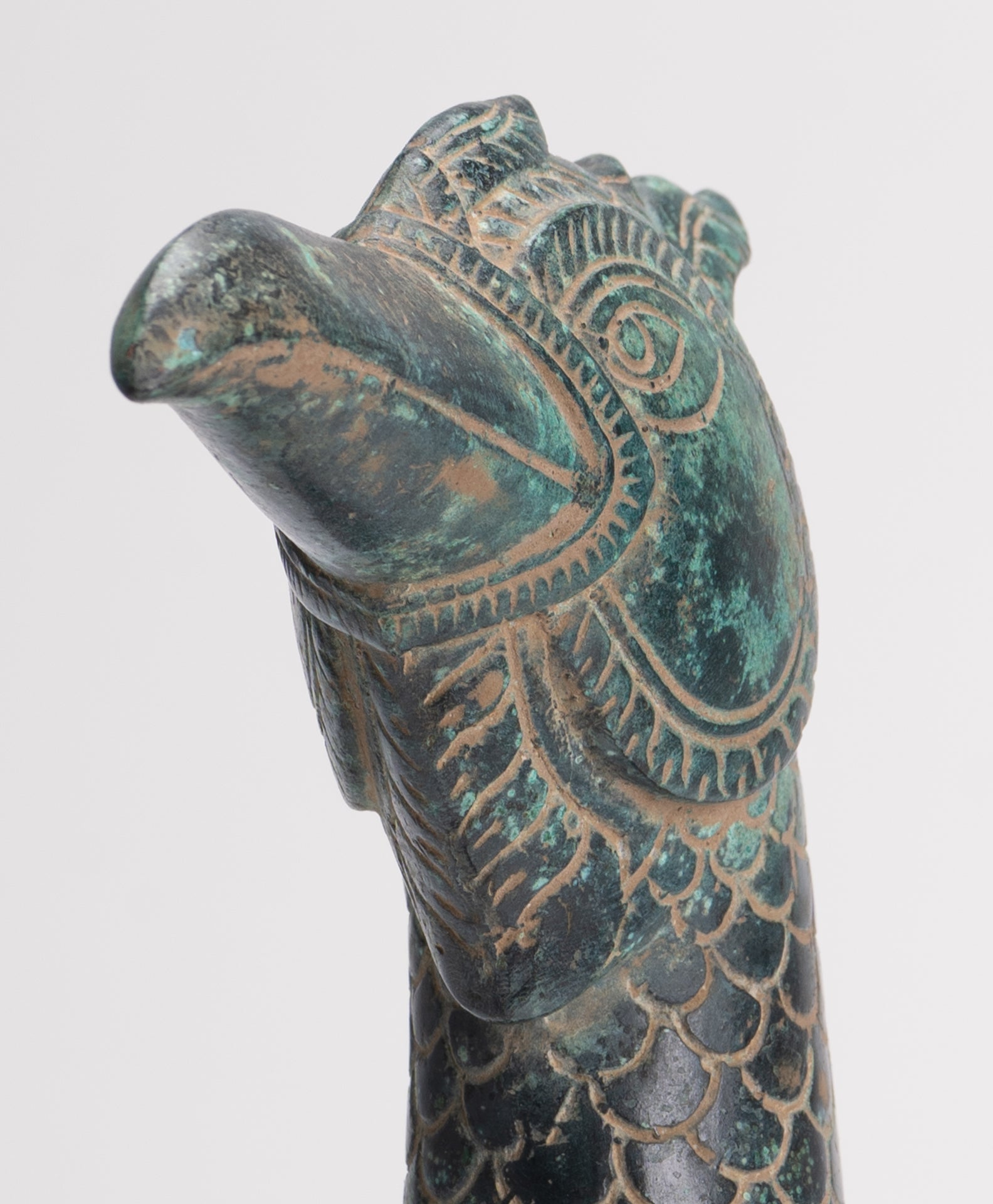
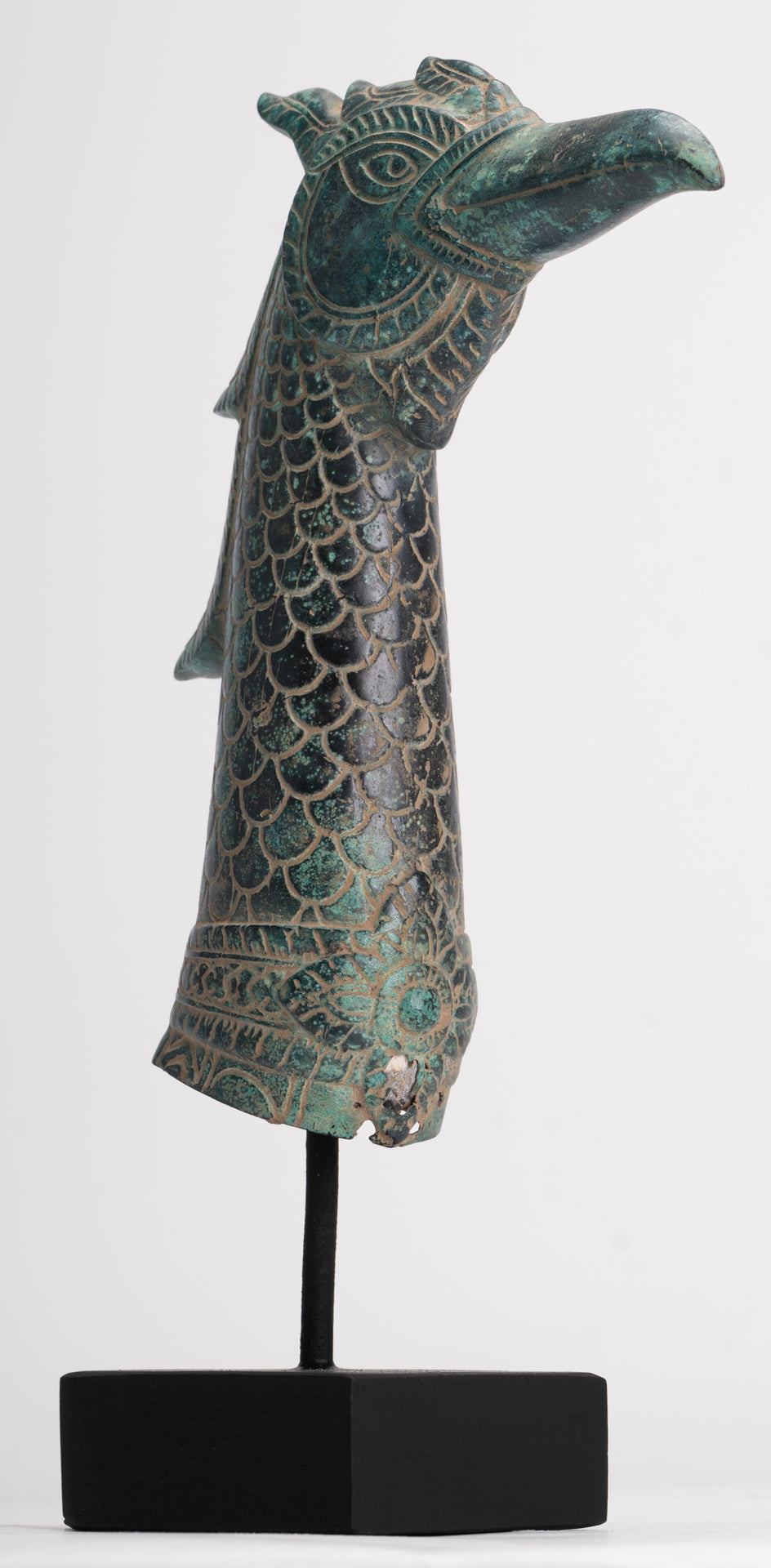
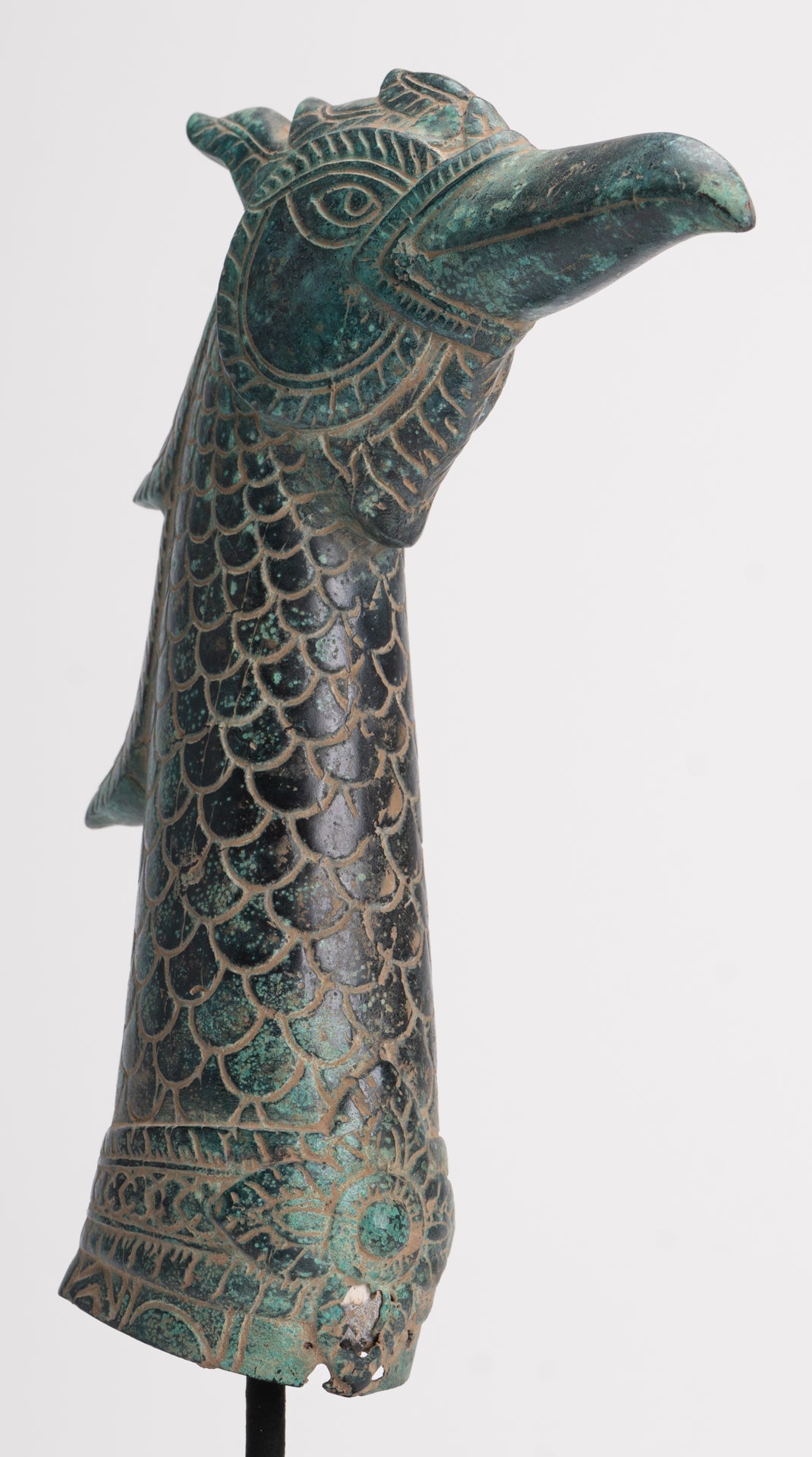
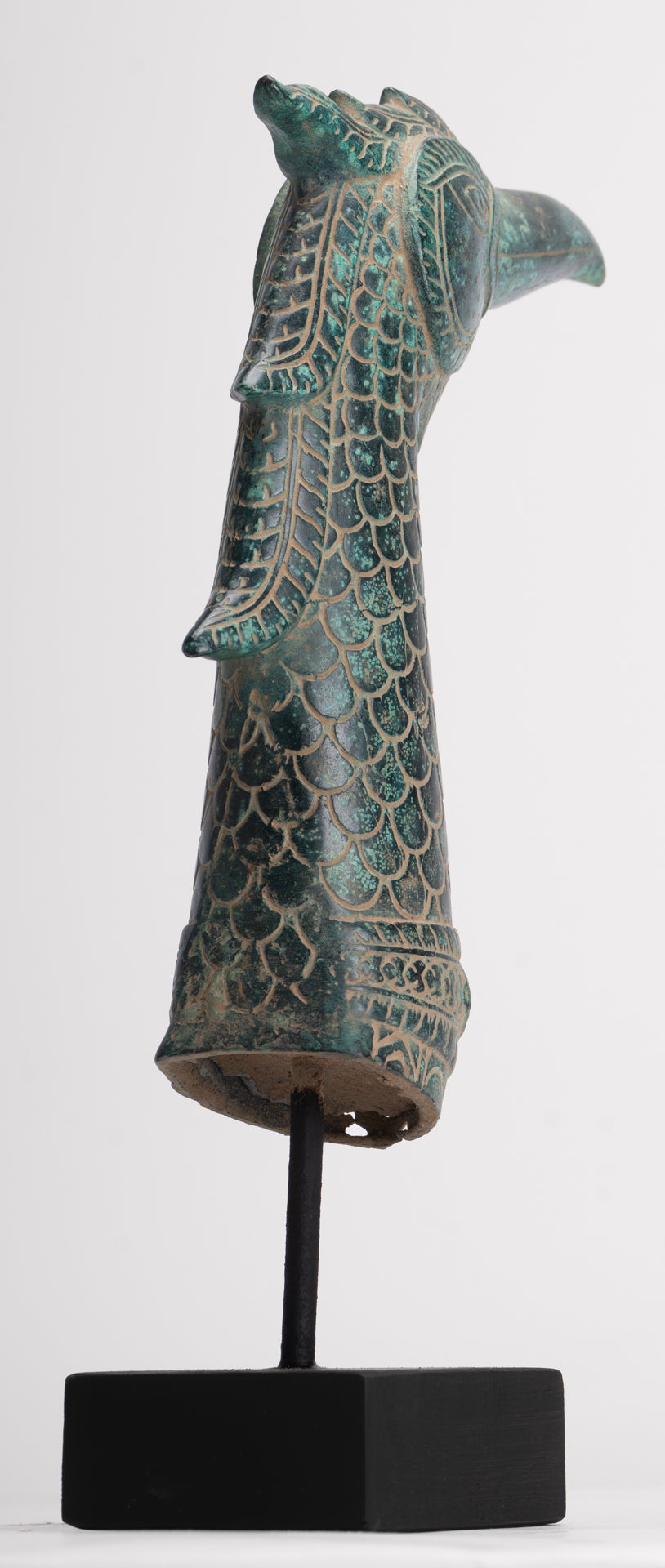
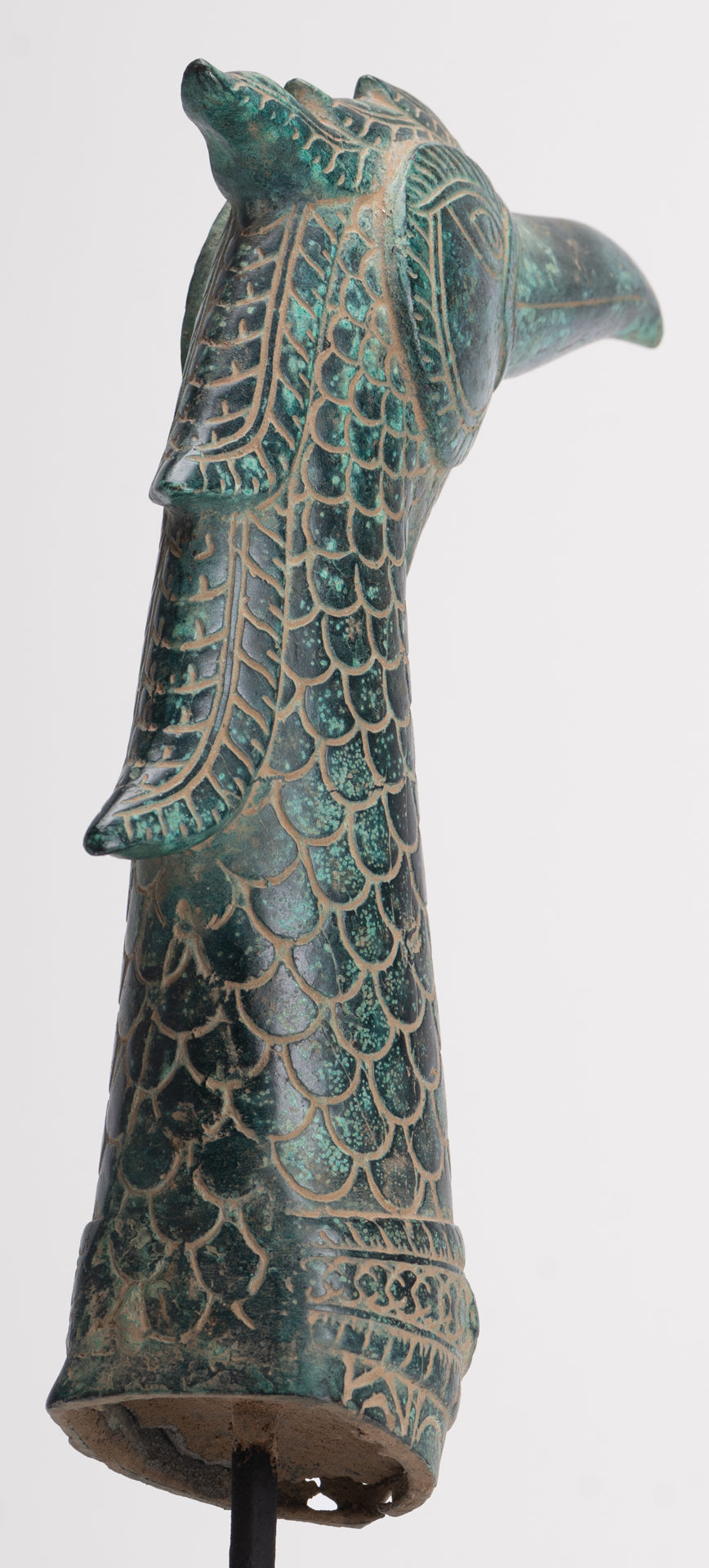
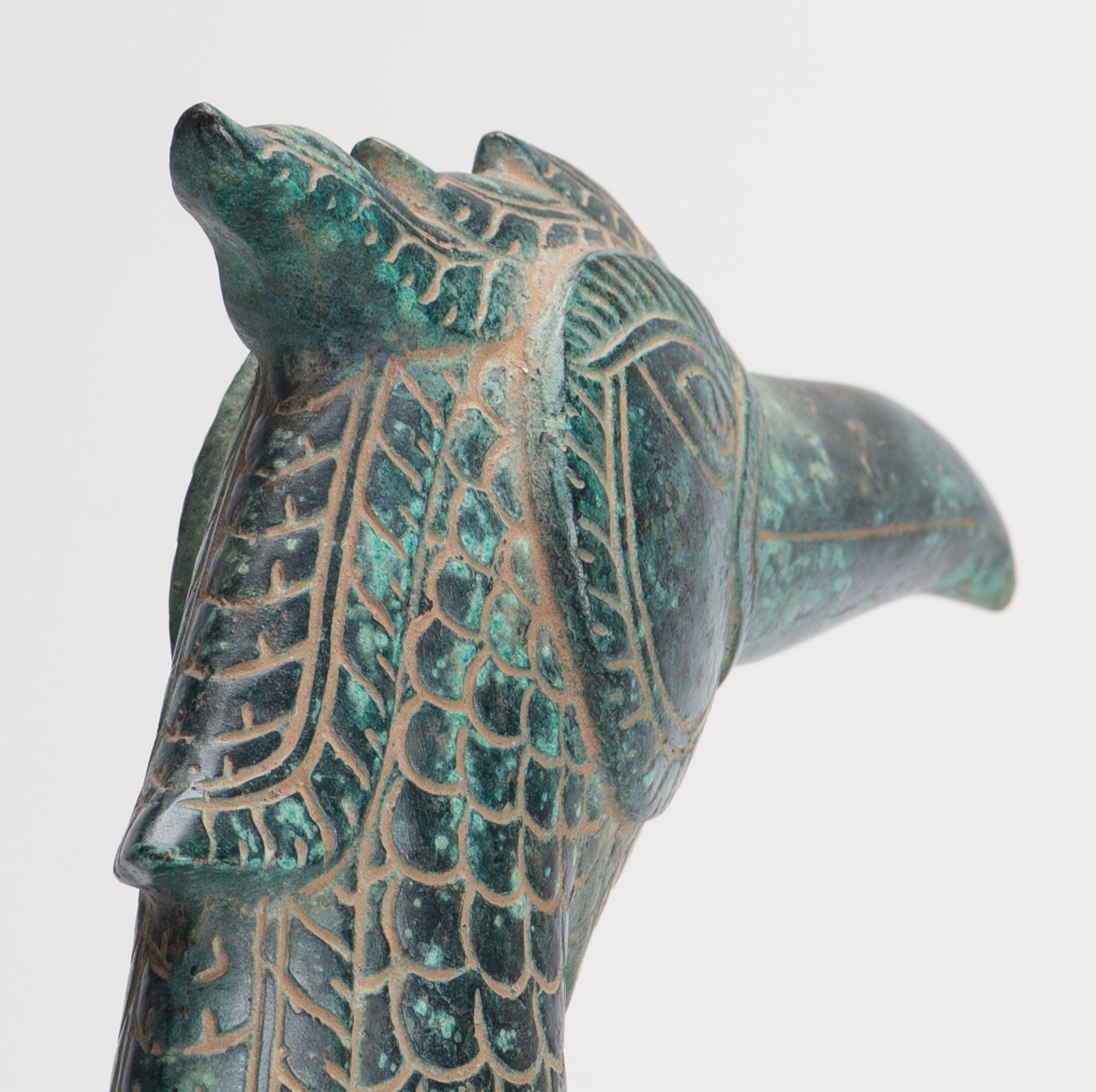
Antique Khmer Style Standing Bronze Mythical Bird/Goose/Peacock - 29cm/12" Tall
Measures (Height) 29cm/12"
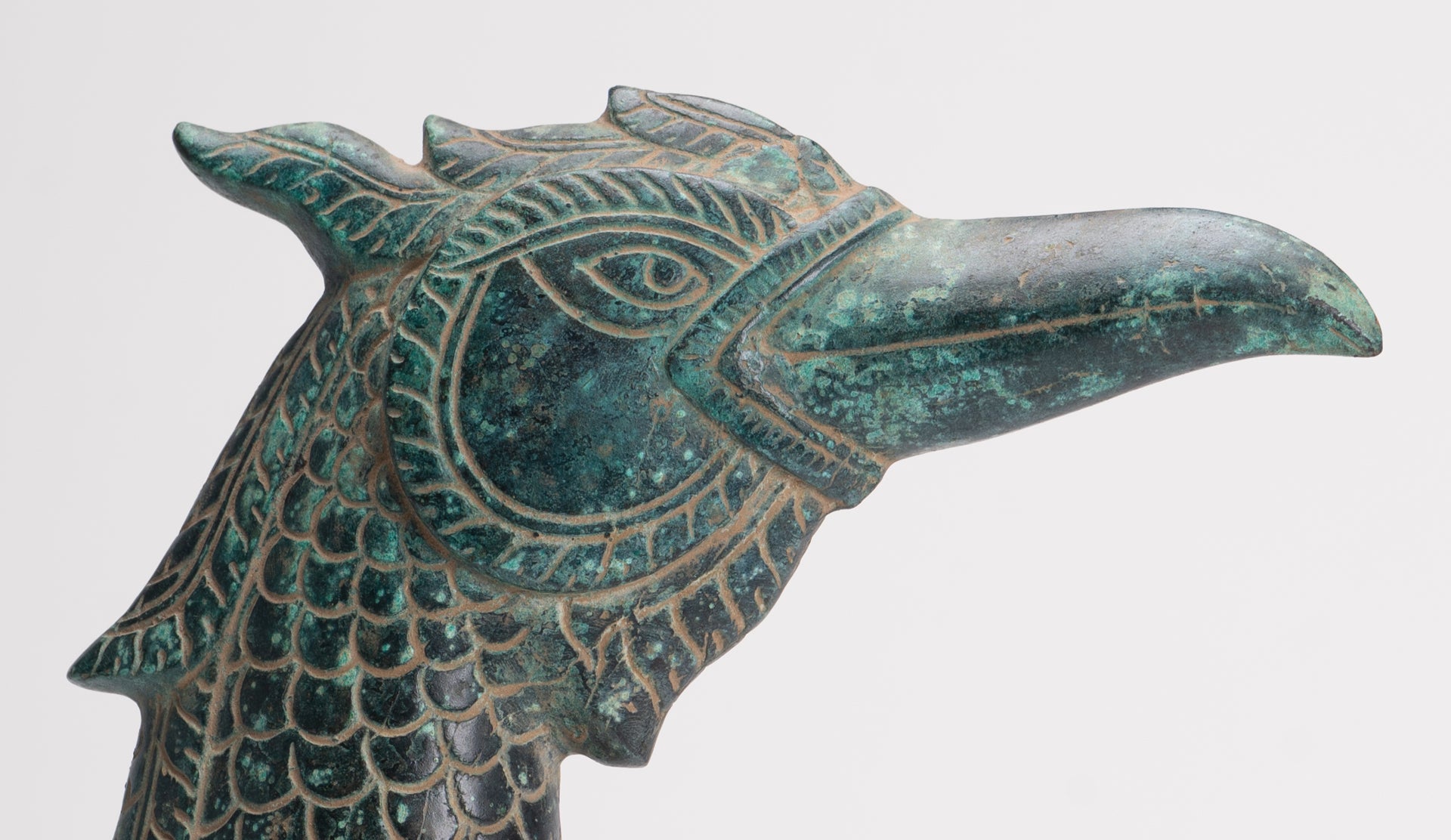
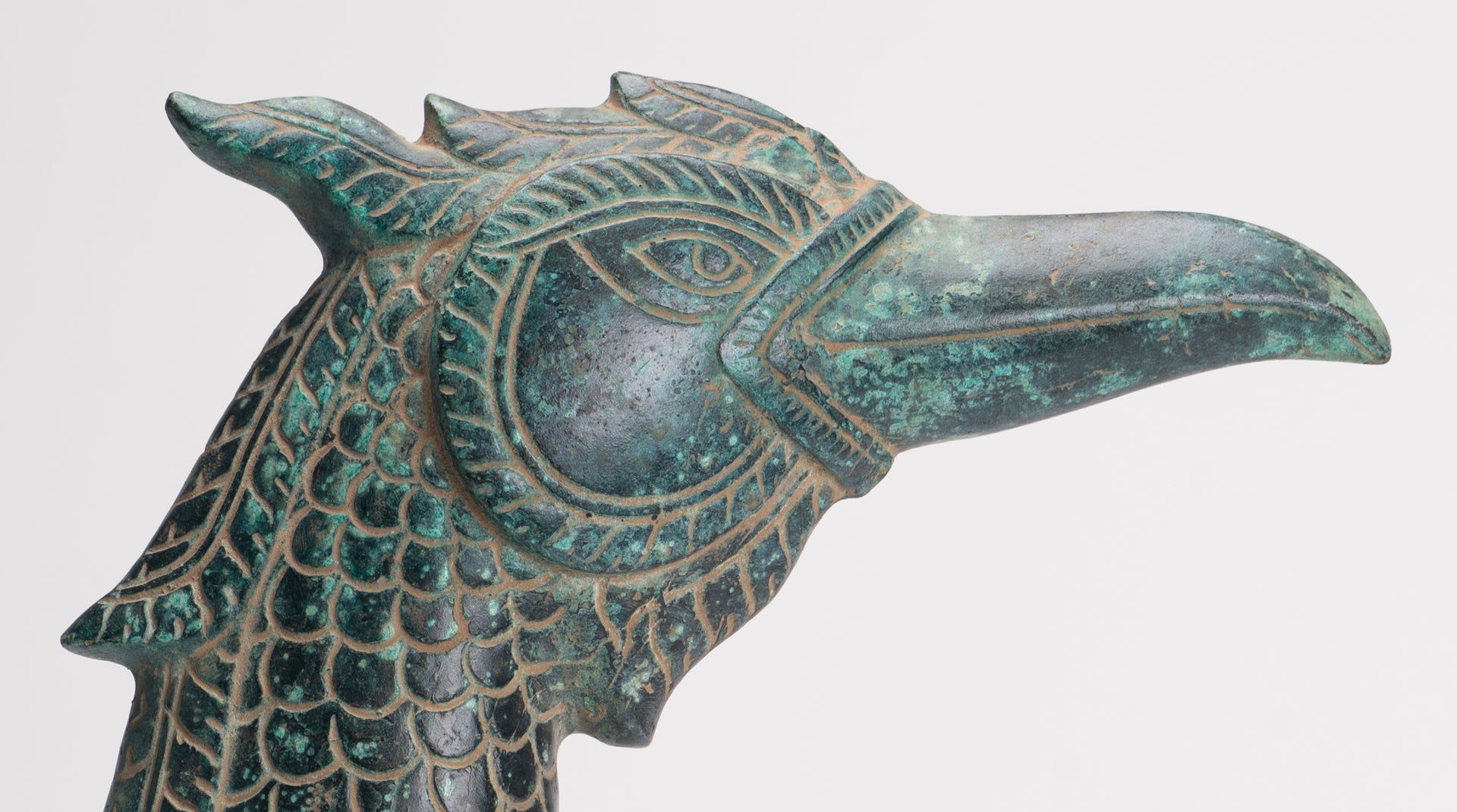
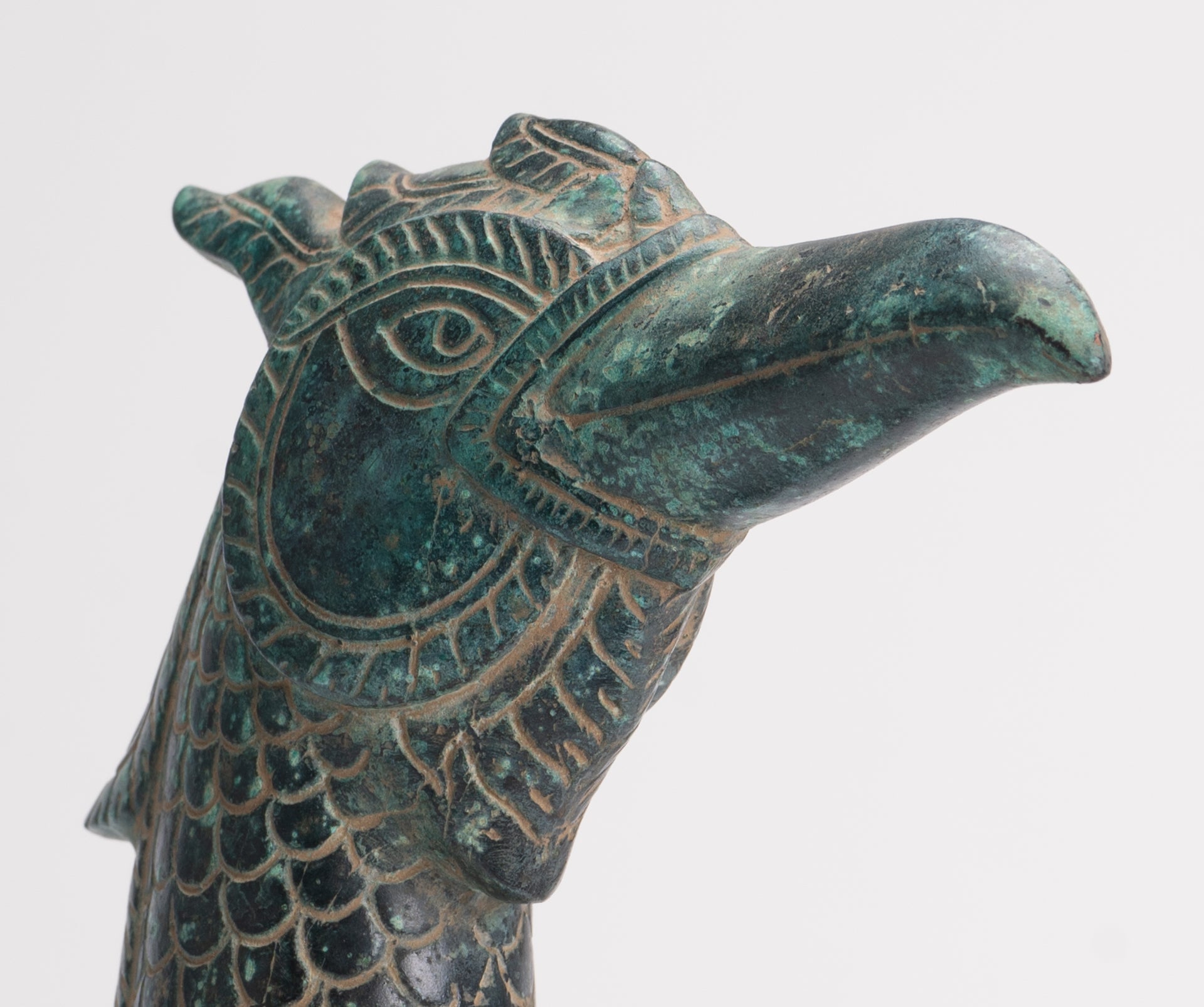
An antique Khmer style sculpture of a mythical bird (goose or peacock?). In many Hindu and Buddhist contexts the wild bird (seen here in a highly stylised form) is associated with soaring high above the earth and thus with detachment and spiritual attainment.
Goose - Hamsa
The hângsa (Khmer: ហង្សទ; from Sanskrit hamsa), a mythical aquatic bird often interpreted as a goose or swan, holds a central and significant place in Khmer culture, derived from Hindu and Buddhist traditionsSymbolism and Cultural Significance- Spiritual Symbol: The hângsa is an important spiritual icon in both Indian and Southeast Asian culture, including Cambodia.
- Vehicle of Deities: In Hindu iconography, the hamsa serves as the vahana (vehicle or mount) of several important deities, including Brahma (the creator god), his consort Gayatri, Saraswati (goddess of knowledge, music, and art), and Vishvakarma.
- Aesthetical Perfection: The bird is considered a symbol of aesthetical perfection, embodying grace, frailty, and strength, and is often associated with the female principle and fertility in Southeast Asian cultures.
- Purity and Wisdom: The hamsa is attributed with the mythical ability to extract milk from a mixture of milk and water, or good from evil, symbolizing spiritual discernment, wisdom, and purity.
- Guidance: In Theravada Buddhism, which is the predominant form in Cambodia, the "wild goose" represents the birds that the Great Being (a Bodhisattva figure) guides, symbolizing spiritual leadership and the path to enlightenment.
- Decorative Motif: Due to its profound symbolism, the hângsa motif is widely used as a decorative element in Khmer art and architecture, found on temples, viharas (Buddhist monasteries), and traditional houses. For example, the hamsa can be seen as a ceiling support in some wats (pagodas).
Peacock
In Khmer culture, the peacock is a symbol of beauty, prosperity, and good luck, deeply integrated into art, dance, and ancient beliefs. It appears in carvings at Angkor Wat, represents a spiritual vehicle for deities, and is the subject of traditional dances like the Pailin Peacock Dance and Pursat Peacock Dance. These dances often depict courtship rituals, celebrate nature, or are performed to bring blessings for a happy life.Representation in art and legend
- Art: Peacocks are frequently carved into temple walls, like those at Angkor Wat, sometimes depicting stories of flying peacocks in ancient battles.
- Legend: The Peacock Princess legend is a recurring story in Southeast Asian folklore and is sometimes featured in musical plays.
- Symbolism: The bird represents beauty, grace, and happiness, and is associated with prosperity
Significance in dance- Courtship: The Peacock Dance often portrays a courtship ritual between a peacock and peahen, using elegant and graceful movements.
- Blessings: It is performed at ceremonies and festivals to bring blessings of prosperity and happiness.
-
Specific dances:
- Pailin Peacock Dance: Inspired by a local legend about a magic peacock, this dance is lively and symbolizes happiness.
- Pursat Peacock Dance: This dance is performed by the Kola ethnic group to celebrate the harvest and is an offering to spirits for happiness and prosperity.
Spiritual and cultural context- Spiritual vehicle: The peacock is the vahana or vehicle of Lord Murugan, the Hindu god of war, wisdom, and courage, who uses the peacock to defeat evil.
- Pre-Buddhist beliefs: The respect for the peacock pre-dates Buddhism and Hinduism, with beliefs that it has a connection to the land and its spirits.
- Symbol of wisdom: In Buddhist tradition, peacocks symbolize wisdom for their ability to consume poisonous plants without harm, a trait compared to how a bodhisattva can absorb negative emotions.
The casting of this piece is beautiful as you can see in the fine details of the body.
Each detail is rendered perfectly. The distinctive patina of the piece is also particularly delightful. This traditional in appearance piece is sure to add serenity to your home, office or sacred space.
SATISFACTION GUARANTEE - We have been offering SE Asian Art for many years and are proud of the reputation we have developed for fair and honest listings. However, if for any reason, whatsoever, you are unhappy with your purchase please just let us know and we will provide a full refund. We want you to be 100% happy with your purchase.
-
The majority of orders will be shipped with DHL. This is a secure, express and fully tracked service.
Items less than 2Kg we typically ship using Royal Mail.
Once we receive your order we try to ship all orders the same or next working day.
Large and/or fragile pieces requiring palletising, specialist crating and/or extra packaging may take a little longer. Palletised shipments will be delivered curbside.
All orders over 35 GBP will be shipped free of charge.

-
We genuinely hope that all purchases delight.
However, if they do not, regardless of reason, we will refund all orders upon receipt of the unwanted item. Just notify us within 14 days of receiving your order that you wish to make a return and send the piece back to us with 30 days of delivery.


