


-
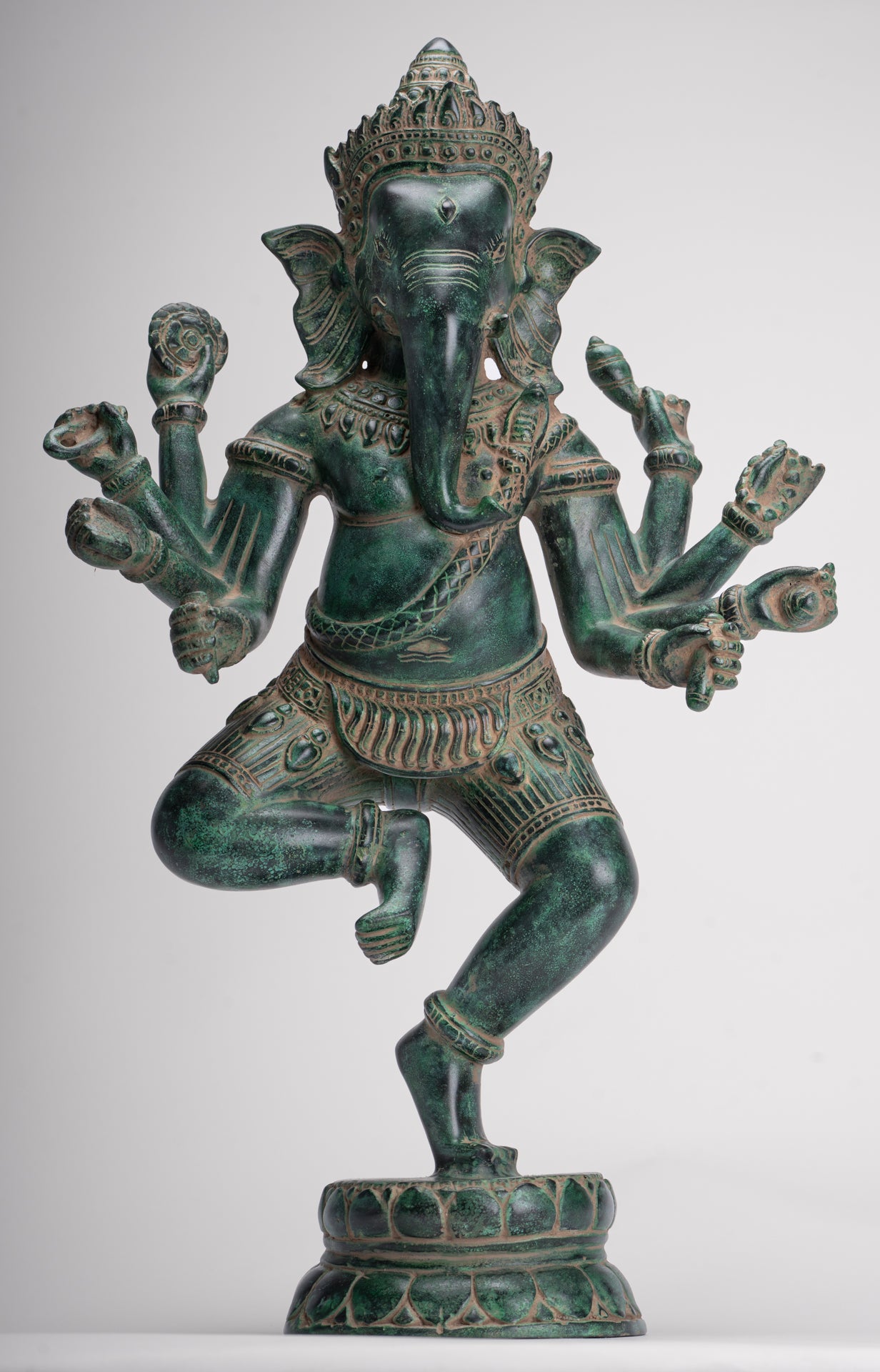
Antique Khmer Style Bronze Dancing Ganesha Statue - 50cm/20"
Measures (Height) 50cm/20"
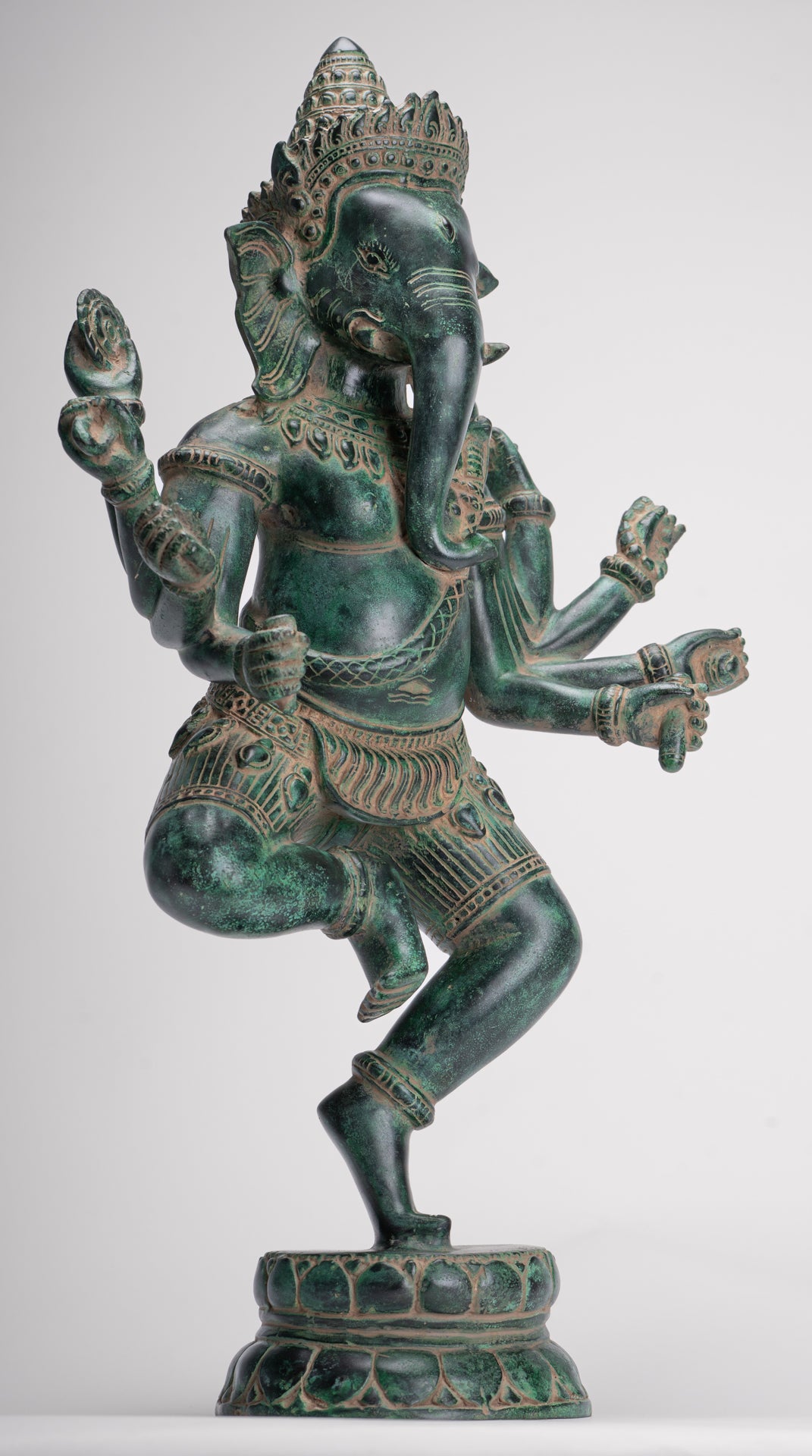
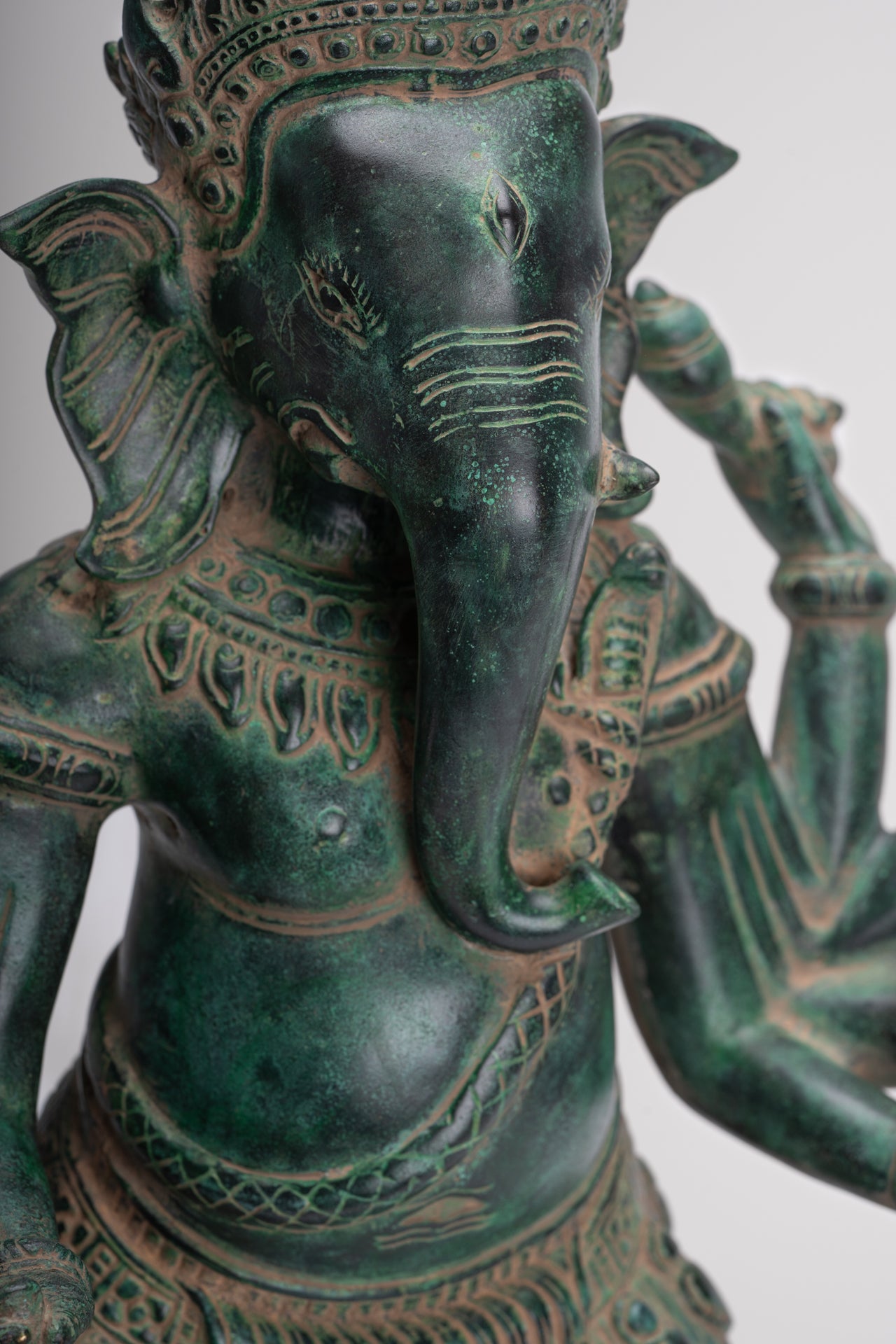
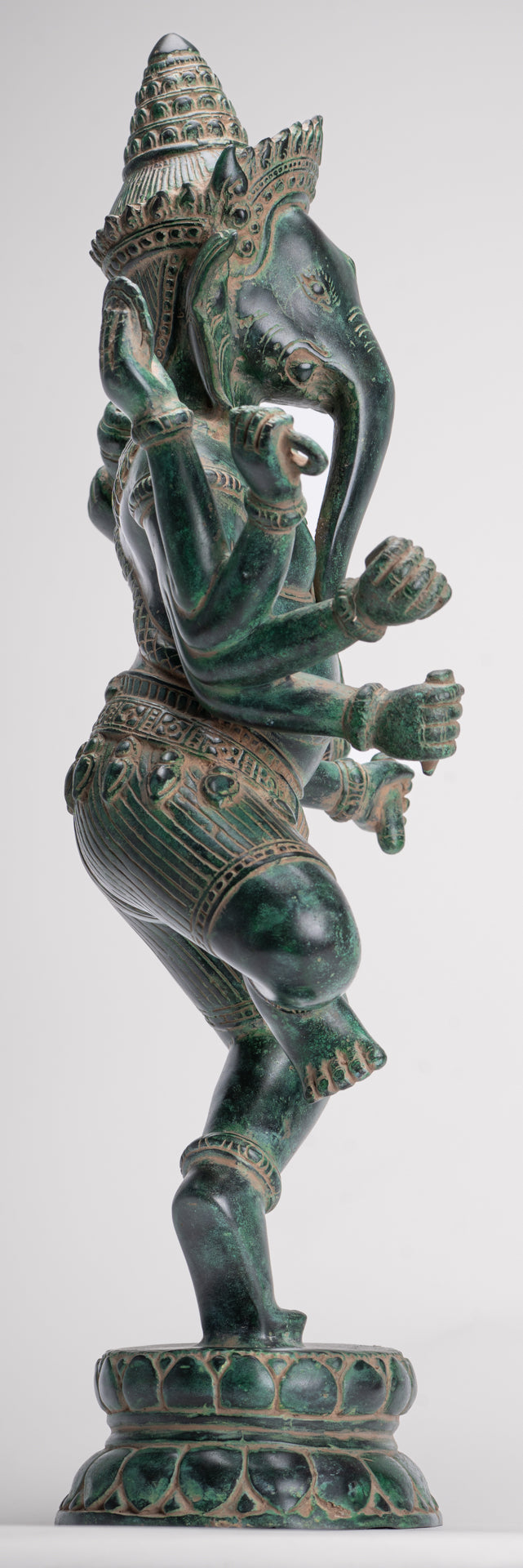
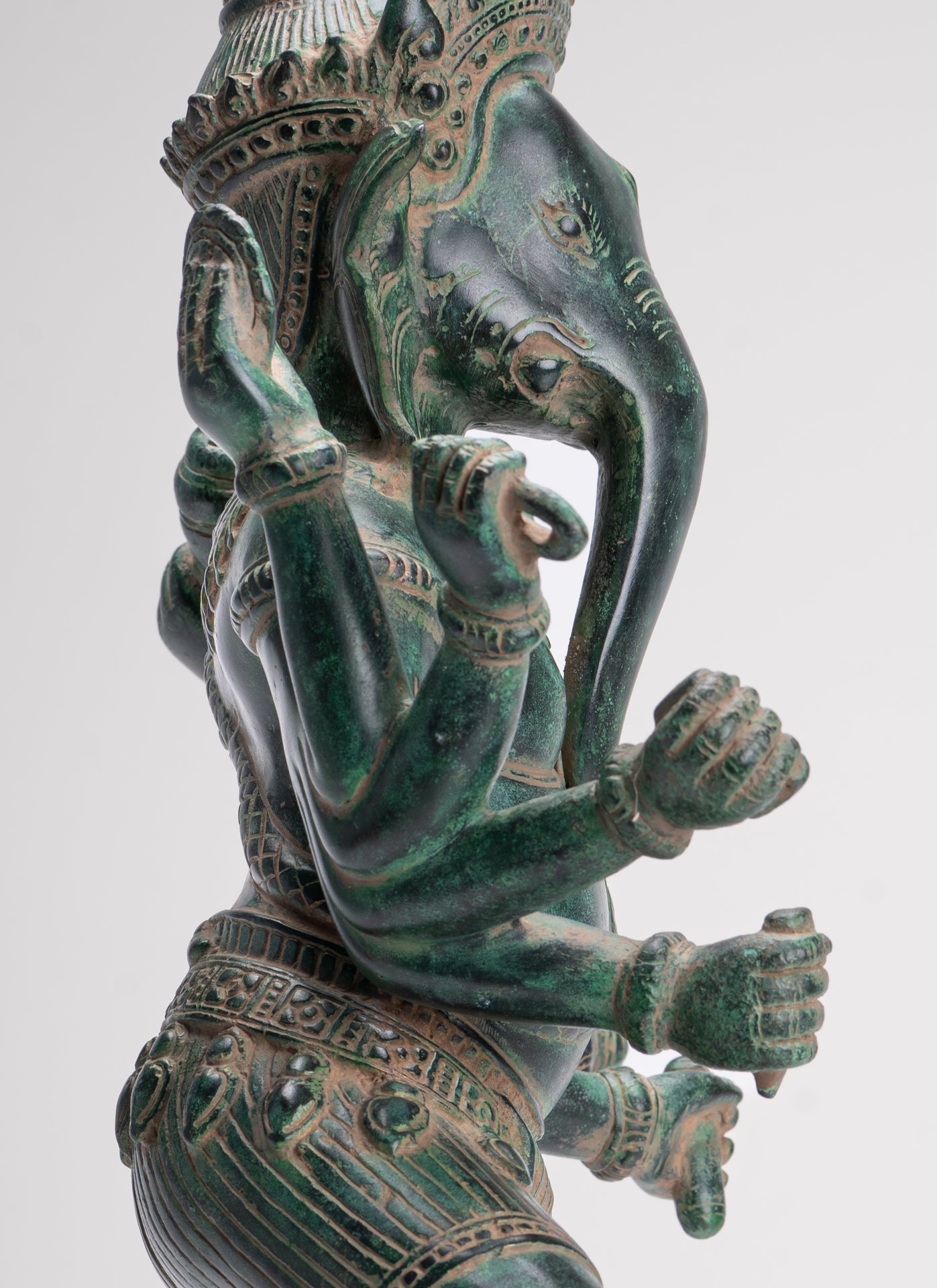
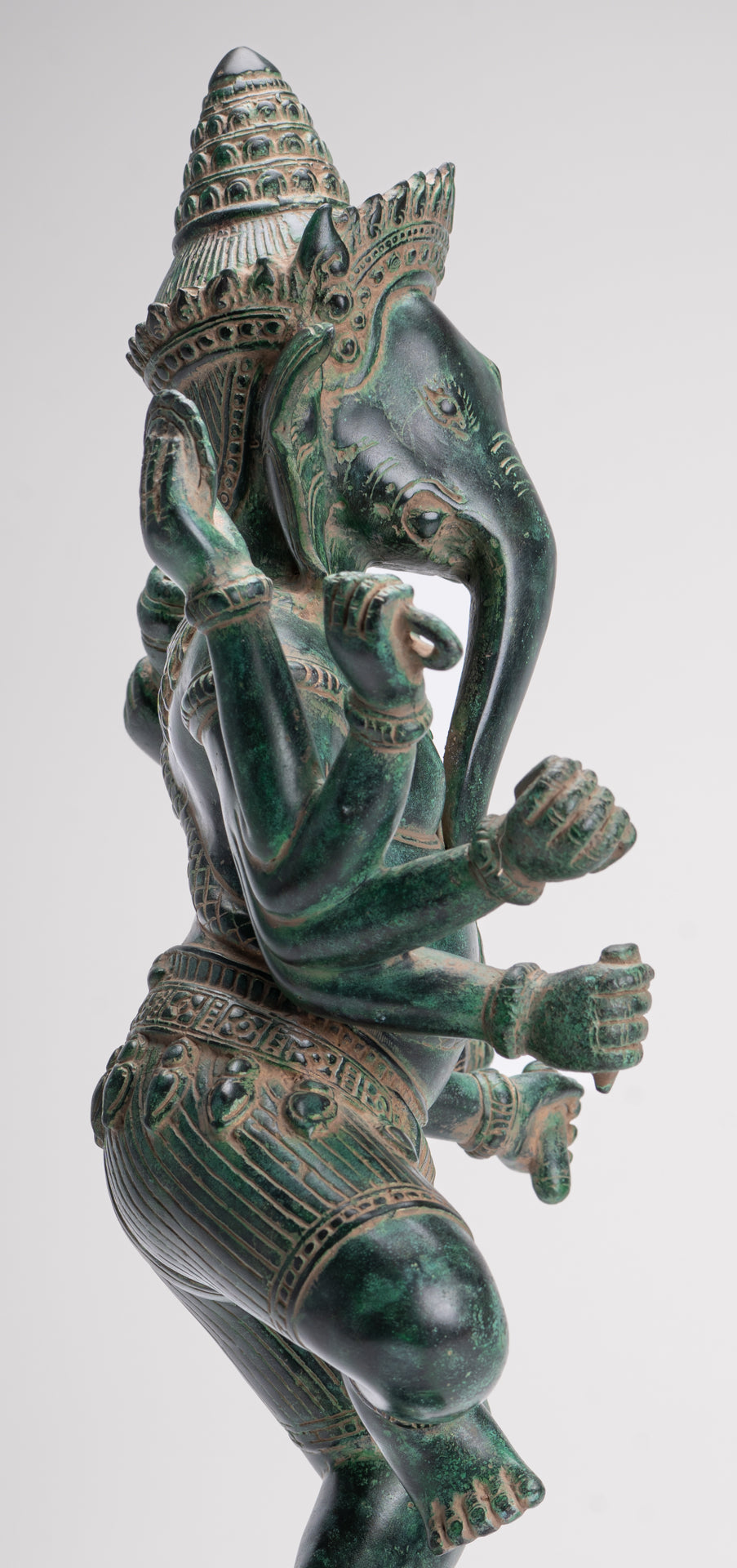
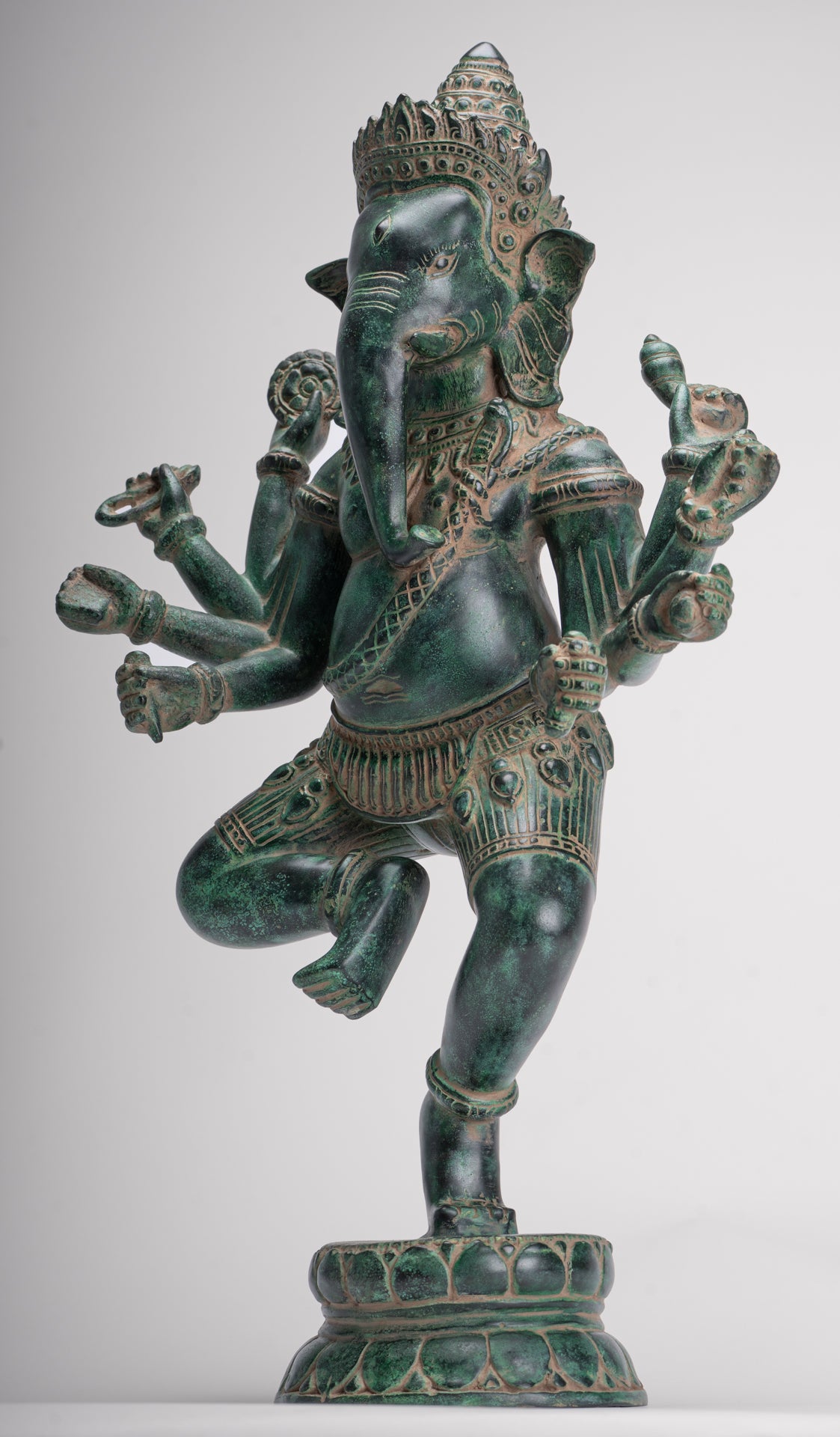
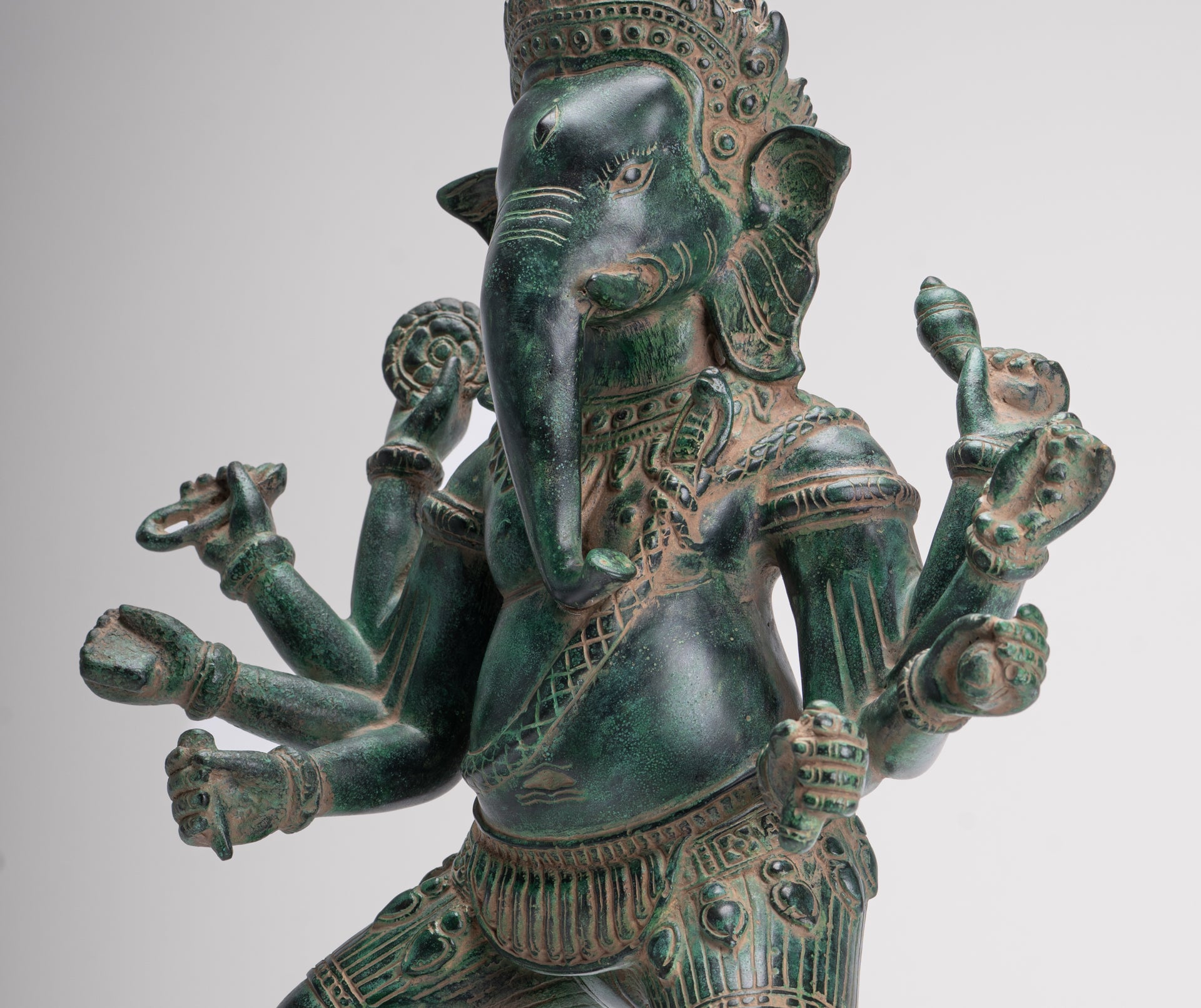
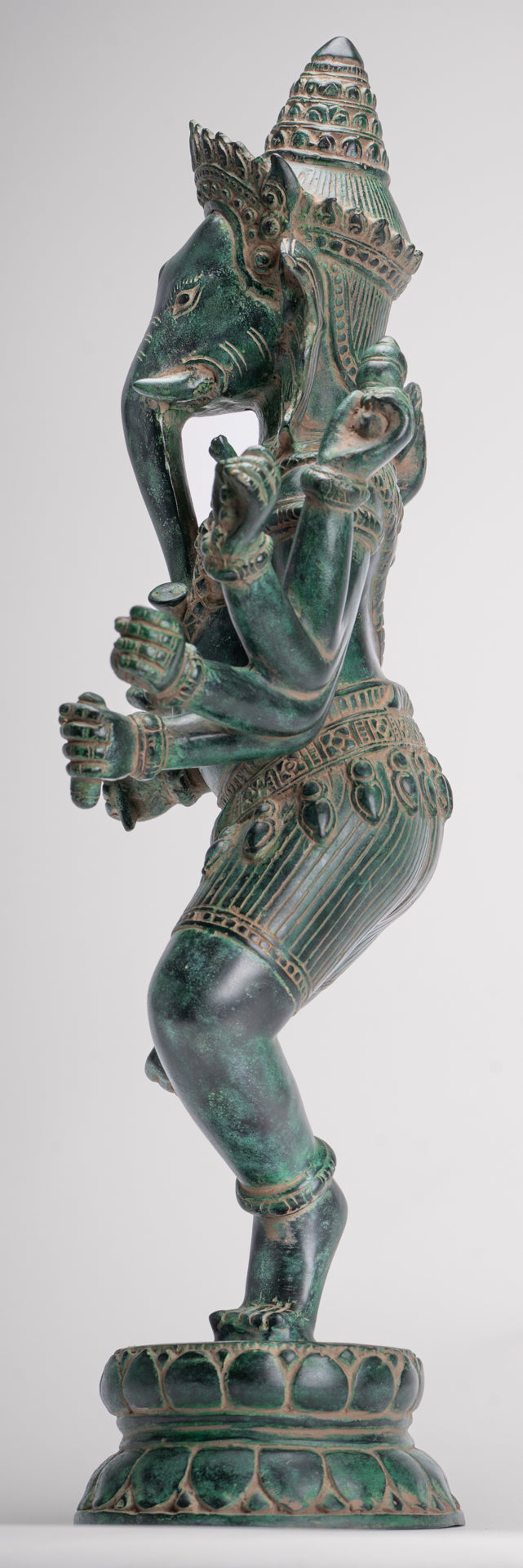
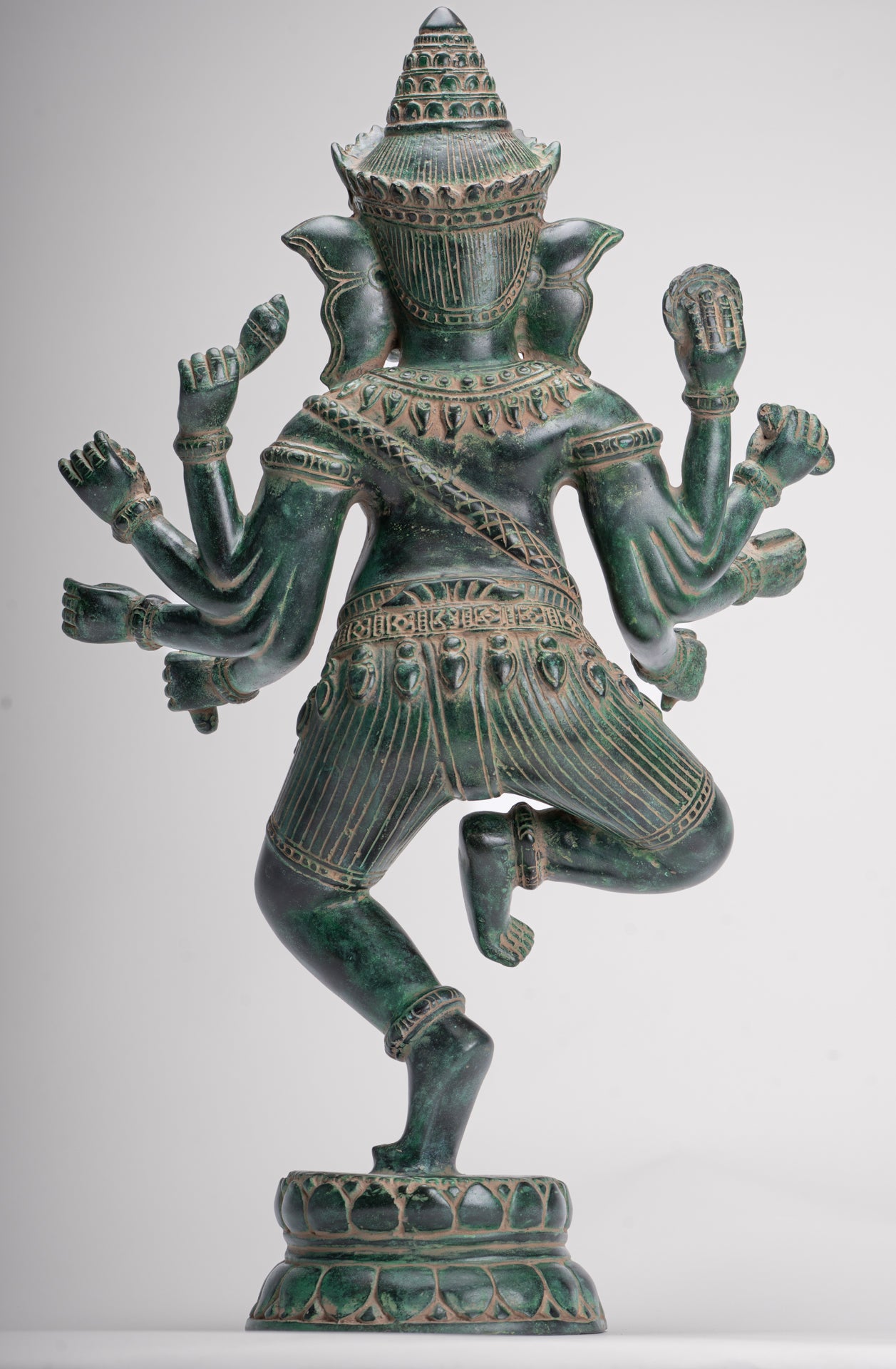
A striking antique Khmer-style bronze of Dancing Ganesha, the elephant-headed Hindu deity shown in an exuberant, multi-armed dance. Measuring an impressive 50 cm / 20 inches in height, this substantial sculpture combines vigorous movement, intricate symbolic detail, and a richly variegated green patina.
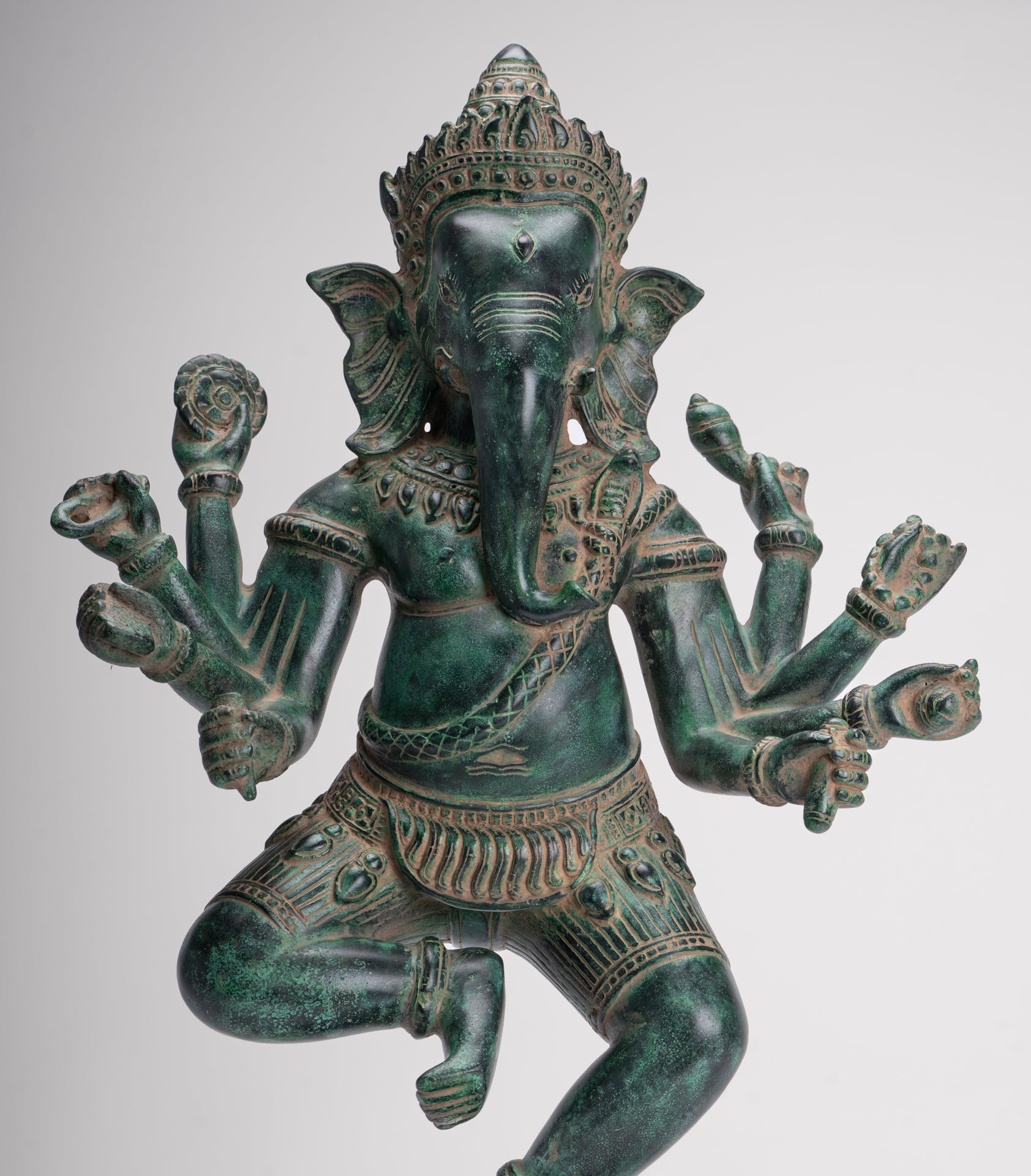
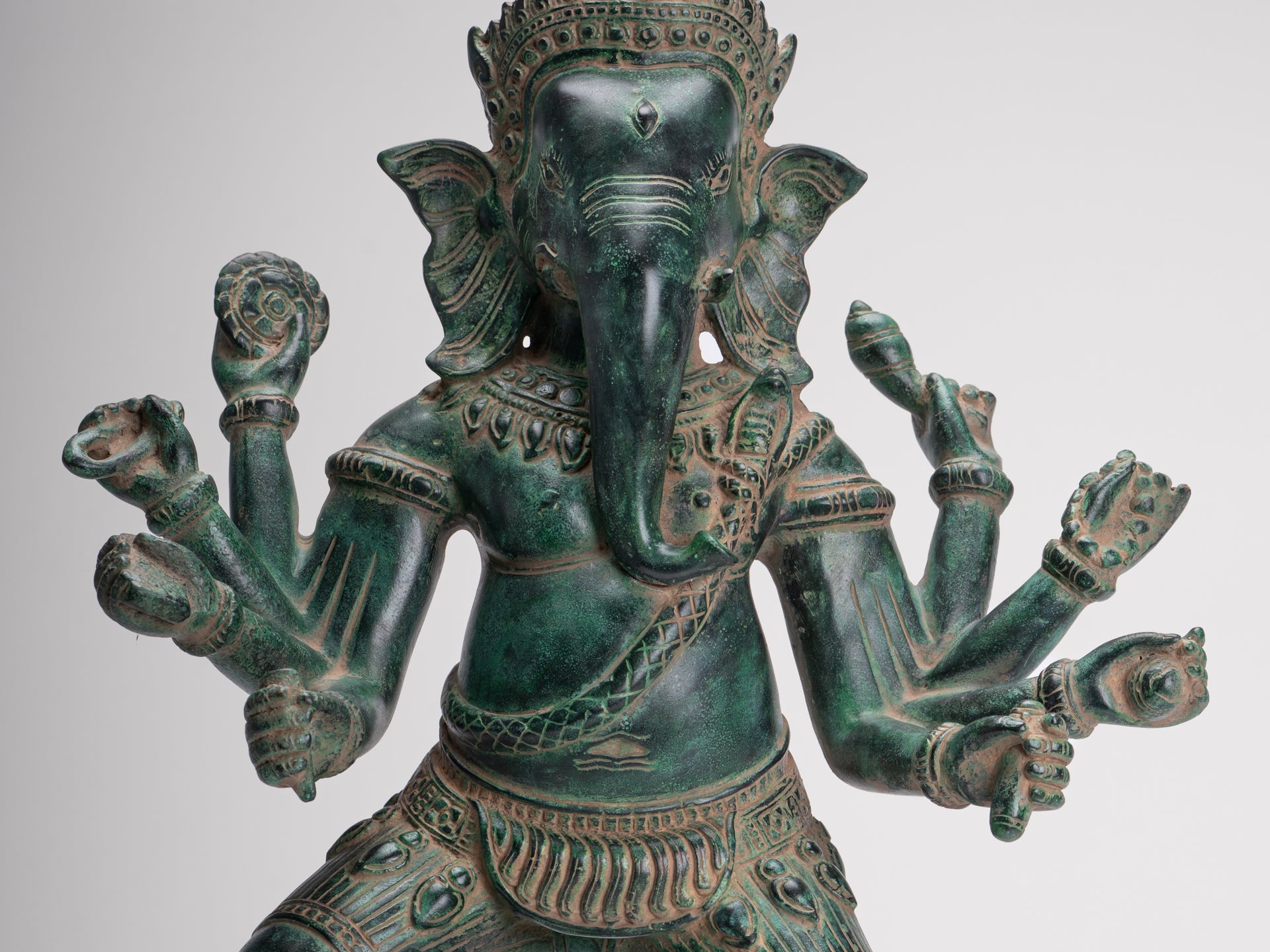
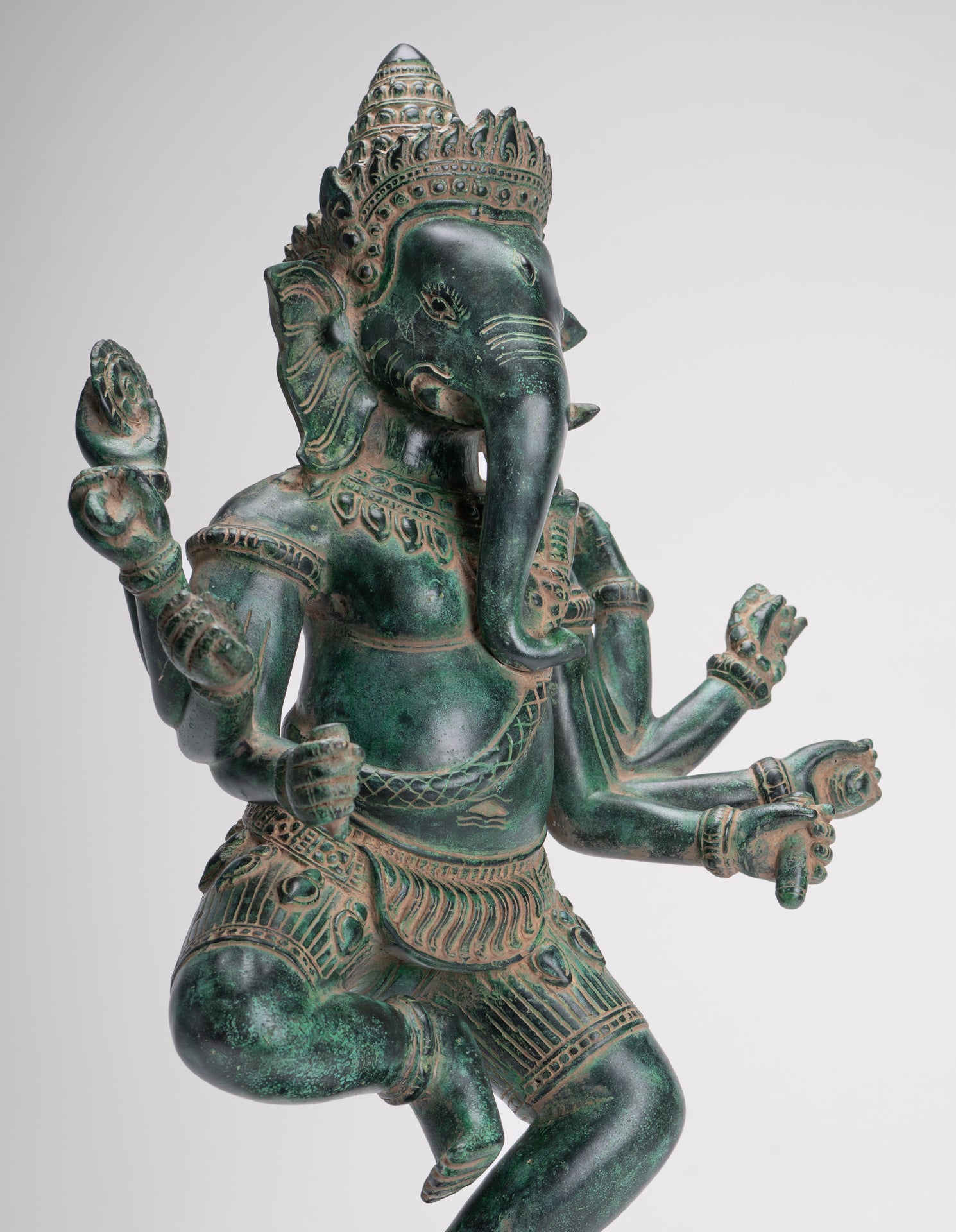
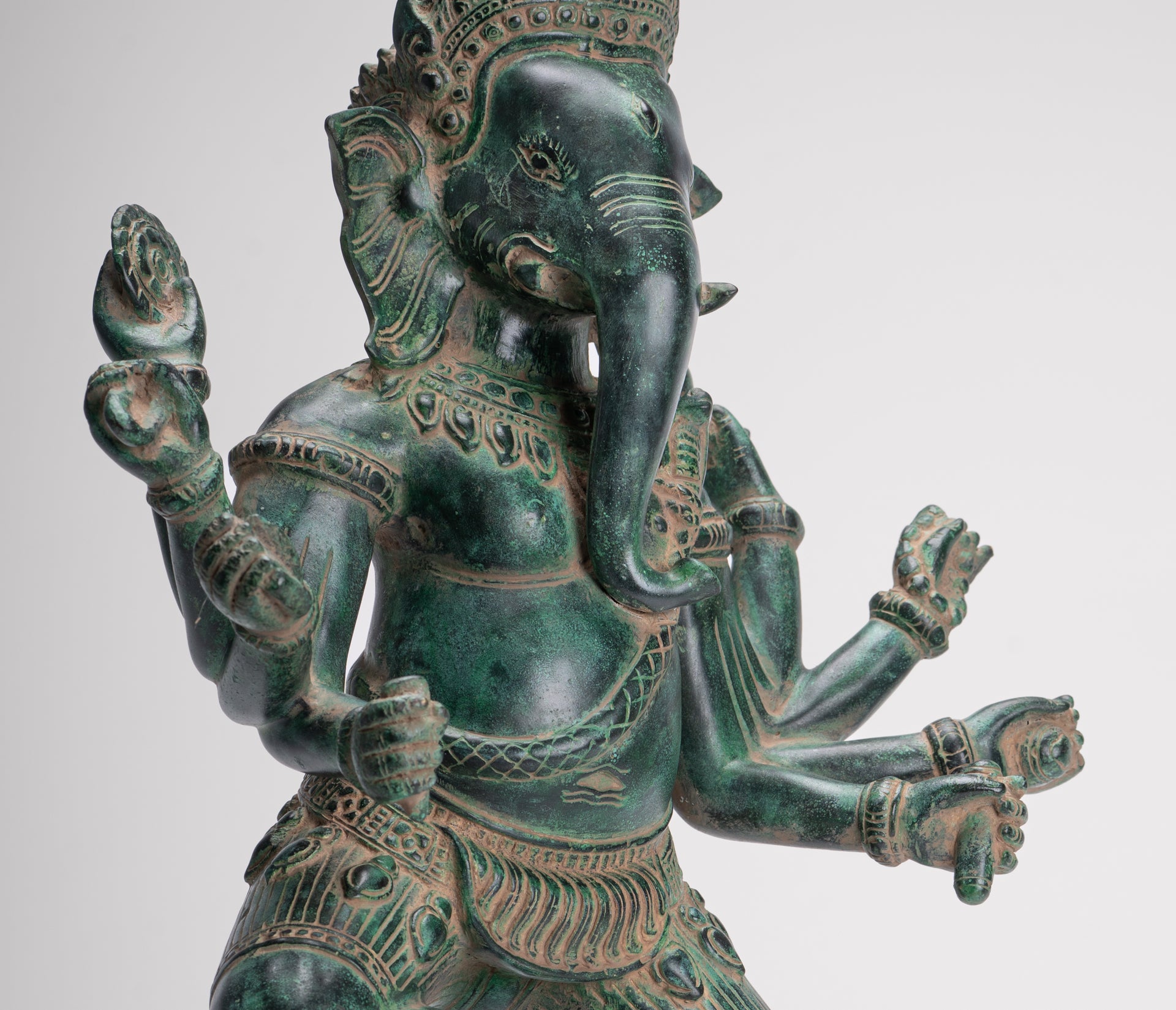
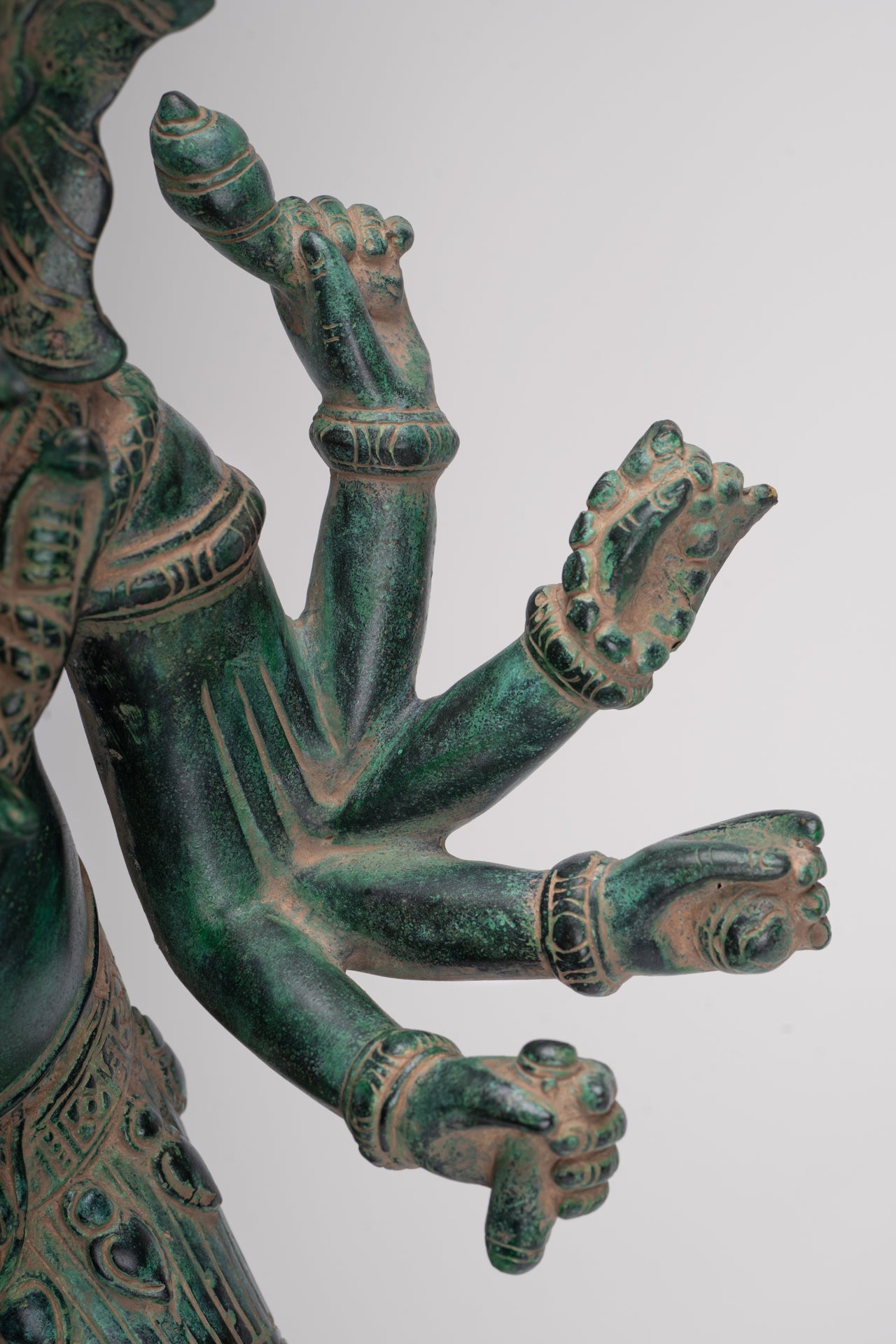
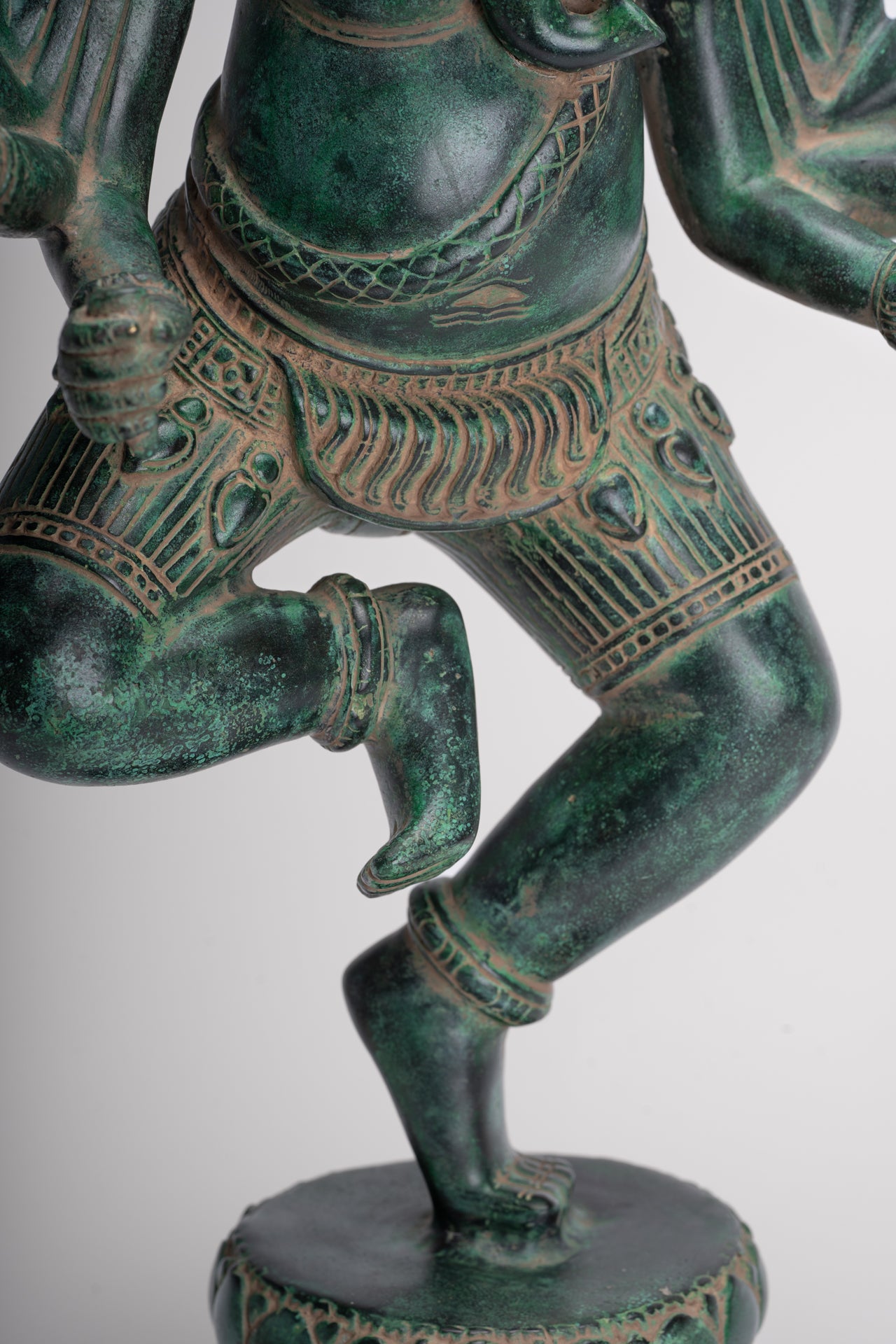
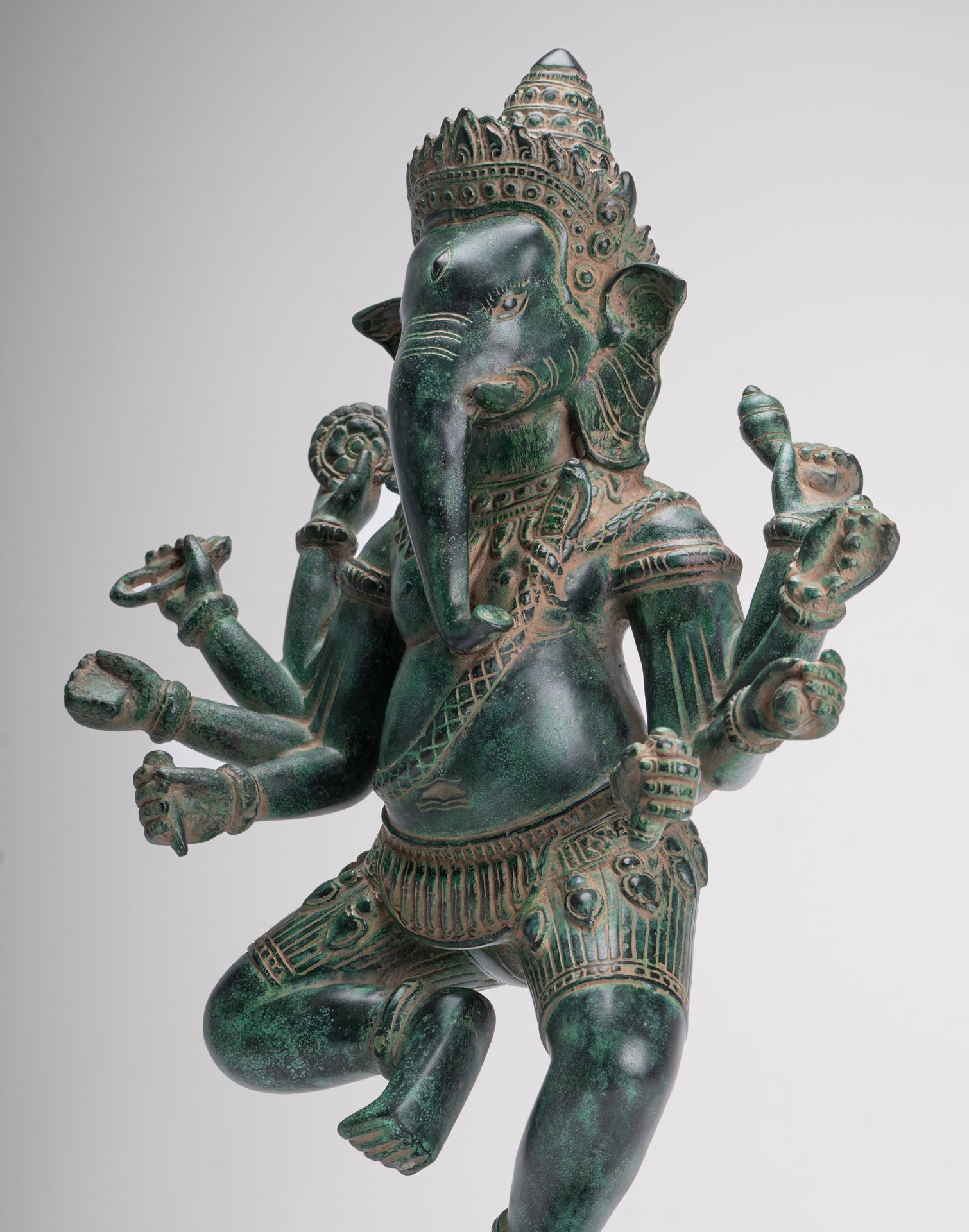
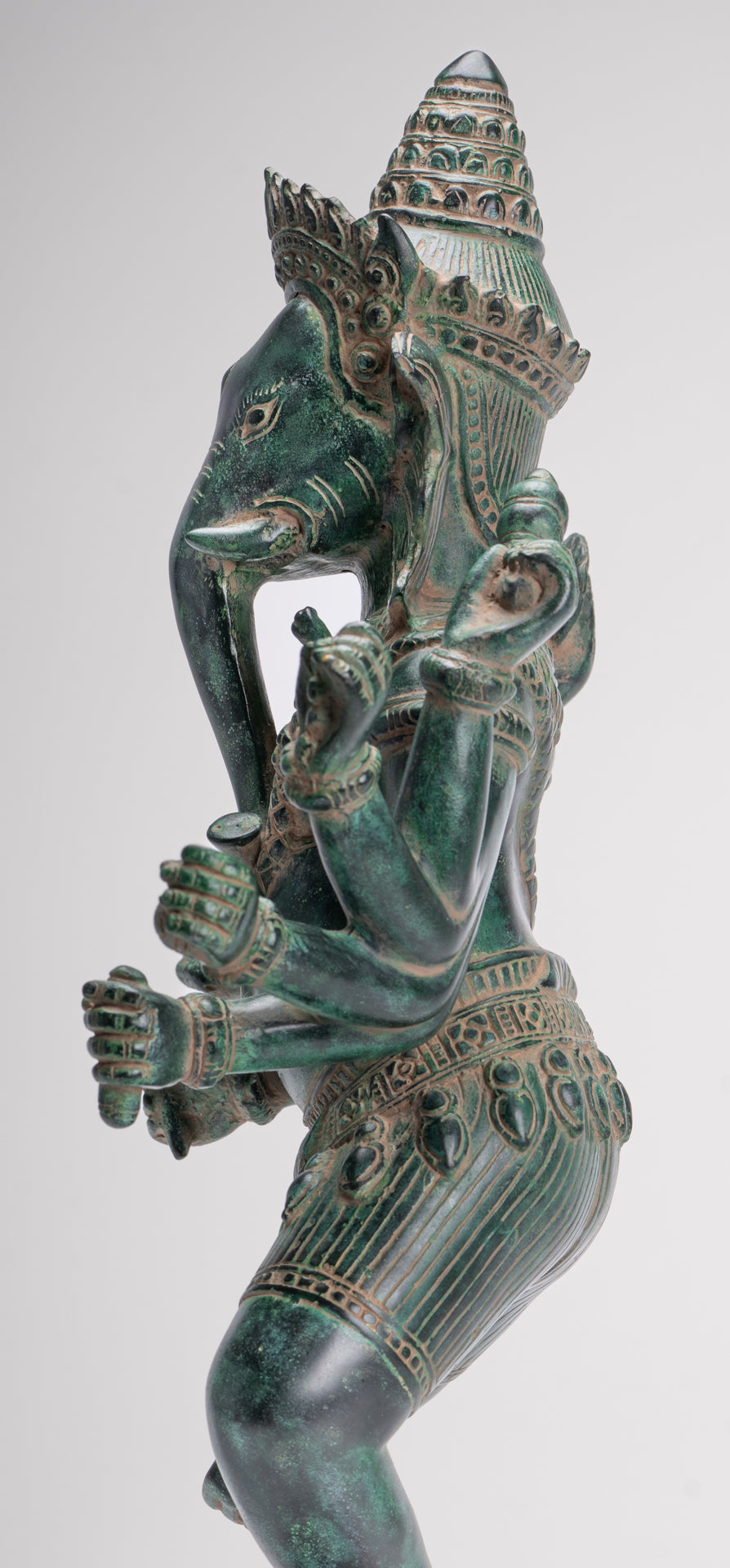
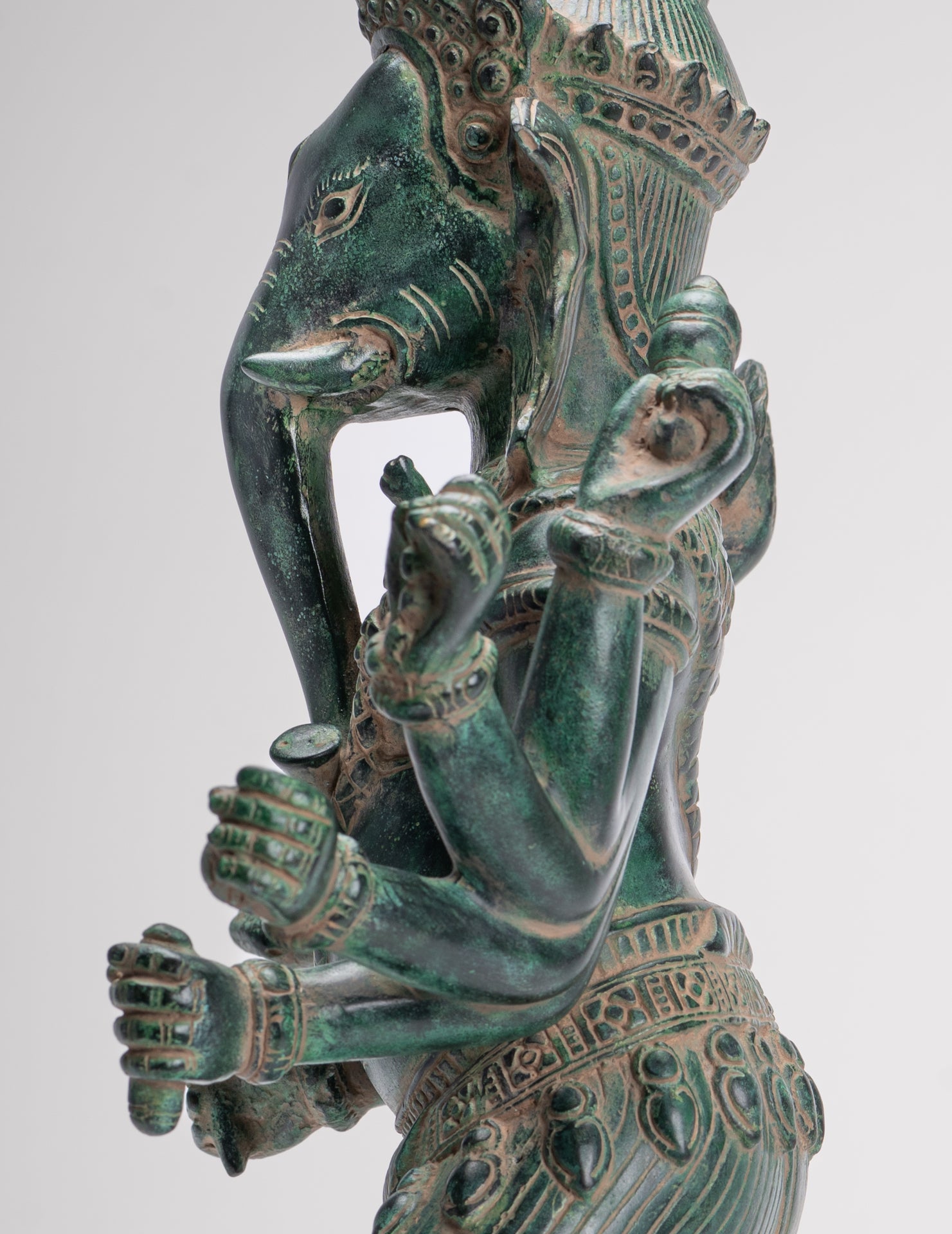
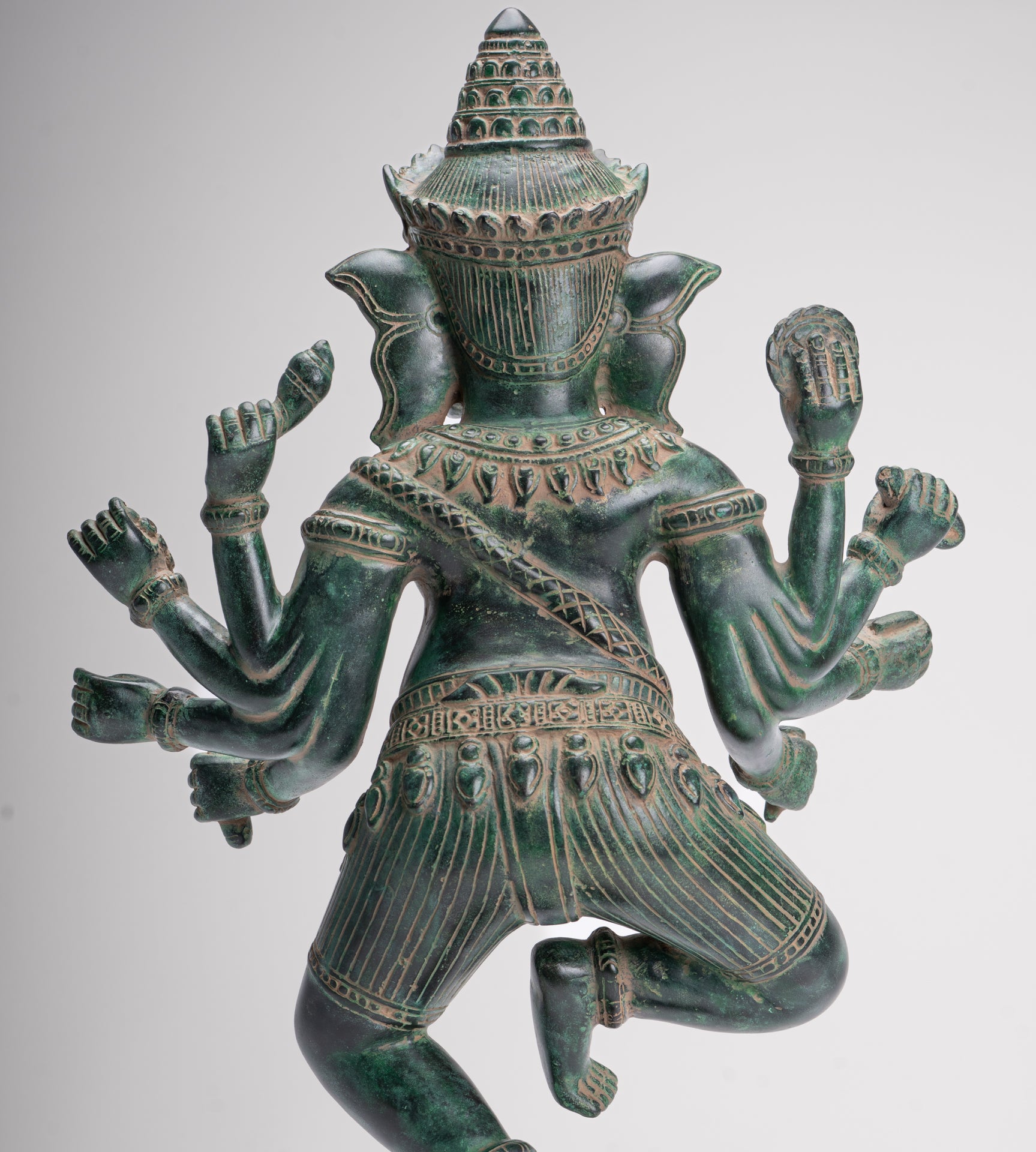
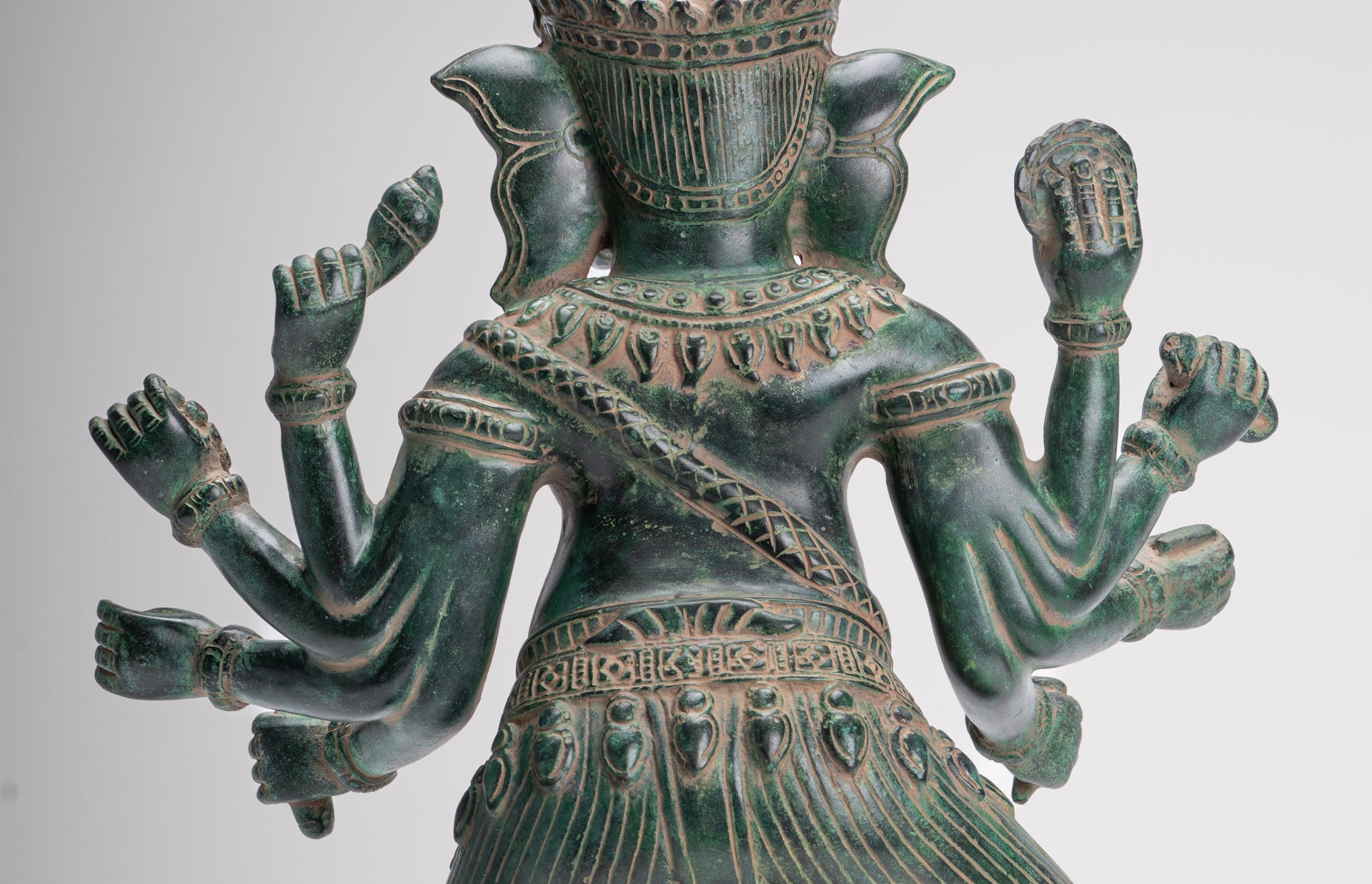
Ganesha is presented in a dynamic one-legged pose, balancing upon a double lotus pedestal while the other leg is raised in rhythmic motion. His eight arms radiate around the body, creating a powerful silhouette that evokes vitality, protection, and the joyful energy of divine dance. The figure wears an ornate Khmer-inspired crown, elaborate jewellery, a finely patterned dhoti, and a serpent-like sacred cord across the torso.
The rich bronze surface displays a deep forest-green patina with darker brown undertones and warm coppery highlights across the raised detail. This beautifully variegated finish enhances the refined casting of the crown, ears, jewellery, fingers, garments, and lotus base.
Nṛtya Gaṇapati: Ganesha as divine dancer
Ganesha is the beloved elephant-headed son of Shiva and Parvati, widely revered as the remover of obstacles, lord of beginnings, patron of learning, wisdom, arts, and new endeavours. In his dancing form—often called Nṛtya Gaṇapati, meaning “Dancing Ganesha”—he becomes a vivid image of joy, adaptability, creative power, and spiritual momentum.
The dance is not merely decorative. It expresses the ability to move through life’s changes with balance and resilience. One leg is firmly grounded, while the other is lifted; the image therefore unites stability with movement, discipline with celebration, and inner composure with outward action.
Dancing Ganesha may also be understood as a guardian of transitions. He is traditionally invoked at beginnings—new homes, journeys, businesses, studies, creative projects, and major life changes—because he represents the intelligence and confidence needed to meet obstacles without losing one’s sense of direction.
Attributes and symbolism
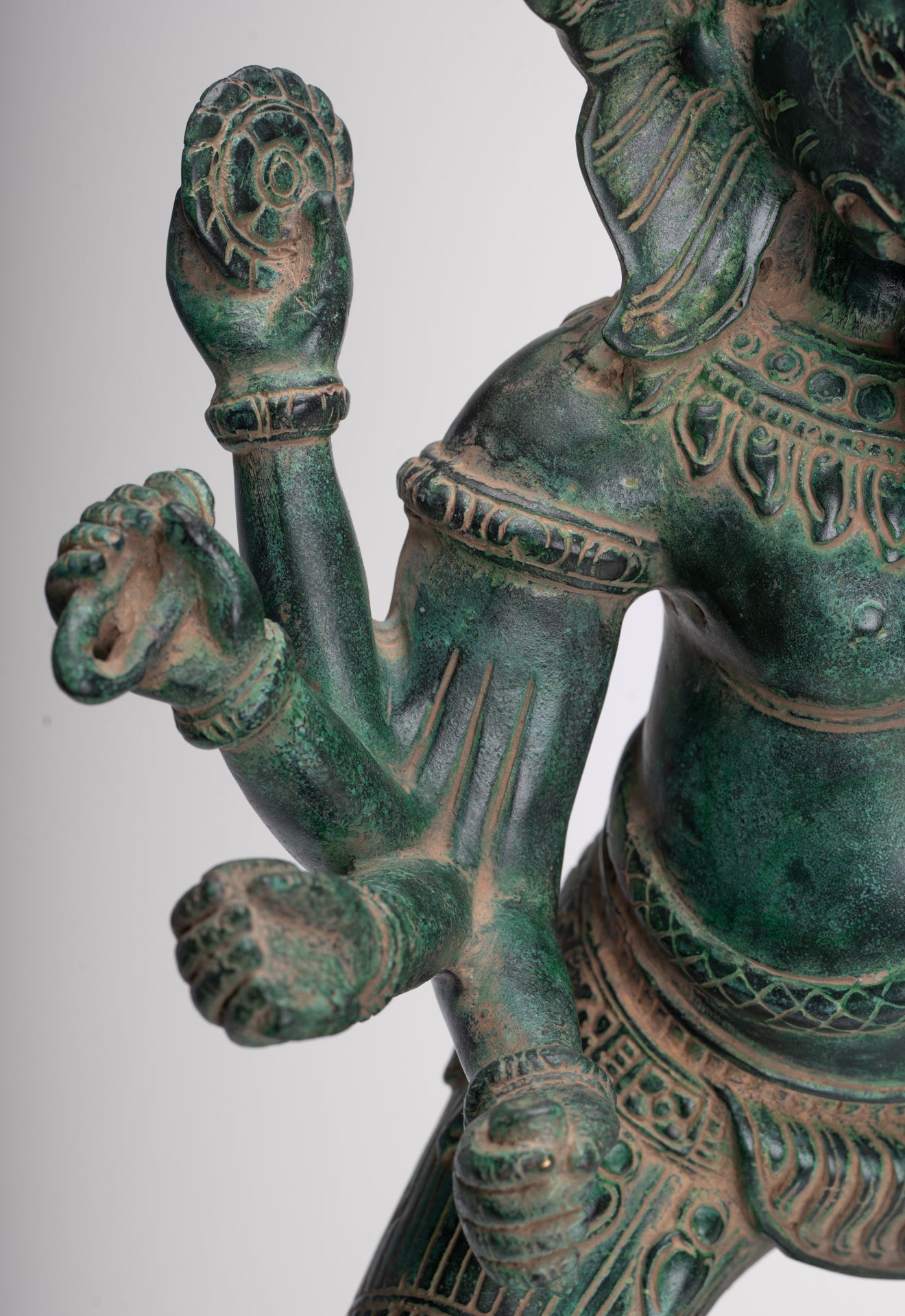
This multi-armed Ganesha holds a compelling group of symbolic attributes. The exact object identification should always remain sensitive to surface wear and casting detail, but the principal elements include:
-
Broken tusk — one of Ganesha’s most recognisable emblems. It represents sacrifice, resourcefulness, perseverance, and wisdom. In a well-known tradition, Ganesha breaks off his tusk to use as a pen while writing the Mahābhārata.
-
Bowl of sweetmeats — probably modaka or laddus, Ganesha’s beloved sweets. These signify abundance, contentment, fulfilment, and the sweet reward of spiritual understanding.
-
Prayer beads or mala — associated with disciplined practice, reflection, recitation, and the cultivation of wisdom.
-
Holy manuscript or palm-leaf sutra — a symbol of sacred knowledge, learning, intelligence, and the transmission of spiritual teaching.
-
Additional ritual or protective emblems — expressed through the remaining hands, reinforcing Ganesha’s role as guardian, remover of obstacles, and bestower of success.
The combination of manuscript and prayer beads is especially fitting for Ganesha as patron of scholarship, writing, education, and the arts. Comparable Cambodian dancing Ganesha sculptures can also appear with numerous attributes, including a manuscript, prayer beads, a broken tusk, and a sweet offering.
The left-curving trunk
The trunk curves towards Ganesha’s left—which appears on the viewer’s right when facing the sculpture. This orientation is traditionally known as Vāmamukhi or Vāmavartī Ganesha. In many modern devotional and household traditions, the left-curving trunk is associated with the lunar, cooling, and receptive qualities of the ida nāḍī.
For this reason, it is commonly considered a gentle and auspicious form for a home, associated with peace, prosperity, domestic harmony, and the successful navigation of worldly life. Traditions concerning trunk direction vary between regions and communities, so it is best appreciated as a meaningful devotional association rather than a universal rule.
Khmer-inspired form
The sculpture draws on the visual traditions of Cambodia and the wider Khmer world, where Hindu and Buddhist beliefs often existed alongside one another. The sharply defined crown, stylised jewellery, strong frontal torso, rhythmic dance posture, and lotus base create a distinctly Southeast Asian interpretation of Ganesha.
Key Features
-
Antique Khmer-style bronze sculpture of Dancing Ganesha.
-
Height: 50 cm / 20 inches.
-
Depicts Ganesha in a dynamic, multi-armed dancing pose.
-
Eight arms create a powerful, balanced, and animated silhouette.
-
Ganesha stands on one leg with the other raised in rhythmic movement.
-
Holds a broken tusk, bowl of modaka or laddus, prayer beads, and a holy manuscript.
-
Broken tusk symbolises wisdom, sacrifice, and perseverance.
-
Sweetmeats symbolise abundance, spiritual fulfilment, and the rewards of devotion.
-
Mala beads and sacred manuscript represent learning, contemplation, sacred knowledge, and intellectual accomplishment.
-
Left-curving trunk, traditionally associated with the gentle and auspicious Vāmamukhi household form.
-
Elaborate Khmer-inspired crown, jewellery, costume, and sacred cord.
-
Raised on a double lotus pedestal, symbolising purity and spiritual awakening.
-
Richly variegated green, brown, and copper-toned bronze patina.
-
A striking focal point for a collection of Hindu, Khmer, Cambodian, or Southeast Asian art.
FAQs
Who is Dancing Ganesha?
Dancing Ganesha is a joyful and energetic form of the Hindu deity Ganesha, the elephant-headed son of Shiva and Parvati. He is widely revered as the remover of obstacles, guardian of beginnings, patron of wisdom, learning, writing, the arts, and new enterprises.
In his dancing form, Ganesha represents creative movement, resilience, celebration, and the ability to meet change with grace.
Is this Nṛtya Gaṇapati?
Yes. Nṛtya Gaṇapati is Sanskrit for “Dancing Ganesha.” Although images vary in the number of arms and attributes they include, this sculpture’s raised leg, rhythmic pose, and multi-armed composition clearly identify it with the dancing manifestation of Ganesha.
What does the dancing pose mean?
The dance represents divine energy, joy, transformation, and the rhythm of creation. Ganesha is firmly balanced on one leg while lifting the other, suggesting that spiritual and worldly obstacles can be met with both stability and adaptability.
For a modern viewer, the pose can be understood as a reminder to remain centred while moving through change, uncertainty, creativity, and new beginnings.
What does the broken tusk represent?
The broken tusk is one of Ganesha’s defining symbols. It is associated with sacrifice, intelligence, and perseverance. In a popular narrative, Ganesha breaks his own tusk to use as a writing tool while transcribing the Mahābhārata, demonstrating complete commitment to wisdom and sacred learning.
What do the sweetmeats mean?
The bowl contains sweet offerings, most likely modaka or laddus. These are strongly associated with Ganesha and symbolise the sweetness of wisdom, spiritual fulfilment, prosperity, and the rewards of devotion.
Why does Ganesha hold prayer beads and a manuscript?
The mala beads represent contemplation, spiritual practice, recitation, and disciplined attention. The holy manuscript represents sacred knowledge, education, writing, scholarship, and wise judgement.
Together, they reinforce Ganesha’s role as patron of students, artists, writers, teachers, and all who begin a course of study or creative work.
What does the left-curving trunk mean?
The trunk curves to Ganesha’s left, which appears on the viewer’s right. This is commonly called Vāmamukhi Ganesha. In many household traditions, it is associated with the gentle, lunar, cooling, and receptive energy of the ida nāḍī, and is regarded as an auspicious form for domestic settings.
Interpretations differ by region and devotional tradition, but the left-curving trunk is widely preferred for home worship.
What does the lotus base symbolise?
The double lotus base represents purity, spiritual growth, and enlightenment. The lotus grows from mud yet rises clean above the water, making it an enduring symbol of the possibility of wisdom and inner freedom amid the conditions of everyday life.
What creates the green surface on the bronze?
The green areas are part of the sculpture’s patina—surface changes that can develop on copper-alloy bronzes through oxidation, handling, environmental exposure, and the history of the object’s care. The varied green, brown, and coppery tones enhance the cast detail and contribute to the sculpture’s individual visual character.
Patina alone, however, cannot be used to prove a specific age or period.
How should I display and care for this bronze Ganesha?
Place the sculpture indoors on a level, stable surface that can comfortably support its weight. Keep it away from direct sunlight, humidity, heat sources, and areas of frequent contact.
Handle it from the lotus base and central body only. Do not lift it by the trunk, arms, crown, raised leg, or individual attributes. Dust gently with a soft, dry brush or microfibre cloth, and do not use metal polish, oils, waxes, solvents, abrasive cloths, or household cleaning products.
SATISFACTION GUARANTEE - We have been offering SE Asian Art for many years and are proud of the reputation we have developed for fair and honest listings. However, if for any reason, whatsoever, you are unhappy with your purchase please just let us know and we will provide a full refund. We want you to be 100% happy with your purchase.
-
-
The majority of orders will be shipped with DHL. This is a secure, express and fully tracked service.
Items less than 2Kg we typically ship using Royal Mail.
Once we receive your order we try to ship all orders the same or next working day.
Large and/or fragile pieces requiring palletising, specialist crating and/or extra packaging may take a little longer. Palletised shipments will be delivered curbside.
All orders over 35 GBP will be shipped free of charge.

-
We genuinely hope that all purchases delight.
However, if they do not, regardless of reason, we will refund all orders upon receipt of the unwanted item. Just notify us within 14 days of receiving your order that you wish to make a return and send the piece back to us with 30 days of delivery.


