



Buddha Statue at Home: Benefits & Placement Guide
Buddha Statue at Home: Benefits & Placement Guide
Table of Contents
Why a Buddha Statue Belongs in Your Home
A buddha statue at home serves as far more than decorative art, it functions as a focal point for intentional living, a visual anchor for mindfulness practices, and a symbol of inner peace that quietly reshapes your daily environment. Whether you're drawn to Buddhist philosophy, seeking a meditation focal point, or curating a culturally rich interior, a thoughtfully placed Buddha statue can transform how you experience your living space.
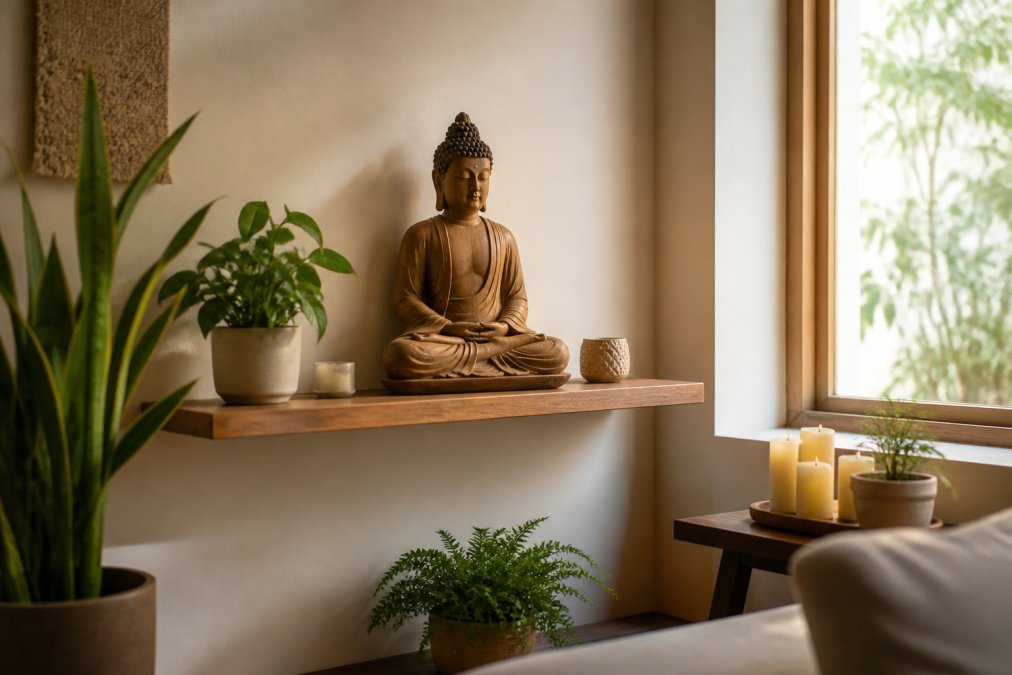
At HD Asian Art, the most meaningful Buddha statues are those selected with intention, pieces that resonate personally while respecting the traditions they represent. This guide explores the tangible and spiritual benefits of incorporating a buddha statue at home, practical placement strategies, and the cultural considerations that ensure your piece becomes a genuine sanctuary element rather than mere decoration.
Spiritual and Mental Well-Being Benefits
A buddha statue at home cultivates mental clarity and emotional stability through its symbolic presence and the mindfulness practices it encourages. Meditating before or near a Buddha statue creates a psychological anchor, a designated space where your mind associates the location with focus, calm, and self-discipline.
For Buddhist practitioners, a statue represents the historical Buddha and the path to enlightenment, serving as a reminder of core principles like compassion, wisdom, and inner peace. For secular practitioners, the serene expression, meditative posture, and composed presence trigger a neurological response toward relaxation. The visual cues associated with a meditating Buddha naturally guide your nervous system toward a parasympathetic state, the biological foundation of tranquility (peer-reviewed research).
Establishing a daily meditation practice becomes significantly easier with a dedicated focal point. Rather than sitting in an abstract space, you're sitting before something that embodies the state you're cultivating. This environmental design influences behavior in measurable ways, a Buddha statue becomes a behavioral cue, similar to how a gym setup reminds you to exercise.
The presence of a buddha statue also reduces ambient stress throughout your day. Walking past a serene Buddha expression during a hectic morning, or pausing to observe it during an anxious moment, creates micro-moments of perspective shift. These small interruptions accumulate over time, lowering your baseline cortisol levels and improving overall well-being (the NIH).
Where to Place Buddha Statue at Home
The placement of your buddha statue at home determines whether it functions as a meaningful focal point or remains peripheral to your daily life. The most effective placements integrate the statue into spaces where you naturally pause, reflect, or spend quiet time.
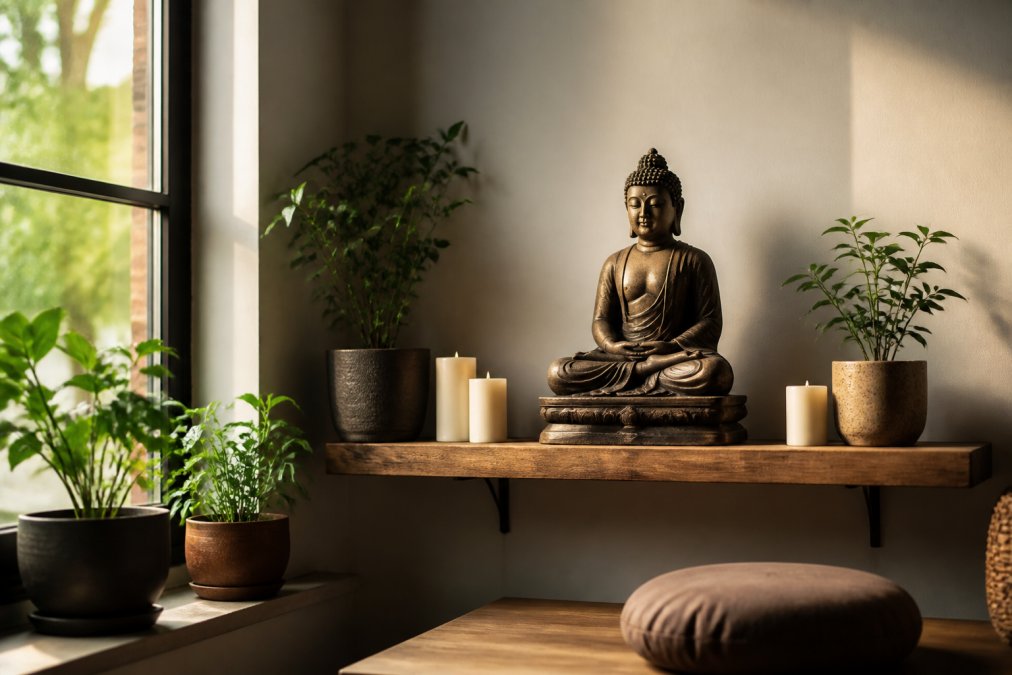
A meditation room or dedicated spiritual corner represents the ideal placement. Position your Buddha statue at eye level or slightly above, roughly three to six feet away. This distance allows you to see the full form without straining, and the eye-level positioning creates a natural focal point for your gaze during meditation.
Living room placement works well if your living room functions as a sanctuary space. Position the statue on a shelf or altar-like surface where it commands gentle attention without dominating the room. The key is elevation, never place a Buddha statue on the floor or at ankle level. This positioning shows respect for the form and ensures the statue naturally draws your eye upward.
Bedroom placement should be thoughtful. Many practitioners place a Buddha statue on a dresser or shelf visible from the bed, creating a calming last image before sleep and first image upon waking.
Avoid placing a Buddha statue in high-traffic areas where it becomes merely decorative background, in bathrooms where moisture can damage the piece, or in spaces associated with chaos or clutter. The statue's power derives partly from the intentionality of its placement.
Natural light enhances the presence of a Buddha statue. If possible, position it where soft, indirect sunlight touches it during parts of the day, bringing out texture and form.
Types of Buddha Statues for Home
The form and style of Buddha statue you choose should align with both your aesthetic preferences and the spiritual tradition most resonant with your practice.
Meditating Buddha (Dhyana Buddha) is the most common form for home practice spaces. Depicted in lotus position with eyes closed or half-closed, hands resting in meditation mudra, this form directly embodies the state of deep focus and inner peace you're cultivating.
Laughing Buddha (Hotei in Japanese, Budai in Chinese) represents joy, contentment, and abundance. This rotund, smiling figure is often misidentified as Siddhartha Gautama but actually represents a different Buddhist ideal centered on happiness and prosperity. Many Western practitioners choose this form for living spaces because it radiates warmth while maintaining spiritual significance.
Reclining Buddha depicts Buddha in his final moments before entering parinirvana, symbolizing ultimate peace and release from suffering. While less common in home practice spaces, it's a powerful choice for bedrooms or spaces dedicated to rest.
Standing Buddha represents Buddha in a teaching or blessing posture, conveying active wisdom and guidance. These work well in study spaces or areas where you want to invite clarity and direction.
Buddha Head statues offer a space-efficient option for smaller homes or meditation corners, with the serene expression remaining the focal point.
Material significantly influences both aesthetics and energetic resonance. Stone statues carry an earthy, grounded quality and age beautifully. Bronze statues develop a rich patina over time. Wood statues offer warmth and organic beauty, though they require careful maintenance in humid environments. Brass and gold-plated statues create luminous presence.
Size matters practically and spiritually. A statue between 12 and 24 inches works well for most home meditation spaces, large enough to command attention yet small enough to fit naturally into residential interiors (apa.org).
At HD Asian Art, we specialize in authentic Khmer and Southeast Asian sculptures that carry genuine historical and artistic provenance. Selecting a statue from a source committed to authenticity ensures you're bringing a piece with real cultural integrity into your home.
Buddha Statue Placement Rules and Do's & Don'ts
Respectful placement of a buddha statue at home honors both the tradition it represents and maximizes its functional benefit as a focal point for your practice.
Do's:
- Place the statue on an elevated surface (shelf, altar, dresser, or stand).
- Position the statue facing into your home rather than toward a wall.
- Keep the area around your Buddha statue clean and uncluttered.
- Use soft, indirect lighting.
- Face the statue when meditating or sitting in reflection.
- Refresh the space seasonally with flowers, adjusted lighting, or cleaning.
Don'ts:
- Never place a Buddha statue in a bathroom. Moisture damages most materials, and the association contradicts the reverent positioning the form deserves.
- Avoid placing the statue in high-traffic areas where it becomes visual background.
- Don't position the statue below eye level or on the floor.
- Never treat the statue as purely decorative.
- Avoid overcrowding the space with other spiritual objects.
- Don't place the statue directly opposite a mirror.
- Avoid positioning the statue where it faces directly toward a door or window.
These placement principles reflect environmental psychology: thoughtful spatial arrangement influences how you feel and behave in a space.
Cultural Sensitivity and Respectful Display
Displaying a Buddha statue at home requires awareness of cultural context and respectful engagement with a tradition that extends far beyond aesthetic appeal. The Buddha form carries deep spiritual significance for millions of practitioners worldwide. calm home environment.
The historical Buddha, Siddhartha Gautama, was not a god but a teacher who achieved enlightenment through disciplined practice. In Buddhist tradition, the statue serves as a reminder of his teachings and the path to wisdom, not as an object of worship in the Western religious sense.
The difference between respectful appreciation and appropriation lies in intention and engagement. Purchasing a Buddha statue because you're drawn to Buddhist philosophy, meditation practice, or genuine appreciation for Southeast Asian art represents respectful adoption. Displaying it as a generic "exotic" decoration without understanding its significance represents appropriation.
One practical way to demonstrate respect is through your sourcing. Purchasing from reputable dealers like HD Asian Art ensures your statue carries genuine craftsmanship and historical integrity rather than being a mass-produced replica. Knowing the origin of your piece, its materials, and its artistic tradition deepens your connection to it and honors the artisans who created it.
Another dimension of respect involves not placing the statue in positions that suggest irreverence. Positioning it below eye level, in chaotic spaces, or in areas associated with bodily functions contradicts the reverent relationship the form deserves.
Some practitioners choose to create a small altar space around their Buddha statue, incorporating elements like flowers, incense, or candles. Even a simple arrangement transforms the area from decoration into a genuine sanctuary.
If you're not Buddhist but appreciate the statue aesthetically or spiritually, that's entirely valid. The key is acknowledging this appreciation openly rather than claiming a spiritual connection you don't possess.
Maintenance and Care Rituals
A Buddha statue at home deserves regular care that extends its lifespan and maintains the reverent quality of your space. Maintenance rituals also create opportunities for intentional engagement with the piece.
Cleaning and dusting should be done gently and mindfully. Use a soft, dry cloth for most materials. For stone or bronze pieces, a slightly damp cloth works well, but avoid soaking or submerging the statue. Many practitioners find that cleaning becomes a mini-meditation, a moment of focused attention on the object and the space it occupies.
Material-specific care varies by statue type. Stone statues are relatively durable but can be damaged by extreme temperature shifts or prolonged direct sunlight. Bronze statues develop patina naturally; this aging process is generally considered beautiful. Wood statues require the most attention, keep them away from direct heat sources and excessive humidity, and consider applying a light wood oil annually. Brass and gold-plated pieces benefit from occasional gentle polishing.
Environmental protection matters significantly. Avoid placing your Buddha statue in direct sunlight for extended periods or near heating vents, air conditioning units, and areas with high humidity or temperature fluctuation.
Seasonal refreshing deepens your engagement with the piece. Some practitioners change flowers or adjust lighting seasonally, treating it as a ritual that renews their commitment to the space and their practice.
Incense and candles often accompany Buddha statues in practice spaces. Ensure they're positioned safely away from the statue, incense smoke can accumulate on the surface, and candles should never be placed so close that heat damages the piece.
Caring for your Buddha statue becomes a form of mindfulness practice itself. Rather than viewing maintenance as a chore, reframe it as an opportunity to engage more deeply with the space and renew your commitment to the tranquility it represents.
Bringing a Buddha statue into your home represents a commitment to creating intentional space within your living environment. Whether your connection is rooted in Buddhist practice, appreciation for Southeast Asian art, or a desire to cultivate greater peace and mental clarity, the statue becomes a physical anchor for these aspirations. The benefits emerge not from mystical properties but from thoughtful placement, respectful engagement, and the psychological power of environmental design.
At HD Asian Art, we understand that selecting the right Buddha statue means finding a piece that resonates with your specific intention while carrying genuine cultural and artistic integrity. Our carefully curated collection of authentic Buddhist and Hindu statues, alongside exquisite Khmer and Southeast Asian sculptures, ensures that your piece brings both aesthetic refinement and spiritual authenticity to your home. Browse our selection to discover the statue that will transform your space into a true sanctuary.
Frequently Asked Questions
Is it good to have a Buddha statue in your home?
Yes. A Buddha statue serves as a focal point for meditation practice, creates a visual reminder of inner peace and mindfulness, and enhances your home environment with spiritual intention. Beyond the spiritual dimension, meaningful, intentional decor can contribute to reduced stress and improved mental clarity. Whether you're drawn to the symbolism, the aesthetic, or the meditative focus, a Buddha statue can meaningfully support your personal sanctuary and daily well-being.
What happens when we keep a Buddha statue at home?
A Buddha statue creates a dedicated point of focus for meditation and mindfulness practice. It can serve as a visual cue that encourages self-discipline and intentional living. The statue becomes part of your sacred space, helping to establish a calm atmosphere in your home. It also serves as a reminder of Buddhist principles like compassion, wisdom, and inner peace.
Where is the best place to put a Buddha statue in your home?
The ideal placement depends on your home's layout and your practice. A Buddha statue works best in a quiet corner, meditation room, or bedroom where you spend reflective time. Elevate the statue on a shelf or altar to show respect, keep it away from foot traffic, and ensure it's not directly facing a bathroom or kitchen. Choose a spot where you can see it during meditation or quiet moments, as this strengthens its role as a focal point for your mindfulness practice.
How do I care for and maintain my Buddha statue?
Regular, respectful maintenance preserves both the statue's physical condition and its spiritual significance. Dust gently with a soft, dry cloth every few weeks. For deeper cleaning, use a slightly damp cloth appropriate to the material, wood, stone, and metal each require different care. Avoid harsh chemicals or abrasive scrubbing. Some practitioners perform simple rituals like offering incense or fresh flowers as part of their maintenance routine, which deepens the intentional relationship with the piece. Store the statue in a clean, protected space if you ever need to move it, and handle it with mindfulness.
