



Laughing Buddha Poses: Meanings and Placement Guide
Laughing Buddha Poses: Meanings and Placement Guide
Table of Contents
Understanding the Laughing Buddha and Budai
The laughing buddha statue isn't Siddhartha Gautama, the historical Buddha, but Budai, a deity revered in Mahayana Buddhism and Feng Shui tradition for attracting prosperity, contentment, and positive energy. Budai's characteristic joyful expression and rotund belly symbolize abundance and spiritual fulfillment. In Chinese and Southeast Asian traditions, he represents joy, generosity, and triumph over life's burdens. While Siddhartha embodies enlightenment through asceticism, Budai embodies joy found in accepting life's gifts and sharing abundance (peer-reviewed research). Understanding this distinction shapes how you select and position a laughing buddha statue in your space. HD Asian Art specializes in carefully curated Buddhist and Hindu statues that capture this spiritual essence for your meditation room or sanctuary.
The Meaning of Laughing Buddha Statue Poses
Laughing buddha statue poses communicate specific intentions through hand positions, body orientation, and accompanying objects. Each pose carries distinct meanings rooted in Buddhist symbolism and Feng Shui principles.
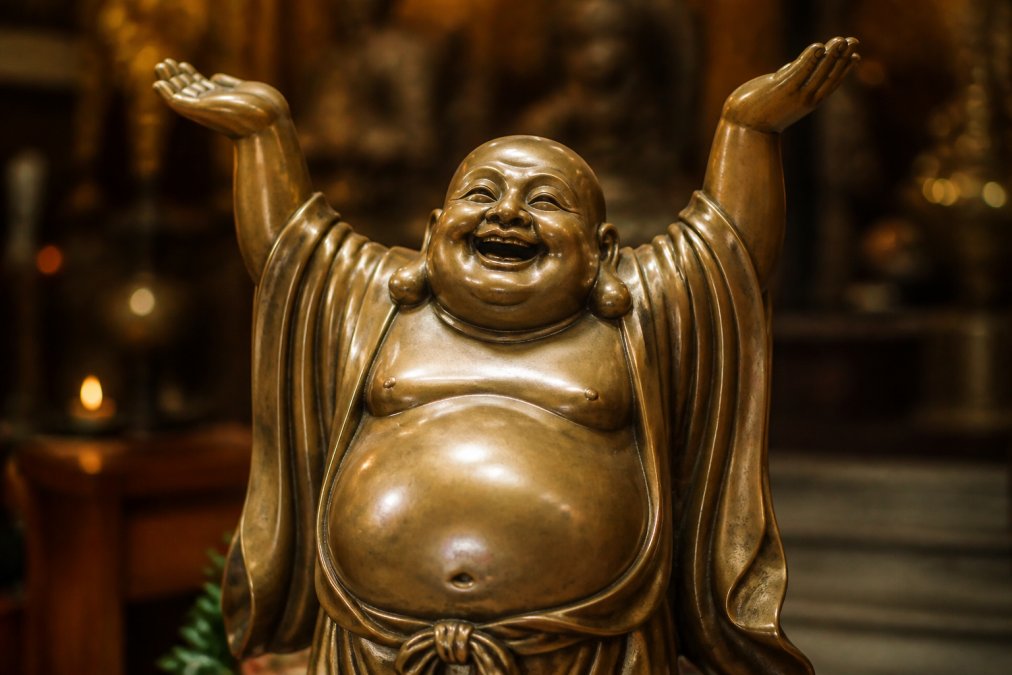
Hands Raised in Celebration
Hands raised above the head or shoulders represent celebration, joy, and triumph over adversity. This pose symbolizes freedom from burdens and welcomes positive energy and good fortune. The open, expansive posture invites abundance and signals readiness to receive blessings. This popular configuration works well in entry areas or living rooms to set a tone of optimism.
Hands on Belly or Chest
Hands positioned on the belly or chest represent contentment, inner peace, and gratitude for what you already possess. This meditative pose embodies the message that true wealth comes from appreciating your current circumstances. This configuration works particularly well in meditation spaces and bedrooms where you want to cultivate calm and self-acceptance.
Meditative Pose with Hands in Lap
Hands resting gently in the lap convey deep meditation, wisdom, and inner reflection. This posture mirrors traditional Buddhist meditation positions and suggests profound peace achieved through spiritual practice. This pose suits contemplative spaces where you seek clarity and deeper understanding.
Reclining or Seated Positions
Reclining poses depict complete relaxation and freedom from worldly concerns, embodying wu wei, or effortless action. Seated positions with relaxed demeanor convey approachability and warmth, working well in living areas where you want guests to feel welcome. These versions resonate with those seeking to release perfectionism and embrace a flowing approach to life.
Types of Laughing Buddha Statues and Their Symbolism
Objects the laughing buddha holds add layers of symbolic meaning, allowing you to select a statue addressing your specific aspirations.
Laughing Buddha with a Sack or Bag
A large sack or bag represents the collection of good fortune, abundance, and spiritual gifts. This version speaks to those seeking material prosperity while maintaining spiritual balance. Many business owners favor this configuration because it combines wealth attraction with the wisdom of sharing resources generously.
Laughing Buddha with Children
Children surrounding the laughing buddha represent fertility, family harmony, and the joy of progeny. This configuration celebrates family blessings and strengthens bonds between family members. This variation creates a powerful focal point if you're seeking to improve family relationships or expand your family.
Laughing Buddha Holding a Gold Ingot
The gold ingot represents direct material prosperity and financial success. When the laughing buddha holds this object, it signals intention to attract wealth and monetary abundance. Place this configuration in your wealth sector (far left corner of your home) or office to amplify financial success.
Laughing Buddha with Mala Beads
Mala beads represent spiritual practice, meditation discipline, and the path to enlightenment (peer-reviewed research). This version balances material abundance with spiritual development, appealing to practitioners who recognize that true prosperity includes spiritual wealth. This configuration works well in dedicated meditation spaces.
Where to Place Laughing Buddha at Home
Strategic placement amplifies the statue's energetic impact and ensures it supports your intentions.
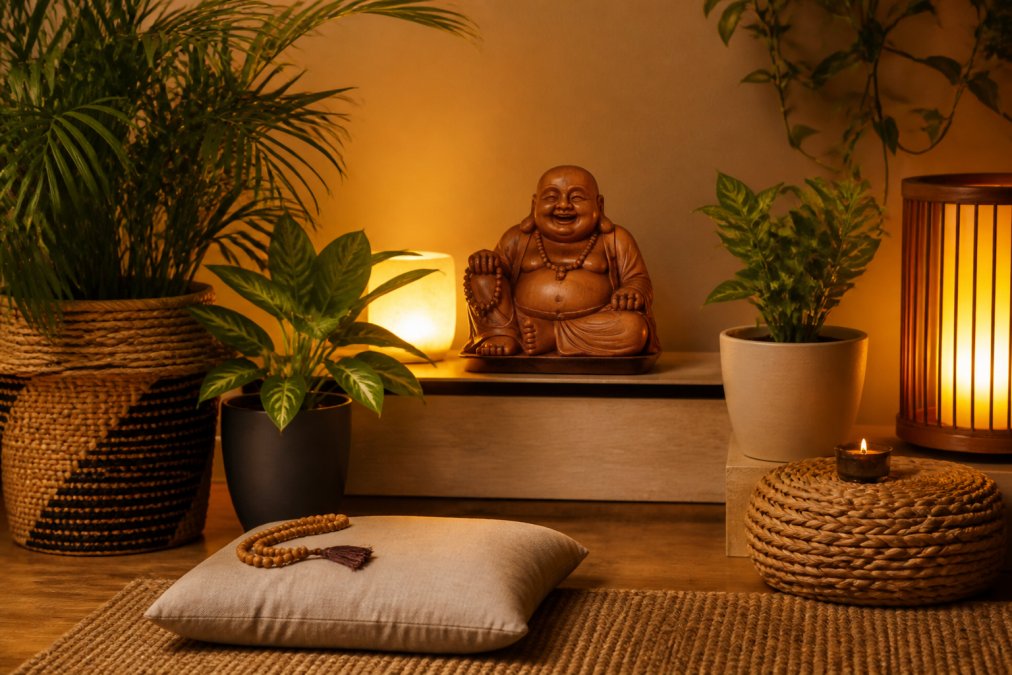
Placement for Wealth and Prosperity
The Bagua map's wealth sector occupies the far left corner of your home when you stand at the entrance looking inward (peer-reviewed research). Placing the laughing buddha here, particularly a version holding a gold ingot or sack, amplifies prosperity attraction. Alternatively, position it where you handle finances or conduct business. Ensure the statue faces into the room at eye level or slightly above, never on the floor where it could be stepped over.
Placement in Living Spaces and Meditation Areas
Living rooms benefit from laughing buddha placement because these communal spaces welcome the statue's energy of joy and togetherness. In dedicated meditation rooms, place it at a height that feels natural to your gaze during practice. Bedrooms can benefit from the statue's calming presence, though choose poses emphasizing peace rather than celebration.
Placement Taboos and What to Avoid
Never position the laughing buddha facing a bathroom, kitchen, or directly above a toilet or sink. Don't place it on the floor or where people might step over it. Avoid cluttering the area around the statue; it should have breathing room and clear sightlines. Never position it directly facing a mirror, as this can create conflicting energy.
How to Clean Buddha Statues and Maintain Sacred Energy
Regular cleaning preserves both the physical beauty and energetic integrity of your statue. Dust gently with a soft, dry cloth monthly. For deeper cleaning, use a barely damp cloth with lukewarm water, never harsh chemicals. Allow the statue to air dry completely.
Many practitioners perform energetic cleansing alongside physical cleaning. Pass the statue through incense smoke to clear stagnant energy, or use moonlight exposure or sound cleansing. Set an intention during maintenance, silently affirming gratitude and restating your intention. This transforms routine maintenance into a spiritual practice.
Material-Specific Energetics and Selection
The material from which your statue is crafted carries its own energetic signature. Wood embodies growth and renewal, ideal for meditation spaces. Jade represents healing and harmony, particularly powerful for wealth attraction. Stone grounds energy and creates stability for long-term prosperity. Ceramic and porcelain offer delicate beauty and affordability. Metal, particularly brass or bronze, amplifies energy and creates protective boundaries.
HD Asian Art's curated collection includes pieces crafted from various materials, allowing you to select based on aesthetic preferences and energetic qualities. Each statue is chosen for authentic craftsmanship and genuine spiritual presence.
Conclusion
Laughing buddha statue poses offer far more than decorative appeal. Each hand position, accompanying object, and material choice carries specific meanings rooted in centuries of Buddhist and Feng Shui wisdom. Whether drawn to the raised-hands pose for joy, hands-on-belly for contentment, or a version holding a gold ingot for prosperity, your selection should reflect your genuine intention. Strategic placement and respectful maintenance preserve the statue's power. When you invest in an authentic laughing buddha from HD Asian Art, you're acquiring more than a beautiful sculpture, you're bringing into your home a symbol of abundance, peace, and the joyful spirit that transforms ordinary spaces into sanctuaries of refined spiritual presence.
Frequently Asked Questions
Q: What does the position of the laughing Buddha's hands change in its meaning?
A: Yes, hand positions significantly alter the meaning of laughing buddha statue poses. Raised hands symbolize joy and celebration of abundance, while hands on the belly represent contentment and meditation. Hands in the lap suggest spiritual balance and inner peace. The specific gesture, or mudra, communicates different aspects of prosperity, protection, and spiritual harmony. Understanding these distinctions helps you select a statue that resonates with your personal intentions.
Q: Where should a laughing Buddha face in the home for maximum positive energy?
A: A laughing buddha statue should face into your home rather than toward walls or windows. Position it to face the main living area or entrance to invite good fortune and positive energy into your space. In feng shui practice, the wealth sector (far left corner of a room) amplifies prosperity when a laughing buddha with a gold ingot is placed there. Avoid placing it facing doorways or windows, as this allows beneficial chi to escape. The statue's orientation matters as much as its placement location.
Q: How many laughing Buddha statues should you keep at home?
A: One laughing buddha statue is sufficient for most homes and creates a focused point of positive energy. However, some practitioners place multiple statues in different areas, one in the wealth sector, another in the meditation room, and a third near the entrance. If using multiple statues, ensure they don't compete for attention or create visual clutter. Quality and intentional placement matter more than quantity. A single, carefully chosen statue in a meaningful location generates stronger spiritual resonance than several scattered pieces.
Q: How do you activate a laughing Buddha statue once you bring it home?
A: To activate a laughing buddha statue, first cleanse it with intention using a soft cloth and gentle movements. Place it in its designated location and spend time in meditation near it, visualizing abundance and joy flowing into your life. Some practitioners offer light incense or water as a blessing ritual. Set a clear intention for what the statue represents, whether prosperity, contentment, or protection, and acknowledge this purpose regularly. This mindful engagement transforms the statue from a decorative object into an active focal point for your spiritual practice and manifestation.
