



Diwali Hindu Art: Lights, Lakshmi and Deity Sculpture
Diwali Hindu Art: Lights, Lakshmi and Deity Sculpture
Across India and in Hindu households around the world, Diwali is the moment when oil lamps go on the doorstep and the home altar gets its most careful cleaning of the year. Google Arts and Culture describes Diwali as India's largest and most important festival, and its celebrations now include lamps, firecrackers, gifts, and sweets.
Yet the statues on the altar carry the festival's oldest meaning. Diwali Hindu art grows out of the same stories the festival retells, from Rama's homecoming to Lakshmi's emergence from the churned ocean. Understanding that link changes which figure you choose, where you place it, and how you look after it.
Table of Contents
- Quick Takeaways
- What Diwali Celebrates in Hindu Tradition
- Lakshmi Diwali and the Goddess of Wealth
- Ganesha and the Diwali Altar
- Krishna, Narakasura, and the Victory of Light
- Choosing Deity Sculptures for Diwali Worship
- Caring for Sculptures During Diwali
- Diwali Dates for 2026 to 2028
- Frequently Asked Questions
- References
Quick Takeaways
|
Key Insight |
Explanation |
|---|---|
|
Match the figure to the story |
Rama with Sita and Lakshmana suits the homecoming story, Lakshmi suits the wealth tradition, and Krishna suits the Narakasura story. |
|
Ganesha belongs on the Diwali altar too |
The Rubin Museum describes observers worshipping Ganesha during Diwali as the god of good beginnings and remover of obstacles. Place him near Lakshmi or ahead of her in the order of worship. |
|
Lakshmi Puja in 2026 falls on 8 November |
Wikipedia's 2026 calendar lists Dhanteras on 6 November and Bhai Dooj on 10 November, with Lakshmi Puja in between. Clean and position your figure by late October. |
|
Dates move every year |
The lunar year is about eleven days shorter than the solar year, so Diwali lands on different Gregorian dates. Wikipedia lists 29 October 2027 and 17 October 2028. |
|
Clean before the festival, not during it |
Dust, oil from diyas, and rangoli powder settle on bases and fingers. A soft brush and dry cloth the week before keep statues clean through the evenings. |
|
Keep flame away from wood and lacquer |
Painted wood and lacquer can soften, lift, or blister near heat. Set lamps on a tray at a safe distance from any lacquered or wooden figure. |
|
Diwali is observed across several traditions |
Google Arts and Culture notes the festival is celebrated across Hinduism, Jainism, and Buddhism, and Wikipedia adds Sikhs, so a Diwali altar is relevant beyond one community. |
What Diwali Celebrates in Hindu Tradition
Diwali, also called Deepavali or Deepawali, is a Hindu festival of lights. Wikipedia notes that Jains and Sikhs observe it too, as do some Buddhists, notably Newar Buddhists. Its observances include diya lighting, puja, fasting, charity, fairs, home cleaning, and shared meals, so the altar is only one part of a longer festival.
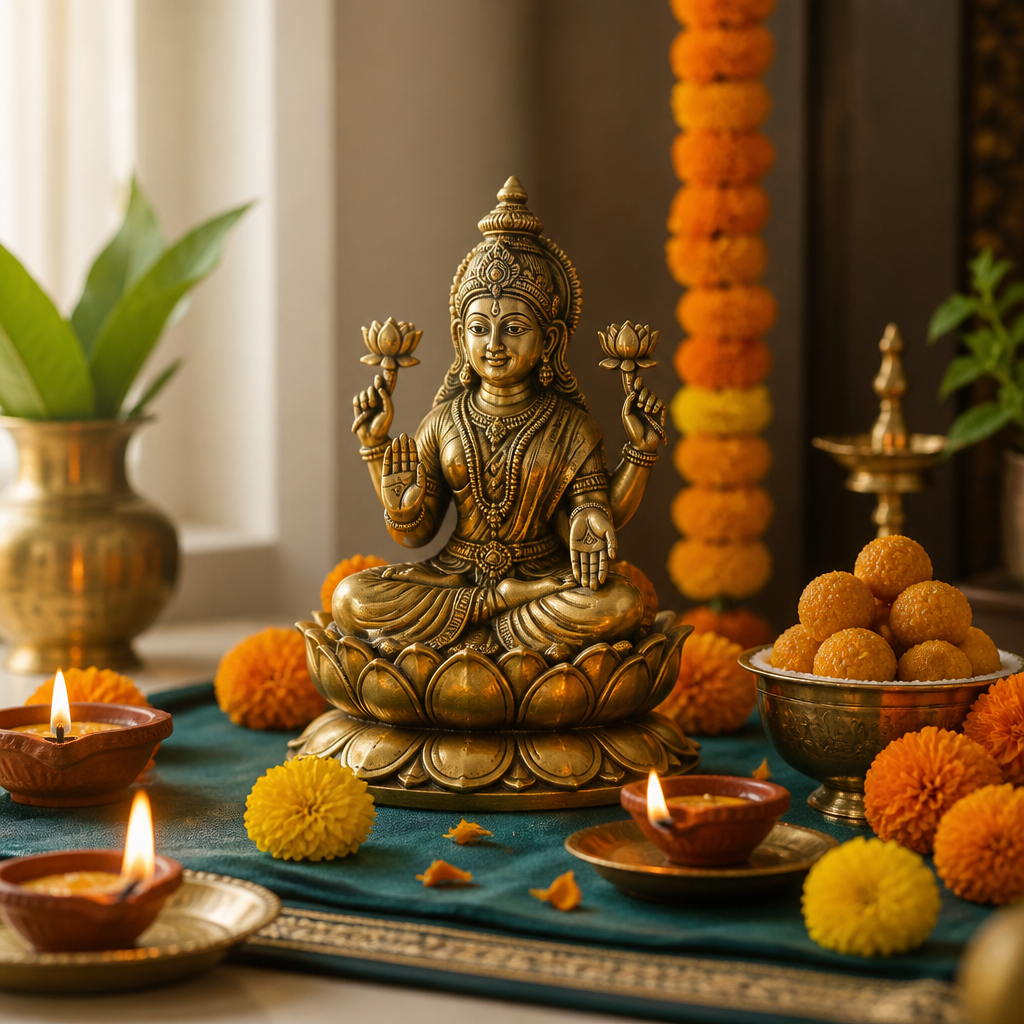
The Homecoming of Rama and Sita
One of the most widely told threads is the return of Prince Rama of Ayodhya with his wife Sita and brother Lakshman after a 14-year exile and a war, as the Brandeis University observance guide describes it. A 17th-century painting featured by Google Arts and Culture shows the couple returning in a flying vimana, with the lamps outside houses said to guide them home. That image explains why diyas line doorways and window ledges, not just as decoration but as a welcome.
In practice, a Rama, Sita, and Lakshmana figure works well on a home altar when the household wants the homecoming story at the centre of the festival. Keep the group together on one tray so the figures read as a family, which matches how the scene is painted. Place a small row of diyas at the front edge rather than behind the figures, so the light faces the viewer.
Why Lamps Mark the Threshold
The lamp is the festival's most recognisable symbol, and the lamps lit for Rama and Sita are the reason many families light them at the entrance. A common mistake is to set a few small lamps behind the altar where nobody sees them. Put the lamps at the threshold or along the altar's front edge, and the ritual matches the story it tells.
Lakshmi Diwali and the Goddess of Wealth
Many people searching for Lakshmi Diwali want the strand of the festival tied to the goddess of wealth. Google Arts and Culture reports a tradition that links Diwali to Lakshmi's birth from the churning of the cosmic waters on the first day of the festival. The platform's featured 1930s artwork, attributed to Raja Ravi Varma and Ravi Varma Press, shows her rising from a lagoon on a lotus, with an elephant attending her.
The Birth from the Churned Ocean
The churning story gives Lakshmi her visual logic. She is typically shown seated or standing on a lotus, and that is the detail to check first when you compare figures. The lotus base is not decoration, because it tells the viewer which goddess is being honoured.
Lakshmi Puja Timing for 2026
Wikipedia's 2026 calendar places Lakshmi Puja on 8 November, between Naraka Chaturdashi on 7 November and Govardhan Puja on 9 November. From 10 October, that leaves about four weeks. That is enough time to order, clean, and test-place a figure, but not enough to wait for a late delivery and then start restoring a damaged piece.
Many traders and families who keep account books set the Lakshmi figure beside them on the day, so the statue belongs in the ritual space rather than a display cabinet. Choose a figure that can stand on a clean cloth and be wiped down without fuss. Brass and bronze handle this better than delicate painted pieces.
Pro tip: Decide on the Lakshmi figure's position and buy any replacement by late October, so you have time to clean it and test the light before 8 November.
Ganesha and the Diwali Altar
Ganesha is not a side figure at Diwali. The Rubin Museum describes him as the god of good beginnings and the allegorical destroyer of obstacles, and observers worship him during the festival. For households that follow this custom, a Diwali altar that holds only Lakshmi is incomplete.
Why Ganesha Often Shares the Altar
Ganesha's role as remover of obstacles makes him a natural companion for the goddess of wealth. Many families invite him first, clear the way, and then turn to Lakshmi, so placing him at the front or to one side follows the ritual order without special knowledge. Whatever arrangement you choose, keep the two figures at a similar scale so neither overwhelms the other.
Scale and Spacing on a Small Shrine
A common mistake is buying a large Lakshmi and a tiny Ganesha, then watching the smaller figure disappear behind the diyas. On a shelf or a small wooden shrine, keep the height difference between the two modest, and leave a clear strip of tray in front for flowers and sweets. The gap also gives you room to clean.
Spacing matters for care as well. Figures placed close together collect rangoli powder, sweet residue, and wax drips from each other's surroundings, so a clear gap makes the next morning's cleaning quicker. Check that neither figure sits on a cloth that could catch oil or flame.
Krishna, Narakasura, and the Victory of Light
Google Arts and Culture describes Diwali as celebrated across religious traditions, with stories that differ but share one theme: the victory of light over darkness and good over evil. One Hindu tradition tells of the killing of the demon king Narakasura by Krishna. The 18th-century painting featured on the platform shows Krishna and Satyabhama in the middle of that battle.
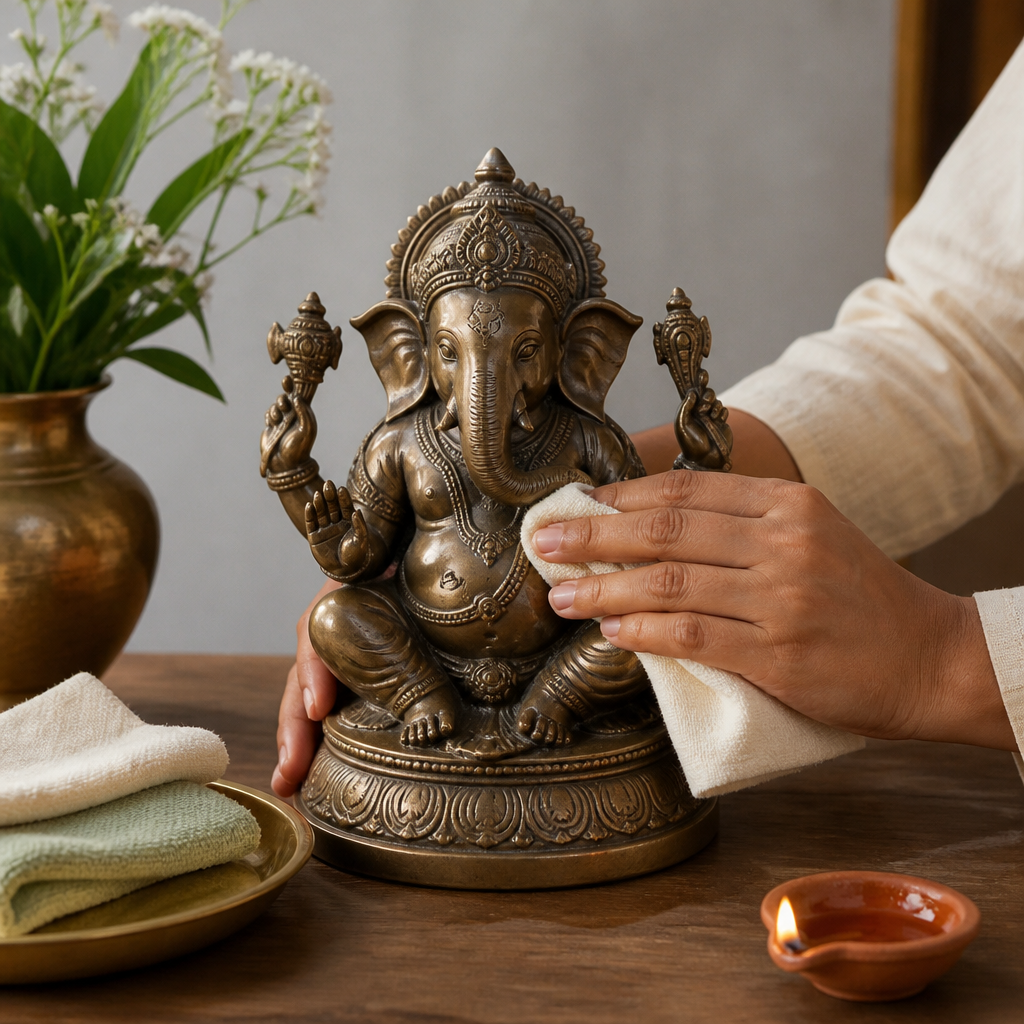
The Narakasura Story on Festival Shelves
Krishna figures suit households that want the battle story rather than the homecoming. In practice, a standing Krishna or a Krishna with Satyabhama works well as the single main figure on a small shelf, because the story turns on one clear moment. Place the figure at the centre of the shelf with lamps on both sides.
Govardhan Puja and the Krishna Connection
Wikipedia's 2026 calendar places Govardhan Puja on 9 November, and that day is closely linked to Krishna among the festival's dates. Households that already own a Krishna figure may bring it out for that day, which gives the altar a second focal point after Lakshmi Puja. Plan the placement a few days early so the figure is in position before the evening.
Most Diwali stories describe the same idea in different ways: darkness is not defeated once and for all, it is pushed back each year, and the lamp on the threshold is how each household takes part.
Choosing Deity Sculptures for Diwali Worship
A Diwali figure among Hindu festival sculptures has to do three jobs: carry the story, survive handling and oil, and fit the space you actually have. Many buyers start with the look and only later discover the material cannot take the cleaning the festival demands. Decide on the story first, then the material, then the size.
Stone, Bronze, and Painted Wood Compared
Each common material suits a different household routine. The table below compares three typical choices across cleaning, heat, and display during a festival week.
|
Approach |
Best use for Diwali |
Practical drawback |
|---|---|---|
|
Bronze or brass figures |
Lakshmi and Ganesha on a main altar that gets handled and wiped often |
Oil from diyas dulls the surface, so it needs a dry cloth after each evening |
|
Carved stone sculptures |
Large central figures that anchor a display for the whole festival |
Heavy to move, and oil or wax residue can stain porous surfaces if not wiped quickly |
|
Painted or lacquered wooden figures |
Light figures for small shelves, including pieces with a lacquer finish |
Heat and water can lift or soften the finish, so keep lamps on a tray and well away from them |
Size and Placement on a Small Altar
Match the figure's height to your shelf, not to your ambitions. A figure that is too large forces the lamps further away, and the light then falls on the base instead of the face. Measure the shelf depth and leave room for a tray of offerings in front.
Diwali deity sculptures are often seen from a distance during evening puja, so a clear silhouette reads better than fine detail lost in shadow. Choose a figure with a readable face and hands at arm's length.
Pro tip: Ask for close photographs of the base and back before buying. The underside shows wear, old repairs, and whether the piece will sit flat on a tray.
Caring for Sculptures During Diwali
Diwali is the time of year when a home altar takes the most wear. Diyas drip, rangoli powder drifts, and hands touch figures more often than usual. A short routine before and after the festival prevents most damage.
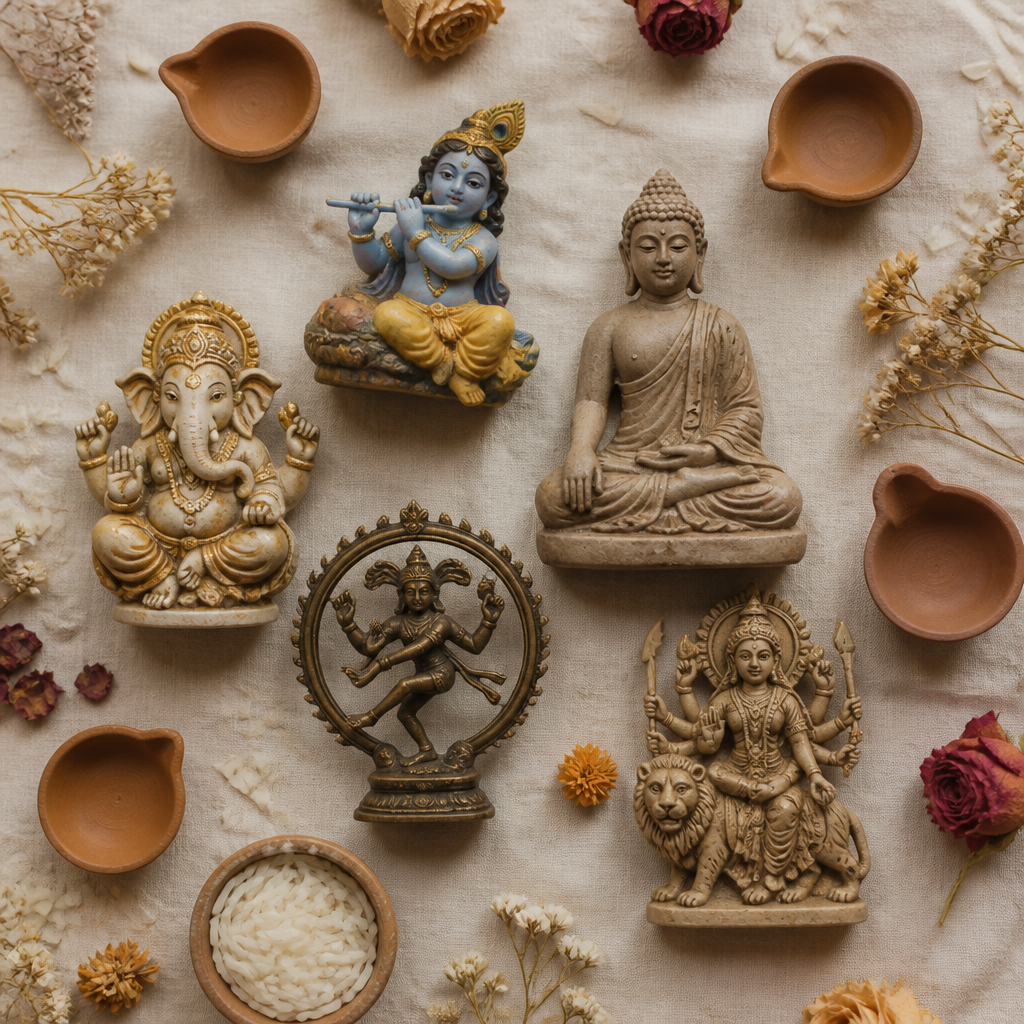
Cleaning Before the Festival
Dust the figure with a soft brush a week before the festival, paying attention to crevices around the crown, the lotus base, and any carved detail. For brass and bronze, use a dry cloth, and only a mildly damp one if oily residue has built up from earlier years. Avoid soaking, and never use abrasive polish on painted or lacquered finishes.
Lamp and Flame Safety Near Statues
Set diyas on a metal or ceramic tray, at a clear distance from fabric, wood, and lacquer. Electric diyas are a practical choice near painted pieces, since they give a similar glow without heat or residue. A common mistake is placing a lamp directly beneath a figure's hanging decoration, where wax drips reach the surface.
Storing Statues After Diwali
Once the festival ends, wipe off residue, let the figure dry completely, and wrap it in soft cloth rather than plastic, which traps moisture. Store it away from heaters and direct sunlight. Check the surface again before the next festival so small chips or dulling do not go unnoticed.
Pro tip: Photograph the figure and its base before the festival. Comparing those photos when you unpack it next year shows new chips, dulling, or residue far more reliably than memory.
Diwali Dates for 2026 to 2028
Because Diwali follows the lunar calendar, the date moves each year. Wikipedia notes that the lunar year is about eleven days shorter than the solar year, so most Hindu festivals fall on different Gregorian dates in successive years. Plan your altar around the date for your year, not the one you remember.
The 2026 Festival Sequence
The 2026 sequence runs from Dhanteras on 6 November through Naraka Chaturdashi on 7 November, Lakshmi Puja on 8 November, Govardhan Puja on 9 November, and Bhai Dooj on 10 November. Wikipedia describes the festival as lasting five or six days, depending on the region. Many households that observe only the main evening treat Lakshmi Puja as the centrepiece.
Looking Ahead to 2027 and 2028
Wikipedia lists Diwali as 29 October 2027 and 17 October 2028. An October date gives you a shorter window to order, so for 2027 you should have a figure in hand by mid-October. For 2028 the same logic applies, and the cleaning routine should start in September.
Regional calendars also differ. Wikipedia notes that the start and end dates depend on whether a community follows the amanta or purnimanta tradition, so check which observance your family follows before fixing the altar date.
Frequently Asked Questions
Is Lakshmi Diwali a separate festival from Diwali?
No. Lakshmi Diwali is a popular way of talking about the part of Diwali centred on the goddess of wealth, and the main worship for that strand is Lakshmi Puja. Wikipedia lists Lakshmi Puja on 8 November 2026 as one of the festival's named days.
Which deity sculpture should I put on a Diwali altar?
Choose the figure that matches the story your household most wants to honour. Lakshmi suits the wealth tradition, Ganesha suits new beginnings, and Rama with Sita and Lakshmana suits the homecoming. If you only have room for one figure, Lakshmi is a common choice for the festival's main evening.
Can I place Ganesha and Lakshmi on the same altar?
Yes. The Rubin Museum describes Ganesha as worshipped during Diwali, and many households place him beside Lakshmi with a clear gap between them. Keep the two figures at a similar scale so neither dominates the display.
How early should I buy a sculpture for Diwali 2026?
Aim to have the figure in hand by late October. That gives you time to clean it, test its position with lamps, and replace anything that does not fit before Lakshmi Puja on 8 November.
How do I clean a brass deity statue without damaging it?
Start with a dry soft cloth or brush, and use a mildly damp cloth only if oily residue remains. Avoid soaking the figure or using abrasive polish, which can wear away fine detail. Dry it fully before placing it back on the altar.
Are Diwali deity sculptures only for Hindu households?
Diwali is observed across several communities, and Wikipedia notes that Jains, Sikhs, and some Buddhists also mark it. Collectors and home decorators also display Hindu deity sculptures as cultural art. Whatever your background, keep the figure clean, elevated, and away from the floor.
If you have set up a Diwali altar with a deity sculpture before, we would love to hear which figure you chose and what you would do differently next time.
References
-
Google Arts and Culture overview of five artworks that tell the Diwali story
-
Wikipedia overview of Diwali observances, dates, and related festivals
