



Burmese Lacquerware Ritual: Sacred Offering Vessels Guide
Burmese Lacquerware Ritual: Sacred Offering Vessels Guide
Walk into a Burmese household altar or a monastery storeroom and you will often find the same thing: a lidded lacquer vessel, dark and glossy, holding something set aside as an offering. The Burmese lacquerware ritual tradition is older than most collectors realise, and it explains why these pieces were never treated as ordinary containers. Lacquer was light, sealed well, and hard enough to last, so it suited everything from kitchen storage to sacred manuscripts. In this guide we look at how offering vessels were used, what made the material suitable for sacred use, and how to look after a piece you bring into your home today.
Table of Contents
- Quick Takeaways
- What Makes Lacquer Suited to Sacred Use
- From Household Container to Temple Vessel
- Burmese Offering Vessels in Practice
- Surface Craft and the Meaning of Each Layer
- Caring for Lacquerware on a Home Altar
- Burmese Buddhist Objects Beyond the Vessel
- Comparing Lacquer Vessels for Ritual Use
- Frequently Asked Questions
- References
Quick Takeaways
|
Key Insight |
Explanation |
|---|---|
|
Lacquer was chosen for practical reasons first. |
Its lightness, waterproofing, easy moulding, and hard finish suited both household and sacred use, as the Abbey Museum's research on its Burmese collection describes. |
|
Ritual status came from the setting, not only the object. |
The same lidded form could hold food in a kitchen or sacred texts in a temple, so context matters as much as shape. |
|
The layers in the finish carry the history of the piece. |
Engraved lines filled with colour, then polished and reapplied several times, take many stages to build, so judge a piece by its surface. |
|
Offerings are about intent and placement. |
Buddhist practice includes symbolic offerings of food, incense, and other items to the Buddha, so a vessel should sit where it can be honoured. |
|
Handle old lacquer like a delicate object. |
Avoid direct sun, heating vents, harsh solvents, and sudden humidity swings, which cause more damage than gentle daily use. |
|
Ask about provenance and construction before buying. |
Check the form, age claims, and whether the seller can explain whether the piece was made for religious use or later decorative production. |
What Makes Lacquer Suited to Sacred Use
Burmese lacquer has been a cultural industry in Burma, now Myanmar, for roughly three centuries, according to the Abbey Museum's research on a small lacquerware collection gathered in Burma in the mid 1910s. The reason it spread so widely comes down to physical properties. The material is light, waterproof, easy to mould, and dries to a hard finish, so a single vessel can be carried, stored, and handled without falling apart.
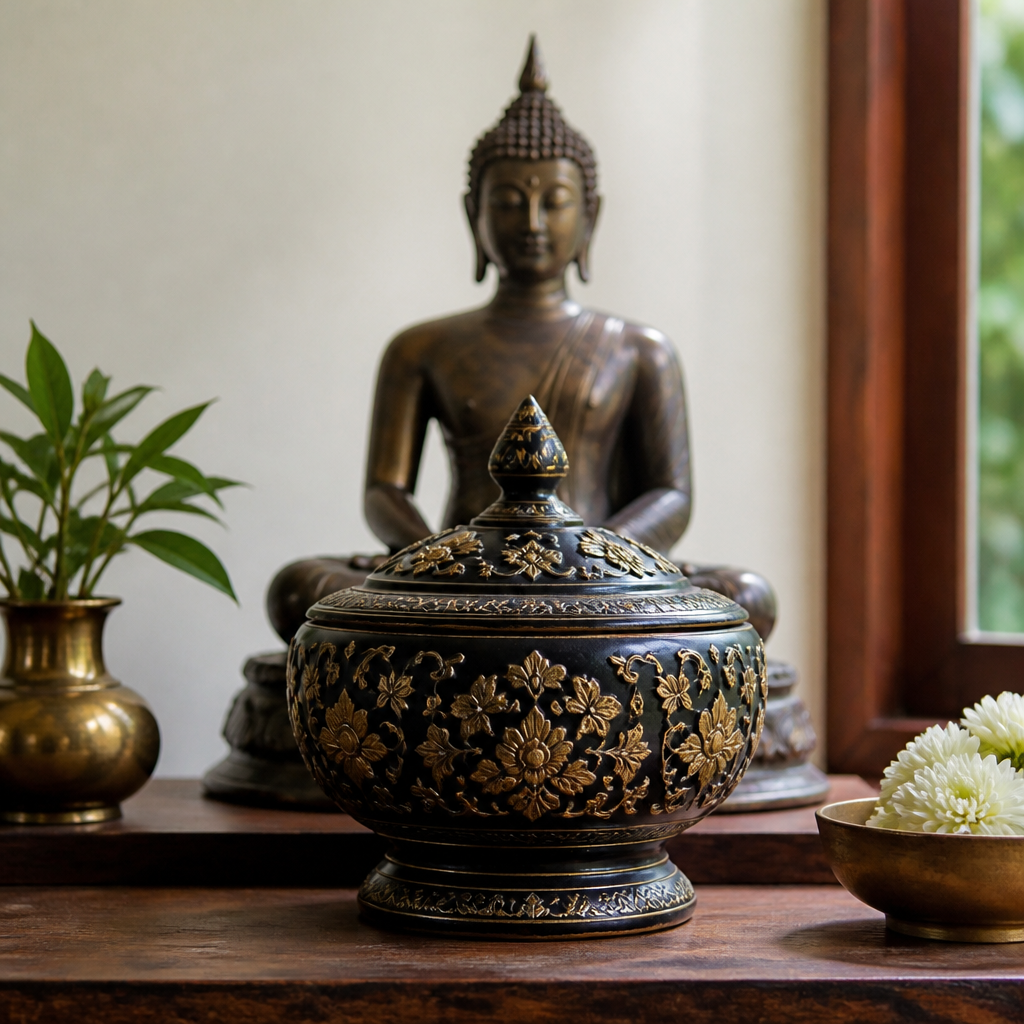
For a temple, those qualities mattered in a different way. A lacquer box could protect sacred texts from damp, and its smooth surface gave decorators a fine ground to work on. Few other materials available to Burmese craftsmen combined protection, lightness, and decorative potential in the same way.
Light, sealed, and durable
In practice, the sealing quality is what a buyer notices first. A well-made lacquer piece feels solid but not heavy, and its surface resists moisture better than bare wood. That combination explains why lacquer appears on manuscript covers and scripture chests, a pattern a survey of Myanmar lacquer in a Victoria and Albert Museum collection also highlights.
Why the material carried religious weight
UNESCO's historical background on Myanmar lacquerware notes that over the centuries lacquerware came to be used for religious ritual. The Myanmar word yun-the simply means lacquerware, which tells you the material and the object were bound together in language as well as in practice.
A common mistake is to assume sacred use came later as a special category. The evidence points the other way. Ritual use grew out of everyday craft, which is why many surviving pieces look like ordinary boxes at first glance.
From Household Container to Temple Vessel
The Abbey Museum's research describes lacquer as the Tupperware of its time in Burmese homes, used to store food, clothing, cosmetics, flowers, and betel nut. That everyday role is the key to understanding its sacred function. The same form was put to different uses depending on who owned it and where it stood.
The domestic line
Household lacquer was practical. A lidded bowl stored food, a box held small goods, and people at every social level had access to it. Because the same forms appear in homes and shrines, collectors often struggle to tell a domestic piece from a ritual one. The distinction usually lies in provenance, inscription, and condition rather than shape alone.
Where the sacred line begins
In temples and palaces, the privileged used lacquer boxes to store jewels, letters, and sacred Buddhist manuscripts. That shift from everyday storage to guarding sacred texts is the moment lacquer became a ritual object in the full sense. A box that held a manuscript was itself treated with care and kept in a place of honour.
Be cautious with any claim that a piece was used only in temples. Most surviving lacquer was made for the wider market of Burmese life, and sacred use was one role among several. A good seller will tell you what an object was likely to hold and will admit what cannot be proven.
Burmese Offering Vessels in Practice
Buddhist ceremonies commonly include chanting, reciting sutras, and making symbolic offerings of food, incense, and other items to the Buddha, as a Manitoba education guide to Buddhist practices explains. Lacquer vessels suit this pattern because they hold the offering, keep it covered, and can be lifted and set down with care.
What goes inside an offering vessel
Offering vessels were working containers, so their contents varied with the household and the occasion. Food, incense, and small items are the offerings most often associated with Buddhist practice, and a lidded form keeps them clean between uses.
The deep lidded lacquer bowl in the Abbey Museum's collection is thought to date from the 1890s and may have held sugar or condiments for Burmese cooking. That example is a useful reminder that a vessel's shape reflects its daily job, and sacred and culinary uses shared the same craft.
Placement on the altar
On a home altar, placement matters more than most newcomers expect. Keep the vessel on a stable, clean surface, positioned below the Buddha image rather than competing with it. A common mistake is to crowd the altar with too many vessels, which hides their form and makes the offering area look like storage.
Pro tip: Remove perishable offerings the same day and keep food on a separate plate, so the lacquer interior never sits damp overnight.
Surface Craft and the Meaning of Each Layer
The Abbey Museum describes the process in detail. The surface is engraved with a fine stylus, the incisions are filled with colour, and the colour is dried, polished, and reapplied several times, often in different colours. The final polish uses teak charcoal, which gives the fine lustre that collectors notice first.
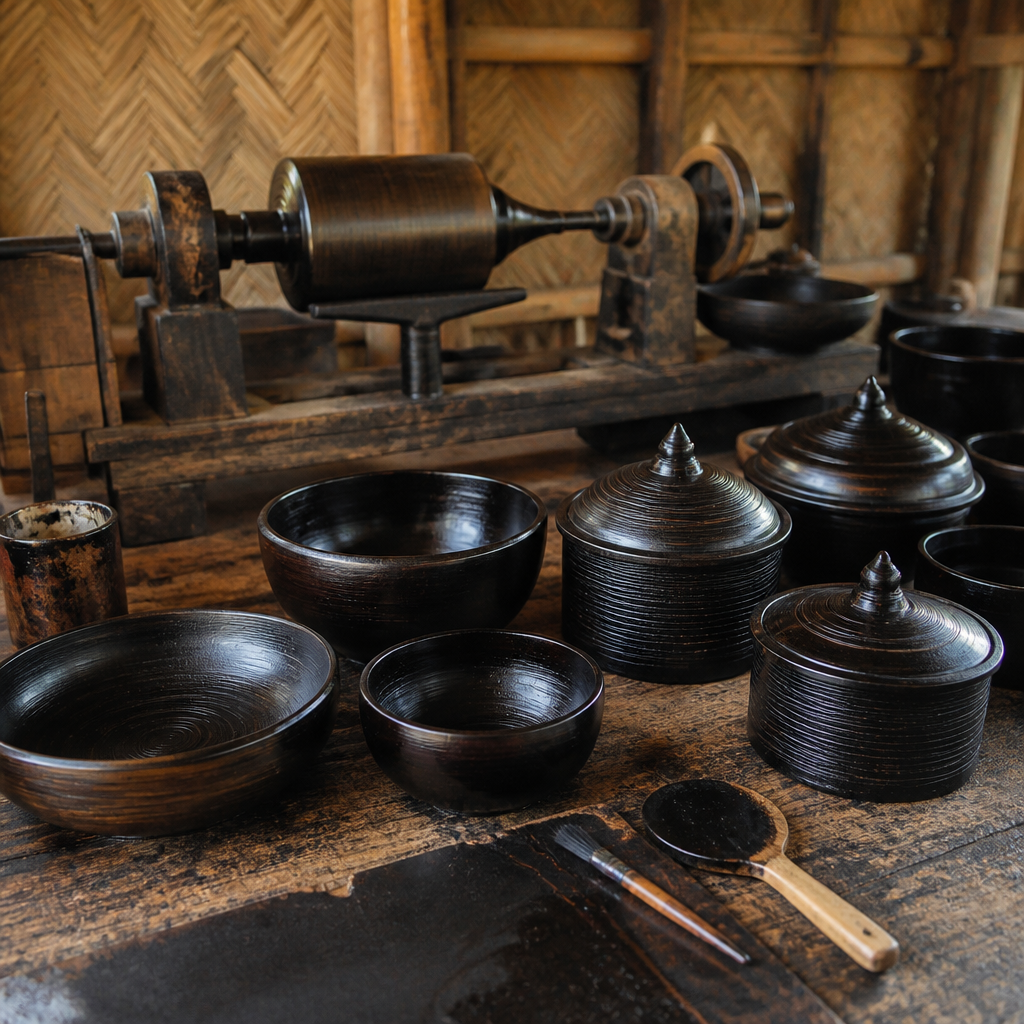
The red most people picture traditionally comes from ground cinnabar. The colouring was a closely guarded skill, passed down from father to a most trusted son. That secrecy explains why workshop methods are hard to document and why well-made pieces earn respect.
Reading the incised lines
Look closely at the edges of the engraved lines. Crisp, even cuts with cleanly filled colour suggest a skilled hand, while blurred edges or uneven colour can point to later work or a weaker workshop. Use a raking light rather than direct overhead light, because it shows the depth of the incisions.
Why layering matters for condition
Because colour is built up through repeated polishing, a worn surface records the piece's history. Thinning at edges where hands have touched a lid over many years is normal and often reassuring. Deep scratches cutting through to the base are a different matter, and they should change how you handle the object.
The finish of a lacquer vessel is a record of its making. Each layer was polished before the next was added, so the surface shows how much patience went into the piece long before it reached your hands.
Caring for Lacquerware on a Home Altar
Lacquer is durable, but it is not indestructible. The qualities that made it useful in humid households can be undone by sudden heat, direct sunlight, or harsh cleaning products. In practice, the damage that appears most often comes from a window sill or a radiator placed too close.
Dusting, cleaning, and what to avoid
Dust with a soft, dry brush or a lint-free cloth. Avoid solvent-based cleaners, abrasive pads, and anything containing alcohol or ammonia, since these can dull or lift the finish. A barely damp cloth is the most you should use, and only on a sound surface.
Humidity, light, and handling
Keep lacquer away from direct sun and heating vents. Sudden swings in humidity stress the finish more than steady conditions do, so avoid bathrooms and spots near kettles or cooking steam. Lift lidded pieces by the base rather than the lid, which is often the weakest point.
Pro tip: Keep a small card with the piece's measurements, origin, and any repairs, and store it alongside the object. Documentation matters more than most owners expect when a piece changes hands or moves house.
Burmese Buddhist Objects Beyond the Vessel
Lacquer is one part of a wider material culture. Burmese Buddhist objects, from images of the Buddha to ritual items, were made from many materials, and lacquer is one of the forms most closely tied to daily devotion rather than display. Our Burmese lacquerware range reflects that balance between practical and sacred use.
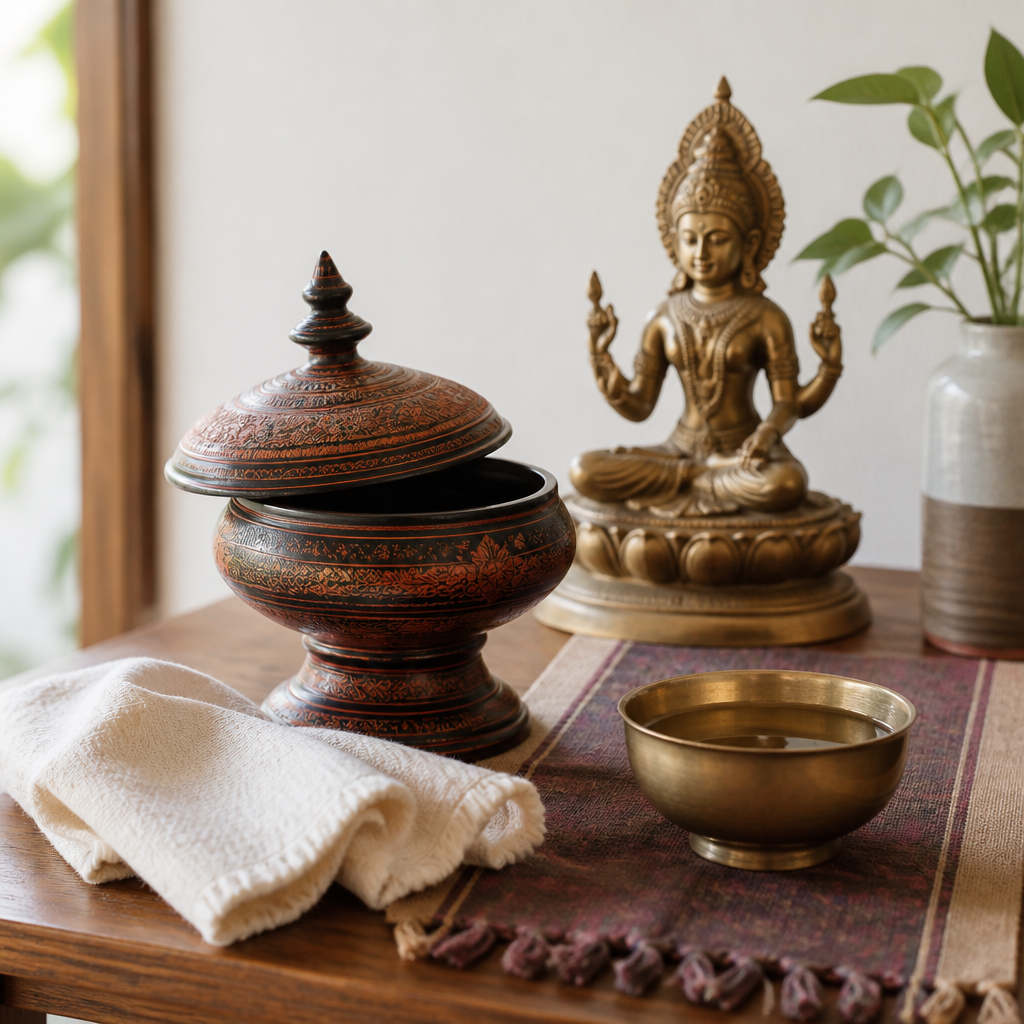
Lacquer alongside images of the Buddha
Many home altars pair a lacquer vessel with a seated Buddha image, and the pairing makes sense. The image is the focus of devotion, while the vessel holds the offering. Balance the two so neither overwhelms the other, and keep the arrangement simple.
Manuscript covers and scripture chests
Some of the strongest lacquer pieces are manuscript covers and scripture chests. An Art of Asia survey of Myanmar lacquer notes that this decoration continued after the fall of the court and is still practised in Mandalay today. For a buyer, that points to a living craft, so contemporary pieces may use the same methods, and a seller should be able to explain the difference.
Contemporary work is not automatically inferior. The real question is whether the maker used traditional layering and whether the piece is sold honestly as new. A clear description is worth more than a vague claim of age.
Comparing Lacquer Vessels for Ritual Use
Not every lacquer piece suits every altar. The three common types below have different strengths, and the right choice depends on how you plan to use the vessel.
|
Vessel Type |
Typical Ritual Use |
Practical Consideration |
|---|---|---|
|
Lidded offering bowl |
Holding food or small offerings on an altar |
Lid fit matters, and rim chips are the first sign of stress |
|
Scripture or manuscript box |
Storing sacred texts and papers |
Look for a flat base and keep it dry and out of direct light |
|
Decorative lacquer box |
Display and occasional ceremonial use |
Limit handling, and check the finish and inscriptions closely |
For most home altars, the lidded bowl is the most practical starting point. A manuscript box suits a collector who wants a piece with a clear historical role. A decorative box is the right choice if you value the finish more than daily use.
Frequently Asked Questions
Was all Burmese lacquerware used in religious settings?
No. Lacquer was used in homes for food, clothing, cosmetics, and more, and the same forms appear in both domestic and sacred settings. Ritual use depended on the owner and the place where the piece stood.
What were Burmese offering vessels used for?
They held offerings such as food and incense placed before the Buddha, and their lidded forms kept the contents clean. What went inside varied with the household and the occasion.
How can I tell whether a lacquer piece is old?
Look at construction, wear patterns, and the engraved and coloured layers. Ask the seller for provenance, and be wary of firm dates given without any documentation.
Can I use a Burmese lacquer bowl for food on my altar?
Use it only for offerings you will remove the same day, and keep perishable food on a separate plate. Do not leave food sitting in the bowl overnight.
Do you offer free shipping on lacquerware?
HD Asian Art offers free shipping on orders over £35. Check the product page for current dispatch details before you order.
Tell us about your own experience with a lacquer offering vessel, or the question you would most like answered before buying one.
References
-
Abbey Museum research on the history and making of Burmese lacquerware
-
UNESCO historical background on Myanmar lacquerware and its religious use
-
Survey of Myanmar lacquer highlights from a Victoria and Albert Museum collection
-
Manitoba education guide to Buddhist practices and symbolic offerings
