



-
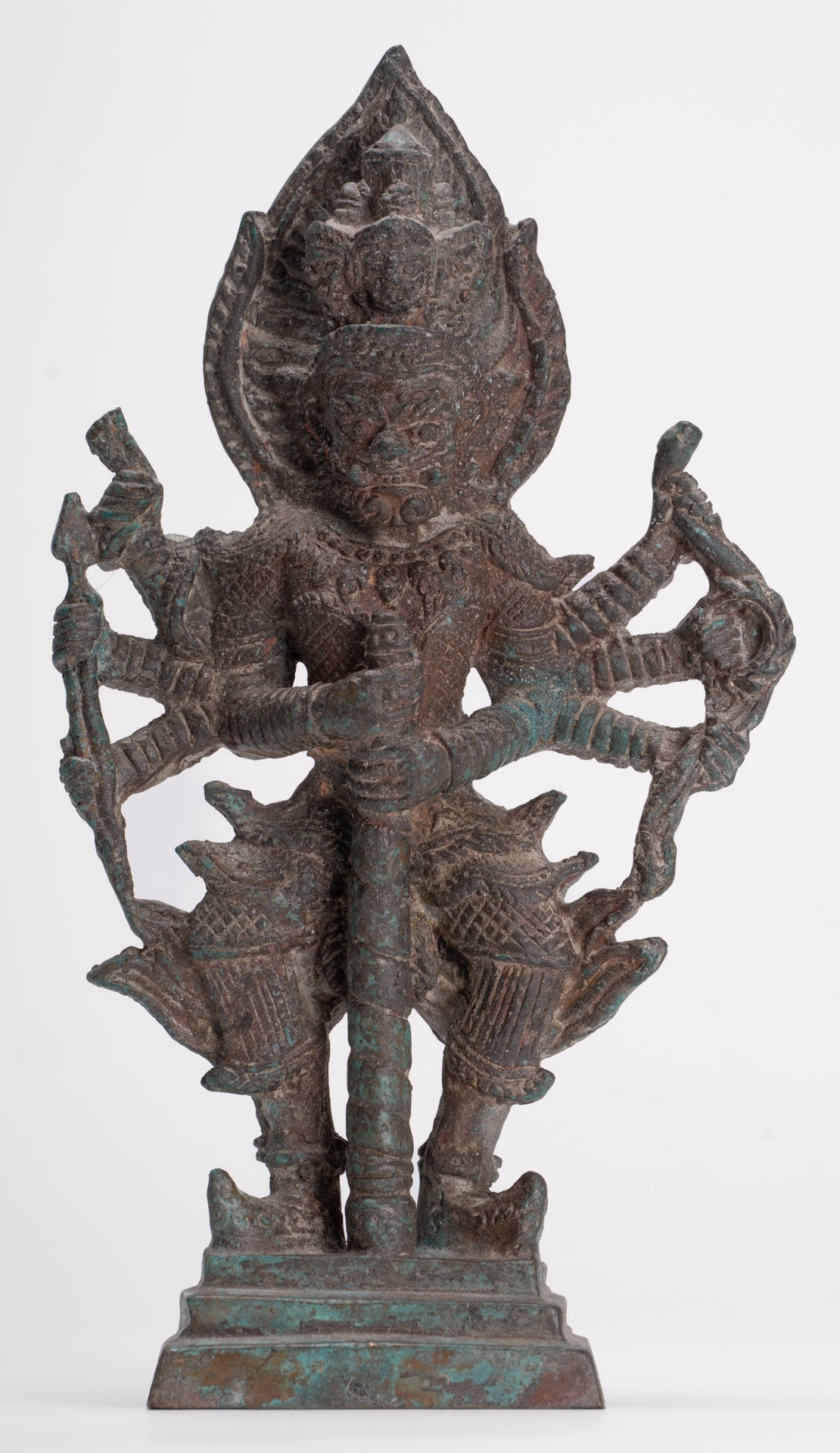
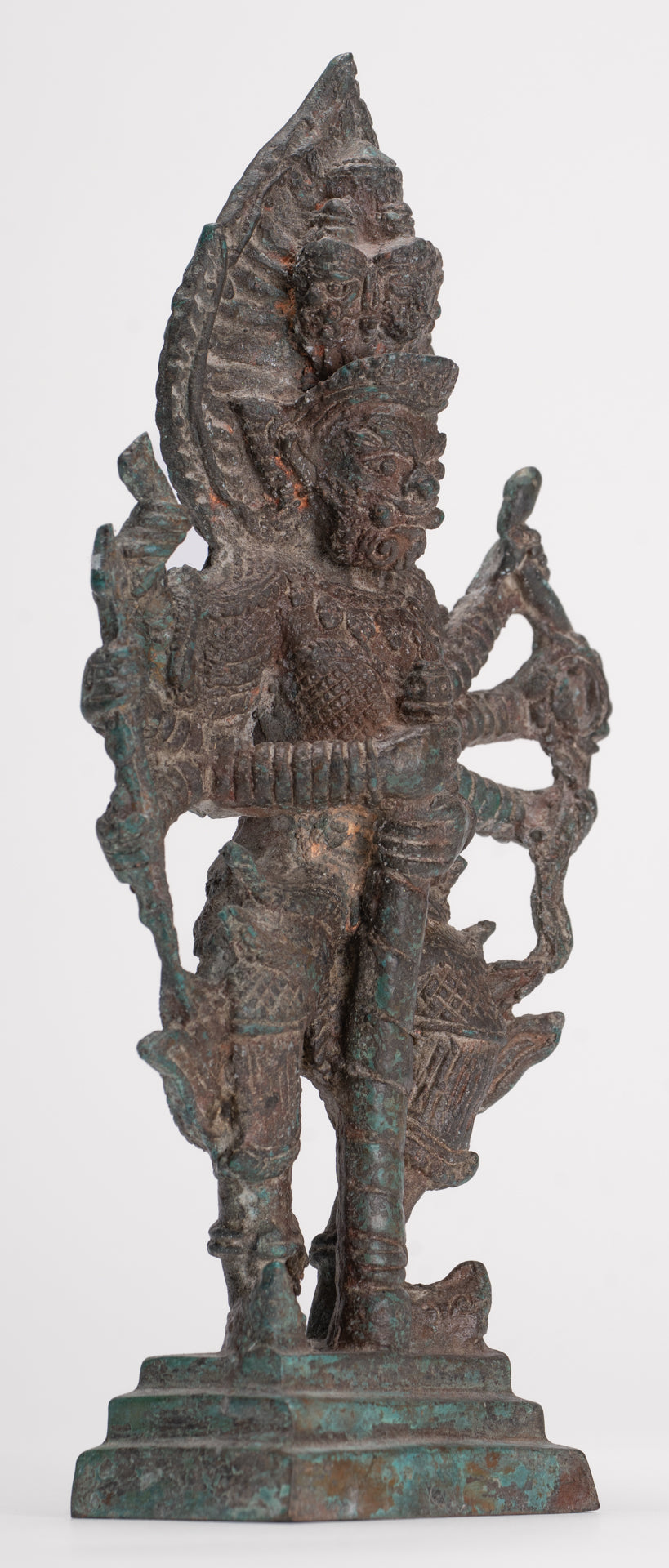
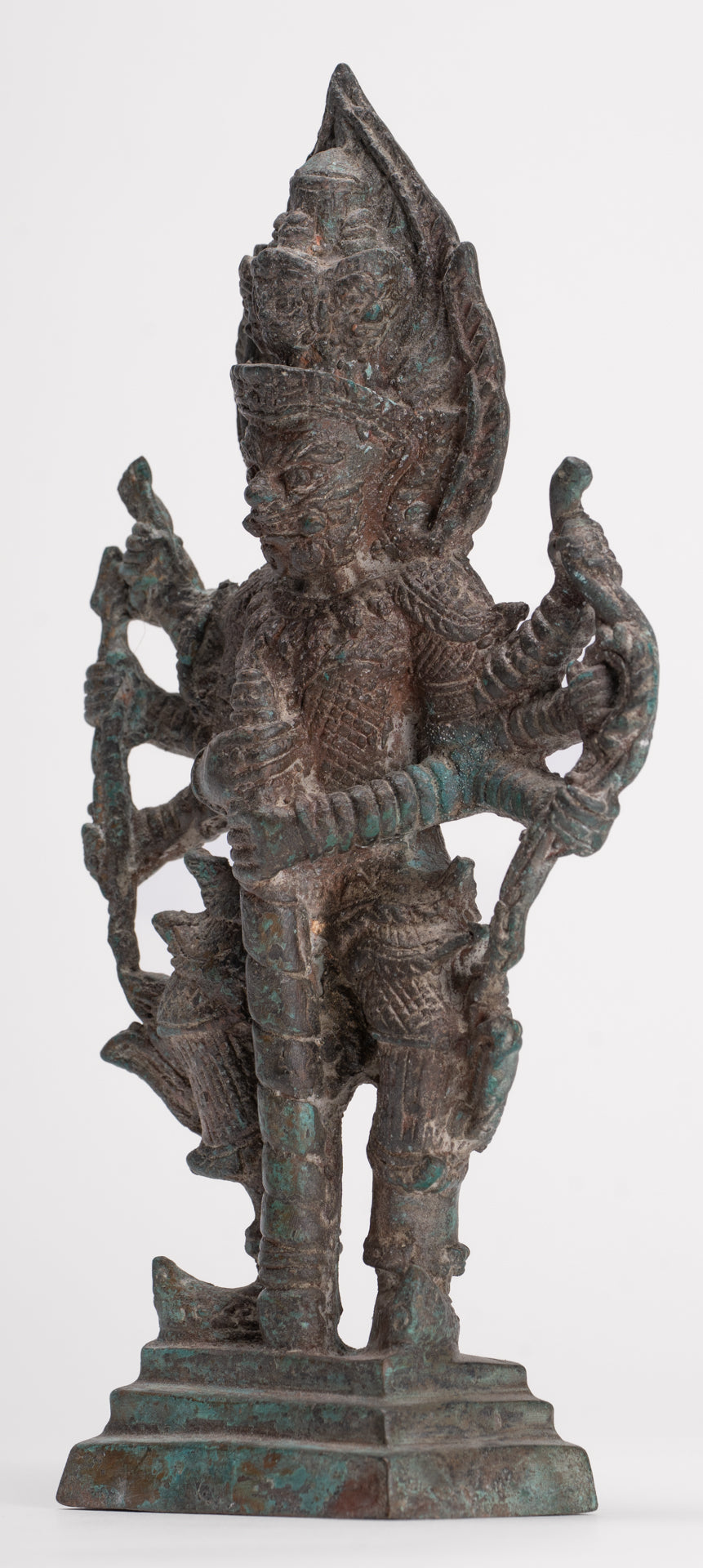
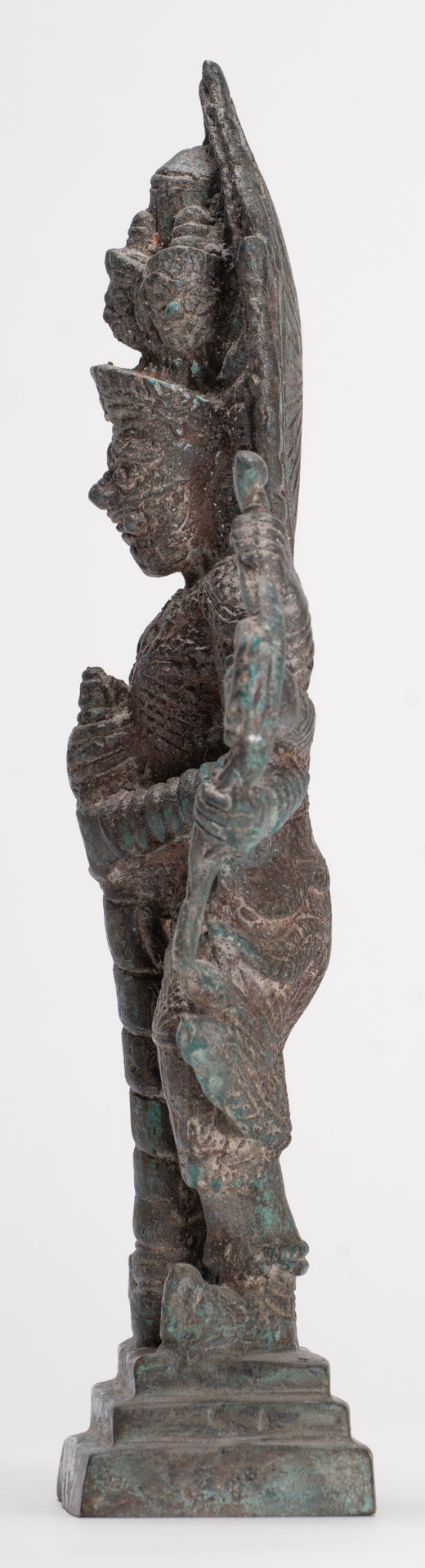
Temple Guardian - Antique Thai Style Bronze Thao Wessuwan / Vessavaṇa Statue - 22cm/9"
Measures (Height) 22cm/9"
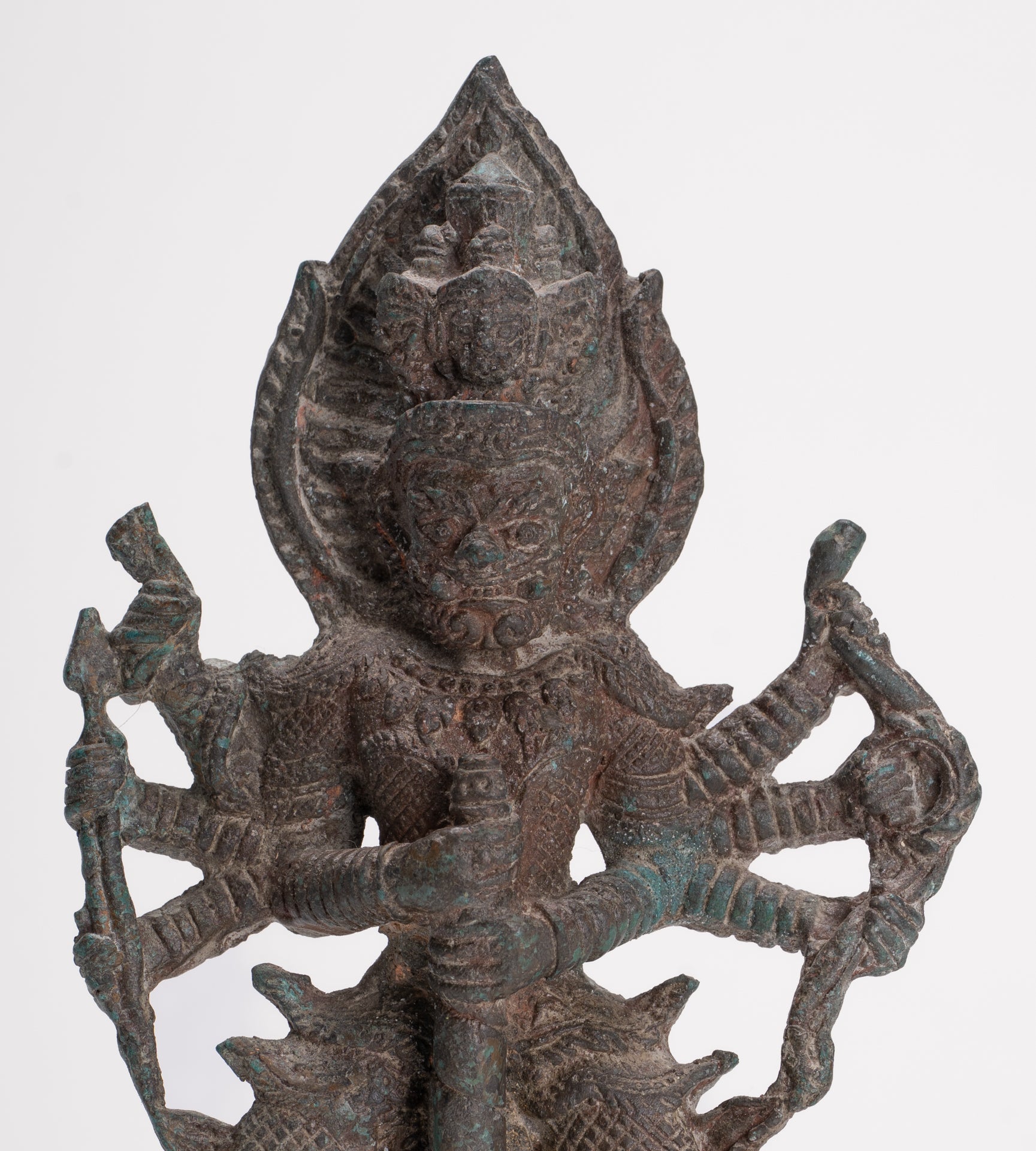
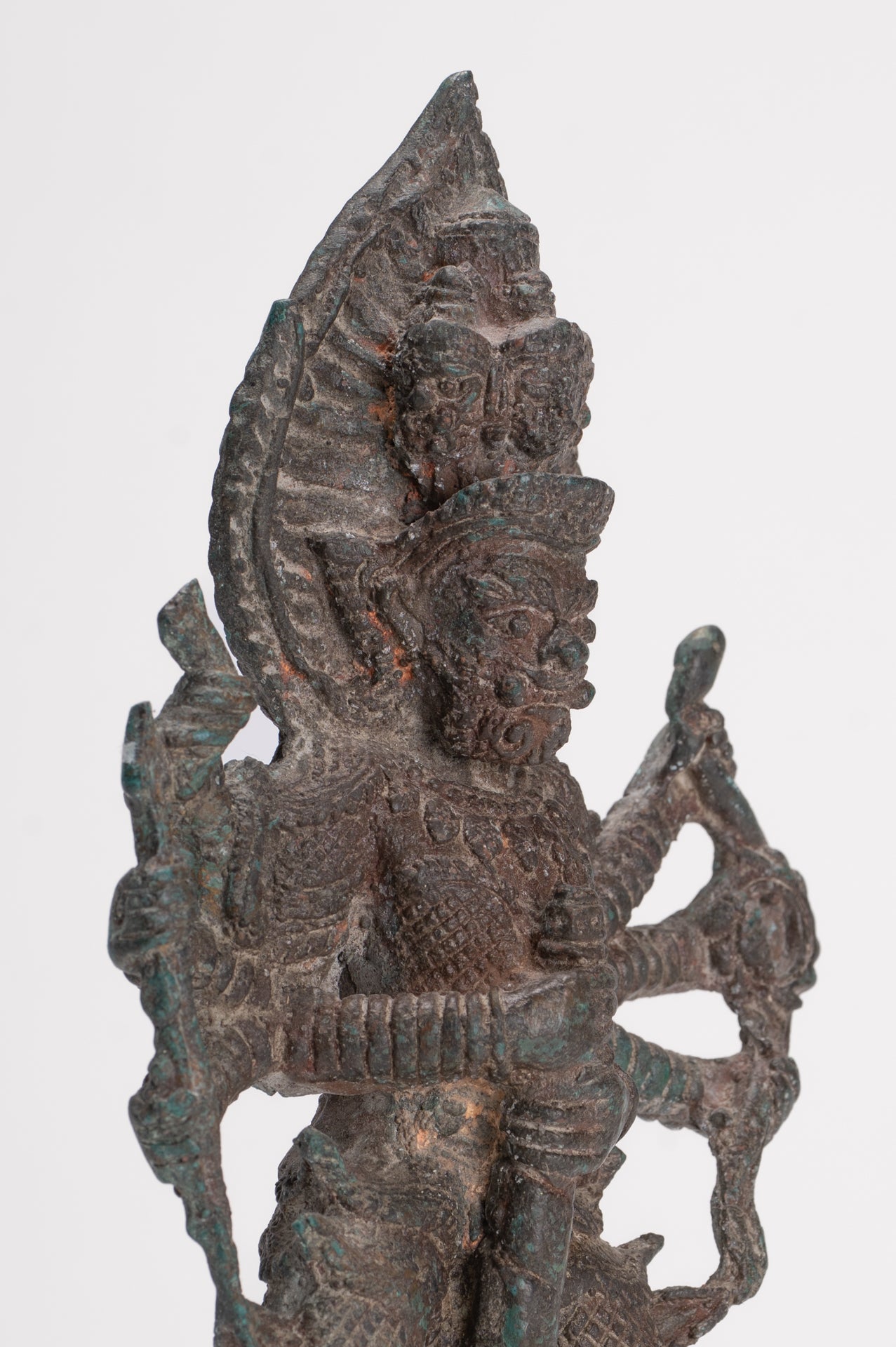
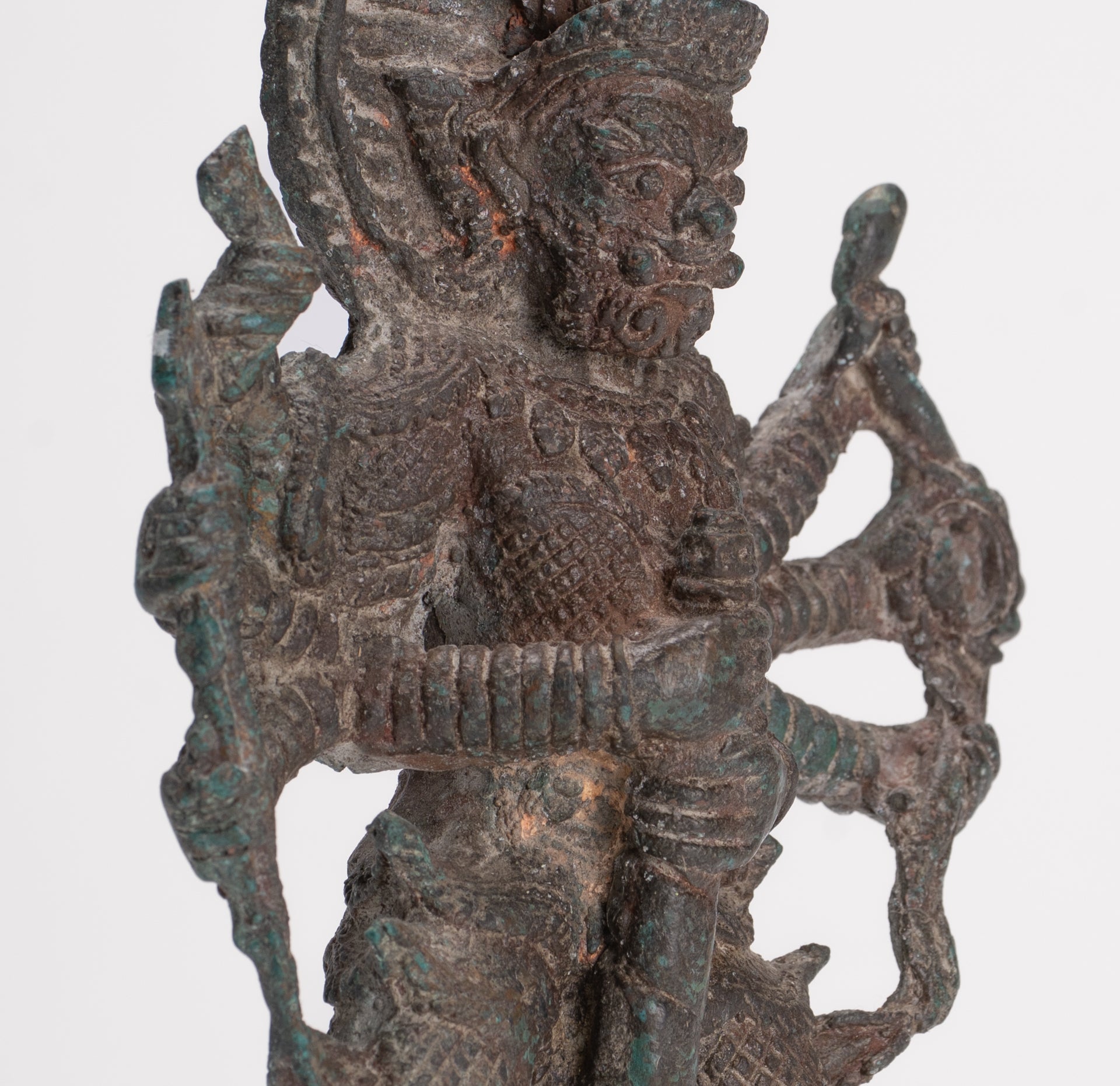
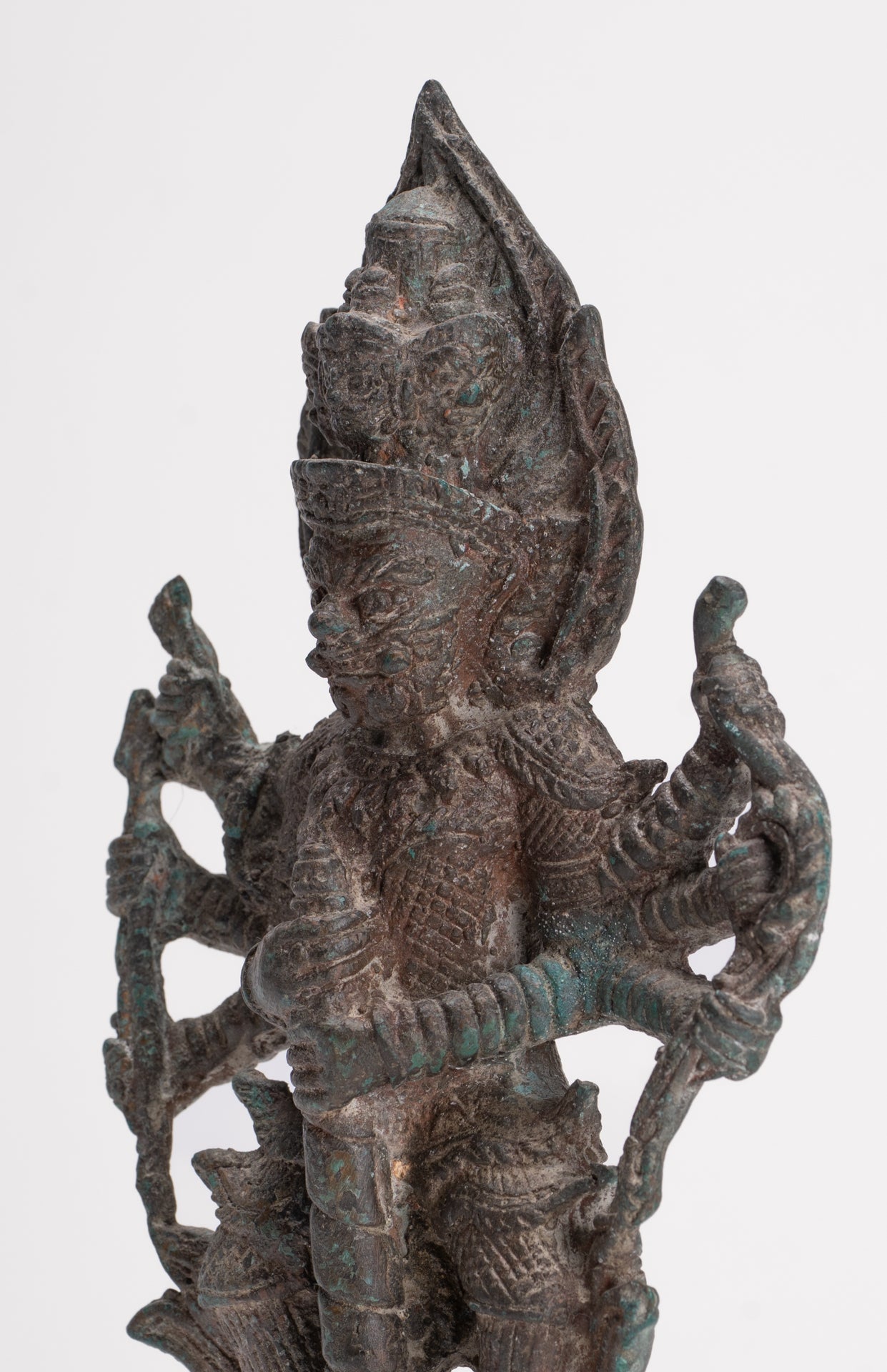
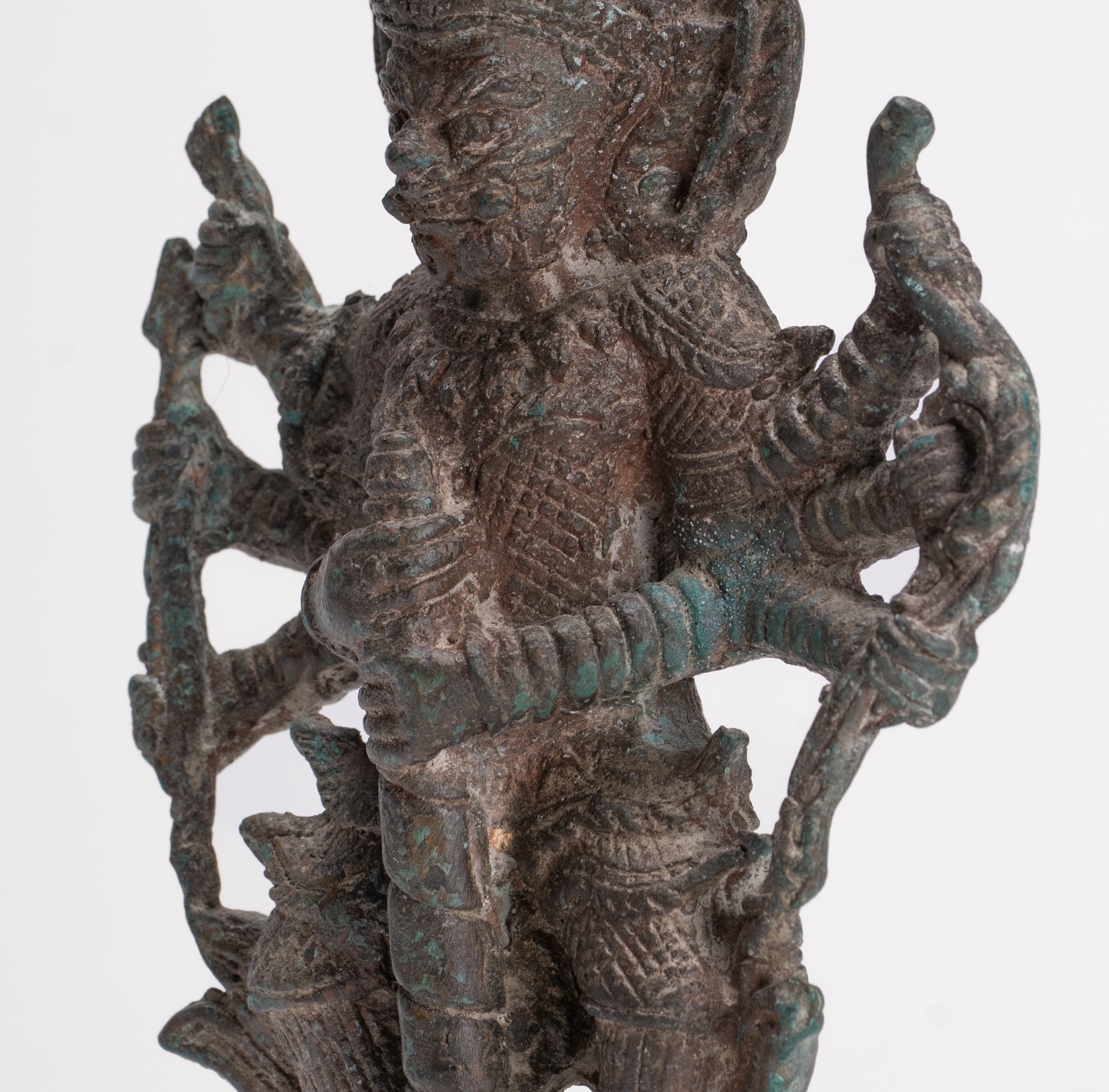
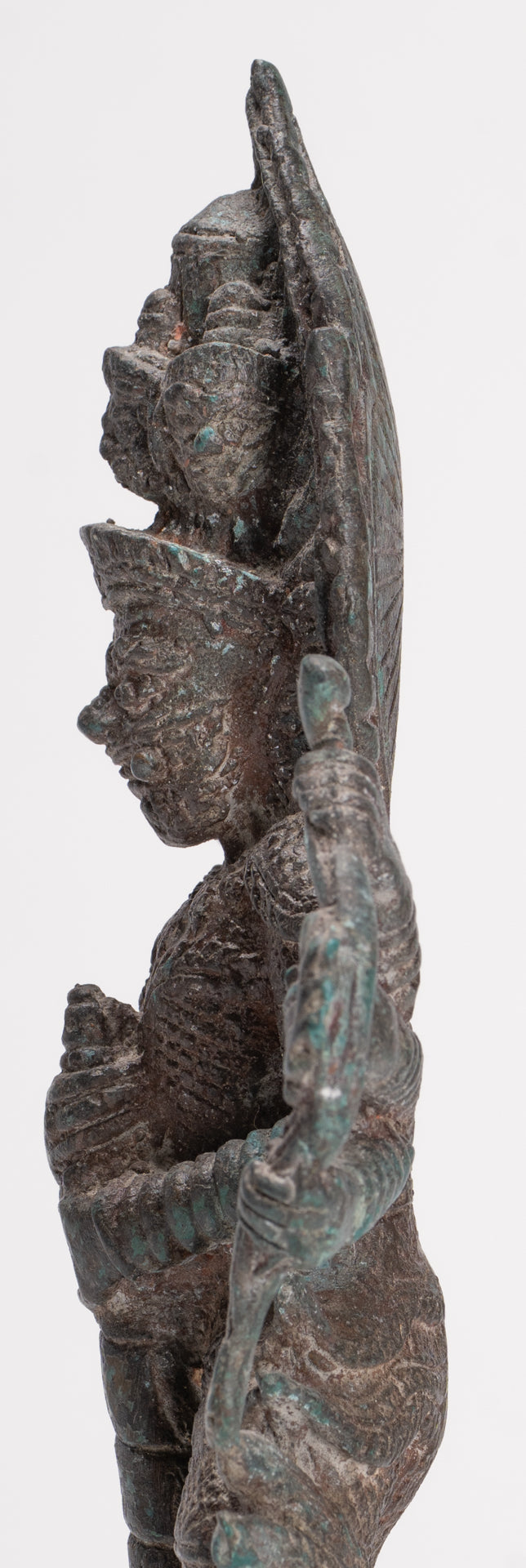
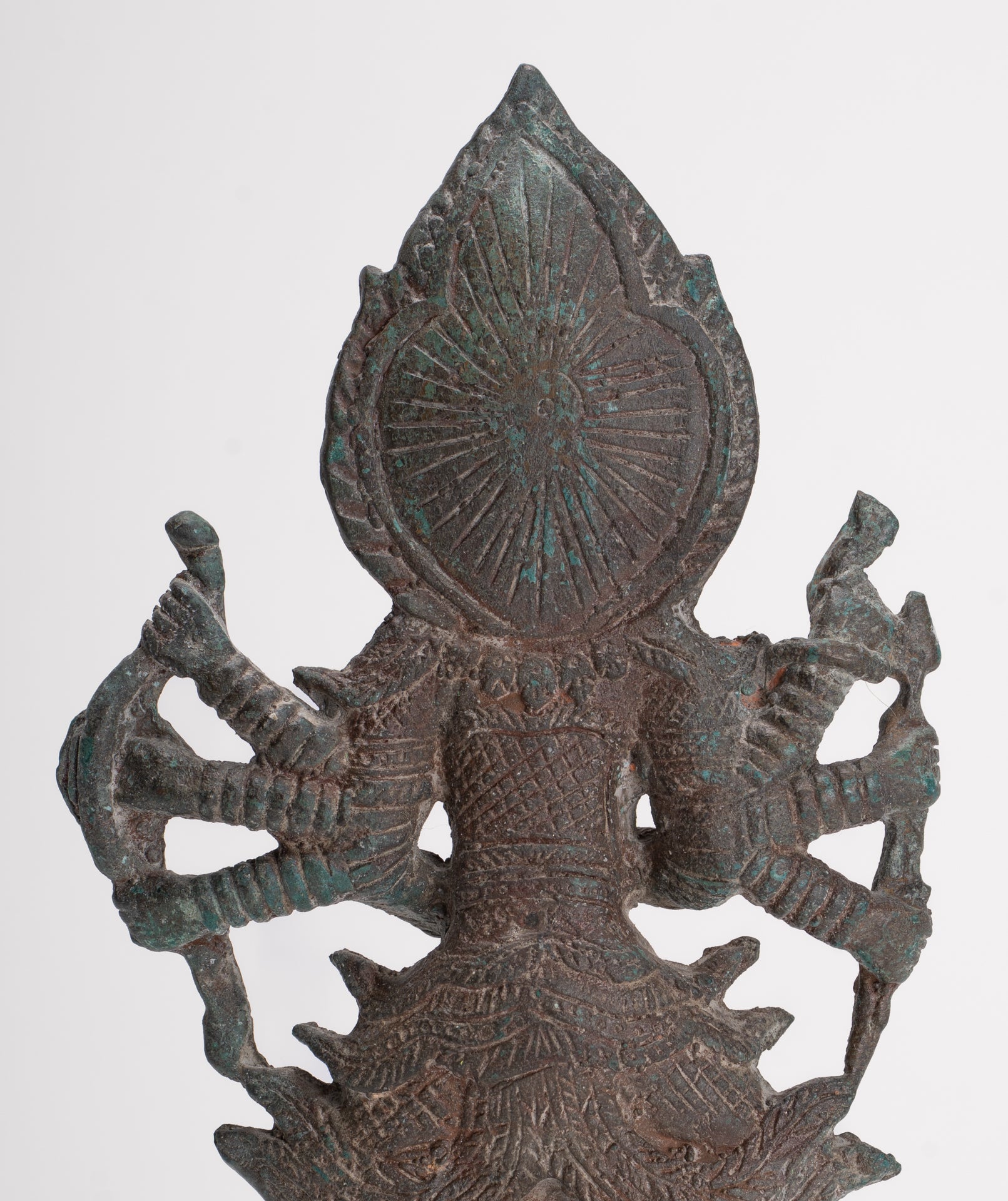
A delightful Thai-style representation of Thao Wessuwan, also known as Vessavaṇa or Vaiśravaṇa—the great Guardian King of the North. Shown as a fierce, fanged Yaksha with bulging eyes, elaborate traditional armour and eight powerful arms, this commanding temple guardian embodies protection, authority, spiritual vigilance and abundance.
In Buddhist cosmology, Vessavaṇa is one of the Four Heavenly Kings, guardians of the four cardinal directions. He presides over the northern quarter, commands the Yakshas and is associated with the protection of the Dharma, guardianship of sacred places and the safeguarding of hidden treasures. He is also closely associated with wealth, prosperity and the ability to overcome threatening or disruptive forces.
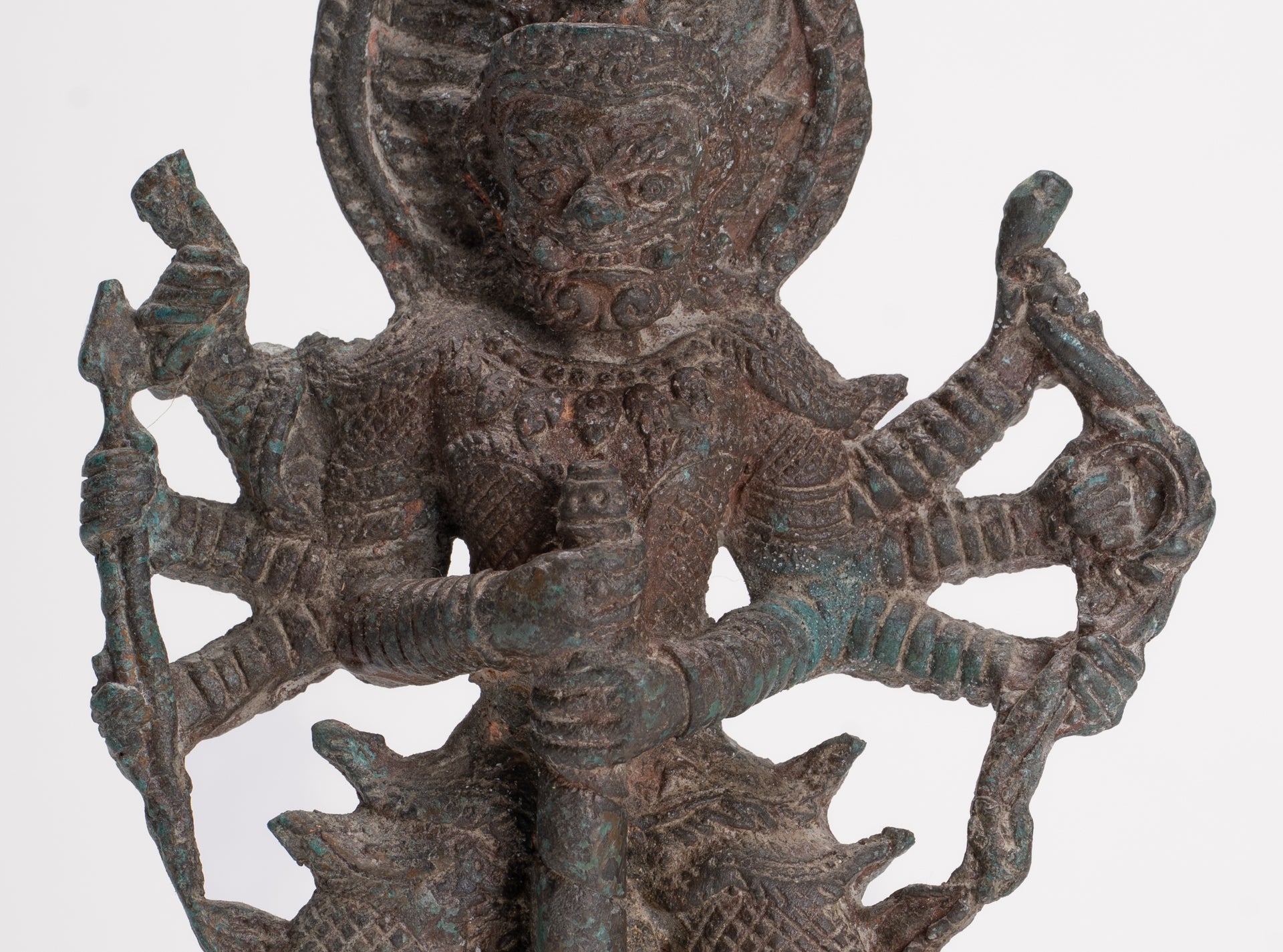
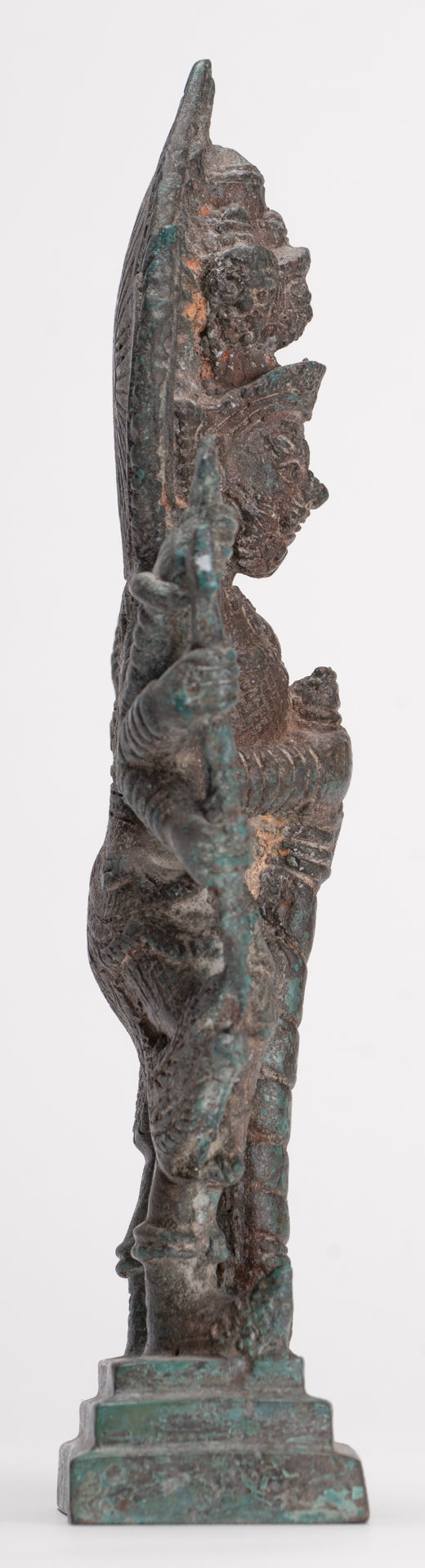
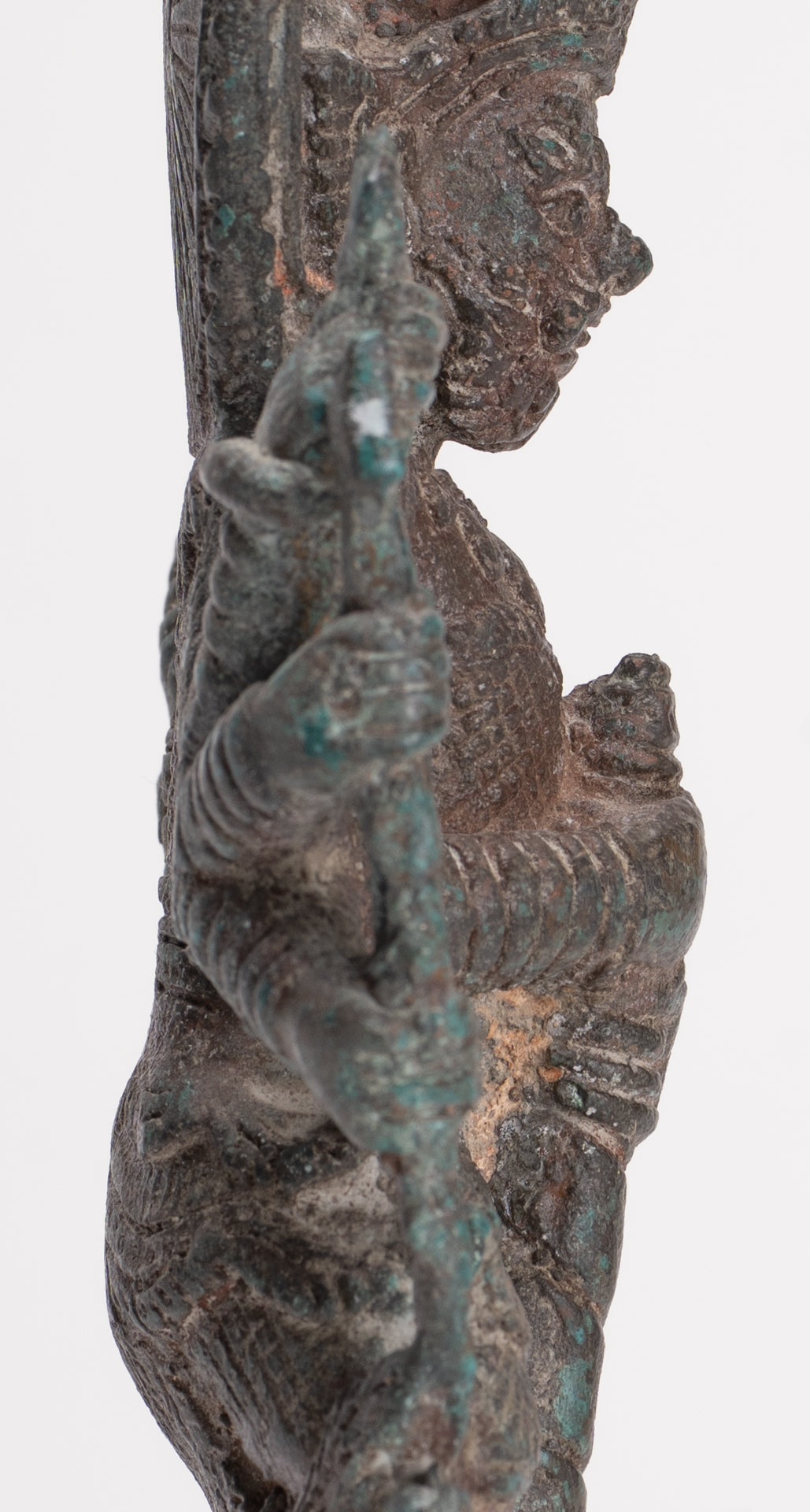
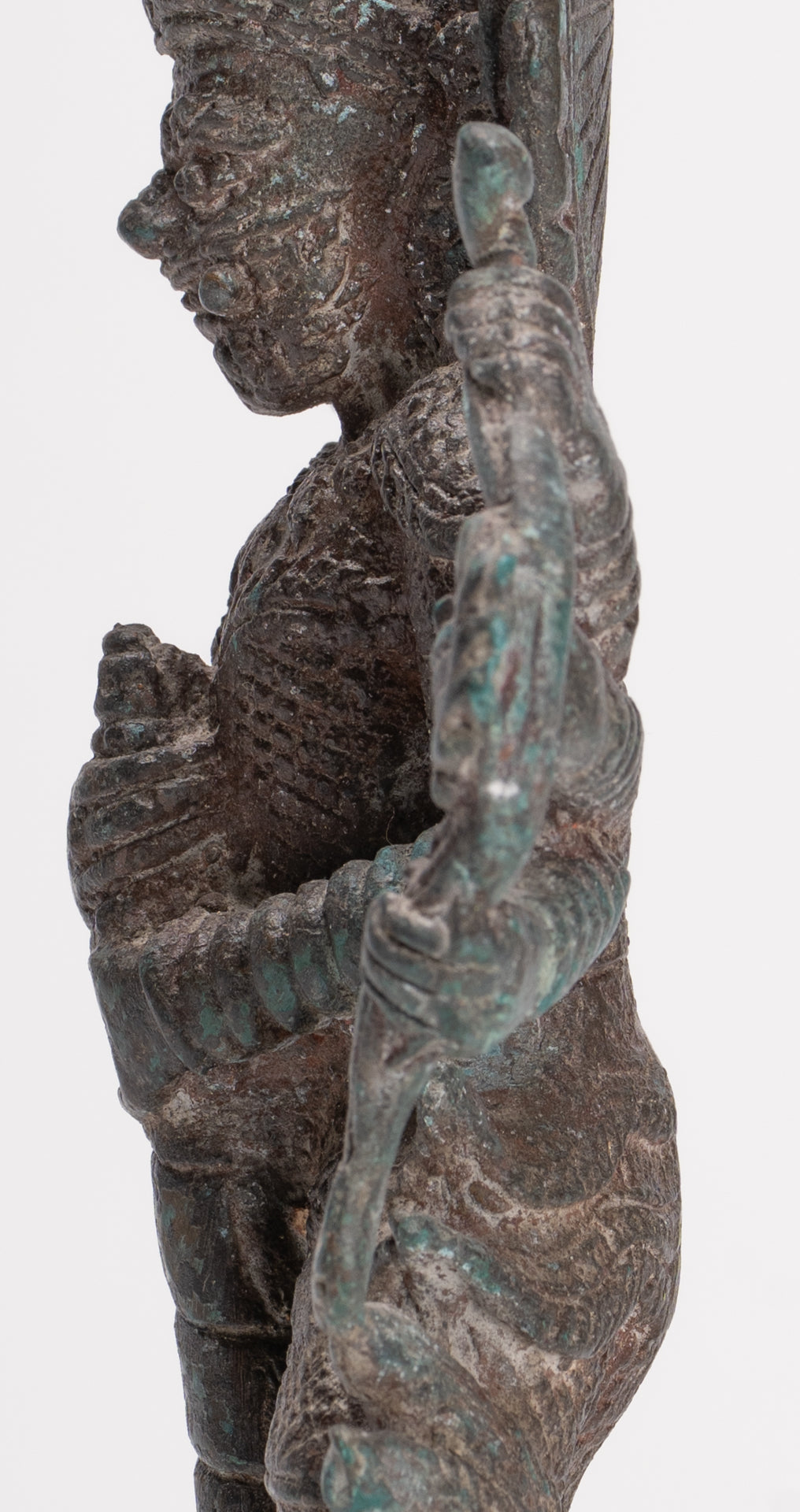
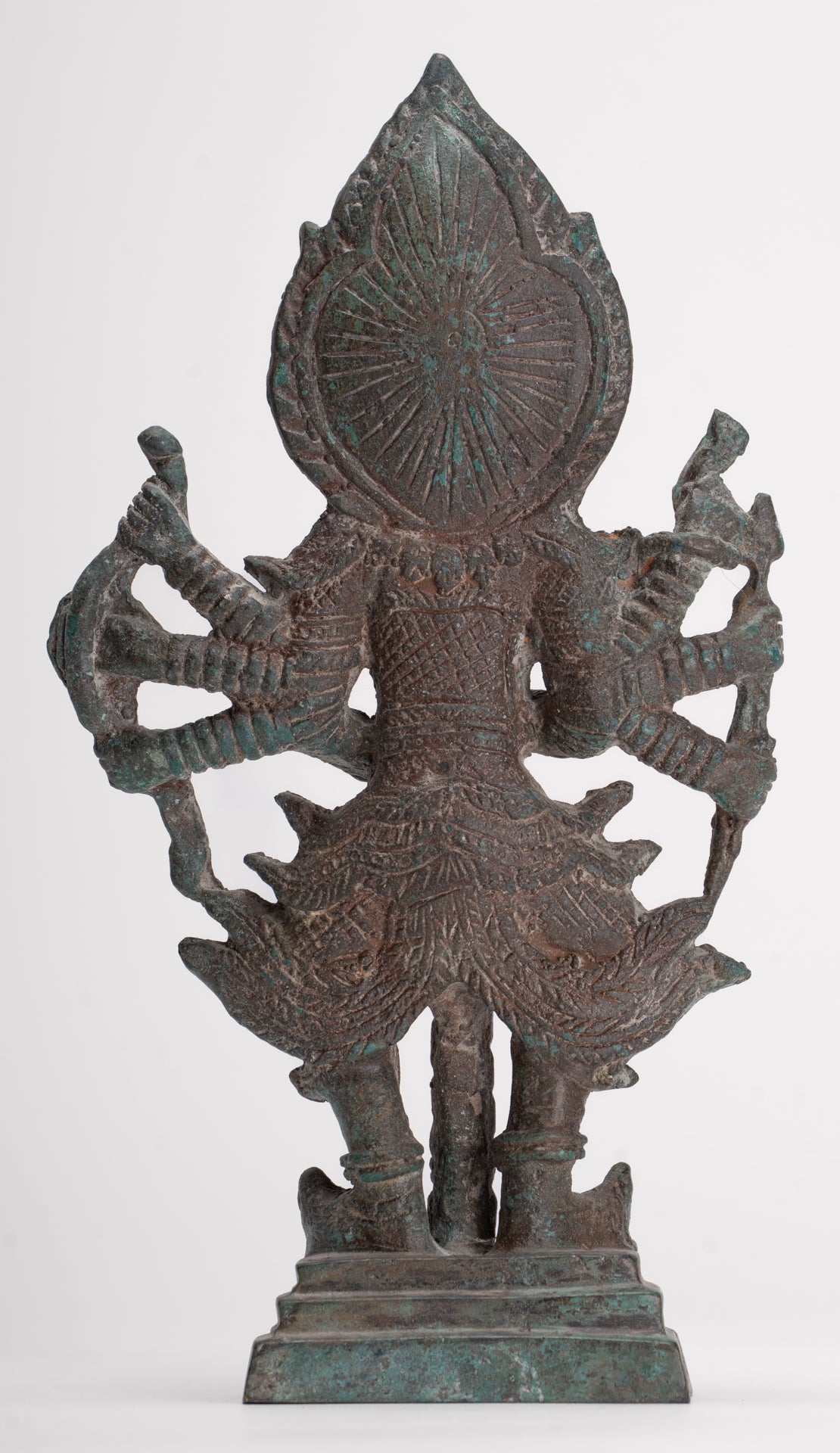
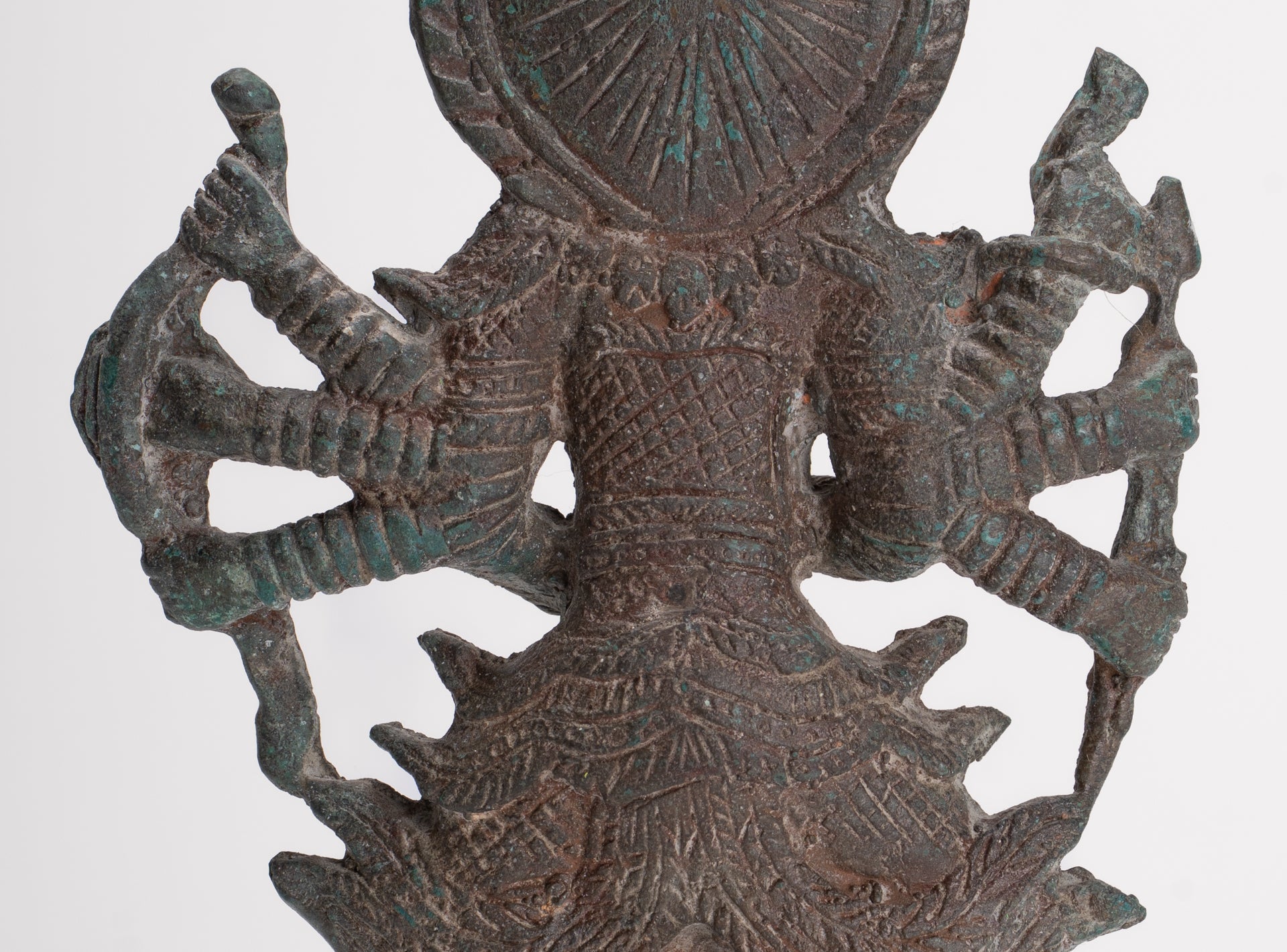
This remarkable multi-armed form presents Thao Wessuwan in his most dynamic and protective aspect. Among his eight hands, he carries martial and sacred attributes including a bow, weapons and a chakra, each reinforcing his role as a celestial defender. His staff, or Grabong, is a particularly important emblem in Thai tradition: it signals his authority over spirits and his uncompromising power to repel harmful influences. Thai depictions commonly show Thao Wessuwan as a giant guardian holding a club or staff at temple gates, where he protects sacred precincts from danger.
The deity’s fierce expression is purposeful rather than malevolent. His prominent fangs, wide eyes and forceful stance convey watchfulness, courage and the readiness to confront negativity. In Thai Buddhist art, the Yaksha form is a guardian image: terrifying to hostile beings, but protective and reassuring to those within the sacred space.
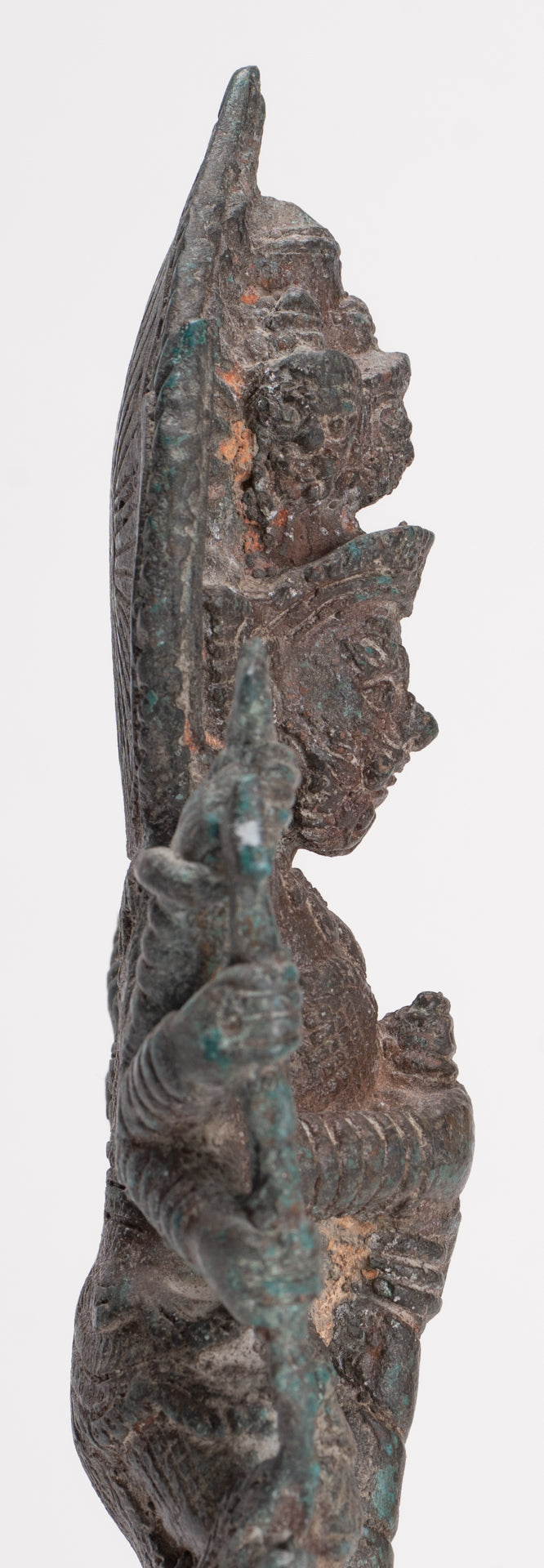
Behind the figure rises an ornate aureole, framing the deity with a powerful sacred presence. His tall crown is enriched with four heads, an exceptional iconographic detail that amplifies the sculpture’s commanding, all-seeing character. Traditional armour, richly ornamented jewellery and the many carefully arranged hands create a layered silhouette full of movement, authority and devotional meaning.
Thao Wessuwan is especially meaningful for a home, business, entranceway, office, meditation room or sacred interior. He is traditionally revered as a protector against unseen dangers and negative influences, as well as a guardian of prosperity, discipline and righteous order. Placed with respect, this powerful guardian sculpture offers a striking statement of Thai spiritual art and enduring symbolism.
Key Features
- Thai-style Thao Wessuwan, also known as Vessavaṇa or Vaiśravaṇa
- One of the Four Heavenly Kings in Buddhist cosmology
- Guardian of the northern direction and ruler of the Yakshas
- Eight-armed protective form with a dramatic martial presence
- Holds symbolic attributes including a bow, weapons and chakra
- Features the sacred Grabong staff, an emblem of authority and protection
- Fierce Yaksha expression with fangs, bulging eyes and commanding gaze
- Elaborate traditional Thai armour and ornate jewellery
- Decorated aureole or halo framing the guardian deity
- Tall crown surmounted by four heads
- Symbolises protection, spiritual vigilance, prosperity, courage and the safeguarding of sacred treasures
- A compelling focal point for a Thai art collection, entrance hall, meditation room, altar or business setting
Frequently Asked Questions
Who is Thao Wessuwan?
Thao Wessuwan is the Thai name for Vessavaṇa, also known in Sanskrit as Vaiśravaṇa. He is one of the Four Heavenly Kings, the celestial guardians who protect the four directions of the world in Buddhist cosmology.
He is the Guardian of the North, leader of the Yakshas and an important protective figure associated with wealth, guardianship and the defence of Buddhist teachings.
Is Thao Wessuwan the same as Kubera?
Thao Wessuwan is closely connected with Kubera, the ancient Indian deity of wealth and king of the Yakshas. In Buddhist traditions, Vaiśravaṇa or Vessavaṇa became established as a guardian king, protector of the northern direction and ruler of Yaksha beings.
While names, attributes and visual forms differ across regions and religious traditions, the shared associations with wealth, guardianship and command over Yakshas remain important.
Why does Thao Wessuwan look fierce?
His fierce appearance is protective. The large eyes, fangs, armour and weapons are intended to repel harmful forces, fear and spiritual obstacles. He is not shown as wrathful toward devotees; rather, his formidable presence protects sacred spaces, Buddhist teachings and those who seek his guardianship.
Thai temple guardians are often deliberately imposing because they mark the boundary between ordinary space and a protected sacred environment.
What is a Yaksha?
A Yaksha is a powerful class of supernatural being found in Indian, Buddhist and Southeast Asian traditions. Yakshas may be associated with nature, hidden wealth, trees, water, fertility and the guardianship of treasures.
In Buddhist traditions, Vessavaṇa is recognised as the king or leader of the Yakshas. His Yaksha-like form emphasises his formidable ability to command protective forces and guard the northern direction.
What does the Grabong staff represent?
The Grabong is a staff or club associated with Thao Wessuwan in Thai tradition. It is an emblem of sovereign authority, spiritual protection and the power to subdue harmful spirits or disruptive influences.
When carried by a temple guardian, the staff signals readiness, discipline and the preservation of sacred order. It is one of the most recognisable attributes of Thao Wessuwan in Thai devotional imagery.
What does the chakra mean in this sculpture?
The chakra is a circular weapon or sacred discus. In Asian religious art, it can express divine authority, the destruction of obstacles and the capacity to protect the cosmic order.
Here, the chakra contributes to Thao Wessuwan’s martial, guardian identity. Together with the bow, weapons and Grabong, it conveys alertness, strength and the power to overcome threatening forces.
Why does the guardian have eight arms?
Multiple arms are a visual way of communicating supernatural power and many-sided ability. The eight arms allow the deity to hold several symbolic attributes at once, reinforcing his role as a vigilant protector equipped to respond to danger in every direction.
The multi-armed form also gives the sculpture exceptional visual energy, creating a complex silhouette of weapons, gestures and devotional authority.
What do the four heads on the crown signify?
The four heads on the crown enhance the guardian’s sense of all-encompassing awareness and authority. Although crown forms and multi-headed imagery can vary by Thai workshop, regional style and devotional tradition, the motif can be understood as emphasising the deity’s ability to watch over all directions and exercise wide-ranging protective power.
They also create an elaborate vertical composition that makes the sculpture especially impressive as a display piece.
What is an aureole?
An aureole is a sacred halo or decorative frame positioned behind a deity. It distinguishes the figure from an ordinary being and emphasises divine presence, spiritual power and holiness.
In this sculpture, the aureole frames Thao Wessuwan’s head and many arms, adding visual grandeur and making the guardian’s silhouette more dramatic.
Where should a Thao Wessuwan sculpture be displayed?
Thao Wessuwan is particularly suited to an entrance, hallway, reception area, office, meditation space, altar or dedicated Asian-art display. As a guardian of sacred thresholds, he can be placed where his commanding form is visible and where he creates a protective visual presence.
Choose a secure, stable location with sufficient space around the aureole, crown and arms. Avoid positioning a detailed sculpture where it could be easily knocked or exposed to prolonged dampness or direct sunlight.
Is Thao Wessuwan associated with wealth?
Yes. Vessavaṇa is traditionally associated with wealth, hidden treasures, prosperity and abundance. This connection is related to his identification with Kubera and his role as lord of the Yakshas, beings often linked with the earth’s riches and protected treasures.
In Thai tradition, he is revered not only for prosperity but also for the wisdom, discipline and protection needed to preserve it.
Is this sculpture appropriate for a business setting?
Yes. Thao Wessuwan is often appreciated as a guardian figure in homes, offices and business environments because of his associations with protection, authority, prosperity and the overcoming of obstacles.
Display him respectfully, in a clean and prominent location, and treat the sculpture as a meaningful cultural and religious artwork rather than simply an ornamental object.
How should I care for a Thai guardian sculpture?
Use a soft, dry cloth or soft brush to remove dust. Avoid chemical cleaners, metal polish, abrasives and prolonged exposure to direct sunlight, moisture or dramatic temperature change.
As the sculpture has a developed bronze patina, do not polish it. Aged surface variation is often an important part of its history and visual character.
SATISFACTION GUARANTEE - We have been offering SE Asian Art for many years and are proud of the reputation we have developed for fair and honest listings. However, if for any reason, whatsoever, you are unhappy with your purchase please just let us know and we will provide a full refund. We want you to be 100% happy with your purchase.
-
The majority of orders will be shipped with DHL. This is a secure, express and fully tracked service.
Items less than 2Kg we typically ship using Royal Mail.
Once we receive your order we try to ship all orders the same or next working day.
Large and/or fragile pieces requiring palletising, specialist crating and/or extra packaging may take a little longer. Palletised shipments will be delivered curbside.
All orders over 35 GBP will be shipped free of charge.

-
We genuinely hope that all purchases delight.
However, if they do not, regardless of reason, we will refund all orders upon receipt of the unwanted item. Just notify us within 14 days of receiving your order that you wish to make a return and send the piece back to us with 30 days of delivery.


