



Vajrayana Buddhist Sculpture: Fierce Protector Deities
Vajrayana Buddhist Sculpture: Fierce Protector Deities
Step into a Tibetan Buddhist shrine and the figure that catches your eye is often not the serene Buddha at the centre. It is the wrathful deity in a side niche, flames rising behind its shoulders and a garland of skulls across its chest. For collectors approaching Vajrayana Buddhist sculpture for the first time, that fierce face is the most confusing part of the category. This guide explains what these figures are, why they look the way they do, and how to choose a dharmapala or wrathful deity statue that is well made and suited to a home altar.
Table of Contents
- Quick Takeaways
- What Vajrayana Means in Practice
- Why Wrathful Figures Guard the Dharma
- Dharmapalas: Protectors of the Teachings
- Reading the Iconography in a Protector Statue
- Materials, Casting and Finish
- Choosing a Protector Statue for Your Home Altar
- Comparing Protector Statues by Material
- Common Mistakes Buyers and Owners Make
- Frequently Asked Questions
- References
Quick Takeaways
Key Insight |
Explanation |
|---|---|
Wrathful does not mean angry |
Fierce figures express the energy needed to cut through ignorance and obstacles. They are not hostile toward the person viewing them. |
Dharmapalas are protectors of practice |
Dharmapalas guard the teachings and the people who practise them. Many are invoked in daily or retreat practice, so they are working images. |
Read the attributes before the size |
Skulls, flames, weapons, and animal skins identify a figure more reliably than height or colour. Check the hands and the crown first. |
Casting quality shows in the small parts |
Fingers, ornaments, and the edges of flames reveal whether a bronze was cast with care. Inspect these areas in every photograph you receive. |
Ask for base and back photographs |
Sellers who cannot show the underside, the back, and the seams are hiding something. Request them before you pay. |
Place the statue with intent |
Give a protector a clean, elevated shelf of its own. Keep it away from the floor, bathrooms, and clutter that signals casual decoration. |
What Vajrayana Means in Practice
Vajrayana, often called the Diamond Vehicle, developed as a distinct path within the wider Buddhist world and became especially central in Tibet. Its name refers to the vajra, a ritual sceptre that symbolises indestructible clarity. The tradition places heavy weight on ritual, mantra, and visualisation, and that is why its sculpture looks so different from the calm images many people associate with Buddhism.
Visualisation is the key. According to the general overview of the tradition, representations of the deity such as statues (murti), paintings (thangka), or mandala serve as an aid to visualisation in deity yoga. In practice, the practitioner looks at the image, builds the deity in the mind, and then dissolves the visualisation back into emptiness. A statue is therefore a focal point, not a finished decoration.
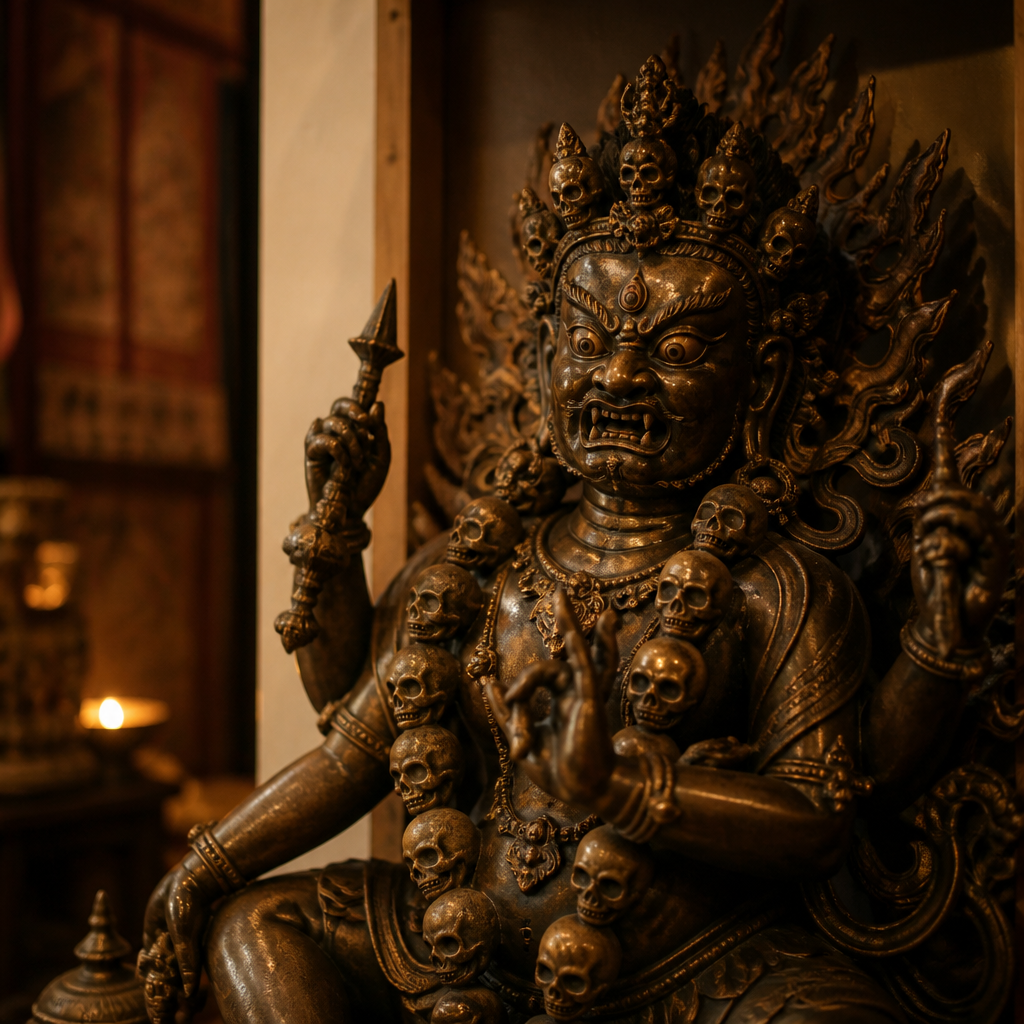
Some of the imagery can look startling to newcomers. The Rubin Museum's guide to visual symbols notes that Vajrayana deities are sometimes shown as male and female couples in sexual embrace, known as yab-yum, meaning "father and mother". Practitioners generally read these images symbolically, and the meaning is taught by a qualified teacher within a lineage rather than decoded from the statue alone. That is a useful lesson for buyers. The figure is a teaching object, and its full meaning sits in the instruction behind it.
A protector statue is not a portrait of anger. It is a working image, and each feature is an instruction for the person who looks at it.
For collectors, the practical takeaway is simple. Before you judge a piece by its drama, learn which deity it represents and what role that deity plays. The rest of this guide is built around that question.
Why Wrathful Figures Guard the Dharma
Many people assume a fierce figure must be a demon or a threat. In Vajrayana iconography, wrathful forms are usually the activity of enlightened beings taking an active, forceful form. The same compassion that appears as a gentle Buddha or bodhisattva can also appear as a fierce figure when the situation calls for it. The fierce face is a way of meeting obstacles directly, not a sign that the figure has lost its equanimity.
Fierce appearance as a teaching device
Wrathful imagery is designed to grab attention. Bulging eyes, bared fangs, and a scowl make the practitioner stop, and that stopping is part of the method. In a tradition built on visualisation, a face that is hard to ignore helps the mind stay focused on the form rather than drifting into daydreams during a session.
In practice, this means that a wrathful statue often works best when it is placed where the practitioner sits. A figure hidden in a dark corner does little for a practice that depends on visual engagement. The intensity is a feature, and it should be treated as one when you choose where to display the piece.
The protector's job on the altar
Protector figures are often placed on or near a home altar to safeguard the space and the practice. Some households keep one protector with a peaceful Buddha. Others keep a small group. The choice usually follows the teachings a family follows or the advice of a teacher. A shop can describe a figure accurately, but it cannot decide which protector your practice needs, so ask a teacher if you are unsure.
A common error is to buy a dramatic piece because it looks powerful on a website, then place it among unrelated objects where its role is lost. A protector works best with clear space around it and a deliberate position. That discipline matters more than the size of the statue.
Dharmapalas: Protectors of the Teachings
Dharmapala means "protector of the teachings," and the term covers a wide group of figures. Some dharmapalas are shown as fierce warriors, while others appear as guardian deities with more restrained expressions. Across Tibetan and Himalayan art, the protector figures most often seen in shops and monasteries include forms of Mahakala, Yama-related protectors, and the wrathful manifestations of enlightened beings. Each has its own iconography, and a knowledgeable seller should be able to name the figure and explain the attributes.
Mahakala and the great protectors
Mahakala is one of the most widely recognised protectors in the Tibetan tradition. Statues typically show a dark, powerful figure with a crown of skulls, a flayed elephant skin draped over the shoulders, and a weapon in the hand. Protector statues of this type are often displayed in a shrine room or near the altar of a practitioner who keeps a regular protector practice. The exact form varies by lineage, so the lineage behind a piece matters as much as its appearance.
Pro tip: When a listing names a protector, check whether the description matches the attributes in the photographs. A mismatch between the name and the hands, weapon, or mount is the fastest sign that a piece has been mislabelled.
Vajrabhairava and the wrathful yidam
Vajrabhairava, sometimes described as a wrathful form of Manjushri, is a deity from the Tibetan tradition whose statues tend to be bold and multi-faced. Unlike a protector, a yidam is a meditation deity that the practitioner embodies in visualisation. The distinction matters for buyers. A yidam statue is usually a focus for personal practice, while a dharmapala statue is more often placed to guard a space. Knowing which category a figure belongs to will help you decide where it should go in your home.
Pro tip: Many fierce deities come with a retinue or a consort. If a listing shows a figure in union with a partner, research whether the piece is a yab-yum image before you assume it is a single protector.
Reading the Iconography in a Protector Statue
Iconography is the most reliable guide to what you are buying. A skilled sculptor follows a set of conventions for each figure, and those conventions tell you the deity's identity and purpose. Learning a handful of recurring signs will make you a far better buyer than relying on the seller's description alone.
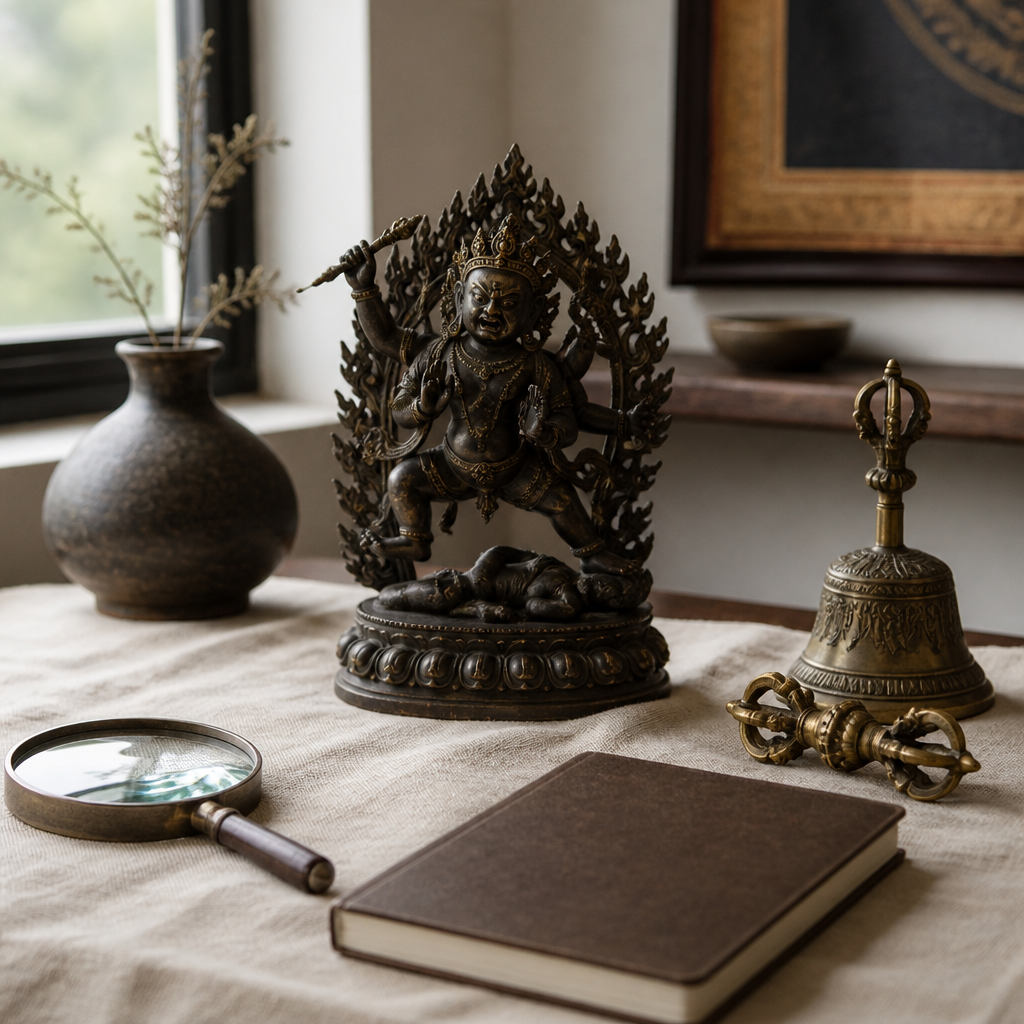
Flames, skulls and the halo of fire
Flames around a wrathful figure usually signify the burning away of obstacles and ignorance. The flame halo is often one of the first features a sculptor refines, and it is one of the easiest places to see wear or poor casting. Skulls, whether worn as a crown, a necklace, or a belt, represent the transformation of death and the dissolution of ego. The number and arrangement of skulls can point to a specific form, so count them when you can.
Bone ornaments appear across the protector and wisdom-deity groups. Vajrayogini, for example, is commonly adorned with bone ornaments, and each piece is read as a reminder of a quality such as wisdom, fearlessness, or the transformation of ignorance. When you see bone ornaments on a statue, ask what they represent in its specific tradition, not just whether they look dramatic.
Hand implements and what they signal
The hands of a protector hold tools, weapons, and ritual objects. A chopper or sword typically signals the cutting away of delusion. A vajra in the right hand and a skull cup in the left is a common pairing in several forms. A hand raised in a threatening gesture or a hand holding a noose tells you that the figure is actively restraining obstacles. The point is not to memorise every combination, but to recognise that the hands are carrying meaning.
Check the hands in your photographs. Fingers that are soft, blunt, or fused to the implement often mean a lower-quality casting. Sharp, distinct fingers that grip the object cleanly usually show a more careful maker.
Trampled figures and animal skins
Many protector statues stand on a prone figure, often read as a subdued demon or an ego that has been overcome. Animal skins, such as an elephant or tiger hide, are draped over the shoulders in several forms and are often associated with the transformation of raw power into protection. These details carry the story of the statue, so a complete piece should show them clearly and without damage. A missing foot on a trampled figure is a serious loss, both for appearance and for the iconography.
Materials, Casting and Finish
The material of a statue affects its weight, durability, and how it ages on an altar. Most serious Vajrayana Buddhist sculpture is cast in metal, carved in wood, or occasionally made in stone. Each has strengths, and each suits a different kind of display.
Bronze and the lost-wax method
Lost-wax casting is one of the oldest metalworking methods in the South Asian sculptural tradition. The Jan Van Alphen essay on Indian sculpture describes a small bronze figurine from Mohenjo-daro, dating from the third millennium BCE, made by the cire perdue or lost-wax technique. The essay also notes that sculpture in the usual sense is rare in the Indian cultural area before the third century BCE, which shows how long metalworking has been refined there. A modern protector cast this way carries a technical lineage that reaches back a very long way.
For a buyer, the value of lost-wax casting is detail. Sharp features, fine ornaments, and crisp flames all depend on the quality of the wax model and the casting. Bronze also develops a patina over decades, so a well-made piece will look more textured and alive as it ages rather than worn.
Gilding, pigment and patina
Gilded surfaces and painted details give a protector its visual intensity. Gold leaf or gold paint is often applied to the hair, ornaments, and skull crown, while the body may be dark or copper-toned. Cheap gilding tends to flake at the edges and at raised areas, so look closely at the highest points of the statue. Patina that has been applied on purpose is different from damage, and a seller should be able to explain which is which.
If you plan to keep the statue in a warm, humid room, ask how the finish was sealed. Some finishes react badly to humidity or direct sunlight, and that can ruin a piece that looked perfect on arrival.
Wood and stone for home altars
Carved wood gives a warmer, more intimate presence and suits a home altar that is used daily. Wood needs stable humidity and protection from heat. Stone is heavy, durable, and grounding, but it can crack if it is moved carelessly or placed on a shelf that is not level. Choose the material based on how you will use the space, not only on what looks most impressive in a photograph.
Choosing a Protector Statue for Your Home Altar
Choosing a protector is a decision about both the image and the space it will occupy. A statue that is too large for its shelf can dominate a room, while one that is too small may disappear. Start with the space, then work out which deity fits the practice you intend to keep. Good sellers help with both steps and do not push a piece simply because it is dramatic.
Size and proportion
Measure the shelf before you browse. Height matters, but so does depth, because a figure with a raised weapon or an outstretched arm needs clear space around it. A protector set slightly lower than the Buddha or the main image is a common arrangement in home shrines, and it keeps the hierarchy of the altar clear. Ask for exact dimensions in centimetres and compare them with the space rather than relying on how a photograph looks.
Checking authenticity and casting quality
Authenticity in this category is about more than age. A piece can be a modern cast made with care, and that is a perfectly sound object for practice. What you want to avoid is a piece sold with a claim it cannot support. Ask where it was made, what material it is, and which deity it represents. Then compare the answers with the photographs. Clear base shots, back views, and close-ups of the face and hands tell you far more than a long product description.
Pro tip: Ask for a photograph of the inside of the base or the underside of the figure. Casting seams, pour points, and internal marks are difficult to fake convincingly, and a seller who provides them is usually confident in the piece.
Comparing Protector Statues by Material
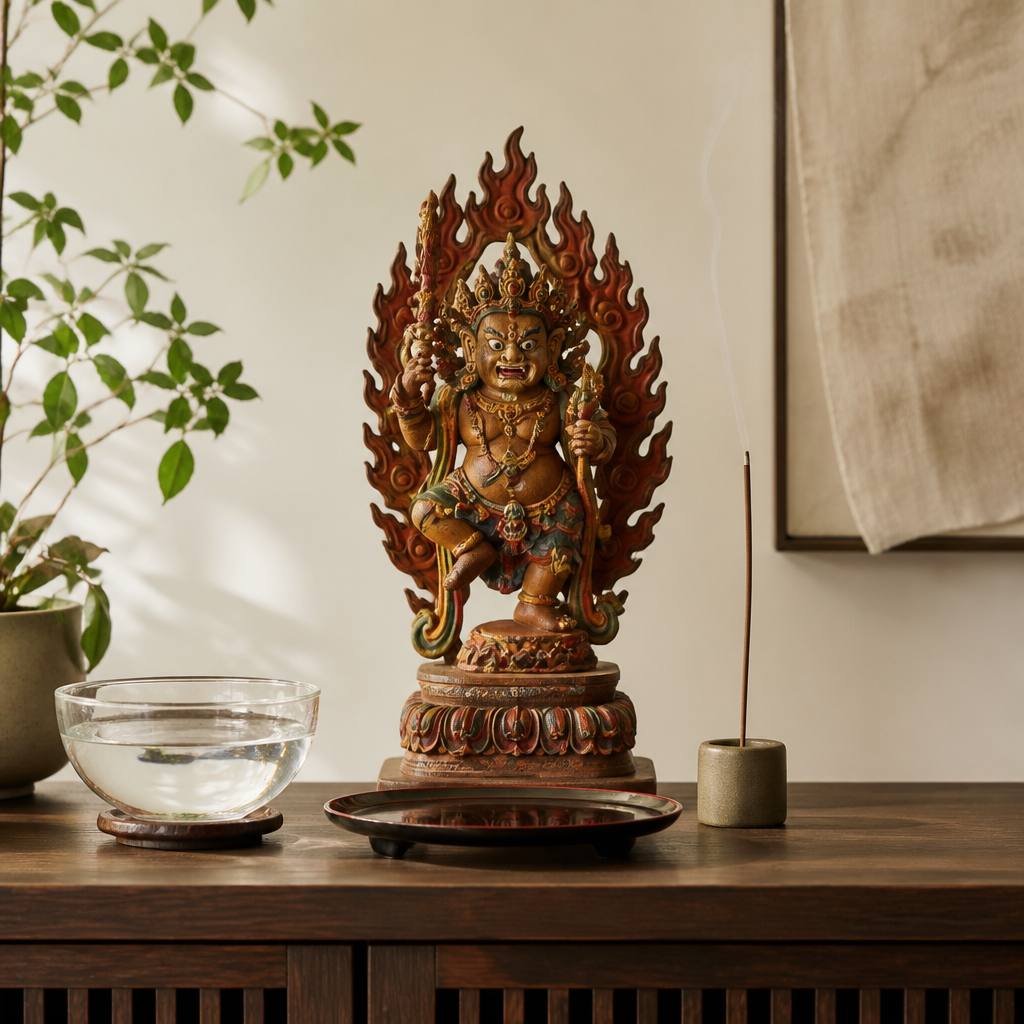
Three common approaches appear in the market for protector figures, and each involves a different balance between detail, durability, and cost. The right choice depends on whether the statue is a focus for daily practice, a decorative piece in a shared room, or a long-term collectable. The table below sets out the main trade-offs.
Approach |
What You Gain |
Trade-off |
|---|---|---|
Lost-wax cast bronze with gilding |
Sharp detail, long lifespan, and a patina that improves with age |
Heavier, costlier, and the quality depends heavily on the casting |
Carved wood with painted or gilded finish |
Warm presence and a traditional feel suited to daily altar use |
Sensitive to humidity, heat, and direct sunlight, and details can soften over time |
Stone or resin reproduction |
Durable, often lighter to handle, and more affordable for larger figures |
Finer details can be less crisp, and some pieces look flat without careful finishing |
Common Mistakes Buyers and Owners Make
Most problems with protector statues come from a small number of predictable errors. They are easy to avoid once you know what to look for. The mistakes below are the ones we see most often when buyers describe what went wrong with a piece.
Buying by photograph alone
A single front-facing photograph hides the features that matter most. Flames, hand implements, and the base can all look convincing from one angle and be poorly finished from another. Ask for at least three views before you commit, including the back and the underside. If a seller will not provide them, treat that as a warning.
Scale is another trap. A statue that looks monumental online can be small in person, or the reverse. Always confirm dimensions in centimetres and inches, and check whether the measurement includes the base.
Placing the statue where it cannot be honoured
Many owners place a protector on a floor, a windowsill in strong sun, or beside household clutter. In the tradition, the position of a sacred image is part of how it is treated, so a clean, dedicated space is the simplest and most respectful choice. It also protects the finish and reduces the risk of accidental knocks.
Dust regularly with a soft brush, and avoid harsh cleaners on gilding. A gentle wipe with a dry cloth is usually enough for bronze, while wood should be kept away from radiators and damp corners.
Mixing protectors without understanding them
Some collectors buy several fierce figures in a single order because they look striking together. The result can be a confusing group with no clear purpose. Before you add a second protector, learn what the first one does and whether the two sit comfortably in the same shrine. A small, well-chosen set is more coherent than a crowded display.
Frequently Asked Questions
What is the difference between a dharmapala and a yidam?
A dharmapala is a protector of the teachings and the practitioner, and its statue is often placed to guard a space. A yidam is a meditation deity that the practitioner visualises and identifies with during practice. Both can appear as fierce figures, so the role the deity plays in practice is the clearest way to tell them apart.
Is it appropriate to display a wrathful deity statue in a family home?
Yes, many families keep protector figures at home, provided the statue has a dedicated, respectful position. Choose a clean, elevated space away from clutter and the floor. If your household includes people who follow different traditions, talk through the placement together before you decide.
How can I tell whether a protector statue is well cast?
Look at the fingers, the edges of the flames, and the fine ornaments first, since these are the hardest details to cast well. Crisp, distinct features and clean seams suggest careful work. Soft or blurred details, uneven gilding on raised areas, and visible pitting are signs to look elsewhere.
Does a protector statue need special care?
Bronze needs only dusting and occasional gentle wiping, while carved wood needs stable humidity and protection from heat and direct sun. Avoid abrasive cleaners on gilded surfaces. Keep the statue steady on its base so it cannot tip or crack.
What should I ask a seller before buying a Vajrayana sculpture?
Ask which deity the piece represents, what material it is made from, and what the dimensions are. Request photographs of the front, back, base, and close-ups of the face and hands. A reputable seller will answer these questions directly and will not pressure you to decide quickly.
Which protector figure has shaped your own practice or home altar, and what did you learn from choosing it? Share your experience in the comments so other readers can benefit from it.
