



The Indian Lotus Flower in Sculpture: A Collector's Guide
The Indian Lotus Flower in Sculpture: A Collector's Guide
In Asian sacred art, “indian lotus flower” refers to the lotus motif used as a throne, attribute, or decorative device in Hindu and Buddhist sculpture, specifically the padma and padmapitha, not the botanical plant. Collectors researching this term usually mean the carved or cast lotus that supports a deity, not the flower growing in a pond.
HD Asian Art works with this motif daily, from Gandharan-influenced thrones to South Indian bronze pedestals, and James at HD Asian Art can provide sourcing guidance and condition reports for pieces built around this iconography.
Here’s what this guide covers:
- What the lotus motif symbolizes across Hindu and Buddhist traditions
- The visual forms it takes (throne, bud, seed head, double lotus) and how to read them
- Regional and historical styles you can use to place a piece by period
- Materials, techniques, and the physical clues that separate old work from new
- A step-by-step authentication checklist and practical buying guidance
Key Takeaways
Authenticating lotus-themed sculpture requires matching visual and stylistic evidence against documented provenance, condition history, and, where warranted, materials testing.
| Point | Details |
|---|---|
| Identify the form first | Note whether the piece shows a single throne, double lotus, bud, or seed head before anything else. |
| Trace provenance carefully | Gaps in ownership history are the single biggest risk factor for institutional buyers. |
| Match materials to claimed origin | Casting seams, tool marks, and alloy composition should align with the stated period and region. |
| Commission testing for high-value pieces | XRF for metal alloys and thermoluminescence for fired clay confirm what stylistic analysis suggests. |
| Buy from a specialist source | HD Asian Art pairs individually written research notes and condition reports with insured worldwide shipping. |
Table of Contents
Why the Lotus Motif Carries So Much Weight in Sacred Sculpture
The lotus functions as shorthand for enlightenment, purity, and cosmic origin, and sculptors have leaned on that shorthand for many centuries. In Buddhist art, the flower’s rise from muddy water to clean bloom became a metaphor for a mind achieving purity of speech, action, and thought, a reading that shows up in Gandharan sculpture from the early centuries CE.
Hindu iconography assigns the lotus an even wider job description. It seats Lakshmi, emerges from Vishnu’s navel to carry Brahma into being, and appears as an attribute held by Saraswati. The flower’s color often signals which deity or spiritual state is in play, with white, pink, and red lotuses each carrying distinct associations across Hindu, Buddhist, Jain, and Sikh art.
The lotus rises from mud, opens above the waterline untouched by it, and closes each night only to bloom again unstained. That cycle became one of the subcontinent’s most durable metaphors for consciousness moving from ignorance toward clarity.
Scholars tracing the motif’s literary roots connect the lotus throne to creation narratives in Vedic and Puranic texts, where the flower’s life cycle stands in for the production of pure knowledge or sacred speech17). The symbolic registers collectors should know include:
- Purity: the bloom untouched by the mud it grows from
- Creation: Brahma’s emergence from Vishnu’s lotus
- Throne or seat: the padmapitha beneath a deity’s feet
- Visualization aid: petal counts mapped onto chakra systems in tantric practice
What Are the Main Forms of Lotus Iconography?
The primary forms a collector will encounter are the lotus throne (padmapitha), the double-lotus pedestal (vishvapadma), the closed bud, the full-blown blossom, and the seed-head motif, each carrying a distinct visual and symbolic weight. A closed bud usually signals potential or a state not yet realized, while a fully opened flower marks revelation or an achieved spiritual state. The seed head, with its distinctive pitted disc, sometimes appears independently as a symbol of fertility and continued generation.
The stylized lotus throne became the standard pedestal for divine figures in both Buddhist and Hindu sculpture, and it evolved over time into the layered double-lotus or vishvapadma form. Shastra texts and workshop practice tie petal count and bloom stage to specific ritual meanings, which means a sculptor’s choice of eight petals versus sixteen was rarely arbitrary. In Hindu sculptural grammar, the padma performs four distinct jobs: an attribute held in the hand, a pedestal beneath the feet, a patterned halo or nimbus behind the head, and a coded sign in yogic visualization practice.
A short glossary helps when cataloging or writing condition reports:
| Term | Meaning |
|---|---|
| Padma | Lotus, the general term for the flower motif |
| Padmapitha | Lotus seat or pedestal beneath a deity |
| Padmāsana | Lotus posture, also used for the throne form |
| Vishvapadma | Double-lotus pedestal, layered petals top and bottom |
| Kamala | Alternate Sanskrit term for lotus, often tied to Lakshmi |
When examining a piece, check petal shape and count, whether a seed head is visible at the center, how the lotus integrates with the base or halo, and whether any original pigment survives in the petal grooves.
How Do Regional Styles Shape the Lotus Motif?
Gandhara produced some of the earliest lotus thrones, blending Hellenistic modeling with Buddhist subject matter, while Gupta-era workshops refined the form into idealized, mathematically regular petal geometry. South Indian and Hoysala carvers layered dense double-lotus bands beneath their bronzes, Khmer sculptors folded lotus-pond imagery into temple reliefs, and Himalayan and Tibetan workshops developed stylized thrones tied to specific chakra-lotus counts.
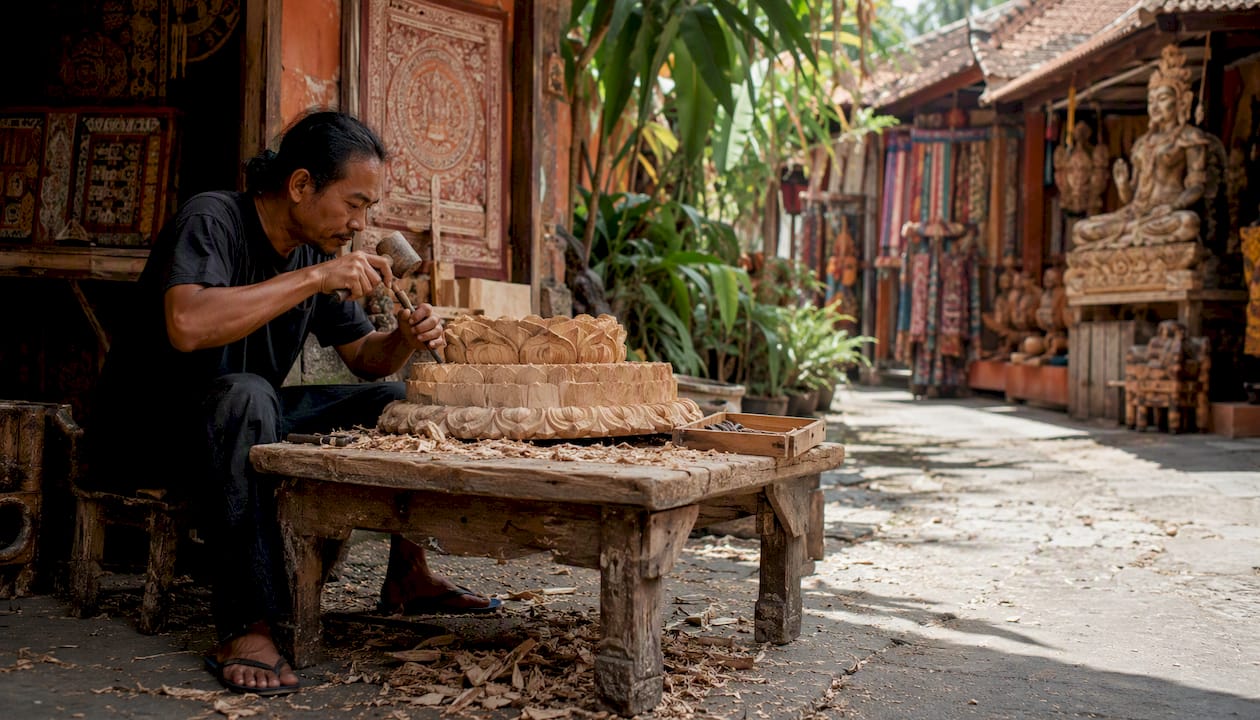
The motif’s spread across the subcontinent has a traceable timeline. It entered the visual vocabulary prominently after the third century BCE with Ashokan pillar capitals, then recurs steadily at stupa sites including Sanchi, Bharhut, and Amravati, with temple plans embedding lotus diagrams into their layout by the first millennium CE.
For dating and origin, look at:
- Petal geometry (idealized and regular suggests Gupta influence; irregular and modeled suggests earlier Gandharan work)
- Carving depth and undercutting on stone pieces
- Lost-wax casting seams and chasing marks on bronzes
- Jointing patterns where a separately cast lotus base attaches to the main figure
| Region/period | Common materials | Typical scale | Iconographic type |
|---|---|---|---|
| Gandhara (2nd to 4th century CE) | Gray schist, stucco | Small to mid relief panels | Early lotus thrones under Buddha figures |
| Gupta period (early centuries CE) | Sandstone, occasional bronze | Mid to large standing figures | Idealized geometric lotus pedestals |
| South India / Hoysala | Bronze (lost wax) | Small ritual to temple scale | Double-lotus bands, Lakshmi seated on lotus |
| Himalayan / Tibetan | Gilt bronze, copper alloy | Small to mid altar pieces | Chakra-linked lotus thrones, Prajñāpāramitā types |
What Materials and Production Traces Signal Age and Origin?
Bronze cast through the lost-wax method, carved stone, carved wood, and lacquer over wood or basketry make up the bulk of lotus-themed sculpture on the market. Each leaves diagnostic traces: casting seams and chasing marks on bronze, tool marks and undercutting depth on stone, joinery and grain direction on wood, and layered buildup on lacquerware.
Regional habits map fairly consistently onto technique. Gandhara favored relief carving in schist with modeled, naturalistic petal forms, while South Indian workshops built up thick, ritual-grade bronze using lost-wax casting with distinctive Hellenistic-inflected modeling in the earliest examples. Materials testing helps confirm what the eye suspects. Careful study of tool marks, seam patterns, and surviving polychrome traces is often what separates a period piece from a modern reproduction or later restoration.
- XRF (X-ray fluorescence) analysis reads alloy composition without damaging the object
- Thermoluminescence dating applies to fired clay and terracotta lotus plaques, not metal or stone
- A basic materials report should state the alloy percentages found and flag any elements inconsistent with the claimed period
Pro Tip: Request an XRF report before committing to a high-value bronze purchase. A modern brass alloy reading where a period bronze is claimed is one of the fastest ways to catch a misattributed piece.
How Should You Authenticate a Lotus-Themed Sculpture?
Run through provenance documents, a condition report, stylistic and technical matching, scientific testing where warranted, institutional references, and a written contract or guarantee, in that order, before finalizing any purchase.
- Request continuous provenance documentation, ideally back to the point of legal export
- Review a professional condition report noting repairs, fills, and restorations
- Confirm the stylistic and technical details match the claimed period and region
- Commission XRF or thermoluminescence testing if the price or claimed rarity warrants it
- Ask whether the piece has appeared in prior exhibitions or museum publications
- Get the sale terms, including authenticity guarantees and return policy, in writing
Watch for these red flags:
- Gaps in ownership history with no documentation to bridge them
- Tool marks that look mechanically uniform rather than hand-finished
- Patina that sits unevenly or looks applied rather than accumulated over decades
- Modern adhesives or fill materials visible under magnification
- Alloy composition that does not match the claimed period or region
Independent authentication is often the biggest risk-reducer for institutional buyers. Combining stylistic judgment with materials testing and documented chain of custody catches problems a visual inspection alone will miss. For higher-value pieces, bring in a conservator or independent specialist before closing, and ask any registrar-facing gallery, HD Asian Art included, to share its own research notes rather than a bare sales description.
How Should You Care for and Display Lotus Pedestals?
Stabilize the object first and avoid moisture, harsh light, and insecure mounts. That single rule covers most of what goes wrong with lotus-themed sculpture in storage or on display.
Bronze tolerates moderate humidity but corrodes with prolonged dampness; stone is generally forgiving but can spall under freeze-thaw cycling; wood needs stable humidity to avoid warping and cracking; lacquer is the most sensitive, reacting badly to both dryness and direct sun. Follow these guidelines:
- Keep relative humidity in a stable band, roughly 45 to 55 percent, for wood and lacquer pieces
- Avoid direct sunlight on polychrome or lacquer surfaces, which fade and craze under UV exposure
- Use padded, custom-fit mounts for lotus pedestals rather than generic stands that stress the base
- Handle multi-part lotus thrones by their structural core, never by projecting petals
For installation:
- Confirm the base support can bear the object’s full weight without stress on the lotus petals
- Choose an anchoring method that is reversible and does not require drilling into original material
- Place labels where they do not obscure iconographic details like mudras or attributes
- Confirm display insurance covers transit and installation, not just static storage
Get a professional condition report before any object goes into a new mount or travels for loan.
What Should You Expect When Buying a Museum-Quality Piece?
When buying from a specialist gallery, expect a condition report, provenance documentation, high-resolution photography, insured shipping options, and a return or authenticity guarantee as standard, not as extras you have to request.
A serious seller typically provides research notes tying the piece to a period and region, a written condition report, detailed photography showing seams and surface texture, insured packing and shipping, and support with temporary export paperwork where relevant. Price ranges vary enormously by category: small ritual bronzes and altar pieces sit at one end, while large temple pedestals and monumental stone thrones sit at the other, so treat any quoted range as a starting point for a conversation, not a fixed number.
HD Asian Art builds each listing around individually written research notes, and James contributes condition assessments drawn from close inspection of casting, carving, and surface wear on pieces sourced from Cambodia, Thailand, Indonesia, Sri Lanka, and Vietnam. Before signing anything, ask for the seller’s return policy, a written authenticity guarantee, and clarity on who handles export documentation if the piece is leaving its country of origin.
An Editorial Take on Collecting Lotus-Themed Sculpture
Most guides treat authentication as a checklist you run once and forget. That undersells how much judgment actually goes into reading a lotus pedestal correctly. A piece can pass every documentary test and still be a later devotional copy of an earlier form, because workshops across South and Southeast Asia kept producing lotus thrones in traditional styles for centuries after the “classic” periods closed. The date on a provenance letter tells you when a piece changed hands, not necessarily when it was carved.
What gets underestimated is how much a mismatched detail, an oddly regular petal count, a seam that does not belong on an object of that claimed age, tends to be the first honest signal something is off, well before a lab report confirms it. Collectors who train their eye on genuine regional variation, Gandharan modeling versus Gupta geometry versus South Indian layering, catch more problems than those who wait for scientific testing to do the work alone. Testing should confirm a suspicion, not replace the looking.
The instinct to treat every lotus throne as interchangeable is the real mistake. A padmapitha under a seated Lakshmi carries different weight, literally and symbolically, than one under a standing bodhisattva, and pretending otherwise flattens exactly the detail that makes a piece worth collecting.
Find Authenticated Lotus-Themed Sculpture at HD Asian Art
If you have read this far, you already know that authenticating a lotus-themed piece takes documented provenance, a real condition report, and someone who can tell a Gandharan throne from a South Indian one on sight. HD Asian Art builds that work into every listing instead of leaving it to the buyer to chase down after the fact.
The gallery’s collection spans bronze, stone, and wood pieces from Cambodia, Thailand, Indonesia, Sri Lanka, and Vietnam, each researched and photographed individually, with worldwide insured shipping handled directly rather than farmed out. A piece like this lotus-bearing bodhisattva statue shows the level of detail buyers can expect in the written research notes and photography that accompany a listing. If you are ready to start looking at specific pieces, browse the current HD Asian Art collection and reach out with questions about provenance or condition before you buy.
Frequently Asked Questions
Is the “Indian lotus flower” in art the same as the plant Nelumbo nucifera?
No. In the context of sculpture and collecting, the term refers to the lotus motif, the padma and padmapitha used as a throne or attribute in Hindu and Buddhist art, not the living plant.
What does a double-lotus pedestal indicate about a piece?
A vishvapadma or double-lotus pedestal generally reflects later stylistic development from the simpler single lotus throne, and it appears frequently in South Indian bronze and Himalayan altar traditions.
Why does petal count matter for identification?
Shastra texts and workshop tradition often tie specific petal counts to ritual or chakra-related meanings, so an unusual count can help narrow down regional origin or intended function.
When should I request lab testing on a lotus sculpture?
Request XRF analysis on any bronze where the price reflects a claimed early period, and consider thermoluminescence testing for terracotta lotus plaques when age is central to the object’s value.
What documentation should a specialist gallery provide?
Expect a written condition report, provenance history, detailed photography, and an authenticity guarantee, along with support for export paperwork if the piece is shipping internationally. This guide offers general information for collectors and does not substitute for advice from a qualified conservator, appraiser, or legal specialist on export and cultural property matters.
Sources
Before buying, ask any seller for a written condition report, high-resolution photography showing seams and surface detail, any XRF or thermoluminescence results on file, and references to prior exhibition or museum history where they exist.
Recommended
- The Symbolic Splendor: The Profound Significance of the Lotus Flower i – HD Asian Art
- The Lotus Throne in Buddhist Iconography: An Art-Historical Guide – HD Asian Art
- Symbolic Art for Mindful Living: A Guide for Collectors – HD Asian Art
- Vietnamese Buddhist Sculpture Traditions: A Scholar’s Guide – HD Asian Art
