


Shiva Statue Guide: Iconography, Forms & Regional Styles
Shiva Statue Guide: Iconography, Forms & Regional Styles
Most people looking at a Shiva statue for the first time see a striking figure with multiple arms, a third eye, and a crescent moon in its hair. What they often miss is that every single element carries a precise meaning that has been encoded by sculptors across Asia for over a thousand years. The form of the statue you choose, Nataraja, Lingam, Ardhanarishvara, or Bhairava, is not an aesthetic preference.
It is a theological statement. Whether you are a collector sourcing museum-quality Hindu sculpture, a spiritual practitioner building a home altar, or simply someone who wants to understand what they are looking at, this guide gives you the iconographic vocabulary you need.
Table of Contents
Quick Takeaways
|
Key Insight |
Explanation |
|---|---|
|
Every attribute is a symbol, not decoration |
The third eye, trident, crescent moon, cobra, and matted hair each carry specific theological meanings rooted in Shaiva philosophy. |
|
Nataraja is the most philosophically dense form |
The Chola-period dancing Shiva encodes five cosmic acts, creation, preservation, destruction, concealment, and liberation, within a single sculptural composition. |
|
The Lingam is the oldest and most aniconic form |
The Shiva Lingam seated in a Yoni represents the union of Shiva and Shakti, encoding cosmic duality in abstract form rather than figurative sculpture. |
|
Regional style changes the form dramatically |
A Khmer Shiva from Cambodia and a Chola bronze from Tamil Nadu share the same deity but differ substantially in posture, material, number of arms, and facial treatment. |
|
Multiple arms indicate divine power, not literal anatomy |
Each additional pair of arms allows the sculptor to display multiple attributes simultaneously, communicating the deity's multifaceted nature in a single view. |
|
Ardhanarishvara is a theological statement about non-duality |
The half-male, half-female form declares that Shiva and Parvati are not two beings but two aspects of a single divine reality. |
|
Material matters as much as form |
South Indian bronzes, Khmer gilded bronze, Indonesian stone, and Thai brass all reflect distinct regional metallurgical and artistic traditions, not just stylistic preferences. |
Who Is Shiva? The Deity Behind the Sculpture
Shiva is one of the principal deities of Hinduism and the supreme deity of Shaivism, one of the oldest living religious traditions in the world. His nature is deliberately paradoxical: he is simultaneously the destroyer and the regenerator, the fierce ascetic and the devoted husband, the dancer and the meditating yogi. This theological breadth is precisely why Shiva iconography is so varied. Each sculptural form is not a different god but a different face of the same cosmic reality.
Understanding this upfront prevents the most common mistake collectors and buyers make: treating each sculptural form as interchangeable. A Nataraja statue placed in your home carries a fundamentally different meaning and energy than a Bhairava or a Dakshinamurti. If you are building a home altar, the choice of form matters. If you are collecting for its art-historical value, the regional style and casting technique matter equally.
Core Iconographic Attributes of a Shiva Statue
Before examining specific forms, it helps to know Shiva's universal identifying markers. These attributes appear across most figurative Shiva sculptures regardless of region or period, and learning to read them transforms the experience of looking at any piece of Hindu sculpture.
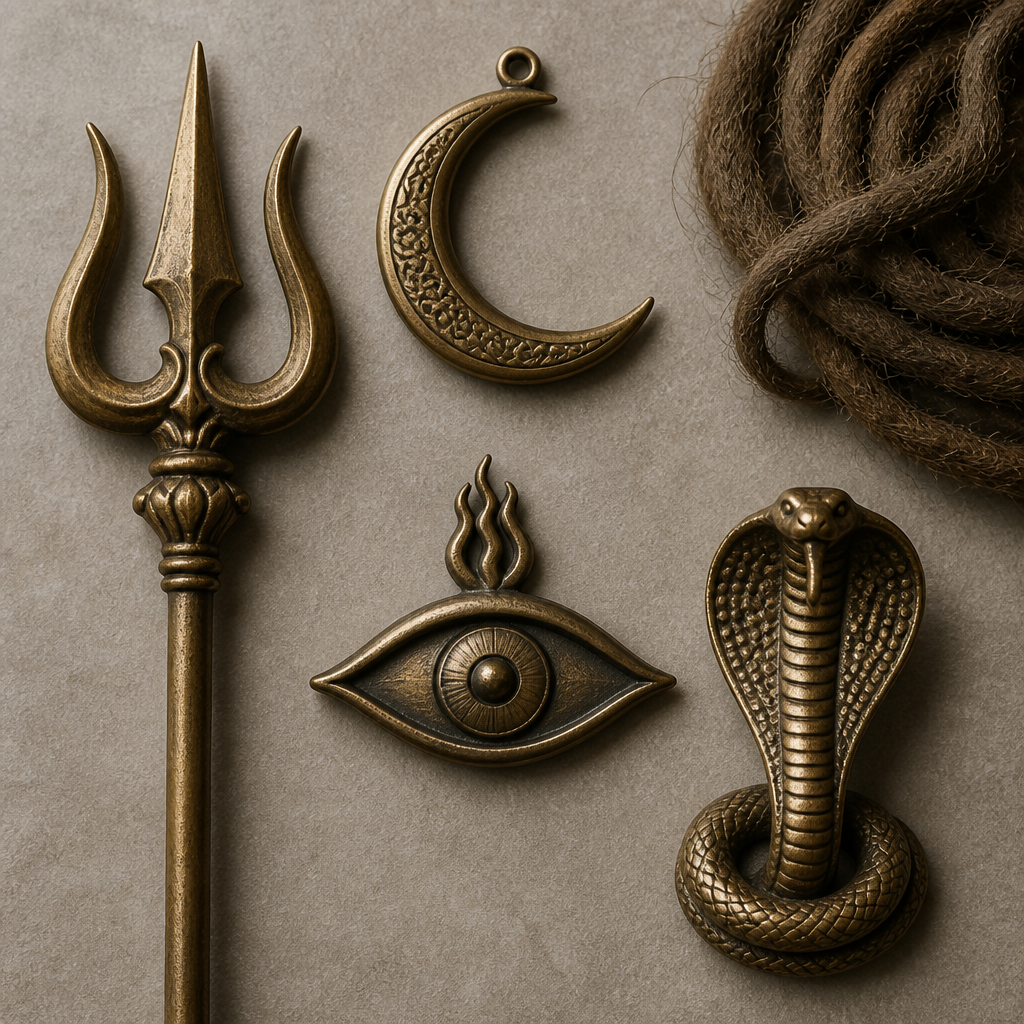
The Third Eye
The third eye on Shiva's forehead is not simply a symbol of wisdom. It is the eye that, when opened in anger, destroyed the god Kama. It represents transcendent perception and the destructive power that comes with ultimate knowledge. In sculpture, it is typically rendered as a vertical mark at the center of the forehead.
The Trishula (Trident)
The trident, or Trishula, is Shiva's most iconic weapon and one of his standard hand-held attributes. It symbolizes his three roles as creator, preserver, and destroyer, and also references the three gunas (qualities) of nature: tamas, rajas, and sattva. In multi-armed statues, the trident is almost always present in one of the right hands.
The Crescent Moon and River Ganga
A crescent moon is embedded in Shiva's matted hair (jata), symbolizing time and its cyclical nature. In Nataraja sculptures specifically, the goddess Ganga is often depicted within the flying tresses of the jata, referencing the mythological account of Shiva catching the descent of the sacred river Ganges in his hair to prevent its force from destroying the earth.
The Snake and the Tiger Skin
Shiva wears snakes as ornaments and is typically depicted seated on or dressed in tiger skin. Both speak to his mastery over primal forces. The snake, sacred to Shiva as Nagabhushana (one adorned with snakes), also symbolizes Kundalini energy in tantric traditions. The tiger skin marks him as a forest ascetic who has tamed the most dangerous wildness.
Pro tip: When evaluating a Shiva statue, use the third eye and the jata (matted hair) as your primary identification markers. A figure with a smooth, elaborate crown is far more likely to be Vishnu or a Khmer royal deity, even if other elements look similar.
Nataraja: The Lord of the Dance
Of all the forms in Shiva iconography, Nataraja is the one that has most captured global attention, and for good reason. It is among the most philosophically concentrated images ever produced in world art. Every element of the composition is a symbol, and the composition as a whole encodes a complete cosmological theory.
"As a symbol, Shiva Nataraja is a brilliant invention. It combines in a single image Shiva's roles as creator, preserver, and destroyer of the universe and conveys the Indian conception of the never-ending cycle of time."
The Origins of the Nataraja Form
Artists in the Tamil region of southern India began to make this form of Shiva in the early tenth century, with the patronage of Chola kings, inspired by devotional poetry and using metalworking skills developed over centuries. While examples of Shiva dancing appear as early as the fifth century, the fully developed, world-famous Nataraja form evolved under Chola rule. The Chola dynasty notably popularized the form of Nataraja that set the standard for subsequent depictions, though variations exist across different regions and artistic traditions.
The form Shiva takes in Nataraja sculpture is the Ananda Tandava, the "dance of bliss," performed after defeating arrogant sages in the Chidambaram forest. The primary temple of Nataraja at Chidambaram in Tamil Nadu remains one of the most important Shiva shrines in India to this day.
Reading the Nataraja Composition
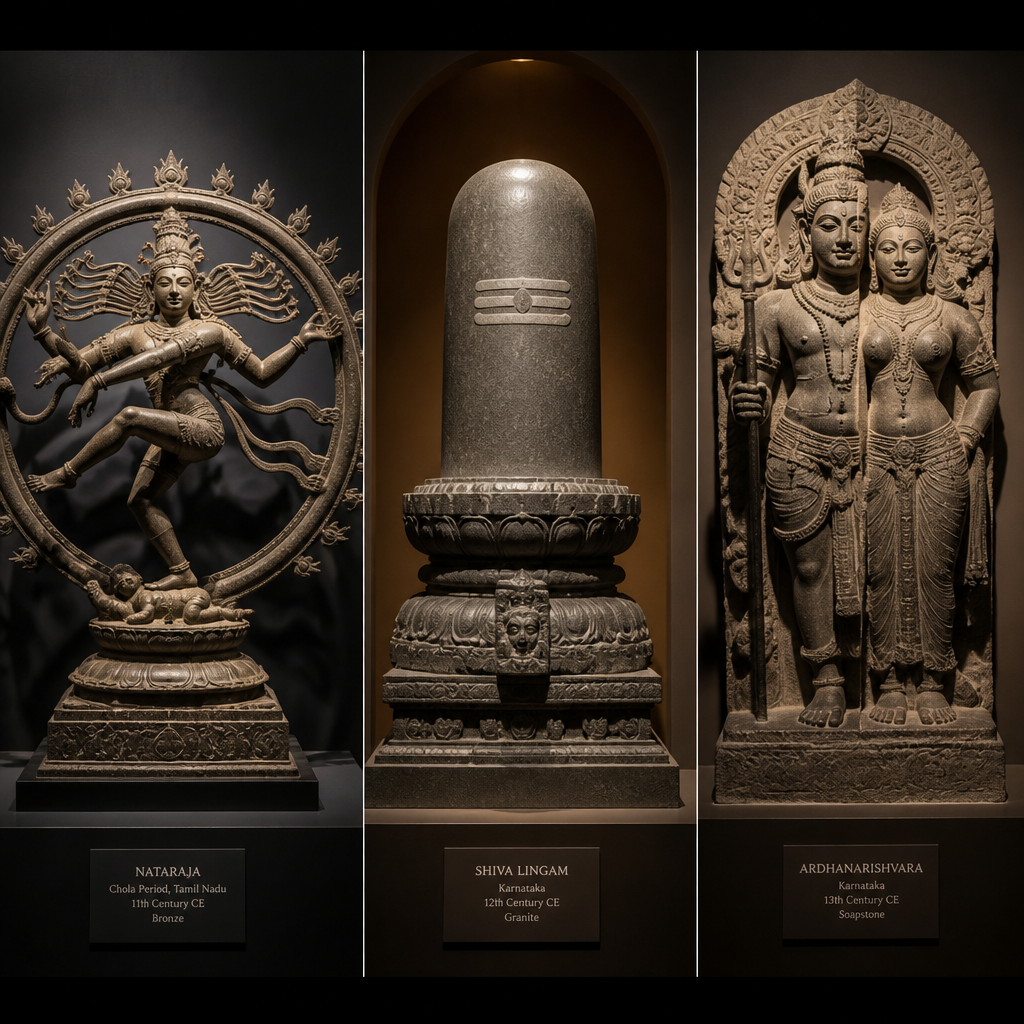
The standard Nataraja is depicted with four arms and stands on one leg, the right foot planted on the dwarf demon Apasmara, the left leg raised in dynamic movement. The upper right hand holds the damaru (an hourglass-shaped hand drum), which symbolizes the rhythm of creation and the first sound of the universe, AUM. The upper left hand holds agni, the cosmic fire that will dissolve the universe at the end of each cycle. The lower right hand displays the abhaya mudra, the gesture of fearlessness and protection. The lower left hand points to the raised left foot, which signifies refuge and liberation for the devotee.
Encircling the entire figure is the prabhamandala, the ring of flames, which represents the boundaries of the cosmos and the cyclical nature of time. Apasmara, crushed underfoot, symbolizes ignorance and the ego, the obstacles that must be overcome on the path to enlightenment. The expression on Shiva's face, critically, is one of perfect serenity despite the violence of the dance: a precise theological point about the transcendence of the divine over the turbulence of cosmic action.
Pro tip: Early Nataraja bronzes from the Chola period can sometimes be identified by the straightened (rather than fully rounded) sides of the ring of fire, and by the absence of the goddess Ganga in the hair. Later examples typically show a fully circular prabhamandala and more elaborate jata detail. When shopping for a historically accurate reproduction, these details separate a well-researched piece from a generic casting.
Other Major Forms of Shiva in Sculpture
Nataraja gets most of the attention, but collectors and practitioners who stop there miss several equally important and aesthetically powerful forms of Hindu sculpture.
The Shiva Lingam
The Shiva Lingam is an abstract embodiment of Shiva, representing his creative and regenerative power. The Lingam is an elliptical structure typically set in the center of a disk-shaped base called a yoni, which symbolizes Shakti, Shiva's consort. Together the Lingam and the Yoni symbolize the cosmic union of male and female aspects and represent the totality of existence. This is the most aniconic form of Shiva worship, and in many South and Southeast Asian temple complexes, a Lingam in a sanctuary represents the primary cult image. Both Indian-style and Khmer-style Lingam sculptures appear frequently in the collections of specialists in Asian religious art.
Ardhanarishvara
Ardhanarishvara, from the Sanskrit meaning "the lord who is half woman," represents what scholars sometimes call the radical non-duality at the heart of Shaiva theology. In sculptural form, the figure is depicted as literally half-male and half-female: the right side shows Shiva's attributes (matted hair, third eye, snake, tiger-skin garment), the left side shows Parvati's attributes (braided or elaborately dressed hair, fine jewellery, smooth limbs). The composition declares that Shiva and Parvati are not two beings but two aspects of a single divine reality. This form appears across Indian and Indonesian sculpture and is one of the most intellectually compelling subjects in all of Hindu iconography.
Bhairava
Bhairava is Shiva's fierce, wrathful aspect. In sculpture, Bhairava is typically depicted with a terrifying expression, multiple arms carrying weapons, a garland of skulls, and wild, standing hair. The form embodies protection through ferocity and the annihilation of evil. Bhairava sculpture is particularly prominent in Nepal and in certain South Indian temple traditions. For collectors, this is among the most dramatic and visually powerful forms of Shiva available, though it requires some care in placement given its intense iconographic character.
Dakshinamurti
Dakshinamurti is Shiva in his aspect as the silent teacher, depicted seated under a banyan tree facing south, teaching through silence. Students and sages sit at his feet, and the gesture of his hand (the chinmudra or jnana mudra) indicates the transmission of wisdom. This is a quieter, meditative form, frequently used in home altar settings where the focus is contemplation rather than devotion through devotional energy.
Mahayogi (The Great Ascetic)
This form depicts Shiva seated in deep meditation, embodying the ascetic dimension of his nature. The Mahayogi is typically shown seated in padmasana or virasana, with matted hair piled high, eyes closed or half-closed, and a calm, inward-turned expression. This is the counterweight to the dynamic energy of Nataraja: the same deity, expressed through perfect stillness rather than cosmic motion.
Regional Variations Across Asia
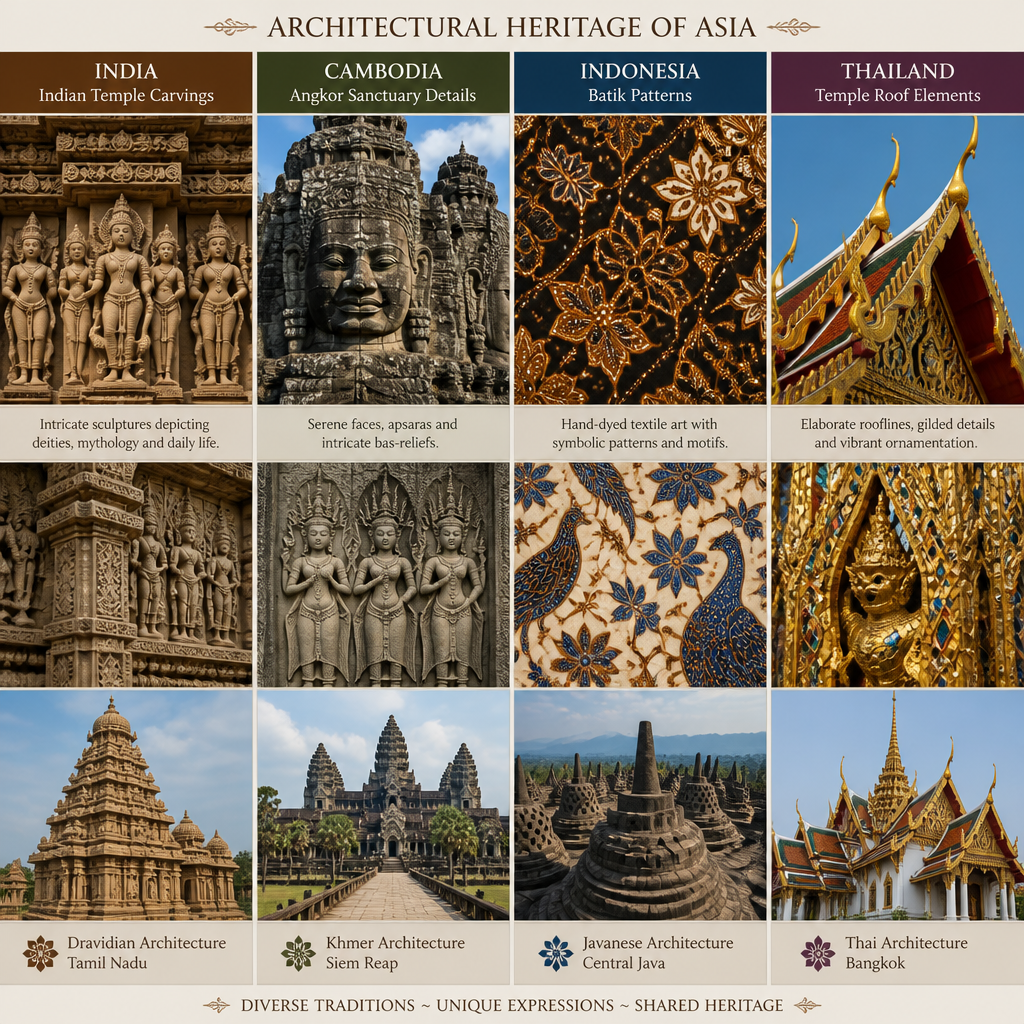
Shiva spread across Asia with Hinduism and Buddhism from the early centuries of the Common Era, carried by merchants, court diplomats, and brahmin scholars. Each region adapted the iconography to local aesthetic traditions, materials, and theological emphases. The result is a rich family of related but visually distinct sculptural traditions that cover India, Cambodia, Indonesia, Thailand, Vietnam, and beyond.
South Indian Chola Bronzes
The Chola dynasty of Tamil Nadu produced what are generally considered the high-water mark of Shiva sculpture worldwide. Chola Nataraja bronzes, cast using the lost-wax (cire perdue) technique, achieved a quality of movement, anatomical precision, and symbolic completeness that subsequent traditions across Asia aspired to but never fully replicated. The Chola empire stretched south-east towards Sri Lanka, giving the kingdom access to copper reserves that enabled the proliferation of bronze sculpture. These bronzes were produced at scale, with large examples measuring up to 1.4 metres in height, often carried in religious processions. Museum-quality reproductions in the Chola style remain among the most sought-after pieces for serious collectors of Hindu sculpture.
Khmer (Cambodian) Style
Hinduism and Buddhism were present in mainland Southeast Asia from the first centuries of the Common Era. During the Angkor period (roughly the 9th to 15th centuries), Hinduism was the main religion in the Khmer Empire, and Shiva was the most prominent deity in state religious practice. Khmer Shiva sculpture is distinctive: broad faces with clearly defined lips and eyes, wide crowns (rather than the jata of South Indian tradition), and a formal, frontal bearing that reflects the connection between the deity and royal authority. Depictions of Shiva in human form began to appear in Khmer art in the seventh century. The famous gilded-bronze Standing Shiva from the 11th-century Angkor period, now in the Bangkok National Museum after its repatriation in 2023, is described by the Metropolitan Museum of Art as "the most complete extant gilded-bronze image from Angkor." Khmer-style Shiva and Shiva Lingam pieces remain among the strongest entries in collections focused on Southeast Asian religious art.
Javanese (Indonesian) Style
Java and Sumatra produced Hindu and Buddhist statuettes from roughly the 8th to 10th century CE, with alloy compositions that reveal connections to mainland South Asian traditions. Javanese Shiva sculpture, like that found at the Prambanan temple complex, tends toward a heavier, more monumental form than South Indian or Khmer work, with multiple arms (six-armed versions are not uncommon), elaborate crowns, and a more symmetrical frontal posture. The six-armed Shiva is a distinctly Javanese compositional choice, allowing the sculptor to display a wider range of attributes simultaneously.
Thai Style
Shiva worship in Thailand reflects centuries of Khmer influence followed by the eventual dominance of Theravada Buddhism. Thai Shiva sculptures often blend Hindu iconographic elements with Thai aesthetic conventions: sinuous postures, flame-like crown elements, and the highly polished surface quality associated with Thai metalwork. Standing Shiva figures in the Thai tradition are typically tall and elegant, sometimes paired with a turtle and naga base, as seen in specific examples within specialist collections. Thai brass Nataraja sculptures bring the South Indian iconographic program into a distinctly Southeast Asian formal vocabulary.
Pro tip: Regional attribution matters enormously for both provenance and value in the market for Asian religious art. A Khmer-style piece is identified not just by the crown type but by the specific treatment of the face, the texture of the garment (often a sampot in Khmer work), and the alloy. Do not accept regional attribution from a seller who cannot point to specific stylistic evidence beyond a general "Southeast Asian" label.
Comparing the Main Shiva Statue Forms
|
Form |
Primary Symbolism |
Best Suited For |
|---|---|---|
|
Nataraja |
Cosmic dance of creation and destruction; the five acts of Shiva; triumph of wisdom over ignorance (Apasmara underfoot) |
Collectors, living spaces, practitioners focused on cosmic cycles and creative energy |
|
Shiva Lingam with Yoni |
Union of Shiva and Shakti; creative force; abstract representation of the totality of existence |
Home altar, temple settings, practitioners of Shaiva tantra |
|
Ardhanarishvara |
Non-duality of male and female; unity of Shiva and Parvati as a single divine reality |
Collectors interested in theological depth; practitioners emphasising balance and unity |
|
Bhairava |
Fierce protection; destruction of evil; the raw, uncontained power of Shiva |
Collectors of dramatic sculpture; protective altar use in specific tantric traditions |
|
Dakshinamurti |
Shiva as the silent teacher; transmission of wisdom through stillness |
Meditation spaces, study rooms, practitioners valuing contemplative energy |
|
Mahayogi |
Shiva as the supreme ascetic; mastery of mind over senses; inward stillness |
Meditation spaces, yoga practitioners, collectors drawn to quieter devotional forms |
What to Know Before You Buy a Shiva Statue
The market for Hindu sculpture sits at the intersection of art collecting, spiritual practice, and cultural heritage, which means the quality range is enormous. Understanding what differentiates a museum-quality piece from a generic production casting is the single most important thing a buyer can know before spending serious money.
Casting Quality and Material Authenticity
The best Shiva statues in the market for reproductions are cast using the traditional lost-wax method: a model is made in wax, covered with a clay mould, the wax is melted away, and molten metal is poured into the resulting cavity. This process, unchanged in its fundamentals from the Chola period to the present, produces finer surface detail than sand casting and allows for the complex multi-armed compositions that Shiva iconography demands. When evaluating a piece, look at the surface quality of the hands and face. These are the areas where careless casting shows most clearly.
Iconographic Accuracy
A common mistake among first-time buyers is prioritising visual drama over iconographic accuracy. A Nataraja with the wrong object in a hand (or a missing Apasmara underfoot) is not a minor detail: it is a fundamental error that alters the meaning of the piece entirely. The four-armed Nataraja composition is standardised: damaru in the upper right, agni in the upper left, abhaya mudra in the lower right, and the lower left hand pointing to the raised foot. Deviation from this schema should be either historically justified by a specific regional tradition or treated as a flaw.
Regional Specificity and Sourcing
Specialists in Asian religious art who source from across the region, including from Burma, Cambodia, India, Indonesia, Japan, Sri Lanka, and Thailand, are generally better positioned to offer regionally authentic pieces than generalist retailers who treat "Asian" as a single category. The difference between a Khmer-style and an Indian-style Shiva Lingam is not just aesthetic: it reflects entirely different sculptural traditions, alloy compositions, and religious contexts. When you buy a Shiva statue from a specialist, you should be able to ask about the specific regional tradition the piece references and receive a substantive answer. The collection of Shiva statues at HD Asian Art spans Khmer, Javanese, Indian, and Thai traditions precisely because these are not interchangeable.
Placement and Display
In practice, placement of a Shiva statue follows traditional Hindu conventions where they apply and personal aesthetic judgment where they do not. Nataraja is traditionally placed facing east or south, so the devotee faces the deity from the west or north. Lingams are typically the central focus of a dedicated altar space rather than a secondary decorative element. Bhairava, given its fierce character, is conventionally placed at entrances or thresholds in temple contexts. None of these conventions are binding for collectors approaching the sculptures as art objects, but knowing them adds a layer of understanding to the piece.
Frequently Asked Questions
What is the difference between a Nataraja and other Shiva statues?
Nataraja is specifically the form of Shiva as the cosmic dancer, depicted within a ring of flames with four arms, standing on one leg over the demon Apasmara. Other major forms include the Mahayogi (meditating ascetic), Bhairava (the fierce destroyer), Ardhanarishvara (half-male, half-female), Dakshinamurti (the silent teacher), and the aniconic Shiva Lingam. Each represents a distinct aspect of Shiva's nature and is identified by different attributes, postures, and compositional choices. Nataraja is the most philosophically dense and most globally recognised, but it is not the "default" form across all regional traditions.
What does the Apasmara dwarf under Shiva's foot represent?
Apasmara, the dwarf demon crushed under Shiva's right foot in the Nataraja composition, represents ignorance, spiritual blindness, and the ego. The act of standing on Apasmara is not simply a display of power: it is a philosophical statement that wisdom (embodied by Shiva's dance) overcomes the fundamental human obstacle of ignorance. This detail is iconographically non-negotiable in an accurate Nataraja. A piece missing Apasmara is either from a very early period of the form's development or is inaccurate.
How do I identify whether a Shiva statue is in the Khmer or South Indian style?
The most reliable distinguishing features are the treatment of the hair and the crown. South Indian Chola-tradition Shiva figures wear the jata (matted, piled hair), which is a central identifying marker of the ascetic Shiva. Khmer-style figures typically wear a structured, tiered crown (kirita mukuta) rather than the jata, and have a broader, flatter face with more clearly defined features. The garment also differs: South Indian bronzes often show a dhoti, while Khmer work frequently depicts a sampot. If a seller cannot explain these distinctions clearly, treat that as a red flag.
Is it appropriate to display a Shiva statue in a home if I am not Hindu?
There is no single authoritative answer to this question, and practices vary widely across Hindu traditions and individual practitioners. In general, statues displayed with genuine respect for their iconographic significance and cultural origins, rather than as purely generic "exotic" decoration, are received positively by most practitioners and scholars of South Asian art. If you are placing a Shiva statue on a home altar, taking the time to understand the specific form you have chosen, what it represents and how it was traditionally venerated, is both respectful and makes the experience more meaningful.
What materials are Shiva statues traditionally made from, and does material affect meaning?
Shiva statues have been made from bronze, brass, stone (sandstone, granite, schist), terracotta, and wood, depending on region and period. South Indian temple images were primarily cast in bronze, particularly the five-metal alloy panchaloha in certain traditions. Khmer court bronzes were often gilded. Javanese sculpture frequently used stone. For contemporary museum-quality reproductions, bronze and brass remain the most authentic materials for figurative Shiva sculpture, preserving the casting techniques and surface qualities of the historical traditions they reference.
What is the significance of the Shiva Lingam being placed in a Yoni base?
The Shiva Lingam (representing Shiva's creative energy) set within a Yoni base (representing Shakti, the divine feminine) is a composite symbol of the cosmic union of male and female principles, and by extension, of the totality of existence. The Yoni is not simply a base for structural reasons: it is a theologically active component of the icon. The Lingam without the Yoni and the Yoni without the Lingam are both incomplete in the Shaiva theological framework. When purchasing a Lingam sculpture, examine whether the Yoni base is present and whether it is proportioned and finished to the same standard as the Lingam itself.
If you collect or display Hindu sculpture, or if you are just beginning to explore this extraordinary tradition, share your experience below. What form of Shiva statue resonates most with you, and what drew you to it?
References
