



Outdoor Asian Sculpture: Materials and Weather Protection
Outdoor Asian Sculpture: Materials and Weather Protection
Placing a Buddha or Hindu deity in the garden changes how it is seen, and how quickly it wears. An indoor statue rarely faces rain, frost, or a slow build-up of algae at its base, but an outdoor Asian sculpture meets all three through the British autumn and winter. Many owners only notice the damage once a hairline crack opens in a stone base or a painted finish starts to flake. This guide covers the materials that cope with outdoor conditions, the placement decisions that prevent most problems, and the protection routine that keeps a piece looking settled rather than neglected.
Table of Contents
- Quick Takeaways
- Choosing Materials for Outdoor Asian Sculpture
- Lacquer, Gilding and Painted Finishes Outdoors
- Choosing a Site: Shade, Drainage and Ground Contact
- Placement for Garden Buddha Statues
- Protecting Against Rain, Frost and Standing Water
- Sun, UV and Colour Fade
- Caring for Outdoor Hindu Statues
- Comparing Outdoor Protection Approaches
- Frequently Asked Questions
- References
Quick Takeaways
|
Key Insight |
Explanation |
|---|---|
|
Choose bronze or sealed stone for permanent pieces |
Bronze tolerates rain and frost, and sealed stone resists the water absorption that cracks bases in winter. |
|
Keep lacquer, gilding and painted finishes under cover |
UV light and wet weather break down these surfaces faster than any other finish. |
|
Lift every statue off bare soil |
A plinth or paver base prevents soil staining, moss growth and frost damage at ground level. |
|
Make water drain away from the base |
Standing water freezes and expands, and it is the most common route to cracks. |
|
Reseal stone and wood once a year |
Coatings wear out, so a yearly check keeps the protection working through the wet season. |
|
Bring hollow or painted pieces in before the first hard frost |
Trapped water and sudden cold do the most damage in late autumn and winter. |

Choosing Materials for Outdoor Asian Sculpture
Material decides how much maintenance a statue will need, so it is the first decision and the one most often rushed. Stone, cast metal and resin are the families most owners compare, and each behaves differently once rain, frost and sun arrive. Choose the material with the garden in mind, and the placement and protection steps become far simpler.
Stone and Cast Stone in Freeze-Thaw Weather
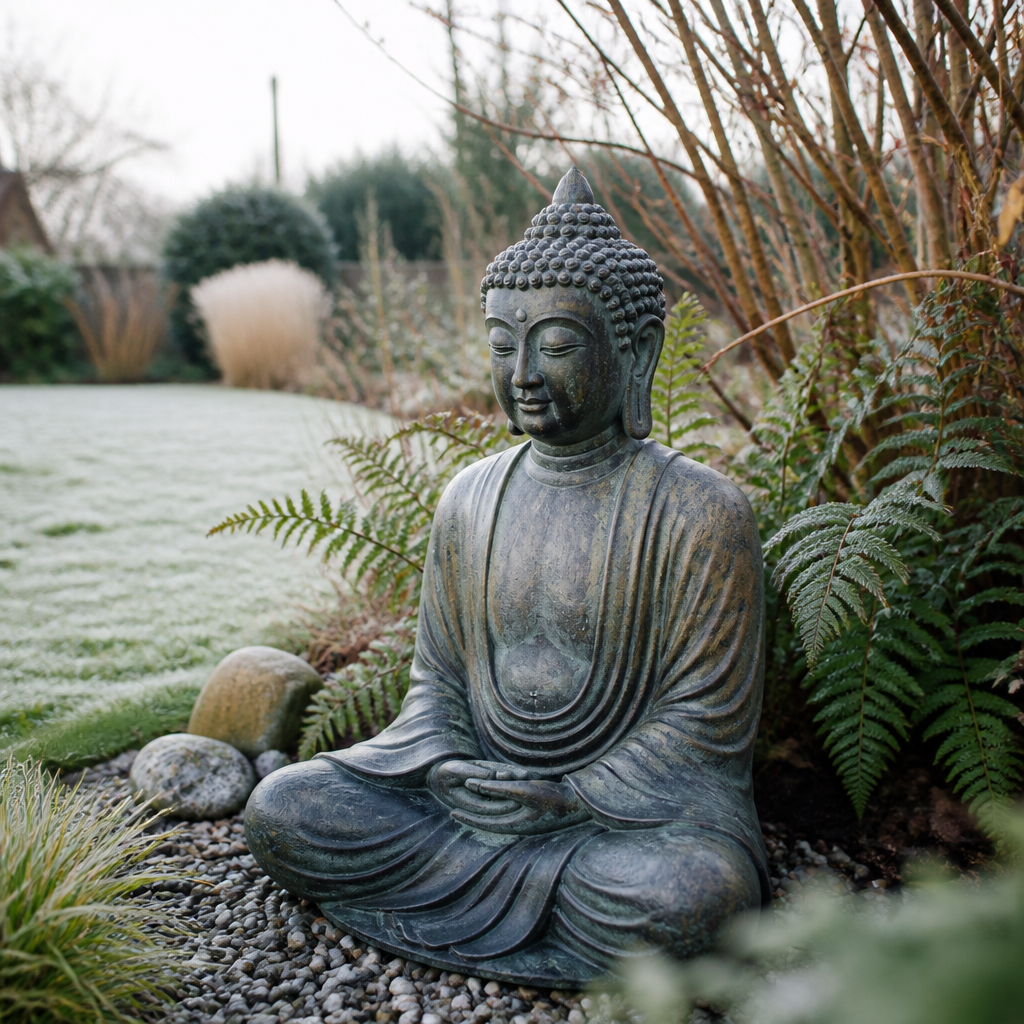
Granite, sandstone and cast stone handle sun and rain well, and their weight keeps them steady in wind. The weakness is absorption. Porous stone soaks up water, and when that water freezes it expands, which is how hairline cracks usually start, often at the base or along the neck of a seated figure.
In practice, a breathable masonry sealer makes a visible difference. Breathable is the word to check on the label, because a film-forming sealer can trap moisture under the surface and peel, while a breathable one lets vapour escape. Test any sealer on a hidden area first, since some stones darken noticeably after treatment.
Bronze, Brass and Cast Iron
Bronze is the most forgiving metal for outdoor use. It develops a green or brown patina over the years, and most collectors accept that as part of the piece's character. Stainless steel and aluminium also cope well, though they suit contemporary sculpture more than traditional devotional figures.
Cast iron and untreated steel are a different story. They rust, and rust runs down onto stone plinths and leaves orange staining that is difficult to remove. Keep iron pieces under cover, or make sure they carry a protective finish before they go outside.
Lacquer, Gilding and Painted Finishes Outdoors
Surface finishes are where outdoor placement goes wrong most often. A Buddha that looks durable on a shelf can change within one season once it sits in damp air, and the first sign is usually a loss of sheen rather than a crack. Lacquer, gilding and painted surfaces need more care than stone or bronze, and some should not be placed outside at all.
A finish that looks durable indoors often fails outdoors within a single season, and the first warning is usually a change in the surface sheen rather than a visible crack.
Why Burmese Lacquerware Belongs Indoors
Traditional Burmese lacquerware is built up from layers of natural lacquer over a base, and the surface depends on a stable, dry environment. Rain softens it, sunlight dulls the gloss, and temperature swings can lift the layers at edges and joins. We recommend keeping lacquer pieces indoors, or in a covered, dry porch away from direct weather, and never on a damp garden step.
If a lacquer piece has been left outside by accident, bring it in as soon as possible and let it dry slowly at room temperature. Do not use heat to speed the process, because rapid drying can cause the surface to crack. Gently wipe away grit with a soft, dry cloth rather than scrubbing.
Gilded and Painted Figures Under Cover
Gold leaf is thin and easily abraded. Wind-blown grit, heavy rain and hard water can all wear it down, and once the gilding is gone it cannot be restored to its original state without specialist work. Painted finishes, whether acrylic or enamel, fade in strong sun and blister when moisture is trapped beneath them.
The practical answer for gilded or painted pieces is a covered position, such as a sheltered alcove or a roofed courtyard, with good air movement. Full exposure to the garden should be reserved for solid materials such as bronze or sealed stone.
Choosing a Site: Shade, Drainage and Ground Contact
Before a statue reaches the garden, walk the site after heavy rain and note where water sits. Most outdoor failures trace back to a spot that holds moisture for days, not to the statue itself. A good position drains quickly, gets some light, and does not collect falling leaves or runoff from a roof.
Avoiding Spots Where Water Collects
Low corners of a lawn, the base of a downpipe, and the area under a dripping tree are the usual trouble spots. Water pooling around a base softens the soil, and the soil then keeps the stone or metal damp long after the rain has stopped. Choose a slightly raised area where the ground falls away from the statue.
Lawn sprinklers deserve special attention. Repeated spray leaves mineral deposits on stone and metal, and those deposits look like grey scale that is difficult to shift without damage. Redirect or move sprinkler heads away from any statue placed nearby.
Ground Contact and Staining
Direct contact with soil is one of the most common causes of statue damage. It leads to soil staining, moss and mould growth on the lower sections, and frost damage at ground level, where the cold is most concentrated. A plinth, a paver base or a decorative stone bed lifts the figure clear of that zone and makes it easier to inspect.
Pro tip: Set the base on a bed of compacted gravel before placing the plinth. It keeps water moving away from the foot of the statue and is far easier to adjust later than a concrete slab.
Placement for Garden Buddha Statues
A garden Buddha statue works best when it is placed for the person who will see it most, usually someone sitting on a bench or walking a path. Position matters as much as the sculpture itself, because a fine figure tucked behind a shed or pushed into the corner of a border tends to look like an afterthought. Decide the viewing point first, then build the placement around it.
Sightlines and Backdrops
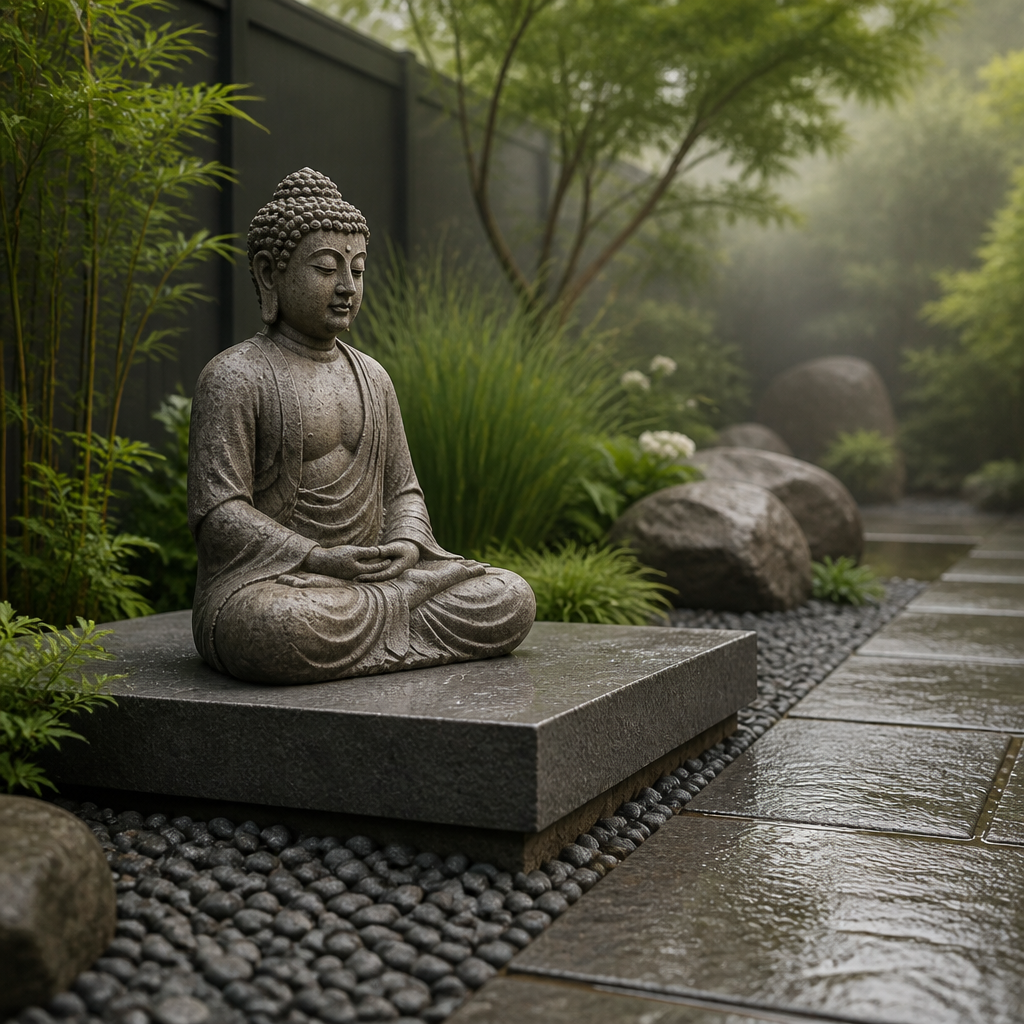
A seated Buddha reads most clearly against a backdrop of clipped hedging, dark foliage or a plain stone wall. Busy planting behind the figure competes with the face and the hands, which are the details people notice first. Keep the line of sight clear from the main seating point, and check the view from the path as well.
Plinths That Suit the Figure
The plinth should be solid, level and wider than the base of the figure. A narrow pedestal makes a tall statue look top-heavy, and it gives less protection to the foot. The aim is a height that brings the face into a natural line of sight from a seat, rather than one that looks good only from a standing position.
Keeping Figures Clear of Water Features
Buddha statues placed beside fountains or ponds take a regular dose of spray and algae. The moisture is constant, so the damp lasts longer than it would in an open border. If a water feature is part of the design, place the figure outside the spray zone and on a dry, raised base rather than at the water's edge.
Protecting Against Rain, Frost and Standing Water
Rain itself rarely destroys a sound statue. The damage comes from water that stays in the wrong place, and from the freeze that follows when temperatures drop. Frosts can arrive in many UK gardens from late autumn, so this is a good moment to check drainage and cover any vulnerable piece before the cold sets in.
Drainage Under and Around the Base
Check that water runs away from the statue after rain. Fill any low dips in the bed, and make sure the base sits level so it does not rock or trap water in a gap. A gravel layer beneath the plinth lets water drain through rather than sitting against the stone.
Winter Frost Routines
Before the first hard frost, dry any piece that has been sitting in wet weather. Empty hollow figures of standing water, and tip out any water from bowls or hollow bases. Water that freezes inside a cavity expands and can split a resin or cast stone piece from the inside, often without a visible crack until spring.
Cover a vulnerable statue with a breathable fleece or a purpose-made garden cover rather than plastic, which traps condensation against the surface. Lift the cover on milder days so the piece can air out. Remove covers in spring once the risk of frost has passed.
Pro tip: Mark the base of your statue with a small piece of masking tape at the water line after heavy rain. It shows you at a glance whether water is pooling and whether a drainage change has worked.
Sun, UV and Colour Fade
Sunlight is the slow threat. It rarely causes sudden damage, but over several summers it dulls paint, bleaches resin and dries out wood and lacquer. Sun exposure matters most on figures with bright colour or fine detail, where fading shows first.
Choosing Shade That Still Lets Light Through
Dappled shade from a tree or pergola is usually better than full shade. A statue placed under dense canopy tends to stay damp, and moss arrives quickly. Partial light keeps the surface drier while reducing the strongest UV, which is a good balance for most garden settings.
Dark Stone and Heat Stress
Dark granite and dark-glazed pieces absorb more heat than pale stone. On a hot day, that heat can drive moisture out of the surface unevenly, and repeated heating adds stress to existing hairline cracks. In a fully exposed, sunny spot, a lighter stone or a partly shaded position is the safer choice.
UV Protection for Resin and Painted Finishes
Resin and fibreglass resist water well but fade under prolonged UV. A UV-resistant clear sealant slows this down and should be reapplied as part of the annual routine. Sealant alone will not stop fading on a heavily exposed piece, so placement still matters.
Caring for Outdoor Hindu Statues
Hindu deity statues are often cast in brass or bronze, carved in stone, or finished with paint and polish for worship. Outdoors, the choice of material and finish decides how much maintenance the figure needs, and the placement should reflect how the figure is used. Many owners place a deity in a small shrine or sheltered niche rather than in an open border.
Respectful Height and Position
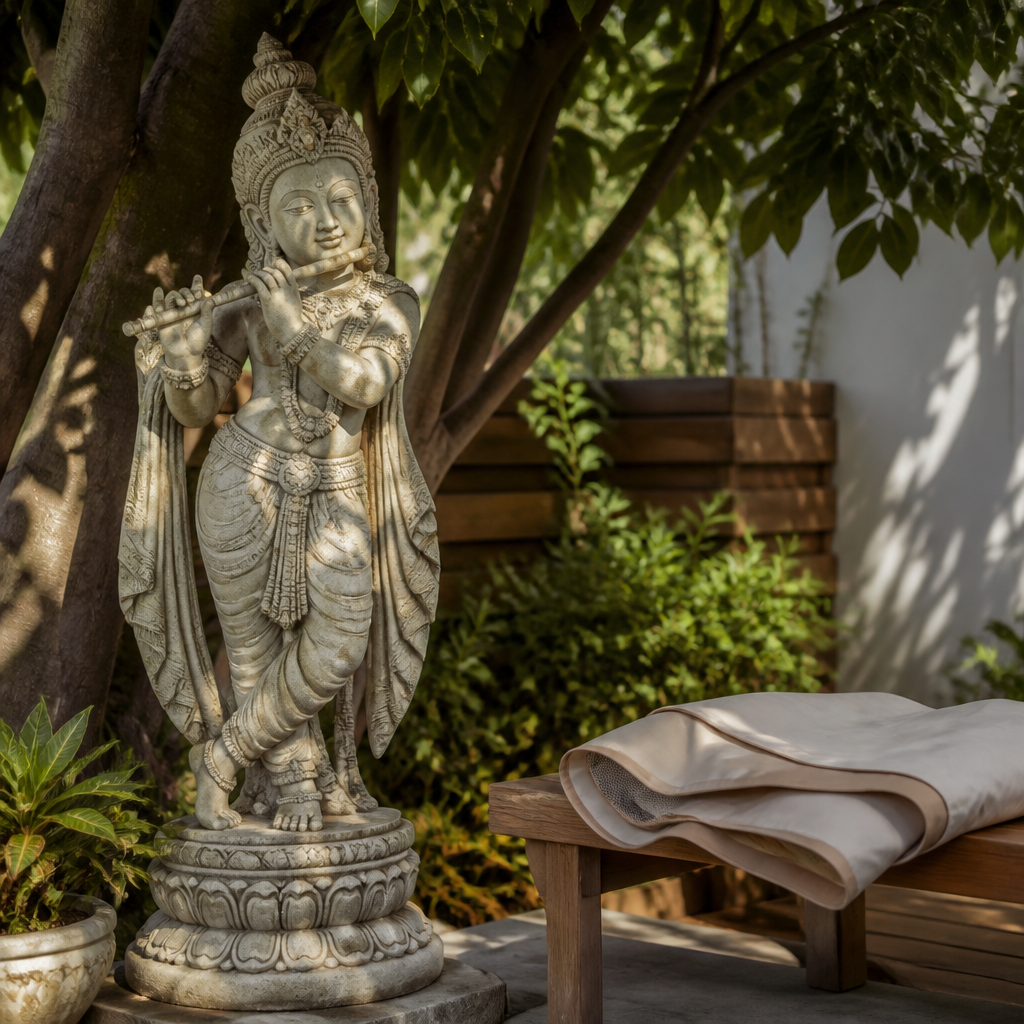
Many devotees prefer a deity raised above ground level and kept clear of paths, bins and areas where people sit or walk over it. A raised, clean platform also keeps the base dry. Stone or brass figures can sit on a plinth at a height that suits the setting, with the face clearly visible from the approach.
Shrines and Covered Niches
A small shrine with a roof overhang gives the best of both worlds. It keeps rain off the figure while still allowing the statue to be seen, and it makes cleaning easier. Choose a niche with good ventilation, because a closed cavity holds damp and encourages mould.
Cleaning Brass and Painted Surfaces
Brass tarnishes in damp air, so a light, periodic polish helps keep the surface even. Use a soft cloth and a product recommended for the metal, and avoid abrasive pads that scratch the finish. Painted or gilded figures should be cleaned only with a dry, soft brush, never with water and detergent.
Comparing Outdoor Protection Approaches
Three approaches cover most outdoor sculptures. Each one trades upkeep against appearance, and the right choice depends on how much maintenance you are willing to do each year. The table below sets them side by side.
|
Approach |
Best Suited To |
Main Drawback |
|---|---|---|
|
Breathable masonry sealer on stone |
Granite, sandstone and cast stone Buddha statues in exposed gardens |
Needs checking and reapplication, and can slightly change the stone's tone |
|
Natural patina or periodic wax on bronze |
Permanent outdoor figures where a changing surface is accepted |
Wax needs regular reapplication to keep the colour even |
|
UV-resistant clear sealant on resin or painted pieces |
Lightweight figures that are moved seasonally |
Does not stop fading in full sun, so placement still matters |
A Seasonal Routine for UK Gardens
Spring is the time for a full inspection after the wet winter, with a check for cracks, moss and staining at the base. Summer calls for a quick clean and a look at fading. Autumn is when to reseal stone and wood, clear leaves away from the figure, and prepare covers before the frost season.
Keep notes on each piece, including the date it was last sealed and any cracks you have spotted. A simple written log turns protection from a reaction into a routine, and it helps when you choose a sealer or cover for the next year.
Pro tip: Photograph each outdoor piece every spring from the same angle. Small changes in colour or a hairline crack are easier to spot when you compare images across seasons.
Frequently Asked Questions
Can a bronze Buddha statue stay outdoors all year?
Yes, a sound bronze statue can stay outdoors through the full year, provided its base drains well and the figure is inspected each spring. The surface will darken and may develop a patina, which many owners consider part of its character. Avoid leaving bronze in standing water, which can stain the base.
Is resin or stone better for a garden Buddha statue?
Stone is the better choice for a permanent position because its weight keeps it steady and it tolerates weather well when sealed. Resin is lighter and easier to move, but it can fade in strong sun and needs a UV-resistant finish. If you plan to move the figure seasonally, resin makes more sense.
Do I need to seal a stone Buddha statue?
For most outdoor settings, yes. A breathable masonry sealer reduces water absorption, which is the main route to cracks during freeze-thaw cycles. Check the label for breathable wording, and reapply according to the product instructions, which is usually once a year.
Can Burmese lacquerware go outside?
We advise against it. Lacquer softens with moisture, loses its gloss in sunlight and can lift at joins during temperature changes. A covered, dry porch is the most sensible outdoor option, and a bright indoor position is better still.
How do I stop mould on an outdoor Hindu statue?
Lift the figure off the ground, keep the base dry, and avoid positions under dense, dripping trees. Brush off surface growth gently, and use only clean water on bronze or stone, never on painted or gilded surfaces. Improve airflow around shrines and niches, since trapped damp is what brings mould back.
What should I do with an outdoor statue during a hard frost?
Dry the piece and empty any standing water from hollow sections before the frost arrives. Cover it with breathable fleece rather than plastic, and lift the cover on milder days to let it air out. Bring lacquer, gilded or painted pieces indoors where possible.
Tell us which material you chose for your garden and what has held up well, or badly, after your first winter outside.
We would love your feedback and any insights you would share with others. What perspective would you add?
References
