



How to Identify High Quality Wood Carvings
How to Identify High Quality Wood Carvings
Table of Contents
What Makes a Wood Carving High Quality
High quality wood carvings are distinguished by craftsmanship, material selection, and structural integrity. The difference between a masterfully executed piece and a mediocre one comes down to details most people overlook: how grain direction influences the final form, whether the wood was properly seasoned, and whether the carver understood the wood's natural properties well enough to work with them rather than against them.
At HD Asian Art, we've spent years sourcing and evaluating Southeast Asian sculptures and Buddhist statues. The foundation of quality begins with material selection. A carver working with inappropriate wood, green wood that hasn't been properly seasoned, or softwood too porous to hold fine detail is fighting an uphill battle. The wood must have the right density, grain structure, and moisture content to accept delicate carving and maintain its integrity over decades.
Beyond materials, execution matters enormously. Hand-carved pieces exhibit characteristics that machine-cut work simply cannot replicate. The subtle variations in depth, the organic flow of tool marks, and the way a skilled carver reads the grain and adjusts technique accordingly create visual richness that defines fine art sculpture.
Hand Carved vs Machine Carved Signs: Spotting the Difference
Understanding the distinction between hand carved versus machine carved work is essential to identifying high quality wood carvings. Machine carving produces precision and consistency. Hand carving produces character and soul.
Surface Finish and Tool Marks
Hand-carved surfaces tell a story through their imperfections. When a skilled carver works wood, each chisel stroke leaves a mark that varies slightly in depth and angle because human hands don't move with mechanical precision. That variation is the signature of authenticity.
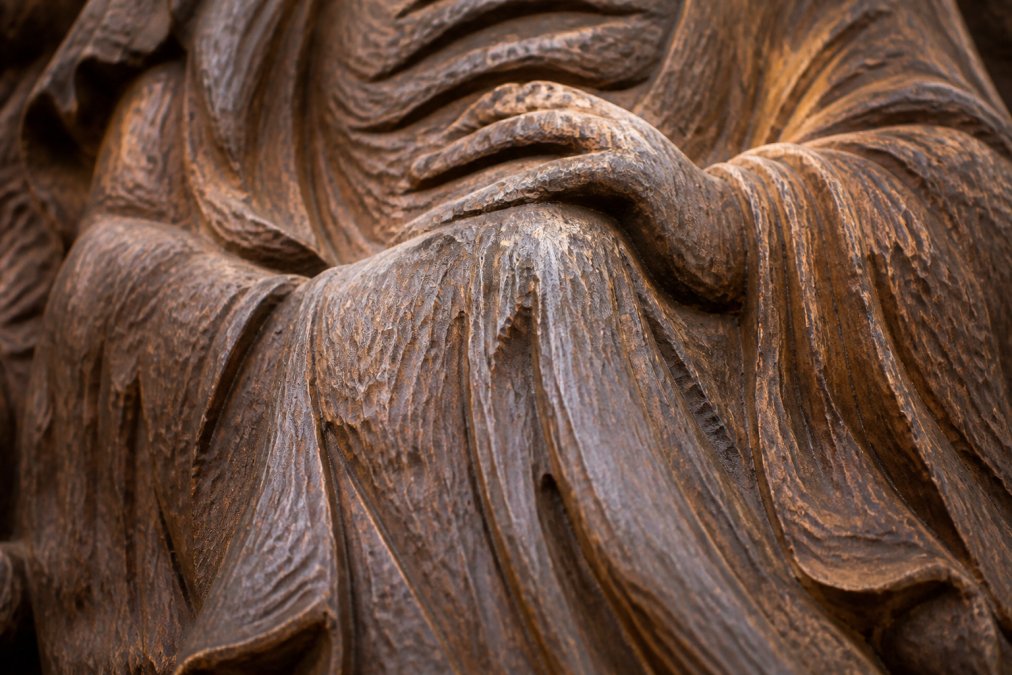
Machine-carved work exhibits uniform tool marks. The routing bit or laser follows the same path repeatedly, creating consistent, predictable patterns. If you examine the surface under moderate lighting and see repetitive, evenly-spaced marks, you're likely looking at machine work.
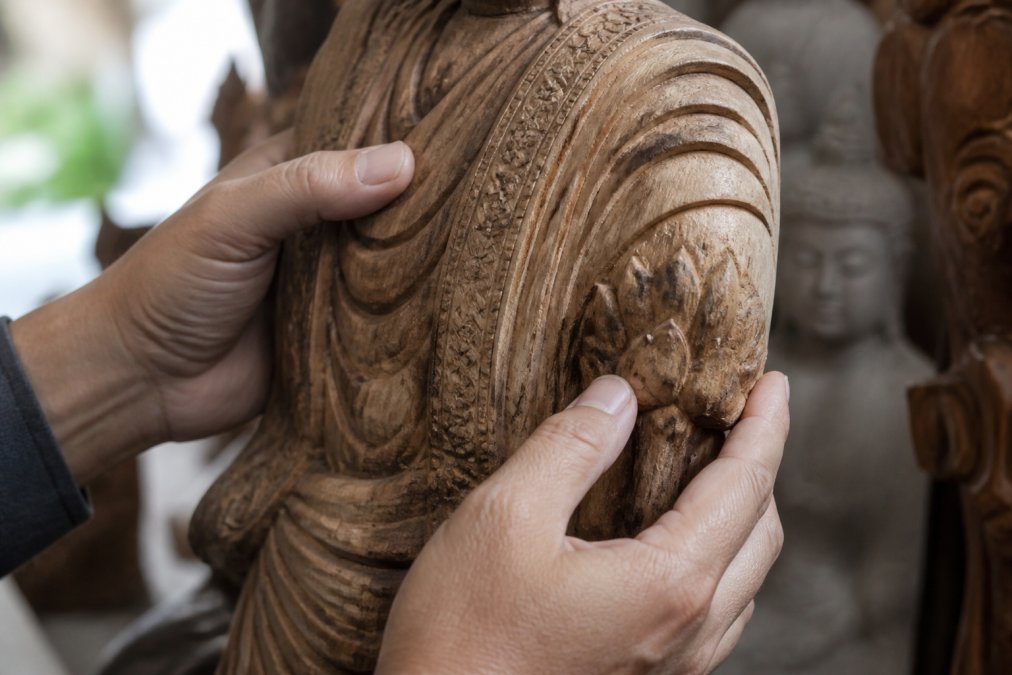
Run your fingertips across the carving. Hand work feels slightly irregular with subtle variations in surface texture. Machine carving feels more uniform. Look at transition lines where the carving meets uncarved sections. Hand carvers create softer, more organic transitions. Machine cuts produce sharper edges and more defined boundaries.
Consistency and Repetition Patterns
If a carving includes repeated elements, leaves on a tree, scales on a dragon, folds in fabric, examine whether each repetition is identical or unique. Machine carving produces absolute consistency. Every element looks exactly like every other. Hand carvers introduce subtle variations. One leaf might be slightly deeper than its neighbor. A series of scales might vary marginally in size or angle. These variations aren't flaws; they're evidence of human execution.
Understanding Wood Grain Direction and Fiber Orientation
Wood grain direction fundamentally determines how a carving will age and whether it will develop structural problems. Grain runs in a specific direction through the wood, along the fiber orientation. A skilled carver understands this orientation and uses it, rather than fighting against it.
Carving with the grain produces a clean surface and requires less force. Carving against the grain produces tear-out, splintering, and surface damage. Master carvers plan their work to carve with the grain whenever possible. Look at the surface of a quality carving. Fine details should show clean edges and smooth transitions. Rough, splintered areas suggest the carver was fighting the grain rather than working with it.
The grain also affects how the carving will move over time. Wood expands and contracts with humidity changes. When grain runs straight through a carving, movement is relatively uniform. When grain changes direction abruptly, different sections move at different rates, creating internal stress that can lead to checking (surface cracks) or warping.
Best Wood Types for Fine Art Sculptures
Not all wood is suitable for carving, and not all carving wood is equal. The choice of wood species affects the final result dramatically.
Hardwoods vs Softwoods for Carving
Hardwoods come from deciduous trees like oak, walnut, cherry, and maple. These woods have tight grain, high density, and excellent workability for fine detail. They accept sharp tool marks cleanly and hold fine details without splintering, making them ideal for sculpture and intricate relief work.
Softwoods come from conifers like pine, spruce, and cedar. They're easier to carve but more prone to splintering and damage. Fine details can become fuzzy or rounded over time as softer fibers compress and wear.
Basswood occupies a unique position. It's technically a hardwood but softer than true hardwoods with extremely fine grain. Basswood is prized for fine carving because it carves like softwood but holds detail like hardwood (peer-reviewed research).
Tropical hardwoods like teak and rosewood are denser and more durable, excellent for outdoor or high-traffic pieces. However, their density makes them harder to carve and requires sharper tools and more skill. The wood species visible in a carving tells you something about the carver's intent and skill level.
Moisture Content and Seasoning Methods
Green wood, freshly felled wood with high moisture content, is difficult to carve and prone to problems. As it dries, it shrinks unevenly, creating internal stress that leads to checking and warping.
Seasoned wood, dried to stable moisture content, is the standard for quality carving. Two main seasoning methods exist: air-drying, which seasons naturally over months or years, and kiln-drying, which accelerates the process through heat. Air-dried wood is gentler on the wood and produces excellent results but is time-consuming. Kiln-dried wood is faster but can introduce internal stress if done improperly. handmade art quality.
Quality carvers use properly seasoned wood. If a carving shows fresh cracks or significant warping despite apparent age, it may have been carved from inadequately seasoned wood. Check the carving's edges and ends for signs of checking. Fine surface cracks are normal in aged wood, but deep, open cracks suggest poor seasoning or exposure to extreme humidity fluctuations.
Inspecting Wood Density, Texture, and Defects
Assessing the quality of wood requires understanding what to look for and what it means.
Identifying Knots, Cross-Layers, and Structural Integrity
Knots are branches covered by growing wood. They appear as dark, circular or oval sections and are harder than surrounding wood. Quality carvers avoid placing important details in areas with knots. If a carving shows a knot in a prominent location, it suggests either poor planning or working with compromised material.
Cross-layers occur where grain direction changes abruptly. These areas are difficult to carve and prone to splintering. In quality work, you'll see minimal cross-grain carving in visible surfaces.
Structural integrity refers to the wood's soundness and strength. Press gently on thin sections; they should feel solid and not flex excessively. Look for areas where the wood appears weakened by carving too deeply in a small area.
Spotting Rot, Fungal Damage, and Checking
Rot is decay caused by fungal growth. Early-stage rot appears as discoloration or areas where the wood color seems off. Advanced rot softens the wood and creates a spongy texture. Rotted wood cannot support fine carving and indicates poor storage conditions or age without proper care.
Fungal damage can manifest as staining or surface growth. Some fungal staining is superficial and doesn't affect structural integrity, while other fungal growth indicates moisture problems and potential rot developing internally.
Checking, fine surface cracks, is normal in aged wood. However, deep checking or checking that forms a pattern suggests very old age, unstable storage conditions, or poor initial seasoning.
Run your fingers over the surface. Rot or advanced fungal damage often feels soft or slightly spongy. Sound wood feels firm throughout. Look for areas where the carving appears to have been repaired. While repairs don't necessarily indicate poor quality, they do affect authenticity and value.
How to Care for Antique Wood Carvings
Once you've acquired a quality carving, proper care preserves its condition and value. Store carvings in stable conditions. Humidity fluctuations cause wood to expand and contract, creating stress that leads to checking and warping. Maintain consistent humidity levels between 40-60% if possible (si.edu). Avoid placing carvings near heating vents, air conditioning units, or windows where direct sunlight and temperature swings are extreme.
Dust gently with a soft cloth. Avoid harsh chemicals or oil-based polishes that can accumulate and darken the wood. If cleaning is necessary, use a barely-damp cloth and dry immediately. Never soak a wooden carving or subject it to water.
Handle with care, particularly delicate pieces. Support thin sections properly and avoid touching carved details excessively, as hand oils can accumulate and darken the wood over time. Inspect periodically for signs of pest damage. If you notice small holes or sawdust-like material, consult a conservator immediately.
Assessing Authenticity and Provenance
Authenticity and provenance, the documented history of ownership, significantly affect a carving's value and meaning. For collectors seeking pieces with spiritual significance, authenticity matters deeply.
Provenance is the ownership history of an object. Pieces with clear provenance command higher prices and greater confidence. Ask sellers for documentation. Legitimate dealers can provide information about where a piece originated, how long it's been in their collection, and any previous ownership records. HD Asian Art provides detailed information about the provenance and authenticity of each piece in our collection.
Age assessment requires expertise. Genuine antique pieces show signs of age, patina, wear patterns, checking, that are difficult to fake convincingly. Look for consistency between style, wood type, and construction method. A carving purported to be 18th-century Khmer should use wood and techniques consistent with that period and region. Anachronistic details or inappropriate wood species suggest misattribution.
For Buddhist and Hindu statues, iconographic details matter. Genuine pieces follow specific symbolic conventions. Incorrect iconography or unusual stylistic elements suggest either regional variation you should research or potential misrepresentation.
Conclusion
Learning to identify high quality wood carvings combines technical knowledge with hands-on experience. You're looking for evidence of skilled execution, appropriate material selection, and respect for the wood's natural properties. Hand-carved work shows character through subtle variations. Grain direction influences both the carving process and the piece's long-term stability. Wood species choice reveals the carver's intent and skill level. Defects like knots, rot, and checking tell stories about the wood's history and the carver's planning.
The most important skill is developing a critical eye. Examine pieces in person whenever possible. Feel the surface. Look at grain direction under varied lighting. Compare hand-carved and machine-carved examples to train your eye. Over time, you'll develop intuition about quality that goes beyond any checklist.
When you're ready to invest in pieces for your meditation space or collection, work with dealers who understand their material and can articulate why a piece is exceptional. At HD Asian Art, we curate each Buddhist and Hindu statue with attention to authentic craftsmanship and provenance. Our collection features hand-carved Southeast Asian sculptures selected for their spiritual presence and artistic excellence. Browse our carefully sourced pieces to find the right work for your space.
Frequently Asked Questions
What are the signs of a high-quality wood carving?
High-quality wood carvings display clean, precise tool marks from hand carving, consistent grain direction that enhances rather than detracts from the design, and flawless finishing without visible defects. The wood itself should be dense with tight grain, properly seasoned to prevent warping or checking, and free from knots or cross-layers that compromise structural integrity. Fine art sculptures also show evidence of skilled craftsmanship in proportional accuracy and anatomical detail.
How can you tell if a wood carving is hand-carved or machine-made?
Hand-carved pieces show varied, organic chisel and gouge marks with natural surface irregularities that reflect the artist's technique. Machine-carved items display uniform, repetitive patterns with mechanical precision and identical tool marks across identical sections. Hand-carved work also exhibits subtle asymmetries and individual character, while machine pieces often look perfectly uniform and lack the natural variations that come from human craftsmanship.
What wood types are best for fine art sculptures?
Hardwoods like basswood, walnut, and oak are preferred for fine art sculptures because they offer tight grain, superior density, and excellent workability. Basswood is especially valued for detailed carving due to its straight grain and uniform texture. Softwoods can work for larger pieces but are more prone to denting and damage. Properly kiln-dried or air-dried seasoned wood is essential to prevent warping, checking, and moisture-related degradation over time.
How should you care for antique wood carvings?
Store antique wood carvings in stable temperature and humidity environments to prevent warping and checking. Dust gently with soft brushes rather than cloths that might catch on carved details. Avoid direct sunlight and extreme heat. Never use harsh cleaners or excessive water. For valuable pieces, consider professional conservation. Regular inspection for signs of rot, fungal damage, or insect damage helps catch problems early and preserve structural integrity and carving quality.
Quality wood carvings elevate both physical spaces and spiritual practice. The right piece, authentically crafted, properly selected, and carefully maintained, becomes a focal point that deepens your connection to the art form and its cultural tradition. Understanding how to identify high quality work ensures you invest in pieces worthy of that role.
