



How to Display Buddha Statues for Good Feng Shui
How to Display Buddha Statues for Good Feng Shui
Table of Contents
-
Essential Do's and Don'ts for Respectful Positioning
- The Core Principle: Elevation as Respect
- Why Bathrooms and Bedrooms Are Problematic
- Directional Choices and Their Spiritual Meaning
- Avoiding Mirrors and Conflicting Placements
- Direct Sunlight and Material Preservation
- Heat Sources and Environmental Stability
- The Clutter Principle: Energy and Attention
- Do's: Active Reverence Through Maintenance
The Spiritual Significance of Buddha Statue Placement
Buddha statue placement carries profound spiritual weight in Buddhist and Feng Shui traditions. A statue positioned with intention becomes a focal point for meditation, a symbol of wisdom and peace, and a conduit for positive chi throughout your home.
Buddha Statue Placement Rules for Your Home
Elevation and Eye-Level Positioning
Your Buddha statue should never rest on the floor or below eye level. Placing it at or above eye level shows respect, allows the figure to command the space with dignity, and improves the flow of positive energy throughout the room.
A pedestal lifts the statue above clutter and creates a dedicated focal point. Many practitioners elevate statues 3 to 5 feet from the ground, positioning them where they're visible from primary seating areas, which encourages upward gazing and reinforces respect (peer-reviewed research).
Choose a sturdy pedestal proportional to your statue's size. Wood is traditional and grounding; stone evokes permanence and stability.
Directional Orientation and Feng Shui Principles
In Feng Shui, facing the main entrance is one of the most powerful placements, symbolically welcoming positive energy and guarding against negative influences, particularly effective in living rooms and meditation spaces.
Facing east, aligned with the rising sun and new beginnings, supports growth and renewal. Some practitioners position statues to face both the entrance and east when layout permits.
Avoid placing your statue with its back to the main entrance or directly across from windows or doors, as these create conflicting energy flows. Instead, anchor it in a corner or against a wall for stability.
Where to Place Buddha Statue in Living Room Settings
Creating a Dedicated Focal Point
Designate one specific area in your living room as your focal point rather than scattering statues. A corner shelf, console table, or dedicated altar creates visual harmony and concentrates spiritual energy.
Position your statue where it naturally draws attention. A side table near seating or a middle bookshelf at eye level works well, surrounded by meaningful objects like crystals, candles, or sacred texts.
Soft, indirect natural light or a small dedicated lamp enhances the statue's presence and transforms it into a beacon of calm.
Placement in Small Apartments and Compact Spaces
In compact spaces, a single well-placed statue creates more impact than multiple pieces. Choose a corner that feels naturally sacred.
A floating shelf at eye level or a small pedestal in a corner works well. Ensure your statue has breathing room, free from clutter.
Wall-mounted shelves above furniture create height without sacrificing space, maintaining eye-level visibility while freeing floor and table space.
Buddha Statue for Meditation Space: Altar Setup and Sacred Space
Building Your Altar Foundation
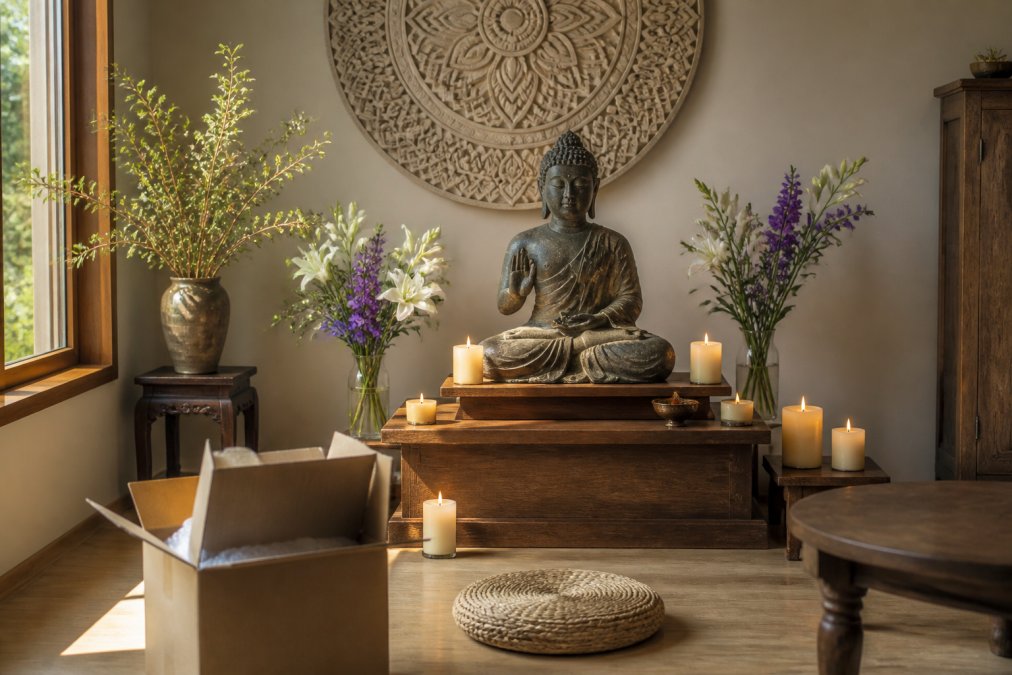
Begin your altar with a clean, level surface covered in a natural-colored cloth. Place your Buddha statue at the center, elevated on its pedestal.
Surround your statue with meaningful elements: candles for light, fresh flowers for renewal, and incense for purification. Many practitioners include a small bowl of water or rice as an offering.
At HD Asian Art, we understand that your altar reflects your personal spiritual journey. Our carefully curated collection of Buddhist and Hindu statues is designed to anchor these sacred spaces with authenticity and grace. Each piece carries the weight of tradition, making it an ideal centerpiece for your meditation practice.
Maintaining Clutter-Free Surroundings
Keep the area around your statue clear of unnecessary objects. This minimalist approach allows chi to flow freely and helps your mind settle into stillness.
Dust your statue gently with a soft cloth, refresh flowers weekly, and replace candles as needed. This routine maintenance becomes part of your spiritual practice.
Garden and Outdoor Placement for Spiritual Energy
Outdoor Buddha statues extend your spiritual practice into nature. Success requires matching your statue's material to your climate and understanding how weather affects longevity.
Material Selection for Outdoor Durability
Not all Buddha statues are suitable for outdoor exposure. Your material choice determines how long your statue will last and how much maintenance it requires.
Stone statues (granite, marble, sandstone) are the most durable outdoor choice. Granite is hardy in cold climates; marble requires occasional sealing in humid climates; sandstone erodes in heavy rain or freeze-thaw zones. For harsh winters or high rainfall, choose granite or sealed marble.
Concrete statues last 20+ years outdoors but are porous; apply sealer every 2-3 years, especially in freeze-thaw climates (fema.gov). Resin statues don't absorb water but fade and become brittle under intense UV exposure.
Bronze statues develop a protective patina and become more beautiful with age. Let the patina develop naturally; in coastal areas, apply a protective wax coating annually.
Wood statues should not be placed in full outdoor exposure. Place them under a covered porch, gazebo, or pergola and apply protective oil or sealant annually.
Ceramic and hand-painted statues are too delicate for outdoor placement. Frost cracks ceramic; rain fades hand-painted details. Reserve these for indoor altars or covered spaces.
Positioning for Outdoor Feng Shui and Visibility
Position your statue where it's visible from your primary outdoor seating area. Face it toward your main garden entrance or most-used path to invite positive energy.
Use a pedestal to lift the statue 2-4 feet above ground, protecting it from standing water, debris, and accidental damage.
Integration with Water Features and Plantings
Position your statue near water features for spiritual energy, but keep it a few feet away from direct splash zones to prevent erosion.
Evergreen shrubs or trees shield the statue from harsh weather. Avoid planting directly against the base; leave 12 inches of clear space for air circulation and cleaning (usda.gov).
Climate-Specific Considerations
Cold climates: Choose granite, sealed marble, or bronze; seal concrete annually. Hot, dry climates: Stone and concrete perform well; ensure adequate shade. Humid/coastal: Bronze is durable; seal concrete annually. Rainy: Granite and sealed concrete are best; ensure excellent drainage around the pedestal. style luxury decor.
Maintenance Routines for Outdoor Statues
Inspect statues seasonally for damage. Gently brush away moss or algae. Reapply seals and protective coatings as needed. Remove fallen leaves and debris regularly.
Your garden becomes a temple, a place where spiritual practice unfolds in harmony with nature, and where your statue endures as a lasting anchor for that practice.
Essential Do's and Don'ts for Respectful Positioning
Beyond feng shui mechanics, respectful Buddha statue placement is rooted in Buddhist and Hindu spiritual traditions. Understanding the 'why' behind placement rules helps you avoid accidental disrespect and honors the sacred nature of the object, not just its decorative function.
The Core Principle: Elevation as Respect
Elevation reflects a fundamental Buddhist principle: the statue represents enlightenment and wisdom, deserving a position of honor. Understanding this cultural foundation helps you maintain respectful placement.
Why Bathrooms and Bedrooms Are Problematic
Never place your statue in a bathroom or bedroom. Bathrooms expose statues to moisture and humidity that degrade materials, and spiritually, they're associated with bodily functions. Bedrooms lack the contemplative energy appropriate to a sacred object. Living rooms, meditation spaces, and entryways are ideal.
Directional Choices and Their Spiritual Meaning
Facing east symbolizes new beginnings and renewal; facing the main entrance invites positive energy and creates a guardian presence. These are intentional design choices that align your space with your spiritual intention.
Avoiding Mirrors and Conflicting Placements
Don't position your statue facing a mirror, as this can create fragmentation rather than grounded presence. Avoid placing it where it might be stepped over or treated casually; maintain a space where it's treated with reverence.
Direct Sunlight and Material Preservation
Avoid direct sunlight, which fades hand-painted details, warps wood, and creates stress in stone. Soft, diffused light creates the reverent atmosphere appropriate to a sacred object.
Heat Sources and Environmental Stability
Never place your statue near radiators, fireplaces, or heat vents. Temperature fluctuations cause cracking and peeling; proximity to heat sources creates visual and energetic instability.
The Clutter Principle: Energy and Attention
Keep the area surrounding your statue clear of unnecessary objects. Clutter collects dust and disrupts focused attention; a clear space trains your mind to pause and reflect.
Do's: Active Reverence Through Maintenance
Do treat your statue as a living part of your spiritual practice. Dust it gently, refresh flowers weekly, and replace candles as they burn down. Do position it where you naturally see it during daily routines. Do use natural materials for pedestals and altar surfaces, wood, stone, or ceramic.
Material-Specific Care and Placement Considerations
Stone statues benefit from occasional gentle cleaning. Wood statues require protection from moisture and regular oil application. Bronze develops patina naturally, dust gently without aggressive cleaning. Ceramic and hand-painted statues need stable indoor environments. Your material choice determines safe placement: wood suits interior altars or covered porches; stone or bronze thrives outdoors.
Creating a space where how to display Buddha statues for good feng shui becomes a daily practice transforms your home into a sanctuary. At HD Asian Art, our handpicked collection of authentic Buddhist and Hindu statues brings temple-inspired grace to your meditation space and living areas. Each piece is selected for its craftsmanship and spiritual presence, designed to enhance your personal sanctuary with refined beauty. Browse our curated collection today and discover the statue that will anchor your practice and invite harmony into your home.
Frequently Asked Questions
Where should you never place a Buddha statue?
Avoid placing Buddha statues on the floor, in bathrooms, kitchens, or directly facing the main entrance. Never position a statue in cluttered or dirty areas, as this disrupts positive chi and shows disrespect. Keep statues away from high-traffic areas where people might brush past them. Bedrooms are generally considered inappropriate unless you have a dedicated meditation corner. Statues should never be placed below eye level or in corners where they're hidden from view.
What height should a Buddha statue be displayed at for feng shui?
Buddha statues should be positioned at eye level or slightly above when seated. Elevate your statue on a plinth, pedestal, or shelf to ensure it sits higher than where people typically stand or sit. This elevation creates respect and allows the statue to command the space spiritually. In meditation rooms, aim for the statue to be at or just above your eye level when seated in meditation. Never place statues on low surfaces like coffee tables or the floor, as this diminishes their spiritual presence and energy.
Does a Buddha statue need to face a specific direction for good feng shui?
Facing east is traditionally considered most auspicious in feng shui practice, as it symbolizes new beginnings and spiritual awakening. However, facing the main entrance of your room or home is also powerful, as it welcomes positive energy into your space. Some practitioners follow Vastu Shastra principles, which emphasize facing north for wisdom and peace. The most important factor is that your statue faces an open area rather than a wall, allowing spiritual energy to flow freely around it.
Can I place a Buddha statue in my bedroom?
A Buddha statue can be placed in a bedroom only if you create a dedicated meditation or spiritual corner separate from your sleeping area. The bedroom is primarily a space for rest and intimacy, so statues work best when isolated in a quiet nook. If you do place one in your bedroom, ensure it's elevated on a pedestal, positioned away from your bed, and kept in a clutter-free, clean area. Many spiritual practitioners prefer keeping Buddha statues in living rooms, meditation rooms, or gardens where they serve as focal points for spiritual practice rather than bedroom sanctuaries.
