


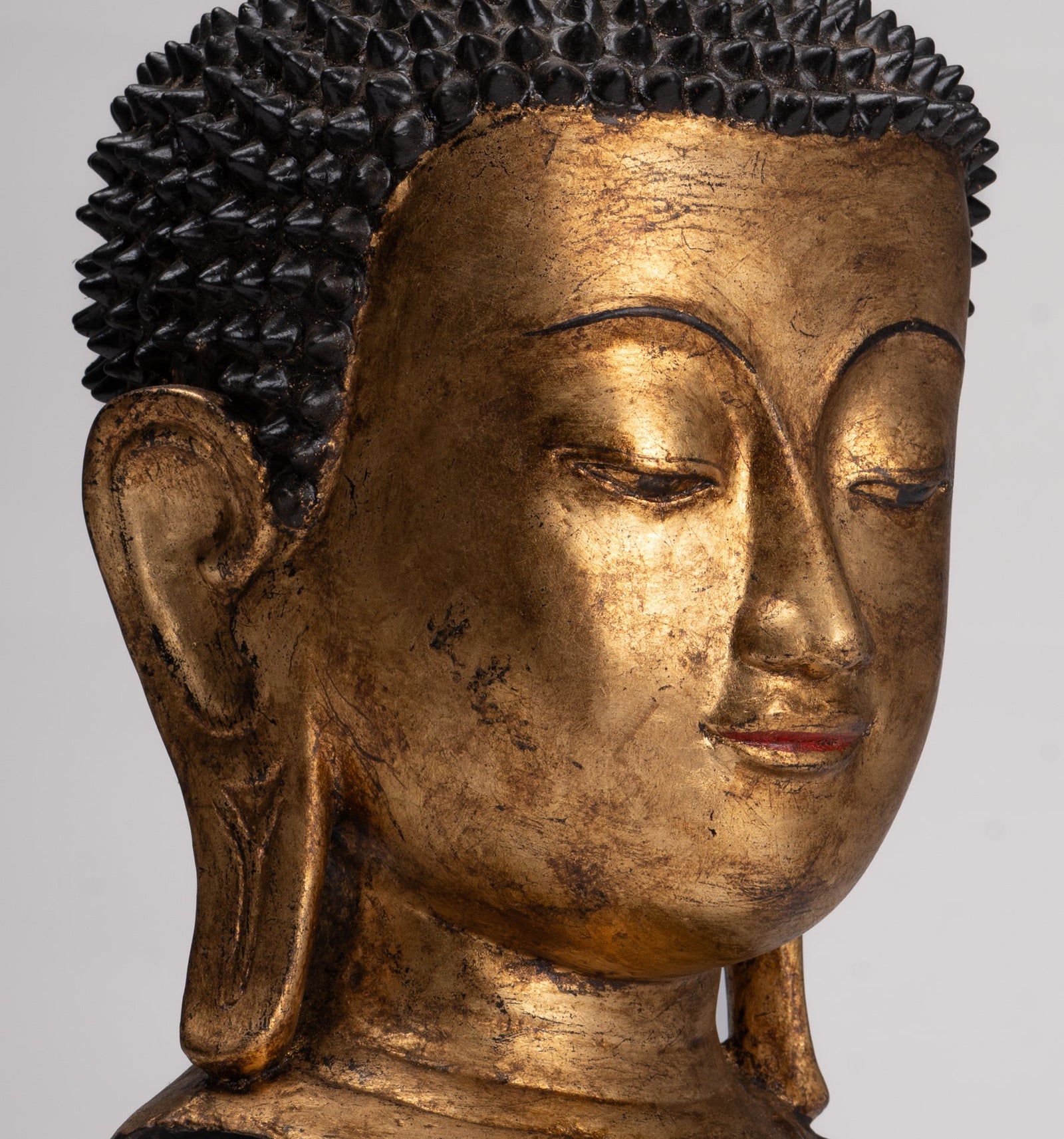
Grace in Stillness: The Shan-Style Buddha of Burma
Grace in Stillness: The Shan-Style Buddha of Burma
Among the many artistic expressions of the Buddha found across Southeast Asia, the Shan-style Buddha of Burma (Myanmar) holds a distinctive place for its refined elegance, gentle serenity, and uniquely regional character.
Originating from the Shan States of eastern Myanmar, this style blends classical Buddhist iconography with local aesthetics and spiritual values, resulting in some of the most graceful depictions of the Enlightened One in Southeast Asian art.
In this post, we explore the historical context, stylistic features, and cultural significance of the Shan-style Buddha, highlighting why these sculptures continue to captivate collectors, scholars, and spiritual seekers alike.
Historical Background: The Shan States and Their Buddhist Heritage
The Shan people are a Tai-speaking ethnic group who inhabit the Shan Plateau in eastern Myanmar, bordering Thailand, Laos, and China. Historically, this region was home to a constellation of semi-independent Shan principalities, which flourished from the 14th to the 19th centuries, often under loose Burmese suzerainty.
-
The Shan rulers, known as Sawbwas, were devout patrons of Theravāda Buddhism, sponsoring temples, monastic institutions, and sacred art.
-
Influenced by both Mon-Burmese traditions and Lan Na (northern Thai) aesthetics, the Shan developed a distinct artistic language—graceful, delicate, and contemplative.
By the 18th and 19th centuries, the Shan Buddha image had become a recognizable and widely respected form, deeply tied to regional identity and religious devotion.
Stylistic Characteristics of the Shan Buddha
Shan Buddha sculptures—particularly in bronze—are celebrated for their refined proportions, meditative composure, and lyrical elegance. While variations exist across periods and sub-regions, most Shan Buddhas share the following key features:
1. Slender, Elongated Body
The Shan Buddha is often tall and slim, with elegant lines and a subtle sense of elongated grace. The body posture reflects calm poise, evoking a sense of weightlessness and inner balance.
2. Distinctive Facial Features
-
Oval or heart-shaped face
-
High arched eyebrows
-
Downcast almond-shaped eyes, suggesting introspection and serenity
-
Delicately formed lips, sometimes with a soft smile—often called the "Shan smile"
-
Smooth, unlined forehead and graceful chin, conveying youthfulness and clarity
This facial expression is designed to embody metta (loving-kindness) and upekkhā (equanimity)—central qualities of the awakened mind.
3. Hair and Usnīsha
-
The Buddha’s hair is typically rendered as smooth or lightly curled, with a tall flame-like usnīsha (symbolizing spiritual illumination).
-
Sometimes a small band or crown encircles the usnīsha, echoing northern Thai or Lan Na styles.
4. Robes and Drapery
-
The Shan Buddha wears a simple monastic robe (civara), elegantly wrapped over one shoulder.
-
Robe lines are often softly incised or subtly modeled, enhancing the sculpture’s flowing aesthetic.
-
Unlike more elaborate Burmese court styles, Shan robes are understated—focusing on spiritual humility and purity.
5. Seated or Standing Postures
Most Shan Buddhas are depicted in:
-
Dhyāna mudrā (meditation gesture), with hands resting in the lap
-
Bhumisparsha mudrā (earth-touching gesture), representing the moment of enlightenment
-
Abhaya mudrā (gesture of fearlessness), in standing figures
Whether seated or standing, the figure radiates a sense of stillness, compassion, and transcendence.
Materials and Craftsmanship
Shan-style Buddhas were primarily cast in bronze, though examples in wood, lacquer, and stucco also exist. Bronze casting was refined by Shan artisans, who often employed the lost-wax method to create delicate, detailed figures.
-
Surfaces are typically polished to a warm glow, sometimes gilded or lacquered.
-
In sacred settings, Buddhas may have been adorned with gold leaf, glass inlay, or floral motifs, especially during festivals and rituals.
The combination of technical skill and devotional intention gives these sculptures their enduring spiritual presence.
Comparison with Other Burmese Styles
The Shan Buddha can be distinguished from other regional Burmese styles by its graceful subtlety:
| Style | Notable Traits |
|---|---|
| Mandalay | Round face, smiling features, opulent robes, more courtly and ornate |
| Ava/Inwa | Heavier proportions, large head and hands, strong features |
| Shan | Slender, refined, introspective, lightly detailed robes, lyrical grace |
While the Mandalay and Ava styles often emphasize royal grandeur, the Shan Buddha focuses on spiritual refinement and inner light.
Symbolism and Devotional Role
For Shan Buddhists, the Buddha image is not simply decorative—it is a focus of worship, meditation, and merit-making. In temples and monasteries across the Shan States, these statues are clothed, gilded, and ritually venerated.
The Shan Buddha embodies:
-
Compassion and peace of mind
-
The path to enlightenment through meditation and ethical living
-
A reminder of the Buddha’s qualities: patience, humility, and clarity
In homes, placing a Shan Buddha in a quiet corner or meditation space fosters a sacred atmosphere, encouraging contemplation and mindfulness.
Collecting and Displaying Shan Buddha Sculptures
Collectors and spiritual practitioners are drawn to Shan Buddhas for both their aesthetic purity and spiritual authenticity. Whether displayed in a gallery setting or a personal sanctuary, these figures speak to a universal human longing for peace, grace, and enlightenment.
Tips for collectors:
-
Look for balance and proportion—Shan figures often exude subtle harmony.
-
Surface patina—especially in older bronzes—can reflect centuries of devotion.
-
Consider both form and feeling; the best pieces have a presence that transcends their materials.
At HDasianArt.com, we select pieces that embody not only regional authenticity but also the timeless resonance of spiritual art.
Conclusion: The Quiet Majesty of the Shan Buddha
The Shan-style Buddha is a jewel of Burmese Buddhist art—serene, contemplative, and full of grace. It reflects the values of a deeply spiritual culture that treasures inner stillness over outward grandeur, and refined simplicity over ornate display.
For today’s collectors and admirers, Shan Buddhas offer not only a glimpse into Southeast Asia’s sacred past but also a timeless invitation: to pause, reflect, and reconnect with the profound peace at the heart of all things.
Explore Our Collection
At HDasianArt.com, we offer a curated range of Shan-style Buddha sculptures in bronze, wood, and stone, each one selected for its beauty, craftsmanship, and spiritual presence.
Looking to bring calm elegance and spiritual depth to your space? Browse our Shan Buddha Collection today.
