



Buddha Statue Size Guide: Choose the Right Dimensions
Buddha Statue Size Guide: Choose the Right Dimensions
Choosing the appropriate Buddha statue size is defined by one principle: the statue must remain visually legible and dignified at your actual viewing distance. A piece that looks striking in a photograph can disappear on a large mantel or overwhelm a compact meditation corner.
The standard industry term for this principle is proportional scaling, and it applies whether you are placing a small bronze Dhyana Mudra figure on a bedside table or a granite Shakyamuni in a garden shrine. Viewing distance, room scale, and intended purpose determine the correct dimensions before aesthetics enter the conversation.
How to choose appropriate Buddha statue size by placement
The most reliable method for selecting Buddha statue dimensions is to start with where the statue will live, then work backward to the correct height range. Placement location determines viewing distance, and viewing distance determines the minimum height needed for the statue to register as a meaningful presence rather than a decorative afterthought.
The following size ranges reflect established guidelines from Tibetan artisan traditions and spatial design practice:
| Placement | Recommended Height | Notes |
|---|---|---|
| Desktop or bedside | 3–5 in (7–13 cm) | Close viewing distance; intimate scale |
| Bookshelf or windowsill | 5–8 in (13–20 cm) | Mid-distance; needs clear negative space |
| Home altar | 8–14 in (20–36 cm) | Central focal point; elevation required |
| Living room console or mantel | 12–20 in (30–51 cm) | Scale to furniture; allow surrounding space |
| Entryway or corridor | 10–18 in (25–46 cm) | Greeting position; Abhaya Mudra suits this spot |
| Floor focal point | 20–30 in (51–76 cm) | Requires pedestal or altar base |
| Outdoor garden shrine | 24–36 in (61–91 cm) | Open-air scale; durable material required |
These ranges come directly from size-by-placement research that maps statue height to typical viewing distances in residential settings. A 12-inch statue on a console sits roughly 6 to 8 feet from a seated viewer, which is the minimum height needed to read facial expression and mudra detail at that distance.
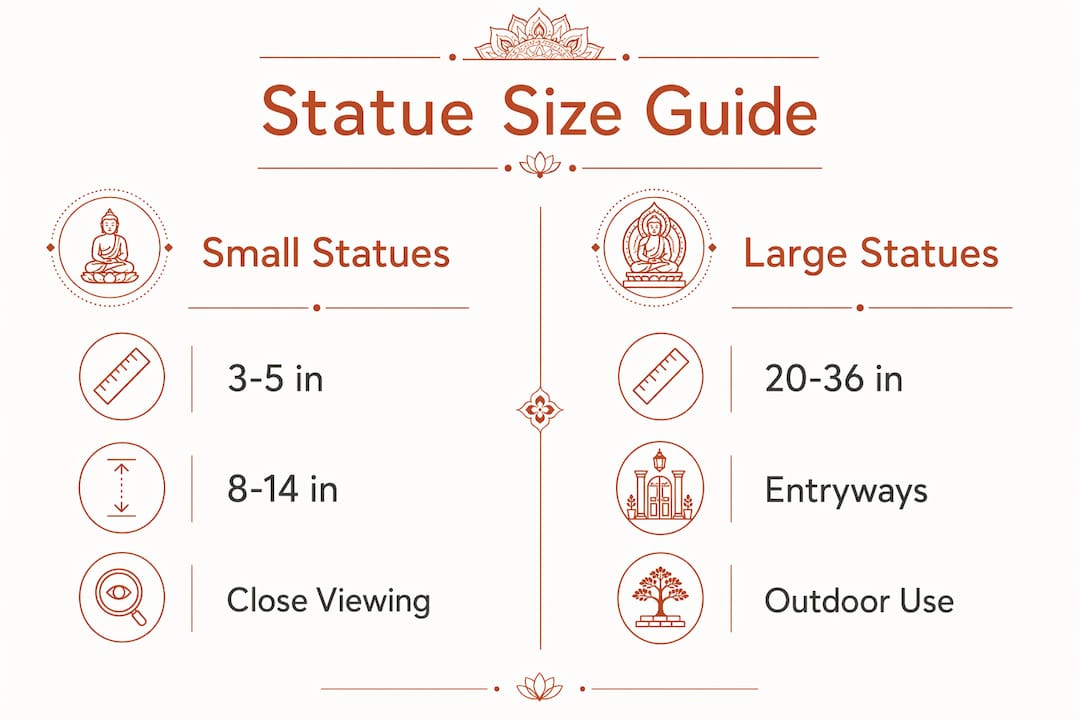
Pro Tip: If your preferred statue falls below the recommended height for its location, add a carved wooden or stone altar base. A 4 to 6 inch base raises the statue into the correct visual register without requiring a larger piece.
Living room placement calls for a dedicated shelf or mantel with uncluttered space around the statue, and console placement works best when the statue is 12 to 20 inches tall to scale with standard furniture proportions. Crowding a statue with books, candles, or decorative objects reduces its presence regardless of size.
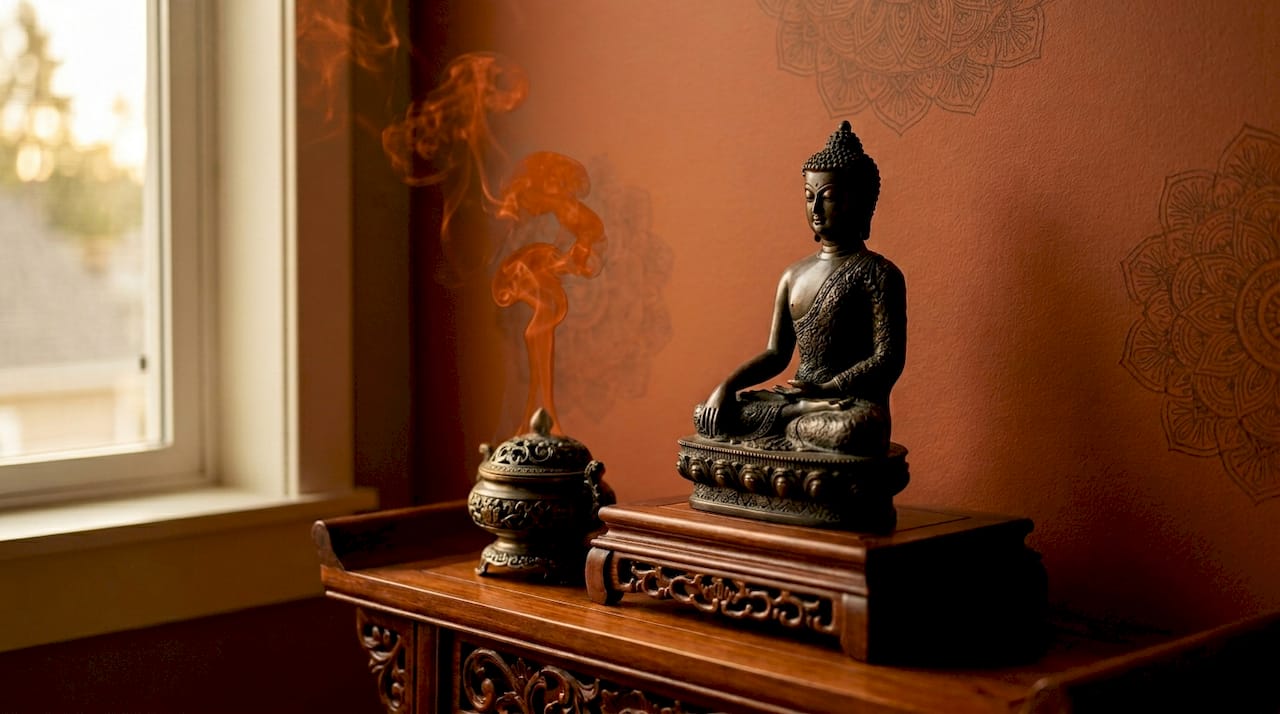
Why elevation matters as much as statue height
Elevation is the factor most buyers overlook when selecting Buddha statue dimensions. Statue base height should place the figure at or above eye level for a seated or standing viewer. The base of the statue should sit at least 36 inches from the floor in most home settings. Placing a statue on the floor or below waist height without a raised platform contradicts the cross-cultural tradition of honoring the figure above the viewer’s sightline.
This principle has practical consequences for size selection:
- A 10-inch statue on a 30-inch altar base reads as a commanding presence.
- The same 10-inch statue placed directly on a low coffee table reads as a decorative object.
- A 20-inch floor statue without elevation loses authority in a room with 9-foot ceilings.
- Elevation compensates for smaller statue height when space or budget limits your options.
Scale and elevation are the two variables that determine whether a statue commands respect or simply occupies space. The tradition of elevating sacred figures appears consistently across Theravada temple practice in Thailand and Sri Lanka, Mahayana altar arrangements in Vietnam and Cambodia, and Tibetan shrine construction. The principle is not decorative preference. It is structural to how the figure communicates reverence.
Pro Tip: A custom altar stand built to the correct height for your room solves both the elevation and scale problems simultaneously. Specify the finished height so the statue’s face sits at or just above your eye level when seated.
Diminutive statues, those under 8 inches, maintain full dignity when elevated correctly. A 6-inch bronze Amitabha on a 24-inch carved wooden altar base creates a focal point that a 14-inch statue sitting on the floor cannot match. The math of elevation outweighs the math of height.
Large vs small Buddha statues: what works in entryways and rooms
The debate between large vs small Buddha statues in entryways and living rooms resolves quickly when you apply the visual legibility test. A 6-inch statue looks refined on a dedicated altar but nearly disappears in a large living room. The “disappearance effect” is the most common sizing mistake buyers make, and it applies to both residential and commercial spaces.
| Space Type | Small Statue (under 10 in) | Large Statue (over 20 in) |
|---|---|---|
| Compact meditation corner | Ideal; intimate scale suits close viewing | Overpowering; disrupts calm atmosphere |
| Open-plan living room | Disappears without elevation or altar | Creates strong focal point when elevated |
| Entryway or foyer | Works if on a console at eye level | Commands presence; suits wide corridors |
| Outdoor garden | Too small; loses detail at distance | Correct scale; weather-resistant material needed |
| Home altar (dedicated) | Correct scale; allows ritual objects around it | Too dominant; crowds the altar surface |
Large statues create impactful focal points in spacious rooms and outdoor settings, but they require proportional surrounding space. A 28-inch bronze Shakyamuni placed against a blank wall in a 15-by-20-foot room works. The same statue in a 10-by-10-foot bedroom compresses the space and creates visual tension rather than calm.
Small statues suit close-up meditation corners, bedside tables, and intimate altars where the viewer sits within 3 feet of the piece. At that distance, a 5-inch statue with fine casting detail in bronze or carved wood delivers more presence than a large, roughly finished piece. Material quality and detail density compensate for reduced scale at close range.
Scale balance with other room elements is the deciding factor for mid-size spaces. A 14-inch statue on a mantel flanked by two 8-inch candle holders reads as intentional composition. The same statue on a bare shelf with no surrounding objects reads as an afterthought. Negative space around the statue amplifies its presence more reliably than increasing its size.
Selecting Buddha statue dimensions that match your intention
Your primary purpose for the statue determines the correct size range before you measure the room. Meditation statues, protection figures, and decor centerpieces each call for different dimensions and placement logic.
- Meditation focus: Choose a statue sized for close viewing, typically 5 to 14 inches, placed at seated eye level on a dedicated altar or shelf. Dhyana Mudra figures, with hands resting in the lap in the gesture of meditation, suit this purpose across most traditions.
- Entryway protection: Abhaya Mudra statues, with the right hand raised in the gesture of fearlessness, are the traditional choice for entryways. Size them at 10 to 18 inches and place them on a console or shelf at or above eye level for a standing adult.
- Decor centerpiece: Floor focal point statues in the 20 to 30 inch range suit open living areas. Pair with a dedicated pedestal and clear surrounding space.
- Outdoor shrine: Outdoor statues sized 24 to 36 inches weather best in bronze, granite, or natural stone. Cast resin degrades in direct sun and freeze-thaw cycles.
Material affects perceived scale in ways that pure measurement does not capture. A dark bronze statue reads as heavier and more commanding than a pale sandstone piece of identical height. Highly polished gilt bronze reads as larger than matte stone at the same dimensions. Factor material finish into your size decision, particularly for smaller statues where perceived weight matters.
Surrounding elements, including offering bowls, incense holders, and altar cloths, create a visual frame that amplifies statue presence. A well-composed altar with a 10-inch statue and thoughtfully placed objects outperforms a bare shelf with a 20-inch statue. Proportionality is a system, not a single measurement. For guidance on statue scale and harmony, the relationship between the figure and its environment defines the final result.
Key takeaways
Matching Buddha statue size to viewing distance and elevation is the single most reliable method for achieving dignified, harmonious placement in any space.
| Point | Details |
|---|---|
| Size by placement | Use location-specific height ranges: 3–5 in for bedside, 10–18 in for entryways, 24–36 in for outdoor shrines. |
| Elevation over height | A base height of at least 36 inches from the floor matters more than statue height alone. |
| Avoid the disappearance effect | Statues under 10 inches need elevation or altar framing to register in large rooms. |
| Match pose to purpose | Abhaya Mudra suits entryways; Dhyana Mudra suits meditation altars; pose guides size and placement. |
| Material affects perceived scale | Dark bronze reads larger and heavier than pale stone at identical dimensions. |
What I’ve learned about size, scale, and getting it right
Most buyers focus entirely on the statue itself and forget the room. I have seen a stunning 8-inch gilt bronze Amitabha from Cambodia placed on a low bookshelf in a large open-plan living area where it simply ceased to exist visually. The piece was museum quality. The placement erased it.
The counterintuitive truth is that a smaller statue, correctly elevated and framed, creates more presence than a larger statue placed without thought. The 36-inch base height rule is not arbitrary. It reflects centuries of temple and shrine design across Thailand, Sri Lanka, Cambodia, and Vietnam, where the figure’s face meets the worshipper’s gaze rather than requiring them to look down.
I also think buyers underestimate how much material finish shapes perceived size. A 12-inch dark patina bronze Shakyamuni from Thailand reads as a commanding object. A 12-inch pale resin reproduction of the same pose reads as a trinket. The size is identical. The presence is not.
The most common pitfall is buying a statue sized for the photograph rather than the space. Measure your placement surface, calculate the viewing distance, and apply the height ranges before you fall in love with a specific piece. The guidelines exist precisely because the eye is unreliable when shopping online or in a gallery. Trust the measurements first, then let the aesthetics confirm the choice.
— James, HDAsianArt.com
Find the right statue at HDAsianArt

HDAsianArt offers a curated selection of authentic Buddhist statues in bronze, stone, and wood sourced from Cambodia, Thailand, Indonesia, Sri Lanka, and Vietnam. Each piece is individually researched and described by specialists, with size and material details documented to support accurate placement decisions. Whether you need a compact 6-inch bronze for a meditation altar or a 30-inch stone figure for a garden shrine, the collection spans the full range of placement-appropriate dimensions. Worldwide insured DHL shipping and expert guidance make it straightforward to find a statue that fits both your space and your intention. Browse the collection at HDAsianArt.com to match the right piece to your specific placement context.
FAQ
What is the ideal size for a Buddha statue in a living room?
A living room console or mantel calls for a statue 12 to 20 inches tall, scaled to furniture proportions and surrounded by clear negative space. The statue should sit on a dedicated shelf or mantel rather than among unrelated objects.
How do I size a Buddha statue for an entryway?
Entryway statues work best at 10 to 18 inches, placed on a console at or above standing eye level. Abhaya Mudra figures, with the hand raised in the gesture of fearlessness, are the traditional choice for this placement.
Can a small Buddha statue work in a large room?
A small statue can work in a large room if elevated on an altar base that raises the figure to at least 36 inches from the floor and framed with intentional surrounding objects. Without elevation, a statue under 10 inches disappears visually in open-plan spaces.
What size Buddha statue is best for outdoor placement?
Outdoor statues sized 24 to 36 inches suit garden shrines and remain visually legible at typical garden viewing distances. Bronze, granite, and natural stone are the correct materials for outdoor use, as cast resin degrades under direct sun and temperature cycling.
Does Buddha statue pose affect the size I should choose?
Pose and mudra guide both size and placement. Dhyana Mudra meditation figures suit altars at 8 to 14 inches; Abhaya Mudra protection figures suit entryways at 10 to 18 inches. Matching pose to placement context produces a more coherent and respectful result than selecting size on aesthetics alone.
