



Nandi Bull Statue: Symbolism and Sculpture in Hindu Art
Nandi Bull Statue: Symbolism and Sculpture in Hindu Art
Walk into almost any Shiva temple in South India and you will find a bull sitting before the main shrine. That bull is Nandi, and he is far more than decoration. If you are choosing a Nandi bull statue for a collection or a home altar, the difference between a piece that reads as authentic and one that looks like a generic souvenir comes down to a few details: the bull's age, the carving of his saddle strap, and the way he is oriented. This guide explains what those details mean and how to check them before you buy.
Table of Contents
- Quick Takeaways
- Who Nandi Is in Hindu Tradition
- The Name and Its Meaning
- Why a Bull Serves Shiva
- Reading the Sculpture
- Placement in Shiva Temples and at Home
- Choosing a Nandi Statue
- Caring for a Nandi at Home
- Hindu Deity Accessories for a Shiva Altar
- Frequently Asked Questions
- References
Quick Takeaways
|
Key Insight |
Explanation |
|---|---|
|
Nandi faces the shrine |
Almost all Shiva temples show a seated Nandi, generally facing the main shrine. A statue turned to face the room loses the relationship it was made to express. |
|
A young bull is the traditional form |
Nandi is shown as a young bull with horns not yet fully developed. Heavy, mature horns depart from the convention, so ask the seller why the maker chose them. |
|
White carries meaning |
The white colour of the bull symbolises purity and justice. A white stone or white finish keeps that layer of meaning on your altar. |
|
Check the saddle strap |
A decorative strap encircles the body to secure a load or saddle and is tied in a knot. A clearly carved knot shows the sculptor understood the animal being depicted. |
|
Ask for the period and region |
A granite Nandi from Tamil Nadu dated 1000 to 1100 CE, during the Chola period, gives you a documented reference point. Be cautious with any age claim that comes without a source. |
|
Fresh flowers are the traditional offering |
Nandi images are often decorated with fresh flowers. Choose a finish and a base that can handle petals, water, and regular wiping. |
Who Nandi Is in Hindu Tradition
Nandi, also known as Nandikeshvara or Nandideva, is the bull vahana, or mount, of the Hindu god Shiva. Wikipedia describes him as the guardian deity of Kailash, the abode of Shiva. Almost all Shiva temples display stone images of a seated Nandi, generally facing the main shrine.
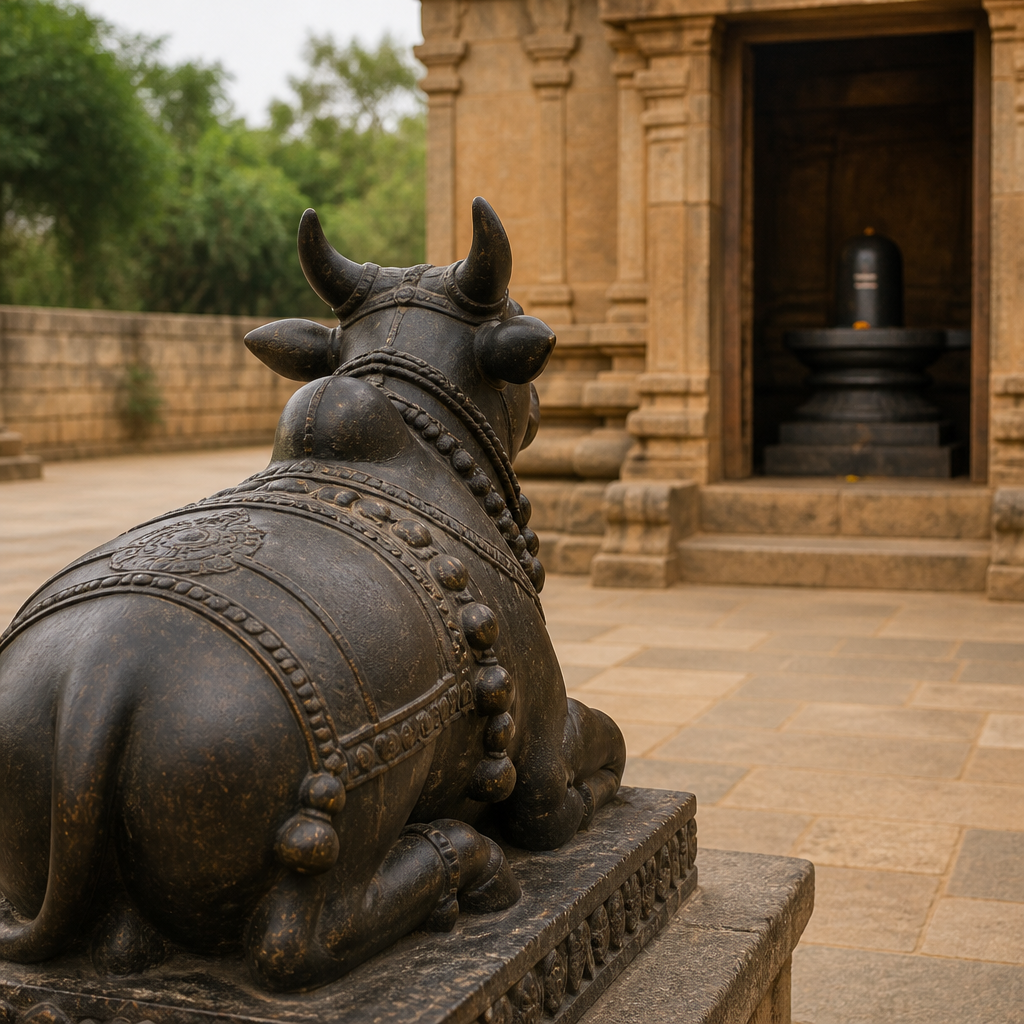
The Denver Art Museum's object page for a Chola-period granite Nandi describes him as Shiva's animal form, his means of transport, and his most ardent worshiper. That last role matters for collectors. Nandi is defined by devotion, so the best sculptures show him turned toward Shiva rather than posing for the viewer.
In practice, many buyers judge a Nandi as a cute animal figure and pick the one with the most playful face. That is the wrong test. Ask whether the bull reads as a devotee first and a livestock study second.
The Name and Its Meaning
The name Nandi is usually translated as "giving delight" or "giving joy." That single meaning should shape how you read any Nandi bull statue. The sculpture is meant to be calm, welcoming, and pleasant to look at, not fierce or threatening.
A carving that exaggerates aggression, with a lowered head, bared teeth, or a sharp stance, works against the name. A common mistake is to be drawn to these pieces because they look dramatic in photographs. On an altar, they tend to dominate the room in a way the tradition does not intend.
A Nandi statue is meant to give delight before it gives instruction.
Age is the other half of the story. The Denver Art Museum dates its granite example to between 1000 and 1100 CE, carved in Tamil Nadu during the reign of the Chola Empire. The Cholas ruled most of south India, Sri Lanka, and parts of the Indonesian island of Java, and they were active patrons of temple sculpture. A documented period like this gives you a fixed point when you compare pieces.
Why a Bull Serves Shiva
Hindu deities travel on vahanas, sacred animals that act as their mounts. According to the Denver Art Museum's notes, a vahana symbolises or complements the energy or character of its deity. Shiva's role includes destroying a world that has become evil in order to make way for beneficial change, and the steady, sturdy bull balances that force.
The connection goes back to early Indian culture, where dairy farming was the most important occupation. That is why the cow and bull carry such sacredness, and why bull imagery in Shiva art feels familiar and rural rather than remote. A bull on the altar is a reminder of daily life and sustenance as much as of divinity.
Nandi is also associated with fertility, and visitors to temples may touch the image for a blessing. Flowers and offerings are a regular part of his worship, so the sculpture needs to be built to live in a space where people handle it.
Pro tip: If the statue will sit on a home altar, decide the finish before you buy. The white colour that carries purity and justice is easy to choose at the start, and it is much harder to recreate convincingly with paint later.
Reading the Sculpture
Why Nandi Should Look Young
The Denver Art Museum notes that Nandi is always shown as a young bull, with horns not yet fully developed. Its example shows the bull licking his muzzle in rapt devotion to Shiva. Hindu gods are usually depicted as sixteen years old, a number signifying perfection, and Nandi follows the same logic of youthful completeness.
Judge the horns and the body together. A bull that looks like a mature working animal has moved away from the youthful form the tradition uses. A common mistake is to choose a statue for its size alone, when a larger, bulkier animal is often further from the original image.
Carved Details Worth Checking
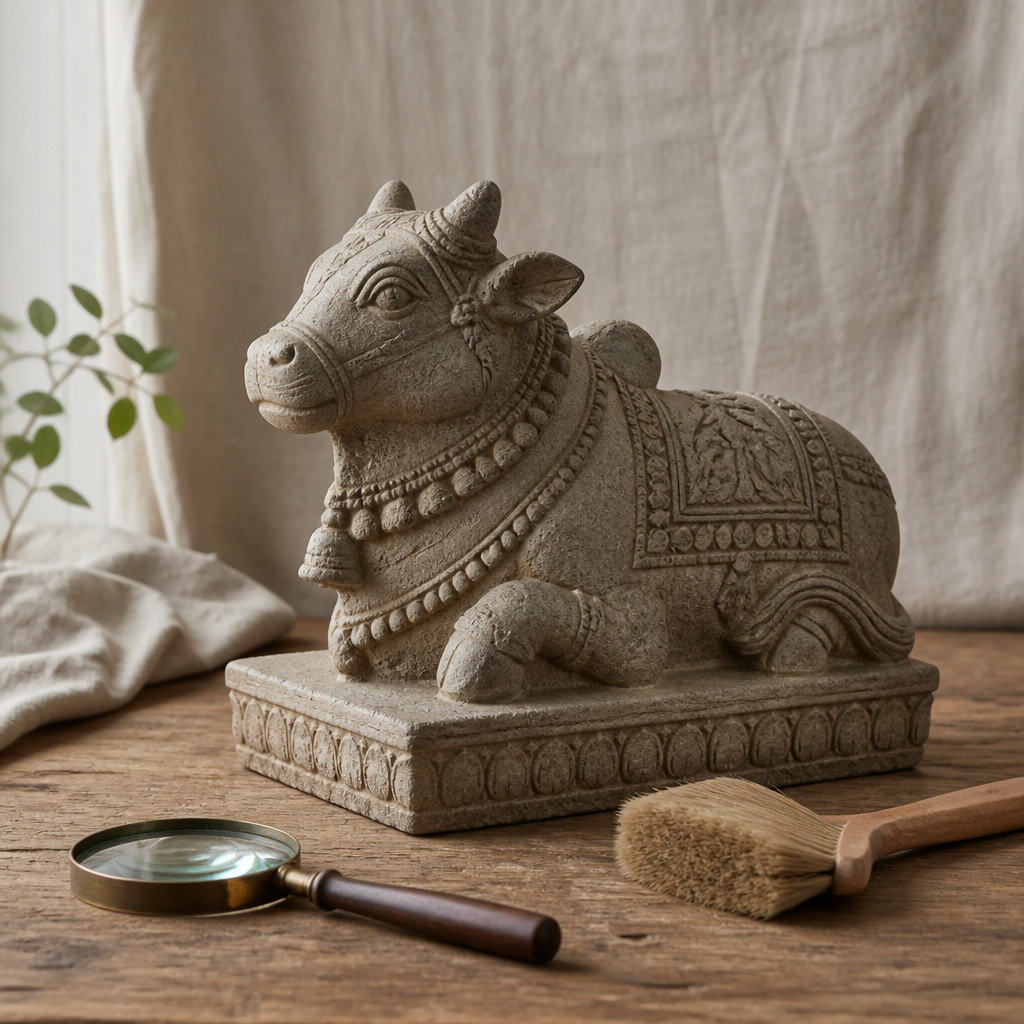
The surface of a good Nandi is enriched with shallow carving that heightens the volume of the body without cluttering it. Look for the blanket across the back, the flowers on the head, the double row of necklaces, and the leggings, which may be meant as leaves or flowers. These details should be realistic and proportionate.
A practical test is to look at the same detail on both sides of the statue. Uniform, repetitive marks on a piece sold as hand-carved are a warning sign, because good carving varies slightly with the hand that made it. Realistic detail is the clearest mark of skill.
The Saddle Strap and Knot
A decorative strap encircles the animal's body to secure a load or saddle on its back, and in the Denver example it is tied in a knot. That practical detail is easy to skip, but it is one of the best ways to judge whether a sculptor understood the animal. Subtle shifts in the body's position also make the figure seem almost in motion, so be wary of a statue that stands perfectly square.
Placement in Shiva Temples and at Home
In most Shiva temples, Nandi sits before the main shrine and faces it, which places him between the visitor and the deity. He is the devotee who faces Shiva, and the visitor sees him in relation to the god. A home altar should follow the same logic at a smaller scale.
The most common placement mistake is pushing Nandi against a wall with his back to the deity, or placing him by the door so he faces the room. Plan the altar before the statue arrives. Decide where Shiva's image or lingam sits, then set Nandi so he faces it.
Arranging Nandi on a Home Altar
Give him room. A crowded shelf of brass bowls, incense sticks, and framed photographs makes a bull disappear. Use a stable base at a height that lets the carving be seen from where you sit to pray, and keep it away from heat sources and direct sun that can fade painted finishes.
Indoor Placement and Shrine Rooms
In a dedicated shrine room, Nandi can sit on the floor in front of a raised Shiva image. On a wall shelf, keep the bull at a lower level than the deity so the relationship between them reads clearly. Avoid a high shelf where you have to look up at him, because that changes the sense of devotion the sculpture is meant to show.
Choosing a Nandi Statue
Three approaches cover most of what collectors and altar keepers buy. Each has a clear use and a different risk. The right choice depends on whether you are building a display piece, a working altar, or a gift.
Comparing Stone, Metal, and Painted Finishes
Stone suits anyone who wants the closest link to the Chola-period granite tradition. Cast metal gives weight and durability for a figure that is handled often. Painted or lacquered pieces work well where you want warm colour without a heavy object.
|
Approach |
Strengths |
Watch Out For |
|---|---|---|
|
Carved stone in the temple style |
Closest to the historical sculpture tradition, with surface detail that catches light and a sense of age. |
Porous stone can stain from oils and wet offerings, and it can crack if left outdoors through freezing weather. |
|
Cast metal |
Heavier and more durable for regular handling, with crisp detail in the saddle strap and necklaces. |
Casting quality varies, so check edges and seams. A dark metal finish drops the white symbolism of purity. |
|
Lacquered or painted figure |
Bright, warm finish suited to a home altar or decorative shelf, and easy to match with other pieces. |
Paint wears where people touch the figure, and water left on the surface can lift the finish. |
For a collector, I would choose carved stone every time, provided the seller can describe the maker and the finish. For a working altar that is dusted and offered to daily, cast metal is the more forgiving choice. Orders over £35 ship free, so it is practical to compare finishes side by side before you commit.
Caring for a Nandi at Home
The Denver Art Museum notes that Nandi sculptures are often decorated with fresh flowers and other offerings. Those offerings are central to how the figure is used, but they can damage the surface if handled carelessly. Set a small tray or saucer beneath the flowers so that water and petals do not sit in the carved folds of the blanket and necklaces.
Offerings That Protect the Surface
Fresh flowers are the traditional choice, and they should be removed once they wilt. Avoid oil or ghee on porous stone, which darkens the surface and attracts dust. For painted figures, wipe away any water immediately rather than letting it dry in the crevices.
Dusting, Humidity, and Handling
Dust the figure with a soft, dry brush, which keeps the carved details clean without scratching them. Lift the statue by its base rather than the horns, since the horns of a young bull are the most fragile part of the sculpture. In a damp British autumn or winter, keep it indoors and away from cold outside walls, because freeze and thaw cycles are hard on porous stone.
Hindu Deity Accessories for a Shiva Altar
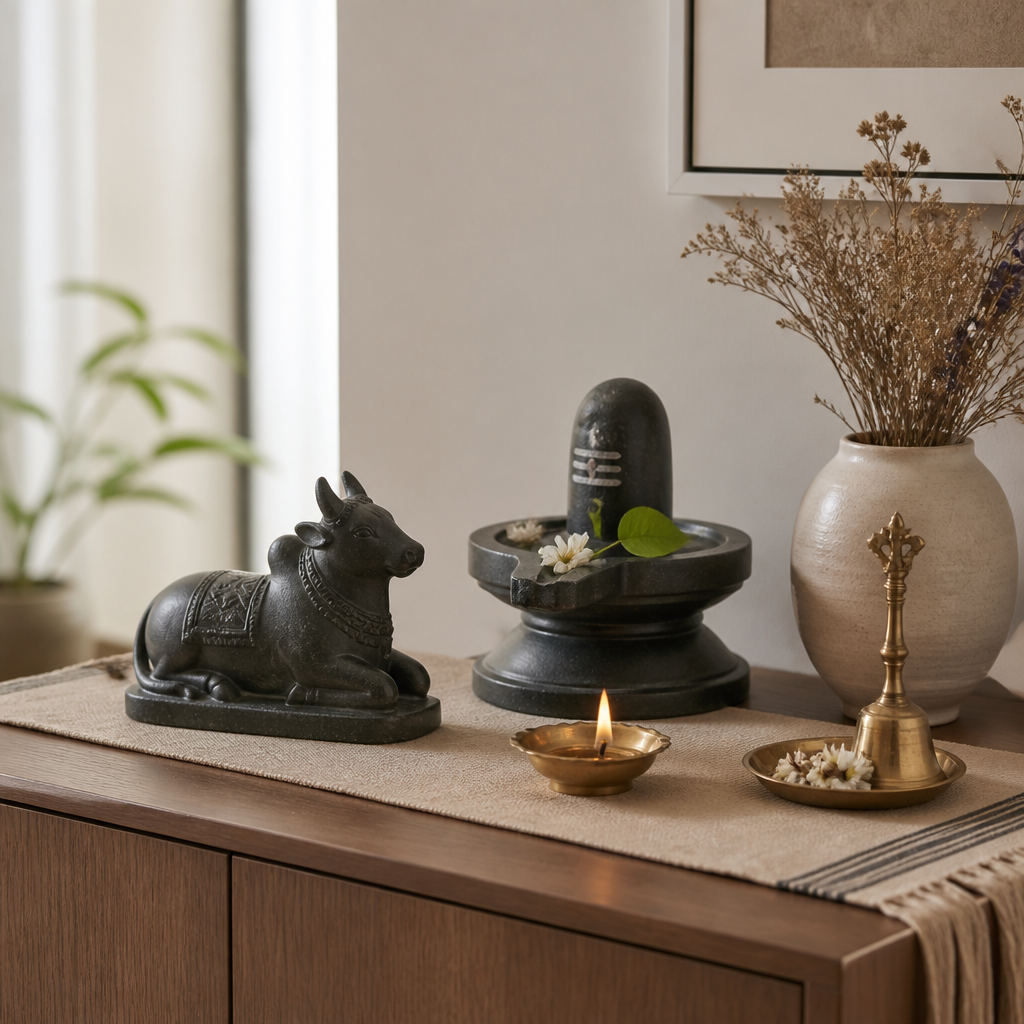
A Nandi looks most at home beside Shiva's image or lingam, and a few accessories help a small altar hold together. The aim is restraint. Choose items that support the scene rather than crowding it.
Small lamps, a brass water vessel, and an incense holder are the simplest additions. Rudraksha beads and bilva leaves also appear among Shiva-related practices in the Wikipedia overview, so they fit naturally on a Shiva altar. Keep these at the front edge, leaving Nandi a clear view of the deity.
When you look for a Nandi bull statue, consider the whole set rather than one piece in isolation. A Nandi and a Shiva image in matching materials make a calmer altar than a mix of finishes that compete. You can browse the full range of Hindu deity statues at HD Asian Art to compare materials side by side.
Pro tip: Photograph your altar before you add Nandi, then again after. If the bull blocks the view of the deity from where you normally sit, move him closer or lower him until both are visible.
Frequently Asked Questions
How can I tell if a Nandi bull statue follows the traditional form?
Look for a young bull with horns that are not fully developed, a calm devotional pose turned toward the deity, a decorative strap tied in a knot, and realistic carved detail on the blanket and necklaces.
Which direction should a Nandi statue face?
In most Shiva temples, Nandi sits before the main shrine and faces it. At home, set him so he faces Shiva's image or lingam rather than the door or the room.
Is a white Nandi better than a dark one?
For a Shiva altar, I would choose white stone or a white finish, because the white colour of the bull symbolises purity and justice. A dark metal figure is still a valid devotional object, but it drops one layer of that meaning.
What offerings are traditionally made to Nandi?
Fresh flowers are the most common offering, and sculptures are often decorated with them. Use a tray to catch water and petals, and avoid oil on porous stone.
Can a Nandi statue stay outdoors in the UK?
I would not leave one outside. Porous stone can stain from wet offerings and crack in freezing weather, so bring it indoors or under cover during damp, cold months.
Tell us in the comments how you chose the position or finish of your own Nandi, because the practical lessons from real homes are the ones that help other readers most.
We would love your feedback and any insights you would share with others. What perspective would you add?
References
-
Denver Art Museum object page on a Chola-period granite Sacred Bull of Shiva
-
Wikipedia overview of Nandi as the mount and guardian of Shiva
