



Comment prendre soin des statues en bronze antiques : guide du collectionneur
Comment prendre soin des statues en bronze antiques : guide du collectionneur
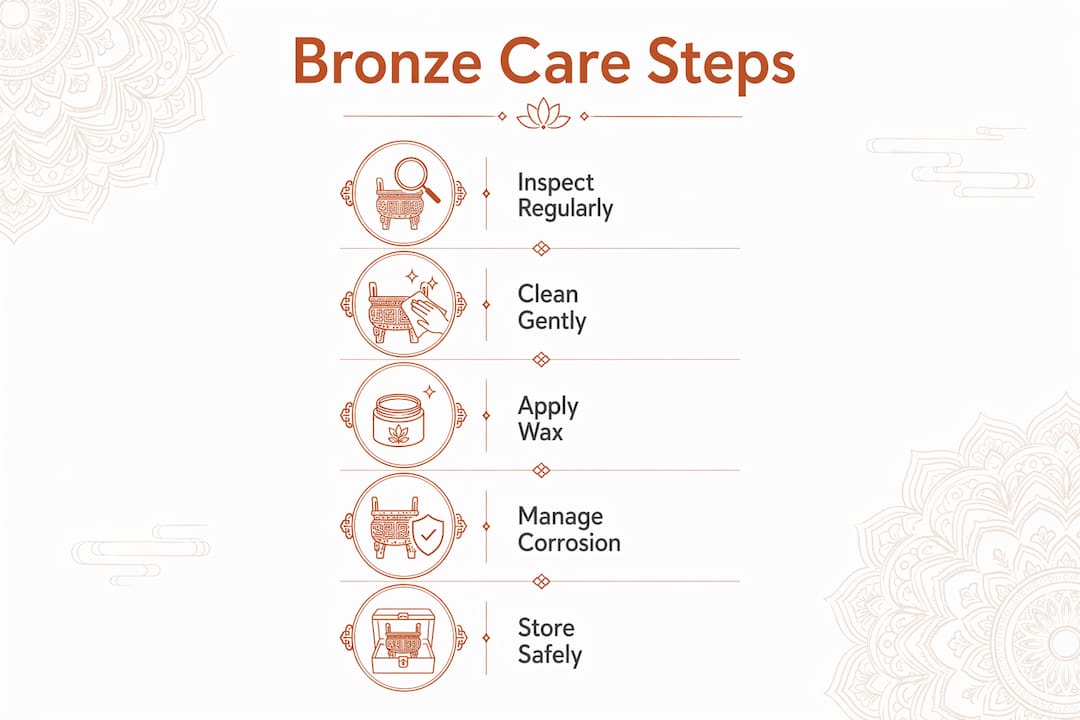
L'entretien approprié d'une statue en bronze antique se résume à quatre pratiques : un dépoussiérage doux, une application périodique de cire, un placement contrôlé et une action rapide contre la corrosion. Si vous ignorez l’une d’entre elles, la patine, l’intégrité structurelle et la valeur à long terme de la statue seront menacées.
Aperçu des pratiques de soins de base :
- Époussetez régulièrement avec une brosse douce ou un chiffon non pelucheux pour éliminer les polluants.
- Appliquer de la cire microcristalline ou de carnauba une à deux fois par an pour les pièces d'intérieur
- N'utilisez jamais de produit de polissage pour métaux, de solvants ou de tampons abrasifs sur les surfaces en bronze.
- Éloignez les statues des surfaces en bois qui émettent des gaz acides
- Surveillez les taches poudreuses vert vif, principal signe de corrosion active.
1. Entretien courant des statues en bronze antiques
Statues en bronze d'intérieur nécessitent un dépoussiérage et une application de cire 1 à 2 fois par an pour maintenir l’éclat et la protection. Les pièces extérieures sont confrontées à des conditions plus difficiles. La durée de vie du revêtement de cire sur les statues de bronze extérieures est de 1 à 3 ans selon le climat et l'exposition, les programmes d'entretien extérieur doivent donc être ajustés en conséquence.
Dépoussiérage et nettoyage :
- Utilisez un chiffon en microfibre sec ou une brosse à poils doux pour le dépoussiérage de routine
- Un dépoussiérage en douceur empêche la corrosion déclenchée par les polluants atmosphériques se déposant sur la surface
- Pour les crevasses, une brosse à dents souple trempée dans de la cire microcristalline soulève la saleté sans la rayer
- N'utilisez jamais d'eau sur les bronzes d'intérieur ; le dépoussiérage seul suffit pour la plupart des pièces
Epilation :
- Appliquez de la cire microcristalline ou de la cire 100 % carnauba (comme la Johnson's Paste Wax) avec une brosse douce.
- Réchauffer la surface du bronze avant le cirage améliore l’absorption ; le Service des parcs nationaux a utilisé des torches au propane pour chauffer les surfaces à environ 175°F lors de la conservation professionnelle du monument de Kosciuszko
- Pour un usage domestique, un sèche-cheveux à basse température réchauffe adéquatement les petites zones.
- Laissez la cire durcir, puis polissez avec un chiffon non pelucheux pour une finition propre.
Facteurs environnementaux :
- Les gaz acides provenant du bois comme le contreplaqué et le chêne accélèrent la corrosion du bronze ; éloignez les statues des meubles en bois et des armoires en bois scellées
- Évitez les endroits présentant de grandes fluctuations de température, qui augmentent le taux de changement de surface
- La pollution due à la circulation s'infiltre dans les espaces intérieurs au fil du temps et corrode les surfaces en bronze
Conseil de pro : Soulevez les statues de bronze avec un chiffon propre plutôt qu'à mains nues. La sueur est acide et corrode la surface métallique même à travers une barrière de cire.
2. Identifier et gérer la corrosion causée par la maladie du bronze
Corrosion active sur bronze apparaît sous forme de taches poudreuses vert vif et nécessite un traitement professionnel urgent pour éviter des dommages irréversibles par piqûres. Cette condition, appelée maladie du bronze, est causée par la réaction des chlorures avec le cuivre présent dans l'alliage. Non traité, il ronge progressivement le métal.
Reconnaître la différence :
- Patine naturelle stable : une couche uniforme brune ou vert foncé qui se forme lentement au fil des décennies
- Corrosion active (maladie du bronze) : taches vertes brillantes et poudreuses qui apparaissent soudainement et se propagent
Que faire :
- Pour une très petite zone isolée, l’application immédiate de cire peut ralentir temporairement le processus.
- Tout ce qui dépasse une imperfection mineure nécessite un restaurateur professionnel, pas un remède maison.
- N'essayez pas de frotter ou d'enlever la poudre verte ; cela propage la contamination par le chlorure
Attention : Ignorer la maladie du bronze ne la ralentit pas. La corrosion provoquée par les chlorures est auto-entretenue et continuera à creuser et à détruire le métal sous-jacent jusqu'à ce que la source de chlorure soit neutralisée par un restaurateur.
Conseil de pro : Inspectez régulièrement vos statues en bronze. La détection précoce de petites taches poudreuses permet à un restaurateur d'intervenir avant que des dommages structurels ne surviennent.
3. Conseils professionnels en matière de restauration et de repatinage
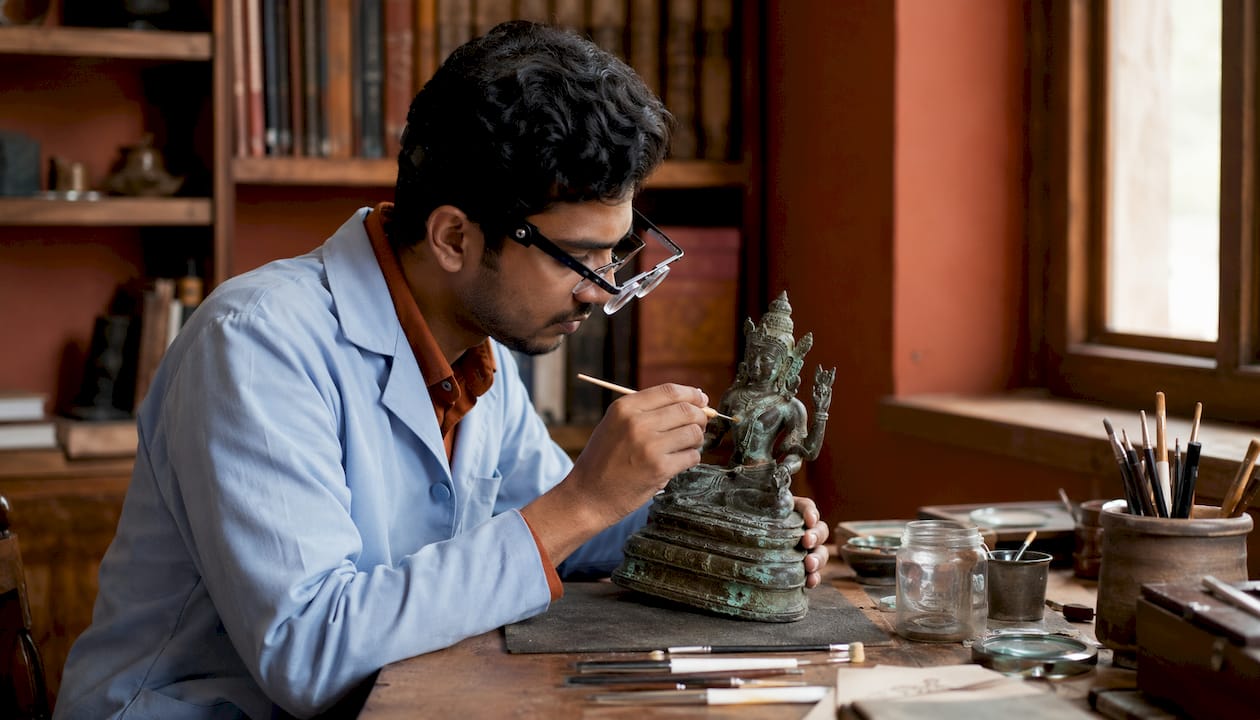
La repatination restaure les surfaces en bronze endommagées et ne doit être effectuée que par un restaurateur professionnel pour préserver l'intégrité de l'œuvre d'art et garantir que les résultats sont réversibles. Les propriétaires qui tentent une repatination ou un nettoyage agressif à la maison risquent une perte permanente des détails de surface d'origine.
Ce qu'implique la restauration professionnelle :
- Examen des surfaces pour détecter les finitions d'origine, y compris la dorure à la feuille ou les patines artificielles, avant le début de tout nettoyage
- Nettoyage sélectif à l'eau moyenne pression ou à la vapeur haute pression, sans produits chimiques ni abrasifs
- Traitement localisé de la corrosion active et élimination des revêtements défaillants
- Réparations physiques utilisant des méthodes traditionnelles : vérification des fixations de fonderie, réparation des trous et finitions manuelles pour correspondre à la surface environnante
- Réapplication de couches de cire protectrices sur une surface chauffée comme étape finale
Ce que les propriétaires doivent éviter :
- Le sablage et le grenaillage aux billes de verre éliminent le métal de la surface et détruisent les détails sculpturaux originaux.
- Les polis métalliques agressifs sont l'une des principales causes de dommages permanents aux bronzes antiques.
- Les abrasifs chimiques enlèvent la couche de patine, qui est à la fois un élément esthétique et historique de la pièce.
La repatination est envisagée lorsque la corrosion active a affecté une grande partie de la surface ou lorsque la patine d'origine a été considérablement endommagée. Si une statue a développé une patine verte encore naturelle, les restaurateurs conseillent de la laisser en place et de l'entretenir avec de la cire.
4. Avis d'experts de HDAsianArt sur l'entretien et la collection des statues en bronze
L’approche de HDAsianArt envers les statues en bronze antiques se concentre sur une intervention minimale et le respect des surfaces d’origine. La patine d'un bronze antique n'est pas un défaut à corriger. Il s’agit d’un enregistrement documenté de l’âge, de l’environnement et de l’histoire de l’objet, et il contribue directement à l’authenticité et à la valeur de la pièce.
Principes clés des spécialistes HDAsianArt :
- La vérification de la provenance et l'examen de la surface sont les premières étapes avant toute décision d'entretien ou de restauration.
- Des pièces de qualité musée, comme celles de Cambodge, Thaïlande, et Indonésie, portent souvent historiques de surface authentifiés qu'il faut préserver
- Les conditions d’affichage comptent autant que le nettoyage ; une humidité stable, une température modérée et une distance par rapport aux matériaux acides protègent le bronze à long terme
- Pour des questions d'entretien complexes ou une suspicion de corrosion active, consulter un spécialiste de confiance est toujours la bonne solution.
Environnemental et conditions de stockage sont aussi importants que le nettoyage dans la préservation du bronze. Une pièce stockée ou exposée dans de mauvaises conditions se détériorera quel que soit le soin avec lequel elle est nettoyée.
5. Techniques de stockage sécurisées lorsqu’elles ne sont pas exposées
Les statues en bronze entreposées sont confrontées à des risques différents de ceux exposés. Les principales menaces sont l’humidité emprisonnée, les matériaux d’emballage inadaptés et un mauvais contrôle environnemental.
Directives de stockage :
- N’enveloppez jamais le bronze directement dans du papier bulle ou du plastique. Le bronze retient l’humidité et lorsque le métal se réchauffe, cette humidité s’évapore. Piégé dans le plastique, il crée de la corrosion sous l’emballage.
- Utilisez du papier de soie sans acide ou un chiffon en coton propre comme première couche avant tout emballage extérieur.
- Conserver dans un endroit avec une humidité stable et modérée. De larges variations d’humidité accélèrent les réactions de surface sur le bronze.
- Évitez les sous-sols et les greniers où la température et l'humidité fluctuent selon les saisons.
- Placez les statues sur des surfaces rembourrées et stables pour éviter d'endommager les détails sculpturaux fins.
- Vérifiez périodiquement les pièces stockées pour détecter tout signe de taches vertes poudreuses, le même signe d'avertissement qui s'applique aux pièces exposées.
Les déversements de liquide lors de la manipulation constituent un risque distinct. Si de l'eau, du vin ou tout autre liquide entre en contact avec le bronze, retirez-le immédiatement avec un chiffon sec. Le liquide laissé sécher sur le bronze grave la surface selon la forme exacte du déversement.
Points clés à retenir
Une bonne préservation de la statue en bronze nécessite un cirage constant, un nettoyage en douceur, un stockage contrôlé et une aide professionnelle pour toute corrosion active.
| Indiquer | Détails |
|---|---|
| Fréquence de cire | Appliquez de la cire 1 à 2 fois par an à l’intérieur ; les revêtements de cire extérieurs durent 1 à 3 ans et nécessitent un renouvellement régulier. |
| Évitez les nettoyages agressifs | Les produits de polissage et les abrasifs pour métaux endommagent de manière permanente la patine et les détails de surface des bronzes antiques. |
| Maladie du bronze | Des taches poudreuses vert vif signalent une corrosion active ; consultez rapidement un restaurateur, ne frottez pas. |
| Repatination | Seul un restaurateur professionnel doit repatiner ou restaurer une surface en bronze endommagée. |
| Stockage | N'emballez jamais le bronze dans du plastique ; utiliser des matériaux sans acide et des conditions d’humidité stables et modérées. |
HDAsianArt propose une sélection de statues en bronze antiques de qualité musée provenant de toute l'Asie du Sud-Est, chacune étant étudiée et documentée individuellement. Que vous collectionniez des figures de bodhisattva javanais ou Bouddhas en bronze assis, des soins appropriés commencent par la compréhension de ce que vous possédez. Découvrez la collection complète sur HDAsiatiqueArt.

Recommandé
- Comment authentifier des statues de Bouddha en bronze antique – HD Asian Art
- Comment conserver une sculpture bouddhiste en pierre antique en toute sécurité – HD Asian Art
- Comment dater des images antiques de Bouddha thaïlandais : Guide du collectionneur – HD Asian Art
- Types de moulage en bronze des temples asiatiques : guide de l’érudit – HD Asian Art
