



Was Dvarapala in der Tempelkunst bedeutet und warum Wächter wichtig sind
Was Dvarapala in der Tempelkunst bedeutet und warum Wächter wichtig sind
A dvarapala (Sanskrit: dvāra = Tür, pāla = Beschützer) ist ein Wächter der Tempeltür, dessen Aufgabe es ist, die Grenze zwischen der profanen Welt draußen und dem heiligen Raum drinnen zu markieren und zu verteidigen. Die Figur steht fast immer an den Eingängen hinduistischer, buddhistischer und jainistischer Tempel paarweise statt allein. Seine Kernfunktion ändert sich nie, auch wenn sich Gesicht, Waffen und Körperhaltung je nach Region und Epoche ändern.
- Bewacht die Grenze zwischen heiligem und gewöhnlichem Raum
- Weist feindliche Kräfte aus dem Heiligtum ab
- Kommt in der hinduistischen, buddhistischen und jainistischen Tempelarchitektur vor
- Normalerweise als passendes Paar neben einer Tür installiert
Wichtige Erkenntnisse
Dvarapalas markieren die Grenze zwischen heiligem und profanem Raum in hinduistischen, buddhistischen und jainistischen Tempeln durch Waffen-, Haltungs- und Ausdrucksmöglichkeiten, die direkt mit der Gottheit verknüpft sind, der sie dienen.
| Punkt | Details |
|---|---|
| Kernbedeutung | Dvāra (Tür) plus pāla (Beschützer) definieren einen Wächter, dessen Aufgabe die Schwellenverteidigung ist. |
| Die Kopplung ist Standard | Wächter erscheinen fast immer in gleichmäßiger Anzahl, selten allein, an den Tempeleingängen. |
| Waffen signalisieren Treue | Muschel und Diskus deuten auf einen vaishnavitischen Dienst hin; Dreizack und Reißzähne deuten auf Shaivit hin. |
| Die Region verrät das Alter | Pallava-Zurückhaltung, Chola-Wildheit und Vijayanagar-Ornament zeichnen eine sichtbare Zeitlinie nach. |
| Museumsetiketten heben sich bewusst ab | Doppelte Identifikationen wie „Shiva oder Tempelwächter“ spiegeln echte ikonografische Überschneidungen wider. |
Inhaltsverzeichnis
Was bedeutet Dvarapala in der Geschichte der Tempelkunst?
Das Wort lässt sich sauber aufschlüsseln: dvāra bedeutet Tor oder Tür, pāla bedeutet Beschützer oder Hüter. Zusammengefasst bedeutet dvarapala „Türhüter“, ein Begriff, der immer wieder vorkommt Vaishnava-Lehrtexte Beschreibung der Wächter der göttlichen Wohnstätte. Das Konzept geht auf jeden einzelnen Tempel zurück, den Sie heute besuchen können, und hat seine Wurzeln in der Agama- und Purana-Literatur, die das Allerheiligste als einen Raum behandelt, der einen geregelten Zugang erfordert, und nicht als einen Ort, an dem man frei herumwandern kann.
Archäologische Beweise belegen dies. Wächterfiguren, die in Torana-Tore und Vedika-Geländer eingemeißelt sind, tauchen an frühbuddhistischen Stätten wie Bharhut auf, lange vor den kunstvollen steinernen Dvarapalas mittelalterlicher südindischer Tempel. Von dort gelangte das Konzept über Handelsrouten und religiösen Austausch nach Südostasien, wo es in Java deutlich lokale Züge annahm. Kambodscha, und darüber hinaus.
- Sanskrit-Zusammensetzung: dvāra (Tür) + pāla (Beschützer)
- Frühe Auftritte in Torana- und Vedika-Schnitzereien an Orten wie Bharhut
- Lehrbegründung in Pancaratra- und Agama-Texten
- Übertragung nach Südostasien durch jahrhundertelangen Kulturkontakt
Wie erkennt man eine Dvarapala-Statue?
Dvarapalas haben eine wiedererkennbare visuelle Sprache, wenn man weiß, wonach man suchen muss. Die meisten sind bewaffnet, muskulös und wachsam und scheinen gewalttätig zu sein, selbst wenn sie sich nie bewegen. Die Gada (Streitkolben) ist die gebräuchlichste Waffe, aber je nachdem, welcher Gottheit der Wächter dient, können Sie stattdessen auch eine Shankha (Muschel), Chakra (Diskus) oder Pascha (Schlinge) sehen.
- Waffen signalisieren Treue. Eine Muschel und ein Diskus weisen auf den Dienst der Vaishnaviten hin; ein Dreizack oder eine Schlinge lehnt sich an Shaivite.
- Die Haltung variiert je nach Tradition. Es dominieren stehende Figuren Indien; Javanische Wächter erscheinen oft in einer geduckten oder knienden Haltung, die als bekannt ist jèngkèng.
- Der Ausdruck entspricht dem hingebungsvollen Temperament. Ruhige, gefasste Gesichter begleiten meist die Wächter der Vaishnaviten, während die Wildheit mit den Reißzähnen und großen Augen die Shaiviten und viele mittelalterliche Vorbilder kennzeichnet.
- Die Skala folgt den Tala-Maßen. Traditionelle architektonische Proportionssysteme wie Saptha-Tala (Sieben-Tala) oder Nava-Tala (Neun-Tala) verleihen Dvarapalas ihre überlebensgroße Gestalt, die die menschlichen Besucher, die unter ihnen vorbeigehen, oft in den Schatten stellt.
Profi-Tipp: Beurteilen Sie die Tradition eines Dvarapala nicht allein nach der Größe. Ein bescheidener Wächter mit ruhigem Gesicht, der ein Muschelhorn hält, ist mit ziemlicher Sicherheit ein Vaishnaviter, während eine übergroße Figur mit gefletschten Reißzähnen und einem Dreizack auf die Shaivite-Ikonographie hinweist, unabhängig davon, wie groß einer der beiden ist.
Welche Rolle spielen Dvarapalas in allen Religionen?
Hinduistische Tempel weisen Dvarapalas-Aufgaben zu, die je nach der vorherrschenden Gottheit wechseln. Vaishnavitische Wächter werden häufig genannt Jaya und Vijaya, komponierte Figuren mit Muschel und Diskus, die Vishnus eigene Embleme widerspiegeln. Shaivite-Wächter tauschen diese Gelassenheit gegen Wildheit und erscheinen mit Dreizack, verfilztem Haar und entblößten Reißzähnen, die Shivas wildere Aspekte widerspiegeln.
Buddhistische Tempel interpretieren die Rolle durch Bodhisattva- und Yaksha-Formen neu ChinaDie buddhistische Tradition entwickelte ihre eigene Parallele im Wilden Renwang (Gütige Könige) bewachen die Tempeltore. Die Jain-Architektur platziert Pförtner an Türrahmen und im Inneren samavasaraṇa, die symbolische Versammlungshalle, die in der Jain-Kosmologie dargestellt wird. In allen drei Traditionen entlehnt der Wächter seine Waffen und sein Temperament von der Gottheit, die er beschützt, ein Muster, das durch bestätigt wird Vergleichende ikonografische Untersuchungen von Tempelwächterfiguren.
- Hindu: gottheitsspezifische Paare, Jaya–Vijaya im Vaishnavismus, heftigere Formen im Shaivismus
- Buddhistisch: Bodhisattva- und Yaksha-Wächtertypen sowie die chinesische Renwang-Parallele
- Jain: Pförtner an Türrahmen und in der Samavasaraṇa-Versammlungshalle
- Die Ikonographie orientiert sich konsequent an der Hauptgottheit, die bewacht wird
Wo werden Dvarapalas in der Tempelarchitektur platziert?
Die Platzierung folgt einer strengen Logik, die an die heilige Geometrie gebunden ist. Sie finden Dvarapalas am Haupteingang, am Mandapa (der Säulenhalle, die zum Heiligtum führt) und am Eingang des Heiligtums selbst, dem am stärksten eingeschränkten Punkt im gesamten Gebäude. Jede Platzierung stellt einen Schritt tiefer in den geweihten Raum dar, und die Anwesenheit des Wächters signalisiert genau, wie viel rituellen Zugang ein Besucher durch das Erreichen dieses Punktes verdient hat.
Die Paarung ähnelt eher einer Regel als einer Präferenz. Wissenschaftler weisen darauf hin, dass Dvarapalas fast immer in gerader Anzahl aufgestellt werden, wobei eine einzelne freistehende Figur so selten ist, dass ihr alleiniges Erscheinen oft eher auf einen kleinen oder informellen Schrein als auf einen großen Tempel hinweist. Die Anzahl steigt typischerweise mit der Komplexität eines Tempels, beginnend mit einem Paar bei einer einfachen Schwelle bis hin zu mehreren Paaren bei größeren Komplexen.
Das ist nicht nur dekorative Logik. Wissenschaftliche Arbeit zum Die Dwarapala-Statuen des Adan-Adan-Tempels umrahmt die Figuren als funktionale Markierungen der Grenze zwischen heiligen und profanen Zonen, konzeptionell verbunden mit der Symbolik des Mount Meru in der Tempelanordnung. Die in den Fels gehauenen Wächter, die die Höhleneingänge in Ellora flankieren, folgen dem gleichen Prinzip in monumentalem Maßstab.
- Eingänge, Mandapa-Hallen und Heiligtumstüren bekommen jeweils ihre eigenen Wächter
- Paare mit gerader Nummer sind die Norm; Solofiguren markieren normalerweise kleinere Schreine
- Die Zählung steigt mit der Tempelskala, bis hin zu acht oder zwölf Ziffern an größeren Standorten
- Die Platzierung kodiert den rituellen Zugang, nicht nur die architektonische Symmetrie
Wie haben sich die Dvarapala-Stile über Regionen und Epochen hinweg verändert?
Die indische Dvarapala-Skulptur folgt einem klaren stilistischen Bogen. Wächter aus der Pallava-Zeit (ungefähr 7. bis 9. Jahrhundert) tendieren zur Zurückhaltung, mit einfacheren Ornamenten und ruhigeren Ausdrücken. Arbeiten aus der Chola-Zeit (9. bis 13. Jahrhundert) streben nach Wildheit, schärferen Reißzähnen, gespannterer Muskulatur und dramatischerer Waffendarstellung. In der Vijayanagar-Zeit (14. bis 17. Jahrhundert) sind die Wächter stark verziert, reich an Schmuck und dekorativen Details, was die Vorliebe dieser Zeit für Ausarbeitung statt Zurückhaltung widerspiegelt.
Südostasien entwickelte eine völlig eigene visuelle Grammatik. Javanische und breitere indonesische Dvarapalas übernehmen oft die geduckte Haltung jèngkèng Haltung statt aufrechtem Stehen, eine regionale Konvention, die sich von den indischen Normen unterscheidet. Die Adan-Adan-Tempel-Studie identifiziert zeitspezifische Merkmale, die es Forschern ermöglichen, Beispiele in die antiken Mataram-, Kadiri-, Singhasari- und Majapahit-Zeiten zu datieren, wobei jede ihren eigenen ornamentalen Fingerabdruck aufweist. Vor allem Wächter aus der Majapahit-Ära haben ein wuchtigeres, stärker verziertes Aussehen, das spätere Sammler und Gelehrte aus der Kolonialzeit zum Aufbau der heute noch referenzierten Klassifizierungssysteme verwendeten. HDAsianArts Überblick über Indonesische Hindu-Skulptur zeichnet nach, wie sich diese regionalen Formen zusammen mit umfassenderen stilistischen Veränderungen in der javanischen religiösen Kunst entwickelten.
- Pallava: zurückhaltendes Ornament, ruhigerer Ausdruck
- Chola: schärfere Details, schärfere Muskulatur
- Vijayanagar: schwere Verzierung, dichter Schmuck
- Java/Indonesien: geduckte Jèngkèng-Haltung, deutliche Masse aus der Majapahit-Ära
Aus welchen Materialien wurden Dvarapalas hergestellt?
Stein dominiert die erhaltenen Aufzeichnungen, wobei im Süden häufig Granit vorkommt Indien und Andesit ist das Material der Wahl in weiten Teilen von Java und Indonesien. Durch den Bronzeguss entstanden kleinere, oft tragbarere Wächterfiguren, während Holzschnitzereien weit verbreitet waren, aber nur selten Jahrhunderte der Feuchtigkeit und Insektenschäden überstanden, wie dies bei Stein und Bronze der Fall war. Diese Überlebensvoreingenommenheit verzerrt die Fakten: Was man heute in Museen sieht, repräsentiert zu stark langlebige Materialien, nicht unbedingt das, was in der Vergangenheit am häufigsten vorkam.
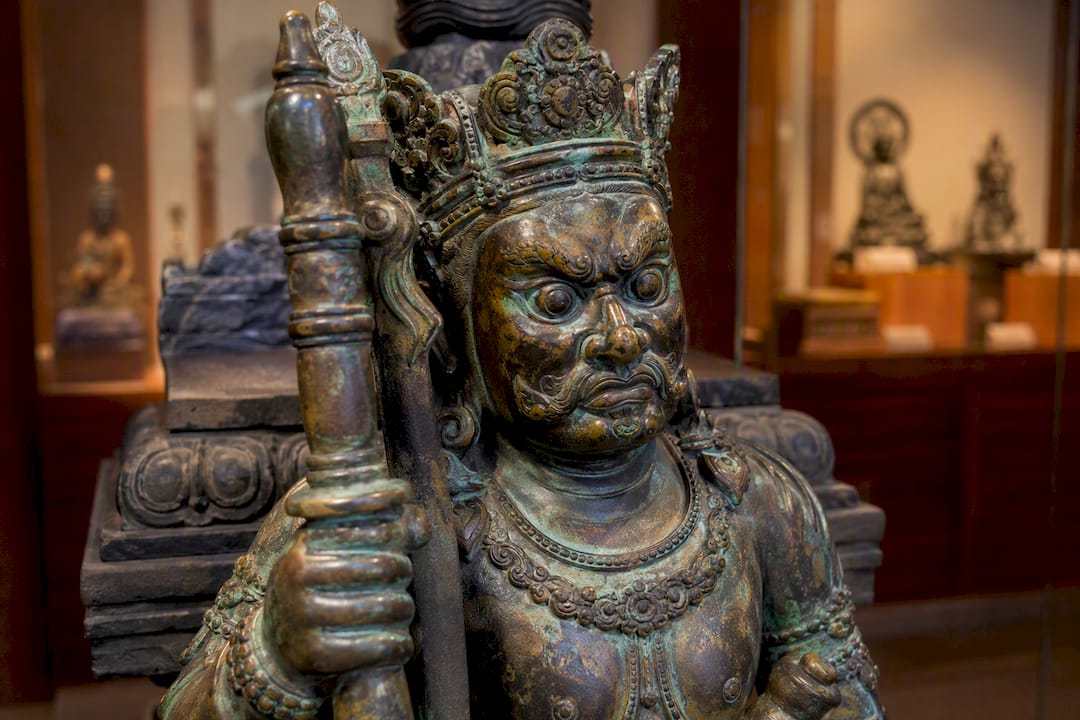
Größe folgte Funktion. Ein Wächter am Eingang eines Heiligtums neigte zu den zuvor beschriebenen größeren Nava-Tala-Proportionen, während kleinere flankierende Figuren an Nebeneingängen oft eher menschliche Maßstäbe hatten.
Museumsetiketten zeigen Ihnen, wie Sie ein Stück richtig lesen. Der Katalogeintrag des Met für ein „Stehender Shiva oder Tempelwächter (Dvarapala)„Datiert die Skulptur ungefähr in die erste Hälfte des zehnten Jahrhunderts und listet neben ihrer doppelten Identifizierung auch Material, Abmessungen und Herkunft auf. Wenn ein Museum zwischen zwei Labels wie diesem abweicht, ist das keine Unentschlossenheit. Es spiegelt tatsächlich überlappende ikonografische Signale wider, die Kuratoren mit Provenienzaufzeichnungen abwägen, und nicht ein einzelnes Stilmerkmal.
- Stein (Granit, Andesit) ist am besten erhalten und dominiert die Museumssammlungen
- Aus Bronze entstanden kleinere, tragbarere Wächterfiguren
- Holz war weit verbreitet, überlebt aber nur selten langfristig
- Auf Museumsetiketten sind in der Regel Kultur, Datum, Material, Abmessungen und Herkunft aufgeführt
Wie beurteilen Sammler die Authentizität eines Dvarapala?
HDAsianArt dokumentiert Herkunft, Patina, Werkzeugspuren und Motivdetails jeder Wächterfigur, die durch seine Sammlung geht, dieselben Kategorien, auf die sich ein Museumskatalogeintrag stützt. Die Konsistenz der Patina über ein Stück hinweg lässt sich am schnellsten erkennen: Gealterter Stein oder Bronze entwickelt im Laufe der Jahrhunderte eine gleichmäßige Oberflächenveränderung, die sich nur schwer überzeugend über eine gesamte Skulptur hinweg nachahmen lässt.
Ikonografische Markierungen, die an Zeit und Region gebunden sind, sind ebenso wichtig wie der Zustand der Oberfläche. Das Waffenset, der Kopfschmuck und die Wildheit des Gesichts eines Wächters sollten mit der Epoche und Region übereinstimmen, die ein Verkäufer behauptet, und nicht im Widerspruch dazu stehen.
Eine Muschel und ein Diskus an einem Wächter mit ruhigem Gesicht erzählen eine andere Geschichte als ein Dreizack und Reißzähne an einem knurrenden Wächter, und dieser Unterschied sollte immer mit der für das Stück beanspruchten Zeit und Region übereinstimmen. Nicht übereinstimmende Signale sind das Erste, was es wert ist, vor der Authentizität in Frage gestellt zu werden, nicht danach.
Profi-Tipp: Wenn ein Händler nicht erklären kann, warum das Waffenset eines Wächters mit dem angegebenen Zeitraum übereinstimmt, betrachten Sie diese Lücke als Warnsignal und nicht als Fußnote. Der HDAsianArt-Katalog mit sitzenden javanischen Bronze-Buddhafiguren zeigt den Grad an Material- und Herkunftsdetails, den man von jedem Stück dieser Kategorie erwarten kann.
Worauf sollten Sie bei einer Dvarapala-Statue eigentlich achten?
Die meist beiläufige Berichterstattung über Dvarapalas hört bei „Tempelwächter“ auf und geht weiter, was unterschätzt, wie viele Informationen in den Waffen und dem Gesichtsausdruck einer einzelnen Figur stecken. Die eigentliche Fähigkeit besteht nicht darin, zu wissen, dass ein Streitkolben Schutz signalisiert. Es geht darum zu erkennen, dass ein Muschelhorn in Kombination mit einem ruhigen Gesicht in eine Richtung zeigt, während ein Dreizack in Kombination mit Reißzähnen in eine andere zeigt, und dass die Diskrepanz zwischen diesen Signalen normalerweise der Ausgangspunkt für Authentizitätsfragen ist.
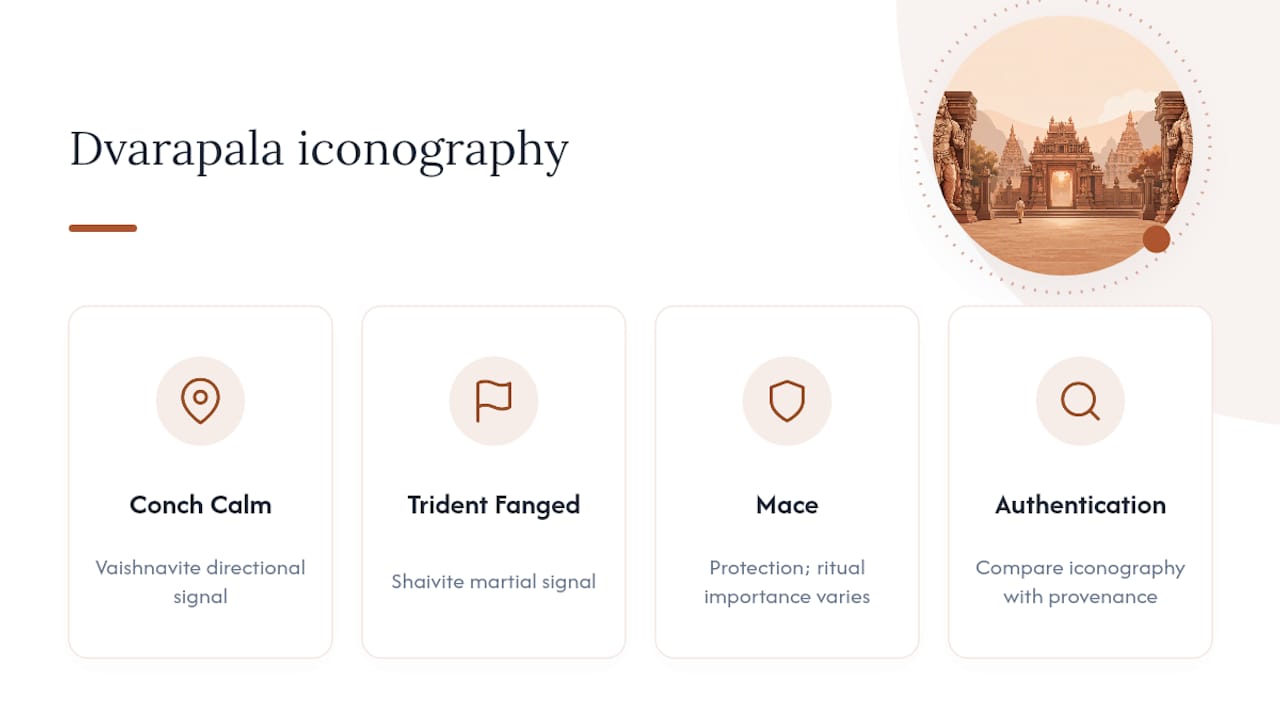
Herkömmliche Ratschläge betrachten die Größe als Indikator für die Wichtigkeit, und das ist nur die halbe Wahrheit. Die auf Tala basierende Skalierung verfolgt zwar die rituelle Bedeutung, aber ein kleinerer Wächter an einem sekundären Vaishnavi-Eingang kann genauso viel doktrinäre Präzision vermitteln wie eine monumentale Shaivi-Figur an einem Haupteingang. Wenn Sie die Paarung, den Waffensatz und die regionalen Haltungskonventionen zusammen lesen, erfahren Sie mehr, als die Körpergröße jemals verrät.
Wenn es eine Gewohnheit gibt, die es wert ist, entwickelt zu werden, dann ist es der Umgang mit einem Dvarapala so, wie es ein Kurator tut: Überprüfen Sie die Ikonographie anhand der Herkunft, bevor Sie allein aus einem von beiden Schlussfolgerungen ziehen.
Häufig gestellte Fragen
Was bedeutet Dvarapala in der Tempelkunst? Dvarapala kombiniert die Sanskrit-Wörter dvāra (Tür) und pāla (Beschützer) beschreibt eine Wächterfigur, die an den Tempelschwellen stationiert ist, um das Heiligtum zu verteidigen und den heiligen Raum zu markieren.
Werden Dvarapalas immer paarweise installiert? Fast immer. Wächter flankieren in Paaren den Eingang, und Einzelfiguren sind selten genug, um normalerweise auf einen kleinen oder informellen Schrein und nicht auf einen großen Tempel hinzuweisen.
Was ist der Unterschied zwischen Vaishnavite- und Shaivite-Dvarapalas? Vaishnavitische Wächter, oft Jaya und Vijaya genannt, tragen Muschel und Diskus und wirken gelassener, während Shaivite-Wächter zu Dreizacken, Reißzähnen und grimmigeren Gesichtsausdrücken neigen.
Haben buddhistische und jainistische Tempel auch Dvarapalas? Ja. In buddhistischen Tempeln werden Bodhisattva- und Yaksha-Wächterformen verwendet, mit einer parallelen Tradition in Chinas Renwang-Figuren, während die Jain-Architektur Pförtner an Türrahmen und in der Samavasaraṇa-Versammlungshalle platziert.
Warum sind auf einigen Museumsetiketten zwei mögliche Identitäten für einen Dvarapala aufgeführt? Ikonografische Markierungen überschneiden sich manchmal zwischen einer bestimmten Gottheit und einem generischen Wächtertyp, daher listen Kuratoren beide Möglichkeiten auf und stützen sich auf Provenienzaufzeichnungen, anstatt eine einzige Bezeichnung zu erzwingen.
Quellen
- Dvarapala – Wikipedia
- Dvarapalas | Religion und Mythologie, vormoderne Kultur – vermitteln
- Die relative Datierung und der Kunststil der Dwārapāla-Statuen des Adan-Adan-Tempels – DOI
- Stehender Shiva oder Tempelwächter (Dvarapala) – The Met
- Dvarapala – WisdomLib
Empfohlen
- Identifizierende Merkmale einer Hindu-Göttin-Statue: Ein Leitfaden für Sammler – HD Asian Art
- Was bedeutet Vajra in der buddhistischen Kunst? – HD Asian Art
- Theravada-buddhistische Skulptur für Kunstwissenschaftler erklärt – HD Asian Art
- Vajrapāṇi: Der den Blitz schwingende Beschützer in der buddhistischen Tradition – HD Asian Art
