



How to Create a Home Meditation Space: A Step-by-Step Guide
How to Create a Home Meditation Space: A Step-by-Step Guide
Table of Contents
Understanding the Foundations of How to Create a Home Meditation Space
Creating a home meditation space requires intentional environmental design. The space you build directly influences your ability to focus, relax, and sustain a consistent practice. This guide from HD Asian Art covers the essential principles and practical steps for how to create a home meditation space that genuinely supports your mindfulness journey.
Your meditation space is a tool. Like any tool, it works best when intentionally designed for its specific purpose. The difference between a space that draws you back daily and one you abandon after two weeks often comes down to thoughtful environmental design.
Why Your Environment Matters: The Neuroscience of Meditation Spaces
The brain responds powerfully to environmental cues. When you consistently meditate in the same location, your nervous system begins to associate that space with calm and focus. Over time, simply entering that space triggers a parasympathetic response before you even sit down.
Research from the American Psychological Association on environmental psychology demonstrates that physical spaces shape cognitive and emotional states. Lighting, sound, temperature, and visual clutter all register in your brain's threat-detection systems. A cluttered, noisy space keeps your nervous system on alert. A calm, intentional space signals safety.
Your meditation space doesn't need to be large or expensive. It needs to be consistent. The same corner, the same cushion, the same visual environment, these repetitions build neurological pathways that make meditation easier over time.
Intentionality vs. Perfection
Many people delay creating a meditation space waiting for the "perfect" setup. Meanwhile, weeks pass without a single meditation session.
Intentionality beats perfection. An intentional space is one you've designed with specific purpose, even if it's simple. Start with what you have, a corner of your bedroom, a section of your living room, even a closet. The first step is designation, claiming a specific area as your meditation zone. Once you have a designated space, add elements gradually. You don't need everything at once.
Meditation Space Essentials: What You Actually Need
Most meditation space guides overwhelm you with optional items. Here's what actually matters: seating, a defined area, and minimal distractions.
Seating: Cushions, Benches, and Ergonomic Foundations
Your seating choice determines whether you can actually sit still. Back pain, numb legs, or hip discomfort will end your meditation session quickly.
A zafu (traditional round meditation cushion) elevates your hips and tilts your pelvis forward, naturally straightening your spine. This 4-6 inch elevation is the difference between sitting comfortably for 20 minutes and struggling through 5. A meditation bench (seiza bench) works differently, you kneel with the bench supporting your thighs, keeping your back upright without requiring hip flexibility. A regular chair works too. Don't let perfectionism stop you from starting.
The ergonomic principle: your knees should be at roughly 90 degrees or lower, your back naturally upright without strain, and your feet supported. Test your seating for 10 minutes before committing.
Sacred Objects and Spiritual Anchors
Many meditation practitioners find that a visual focal point deepens their practice. This might be a Buddha statue, a photograph, a plant, or a simple candle. At HD Asian Art, we've observed that people often choose pieces that resonate with their spiritual tradition or aesthetic sense. A carefully selected statue becomes an anchor, a visual reminder of your intention to practice.
Place your focal object at eye level or slightly above when you're seated.
Small Meditation Space Ideas for Apartments and Compact Homes
Space constraints are real. Most people don't have a dedicated room for meditation. The good news: you don't need one.
Vertical Storage and Corner Optimization
A corner meditation space takes up roughly 4 feet by 4 feet. Use vertical space to keep items organized and off the floor. Wall-mounted shelves hold candles, incense, or small statues. The goal is visual calm, when you look at your meditation corner, you should see only the essentials.
A folding screen or curtain can define your space psychologically, creating a boundary between your meditation area and the rest of the room.
Multi-Purpose Meditation Corners
Your meditation space doesn't need to serve only meditation. In small homes, the same corner might function as a reading nook or yoga space. The key is maintaining clear intention. When you sit down to meditate, clear away reading materials, yoga props, or work items. Many apartment dwellers find success with a dedicated cushion and mat that they roll out before each session.
Creating Tranquility: Lighting, Sound, and Sensory Design
Environment is sensory. Lighting, sound, and air quality all influence your ability to relax.
Natural Light and Layered Lighting Strategies
Natural light is ideal. If your meditation space has access to a window, use it. Direct sunlight can be distracting, so sheer curtains diffuse harsh light while maintaining brightness.
For evening meditation, avoid overhead lights. Use layered lighting: a small table lamp, a wall sconce, or a single candle. Dimmer switches offer flexibility to adjust light levels based on time of day.
Soundscapes and Acoustic Privacy
Sound is often the biggest obstacle in shared living spaces. Acoustic privacy requires layering: heavy curtains absorb sound, rugs and cushions dampen noise, white noise machines or ambient sound apps mask external sounds.
Many practitioners use meditation apps that include nature sounds, rain, ocean waves, or forest ambiance. These sounds mask unwanted noise and create a consistent auditory environment your brain learns to associate with meditation.
Aromatherapy and Essential Oils for Mindfulness
Scent is a powerful trigger for calm. Your olfactory system connects directly to the brain's limbic system, which processes emotion and memory. A consistent scent becomes a cue for relaxation.
Common choices include lavender (calming), sandalwood (grounding), and frankincense (centering). Start with one scent rather than rotating between many. Methods range from incense (under a dollar, scents a room for 30 minutes) to essential oil diffusers. Subtle is better than overwhelming.
Meditation Corner Decor: Aesthetic and Functional Design
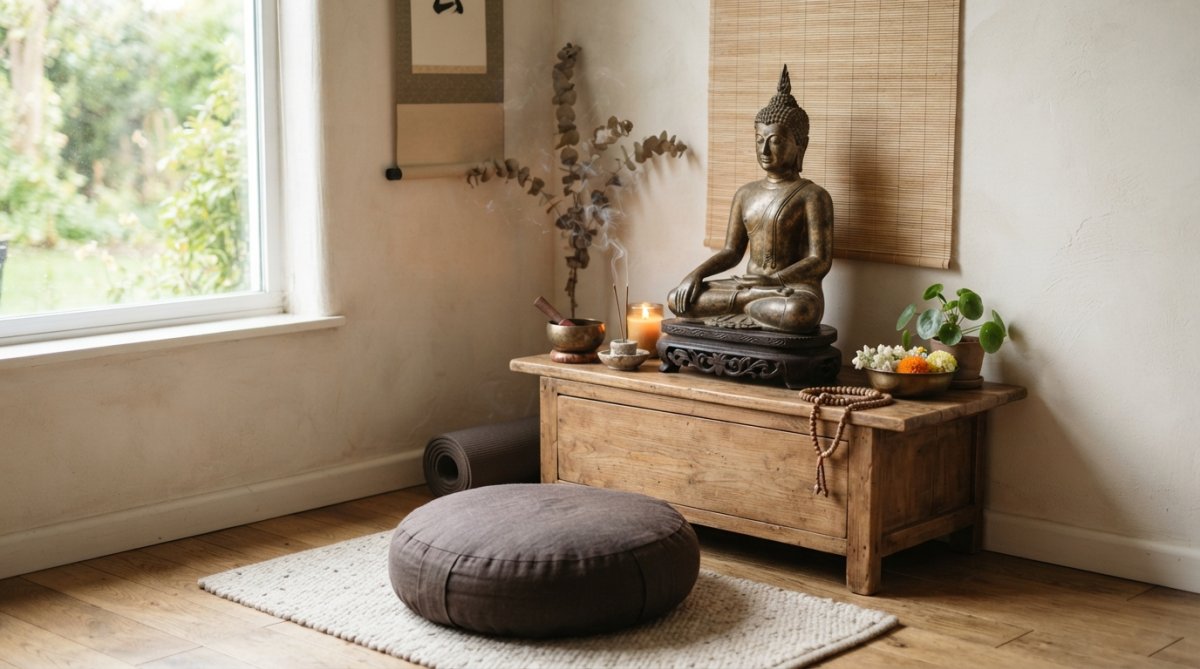
Your meditation space should reflect your values and support your practice.
Minimalism vs. Intentional Decoration
There's a spectrum between bare and decorated. Some practitioners thrive in completely minimal spaces; others find that carefully chosen decorative elements deepen their practice. The principle is intentionality. Every item in your space should serve a purpose, functional or spiritual. Ask yourself about each item: Does this support my meditation practice? If the answer is no, remove it.
Natural Elements and Grounding Materials
Many practitioners find that natural materials, wood, stone, clay, plant fibers, create a grounding quality that synthetic materials lack. A wooden shelf, a stone statue, a woven mat, or a living plant connects you to the natural world. Plants improve air quality, add visual interest, and create a sense of life and growth.
Sacred Space Creation for Neurodivergent and Sensitive Individuals
Not everyone experiences meditation spaces the same way. Neurodivergent individuals often need different environmental configurations.
Customization for ADHD, Autism, and Sensory Processing
For people with ADHD, a meditation space needs tools to support focus, a fidget tool, a weighted blanket, or a structured timer. For autistic individuals, sensory sensitivities matter enormously. Fluorescent lights might trigger discomfort. Certain textures might feel unbearable. Your meditation space should accommodate your specific sensory profile.
If you're sensitive to sound, a quiet room with sound dampening matters more than aesthetics. If you're sensitive to light, dim, warm-colored lighting becomes essential. Your meditation space should reduce sensory overwhelm, not create it.
Privacy Boundaries and Stress Reduction
A dedicated meditation space creates psychological safety. You know this corner is yours. People won't interrupt you here. Your practice is protected.
Physical boundaries help. A door you can close, a screen that provides visual privacy, or even a "do not disturb" sign signals to others that this time is protected. Many families find that establishing this boundary reduces household tension overall.
Budget-Friendly DIY Hacks for How to Create a Meditation Space
You don't need to spend money to create a functional meditation space.
Low-Cost Cushion and Seating Alternatives
A meditation cushion can cost $15 to $150, but you can start with what you have, a firm pillow, a folded blanket, or a rolled-up yoga mat. A DIY cushion costs less than $20 to make. Sew two pieces of fabric together, fill with buckwheat hulls or old pillow stuffing, and you have a functional zafu. A meditation bench can be built from scrap wood for under $30. For seating, a simple wooden chair works perfectly.
Smart Home Integration for Ambiance Control
Smart home technology offers affordable options for creating consistent ambiance. A smart light bulb (under $15) lets you set specific colors and brightness levels. A smart speaker with a meditation app provides guided sessions and ambient sounds for under $50.
These tools aren't necessary, but they offer convenience if you're already interested in smart home technology.
| Budget Level | Seating | Focal Object | Lighting | Sound | Total Investment |
|---|---|---|---|---|---|
| Minimal ($0-20) | Pillow or chair | Plant or photo | Natural light | Silence | Free to $20 |
| Basic ($20-75) | DIY cushion | Candle or small statue | Table lamp | White noise app | $50-75 |
| Moderate ($75-200) | Zafu cushion | Meaningful statue | Dimmable lamp | Meditation app | $150-200 |
| Enhanced ($200+) | Meditation bench | Curated artwork | Smart lighting | Smart speaker | $250+ |
Common Mistakes to Avoid When Setting Up Your Meditation Space
Overcomplicating the setup. Begin with what you have. Add elements gradually based on what your practice actually needs.
Choosing seating without testing. Always test seating for at least 10 minutes before committing to it.
Neglecting sound management. If sound is an issue, address it early. Earplugs, white noise, or a quieter location make enormous differences.
Using the space inconsistently. Your brain learns through repetition. Meditating in the same space at the same time builds stronger neural associations.
Treating the space as decoration. A meditation space is a functional environment. If it looks beautiful but doesn't support your practice, it's failing its purpose.
Ignoring personal sensory needs. Your meditation space should accommodate your body and nervous system, not fight against them.
Creating a home meditation space is fundamentally about removing obstacles to your practice. The environment you design should feel inviting, support your body's comfort, and protect your time from interruption. Many practitioners enhance their spaces with carefully curated pieces, a Buddha statue, a meaningful sculpture, or temple-inspired decor that anchors their intention. At HD Asian Art, we specialize in handpicked Buddhist and Hindu statues alongside exquisite Khmer and Southeast Asian sculptures designed specifically to elevate meditation spaces. Our temple-inspired pieces bring both artistry and spiritual resonance to your sanctuary. Browse our collection and find the piece that resonates with your practice.
Frequently Asked Questions
What are the essential meditation space essentials I need to get started?
You need comfortable seating (a zafu cushion or meditation bench), a quiet location, and intentional space, even a small corner works. Many practitioners add a spiritual anchor like a statue or candle, but these are optional. Lighting, natural elements like plants, and privacy boundaries enhance the experience but aren't mandatory. Start simple and add elements as your practice deepens. The most important element is your commitment to the space itself.
How do I create a meditation space in a small apartment?
Small meditation space ideas include using a corner of your bedroom, closet, or living room. Vertical storage keeps cushions and props organized. Use a folding screen or curtain for privacy without taking floor space. A single cushion, mat, and small plant create a functional sanctuary in under 4 square feet. Multi-purpose furniture, like a meditation bench that doubles as a shelf, maximizes limited space. The key is intentionality: even a 2x3 foot area becomes sacred when dedicated to your practice.
What's the neuroscience behind why environment matters for meditation?
Your brain's sensory cortex processes environmental cues, lighting, sound, scent, and texture, which influence your nervous system. Soft lighting reduces cortisol; natural elements lower stress responses; and controlled soundscapes enhance focus. A dedicated space trains your brain through repetition: entering that space signals your nervous system to shift toward calm. This conditioning effect means your meditation space becomes a neurological anchor for tranquility, making mindfulness practice easier over time.
Can I create a meditation corner decor that's both beautiful and functional without spending a lot?
Yes. Budget-friendly DIY hacks include repurposing household items as cushions, using free natural light, and decorating with plants from cuttings. Thrift stores offer affordable statues and decor. String lights or candles create ambiance inexpensively. Focus on minimalism, fewer, intentional items cost less and create better zen aesthetics than cluttered decoration. Free resources like nature (stones, branches) and digital soundscapes (YouTube) support your space without expense. Intentionality matters more than price tags.
