



Wie der Zustand asiatischer Skulpturen beurteilt wird: Ein Profi-Leitfaden
Wie der Zustand asiatischer Skulpturen beurteilt wird: Ein Profi-Leitfaden
Bei der Beurteilung des Zustands asiatischer Skulpturen handelt es sich um den systematischen Prozess der Inspektion, Dokumentation und Bewertung des physischen Zustands eines Werks, der als Grundlage für Konservierungs- und Restaurierungsentscheidungen dient. Profis wenden diesen strukturierten Ansatz auf Bronze-, Stein- und polychrome Holzstücke an Kambodscha, Thailand, Indonesien, Sri Lanka, und in ganz Süd- und Südostasien.
Der Prozess kombiniert eine direkte visuelle Untersuchung mit wissenschaftlicher Bildgebung und formeller Berichterstattung. Das Verständnis, wie der Zustand asiatischer Skulpturen beurteilt wird, bietet Sammlern, Kunsthistorikern und Restauratoren einen gemeinsamen Rahmen für den langfristigen Schutz dieser Werke.
Wie wird der Zustand einer asiatischen Skulptur professionell beurteilt?
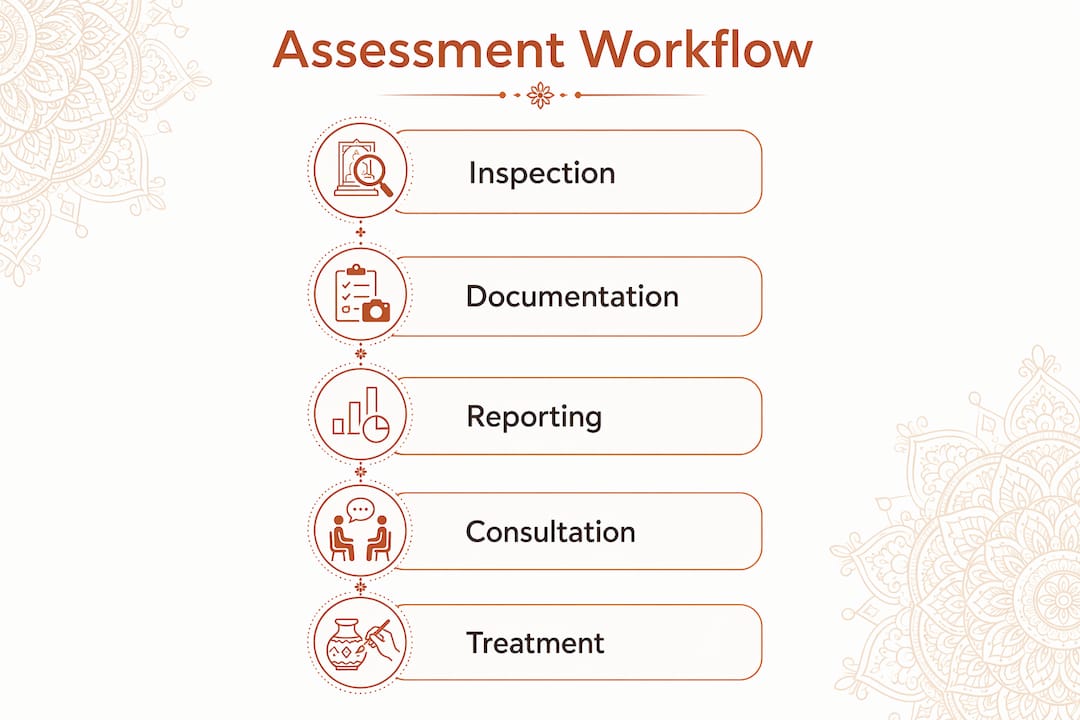
Es folgt eine professionelle Zustandsbeurteilung 5-stufiger Prozess Das reicht von der körperlichen Untersuchung bis hin zur Behandlungsplanung. Die Schritte sind: körperliche Untersuchung vor Ort, Fotodokumentation, formeller schriftlicher Bericht, Kundenberatung und Priorisierung des Behandlungsplans basierend auf dem Risikoniveau. Jeder Schritt baut auf dem vorherigen auf und erstellt eine nachvollziehbare Aufzeichnung, die sowohl sofortige Intervention als auch langfristige Erhaltungsplanung unterstützt.
Die physikalische Inspektion umfasst die Oberflächenintegrität, die strukturelle Stabilität und sichtbare Verschlechterungen wie Risse, Verluste, Flecken und Korrosion. Bei der fotografischen Dokumentation werden natürliches Licht, Streiflicht und vergrößerte Ansichten verwendet, um Basislinien festzulegen und Verschlechterungsfaktoren zu erfassen, die in der Standardfotografie möglicherweise nicht offensichtlich sind. Der formelle Bericht fasst die Ergebnisse dann in einem Dokument zusammen, das als Leitfaden für alle nachfolgenden Entscheidungen dient.
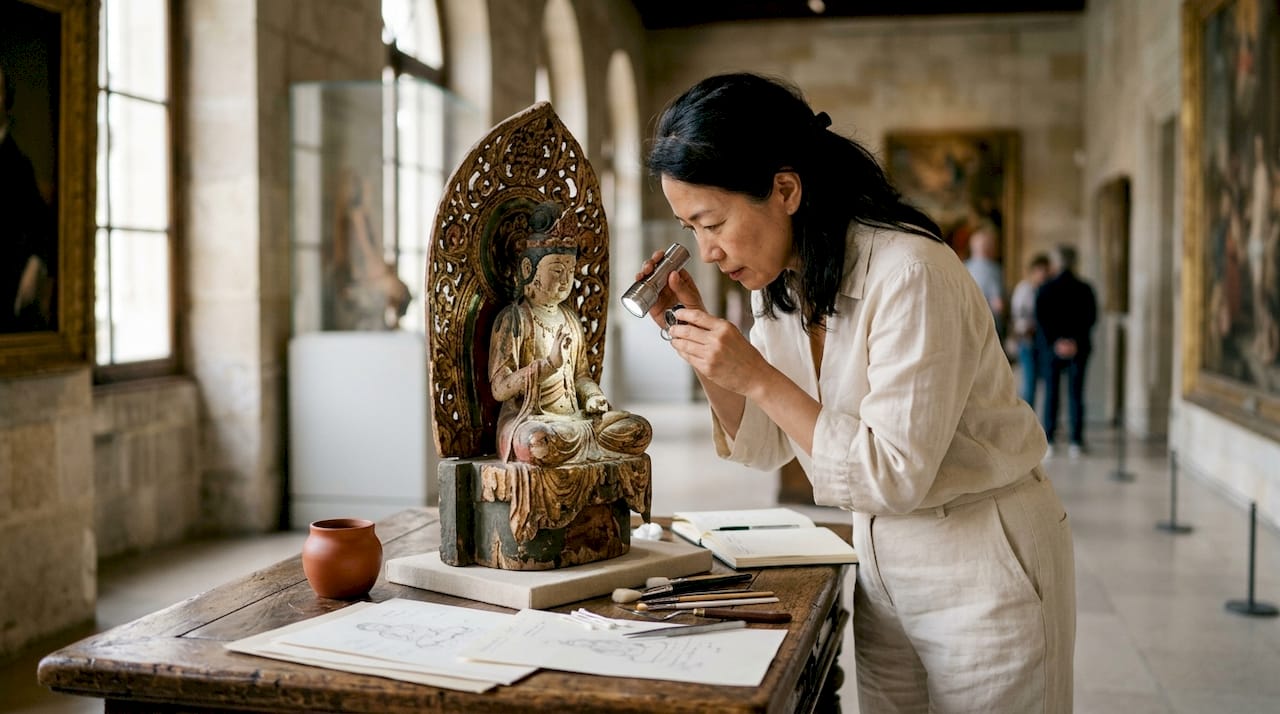
Der branchenübliche Begriff für diesen Prozess lautet Zustandserhebung oder Zustandsbericht, obwohl Sammler und Auktionsspezialisten den Begriff „Zustandsbewertung“ oft synonym verwenden. Beide Begriffe beziehen sich auf dieselbe strukturierte Bewertung. Die Kenntnis dieser Terminologie hilft bei der Beauftragung von Restauratoren, die vom American Institute for Conservation (AIC) oder dem International Institute for Conservation (IIC) zertifiziert sind.
Welche fortschrittlichen Tools werden bei der Zustandsbewertung von Skulpturen verwendet?
Die moderne Zustandsbeurteilung geht weit über das hinaus, was das Auge sehen kann. KI-gesteuertes Laserscannen und Röntgenradiographie kann über 30 Schadensarten an großformatigen Steinskulpturen mit einer Genauigkeit von 10 Mikrometern identifizieren. Dieser Detaillierungsgrad deckt Mikrorisse, Hohlräume unter der Oberfläche und interne Strukturfehler auf, die bei einer normalen Sichtprüfung unsichtbar bleiben würden.
Zu den wichtigsten Bildgebungstechnologien, die bei der professionellen Beurteilung des Zustands asiatischer Kunst eingesetzt werden, gehören:
- Laserscanning: Erstellt präzise 3D-Oberflächenkarten, die Mikrorisse und Oberflächenverformungen auf großen Stein- oder Bronzearbeiten erkennen.
- Röntgenradiographie: Die primäre zerstörungsfreie Methode zum Aufdecken der inneren Ankerkorrosion in Verbundskulpturen, einschließlich innerer Stützen aus Eisen oder Bronze.
- Multilichtfotografie (Raken, Durchlicht, UV): Macht Oberflächenunregelmäßigkeiten, alte Reparaturen und Farbschichtvariationen sichtbar, die bei normaler Beleuchtung unsichtbar sind.
- Multispektral- und Infrarotbildgebung: Identifiziert Unterzeichnungen, frühere Restaurierungen und Materialinkonsistenzen bei polychromen oder lackierten Oberflächen.
- Tragbare Röntgenfluoreszenz (pXRF): Analysiert die Elementzusammensetzung von Metalllegierungen und Pigmenten ohne Probenahme.
Jede Technologie befasst sich mit einer anderen Schicht des Objekts. Laserscanning erfasst das Äußere. Röntgenradiographie liest den Innenraum. Spektroskopische Methoden analysieren die Materialzusammensetzung auf molekularer Ebene. Durch die Kombination dieser Tools entsteht ein vollständiges Bild, das keine einzelne Methode allein liefern kann.
Profi-Tipp: Wenn Sie eine Zustandsuntersuchung für eine zusammengesetzte asiatische Skulptur in Auftrag geben, fordern Sie eine multimodale Bildgebung an, die sowohl Röntgenradiographie als auch Multilichtfotografie umfasst. Röntgen zeigt interne strukturelle Risiken; Multilichtfotografie dokumentiert die Oberflächenstratigraphie. Gemeinsam verhindern sie, dass kritische Erkenntnisse übersehen werden.
Welche Umwelt- und Materialfaktoren beeinflussen den Zustand asiatischer Skulpturen?
Umwelteinflüsse sind die Hauptursache für den Verfall asiatischer Skulpturen. Feuchtigkeitsschwankungen führen dazu, dass sich organische Materialien wie Holz und Lack ausdehnen und zusammenziehen. Durch UV-Einwirkung werden Pigmente und organische Bindemittel in polychromen Schichten abgebaut. Temperaturzyklen beschleunigen Metallkorrosion und Steinbrüche. Das Naturschutzteam der Felszeichnungen von Dazu in Chongqing, China, Monitore über 70 Umweltfaktoren einschließlich Feuchtigkeit, Temperatur und Strukturbewegungen, wobei Frühwarnsysteme eingesetzt werden, um Schäden vorherzusagen und zu verhindern, bevor sie sichtbar werden.
Der Materialtyp bestimmt, welche Verschlechterungsmuster am wahrscheinlichsten sind. Die folgende Tabelle ordnet gängige asiatische Skulptursubstrate ihren charakteristischen Fehlerarten zu.
| Material | Häufige Verschlechterungsmuster |
|---|---|
| Stein (Sandstein, Schiefer, Granit) | Oberflächenerosion, biologisches Wachstum, Salzkristallisation, Bruch |
| Bronze- und Kupferlegierung | Aktive Korrosion („Bronzekrankheit“), Lochfraß, Instabilität der Patina |
| Polychromes Holz oder Lack | Ablösung von Farbschichten, Holzschwindung, Insektenschäden |
| Vergoldete Oberflächen | Abblätterndes Blattgold, Abbau des Bindemittels, Eindringen von Feuchtigkeit |
| Verbundwerkstoff (Metallarmatur + Stein oder Stuck) | Korrosion im Inneren des Ankers führt zu strukturellem Versagen |
Mehrschichtige Stratigraphie in polychromen und lackierten Skulpturen stellt eine besondere Herausforderung dar. Organische Zwischenschichten zwischen Farbschichten reagieren anders auf Feuchtigkeitsänderungen als die umgebenden anorganischen Materialien. Diese Nichtübereinstimmung führt zu einer Delaminierung, die unsichtbar bleibt, bis eine Abplatzung der Oberfläche auftritt. Zu diesem Zeitpunkt ist bereits ein erheblicher Materialverlust eingetreten. Mikroskopische Querschnittsanalysen und spektroskopische Methoden erkennen dieses Risiko frühzeitig, bevor sich sichtbare Schäden manifestieren.
Sammler lagern antike Steinskulpturen Die relative Luftfeuchtigkeit sollte zwischen 45 % und 55 % liegen und direkte Sonneneinstrahlung vermieden werden. Allein diese beiden Kontrollen verhindern den Großteil der umweltbedingten Verschlechterung der Sammelumgebungen.
Wie ist ein Zustandsbericht für asiatische Skulpturen aufgebaut?
Ein professioneller Zustandsbericht ist das formelle Ergebnis des Beurteilungsprozesses. Es dient als Rechtsdokument, Behandlungsleitfaden und Grundlage für die Verfolgung zukünftiger Änderungen. Berichte, die nach den ethischen Standards von AIC und IIC erstellt werden, folgen einer einheitlichen Struktur, die Transparenz und Peer-Review unterstützt.
Ein vollständiger Zustandsbericht umfasst normalerweise:
- Objektidentifikation: Abmessungen, Material, Herkunft, Erwerbsdatum und eventuell vorhandene Katalognummern.
- Grundfotografie: Mehrwinkelbilder unter natürlichem Licht, Streiflicht und UV-Licht zur Dokumentation des aktuellen Zustands.
- Zustandsbeschreibung: Systematische Aufzeichnung aller beobachteten Schäden, geordnet nach Ort und Schwere.
- Kommentierte Schadenskarten: Diagramme oder maßstabsgetreue Fotos mit markierten und nach Typ kodierten Schadensstellen.
- Risikobewertung: Bewertung der aktiven versus stabilen Verschlechterung, mit Prioritätseinstufung für die Behandlung.
- Wartungsempfehlungen: Umgebungskontrollen, Handhabungsprotokolle und Lagerungshinweise.
- Behandlungsvorschlag: Spezifische Interventionen in der Reihenfolge ihrer Priorität aufgeführt, mit geschätztem Umfang und Hinweisen zur Reversibilität.
Eine fotografische Dokumentation unter mehreren Lichtverhältnissen ist nicht optional. Streiflicht zeigt die Topographie der Oberfläche. UV-Fluoreszenz identifiziert alte Füllungen und Lackschichten. Natürliches Licht dient als Referenzbasis. Das Überspringen einer dieser Angaben führt zu Lücken, die den Wert des Berichts als langfristiges Tracking-Tool beeinträchtigen.
Profi-Tipp: Bitten Sie Ihren Restaurator, dem Zustandsbericht eine schriftliche Risikomatrix beizufügen. Eine Risikomatrix ordnet jedes identifizierte Problem nach Schweregrad und Dringlichkeit ein, sodass Sie fundierte Entscheidungen über die Reihenfolge der Behandlung treffen können, wenn Budget- oder Zeitbeschränkungen gelten.
Große Institutionen nutzen digitale Archive und Echtzeitüberwachung, um Zustandsänderungen zwischen den Bewertungszyklen zu verfolgen. Das Team von Dazu Rock Carvings integriert 3D-Laserscandaten mit kontinuierlicher Umweltüberwachung und erstellt so ein Vorhersagemodell für die Verschlechterung. Private Sammler können diesen Ansatz in kleinerem Maßstab nachahmen, indem sie kalibrierte Datenlogger und regelmäßige fotografische Überprüfungen anhand von Basisbildern verwenden.
Welche Besonderheiten gelten bei Authentizität und früheren Restaurierungen?
Die Authentizitätsbewertung ist ein eigenständiger Bestandteil der Zustandsbewertung asiatischer Kunst und kein separater Prozess. Das Erkennen früherer Reparaturen und nicht originaler Materialien ist Teil jeder gründlichen Zustandserhebung. Dies ist wichtig, da einige frühere Eingriffe das Objekt aktiv beschädigen. Füllungen aus Portlandzement sind beispielsweise härter als der umgebende Stein und verursachen Risse, da sich die Materialien unterschiedlich schnell bewegen.
Zu den wichtigsten Überlegungen bei der Bewertung der Authentizität und der Restaurierungsgeschichte gehören:
- Identifizierung nicht originaler Materialien: pXRF, Raman-Spektroskopie und FTIR-Analyse erkennen Materialien, die nicht mit dem Zeitraum oder der Herkunftsregion des Objekts übereinstimmen.
- Dokumentation historischer Reparaturen: Alle bisherigen Eingriffe sollten kartiert und beschrieben werden, auch solche, die stabil und nicht schädlich sind.
- Beurteilung der Reversibilität: Neue Behandlungsmaterialien müssen reversibel sein und sich deutlich vom Originalmaterial unterscheiden. Dies ist eine Kernanforderung der ethischen Standards von AIC und IIC.
- Bewertung schädlicher Eingriffe: Überlack, inkompatible Spachtelmassen und Strukturklebstoffe, die Feuchtigkeit einschließen, müssen möglicherweise entfernt werden, bevor mit der Stabilisierung fortgefahren werden kann.
- Erhaltung und Restaurierung in Einklang bringen: Ziel ist die Stabilisierung und Erhaltung, nicht die Wiederherstellung des spekulativen ursprünglichen Aussehens des Objekts. Sichtbare Verluste werden dokumentiert und unbehandelt gelassen, es sei denn, die strukturelle Stabilität erfordert ein Eingreifen.
Theravada-buddhistische Skulpturen von Thailand und Sri Lanka, Beispielsweise wurden sie während des aktiven rituellen Gebrauchs häufig neu vergoldet und neu bemalt. Diese späteren Schichten haben ihren eigenen historischen und kulturellen Wert. Ein Restaurator muss abwägen, ob das Entfernen der Objekte der Integrität des Objekts dient oder die legitime Geschichte löscht. Dieses Urteil erfordert sowohl eine technische Analyse als auch eine tiefe Kenntnis der regionalen künstlerischen Traditionen.
Sammler unterschätzen oft, wie sehr sich eine vorherige Restaurierung auf den Wert und die Behandlungsmöglichkeiten auswirkt. Die moderne Konservierungsethik verlangt, dass alle neuen Materialien reversibel und nachweisbar sind. Dies ist ein Standard, der zukünftige Restauratoren schützt und die historischen Aufzeichnungen des Objekts bewahrt.
Wichtige Erkenntnisse
Eine genaue Zustandsbewertung ist die Grundlage jeder Entscheidung zur Erhaltung des Klangs asiatischer Skulpturen und kombiniert physische Inspektion, wissenschaftliche Bildgebung und strukturierte Dokumentation.
| Punkt | Details |
|---|---|
| Befolgen Sie den 5-Schritte-Workflow | Inspektion, Dokumentation, Bericht, Beratung und Behandlungsplanung bilden den professionellen Standard. |
| Verwenden Sie multimodale Bildgebung | Kombinieren Sie Röntgenradiographie, Laserscanning und Multilichtfotografie, um sowohl oberflächliche als auch innere Schäden zu erkennen. |
| Passen Sie die Verschlechterungsrisiken dem Materialtyp an | Bronze-, Stein-, polychrome Holz- und Verbundwerke weisen jeweils unterschiedliche Fehlermuster auf, die eine gezielte Bewertung erfordern. |
| Strukturberichte gemäß AIC/IIC-Standards | Kommentierte Schadenskarten, Risikomatrizen und Reversibilitätshinweise machen Berichte rechtlich und professionell vertretbar. |
| Behandeln Sie Authentizität als Teil der Bewertung | Bevor ein Behandlungsplan fertiggestellt wird, müssen frühere Reparaturen und nicht originale Materialien identifiziert werden. |
Was ich nach Jahren des Umgangs mit asiatischen Skulpturen gelernt habe
Der häufigste Fehler, den ich sehe, besteht darin, der Oberflächenoptik Vorrang vor der strukturellen Stabilität zu geben. Eine Skulptur kann ansehnlich aussehen, obwohl sie aktive Ankerkorrosion aufweist, die innerhalb eines Jahrzehnts zu einem katastrophalen Ausfall führt. Die Eindämmung des aktiven Verfalls ist die erste Pflicht eines jeden Restaurators. Kosmetische Arbeiten stehen an letzter Stelle und nicht an erster Stelle.
I’ve also found that collectors consistently underestimate the value of environmental control. Eine Umgebung mit stabiler Luftfeuchtigkeit verhindert mehr Schäden als jeder einzelne Behandlungseingriff. Das Dazu Rock Carvings-Projekt überwacht mehr als 70 Umweltvariablen, weil das Team weiß, dass Prävention billiger und effektiver ist als rettende Erhaltung.
Und noch etwas muss klar gesagt werden: Nicht jeder Restaurator ist mit den asiatischen Bildhauertraditionen bestens vertraut. Die Traditionen des Bronzegusses Südostasiens, die Lacktechniken von Birma, and the stone carving conventions of Khmer art each require specific knowledge to assess correctly. Ein generalistischer Restaurator kann kulturell bedeutsame Oberflächenbehandlungen übersehen oder absichtliche Patinierung fälschlicherweise als Schaden identifizieren. Always verify that the conservator you commission has direct experience with the specific regional tradition of the object in question.
— James, HDAsianArt.com
Entdecken Sie authentische asiatische Skulpturen bei HDAsianArt
HDAsianArt ist auf antike buddhistische und hinduistische Skulpturen spezialisiert Kambodscha, Thailand, Indonesien, Sri Lanka, und Vietnam. Jedes Stück der Sammlung wird individuell recherchiert, unter professioneller Beleuchtung fotografiert und von Spezialisten mit direkten Kenntnissen regionaler Kunsttraditionen beschrieben.
Ganz gleich, ob Sie eine Sammlung aufbauen, eine Zustandsbewertung in Auftrag geben oder Hilfe bei der Pflege asiatischer Skulpturen suchen, die Sie bereits besitzen: HDAsianArt bietet das Fachwissen und die Dokumentationsstandards, die seriöse Sammler und Institutionen benötigen. Durchsuchen Sie die gesamte Sammlung von authentifizierte asiatische Skulpturen und wenden Sie sich direkt an das Team, um Unterstützung bei der Anschaffung, Dokumentation des Zustands oder Hinweise zur Konservierung bestimmter Werke zu erhalten.
FAQ
Was beinhaltet eine Zustandsbeurteilung einer asiatischen Skulptur?
Eine professionelle Zustandsbeurteilung umfasst eine körperliche Untersuchung, eine Multilicht-Fotodokumentation, einen formellen schriftlichen Bericht mit kommentierten Schadenskarten, eine Risikobewertung und einen Behandlungsvorschlag. Der standardmäßige 5-Schritte-Prozess endet mit der Behandlungsplanung basierend auf der Prioritätsrangfolge.
Wie erkennen Restauratoren versteckte Schäden an asiatischen Skulpturen?
Die Röntgenradiographie ist die wichtigste zerstörungsfreie Methode zur Erkennung von Korrosion im Inneren des Ankers und versteckten Strukturschäden. Laser scanning and multispectral imaging add surface and material composition data that visual inspection cannot provide.
Warum ist der Materialtyp bei der Bewertung des Zustands einer Skulptur wichtig?
Verschiedene Materialien versagen auf unterschiedliche Weise. Bei Bronze kommt es zu aktiver Korrosion, bei polychromem Holz kommt es zu einer Delaminierung durch Feuchtigkeit, und bei Skulpturen aus Verbundwerkstoffen kommt es zu internen Strukturversagen durch korrodierende Metallarmaturen. Die Identifizierung des Substrats bestimmt, welche Bewertungsmethoden und Überwachungsprotokolle anzuwenden sind.
Welche ethischen Standards gelten für Zustandsberichte für asiatische Kunst?
Das American Institute for Conservation (AIC) und das International Institute for Conservation (IIC) legen die primären ethischen Standards fest. Beide erfordern, dass alle neuen Behandlungsmaterialien reversibel und nachweisbar sind, um die historischen Aufzeichnungen des Objekts zu bewahren und die Optionen zukünftiger Restauratoren zu schützen.
Wie oft sollten asiatische Skulpturen formal beurteilt werden?
High-value or actively deteriorating works should be assessed every 3–5 years. Stabile Arbeiten in kontrollierten Umgebungen können in längeren Zyklen überprüft werden, vorausgesetzt, die Umgebungsüberwachung erfolgt kontinuierlich und die Basisfotos werden bei jeder Bewertung aktualisiert.
Empfohlen
- In asiatischen Skulpturen verwendete Steinarten: Ein Leitfaden für Sammler – HD Asian Art
- Warum asiatische Skulptur Ihrem Raum spirituelle Energie verleiht – HD Asian Art
- So bewahren Sie antike buddhistische Steinskulpturen sicher auf – HD Asian Art
- Theravada-buddhistische Skulptur für Kunstwissenschaftler erklärt – HD Asian Art
