



Handmudras in Buddhastatuen: Bedeutungen und Anleitung
Handmudras in Buddhastatuen: Bedeutungen und Anleitung
Inhaltsverzeichnis
Was Handmudras in Buddhastatuen darstellen
Hand Mudras in Buddha-Statuen sind symbolische Handgesten, die spirituelle Lehren und Bewusstseinszustände vermitteln. Jede Finger- und Handflächenkonfiguration hat eine spezifische Bedeutung, die in der buddhistischen Philosophie verwurzelt ist und als visuelle Sprache fungiert, die den Praktizierenden zur Erleuchtung führt.
Der Begriff Mudra stammt aus dem Sanskrit und bedeutet „Siegel“ oder „Geste“. In der buddhistischen Ikonographie dienen Mudras als direkte Übermittlung von Lehren, wobei jede Handposition einen bestimmten Aspekt des Dharma oder der spirituellen Praxis signalisiert. Diese visuelle Kompetenz hat sich über Jahrhunderte und Kulturen hinweg erhalten.
Das Verstehen von Handmudras verändert die Art und Weise, wie Sie mit Buddha-Statuen umgehen, und erkennt jede einzelne als spezifisches Lehrmittel und nicht als allgemeine Dekoration. Bei HD Asian Art, Wir kuratieren Statuen sorgfältig auf der Grundlage ihrer Mudra-Bedeutung und sorgen so für authentische spirituelle Resonanz in Meditationsräumen und Wohnräumen.
Die fünf bedeutendsten Handmudras
Die fünf am häufigsten dargestellte Mudras entsprechen Schlüsselmomenten in Shakyamunis Leben und wesentlichen Meditationspraktiken und bilden die Grundlage der buddhistischen Ikonographie in allen wichtigen Traditionen.
Dharmachakra Mudra: Das Rad des Dharma drehen
Das Dharmachakra-Mudra zeigt beide Hände auf Brusthöhe, wobei Daumen und Zeigefinger Kreise bilden, während die anderen Finger nach außen ragen. Diese Geste symbolisiert die Weitergabe buddhistischer Lehren und Shakyamunis erste Predigt nach der Erleuchtung.
Die kreisförmigen Handpositionen spiegeln das Rad des Dharma wider, während ausgestreckte Finger auf das Ausstrahlen von Weisheit hinweisen. Dieses Mudra signalisiert einem lehrenden Buddha, dass spirituelle Weisheit nach außen zu allen Wesen fließt.
Bhumisparsha Mudra: Erdberührung
Das Bhumisparsha-Mudra zeigt die nach unten gerichtete rechte Hand mit zur Erde ausgestreckten Fingern, während die linke Hand im Schoß ruht. Diese Geste erinnert daran, dass Shakyamuni den Boden berührt, um die Erde als Zeuge seiner Erleuchtung zu rufen.
Dieses Mudra symbolisiert die Verankerung der spirituellen Praxis in der Realität und repräsentiert Demut und Verbindung zur physischen Welt. Statuen, die dieses Mudra darstellen, erscheinen oft in Meditationshaltung, was darauf hindeutet, dass das Erwachen durch disziplinierte Praxis entsteht.
Dhyana Mudra: Meditation
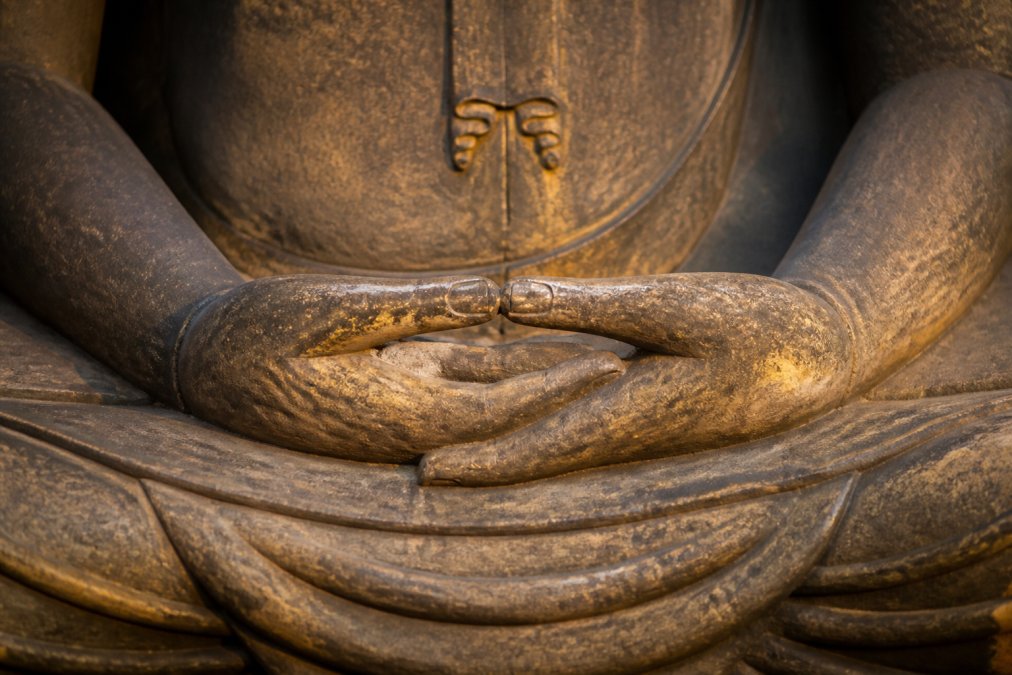
Beim Dhyana-Mudra werden beide Hände in den Schoß gelegt, die Handflächen zeigen nach oben, wobei die rechte Hand auf der linken ruht. Diese Geste verkörpert tiefe Meditation und spirituelle Konzentration und stellt den nach innen gerichteten Geist der Erleuchtung dar.
Dieses Mudra erscheint am häufigsten in Statuen, die Shakyamuni vor der Erleuchtung darstellen. Die symmetrische Handposition suggeriert perfektes Gleichgewicht und innere Stille und dient als visueller Anker für die eigene Meditation des Praktizierenden.
Abhaya Mudra: Furchtlosigkeit und Schutz
Das Abhaya-Mudra hebt die rechte Hand auf Schulterhöhe, wobei die Handfläche nach außen zeigt und die Finger nach oben ausgestreckt sind. Diese Geste kommuniziert Schutz, Furchtlosigkeit und die Zerstreuung der Angst.
Das Abhaya-Mudra entstand, als Shakyamuni seine Hand hob, um einen aggressiven Elefanten zu beruhigen (peer-reviewte Forschung). Dieses Mudra schützt die Praktizierenden vor Hindernissen, fördert den inneren Mut und schafft ein Gefühl der Zuflucht, wenn es in Meditationsräumen platziert wird.
Varada Mudra: Geste der Nächstenliebe
Das Varada-Mudra streckt die rechte Hand nach unten, wobei die Handfläche nach außen zeigt und die Finger nach unten zeigen. Diese Geste symbolisiert die Gabe von Segen, Mitgefühl und die Erfüllung von Wünschen.
Die nach unten zeigende Handfläche deutet auf eine nach außen strömende Großzügigkeit hin. Dieses Mudra betont den mitfühlenden Aspekt der spirituellen Praxis und des Dienstes an anderen.
Arten von Buddha-Handgesten in verschiedenen Traditionen
Verschiedene buddhistische Traditionen betonen ausgeprägte Mudras basierend auf Ihr philosophischer Fokus und ihre Herangehensweise an die spirituelle Praxis zeigen, wie eine einzelne Geste über Traditionen hinweg unterschiedliche Bedeutungen haben kann.
Theravada-Tradition Der Theravada-Buddhismus priorisiert Mudras, die mit Shakyamunis historischem Leben verbunden sind. Das Bhumisparsha-Mudra hat eine besondere Bedeutung und erinnert an die Erleuchtung, während das Dhyana-Mudra häufig in Tempeln erscheint und den Fokus der Tradition auf individuelle Meditation widerspiegelt. Theravada-Mudras tendieren zu Einfachheit und bilateraler Symmetrie.
Mahayana-Tradition Der Mahayana-Buddhismus erweiterte das Mudra-Vokabular um Bodhisattvas und himmlische Buddhas. Das Vitarka-Mudra (Diskussion/Lehre) erscheint häufig in der chinesischen und japanischen Kunst, während das Abhaya-Mudra an Bedeutung gewann und die schützende Natur erleuchteter Wesen betont. Avalokiteshvara erscheint häufig zusammen mit dem Varada-Mudra und symbolisiert grenzenloses Mitgefühl. Leitfaden zur Meditationspraxis.
Vajrayana-Tradition Der Vajrayana-Buddhismus verwendet komplexe Mudra-Systeme mit komplizierten, ineinandergreifenden Handpositionen, die subtilen Energiekanälen (Nadis) und Chakren entsprechen. Mudras treten häufig paarweise auf, wobei jede Hand gleichzeitig unterschiedliche Gesten ausführt. Die tibetisch-buddhistischen Statuen stellen Mudras mit anatomischer Präzision dar, da angenommen wird, dass die genaue Positionierung der Finger bestimmte Energiebahnen aktiviert.
Regionale Variationen innerhalb von Traditionen Regionale künstlerische Konventionen prägen die Mudra-Interpretation weiter. Die thailändische buddhistische Kunst betont das Abhaya-Mudra mit sanften, entspannten Fingern, die zugänglichen Schutz widerspiegeln. In südostasiatischen Statuen sind häufig Mudras zu sehen, die praktische spirituelle Unterstützung, Schutz vor Schaden und mitfühlendes Eingreifen betonen. Japanische buddhistische Skulpturen modifizieren manchmal Mudra-Positionen, um Mahayana-Interpretationen widerzuspiegeln.
Diese Variationen zeigen, wie sich universelle buddhistische Prinzipien an spezifische kulturelle Kontexte anpassen und gleichzeitig die zentrale symbolische Bedeutung beibehalten. Ein Theravada Bhumisparsha Mudra und eine Vajrayana-Version beziehen sich beide auf die Erdberührung, aber die Vajrayana-Version integriert subtile Energiearbeit, die Theravada nicht betont.
Regionale und kulturelle Unterschiede in der Mudra-Praxis
So wählen Sie eine Buddha-Statue für Ihr Zuhause basierend auf Mudra aus
Um eine Buddha-Statue auszuwählen, müssen Sie wissen, welches Mudra zu Ihrer spirituellen Absicht passt. Das Dhyana-Mudra unterstützt die innere Konzentration, während das Abhaya-Mudra Schutz und Zuflucht schafft.
Berücksichtigen Sie Größe und Platzierung: Größere Dharmachakra-Mudra-Statuen dienen als Mittelstücke für Meditationsräume, während kleinere Varada-Mudra-Stücke für intime Ecken geeignet sind. Wählen Sie Mudras, die zu Ihrer aktuellen Praxis passen.
Qualität ist von entscheidender Bedeutung. Authentische Statuen zeigen Mudras mit anatomischer Präzision und spiritueller Präsenz. Bei HD Asian Art, Unsere sorgfältig zusammengestellte Kollektion umfasst Stücke, bei denen die Mudra-Positionierung echte Handwerkskunst und historische Authentizität widerspiegelt.
Mudras in zeitgenössischer Achtsamkeit und Meditation
Moderne Achtsamkeitspraktiker beziehen Mudra-Bewusstsein zunehmend in die Meditation ein und nutzen es aktiv Handgesten als Werkzeuge zur Kultivierung spezifischer mentaler und energetischer Zustände. Zeitgenössische Forschung bestätigt, was buddhistische Praktizierende seit Jahrhunderten wissen: Die Handposition beeinflusst direkt den Geisteszustand und die Aufmerksamkeit (peer-reviewte Forschung).
Das Finger-Element-Korrespondenzsystem Jeder Finger entspricht einem bestimmten Element: Daumen (Feuer/Willenskraft), Zeigefinger (Luft/Ausdehnung), Mittelfinger (Äther/Räumlichkeit), Ring (Erde/Stabilität) und kleiner Finger (Wasser/Fluss). Durch das Zusammenbringen bestimmter Finger entsteht ein energetischer Kreislauf, der entsprechende Qualitäten aktiviert. Im Dhyana-Mudra schafft die Positionierung einen Kreislauf zwischen den Elementen Erde und Wasser, der den Praktizierenden erdet und gleichzeitig einen reibungslosen Energiefluss ermöglicht.
Subtile Energiekanäle und Mudra-Praxis Buddhistische und yogische Traditionen beschreiben subtile Energiekanäle (Nadis): den zentralen Kanal (Sushumna) entlang der Wirbelsäule, den rechten Kanal (Pingala) für aktive Energie und den linken Kanal (Ida) für empfängliche Energie. Verschiedene Mudras aktivieren unterschiedliche Kanäle und Chakren. Das Abhaya-Mudra aktiviert den rechten Kanal und die Herz-/Hals-Chakren und erzeugt Mut. Das Varada-Mudra aktiviert den rechten Kanal und erdet gleichzeitig Energie durch den Unterkörper, wodurch großzügiges Mitgefühl entsteht.
Propriozeptives Feedback und Aufmerksamkeitsverankerung Mudra-Handpositionen erzeugen propriozeptives Feedback, das die Aufmerksamkeit verankert und die Konzentration unterstützt. Die verschachtelte Handhaltung des Dhyana-Mudra erzeugt einen sanften Finger-Handflächen-Kontakt und bietet einen kontinuierlichen Anker für das Bewusstsein. Buddha-Statuen mit klar definierten Mudras dienen als kraftvolle Meditationsschwerpunkte. Durch das Studieren und Nachahmen der Handposition stellen Sie eine direkte somatische Verbindung zur Lehre her.
Praktische Mudra-Integration für moderne Praktizierende Zeitgenössische Lehrer empfehlen drei Ansätze: (1) Halten von Mudras während der Sitzmeditation, um die Konzentration zu vertiefen; (2) Buddha-Statuen studieren, um die richtige Ausführung zu verstehen; und (3) Einbeziehung des Mudra-Bewusstseins in das tägliche Leben. Eine kurze Mudra-Übung (3-5 Minuten) verändert den Geisteszustand spürbar (peer-reviewte Forschung). Das Abhaya-Mudra erzeugt ruhiges Selbstvertrauen; das Varada-Mudra kultiviert Großzügigkeit; Das Dhyana Mudra vertieft die Aufnahme.
Buddha-Statuen als Bezugspunkte für die verkörperte Praxis Buddha-Statuen dienen zeitgenössischen Praktizierenden als anatomische und energetische Bezugspunkte. Subtile Variationen in der Handposition erzeugen unterschiedliche energetische Effekte, ein Dhyana-Mudra mit leicht nach oben oder direkt nach oben gerichteten Handflächen erzeugt unterschiedliche Aufnahmequalitäten. Authentische Statuen, die von Künstlern geschnitzt wurden, die in der buddhistischen ikonografischen Tradition ausgebildet sind, kodieren anatomische Präzision und fungieren als stille Lehrer, die das Mudra-Wissen lebendig und für moderne spirituelle Gemeinschaften zugänglich halten.
Häufig gestellte Fragen
Was sind die häufigsten Mudras, die in Buddha-Statuen zu finden sind?
Die fünf bekanntesten Mudras sind Dharmachakra (Lehrgeste), Bhumisparsha (Erdberührung), Dhyana (Meditation), Abhaya (Schutz) und Varada (Nächstenliebe). Jedes repräsentiert einen anderen Aspekt von Buddhas spiritueller Reise und seinen Lehren. Die Identifizierung dieser Handmudras hilft Ihnen, den spirituellen Zweck der Statue zu verstehen und eines auszuwählen, das zu Ihrer Praxis passt.
Wie erkenne ich verschiedene Handmudras an einer Buddha-Statue?
Achten Sie auf die Positionierung der Finger und Hände. Dhyana Mudra zeigt beide Hände im Schoß mit den Handflächen nach oben und symbolisiert Meditation. Beim Abhaya-Mudra wird die rechte Hand mit der Handfläche nach außen erhoben, was Schutz darstellt. Varada Mudra zeigt die nach unten ausgestreckte Hand mit geöffneter Handfläche, um Mitgefühl auszudrücken. Beim Dharmachakra-Mudra befinden sich beide Hände auf Brusthöhe und die Finger bilden einen Kreis, was die Übermittlung von Lehren darstellt. Die Handpositionen sind deutlich genug, dass Sie sie identifizieren können, sobald Sie wissen, was Sie beobachten müssen.
Was ist der Unterschied zwischen den Abhaya- und Varada-Mudras?
Abhaya Mudra (Furchtlosigkeit) zeigt die auf Brust- oder Schulterhöhe erhobene rechte Hand mit der Handfläche nach außen, was Schutz und Angstvertreibung symbolisiert. Varada Mudra (Wohltätigkeit) zeigt die nach unten ausgestreckte Hand mit geöffneter Handfläche und symbolisiert Mitgefühl, Großzügigkeit und die Erfüllung von Wünschen. Bei Abhaya geht es darum, Schutz und Trost zu spenden, während es bei Varada darum geht, Geschenke und Segen zu geben. Beide vermitteln positive spirituelle Energie, sprechen aber unterschiedliche Aspekte von Buddhas mitfühlender Natur an.
Gibt es bestimmte Mudras, die mit verschiedenen Phasen im Leben Buddhas verbunden sind?
Ja. Bhumisparsha Mudra erinnert an Buddhas Moment der Erleuchtung, als er die Erde berührte, um Zeuge seines spirituellen Erwachens zu werden. Dharmachakra Mudra stellt seine erste Lehre nach der Erleuchtung dar, als er das Rad des Dharma in Bewegung setzte. Dhyana Mudra symbolisiert seine tiefe Meditation und innere Weisheit. Das Verständnis dieser Zusammenhänge bereichert Ihr Verständnis für die Bedeutung der Statue und hilft Ihnen bei der Auswahl eines Stücks, das zu Ihren spirituellen Praxis- oder Meditationszielen passt.
