



I migliori materiali per le statue da meditazione domestica: una guida al 2026
I migliori materiali per le statue da meditazione domestica: una guida al 2026
Sommario
Comprendere i migliori materiali per le statue da meditazione domestica
La scelta del materiale è seconda solo all'aspetto estetico quando si seleziona una statua da meditazione. Il materiale giusto trasforma il modo in cui una statua funziona nel tuo spazio, influenzando la durabilità, la risonanza spirituale e la manutenzione. Una statua da meditazione funge da punto focale durante la pratica, un'ancora visiva che fonda la tua attenzione. Il materiale che scegli influenza la sensazione della statua, se sopravvive ai cambiamenti di umidità, come invecchia e se mantiene la presenza richiesta dalla tua pratica.
Perché la scelta dei materiali è importante per la tua pratica di meditazione
La selezione del materiale influenza l'intera energia del tuo spazio di meditazione. Un pezzo in resina leggera si trova in modo diverso rispetto a una scultura in pietra o bronzo messa a terra. I materiali naturali come il legno e la pietra possiedono qualità tattili che le opzioni sintetiche non possono replicare, mentre i materiali ingegnerizzati offrono consistenza e dettaglio che potrebbero mancare ai pezzi intagliati a mano.
Il materiale determina anche i requisiti di manutenzione e la longevità. La tua scelta riflette in definitiva l'impegno, quanto tempo investirai nella cura del pezzo e quale rapporto desideri con esso nel corso degli anni o dei decenni.
Come il materiale influenza lo spazio spirituale e il radicamento
Materiali diversi portano qualità energetiche distinte. La pietra e il bronzo creano stabilità e radicamento; il loro peso ancora la tua pratica. I materiali naturali come il legno stabiliscono calore e connessione con la natura. Ricerca da studi sulla consapevolezza e progettazione ambientale presso l'UC Davis mostra che i materiali naturali negli spazi di meditazione sono correlati a un impegno pratico più profondo.
Considera come il materiale si collega ai principi del feng shui. Materiali pesanti come il basalto ancorano l'elemento terra. Il bronzo rappresenta l'energia, la chiarezza e la precisione del metallo. Il legno si collega alla crescita e al rinnovamento.
Statue da meditazione in resina e pietra: confronto tra i principali contendenti
La resina e la pietra rappresentano i due punti di ingresso più popolari per le statue da meditazione domestica, ciascuno dei quali offre vantaggi distinti.
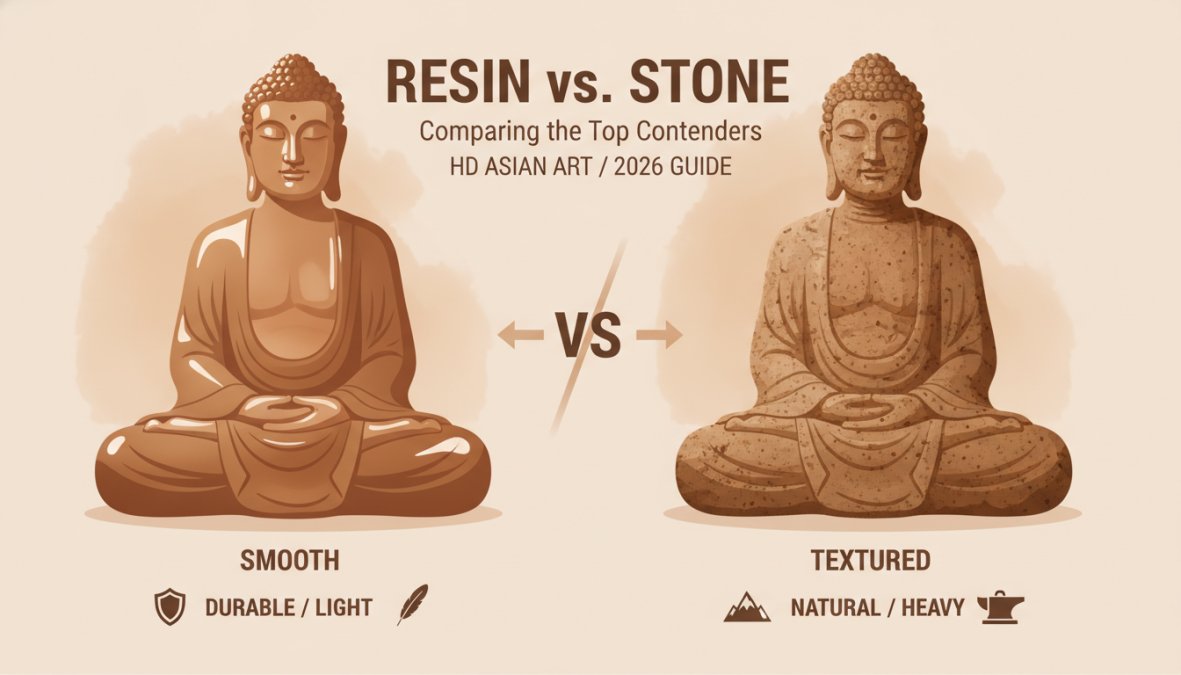
Resina: versatilità, dettaglio e convenienza
Le statue in resina offrono dettagli impeccabili, finiture uniformi e notevole versatilità a prezzi accessibili. La resina colata cattura intricate espressioni facciali, mudra e pieghe dei vestiti. Il materiale consente finiture finte, un pezzo in resina può sembrare bronzo, pietra o legno senza essere effettivamente quei materiali.
La resina funziona bene per i principianti o per coloro che vogliono verificare se una statua appartiene al loro spazio. È leggero, facile da spostare e richiede una manutenzione minima. Per gli appartamenti o gli affittuari che possono trasferirsi, la resina non presenta alcun rischio durante i traslochi.
Il compromesso è autenticità e presenza. Alla resina manca l'"anima" che portano i materiali intagliati a mano o formati naturalmente. Non invecchia né sviluppa carattere e può riflettere la convenienza e la mancanza di impegno.
Pietra: durabilità, energia radicata ed estetica naturale
Le statue di pietra, siano esse marmo, arenaria, granito o basalto, trasportano un'energia di radicamento intrinseca. Ogni pezzo è unico a causa della variazione naturale. La pietra invecchia magnificamente, sviluppando sottili agenti atmosferici che aggiungono carattere. Secondo ricerca sulla durabilità dei materiali della Geological Society di Londra, la pietra naturale sopravvive di secoli alla maggior parte delle alternative sintetiche se mantenuta correttamente.
L'arenaria offre calore e consistenza con una finitura opaca che riduce i riflessi visivi. Il marmo dona eleganza e luminosità. Granito e basalto forniscono peso e permanenza. Le statue di pietra sono più pesanti e più difficili da spostare, il che le rende ideali per spazi di meditazione permanenti. La manutenzione prevede una pulizia delicata con panni morbidi e una sigillatura occasionale a seconda del tipo di pietra.
| Materiale | Peso | Manutenzione | Longevità | Costo | Ideale per |
|---|---|---|---|---|---|
| Resina | Luce | Minimo | 10-15 anni | Basso | Principianti, affittuari, cercatori di dettagli |
| Arenaria | Pesante | Pulizia delicata | 50+ anni | Medio | Pratica a terra, giardini all'aperto |
| Marmo | Pesante | Sigillatura occasionale | 100+ anni | Alto | Spazi interni eleganti |
| Granito/Basalto | Molto pesante | Minimo | 100+ anni | Alto | Installazioni permanenti, all'aperto |
Fusioni in bronzo e statue in metallo per spazi di meditazione
Il bronzo rappresenta l'intersezione tra artigianato e tradizione spirituale. Le statue in bronzo benedette dai monasteri della regione himalayana hanno un profondo significato culturale, mentre i pezzi in bronzo contemporanei offrono un'estetica moderna con una durabilità tradizionale.
La maestria artigianale dietro le sculture in bronzo
La fusione del bronzo è una tecnica antica che richiede artigiani esperti. Il bronzo fuso viene colato in stampi dettagliati, creando sculture con dettagli raffinati e carattere. Ogni pezzo fuso presenta lievi variazioni, non esistono due statue in bronzo identiche.
Le statue di bronzo provenienti dai monasteri, disponibili tramite venditori come la collezione benedetta dai monasteri di Potala Store, spesso hanno un lignaggio spirituale. I monaci consacrano questi pezzi attraverso cerimonie rituali, aggiungendo l'attivazione cerimoniale all'oggetto fisico. Il sostegno alle statue provenienti dai monasteri indirizza i fondi verso programmi educativi monastici e conservazione culturale.
Il bronzo richiede più cure della pietra, ma premia tale cura con una notevole longevità. Una statua in bronzo ben mantenuta può durare secoli, sviluppando una patina naturale che si approfondisce nel tempo.
Sviluppo della patina e fascino estetico a lungo termine
La patina è lo strato superficiale ossidato che si forma sul bronzo nel corso di mesi e anni. Inizia luminoso e gradualmente si scurisce fino a diventare marroni e verdi profondi. Questa trasformazione non è deterioramento, è protezione. Lo strato di patina impedisce effettivamente la corrosione più profonda.
Molti praticanti ritengono che lo sviluppo della patina sia spiritualmente significativo. La statua cambia letteralmente insieme alla tua pratica, rispecchiando l'approfondimento della meditazione stessa. Le statue in bronzo da interni sviluppano lentamente la patina, rimanendo relativamente brillanti per anni. I pezzi per esterni in climi umidi accelerano il processo.
Legno intagliato a mano: calore, unicità e carattere naturale
Le statuette di Buddha in legno intagliate a mano portano calore e bellezza organica che nessun altro materiale eguaglia. Ogni pezzo è veramente unico, le venature del legno, le variazioni di colore e le sottili asimmetrie dell'intaglio a mano creano statue con carattere individuale.
Artigianato artigianale nelle statuette di Buddha in legno
L'intaglio del legno rappresenta forse l'espressione più diretta dell'abilità artigiana. Un intagliatore lavora direttamente con il materiale, rispondendo alle venature man mano che il pezzo emerge. Le statue in legno intagliate a mano da venditori come la collezione artigianale di Coco Papaya portano il tocco del produttore in ogni curva e superficie.
Il legno offre il calore che la pietra e il metallo non possono fornire. Il suo colore naturale varia dal miele chiaro al cioccolato intenso e nel tempo sviluppa una sottile patina. La qualità tattile del legno crea una connessione sensoriale con la statua che i praticanti spesso descrivono come radicamento. Le statue in legno sono più leggere della pietra o del bronzo, il che le rende ideali per il posizionamento su scaffali o altari portatili.
Suscettibilità del legno e considerazioni sul clima
Il limite principale del legno è la sensibilità ambientale. Le fluttuazioni di temperatura e umidità causano l'espansione e la contrazione del legno, causando potenzialmente crepe o deformazioni. Una statua di legno in una camera da letto climatizzata rimane stabile per decenni; la stessa statua in un bagno pieno di vapore si deteriora rapidamente.
Una cura adeguata prolunga significativamente la longevità della statua in legno. Un leggero condizionamento con oli naturali ogni 6-12 mesi protegge la finitura e mantiene l'equilibrio dell'umidità. Mantenere la statua lontana dalla luce solare diretta, da prese d'aria di riscaldamento e da fonti di umidità la preserva. Molti praticanti ritengono che questo rituale di cura stagionale approfondisca il loro rapporto con il pezzo.
Materiali durevoli per statue da meditazione all'aperto
Gli spazi di meditazione all’aperto richiedono materiali che resistano all’esposizione agli agenti atmosferici. Gli sbalzi di temperatura, l’umidità, le radiazioni UV e i cicli di gelo-disgelo eliminano alcuni materiali favorendone altri.
Resistenza agli agenti atmosferici e longevità dei materiali
La pietra e il bronzo dominano i giardini di meditazione all’aperto perché gestiscono lo stress ambientale. Il granito e il basalto resistono agli agenti atmosferici meglio delle pietre più morbide. Il bronzo sviluppa una patina protettiva. Entrambi i materiali effettivamente migliorano con l'età in ambienti esterni.
L'arenaria e il marmo si deteriorano più velocemente all'aperto rispetto al granito. La pioggia acida, l'aria salata e i cicli di gelo-disgelo danneggiano queste pietre più morbide. La resina e il legno si deteriorano all'aperto, la resina diventa fragile se esposta ai raggi UV e si crepa nei cicli di gelo-disgelo; il legno marcisce nonostante i trattamenti sigillanti. Se vuoi una statua da meditazione nel tuo giardino, scegli la pietra o il bronzo.
Distribuzione del peso e stabilità strutturale all'aperto
Le statue all'aperto sono esposte al vento e all'assestamento del terreno. Statue pesanti come il granito o il basalto forniscono stabilità attraverso la massa. Secondo linee guida di ingegneria del paesaggio dell’American Society of Landscape Architects, il posizionamento delle sculture all'aperto richiede la considerazione del tipo di terreno, del drenaggio dell'acqua e del movimento del terreno.
Posiziona le statue all'aperto su superfici piane e ben drenanti. Evitare i punti bassi dove si accumula acqua. Assicurati che la base non si sposti stagionalmente.
Come pulire le statue da meditazione: guide per la cura specifiche dei materiali
Una corretta manutenzione preserva l'aspetto e la longevità della tua statua.
Pulizia di resina e pietra senza danni
Le statue in resina necessitano solo di spolverare occasionalmente con un panno morbido e asciutto. Per una pulizia più profonda, utilizzare acqua tiepida e sapone neutro, quindi asciugare immediatamente. Non utilizzare mai spugne abrasive o prodotti chimici aggressivi.
Le statue di pietra tollerano una pulizia più aggressiva. Utilizzare spazzole a setole morbide e soluzioni di sapone delicato. Per lo sporco ostinato va bene un panno morbido inumidito con aceto bianco diluito. Sciacquare abbondantemente con acqua pulita e lasciare asciugare all'aria. Evitare le idropulitrici, che possono danneggiare le pietre più morbide.
Non usare mai candeggina o detergenti chimici aggressivi su nessuna statua.
Protocolli di mantenimento della patina del bronzo e di cura del legno
Il bronzo richiede cure diverse a seconda che si voglia preservarlo o rallentare lo sviluppo della patina. Per le statue in bronzo da interni, una leggera spolverata con un panno morbido mantiene l'aspetto. Se la patina si scurisce troppo, lucidare delicatamente con un panno morbido e un detergente per bronzo, quindi applicare la cera protettiva.
Le statue in legno necessitano di cure stagionali. Nelle stagioni secche, condizionare con oli naturali come olio di lino o di teak. Applicare con parsimonia con un panno morbido, seguendo la direzione delle venature del legno. Ciò previene le screpolature e mantiene la bellezza naturale. Nelle stagioni umide, garantire una buona circolazione dell'aria attorno alla statua.
Non immergere mai le statue in legno nell'acqua. Pulisci smacchiando con un panno appena umido, quindi asciuga subito.
Dimensioni, posizionamento ed etichetta domestica per la tua statua da meditazione
Le dimensioni e la posizione della statua influenzano profondamente il modo in cui funziona nella tua pratica di meditazione.
Creare armonia visiva nel tuo spazio sacro
Una statua troppo piccola scompare nel disordine; uno troppo grande diventa fonte di distrazione. Per uno scaffale visto da 3-4 piedi di distanza, una statua da 8-12 pollici fornisce un peso visivo adeguato. Per un angolo di meditazione visto da una posizione seduta a 2-3 piedi, una statua da 6-10 pollici funziona bene. Per uno spazio di meditazione in giardino visto da 10+ piedi, considera pezzi da 18-36 pollici.
Il colore e la finitura contano tanto quanto le dimensioni. Una statua in resina brillante richiede attenzione visiva. Una pietra opaca o un bronzo stagionato si allontanano, diventando un'ancora calma. L'altezza del posizionamento influenza il modo in cui la statua funziona spiritualmente. Il livello degli occhi o leggermente al di sopra crea l'uguaglianza; incontri lo sguardo del Buddha.
Principi del Feng Shui e posture simboliche del Buddha
Il Feng Shui è un luogo tradizionale Statua del Buddas in posizioni che supportano il flusso energetico e l'intenzione. Una statua posta di fronte all'ingresso della stanza accoglie l'energia positiva. Il posizionamento nell’angolo sud-est favorisce l’abbondanza; nel nord sostiene la carriera e il percorso di vita.
Diverse posture del Buddha hanno significati diversi. Il Buddha che ride rappresenta contentezza e abbondanza. Il Buddha meditativo seduto incarna la calma e la pace interiore. Il Buddha sdraiato simboleggia l'ingresso nel nirvana. Il Buddha in piedi rappresenta l'insegnamento o la protezione.
Evita di posizionare le statue nei bagni o nelle camere da letto, dove il feng shui tradizionale le considera irrispettose. Lo spazio di meditazione dovrebbe sembrare sacro.
Budget e qualità: considerazioni sull'approvvigionamento etico e sul commercio equo e solidale
Prezzo e qualità non sempre vanno d'accordo. Capire cosa determina i costi ti aiuta a prendere decisioni informate.
Artigianato artigianale del commercio equo e solidale e sostegno ai monasteri
Le statue in resina prodotte in serie costano dai 20 ai 50 dollari perché sono prodotte su larga scala. Le statue in legno intagliate a mano costano dai 50 ai 200 dollari perché gli artigiani investono ore di lavoro qualificato. Le statue di bronzo costano più di $ 200 perché la fusione richiede esperienza e spese materiali. Le statue di pietra variano ampiamente, da $ 60 per la semplice arenaria a $ 500+ per il marmo.
Il commercio equo è importante. Quando acquisti da venditori provenienti dai monasteri, i fondi sostengono le comunità monastiche e la conservazione culturale. I venditori focalizzati sull’artigianato garantiscono che intagliatori e scultori ricevano un giusto compenso.
Considera la durata della statua nel calcolo dei costi. Una statua in resina da 30 dollari che dura 10 anni costa 3 dollari all’anno. Anche una statua di pietra da 300 dollari che dura più di 100 anni costa 3 dollari all’anno. Se ammortizzati sulla durata di vita effettiva, i materiali di alta qualità spesso rappresentano un valore migliore.
Preoccupazioni su allergie e tossicità nella selezione dei materiali
La resina di bassa qualità può rilasciare gas di composti organici volatili, in particolare in spazi caldi e scarsamente ventilati. I produttori rispettabili utilizzano formulazioni sicure. Controlla le certificazioni di sicurezza del prodotto prima dell'acquisto.
Le finiture del legno a volte contengono sostanze chimiche dannose. Assicurati che le statue in legno utilizzino oli naturali o finiture sicure certificate. Chiedi ai fornitori informazioni sul loro processo di finitura.
La pietra e il bronzo sono materiali intrinsecamente sicuri senza problemi di tossicità. Se hai sensibilità chimiche, dai la priorità alla pietra, al bronzo o al legno con finitura naturale proveniente da fornitori certificati.
Scegliere i migliori materiali per le statue da meditazione domestica significa abbinare le proprietà dei materiali alla situazione di vita reale, all'impegno pratico e ai valori. Sia che tu dia priorità alla convenienza e al dettaglio attraverso la resina, alla presenza radicata attraverso la pietra, al carattere artistico attraverso il bronzo o al calore attraverso il legno, la tua scelta modella l'energia della tua pratica meditativa per gli anni a venire.
HD Asian Art è specializzata in statue accuratamente curate in tutte queste categorie di materiali, dai pezzi di legno intagliati a mano alle sculture in bronzo benedette dai monasteri alle selezioni di pietre naturali. La loro collezione enfatizza l'artigianato artigianale, l'approvvigionamento etico e pezzi progettati specificamente per migliorare gli spazi di meditazione.
Domande frequenti
Qual è il materiale migliore per una statua da meditazione?
Il materiale migliore dipende dal tuo spazio e dalla tua pratica. La pietra e il bronzo offrono durabilità ed energia di radicamento ideali per gli spazi di meditazione, mentre la resina offre convenienza e versatilità. Il legno intagliato a mano crea calore e carattere unico. Quando selezioni i materiali migliori per le statue da meditazione domestica, considera la durabilità, l'aspetto estetico, i requisiti di manutenzione e se la tua statua sarà all'interno o all'esterno.
Come posso pulire le statue da meditazione realizzate con materiali diversi?
I metodi di pulizia variano in base al materiale. Le statue in resina e pietra possono essere pulite delicatamente con un panno morbido e umido e sapone neutro. Il bronzo sviluppa una patina protettiva e deve essere pulito minimamente per preservarne il carattere. Il legno intagliato a mano richiede solo spolveratura a secco, evitare l'umidità. Utilizzare sempre materiali non abrasivi e testare prima i detergenti su aree poco appariscenti. Una corretta manutenzione prolunga la longevità del materiale.
Le statue da meditazione in pietra sono migliori della resina per creare uno spazio sacro?
Entrambi i materiali servono bene gli spazi di meditazione, ma in modo diverso. La pietra offre durata eccezionale, energia di messa a terra naturale e resistenza agli agenti atmosferici per installazioni esterne. La resina offre versatilità, fusione dettagliata e convenienza pur rimanendo visivamente accattivante all'interno. La tua scelta dipende dal budget, dal posizionamento, dall'impegno di manutenzione e dalla priorità data ai materiali naturali o alla durabilità pratica. Nessuno dei due è oggettivamente superiore, si tratta di allineamento con la tua pratica.
Cosa dovrei considerare quando scelgo materiali durevoli per le statue da meditazione all'aperto?
Per uso esterno, dare priorità alla resistenza agli agenti atmosferici e alla longevità del materiale. Pietra, basanite e bronzo sono scelte eccellenti che resistono all'esposizione ambientale. Considera il peso e la stabilità strutturale, i materiali più pesanti forniscono la messa a terra ma richiedono un posizionamento sicuro. Valuta il tuo clima: le aree con cicli di gelo-disgelo necessitano di materiali non porosi. Il bronzo sviluppa nel tempo una patina protettiva, mentre la pietra mantiene la stabilità. Evitare il legno all'aperto a meno che non sia sigillato, poiché l'umidità provoca il deterioramento.
