



¿Por qué elegir esculturas de estilo jemer para hogares modernos?
¿Por qué elegir esculturas de estilo jemer para hogares modernos?
Tabla de contenidos
El atractivo atemporal de las esculturas de estilo jemer
Esculturas jemeres une siglos de tradición artística con diseño contemporáneo, transformando espacios en entornos contemplativos. Estas piezas poseen una profundidad espiritual y un refinamiento estético que pocos objetos decorativos igualan. Llevan el peso del legado artístico del Imperio Jemer, una civilización que produjo algunas de las formas escultóricas más sofisticadas del sudeste asiático. Las expresiones serenas, los gestos deliberados con las manos y el equilibrio entre el idealismo espiritual y el realismo humano distinguen las esculturas jemeres de la decoración producida en masa.
En HD Asian Art, entendemos lo que buscan los coleccionistas y practicantes espirituales serios: autenticidad, significado cultural y piezas que realmente mejoren los espacios de meditación y los interiores refinados. Nuestra colección cuidadosamente seleccionada de esculturas jemeres y del sudeste asiático refleja este compromiso con la calidad y la preservación cultural.
Importancia histórica y patrimonio artístico
El legado del Imperio Jemer
El Imperio Jemer, que floreció aproximadamente entre los siglos IX y XV, estableció una tradición artística de extraordinaria sofisticación. Angkor Wat y el período angkoriano más amplio representan la cúspide del logro escultórico jemer. Los escultores jemeres desarrollaron un lenguaje visual distintivo que combina influencias hindúes y budistas en una síntesis única que define el arte del sudeste asiático. Trabajando principalmente en piedra arenisca, los artesanos tallaron detalles intrincados con precisión y paciencia, estas fueron inversiones de tiempo y experiencia que reflejan la importancia espiritual del trabajo.
A pesar de siglos de agitación política y alteración cultural, las tradiciones escultóricas jemeres sobrevivieron y continúan influyendo en el trabajo contemporáneo. Cuando exhibes una escultura jemer en tu hogar, participas en esta continuidad, reconociendo que la belleza y el significado espiritual trascienden las fronteras temporales.
Iconografía y simbolismo espiritual
Comprender el simbolismo de las esculturas jemeres profundiza el aprecio por estas piezas. Cada figura tiene significados específicos arraigados en la filosofía budista e hindú. Gestos con las manos, conocidos como mudras., comunicar distintos mensajes espirituales. Una mano levantada en señal de bendición transmite protección y compasión; Las manos en postura de meditación sugieren paz interior y disciplina espiritual.
La escultura jemer refleja un "idealismo sereno", no son retratos sino representaciones de estados espirituales. La leve sonrisa, los ojos bajos y la compostura general comunican una trascendencia más allá de las preocupaciones mundanas. Esta cualidad hace que las esculturas jemeres funcionen de manera diferente a los objetos puramente decorativos, fomentando estados contemplativos en lugar de una mera apreciación estética.
Las figuras de Apsara representan gracia y expresión artística; Los leones guardianes y Dvarapalas encarnan el poder protector y la autoridad espiritual. Comprender estas distinciones le ayudará a seleccionar piezas que se alineen con la energía prevista para su espacio.
Características estéticas clave que definen las esculturas jemeres
Expresiones serenas y gestos con las manos.
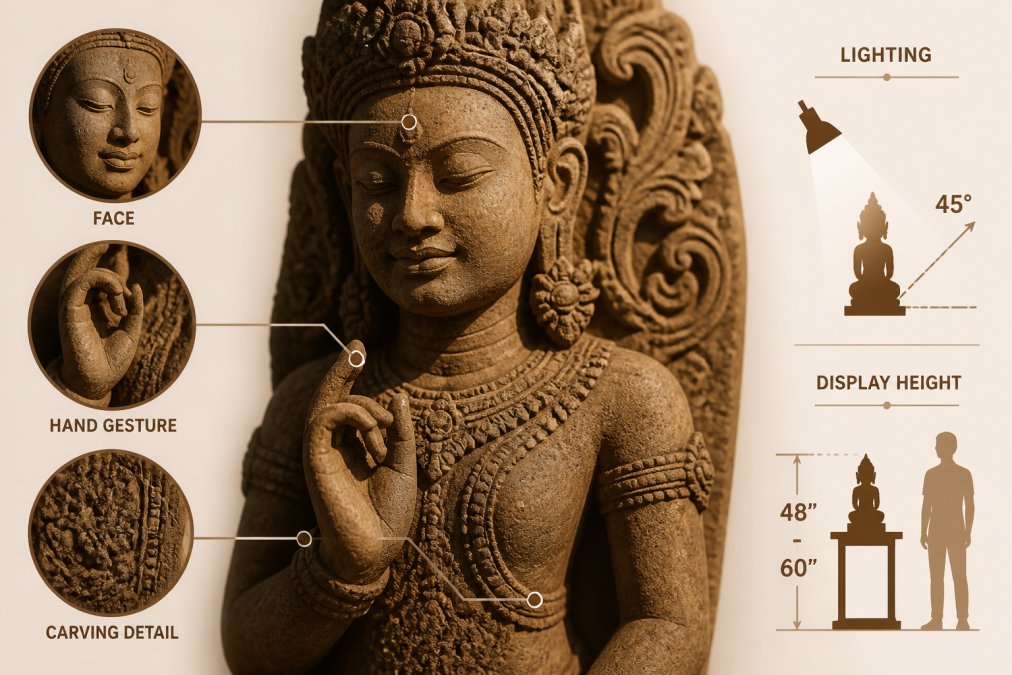
Los escultores jemeres lograron una coherencia notable al transmitir estados espirituales a través de los rasgos faciales y el lenguaje corporal. Las serenas expresiones reflejan una filosofía estética deliberada refinada a lo largo de generaciones. Los gestos con las manos tienen propósitos tanto funcionales como simbólicos, creando un ritmo visual dentro de formas estáticas. Una figura con las manos en posición de oración crea énfasis vertical; Las manos en postura de meditación enfatizan la quietud y la introspección.
Las proporciones en la escultura jemer siguen principios desarrollados a lo largo de siglos, creando una armonía visual que se siente inherentemente equilibrada. Esto refleja principios matemáticos y filosóficos arraigados en la tradición escultórica. Cuando colocas una escultura jemer en tu hogar, este equilibrio inherente la ayuda a anclar el espacio visual y energéticamente.
Equilibrio entre realismo e idealismo
Los escultores jemeres navegaron por una tensión sofisticada entre la precisión representacional y la idealización espiritual. Tallaron formas anatómicamente reconocibles y al mismo tiempo las abstraían hacia la perfección espiritual. Una escultura de Buda jemer parece que podría ser una persona real, pero sus proporciones idealizadas y su expresión serena la elevan más allá del retrato y la convierten en una representación espiritual.
Esta dualidad hace que estas piezas funcionen maravillosamente en interiores contemporáneos, lo suficientemente sofisticadas para sensibilidades de diseño refinadas y al mismo tiempo mantienen la presencia espiritual que atrae a los practicantes contemplativos. A medida que la piedra se desgasta y desarrolla pátina, las piezas ganan carácter sin perder dignidad, pareciendo curtidas en lugar de degradadas.
Cómo diseñar esculturas asiáticas en hogares modernos
Creando equilibrio visual en espacios seleccionados
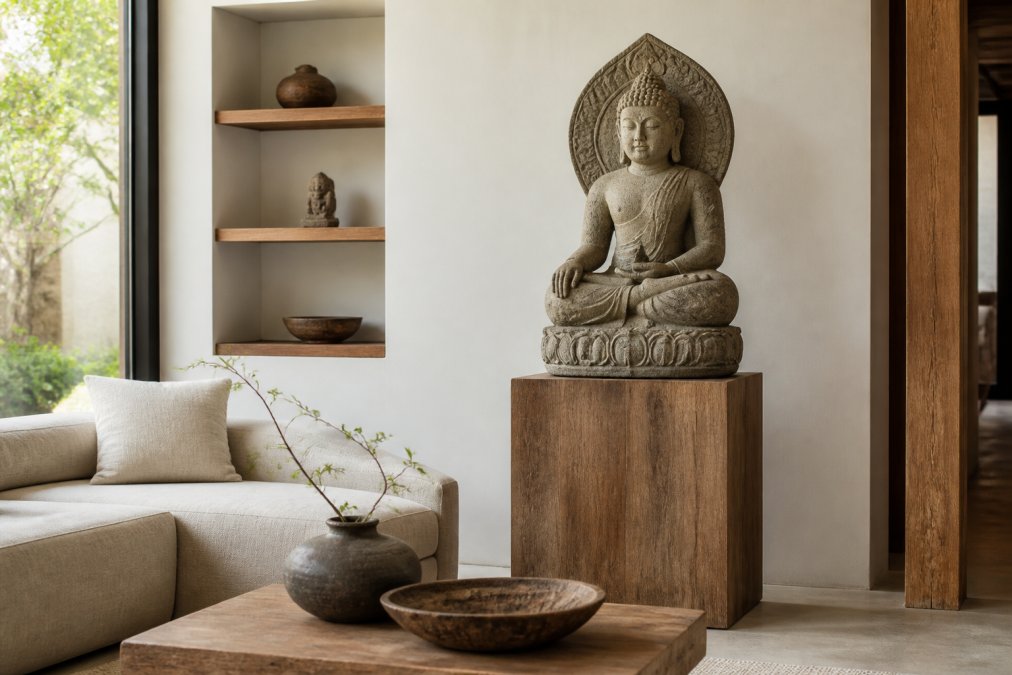
Para exhibir esculturas jemeres de manera efectiva es necesario comprender las relaciones espaciales y el peso visual. Una escultura jemer funciona como un ancla escultórica alrededor de la cual se organizan otros elementos de diseño. La escala importa significativamente: una gran escultura de piedra llama la atención y define el espacio circundante, mientras que una pieza más pequeña recompensa la observación minuciosa.
Considere las líneas de visión y el enfoque. ¿Dónde encontrarán los espectadores la escultura por primera vez? ¿Cómo interactúa el camino a través de tu espacio con la pieza? Coloque su pieza de modo que el ángulo de visión principal se alinee con su forma natural de moverse por el espacio.
El espacio negativo alrededor de la escultura es tan importante como la propia pieza. Estas piezas se benefician de un respiro, un simple pedestal de madera, una pared transparente detrás y elementos visuales mínimos en competencia permiten que surjan las cualidades inherentes de la escultura. Incluso en apartamentos pequeños, se puede crear claridad visual en torno a una única escultura significativa.
La materialidad de los elementos circundantes afecta la forma en que se lee su escultura. Esculturas de piedra combine maravillosamente con materiales naturales como madera, cuero y fibras naturales. Pueden trabajar con materiales contemporáneos como el hormigón o el acero, pero el contraste debe parecer intencionado.
Esculturas jemeres en interiores minimalistas
La filosofía del diseño minimalista y las tradiciones escultóricas jemeres se alinean notablemente bien. Ambos enfatizan la esencia sobre la ornamentación y la dimensión espiritual del espacio físico. Una única escultura jemer en un interior minimalista funciona como punto focal principal, llevando el peso visual y emocional de toda la habitación.
En ambientes minimalistas, cada objeto debe justificar su presencia. Las esculturas jemeres poseen suficiente complejidad visual y espiritual para mantener una atención prolongada. La paleta de colores se vuelve crucial: las esculturas jemeres en tonos de arenisca combinan maravillosamente con paredes blancas y pisos de madera clara. Los cálidos ocres y marrones de la piedra erosionada brindan un interés visual sutil sin introducir colores competitivos.
La iluminación debe resaltar la escultura en lugar de ocultarla. Una fuente de luz unidireccional crea sombras que revelan la tridimensionalidad. Evite el exceso de iluminación, que aplana la forma y elimina el modelado sutil que hace que la escultura jemer sea atractiva.
Mejores prácticas para exhibir esculturas de piedra
Cuidado y mantenimiento de materiales
Las esculturas de piedra requieren un mantenimiento mínimo pero se benefician al comprender las propiedades de sus materiales. La arenisca puede verse afectada por la humedad, las fluctuaciones de temperatura y los contaminantes atmosféricos. Sin embargo, en ambientes interiores controlados, las esculturas de arenisca permanecen estables durante siglos.
Quitar el polvo suavemente y con regularidad evita la acumulación de residuos. Utilice cepillos suaves o paños de microfibra en lugar de materiales ásperos. Evite los productos de limpieza comerciales, que pueden dañar la pátina. Si tu escultura requiere una limpieza más profunda, consulta con profesionales familiarizados con la conservación de la piedra.
La estabilidad de la temperatura y la humedad importa más que las condiciones específicas. Las fluctuaciones extremas tensionan la piedra mediante expansión y contracción. Elija ubicaciones de exhibición donde las condiciones sigan siendo relativamente consistentes. Los interiores con clima controlado, humedad estable (alrededor del 45-55%) y temperaturas moderadas son ideales.
Las esculturas de bronce requieren cuidados diferentes. El bronce desarrolla una pátina protectora con el tiempo. Evite pulir esta pátina a menos que desee específicamente un bronce brillante. Quitar el polvo ligeramente y una limpieza suave ocasional mantienen las piezas de bronce sin dañar su carácter.
Iluminación y ubicación ambiental.
La iluminación transforma la forma en que los espectadores perciben la escultura. La iluminación cenital directa aplana las formas tridimensionales; La iluminación direccional desde un lado o ligeramente desde abajo crea sombras que revelan forma y volumen. Esta es la razón por la que la iluminación de las exhibiciones de los museos utiliza fuentes cuidadosamente anguladas en lugar de iluminación ambiental.
La luz natural que entra por las ventanas proporciona una iluminación excelente si controlas la dirección y la intensidad. Coloque las esculturas donde la luz de la mañana o de la tarde cree sombras dinámicas. Evite el sol directo del mediodía, que crea fuertes contrastes y acelera la erosión de la superficie.
La iluminación artificial debe imitar la luz natural direccional. Un solo foco o riel de luz orientado hacia la escultura crea efectos dimensionales superiores a múltiples luces ambientales. Las temperaturas de color más cálidas (2700-3000K) complementan maravillosamente las esculturas de piedra.
La ubicación ambiental se extiende más allá de la iluminación. Evite colocarlo cerca de rejillas de calefacción, retornos de aire acondicionado o ventanas donde las diferencias de temperatura estresen la piedra. Las cocinas y los baños, con sus variaciones de humedad y temperatura, presentan desafíos. Las salas de estar, los dormitorios y los espacios dedicados a la meditación suelen ofrecer entornos más estables.
El control de la humedad es importante para la conservación. En climas muy secos, considere una humidificación sutil. En climas húmedos, asegure una circulación de aire adecuada para evitar la acumulación de humedad.
Autenticidad, abastecimiento y valor de inversión
Las preocupaciones sobre la autenticidad son legítimas al adquirir esculturas jemeres. El mercado incluye piezas antiguas genuinas, reproducciones contemporáneas de alta calidad y artículos tergiversados. Comprender el abastecimiento protege tanto su inversión como su integridad como coleccionista.
Las auténticas esculturas jemeres antiguas suelen proceder de comerciantes establecidos con historiales de adquisiciones documentados. Fuentes acreditadas como HD Asian Art mantienen registros cuidadosos y proporcionan documentación de autenticidad. Se comentan materiales, técnicas, edad aproximada y cualquier trabajo de restauración. Las afirmaciones vagas sobre su procedencia deberían plantear dudas.
Las reproducciones contemporáneas sirven para fines legítimos. Algunos están elaborados utilizando técnicas tradicionales por artesanos camboyanos, preservando las tradiciones escultóricas y creando piezas asequibles. Comprender qué categoría está comprando alinea su adquisición con sus intenciones. Una pieza contemporánea creada por hábiles artesanos tiene un valor cultural y artístico incluso si no es antigua.
El valor de la inversión en auténticas esculturas jemeres se ha apreciado históricamente. Sin embargo, la inversión nunca debería ser su principal motivación. Las piezas con las que usted realmente se conecta brindan retornos en calidad de vida que la apreciación financiera no puede medir.
Considere la ética de la adquisición. Los comerciantes legítimos obtienen piezas a través de canales legales que respetan las leyes internacionales de patrimonio cultural. La Convención de la UNESCO sobre Bienes Culturales protege el patrimonio cultural. Los distribuidores acreditados cumplen con estos marcos. Si una fuente parece evasiva sobre la adquisición, es una señal de advertencia importante.
El compromiso de HD Asian Art con el abastecimiento cuidadosamente seleccionado refleja la comprensión de que la autenticidad y la adquisición ética son importantes para los coleccionistas serios.
Conclusión
Las esculturas de estilo jemer ofrecen lo que pocas opciones de decoración del hogar pueden ofrecer: una fusión de sofisticación artística, presencia espiritual y significado cultural que se profundiza con el tiempo en lugar de desvanecerse con las tendencias. Estas piezas transforman espacios en santuarios donde convergen la belleza, la historia y la contemplación.
Arte asiático en alta definición's Una colección cuidadosamente seleccionada de piezas jemeres antiguas y contemporáneas cuidadosamente seleccionadas, combinadas con su especialización en esculturas del sudeste asiático y decoración inspirada en templos, aborda esto precisamente. Con envío gratuito y el compromiso de mejorar los espacios de meditación y los refinados interiores espirituales de los hogares, brindan la experiencia y la selección que los coleccionistas serios merecen.
Explora su colección y descubre cómo una única escultura significativa puede anclar tu espacio, fundamentar tu práctica y conectarte con siglos de tradición artística y espiritual.
Preguntas frecuentes
¿Qué diferencia las esculturas de estilo jemer de otras esculturas asiáticas?
Las esculturas de estilo jemer se originan en el Imperio jemer y presentan expresiones serenas distintivas, gestos intrincados con las manos y un equilibrio entre realismo e idealismo. A menudo representan deidades budistas, dioses hindúes y seres celestiales como Apsaras. La artesanía enfatiza la presencia espiritual y el simbolismo cultural específico de las tradiciones artísticas camboyanas, diferenciándolas de las formas escultóricas chinas, tailandesas o indias en su iconografía y lenguaje estético.
¿Cómo sé si una escultura jemer es auténtica?
Las esculturas jemeres auténticas suelen venir con documentación de su procedencia, incluidos detalles sobre dónde y cuándo fueron creadas. Busque piezas de comerciantes acreditados que se especialicen en arte del sudeste asiático y puedan verificar el artista, la composición del material y la edad. Los elementos hechos a mano como marcas de herramientas, pátina en piedra o bronce y variaciones en el acabado son indicadores de un trabajo genuino. Solicite información detallada sobre el historial de la pieza antes de comprarla, especialmente para artículos de mayor valor.
¿Pueden las esculturas jemeres funcionar en espacios pequeños como apartamentos?
Sí. Las esculturas jemeres van desde pequeñas piezas de mesa hasta grandes instalaciones llamativas. Las esculturas más pequeñas (de 6 a 18 pulgadas) funcionan maravillosamente en apartamentos, rincones de meditación y estanterías. La clave es elegir proporciones que se adapten a tu espacio y colocarlas donde creen un punto focal sin abrumar la habitación. Una sola pieza bien elegida sobre un pedestal o estante puede anclar un pequeño espacio o rincón de meditación, aportando presencia espiritual sin requerir grandes metros cuadrados.
¿Qué materiales son mejores para las esculturas jemeres en el interior de una casa?
La piedra y la arenisca son materiales tradicionales que envejecen maravillosamente y desarrollan carácter con el tiempo. Las fundiciones de bronce ofrecen durabilidad y una calidad estética diferente. Las tallas de madera brindan calidez y detalles intrincados. Para el interior de tu casa, ten en cuenta el clima y la capacidad de mantenimiento. La piedra y el bronce requieren un cuidado mínimo pero son más pesados; La madera necesita protección de la humedad en los baños. Cada material tiene diferentes cualidades espirituales y estéticas, así que elija según las necesidades prácticas y la energía que desea en su espacio.
