



Provenance Research for Asian Art: Step-by-Step Guide
Provenance Research for Asian Art: Step-by-Step Guide
Ask a seller where a bronze Buddha was before the 1950s and the honest answer is often a shrug. Ownership history is the factor that most separates a documented piece from one you cannot resell with confidence, yet many collectors treat it as paperwork to file later. Asian sculpture moved through temples, colonial households, dealers in several countries, and periods of war and upheaval, so the gaps are usually larger than they look. Provenance research for Asian art means closing those gaps before money changes hands, and it is a skill you can learn one step at a time.
Table of Contents
- Quick Takeaways
- What Provenance Actually Means for an Asian Sculpture
- Step 1: Read the Object Before the Archive
- Step 2: Build a Dated Chain of Ownership
- Step 3: Work Through Archives and Dealer Records
- Step 4: Check the Export and Legal Trail
- Comparing Three Research Routes
- Step 5: Document Your Findings and Keep Them With the Piece
- Common Mistakes That Undermine Provenance
- Frequently Asked Questions
- References
Quick Takeaways
|
Key Insight |
Explanation |
|---|---|
|
Read the object first |
Inscriptions, materials, and workshop marks can narrow the region and period before you open a single archive file. |
|
Build a dated chain of owners |
Record each owner, the approximate dates, and how the piece changed hands, and mark every gap as a gap. |
|
Use archives and finding aids |
Custodial histories and administrative notes often hold the ownership details that object records leave out. |
|
Check the export and legal trail |
A long ownership history only helps if you can show the piece left its country of origin lawfully under the rules of the time. |
|
Price the gaps |
An undocumented period is a risk to price in, not a detail to smooth over in the sales description. |
|
Keep the research with the piece |
A complete file that travels with the sculpture protects every later owner, including you. |
What Provenance Actually Means for an Asian Sculpture
Provenance is the history of an object's ownership from creation to the present. That definition sounds simple, but it covers every sale, gift, inheritance, loan, and change of custody a sculpture has passed through. The Smithsonian's National Museum of Asian Art describes provenance research as an essential part of art historical and museological scholarship, because ownership history shows how an object's function, meaning, and condition have changed over time.
Provenance also carries a legal question. The same museum notes that ownership history can reveal whether a work was acquired lawfully, and that it will take prudent steps to resolve the status of an item if it finds evidence of illegal activity. For a collector, a missing chapter in an ownership history can matter as much as a wrong date.
Why Asian Works Are Harder to Trace
Asian sculptures often left their original setting long before anyone wrote down who owned them. A figure may have stood in a temple, moved into a private household, passed through a dealer in a port city, and been exported again, with few written records at any step. Ownership before the twentieth century is often recorded only indirectly, through an old photograph, a family inventory, or a line in a dealer's notebook.
A common mistake is assuming the whole history will sit in one source. Most of the chain is built from fragments, and the real work is matching those fragments to the object in front of you. Expect to use several kinds of evidence, and accept that some links will stay unconfirmed.
What a Good Provenance Entry Looks Like
The National Museum of Asian Art presents provenance in chronological order, beginning with the earliest known owner. It indicates relationships between owners and the method of each transaction when those are known, and it uses footnotes to document its research. Dates reflect the beginning and end of each period of ownership, modified by prepositions when the exact dates are uncertain.
That format is worth copying in private research. "By 1920, in a Paris collection" can be tested against a source, while "long in France" cannot. Precise wording makes a chain checkable.
Pro tip: Write every entry with its evidence next to it, and label the source type, such as object label, archive, dealer record, or family account. A reviewer can then judge how much weight each link deserves.
Step 1: Read the Object Before the Archive
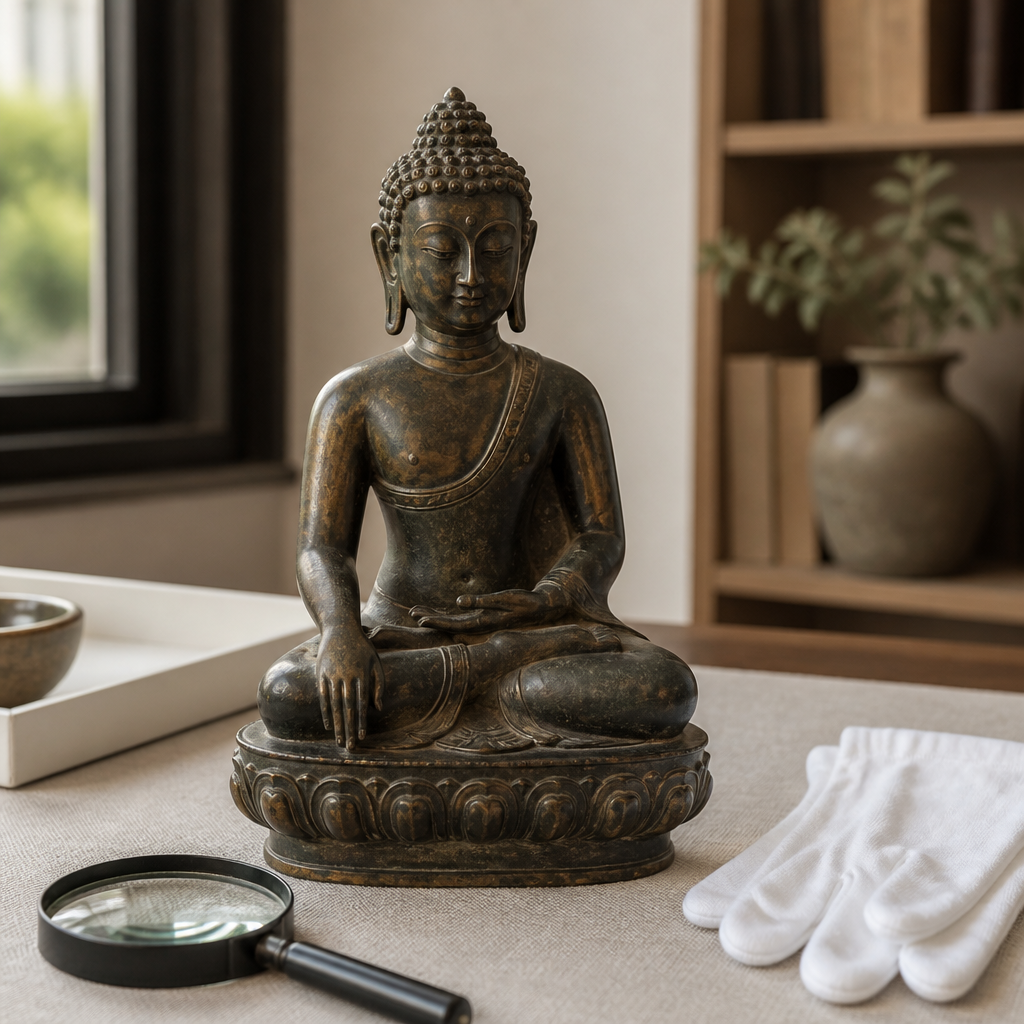
Start with the sculpture itself, because the object can narrow the search before you open a single file. Materials, casting or carving methods, surface wear, and inscriptions suggest a region and period, and those details tell you which archives and dealer networks to examine. A bronze with an inscription in a particular script points you toward different sources than an unmarked stone figure.
Examine the piece with a critical eye for later interventions. Repairs, replaced heads, new bases, and restored gilding change how a sculpture reads, and they are easy to mistake for original features. Note each one, because a restoration may have been carried out during a period of ownership you still need to document.
Inscriptions, Materials, and Workshop Marks
Inscriptions are the most useful evidence and the easiest to misread. Have a specialist translate and date any text rather than relying on the seller's reading. Record the exact wording, its location on the piece, and whether it appears original, added later, or ambiguous.
Workshop marks and casting signatures can connect a piece to a known production center. A mark is evidence of origin, not of ownership, so keep those two questions separate in your notes.
Condition as a Record of Handling
Surface patina, abrasion, and old breaks reveal how a piece was used. A figure worn smooth at the base may have been moved often or handled as a devotional object. Photograph each area of wear from several angles and date the images, because the record stays useful even after the sculpture is cleaned or conserved.
In practice, the underside, the join at the base, and any seal or label are where previous owners' marks tend to survive. Check those areas before anyone moves the piece.
Step 2: Build a Dated Chain of Ownership
Once you have a clear view of the object, build the ownership chain as a dated list, earliest owner first. Each entry should name the owner or institution, give the approximate dates of ownership, describe how the object changed hands, and cite the evidence. Mark each gap as a gap instead of smoothing it over.
The discipline here is refusing to fill silence with assumption. If a piece appears in a mid-century auction catalogue, you know it was offered for sale on a particular date, but not that the consignor held it for twenty years. Record what the document says and nothing more.
A gap in an ownership history is not a neutral blank. It is the question the next buyer will ask, and it costs far less to answer before you pay.
Recording Dates Without Overstating Them
Dates in older records are often approximate, recalled from memory, or restated decades later. Use qualifiers rather than false precision. "Before 1950" and "by 1950" are not the same claim, and treating them as equal is how weak histories turn into confident ones.
Keep a separate field for dates you have inferred rather than found. When a later buyer or auction house reviews your file, they will trust the entries that show their basis.
Handling Transactions and Changes of Custody
Not every change of custody is a sale. Loans, consignments, deposits, inheritances, and gifts move objects without always transferring full ownership, and they leave confusing traces. A loan record in a museum file does not mean the museum bought the piece, so write down the type of transaction, not just the fact that something moved.
Use one consistent vocabulary across the whole file. Mixing "sold", "passed to", and "acquired from" for the same event makes it hard to see what actually happened.
Step 3: Work Through Archives and Dealer Records
Archives are where ownership chains usually open up. Collection databases, finding aids, auction catalogues, exhibition records, and dealer stock books all contain clues, but they are organized differently and rarely cross-reference one another. Decide in advance which records you will check and in what order, so you do not follow every lead at once.
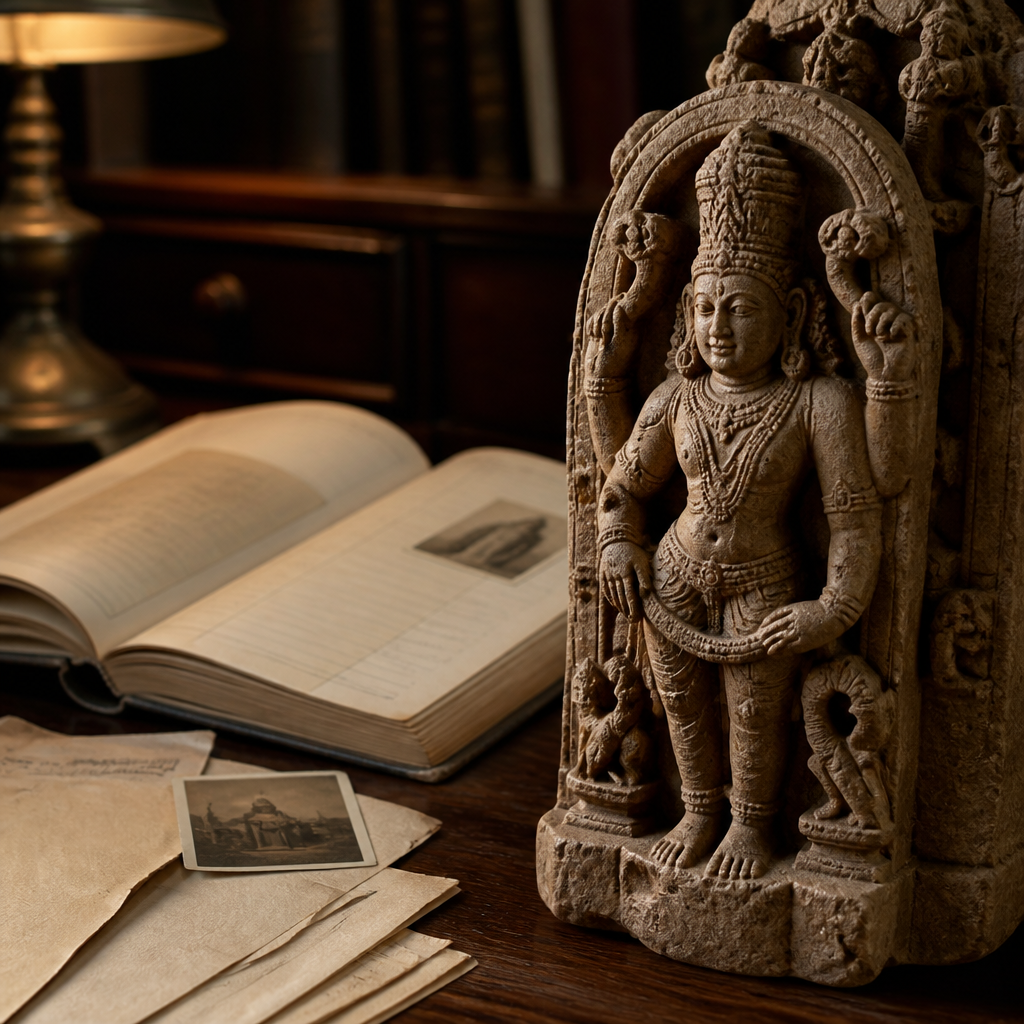
Published museum provenance is a sensible starting point because it is written for public review. The National Museum of Asian Art shares object histories on individual object pages under the "Provenance" heading. The Freer and Sackler Archives record custodial history in the "Custodial History" and "Administrative Section" of each collection finding aid, so the search does not stop at the object pages.
Finding Aids and Custodial Histories
A finding aid is an archive's guide to its holdings, and the custodial history section is where ownership details tend to appear. Read the full aid rather than searching for a single keyword, because the relevant note may sit under an unexpected heading. When a sculpture's own record is thin, a related accession file may name the same dealer or donor.
Check the institution's provenance pages as well. Some museums publish notes on how they document ownership, and those notes help you judge how much confidence to place in their entries.
Dealer Stock Books and Auction Records
Dealer records are harder to reach, but they often give the most detail for twentieth-century transactions. Stock books, invoices, and correspondence can name a buyer, a price, and a date. Find out where a dealer's papers are held, whether by a public library, a museum, or the family, and write with a precise request.
Auction catalogues are public, but a lot number alone does not identify an object. Compare the description, dimensions, and photographs against your piece, and note where the match is strong and where it depends on a guess.
Step 4: Check the Export and Legal Trail
An ownership history answers only half the question. You also need to know whether the piece left its country of origin under the rules in force at the time, and whether it has ever been the subject of a claim. Lawful acquisition is the point at which a chain of owners becomes a defensible one.
Export rules differ by country and by period, and they have changed repeatedly. Do not assume that a piece which left Asia decades ago did so legally, and do not assume the opposite either. Ask a specialist in the relevant national law and keep that advice in your file.
Colonial and Conflict-Era Acquisitions
Many Asian works entered Western collections during colonial rule, military campaigns, or civil unrest. The Smithsonian's Asian art provenance work includes in-depth research into the looting of the western tombs by Western allies during the Boxer Uprising (1900-1901), a reminder of how directly conflict and acquisition can be linked in the record. If your piece dates to such a period or passed through a collection formed then, the questions get harder and the documentation has to be stronger.
A practical rule: when a gap falls within a conflict or colonial period, do not close it with an assumption about how the piece was obtained. Record the gap and seek specialist advice before you commit.
When to Stop and Ask for Help
Stop when you find evidence of a claim, a looted object, or a sale connected to an institution under review. At that point, a dealer's reassurance is not enough. Consult an independent specialist, and do not resell until the question is resolved.
Comparing Three Research Routes
Collectors usually draw on three routes to ownership evidence, and each has different strengths. The table below compares them. The strongest files use all three so that each source can check the others.
|
Research route |
Best used for |
Main limitation |
|---|---|---|
|
Published museum provenance entries |
Setting a verified baseline and seeing how a reputable institution documented a similar object |
Entries cover only objects the institution holds and may not name private owners |
|
Archival finding aids and custodial histories |
Identifying earlier owners, accession files, and related donors |
Access is often restricted, and records may need to be requested in writing or in person |
|
Dealer stock books, invoices, and auction catalogues |
Confirming dates, prices, and buyers for twentieth-century transactions |
Records can be incomplete, and a stock entry or lot number does not always match the object in hand |
In practice, a museum entry gives you a benchmark, archives give you names, and dealer and auction records give you dates. A piece whose three sources agree is far stronger than one supported only by a seller's account. When the sources disagree, treat the disagreement as the most important finding in the file.
Step 5: Document Your Findings and Keep Them With the Piece
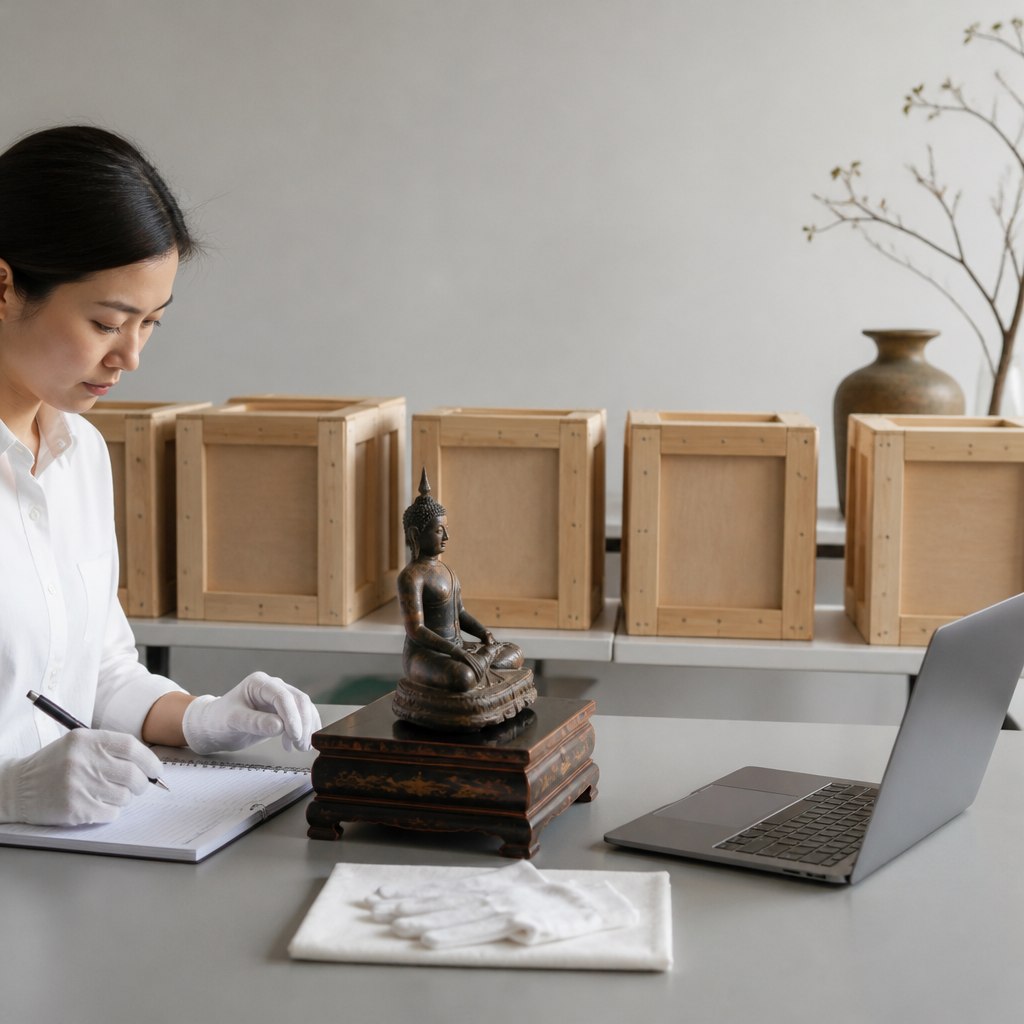
Research only protects you if it is written down clearly enough for someone else to follow. Compile a file that includes the object report, the dated ownership chain, copies of key documents, a list of gaps, and a short summary of what remains unverified. Include the date of your research and the names of anyone you consulted.
Building a File Someone Else Can Verify
Use footnotes or numbered references that point to each source. A reader should be able to locate the original record without asking you for it. Store scanned copies in a durable format and keep originals in a dry, stable place away from light.
Write a one-page summary for the front of the file. It should state the piece's identity, the confirmed owners, the unconfirmed links, and the open questions.
Passing Records to the Next Owner
Documentation is only useful if it stays with the object. When you sell, give the buyer the full file rather than a summary, and note any new findings you made while you owned the piece. A well-kept file supports the next sale and saves future owners from repeating your work.
Pro tip: Ask every seller, including dealers you trust, for the name of the previous owner and the date they acquired the piece. A refusal to name a source tells you something important, even before you read the documents.
Common Mistakes That Undermine Provenance
Most failed provenance research comes from a small set of habits. They are easy to avoid once you know what to look for, and experienced collectors make them as often as beginners. Each one turns a story into something that looks like evidence.
Treating a Photograph as Proof of Ownership
A photograph in an old catalogue or family album shows that an object existed and looked a certain way at a certain time. It does not show who owned it unless a caption or accompanying record says so. Note what the image proves and what it only suggests.
Accepting a Lineage Without Dates
A claim such as "from an old family collection" is a starting point, not a provenance. Ask for the family name, the approximate period, and any documents that support the claim. If the seller cannot provide them, record the claim as unverified and price accordingly.
Mistaking a Lot Number for an Identity
Auction and sale numbers are useful only when the description, dimensions, and photographs agree with the object. Matching a single general detail, such as the subject, is not enough to link two records. Keep a note of each match and each mismatch so that the reasoning stays visible.
Frequently Asked Questions
How long does provenance research for an Asian sculpture usually take?
It varies widely. A piece with a published museum record and a clearly documented twentieth-century sale can be checked in a few weeks, while a sculpture with no papers may take months and still end with gaps. Set a stopping point in advance so that research does not drift on indefinitely.
Do I need a specialist to do provenance research?
For anything beyond a basic check, yes. A specialist can read inscriptions, identify materials, and advise on export law, which are the areas where collectors most often make avoidable errors. Look for someone who works with museum collections or publishes on the field, not only someone who sells.
What should I do if a seller has no documents at all?
Treat the piece as unverified and price the risk accordingly. A missing file is not automatically a dealbreaker, but the object's history then rests on its physical evidence and your own analysis. Some collectors buy undocumented pieces knowingly, and that is a reasonable decision only when the price reflects the gap.
Is a museum provenance entry enough to show a piece is legal to own?
No. A museum entry is strong evidence of documented history, but it does not replace a check of export and national law for the period in question. Use the entry as a benchmark, then test its claims against other sources.
What documents should I ask a dealer for before buying?
Ask for the previous owner's name, the date of acquisition, any invoices or receipts, export or import papers if they exist, and dated photographs of the object if they have them. Request these before you pay, not after the sale is complete.
Can provenance research change the value of a piece?
Yes. A well-documented chain can support a higher price and a smoother resale, while a serious gap can reduce both. The effect is strongest for pieces with a known historical connection, but it applies to most sculptures of meaningful value.
Which record surprised you most when you traced the history of an Asian sculpture, and how did it change your decision about the piece?
References
-
Smithsonian National Museum of Asian Art overview of its provenance research program
-
Asian Art Museum explanation of how provenance is determined and researched
-
Provenance and Asian Art collaborative workshop and symposium description
