



Cómo limpiar estatuas religiosas de bronce: una guía completa
Cómo limpiar estatuas religiosas de bronce: una guía completa
Tabla de contenidos
Cómo limpiar estatuas religiosas de bronce: primeros pasos esenciales
Aprender a limpiar estatuas religiosas de bronce requiere comprender el equilibrio entre eliminar la suciedad acumulada y preservar la pátina que da carácter y personalidad a estas piezas sagradas. significado espiritual. Las esculturas religiosas de bronce merecen un cuidado que respete su valor artístico y espiritual. Esta guía lo guiará a través de métodos de limpieza seguros y efectivos que protegen la integridad de sus preciadas piezas mientras restauran su belleza natural.
Las estatuas de bronce acumulan polvo, residuos de incienso, cera de velas y oxidación ambiental con el tiempo. Muchas personas asumen que una limpieza agresiva los devolverá a su condición "como nuevos", pero ese enfoque a menudo daña la pátina protectora. El método correcto combina técnicas suaves con materiales adecuados para limpiar sin dañar lo que hace valiosas a estas estatuas.
Comprender el estado de su estatua de bronce
Antes de aplicar cualquier solución limpiadora, evalúe cuidadosamente la superficie de su estatua. ¿Está uniformemente oscuro o ve áreas de acumulación más clara? ¿Hay grietas visibles, manchas de corrosión verde o azul verdosa o pátina desigual? Estas observaciones determinan qué método de limpieza funcionará mejor.
Por qué es importante la pátina en las esculturas religiosas
La pátina de una estatua religiosa de bronce no es suciedad, es una capa protectora que se forma naturalmente durante décadas o siglos. Esta apariencia desgastada tiene un peso histórico y una resonancia espiritual que muchos coleccionistas y profesionales valoran profundamente. Quitar toda la pátina para exponer el bronce brillante debajo destruye el carácter y la autenticidad histórica de la estatua.
La pátina también tiene un propósito práctico: protege el bronce subyacente de una mayor oxidación y corrosión. Al limpiar una estatua de bronce, el objetivo es eliminar los contaminantes de la superficie dejando la pátina intacta.
Herramientas y materiales necesarios para el cuidado seguro de las estatuas de bronce
Una limpieza exitosa del bronce comienza con los materiales adecuados. El uso de herramientas incorrectas, cepillos ásperos o productos químicos fuertes causa más daño que la suciedad que intentas eliminar.
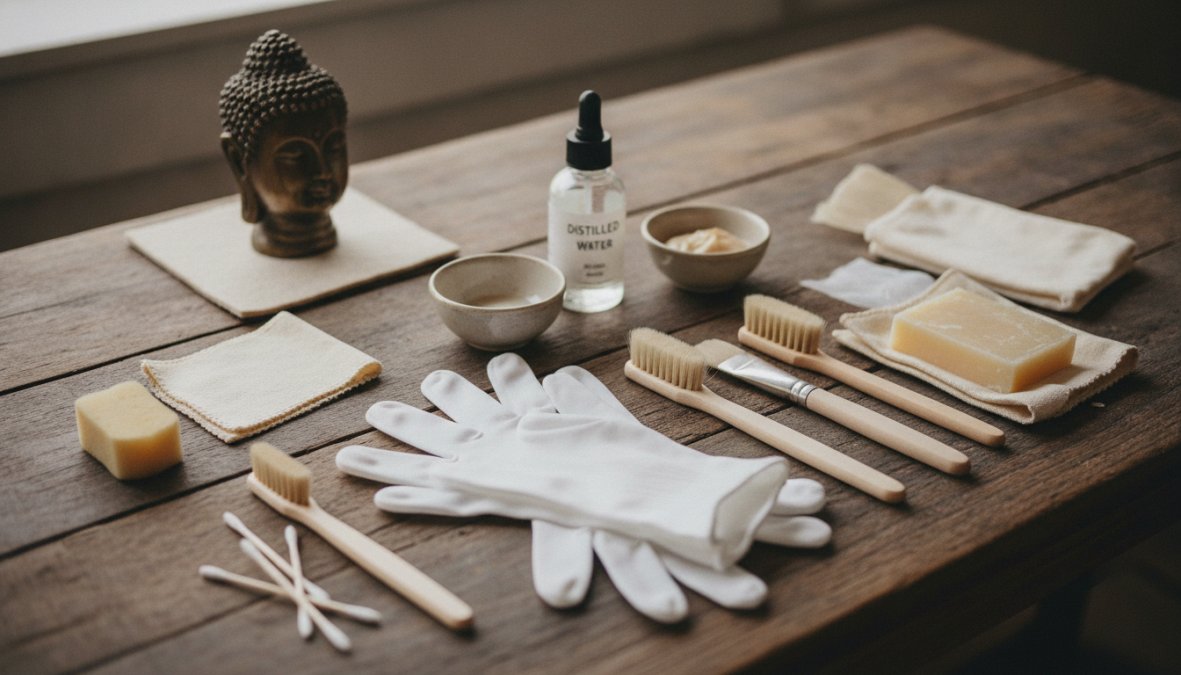
Cepillos suaves y paños sin ácidos
Los cepillos de cerdas suaves diseñados para superficies delicadas son fundamentales. Los cepillos de cerdas naturales funcionan mejor que los sintéticos porque es menos probable que se rayen. Los paños sin ácidos previenen reacciones químicas que dañan la pátina. Los paños de microfibra funcionan bien porque atrapan el polvo sin rayarlo. Evite las toallas de papel, que son abrasivas y dejan fibras.
Soluciones de limpieza con pH neutro
La química de su solución de limpieza es muy importante. Las soluciones ácidas o alcalinas pueden grabar la superficie del bronce o provocar una oxidación no deseada. El agua destilada es tu base, el agua del grifo contiene minerales y cloro que dejan manchas y depósitos en el bronce. Un jabón suave para platos formulado para lavarse las manos mezclado con agua destilada crea una solución de limpieza suave. Utilice aproximadamente una parte de jabón suave por diez partes de agua destilada.
Proceso paso a paso: limpieza sin dañar la pátina
Este enfoque sistemático minimiza el riesgo al tiempo que elimina eficazmente los contaminantes de la superficie.
Paso 1: Quite el polvo y los residuos de la superficie
Comience eliminando el polvo y las partículas sueltas sin ningún líquido. Utilice un cepillo de cerdas suaves o un paño de microfibra para cepillar suavemente la superficie de la estatua, trabajando en la dirección de la veta o la textura. Preste especial atención a las grietas y pliegues donde el polvo se acumula de forma natural.
Paso 2: Pruebe primero su solución de limpieza
Antes de aplicar la solución limpiadora a toda la estatua, pruébala en un área pequeña y discreta como la parte posterior de la base. Aplicar una pequeña cantidad, dejar reposar dos minutos y luego secar completamente. Examine el área de prueba cuidadosamente para detectar cualquier decoloración, grabado o cambio en la apariencia de la pátina.
Paso 3: Lavado suave con jabón suave y agua destilada
Una vez que hayas confirmado que la solución es segura, comienza a lavar la estatua. Humedezca un paño suave con su solución limpiadora; debe estar húmedo, no goteando. Trabaje metódicamente de arriba a abajo, limpiando una sección a la vez. Utilice movimientos circulares suaves, permitiendo que la solución disuelva los contaminantes de la superficie en lugar de frotar agresivamente. Para una acumulación intensa, aplique la solución y déjela reposar durante dos o tres minutos antes de limpiar suavemente.
Paso 4: Secar para evitar manchas de agua
Cómo secas tu estatua es tan importante como cómo la lavas. Las manchas de agua se forman cuando el agua que contiene minerales se seca en la superficie. Utilice paños de microfibra limpios y secos para absorber la humedad inmediatamente después del lavado. Trabaje con el mismo patrón de arriba a abajo, asegurándose de que no se acumule agua en las grietas o áreas detalladas. Deje que la estatua se seque completamente al aire libre en un área bien ventilada.
Hacer y usar un limpiador de bronce casero
Una sencilla solución casera le brinda un control total sobre los ingredientes y el pH, asegurando que su estatua religiosa reciba el cuidado más suave posible.
Fórmula simple de agua destilada y jabón suave
El limpiador de bronce casero más eficaz es también el más sencillo. Combine una parte de jabón suave para lavar manos con diez partes de agua destilada. Esta proporción crea una solución lo suficientemente fuerte como para disolver la acumulación de luz sin ser lo suficientemente dura como para dañar la pátina. Mezcle su solución fresca para cada sesión de limpieza, ya que las soluciones caseras carecen de conservantes.
Consideraciones ambientales y de seguridad química
Incluso el jabón suave conlleva responsabilidad medioambiental. Cuando enjuagas tu estatua de bronce, el agua con jabón ingresa a los sistemas de aguas residuales. El uso de una cantidad mínima de jabón y agua destilada reduce la carga química en el tratamiento del agua local y los ecosistemas naturales. Nunca utilice limpiadores de bronce comerciales fuertes que contengan ácidos, fosfatos o solventes fuertes en estatuas religiosas.
Abordar manchas específicas: residuos de incienso y cera de velas
estatuas religiosas A menudo acumulan tipos específicos de acumulación relacionados con la práctica espiritual.
Eliminar la acumulación de incienso del uso religioso
Los residuos de incienso aparecen como una película oscura, a veces aceitosa. Aplique su solución de jabón suave y agua destilada en el área afectada y déjela reposar durante cinco a diez minutos. Luego limpie suavemente con un paño suave, ejerciendo una presión mínima. Para una acumulación intensa, repita el proceso de remojo y paño dos o tres veces en lugar de frotar con fuerza una vez.
Técnicas suaves de eliminación de cera
La cera de las velas se adhiere al bronce de forma diferente que el polvo o los residuos de incienso. Nunca raspe ni desprenda la cera, ya que esto daña la pátina subyacente. Deje que la cera endurecida se caliente ligeramente en sus manos o bajo la suave luz solar a temperatura ambiente. Para una acumulación de cera más espesa, aplique una solución de jabón suave y agua destilada y déjela reposar durante quince a veinte minutos. Varias aplicaciones funcionan mejor que intentos únicos agresivos. Nunca utilices disolventes como acetona o alcohol para disolver la cera.
Restaure la pátina de bronce mientras limpia estatuas de bronce al aire libre
al aire libre estatuas de bronce enfrentan una exposición a la intemperie que crea diferentes desafíos de limpieza y protección que las piezas de interior.
Capas protectoras de cera y aplicación de cera microcristalina
Después de la limpieza, las estatuas de bronce para exteriores se benefician de una capa protectora de cera. La cera microcristalina específicamente formulada para bronce brinda protección contra la intemperie sin alterar la apariencia de la pátina. Aplique cera microcristalina solo después de que su estatua esté completamente seca. Utilice un paño suave para aplicar una capa fina y uniforme en toda la superficie. Deje que la cera se seque durante 24 horas antes de exponer la estatua a la intemperie o la humedad.
Técnicas de pulido para una protección uniforme
Después de que la cera se seque, el pulido crea una capa protectora uniforme y resalta el brillo natural del bronce. Utilice un paño limpio y suave para pulir suavemente toda la estatua con ligeros movimientos circulares.
Limpieza de estatuas de bronce al aire libre: factores climáticos y ambientales
Las estatuas de bronce para exteriores requieren programas de mantenimiento diferentes a los de las piezas para interiores porque la exposición a la intemperie crea desafíos únicos.
Mantenimiento estacional para estatuas desgastadas
En climas templados, programe una limpieza profunda en primavera y otoño. La limpieza de primavera elimina la acumulación invernal y prepara la estatua para la exposición del verano. La limpieza de otoño aborda el polvo y el polen del verano antes de que lleguen la humedad del invierno y las temperaturas bajo cero. En climas tropicales o costeros húmedos, aumente la frecuencia de limpieza a trimestral o mensual para estatuas en ambientes con alto contenido de sal.
El invierno en climas fríos presenta desafíos únicos. Los ciclos de congelación y descongelación pueden dañar el bronce si el agua penetra en la superficie y se expande a medida que se congela. Asegúrese de que su estatua esté completamente seca antes de que llegue el invierno y vuelva a aplicar cera protectora antes de la primera helada.
Prevención de la corrosión y la oxidación a largo plazo
La preservación del bronce a largo plazo depende de prevenir la penetración de humedad y controlar la oxidación. Inspeccione las estatuas exteriores trimestralmente en busca de signos de corrosión: manchas verdes o azul verdosas, depósitos de polvo blanco o pátina descascarada. Coloque las estatuas al aire libre donde el agua drene naturalmente en lugar de acumularse en la base.
Errores comunes que se deben evitar al limpiar piezas de bronce religiosas
Comprender qué no hacer es tan importante como conocer las técnicas correctas.
Productos químicos agresivos y herramientas abrasivas
Los limpiadores de bronce comerciales que contienen ácidos, fosfatos o disolventes fuertes dañan la pátina de forma irreversible. Los cepillos de alambre, la lana de acero y los estropajos abrasivos rayan y rayan las superficies de bronce. Nunca utilices lavadoras a presión ni chorros de agua a alta velocidad en estatuas de bronce.
Limpieza excesiva y eliminación de pátina intencional
El mayor error es limpiar con demasiada frecuencia o de forma demasiado agresiva. Las estatuas de bronce no necesitan limpieza todos los meses o incluso todos los años en la mayoría de los casos. La limpieza anual de las estatuas exteriores y la limpieza sólo cuando se produzca una acumulación visible en las piezas interiores representa un mantenimiento adecuado. Algunos coleccionistas se obsesionan con hacer que las estatuas parezcan "nuevas" eliminando toda la pátina, lo que destruye la autenticidad y el carácter histórico de la estatua.
Comprenda la diferencia entre suciedad superficial y pátina. La suciedad se puede quitar; la pátina es permanente y protectora. Si no estás seguro de si algo es suciedad o pátina, déjalo en paz.
Preservar estatuas religiosas de bronce requiere comprender que estas piezas tienen propósitos más allá de la decoración. Son puntos focales espirituales, logros artísticos y registros históricos de artesanía y tradición. Los métodos de limpieza suaves que se describen aquí respetan las tres dimensiones de su valor.
HD Asian Art selecciona estatuas religiosas de bronce prestando atención a la autenticidad, la artesanía y la resonancia espiritual. Ya sea que esté limpiando una estatua recién adquirida o manteniendo una pieza que ha sido parte de su práctica espiritual durante décadas, estos métodos garantizan que su bronce permanezca hermoso y protegido para las generaciones venideras. Explora nuestra colección para descubrir estatuas dignas de este nivel de atención dedicada.
Preguntas frecuentes
¿Cuál es la mejor forma de limpiar una estatua religiosa de bronce sin quitarle la pátina?
Utilice un cepillo de cerdas suaves y un jabón suave con agua destilada para eliminar suavemente el polvo y los residuos de la superficie. Primero prueba tu solución de limpieza en un área oculta. Evite productos químicos agresivos o herramientas abrasivas que puedan quitar la pátina protectora. Seque bien con un paño suave para evitar manchas de agua. La pátina, esa capa verdosa o marrón, es parte del carácter y el valor histórico de la estatua, por lo que un mantenimiento preventivo suave es clave para preservarla y al mismo tiempo mantener efectiva la rutina de cuidado de la estatua de bronce.
¿Cómo se hace un limpiador de bronce casero que sea seguro para estatuas religiosas?
Mezcle agua destilada con una pequeña cantidad de jabón suave con pH neutro para crear un suave limpiador de bronce casero. Esta fórmula evita productos químicos agresivos y es segura para el medio ambiente. Aplicar con un paño suave, trabajando suavemente sobre la superficie. Para residuos rebeldes como acumulación de incienso o cera de velas, use una solución ligeramente tibia, pero nunca frote agresivamente. Pruebe siempre este limpiador de bronce casero en un área discreta primero para asegurarse de que no afecte la pátina o el acabado que desea conservar.
¿Cómo debo aplicar cera protectora para restaurar la pátina del bronce después de la limpieza?
Después de la limpieza y secado completo, aplique una fina capa de cera microcristalina con un paño suave, trabajando en pequeñas secciones. Utilice movimientos circulares suaves para pulir la cera en la superficie de manera uniforme. Esta capa protectora de cera crea una barrera contra la oxidación y la corrosión al tiempo que mejora la apariencia de la estatua. Deje que la cera se asiente durante unas horas antes de manipularla. El encerado regular, generalmente cada 6 a 12 meses, dependiendo de la ubicación en interiores o exteriores, ayuda a restaurar la apariencia de la pátina de bronce y extiende la vida útil de su estatua religiosa.
¿Cuándo debo buscar una restauración profesional para mi estatua religiosa de bronce?
Busque una restauración profesional si su estatua muestra corrosión profunda, picaduras activas, daños estructurales o si la limpieza hecha por usted mismo no ha resuelto manchas o decoloración significativas. Los restauradores profesionales cuentan con herramientas y experiencia especializadas para manipular de forma segura piezas valiosas o antiguas sin comprometer la integridad histórica o el significado religioso. Pueden evaluar si su estatua necesita un tratamiento de conservación especializado más allá del mantenimiento regular. No intente una limpieza agresiva en estatuas particularmente viejas, frágiles o irremplazables; el cuidado profesional protege tanto la obra de arte como su inversión.
