



Hand Mudras for Focus and Concentration: A How-To Guide
Hand Mudras for Focus and Concentration: A How-To Guide
Table of Contents
- What Hand Mudras Are and How They Work
- Mudras for Concentration: The Gestures Worth Learning First
- How to Do Yoga Mudra: Step-by-Step Finger Placement
- Mudra Practice for Beginners: A 10-Minute Focus Routine
- Hand Mudras for Meditation and a Calmer Mind
- Common Mistakes, Hand Comfort, and What the Evidence Actually Supports
- Conclusion
- Frequently Asked Questions
What Hand Mudras Are and How They Work
Hand mudras are specific finger and palm positions used in yoga and meditation to direct attention inward and steady the mind. The practice is simple: you shape the hands, rest them on the knees or lap, and let the gesture anchor your focus while you breathe.
At HD Asian Art, we spend our days around objects made for quiet attention, from temple-inspired decor to handpicked Buddhist and Hindu statues. That shapes how we think about practice. A mudra is not a trick. It is a physical cue that tells the body it is time to settle.
The Mind-Body Connection Behind Hand Gestures
Your hands carry a lot of unconscious reflex. Watch someone anxious and you will see fingers fidget, thumbs press, palms clench. Mudras work against that grain. They give the hands a fixed, deliberate shape, which interrupts the fidgeting loop and gives the mind one less thing to chase.
Many practitioners describe the effect as a signal rather than a switch. You are not forcing concentration. You are setting conditions where it becomes easier to arrive.
Mudras for Concentration: The Gestures Worth Learning First
Not every concentration problem is the same. A scattered mind before a study session, a dull mind at 3 p.m., and a restless mind at bedtime call for different gestures. Start with two core mudras, then use the comparison below to pick the right one for the moment.
Gyan Mudra (Chin Mudra): The Classic Concentration Mudra
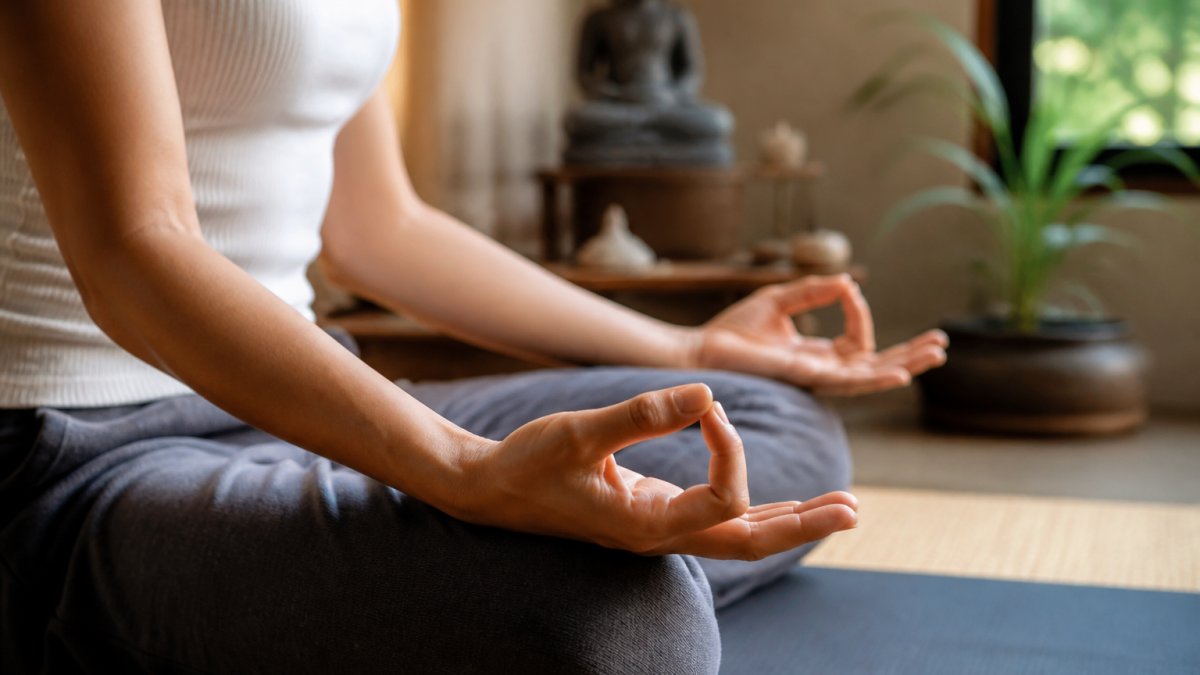
Gyan mudra is the best-known concentration mudra in yoga practice. Touch the tip of your index finger to the tip of your thumb, then extend the remaining three fingers straight but relaxed. Rest the hands palm-up on your knees.
In practice, this is the gesture most teachers default to for seated meditation. It is stable, easy to hold, and the closed circle gives the hand a clear job. Many people find the shape itself calming, which is the point. Use it as your default for general focus, reading, and seated meditation.
Prana Mudra and Vayu Mudra for Steady Attention
Prana mudra brings the tips of the ring and little fingers to the thumb tip, leaving the index and middle fingers extended. It is often used when energy feels low and focus keeps sliding away, the mid-afternoon slump, the end of a long meeting, the third page of a dense report.
Vayu mudra folds the index finger down toward the base of the thumb, with the thumb holding it lightly in place. Practitioners turn to it when the mind feels restless rather than dull, the pre-presentation jitters, the can't-sit-still feeling before a deadline.
Choosing the Right Mudra for the Moment
Use this quick decision guide rather than treating all concentration goals alike:
| Situation | Best First Choice | Why | Hold Time |
|---|---|---|---|
| General focus, reading, meditation | Gyan (Chin) | Stable, neutral, easy to hold | 5-15 minutes |
| Low energy, scattered attention | Prana | Traditionally used to steady fading attention | 5-10 minutes |
| Restlessness, agitation, pre-event nerves | Vayu | Traditionally used for a restless mind | 5-10 minutes |
| Brief study break (2-3 minutes) | Gyan | Fastest to set up, least disruptive | 2-3 minutes |
| Calming stress before sleep | Gyan or Prana | Gentle, low-effort, easy to release | 5-10 minutes |
A practical rule: if your attention feels thin and tired, reach for Prana. If it feels jumpy and over-caffeinated, reach for Vayu. If you are not sure, Gyan is the safe default.
| Mudra | Finger Position | Best For | Hold Time |
|---|---|---|---|
| Gyan (Chin) | Index tip to thumb tip, three fingers extended | General focus and meditation | 5-15 minutes |
| Prana | Ring and little finger tips to thumb tip | Low energy, scattered attention | 5-10 minutes |
| Vayu | Index curled to thumb base, thumb holds it | Restlessness, agitation | 5-10 minutes |
How to Do Yoga Mudra: Step-by-Step Finger Placement
Here is the full sequence for how to do yoga mudra correctly, from posture to release. Total time is about one minute to set up.
What you'll need: a chair or cushion, and a quiet spot where you can sit upright for ten minutes.
- Sit tall. Spine upright, shoulders down, chin level. A chair is fine.
- Rest the hands. Palms up on the knees or thighs, elbows slightly bent.
- Shape the gesture. Bring the thumb and index fingertips together for Gyan mudra. Keep the other three fingers long and soft.
- Soften the pressure. Light contact only. No white knuckles.
- Close the eyes or lower the gaze. Pick whichever helps you stay awake.
- Breathe slowly. Let the breath move without forcing it.
- Hold and notice. Stay with the shape for five to fifteen minutes.
- Release slowly. Open the fingers, stretch the hands, and sit for a moment before standing.
Expected result: a settled, less cluttered feeling in the first few sessions. Consistency matters more than duration.
Mudra Practice for Beginners: A 10-Minute Focus Routine
Mudra practice for beginners works best as a short, repeatable routine rather than a long occasional session. Ten minutes daily beats an hour once a week. This sequence gives you setup, posture, breathing, mudra choice, and a practical transition back to work. Consistent application of these physical anchors creates a reliable mental environment that makes it easier to stay focused at work throughout the remainder of your day.
Before you start (1 minute):
- Sit in a chair with feet flat, or on a cushion with hips slightly higher than knees.
- Spine upright, shoulders down, chin level. Hands palm-up on thighs, elbows slightly bent.
- Silence notifications. A timer is fine; a phone face-down is better.
The 10-minute sequence:
- Minutes 1-2, Settle. Hands open on the thighs. Breathe in through the nose for a count of four, out for a count of six. Let the shoulders drop on each exhale.
- Minutes 3-7, Gyan mudra. Bring thumb and index fingertips together, other three fingers long and soft. Eyes closed or gaze lowered. Keep attention on the breath at the nostrils. When the mind wanders, return to the touch of thumb and finger.
- Minutes 8-9, Switch if needed. If attention has dulled, move to Prana mudra (ring and little finger tips to thumb tip). If attention is jumpy, move to Vayu mudra (index curled to thumb base). If focus is steady, stay with Gyan.
- Minute 10, Release and transition. Open the fingers, stretch the hands, and sit still for thirty seconds. Then take three slow breaths before standing.
The transition back to work:
The gap most guides miss is what happens after. Before you open your laptop or pick up your phone, take thirty seconds to note your focus level on a simple one-to-ten scale. Write it down. Over two weeks, that log tells you more than any article can, you will see which mudra and which time of day actually help you.
A realistic expectation: Most beginners notice a settled, less cluttered feeling within the first few sessions. Consistency matters more than duration. If ten minutes feels long, start with five and keep the same order: settle, Gyan, release, note.
Hand Mudras for Meditation and a Calmer Mind
Hand mudras for meditation do two jobs at once: they occupy the hands and they mark the session as distinct from the rest of the day. That second job is underrated. A ritual cue helps the mind shift gears faster.
The calming effect people report is not the same as clinical treatment. A 2022 review of yoga mudra research indexed in PubMed Central examined mudras combined with breathing exercises for health outcomes, and the authors, SN Kumar and colleagues, did not report findings about focus or concentration specifically. That is worth knowing before you build expectations.
What the evidence supports is modest and practical: mudras are a low-risk way to structure attention. They are not a treatment for anxiety, depression, sleep disorders, or headache. If you are dealing with any of those, talk to a clinician.
Common Mistakes, Hand Comfort, and What the Evidence Actually Supports
The biggest mistake beginners make is chasing a sensation. They press hard, hold long, and expect a jolt of mental clarity. That is not how it works, and it is a fast route to sore fingers.
Other common errors:
- Gripping the thumb too tightly, which tires the hand within minutes
- Slumping the shoulders while concentrating on the fingers
- Practicing only when stressed, so the gesture never becomes a habit
- Holding one mudra for thirty minutes on day one
- Expecting memory or brain power changes within a week
On comfort: if you feel numbness or tingling, release the gesture and shake out the hand. People with arthritis or hand injuries should shorten holds and check with a doctor first. Anyone can practice, but the shape may need adjusting.
On evidence: treat mudras as a focus aid with a long tradition, not a proven cognitive enhancer. Claims about memory power and brain function are worth holding loosely. The honest position is that the practice is safe, cheap, and pleasant, and many people find it helps them sit still. That alone has value.
Conclusion
Building a focus habit is hard when your environment is loud and your phone is louder. A quiet corner helps more than most people expect, and so does a physical cue that tells your mind the session has started.
At HD Asian Art, we curate Buddhist and Hindu statues and temple-inspired decor for exactly these spaces, with free shipping and pieces chosen to anchor a meditation room or a small apartment corner. Browse the collection and give your practice a setting worth sitting in front of.
Frequently Asked Questions
What is the best mudra for focus and concentration?
Gyan mudra, also called chin mudra, is the gesture most often associated with concentration. You touch the tip of your index finger to the tip of your thumb and extend the remaining three fingers. Many teachers pair it with steady breathing and a seated posture. There is no single gesture that suits everyone, so treat Gyan mudra as a starting point and notice whether your attention settles more easily with it than with another hand mudra.
How long should you hold a mudra during meditation?
Start with 5 to 10 minutes and build from there. Beginners often find that holding a hand mudra for 15 or 20 minutes at a stretch feels strained, especially in the fingers and wrist. A practical approach is to hold the gesture for the length of a short breathing session, then release and shake out your hands. Consistency across days matters more than a long single session.
Can beginners practice hand mudras, and can you do them at a desk?
Yes to both. Mudra practice for beginners needs no prior training: the gestures are simple finger placements you can learn in a few minutes. You can also practice hand mudras for meditation or focus while sitting at a desk, since the hands rest in your lap or on your thighs. Keep your shoulders relaxed and your spine upright, and avoid pressing the fingertips together hard enough to cause discomfort.
Do mudras actually improve memory and concentration?
The research base is thin. A 2022 paper by Kumar and colleagues proposed yoga mudras combined with breathing exercises for immunity and respiratory issues, and it did not report a finding about focus or concentration. Treat hand mudras as a low-cost way to cue attention and calm the mind, not as a proven cognitive treatment. If you have a health concern about attention or memory, talk to a qualified clinician.
A ten-minute routine only works if the space invites you back tomorrow. HD Asian Art handpicks antique and contemporary Buddhist and Hindu sculptures, including Khmer and Southeast Asian pieces, to turn a corner of your home into a place where practice feels natural. Browse our collection and find the focal point your meditation space has been missing.
