



How to Choose a Home Altar Statue for a Sacred Space
How to Choose a Home Altar Statue for a Sacred Space
Quick Summary
To choose a home altar statue, start with its purpose: a devotional figure for daily prayer or meditation needs a stable base, a clear focal point, and room for offerings, while a decorative piece can move freely. Then match the figure to your spiritual tradition, measure your surface and viewing distance for scale, and pick a material suited to your room.
- Measure surface width and depth, height clearance, and distance from your usual seat before shopping.
- A surface around 36 inches wide and 12 inches deep works well for a crucifix, statues, and candles together.
- Place the altar in a quiet spot with a stable surface and good sightlines, avoiding kitchens and bathrooms.
- Bronze develops a slow, even patina in dry rooms but can darken unevenly near moisture.
- Anchor tall or top-heavy figures with a hidden bracket or wall strap in homes with pets or children.
Table of Contents
- Start With the Purpose of Your Home Altar Statue
- Home Altar Statue Size Guide: Finding the Right Scale
- Where to Place a Home Altar in Your House
- Choosing a Buddha Statue for Home Altar Use
- Catholic Home Altar Design and Statue Selection
- Materials, Craftsmanship, and Long-Term Care
- Budgeting, Sourcing, and Safety Considerations
- Browse HD Asian Art to Find Your Altar Statue
- Frequently Asked Questions
Start With the Purpose of Your Home Altar Statue
Choosing how to choose a home altar statue begins with one question: what is this figure for? A home altar statue is a sacred image placed on a dedicated surface for prayer, meditation, or reflection, and its purpose shapes every choice that follows. Many buyers rush to size and finish before settling that question. The result can be a beautiful piece that never quite fits the room or the practice.
Below, we walk through purpose, scale, placement, tradition, materials, and budget, in that order. Purpose comes first because it decides everything else.
Devotional Practice vs. Decorative Display
A devotional statue sits at the center of a practice. It holds a fixed spot, faces a set direction, and receives offerings like candles, flowers, or incense. A decorative piece can move with the seasons and the furniture.
Ask yourself two things:
- Will you pray or meditate in front of it daily?
- Does it need to anchor a permanent sacred space?
If yes to either, treat it as devotional. That means a stable base, a clear focal point, and room for the items around it.
Matching the Statue to Your Spiritual Tradition
Different traditions carry different expectations. A Catholic home altar centers on a crucifix, often with a patron saint statue beside it. A Buddhist meditation space may hold a Buddha or Bodhisattva figure. Hindu households often arrange several deities together.
As the United States Conference of Catholic Bishops notes, devotional images serve to focus prayer rather than stand alone. Pick a figure that matches the devotion you actually keep.
Home Altar Statue Size Guide: Finding the Right Scale
The right home altar statue size depends on viewing distance and surface depth, not on how grand the figure looks online. A statue that is too large crowds the altar; one that is too small disappears. A good rule: the figure should read clearly from where you sit or stand to pray.
For a complete breakdown by room type, our guide to the best size statue for home altar walks through dimensions step by step.
Measuring Your Altar Surface and Height Clearance
Measure before you shop. Write down three numbers:
- Surface width and depth
- Height from surface to the nearest shelf or wall art
- Distance from your usual seat to the altar
Then subtract space for candles, a text, and flowers. Many practitioners find a surface around 36 inches wide and 12 inches deep works well for a crucifix, statues, and candles together, based on Zayton's 2026 altar guide. Keep at least a few inches of clearance behind the figure.
Small Apartments vs. Dedicated Rooms
In a small apartment, a compact shelf altar with a medium-scale statue often works better than a floor display. In a dedicated room, a larger figure can serve as the visual anchor.
Watch out: buying a floor statue for a narrow corner. Depth matters more than width, and a deep base will block the walkway.
Where to Place a Home Altar in Your House
Place the altar in a quiet spot with a stable surface and good sightlines from where you pray. The living room corner, a bedroom nook, or a hallway alcove all work. Avoid high-traffic paths, kitchens, and bathrooms.
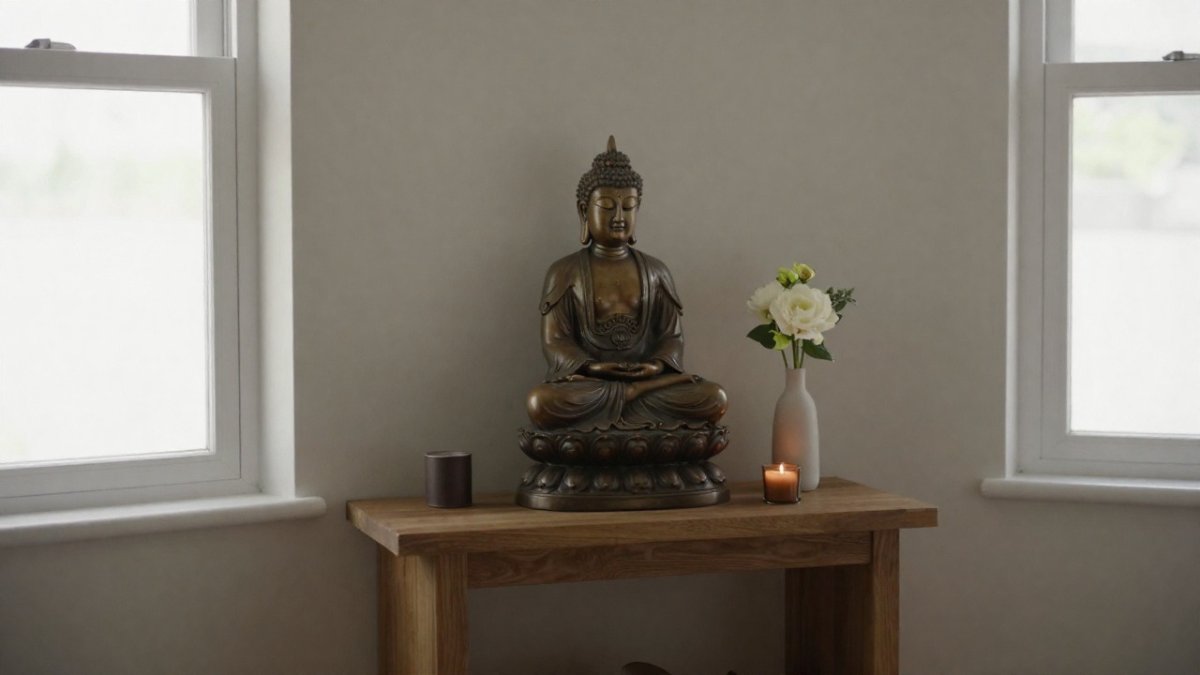
Orientation matters in many traditions. Some practitioners face the altar east; others simply face it toward the room's calmest view. The key is intentional placement, not perfection.
For a deeper look at direction and energy, read our full guide to Buddhist statue placement for good energy.
Choosing a Buddha Statue for Home Altar Use
A Buddha statue for home altar use should match the practice you keep. Serene seated figures suit meditation. Standing figures suit entryways and reflection spaces. The posture and hand gesture tell you what the figure signals.
For a dedicated walkthrough, see our guide on how to choose a Buddha statue for your home altar.
Mudras, Postures, and What They Signal
Each gesture carries meaning. Learn the basics before you buy:
- Dhyana mudra: hands resting in the lap, signaling deep meditation
- Bhumisparsha mudra: one hand touching the earth, signaling steadfastness
- Abhaya mudra: open palm raised, signaling reassurance
- Seated lotus posture: stability and calm focus
Match the gesture to the mood you want in the space. A meditation corner usually suits a seated, inward figure.
Catholic Home Altar Design and Statue Selection
Catholic home altar design centers on the crucifix, with a saint statue placed to one side. Keep the crucifix as the focal point and let the statue support it. This mirrors what many parishes recommend for a domestic church.
Choose a patron saint tied to your family's devotion. A figure with clear sculptural quality reads better at a distance than a busy, crowded piece. Pair it with an altar cloth, blessed candles, and fresh flowers for a cohesive sanctuary.
Materials, Craftsmanship, and Long-Term Care
Material choice affects how a statue ages, how it feels in the room, and how much attention it needs. Most guides stop at aesthetics; the practical question is how each material behaves in a real home over years of temperature swings, humidity, and dust.
How Each Material Ages Indoors
Bronze develops a patina over time as the surface reacts with air and moisture. In a dry, heated room the change is slow and even; near a bathroom or kitchen it can darken unevenly.
Stone is cool, solid, and grounded, and it suits floor displays and deep shelves. Stone is sensitive to knocks and to sudden temperature shifts near radiators or drafty windows. Always set it on a felt or rubber pad and support the base fully so weight is distributed evenly.
Wood feels warmer and lighter and works well on small shelves and in apartments. Wood expands and contracts with humidity, so keep it out of direct sun and away from heating vents to limit cracking and finish fading.
Resin and composite are light and budget-friendly, which makes them good starter or seasonal pieces. They show wear sooner, scuffs, fading, and loosening joints, so handle them carefully and avoid placing them where they will be bumped.
Reading Craftsmanship Before You Buy
Look at the face first for crisp features and clean lines, then check the drapery for folds with depth. Run a finger along the base; a wobble means the piece will not sit level. Ask the seller how the piece should be displayed and handled, and whether the finish is sealed.
| Material | Feel | Best For | Indoor Aging Pattern |
|---|---|---|---|
| Bronze | Weighty, warm patina | Long-term devotional pieces | Slow, even patina in dry rooms; uneven near moisture |
| Stone | Solid, cool, grounded | Floor and large shelf displays | Stable but vulnerable to knocks and temperature shifts |
| Wood | Light, warm | Small shelves and apartments | Moves with humidity; fades in direct sun |
| Resin/composite | Light, budget-friendly | Starter or seasonal setups | Scuffs and fades sooner; handle with care |
Our guide to the best materials for meditation room statues compares options side by side.
Placing a wood or resin statue directly above a radiator or in a sun-baked window can age it faster.
Budgeting, Sourcing, and Safety Considerations
Set a budget before you browse, then hold to it. Pricing depends on material, size, and craftsmanship, so check HD Asian Art's website for current prices or request a quote. A calm, well-chosen piece at a modest budget beats an oversized figure that crowds the space. Decide up front whether you are buying a permanent devotional anchor or a seasonal piece, that single decision sets your realistic range more than any other factor.
Vetting Sourcing and Craftsmanship
Sourcing matters as much as price. Ask where a piece came from and how it was made. Ask where a piece came from and how it was made, and look for signs of artisan work such as slight variation between pieces and hand-finished details. Our list of trusted sources for ethically sourced Buddhist statues helps you vet a seller before you commit.
Securing Statues in Homes With Pets and Children
Safety is the gap most guides skip. A heavy statue needs a level, sturdy surface, and tall pieces should be anchored or placed against a wall so they cannot tip. For households with pets or young children, a few practical steps prevent most accidents:
- A non-slip pad under the base can help resist nudges.
- Keep the altar above tail height and out of the main traffic path.
- Anchor tall or top-heavy figures with a hidden bracket or wall strap.
- Place candles and open flames well clear of drapery, wood, and resin.
- Route cords from lamps or diffusers away from the statue base so nothing can be pulled over.
A stable base and a clear zone around the figure do more for safety than any single product. Check the setup once a season, putty dries out, pads shift, and brackets loosen.
Watch out: a statue placed on a narrow shelf above a doorway or walkway is the most common tipping hazard, because a single bump can send it forward.
Browse HD Asian Art to Find Your Altar Statue
Choosing a home altar statue comes down to purpose, scale, placement, and material, in that order.
At HD Asian Art, we curate Buddhist and Hindu statues, including Khmer and Southeast Asian sculptures, for altars and meditation spaces. Every piece is handpicked, and we offer free shipping. Browse our collection to find the figure that anchors your sacred space.
Ready to find the piece that fits your practice and your room? Start with our curated collection and choose with confidence.
Frequently Asked Questions
What size statue works best on a home altar?
A statue between 8 and 14 inches tall suits most home altars, especially on a surface at least 36 inches wide and 12 inches deep. Measure the height clearance from your altar surface to any shelf or wall above, then leave at least 2 to 3 inches of space above the statue's head. In a small apartment prayer corner, a 6 to 10 inch piece keeps the arrangement balanced without crowding candles or icons.
Can you put a Buddha statue on a home altar?
Yes. A Buddha statue for home altar use is common among practitioners who meditate or follow Buddhist traditions. Place it at the center or highest point of the arrangement, facing the room, and keep the space clutter-free. Choose a seated posture such as meditation or earth-touching mudra if the statue is meant to support calm focus, and set it on a clean cloth or stand rather than directly on the floor.
Where should an altar be placed in a house?
Pick a quiet spot away from heavy foot traffic, televisions, and doorways. A corner of a bedroom, a dedicated alcove, or a living room mantel all work if the area stays calm and uncluttered. The surface should be stable and at least 36 inches wide and 12 inches deep for a crucifix, statues, and candles. Avoid placing the altar in a bathroom or directly facing a bed if your tradition calls for reverence.
What should you consider when choosing a statue for a home altar?
Weigh four factors: purpose, size, material, and symbolism. Decide whether the statue supports prayer, meditation, or decor, then match its scale to your altar surface and height clearance. Check the material for durability and how it will age in your climate. Finally, confirm the figure, posture, or saint reflects your own devotion so the piece feels meaningful rather than hollow.

