



Die Rolle des Bodhisattva Avalokiteshvara in der buddhistischen Kunst
Die Rolle des Bodhisattva Avalokiteshvara in der buddhistischen Kunst
Avalokiteshvara ist eine der visuell komplexesten Figuren in der buddhistischen Kunstgeschichte, dennoch wird die Figur häufig als einzelne, statische Ikone missverstanden. Die Rolle von Avalokiteshvara in der buddhistischen Kunst umfasst Dutzende unterschiedlicher ikonografischer Typen, verschiedene Geschlechtsausdrücke und Jahrhunderte der Lehrentwicklung in ganz Asien.
Dieser Bodhisattva, dessen Name mit „Wahrnehmer der Welttöne“ übersetzt wird, fungiert nicht nur als Andachtssymbol, sondern auch als systematische visuelle Sprache, die Mitgefühl, rituelle Autorität und theologische Doktrin kodiert. Um diese Sprache zu verstehen, muss man weit über die oberflächliche Erkennung hinausgehen.
Inhaltsverzeichnis
- Wichtige Erkenntnisse
- Die Rolle von Avalokiteshvara in der buddhistischen Kunst: Lehrgrundlagen
- Wichtige ikonografische Formen und ihre symbolische Bedeutung
- Regionale künstlerische Adaptionen und Geschlechterausdruck
- Avalokiteshvara in ritueller Praxis und Andachtskunst
- Kunsthistorische Interpretation und kuratorische Überlegungen
- Meine Sicht auf das Lesen von Avalokiteshvaras Bildern
- Entdecken Sie Avalokiteshvaras Werke bei HDAsianArt
- FAQ
Wichtige Erkenntnisse
| Punkt | Einzelheiten |
|---|---|
| Kein einziges Symbol | Avalokiteshvara erscheint in mehr als 33 kanonischen Formen, die jeweils an bestimmte Lehr- und Andachtskontexte gebunden sind. |
| Die Ikonographie kodiert die Lehre | Attribute wie mehrere Arme, Gesichter und Lotusthrone signalisieren spezifische theologische Bedeutungen und keine dekorativen Entscheidungen. |
| Der Geschlechtsausdruck variiert je nach Region | Der Übergang zu weiblichen Formen in Ostasien spiegelt historisch spezifische kulturelle und religiöse Übersetzungen wider. |
| Rituelle Funktionen formen Bilder | Viele Darstellungen dienten als aktive rituelle Schnittstelle zwischen Gläubigen und der Bodhisattva-Lehre und nicht als passive Kunstobjekte. |
| Die kuratorische Identifizierung erfordert Präzision | Die korrekte Klassifizierung eines Werkes hängt von der Lektüre stabiler Attribute ab: Anzahl der Köpfe, Anzahl der Arme, Kronenornamente und Amitabha-Präsenz. |
Die Rolle von Avalokiteshvara in der buddhistischen Kunst: Lehrgrundlagen
Bevor wir uns mit bestimmten Formen befassen, ist es hilfreich zu verstehen, was die Verbreitung von Bildern überhaupt antreibt. Der Name Avalokiteshvara wird im Sanskrit typischerweise als „derjenige, der die Geräusche der Welt wahrnimmt“ und die Figur wiedergegeben verkörpert großes Mitgefühl (mahākaruṇā) als sein definierendes Attribut. Dieses Mitgefühl ist nicht passiv. Es reagiert aktiv auf Leiden in allen Bereichen der Existenz.
Zwei Lehrsysteme leisten hier die meiste Arbeit: Mahayana- und Vajrayana-Buddhismus. In Mahayana-Texten ist Avalokiteshvara ein Bodhisattva, der geschworen hat, die endgültige Befreiung hinauszuzögern, bis alle Lebewesen vom Leiden befreit sind. In Vajrayana-Kontexten nimmt die Figur zusätzliche rituelle Dimensionen an und wird mit Amitabha Buddha in Verbindung gebracht, dessen Bild oft in Avalokiteshvaras Krone als diagnostisches Zeichen in der Skulptur erscheint.
Die einflussreichste biblische Quelle für die ikonografische Vielfalt ist Kapitel 25 des Lotus-Sutra mit dem Titel „Universelles Tor“. Dieses Kapitel beschreibt 33 verschiedene Erscheinungsformen die Avalokiteshvara anwendet, um auf die spezifischen Bedürfnisse bestimmter Lebewesen zu reagieren. Die Liste umfasst Götter, Menschen, Nāgas und Yakṣas und spiegelt eine absichtliche adaptive Logik im Herzen der Theologie wider. Künstler erfanden Formen nicht frei. Sie übersetzten die Heilige Schrift in visuelle Programme.
Zu den wichtigsten Lehrpunkten, die die Avalokiteshvara-Ikonographie direkt geprägt haben, gehören:
- Das Bodhisattva-Gelübde, auf jedes Wesen zu reagieren, das um Hilfe ruft, unabhängig von seiner Form oder seinem Reich
- Die Assoziation mit Amitabha Buddha in den Mahayana-Traditionen des Reinen Landes, wobei Amitabhas Bild in der Krone platziert wird
- Die systematische Verbreitung von Formen im Lotus-Sutra, die an die Bedürfnisse bestimmter Lebewesen gebunden sind
- Tantrische Traditionen entwickeln ausgefeilte mehrarmige, mehrköpfige Formen als Ritualtechnologien
- Huayan-buddhistische Teleologie, die ikonografische Entscheidungen mit doktrinärer und liturgischer Autorität kodiert
Diese Grundlagen erklären, warum die Begegnung mit einer Skulptur mit der Bezeichnung „Avalokiteshvara“ ohne weitere Spezifikation so viel unausgesprochen lässt. Das Label deckt ein enormes doktrinäres und künstlerisches Gebiet ab.
Wichtige ikonografische Formen und ihre symbolische Bedeutung
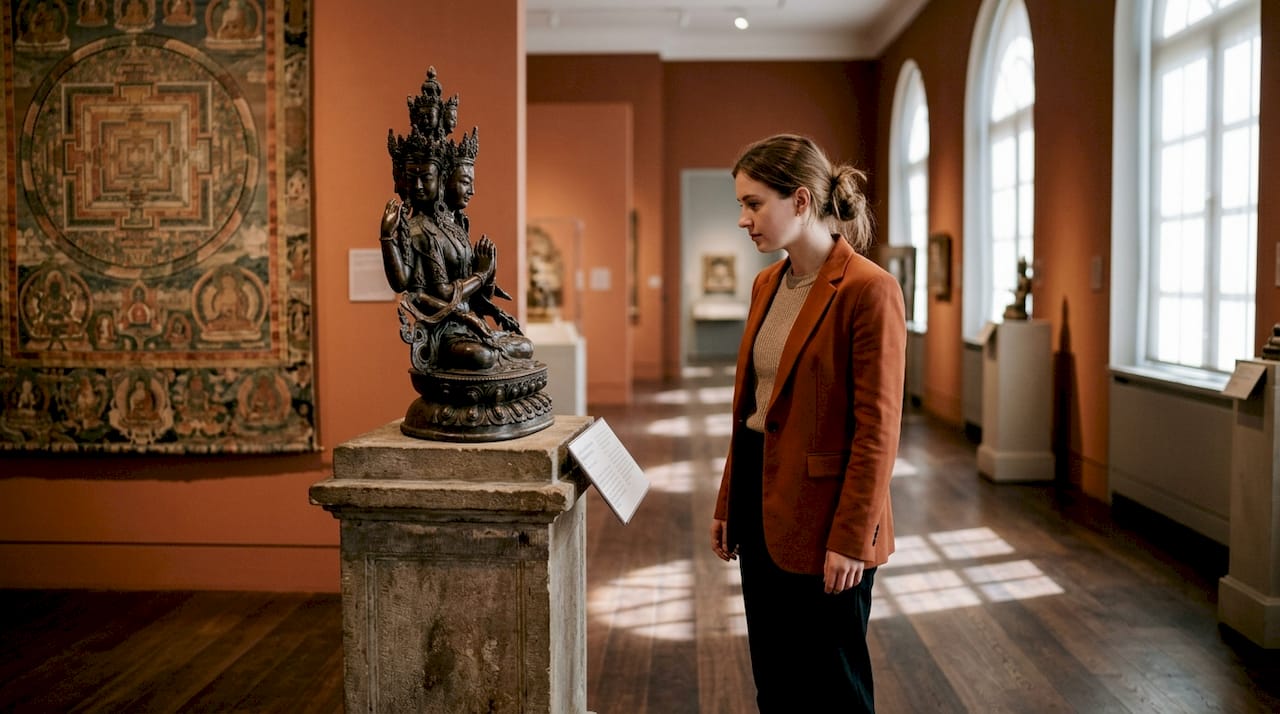
Die beiden in Museumssammlungen und wissenschaftlicher Literatur am häufigsten anzutreffenden Formen sind der elfgesichtige Avalokiteshvara (Ekādaśamukha) und der tausendarmige Avalokiteshvara (Sahasrabhuja). Beides verdient eine sorgfältige Analyse.
Die elfgesichtige Form platziert zehn zusätzliche Köpfe über dem Hauptgesicht, die in Reihen angeordnet sind. Jede Stufe und jeder Gesichtsausdruck hat eine andere Bedeutung, die von Mitgefühl bis hin zu heftigem, schützendem Zorn reicht. Die Vereinbarung kodiert eine abgestufte Reaktion auf Leiden in verschiedenen spirituellen Zuständen. Die tausendarmige Form, die oft auch tausend Augen aufweist, die in die Handflächen dieser Arme eingebettet sind, symbolisiert eine erweiterte mitfühlende Reichweite: jede Form von Leid sehen und die Fähigkeit besitzen, auf jede einzelne einzugehen. Eine Erzählung in der esoterischen Texttradition verbindet diese Form mit einem gebrochenen Gelübde und seiner Wiederherstellung durch Amitabha und verleiht der Ikonographie eine biographisch-theologische Dimension.
| Formular | Schlüsselattribute | Primäre symbolische Bedeutung |
|---|---|---|
| Ekādaśamukha (Elfgesichtig) | 11 Köpfe in gestufter Anordnung, Lotusstab | Abgestuftes Mitgefühl in allen spirituellen Bereichen |
| Sahasrabhuja (Tausendarmig) | 1.000 Arme, Augen in Handflächen, Amitabha-Krone | Universelle Wahrnehmung und grenzenlose mitfühlende Reichweite |
| Chintamani (Wunscherfüllung) | Juwel in Händen gehalten, sitzende Haltung | Erfüllung von Andachtswünschen und materiellen Gebeten |
| Nilakantha | Blaue Kehle, friedlicher Gesichtsausdruck, stehend | Absorption von Gift oder Leiden im Namen von Wesen |
| Padmapani | Einzelner Lotus aufrecht gehalten | Reinheit und die Entstehung von Mitgefühl aus Samsara |
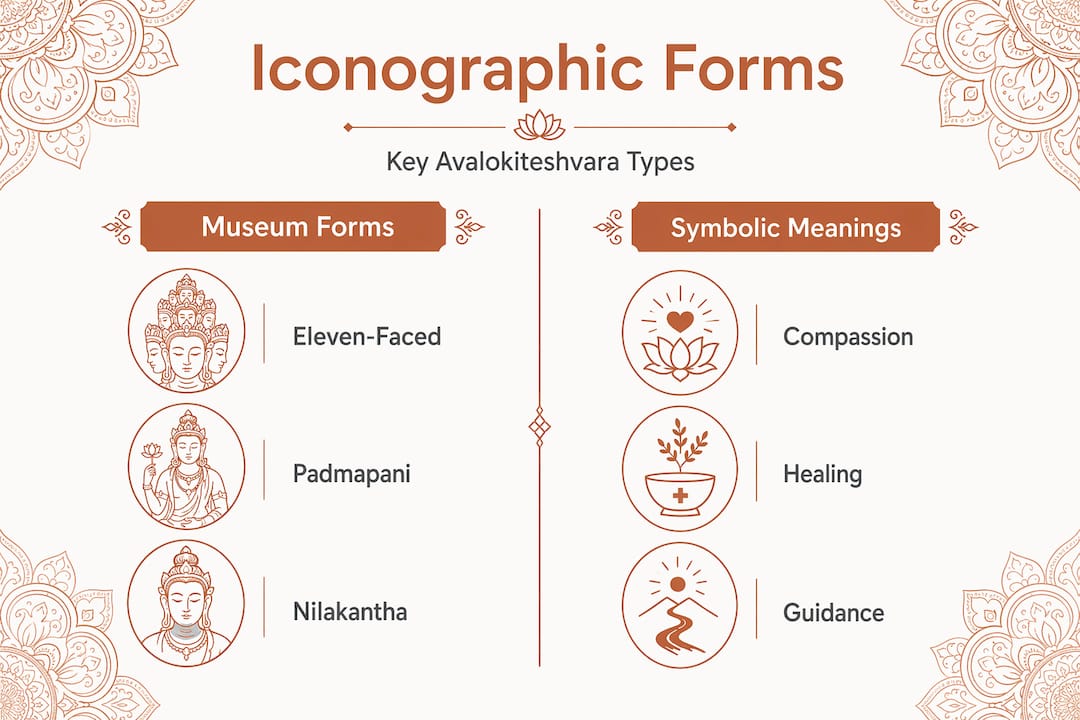
Andere weithin dokumentierte Formen sind Padmapani, erkennbar an dem einzelnen Lotusstiel, und Nilakantha, dessen blauer Hals auf die Absorption kosmischen Giftes hinweist. In der nepalesischen Manuskriptmalerei und Skulptur taucht ein Schöpferaspekt des Bodhisattva auf, der Avalokiteshvara eher als kosmische Kraft denn als reagierenden Helfer darstellt – eine bedeutungsvolle theologische Unterscheidung.
Profi-Tipp: Wenn Sie Bodhisattva-Darstellungen in einer Sammlung studieren, fotografieren Sie immer zuerst den Kronenbereich. Das Vorhandensein oder Fehlen einer kleinen Amitabha-Figur ist eines der schnellsten Diagnoseinstrumente zur Bestätigung einer Avalokiteshvara-Identifizierung gegenüber einem anderen Bodhisattva-Typ.
Regionale künstlerische Adaptionen und Geschlechterausdruck
Eine der am meisten diskutierten Transformationen in der Geschichte der buddhistischen Kunst Asiens ist der Wandel vom überwiegend männlichen Avalokiteshvara in Süd- und Zentralasien zum erkennbar weiblichen Guanyin in China und Kannon herein Japan. Dies Ostasienverschiebung im siebten Jahrhundert geschah nicht einheitlich oder sofort. Frühe chinesische Darstellungen behalten männliche Züge mit Schnurrbärten bei. Spätere Formen werden weicher und werden in populären Andachtsbildern androgyn und schließlich weiblich.
Diese Transformation spiegelt etwas Wichtiges darüber wider, wie Mitgefühl kulturell verstanden wird, und ist kein theologischer Fehler oder eine künstlerische Freiheit. In chinesischen Kulturkontexten kommunizierte die sanftere, mütterliche Form Zugänglichkeit und fürsorgliche Fürsorge effektiver als eine männliche Figur im gleichen Andachtsregister. Wenn man es eine „Korruption“ des Originals nennt, wie es einige frühe westliche Gelehrte taten, missversteht man, wie die ikonografische Übersetzung kulturübergreifend funktioniert.
Regionale Varianten gehen weit über die Verschiebung von Mann zu Frau hinaus:
- Chinesisches Guanyin: Oft in weißen Gewändern dargestellt, manchmal mit einer Vase und einem Weidenzweig in der Hand, auf einer Lotusblume sitzend, verbunden mit Gnade und Geburt
- Japanisches Kannon: Behält mehrere Formen bei (im japanischen Buddhismus gibt es sechs kanonische Kannon-Typen), die jeweils einem bestimmten Bereich der Wiedergeburt zugeordnet sind
- Tibetischer Chenrezig: Vierarmige Form in sitzender Meditation, weißer Körper, verbunden mit dem Mantra Om Mani Padme Hum, das für die nationale Identität Tibets von zentraler Bedeutung ist
- Koreanische Varianten: Die Andachtsthema „Avalokiteshvara des Meeres“ erscheint in der koreanischen buddhistischen Kunst und geht auf die Schutzbedürfnisse der Küstengemeinden ein
- Indonesische und kambodschanische Formen: Oft männlich, königlich und sowohl Lotus als auch Wassergefäß haltend, was die indianisierte Ästhetik des königlichen Hofes widerspiegelt
Die Geschlechterfluktuation in diesen Traditionen lässt sich am besten als historisch spezifische Andachtsübersetzung und nicht als ikonografische Inkonsistenz verstehen. Die Datierung eines Werks und die Regionalisierung seines Kontexts vor der Anwendung eines Interpretationsrahmens ist nicht optional. Es ist die Methodik.
Avalokiteshvara in ritueller Praxis und Andachtskunst
Eine anhaltende Fehlinterpretation der buddhistischen Kunst behandelt skulpturale Formen in erster Linie als ästhetische Objekte. In der Praxis wurden viele Avalokiteshvara-Bilder als funktionierende Bestandteile ritueller Systeme und nicht als Ausstellungsstücke hergestellt.
Esoterische buddhistische Traditionen, insbesondere in der Tang-Dynastie China und in der tibetischen Praxis wurde die Avalokiteshvara-Ikonographie als das verwendet, was Gelehrte so beschreiben Ritualtechnologie. Einen Altar für den elfgesichtigen Avalokiteshvara zu errichten bedeutete nicht, einen Raum zu schmücken. Es setzte einen Lehranspruch um und stellte eine Andachtsschnittstelle bereit, über die Praktizierende Zugang zur mitfühlenden Reaktion des Bodhisattvas erhalten konnten. Das ikonografische Programm des Altars, einschließlich der spezifischen Anordnung der Nebenfiguren, Opfergaben und Richtungsausrichtung, kodierte die Teleologie des Huayan-Buddhismus in drei Dimensionen.
Die folgende Tabelle stellt den rituellen Kontext ikonografischer Entscheidungen dar, die häufig anzutreffen sind:
| Ritueller Kontext | Ikonografische Merkmale eingesetzt | Lehrfunktion |
|---|---|---|
| Heilrituale | Nilakantha-Form, blaue Kehle, medizinische Eigenschaften | Übernahme des Leidens im Namen des Klägers |
| Bestattungspraxis | Bilder des Reinen Landes, Amitabha-Krone | Anleitung zur Wiedergeburt im Reinen Land von Amitabha |
| Schutzriten | Tausendarmige Form, zornige Nebenköpfe | Erweiterte Reichweite über alle Schutzkategorien hinweg |
| Initiationszeremonien | Mehrarmige tantrische Formen mit Ritualgeräten | Weitergabe einer bestimmten Lehrlinie |
Das Konzept der Andachtsschnittstelle erklärt etwas, was der rein ästhetischen Analyse entgeht. Künstlerische Darstellungen dienen als Begegnungspunkt zwischen den Bedürfnissen eines Anbeters und dem Gelübde des Bodhisattvas. Der Bildhauer machte keine Kunst im modernen Sinne. Der Bildhauer konstruierte ein funktionales Ritualobjekt, dessen Wirksamkeit von der ikonografischen Genauigkeit abhing.
Profi-Tipp: Wenn Sie sich buddhistische Reliquienkunst oder Altarskulpturen ansehen, lesen Sie die rituelle Ökologie des Objekts, indem Sie herausfinden, welche Nebenfiguren es umgeben, wie der Raum zwischen ihnen organisiert ist und welche liturgischen Texte mit dem Schrein in Verbindung stehen. Diese kontextbezogenen Details verdeutlichen oft ikonografische Entscheidungen, die sonst ungewöhnlich erscheinen würden.
Kunsthistorische Interpretation und kuratorische Überlegungen
Die korrekte Klassifizierung und Interpretation von Avalokiteshvara-Werken erfordert eine strukturierte Vorgehensweise. Der folgende praxisorientierte Rahmen spiegelt den Umgang professioneller Kunsthistoriker und Kuratoren mit diesen Objekten wider.
- Identifizieren Sie zunächst stabile Attribute. Zählen Sie Köpfe und Arme genau. Suchen Sie die Krone und stellen Sie fest, ob Amitabha vorhanden ist. Lesen Sie diagnostische ikonografische Motive wie Lotus, Wassergefäß, Juwel oder Rosenkranz, bevor Sie Etiketten oder Herkunftsdokumente konsultieren.
- Datieren und regionalisieren Sie die Arbeit. Geschlechtsausdruck, Material und Stilvokabular einer chinesischen Skulptur aus dem 7. Jahrhundert und einer kambodschanischen Bronzeskulptur aus dem 12. Jahrhundert werden sich erheblich unterscheiden, auch wenn beide denselben kanonischen Typus repräsentieren.
- Behandeln Sie Anomalien als Daten, nicht als Fehler. Ikonografische Anomalien resultieren oft aus einer bewussten rituellen Synthese. Ein Werk, das Merkmale zweier kanonischer Typen vereint, spiegelt wahrscheinlich eher einen spezifischen lokalen liturgischen Bedarf oder eine Werkstatttradition wider und ist kein Fehler.
- Betrachten Sie ikonografische Fusionstypen. In einigen Traditionen verschmelzen Avalokiteshvara-Attribute mit denen von Mañjuśrī (Weisheit) oder Samantabhadra (Praxis). Diese visuell-textuellen Verbindungen signalisieren die Einheit der Lehre und die rituelle Wirksamkeit innerhalb einer bestimmten Linie.
- Konsultieren Sie die Ritual- und Textaufzeichnungen. Die Zuordnung der Attribute einer Skulptur zu den Textanweisungen (Sadhana) für ihre Herstellung bestätigt oft die ikonografische Absicht und löst offensichtliche Inkonsistenzen.
Dieser Rahmen ist besonders nützlich, wenn Werke in Übergangskategorien untersucht werden, Stücke, die an kulturellen Schnittpunkten entstanden sind, wo sich indische, zentralasiatische und ostasiatische visuelle Vokabulare überschneiden.
Meine Sicht auf das Lesen von Avalokiteshvaras Bildern
Ich habe lange genug mit buddhistischer Kunst gearbeitet, um ein immer wiederkehrendes Problem bei der Diskussion dieses Bodhisattvas selbst in ernsthaften wissenschaftlichen Kontexten zu bemerken. Die Tendenz besteht darin, die Geschlechtsumwandlung vom Mann zum Guanyin als den interessantesten Teil der Geschichte zu betrachten und dort aufzuhören. Was übersehen wird, ist die rituelle Maschinerie darunter.
Wenn ich einen tausendarmigen Avalokiteshvara aus der Tang-Dynastie betrachte China, Ich sehe keinen skulpturalen Ausdruck einer abstrakten theologischen Idee. Ich sehe ein Objekt, das in einem bestimmten rituellen Raum positioniert wurde, durch die Liturgie aktiviert wurde und als funktionelles Mittel zur Übertragung doktrinärer Autorität auf Praktizierende verwendet wurde. Die ikonografischen Entscheidungen wurden nicht von frei agierenden Künstlern getroffen. Sie wurden durch Sadhana-Texte, Werkstattnormen und institutionelle Schirmherrschaft eingeschränkt.
Das andere, was ich immer wieder unterbewertet finde, ist, wie bewusst die nicht-kanonischen Formen sind. Wissenschaftler betrachten hybride oder anomale Ikonographien manchmal als volkstümliche Abweichungen von der orthodoxen Lehre. Meine Interpretation der Beweise ist anders. Diese Anomalien sind oft die historisch aufschlussreichsten Objekte in einer Sammlung, gerade weil sie die lokale rituelle Logik bewahren, die kanonische Werke überwinden sollten.
— James, HDAsianArt.com
Entdecken Sie Avalokiteshvaras Werke bei HDAsianArt
HDAsianArt bietet eine kuratierte Sammlung antiker buddhistischer und hinduistischer Skulpturen, darunter authentifizierte Stücke mit Bodhisattva-Darstellungen von Kambodscha, Thailand, Indonesien, und darüber hinaus. Jedes Werk in der Sammlung wurde einzeln recherchiert, fotografiert und unter Berücksichtigung der ikonografischen Genauigkeit und des rituellen Kontexts beschrieben. Für Sammler und Gelehrte, die nach Beispielen buddhistischer Kunstsymbolik in Bronze, Stein und Holz in Museumsqualität suchen, ist die HDAsianArt-Skulpturensammlung bietet Zugang zu Stücken, die das gesamte Spektrum der hier diskutierten künstlerischen Traditionen repräsentieren. Weitere Lektüre zu verwandten Themen finden Sie im Buddhistische Reliquienkunst Abschnitt der HDAsianArt-Blog.
FAQ
Was repräsentiert Avalokiteshvara in der buddhistischen Kunst?
Avalokiteshvara steht für großes Mitgefühl (mahākaruṇā) und das Bodhisattva-Gelübde, allen leidenden Wesen zu antworten. Visuelle Formen kodieren dieses Mitgefühl durch Attribute wie mehrere Arme, Augen und Gesichter, die jeweils eine spezifische doktrinäre Bedeutung haben.
Warum erscheint Avalokiteshvara in so vielen verschiedenen Formen?
Kapitel 25 des Lotus-Sutra beschreibt 33 Manifestationen, die an die Bedürfnisse bestimmter Lebewesen angepasst sind und die biblische Grundlage für die außergewöhnliche Vielfalt der Avalokiteshvara-Ikonographie in allen buddhistischen Traditionen bilden.
Wie wurde Avalokiteshvara in Ostasien weiblich?
Ein kultureller Übersetzungsprozess im siebten Jahrhundert brachte das weibliche Guanyin hervor China und Kannon herein Japan, Es spiegelt wider, wie lokale Andachtsbedürfnisse und kulturelle Assoziationen den ikonografischen Ausdruck von Mitgefühl prägten.
Wie identifizieren Kuratoren einen bestimmten Avalokiteshvara-Typ?
Kuratoren verlassen sich auf stabile diagnostische Attribute: die Anzahl der Köpfe und Arme, das Vorhandensein von Amitabha in der Krone, bestimmte handgehaltene Objekte wie Lotus oder Juwelen und die Gesamtanordnung der Nebenfiguren.
Was ist der Unterschied zwischen Avalokiteshvara und Guanyin?
Guanyin ist die chinesische kulturelle Übersetzung von Avalokiteshvara. Die beiden Namen beziehen sich auf denselben Bodhisattva, aber die Guanyin-Bilder spiegeln ostasiatische Andachts- und ästhetische Werte wider, einschließlich einer überwiegend weiblichen ikonografischen Form, die in früheren südasiatischen Darstellungen nicht vorhanden war.
