



Shiva: Mythologie, Symbolik und sakrale Kunst
Shiva: Mythologie, Symbolik und sakrale Kunst
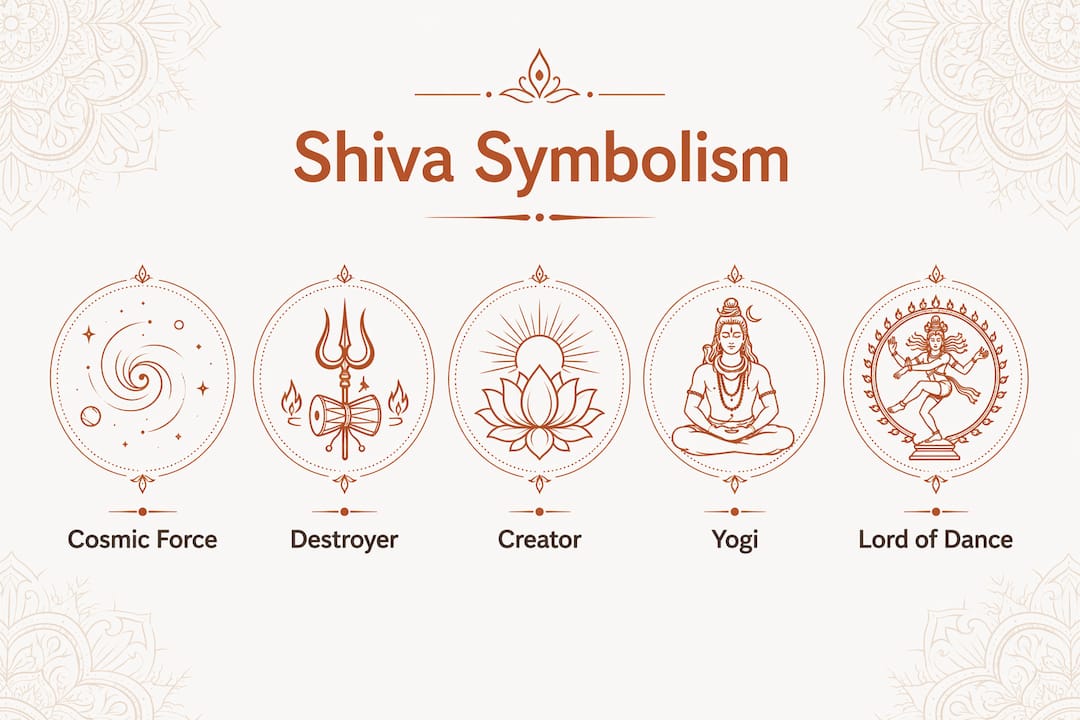
Shiva wird im Hinduismus als der Glückliche definiert, eine höchste kosmische Kraft, die den Kreislauf der Schöpfung, Erhaltung und Transformation regiert. Innerhalb der hinduistischen Trimurti steht er neben Brahma und Vishnu der Zerstörer und Transformator, doch Shaiva-Hindus betrachten ihn als die einzigartige höchste Gottheit, die alle drei Funktionen umfasst. Shiva ist unter Namen wie Mahadev, Nataraja und Adiyogi bekannt und repräsentiert sowohl einen persönlichen Gott als auch ein abstraktes philosophisches Prinzip. Seine Mythologie, Ikonographie und Anbetungspraktiken bilden eines der reichhaltigsten theologischen Systeme der Weltreligion.
Was symbolisiert Shiva in der hinduistischen Mythologie?
Die Shiva-Symbolik wirkt auf zwei Ebenen gleichzeitig: der persönlichen und der kosmischen. Auf persönlicher Ebene ist er die mitfühlende Gottheit, die Anhänger beschützt und Befreiung gewährt. Auf kosmischer Ebene ist er es Saguna und Nirguna Brahman, was bedeutet, dass er sowohl eine Gottheit mit definierten Attributen als auch ein formloses, attributloses reines Bewusstsein verkörpert. Dieser doppelte philosophische Status macht Shiva in verschiedenen Formen der hinduistischen Praxis, von der hingebungsvollen Anbetung bis zur abstrakten Meditation, auf einzigartige Weise zugänglich.
Seine Rolle als Zerstörer ist der am meisten missverstandene Aspekt der Bedeutung von Lord Shiva. Zerstörung bedeutet in Shivas Theologie nicht Vernichtung. Es bedeutet die Beseitigung von Unwissenheit, Ego und Illusion und ebnet den Weg für spirituelle Befreiung. Die zertretene Figur unter seinem Fuß in der Nataraja-Skulptur stellt dar apasmara, der Dämon des Vergessens und der Illusion. Shivas Zerstörung löst die Illusion auf, nicht die Existenz selbst.
Jede der physischen Eigenschaften Shivas hat eine genaue theologische Bedeutung:
- Drittes Auge: Stellt transzendente Weisheit und die Macht dar, alles zu zerstören, was die spirituelle Wahrheit behindert. Wenn es geöffnet wird, verbrennt es die Illusion.
- Halbmond: In seinem verfilzten Haar getragen, signalisiert es seine Beherrschung der Zeit und der Zyklen.
- Fluss Ganges: Es fließt aus seinem Haar und symbolisiert die Reinigung und den Abstieg der göttlichen Gnade in die Welt.
- Dreizack (Trishula): Stellt die drei Grundkräfte der Schöpfung, Erhaltung und Zerstörung sowie die drei Bewusstseinszustände dar.
- Schlange (Naga): Um seinen Hals gewickelt signalisiert es seine Beherrschung über Tod, Angst und ursprüngliche Naturkräfte.
Shiva als Adiyogi, der erste Yogi, fügt seiner Symbolik eine weitere Dimension hinzu. Die hinduistische Tradition identifiziert ihn als den Begründer von Yoga und Meditation, den ersten, der der Menschheit die Wissenschaft der inneren Transformation übermittelte. Dieser Aspekt positioniert ihn nicht nur als eine zu verehrende Gottheit, sondern auch als Lehrer und Führer für die spirituelle Praxis.
Profi-Tipp: Wenn Sie Shivas Attribute in der Skulptur studieren, betrachten Sie jedes Element als einen Satz in einer visuellen Sprache. Wenn man sie zusammen und nicht isoliert liest, offenbart sich die vollständige theologische Aussage, die der Künstler beabsichtigte.
Wie wird Shiva in der hinduistischen religiösen Kunst dargestellt?
Shiva erscheint im Hinduismus sowohl in anthropomorpher als auch anikonischer Form. Die anthropomorphe Tradition bringt Skulpturen seiner menschenähnlichen Figur mit mehreren Armen, verfilztem Haar und charakteristischen Attributen hervor. Die anikonische Tradition konzentriert sich auf den Shiva Lingam, eine abstrakte zylindrische Form, die die formlose, unendliche Natur der Gottheit darstellt. Beide Formen kommen in Tempelanlagen von Süden her vor Indien nach Südostasien, was die geografische Verbreitung des Shaivismus widerspiegelt.
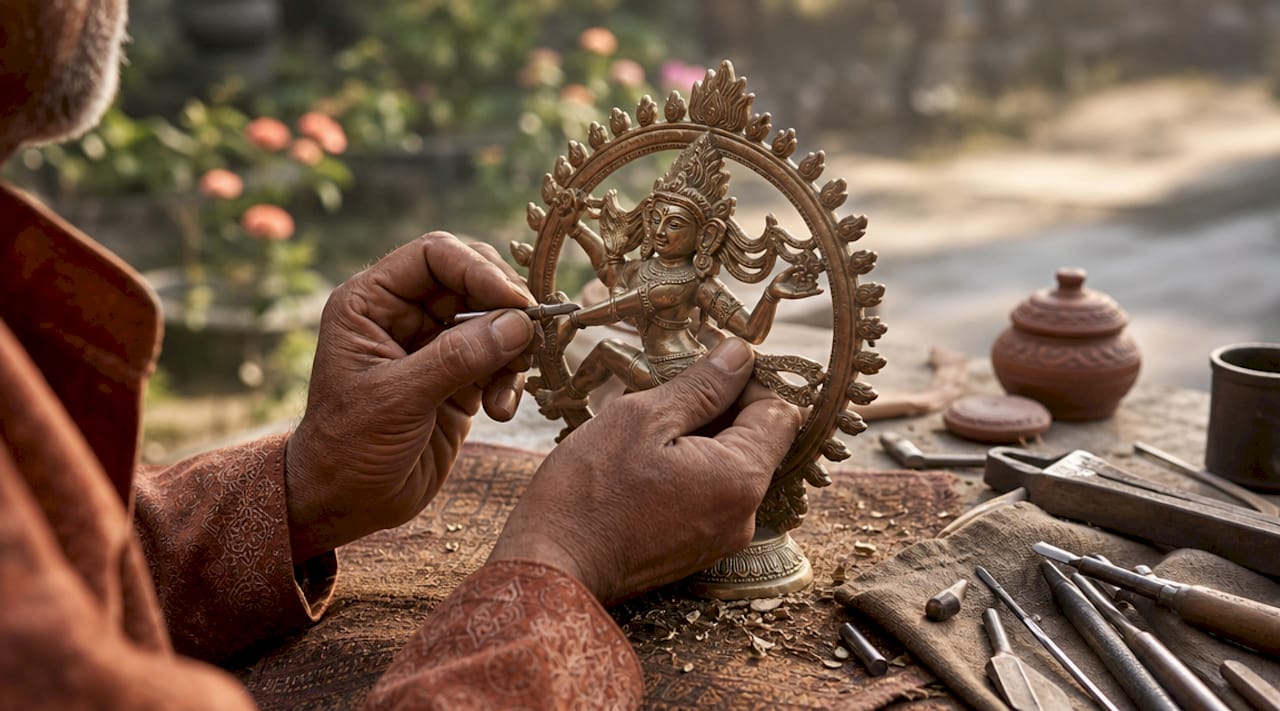
Der Nataraja, Shiva als Herr des Tanzes, ist die theologisch dichteste aller seiner Skulpturenformen. Ikonografische Konventionen für die Nataraja kristallisierten sich während der Chola-Zeit im Süden heraus Indien, etwa im 9. bis 13. Jahrhundert n. Chr., und die Form ist seitdem ikonografisch stabil geblieben. Die Natarajas aus Chola-Bronze, die in Institutionen wie dem Metropolitan Museum of Art in New York aufbewahrt werden, stellen den Höhepunkt dieser Tradition in Bezug auf Handwerkskunst und symbolische Präzision dar.
Die Attribute des Nataraja passen direkt zu theologischen Konzepten:
| Attribut | Symbolische Bedeutung |
|---|---|
| Damaru (Trommel) in der oberen rechten Hand | Der Klang der Schöpfung; die erste Schwingung des Universums |
| Feuer in der oberen linken Hand | Zerstörung und Transformation des Kosmos |
| Abhayamudra-Geste, untere rechte Hand | Furchtlosigkeit; Schutz, der dem Anhänger gewährt wird |
| Erhöhter linker Fuß | Zuflucht und Befreiung für die geplagte Seele |
| Zertrampelter Zwerg (Apasmara) | Überwindung von Illusion und Unwissenheit |
| Ring aus Flammen | Der endlose Kreislauf der kosmischen Zeit |
Die Abhayamudra-Geste erscheint sowohl in der hinduistischen als auch in der buddhistischen Ikonographie als direkte Lehraussage. Im Nataraja wird mitgeteilt, dass der Anhänger, der Shivas kosmischen Tanz versteht, keine Angst vor Zerstörung haben muss, denn was zerstört wird, ist nur Illusion.
Die Schlangenbilder um Shiva verbinden ihn mit einer breiteren südasiatischen ikonografischen Tradition. Naga-Skulpturen erscheinen aus dem ersten Jahrhundert n. Chr und sind integraler Bestandteil von Tempelkontexten auf dem gesamten Subkontinent. Die Schlange, die sich um Shivas Hals windet, ist nicht nur dekorativ. Es verankert ihn in einer heiligen Ökologie natürlicher Kräfte, die die hinduistische Theologie als göttliche Kräfte anerkennt.
Profi-Tipp: Untersuchen Sie bei der Beurteilung einer Shiva-Skulptur die Beziehung zwischen den Gesten und den gehaltenen Gegenständen. Der Nataraja fungiert als integriertes System, in dem Befreiungserzählungen über kombinierte Gesten, Objekte und Tanzposen statt über isolierte Symbole verteilt werden.
Welche großen Mythen sind mit Shiva verbunden?
Shivas mythologische Erzählungen sind keine separaten Geschichten. Es handelt sich um theologische Argumente, die in narrativer Form zum Ausdruck kommen. Jeder Mythos beleuchtet einen spezifischen Aspekt seiner Natur und seiner Beziehung zum Kosmos.
-
Die Neelakantha-Legende. Während des Aufwirbelns des kosmischen Ozeans (Samudra Manthan) wurde ein tödliches Gift gerufen Halahala entstand, der drohte, die gesamte Schöpfung zu zerstören. Shiva nahm das Gift zu sich, um das Universum zu schützen, und sein Hals wurde blau von dem Gift. Aus diesem Grund trägt er den Namen Neelakantha, was Blaukehl bedeutet. Der Mythos stellt Shiva als den ultimativen Beschützer dar, der kosmische Gefahren auf persönliche Kosten auf sich nimmt.
-
Die Tandava. Shivas kosmischer Tanz, der Tandava, ist der physische Ausdruck der Erschaffung und Zerstörung des Universums. Der Tanz ist keine Aufführung. Es ist der Mechanismus, durch den der Kosmos funktioniert. Wenn Shiva tanzt, entstehen und lösen sich Galaxien auf. Die Nataraja-Skulptur ist die visuelle Aufzeichnung dieses Tanzes, eingefroren in Bronze.
-
Shiva und Parvati. Shivas Hochzeit mit Parvati, der Tochter des Himalaya, stellt die Vereinigung von reinem Bewusstsein mit aktiver Energie (Shakti) dar. Ihre Vereinigung bringt Ganesha, den Beseitiger von Hindernissen, und Kartikeya, den Gott des Krieges, hervor. Diese Familienstruktur in der hinduistischen Theologie ist ein Modell für die Integration von asketischem Rückzug und engagiertem weltlichem Leben.
-
Shiva und Zeit. Shivas Beziehung zur Zeit kommt durch seine Rolle als Mahakala, die große Zeit, zum Ausdruck. Er existiert außerhalb des Kreislaufs von Schöpfung und Zerstörung, der alle anderen Wesen beherrscht. Dies versetzt ihn in eine einzigartige theologische Position, da er sowohl der Urheber kosmischer Zyklen als auch derjenige ist, der sie transzendiert.
-
Die Zerstörung von Tripura. Drei von den Asuras erbaute dämonische Städte (Tripura) bedrohten die kosmische Ordnung. Shiva zerstörte alle drei mit einem einzigen Pfeil genau in dem Moment, in dem sie sich zusammenschlossen. Dieser Mythos unterstreicht seine Rolle als die Kraft, die das Gleichgewicht wiederherstellt, wenn der Kosmos destabilisiert wird.
Diese Erzählungen bilden die Grundlage der Shaiva-Andachtspraxis. Wenn man sie versteht, erhält die Ikonographie der Shiva-Skulpturen ihre volle Bedeutung.
Wie wird Shiva in hinduistischen Traditionen verehrt?
Der Shaivismus betrachtet Shiva als den Höchsten Herrn der das Universum erschafft, beschützt und transformiert. Die Anbetungspraktiken dieser Tradition reichen von aufwändigen Tempelritualen bis hin zu einfacher persönlicher Hingabe und machen die Shiva-Anbetungspraktiken zu den zugänglichsten im Hinduismus.
Zu den Kernelementen der Shiva-Verehrung gehören:
- Abhisheka: Rituelles Baden des Shiva Lingam mit Wasser, Milch, Honig und anderen heiligen Substanzen. Jede Substanz hat eine spezifische symbolische Bedeutung im Zusammenhang mit Reinigung und Hingabe.
- Bilva geht: Shiva als eine seiner heiligsten Pflanzen angeboten. Das dreilappige Blatt repräsentiert den Trishula und die drei Aspekte seiner Natur.
- Gesang: Das Panchakshara-Mantra, Om Namah Shivaya, ist das zentrale Mantra der Shiva-Verehrung. Anhänger rezitieren auch die 108 Namen Shivas (Ashtottara Shatanamavali) als vollständige Andachtspraxis.
- Pilgerfahrt: Die zwölf Jyotirlinga-Schreine gegenüber Indien, darunter Somnath in Gujarat und Kedarnath in Uttarakhand, sind die heiligsten Pilgerziele im Shaivismus.
- Maha Shivaratri: Das bedeutendste jährliche Fest, das Shiva gewidmet ist, wird am 14. Tag der dunklen 14 Tage im hinduistischen Monat Phalguna gefeiert. Gläubige beobachten Fasten, Nachtwachen und ununterbrochene Gesänge.
Der Shiva Lingam verdient als Kultobjekt besondere Aufmerksamkeit. Es ist keine wörtliche Darstellung der Gottheit, sondern eine symbolische Form des unendlichen, formlosen Absoluten. Der Lingam ist innerhalb der Yoni (einer kreisförmigen Basis, die Shakti darstellt) platziert und stellt die Vereinigung männlicher und weiblicher kosmischer Prinzipien dar. Diese theologische Präzision geht bei oberflächlichen Beschreibungen der Form oft verloren.
Wichtige Erkenntnisse
Shiva ist die höchste Gottheit des Shaivismus, deren Symbolik, Mythologie und Ikonographie stets eine Botschaft verkörpern: Zerstörung ist Transformation und Transformation ist Befreiung.
| Punkt | Einzelheiten |
|---|---|
| Shivas Kernidentität | Shiva ist sowohl der Zerstörer innerhalb der Trimurti als auch die höchste Gottheit im Shaivismus und verkörpert kosmische Zyklen der Schöpfung und Auflösung. |
| Zerstörung als Transformation | Shivas destruktive Rolle zielt auf Illusion und Unwissenheit ab, nicht auf die Existenz. Die zertrampelte Apasmara-Figur des Nataraja macht dies deutlich. |
| Nataraja als visuelle Theologie | Jedes Attribut in der Nataraja-Skulptur kodiert eine spezifische doktrinäre Bedeutung; Das Formular muss als integriertes System und nicht als isolierte Symbole gelesen werden. |
| Zugänglichkeit des Gottesdienstes | Die Shiva-Hingabe umfasst abstrakte Meditation, Lingam-Anbetung, Mantra-Singen und Pilgerfahrt und macht sie Praktizierenden auf allen Ebenen zugänglich. |
| Bedeutung der Chola-Zeit | Der Bronzeguss aus der Chola-Ära kristallisierte die Nataraja-Ikonographie heraus, die bis heute die theologische Standardreferenz für Shivas kosmischen Tanz ist. |
Warum die Bezeichnung „Zerstörer“ den Kern verfehlt
Die meisten Einführungen in Shiva führen zur Zerstörung. Dieser Rahmen ist korrekt, aber unvollständig, und nach meiner Erfahrung mit hinduistischen Skulpturen bei HDAsianArt führt er Sammler und Studenten, die diesen Objekten zum ersten Mal begegnen, immer wieder in die Irre.
Der Nataraja ist das deutlichste Beispiel. Wenn Sie einen Nataraja aus Chola-Bronze betrachten, wirkt das Feuer in der oberen linken Hand bedrohlich. Aber das Abhayamudra in der unteren rechten Hand ist ebenso hervorstechend und sagt das Gegenteil: Fürchte dich nicht. Religiöse Skulpturen wie die Nataraja fungieren als visuelle Theologie, und die vollständige theologische Aussage entsteht erst, wenn man alle Elemente zusammen liest. Das Feuer und die Geste der Furchtlosigkeit sind keine Widersprüche. Sie sind zwei Hälften desselben Arguments.
Das gleiche Prinzip gilt für den Lingam. Sammler betrachten es manchmal als einfaches Fruchtbarkeitssymbol, das seine eigentliche Bedeutung als Darstellung des unendlichen, formlosen Absoluten verliert. Kontext und ikonografische Kompetenz sind bei der Auseinandersetzung mit diesen Objekten von enormer Bedeutung. Ein Stück Südasiatische religiöse Skulptur ist nicht in erster Linie dekorativ und in zweiter Linie theologisch. Sie ist in erster Linie theologisch, und die ästhetische Qualität ist das Vehikel dieser Theologie.
Mein Rat: Gehen Sie beim Betrachten von Shivas Bildern davon aus, dass jedes Element beabsichtigt ist und eine Bedeutung trägt. Diese Annahme wird Ihnen mehr nützen als jede Zusammenfassung in einem einzigen Satz darüber, wer er ist.
— James, HDAsianArt.com
Entdecken Sie authentische Shiva-Skulpturen bei HDAsianArt
HDAsianArt bietet eine kuratierte Auswahl hinduistischer Skulpturen, die Shiva und verwandte Gottheiten darstellen, aus Süd- und Südostasien stammen und von Spezialisten für asiatische religiöse Kunst authentifiziert wurden.

Jedes Stück in der HDAsianArt-Sammlung wird individuell recherchiert, fotografiert und beschrieben, wobei auf ikonografische Details, Herkunft und Handwerkskunst geachtet wird. Ganz gleich, ob Sie eine Sammlung mit Schwerpunkt auf der Shaiva-Ikonographie aufbauen oder ein einzelnes bedeutendes Werk suchen, der Katalog umfasst Bronze-, Stein- und Holzstücke aus mehreren Epochen und regionalen Traditionen. Der weltweite versicherte DHL-Versand ist bei allen Bestellungen Standard. Für Sammler, die das verstehen Asiatische Skulpturen tragen spirituelle Energie in sich Über ihre materielle Form hinaus sind dies Objekte, die eine ernsthafte Überlegung wert sind.
FAQ
Wer ist Lord Shiva im Hinduismus?
Shiva ist eine der Hauptgottheiten des Hinduismus und fungiert neben Brahma und Vishnu als Zerstörer und Transformator innerhalb der Trimurti. Im Shaivismus ist er die höchste Gottheit, die die Schöpfung, Erhaltung und Auflösung des Universums umfasst.
Was stellt der Nataraja dar?
Der Nataraja ist Shiva als Herr des Tanzes, eine skulpturale Form, die den kosmischen Zyklus von Schöpfung und Zerstörung durch spezifische Gesten und Objekte kodiert. Die Trommel signalisiert Schöpfung, das Feuer signalisiert Zerstörung, das Abhayamudra signalisiert Furchtlosigkeit und der zertrampelte Zwerg repräsentiert die Überwindung der Illusion.
Welche Bedeutung hat der Shiva Lingam?
Der Shiva Lingam ist eher eine anikonische Darstellung des Unendlichen, formlosen Absoluten als ein wörtliches Bild der Gottheit. Platziert innerhalb der Yoni-Basis, die Shakti darstellt, symbolisiert es die Vereinigung kosmischer männlicher und weiblicher Prinzipien.
Was ist Maha Shivaratri?
Maha Shivaratri ist das wichtigste jährliche Fest, das Shiva gewidmet ist und am 14. Tag der dunklen 14 Tage im hinduistischen Monat Phalguna begangen wird. Anhänger feiern dies mit Fasten, Nachtwachen und ständigem Singen von Shivas Namen und Mantras.
Was sind Shivas wichtigste Symbole?
Zu Shivas Hauptsymbolen gehören das dritte Auge, das transzendente Weisheit darstellt, der Dreizack (Trishula), der die drei kosmischen Kräfte darstellt, die Mondsichel, die die Beherrschung der Zeit signalisiert, der Fluss Ganga, der die Reinigung darstellt, und die Schlange, die die Beherrschung des Todes und der Urkräfte darstellt.
