



Erdtöne in der asiatischen Skulptur: Leitfaden für Innenarchitektur
Erdtöne in der asiatischen Skulptur: Leitfaden für Innenarchitektur
Erdtöne in der asiatischen Skulptur werden als die warme, natürliche Farbpalette aus Ocker, Rost, Terrakotta, Schokoladenbraun und Taupe definiert, die in Bronze-, Stein- und Holzstücken aus ganz Asien zu finden ist. Die Rolle erdiger Töne in asiatischen Skulpturen für die Innenarchitektur geht weit über die Dekoration hinaus.
Diese Farben tragen ein kulturelles Gedächtnis, signalisieren die Authentizität des Materials und erzeugen eine geerdete Wärme, die synthetische Oberflächen nicht reproduzieren können. Hausbesitzer und Designer, die verstehen, wie Erdtöne sowohl psychologisch als auch ästhetisch im Raum wirken, gewinnen einen erheblichen Vorteil bei der Platzierung von Kunst in Innenräumen.
Wie prägen Erdtöne in asiatischen Skulpturen die Innenatmosphäre?
Erdtöne verringern die visuelle Energie in einem Raum. Während kühle Grau- und Weißtöne für Aufmerksamkeit sorgen, sorgen warme Ocker- und Rosttöne für Ruhe. Dies ist keine stilistische Präferenz. Es spiegelt wider, wie das menschliche Auge warme Wellenlängen als räumlich zurückweichend und emotional beruhigend wahrnimmt.
Der entscheidende technische Faktor ist der Lichtreflexionswert (LRV). Tiefe Erdtöne wie Rost können einen LRV-Wert von nur 14 aufweisen. Das bedeutet, dass sie den größten Teil des Lichts absorbieren, das auf sie trifft. In einem kleinen oder nach Norden ausgerichteten Raum kann diese Absorption dazu führen, dass sich der Raum komprimiert und düster anfühlt.
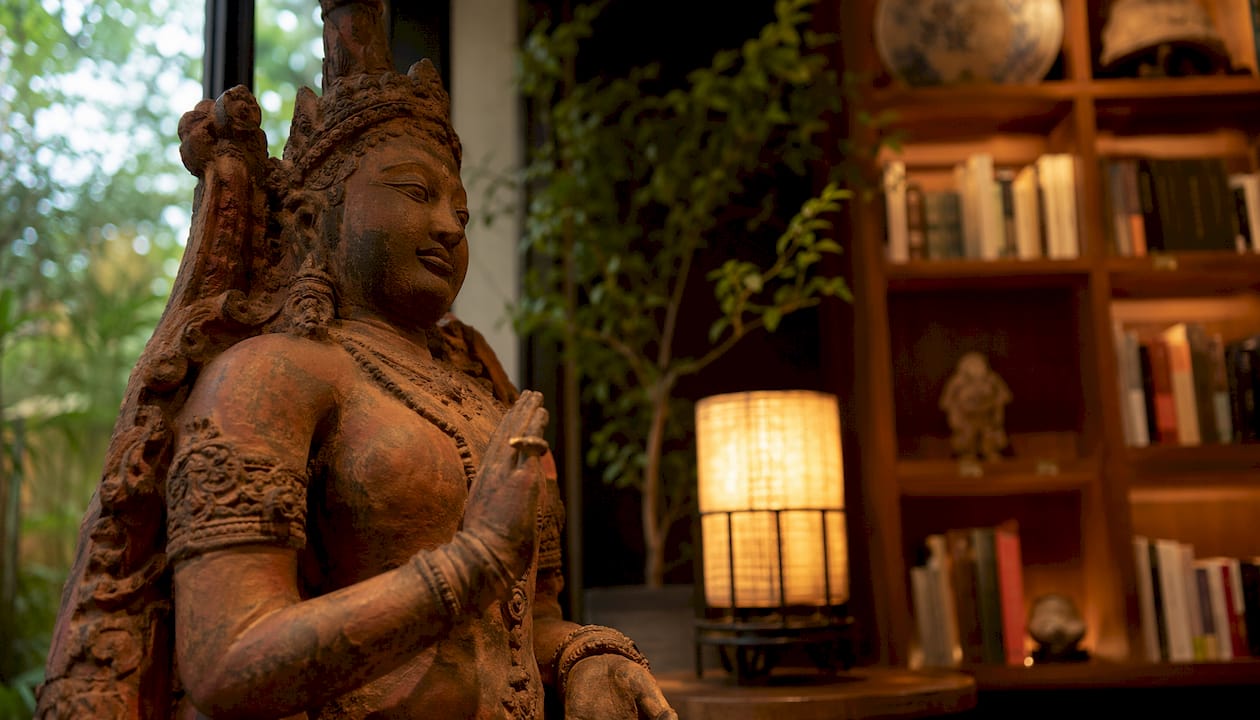
Warme Untertöne in Skulpturen, wie die goldene Patina auf einer kambodschanischen Bronze oder die rote Tonoberfläche einer javanischen Terrakottafigur, interagieren anders mit architektonischen Elementen als Stücke mit kühlen Farbtönen. Eine warme Bronze wirkt als Teil der materiellen Geschichte des Raumes, wenn sie vor Gipswänden, Holzböden oder Leinenpolstern platziert wird. Ein kühl getöntes Stück in derselben Umgebung erzeugt visuelle Reibung.
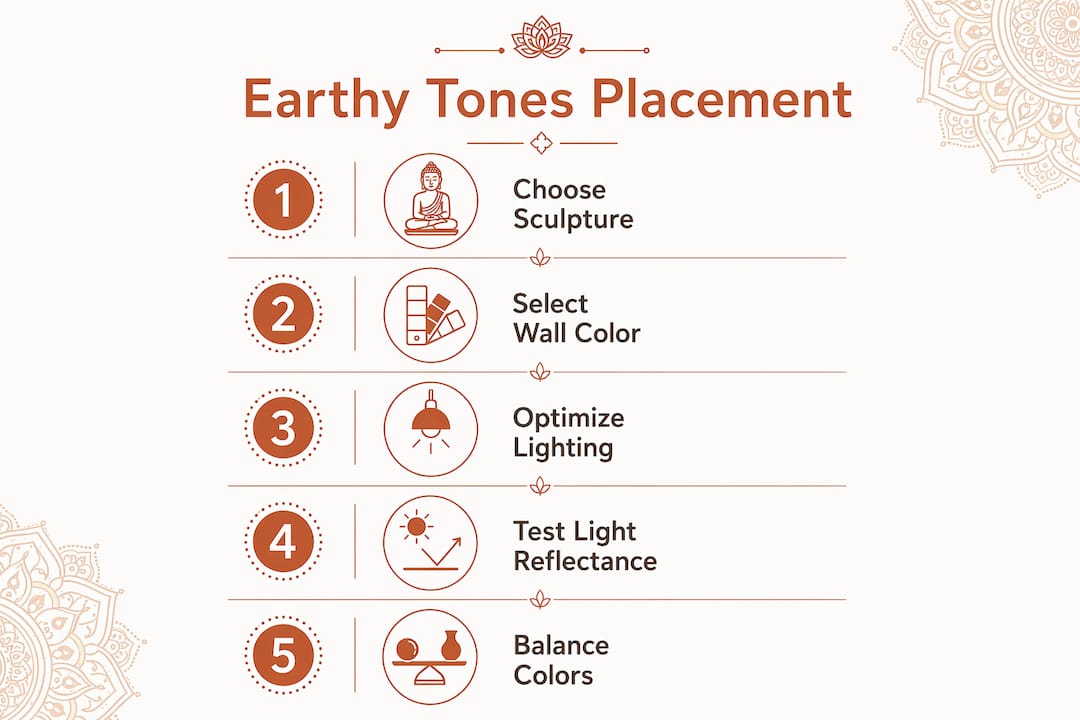
Profi-Tipp: Testen Sie mehrere Tage lang ein großes Farbmuster im gleichen Erdton wie Ihre Skulptur unter natürlichem und künstlichem Licht, bevor Sie sich für eine Wandfarbe entscheiden. Die LRV-Verschiebung zwischen Morgen- und Abendlicht ist erheblich.
Die Farbbalance ist ebenso wichtig wie die Farbauswahl. Erfahrene Designer empfehlen, Erdtonschemata auf drei Farben pro Raum zu beschränken: eine dominante, eine sekundäre und eine Akzentfarbe. Mehr als drei erzeugen visuelles Rauschen, das die Ruhe untergräbt, die diese Paletten erzeugen sollen.
Welche kulturelle Bedeutung haben Erdtöne in der asiatischen Bildhauerkunst?
Erdtöne in der asiatischen Skulptur sind kein Zufall. Sie sind das direkte Ergebnis traditioneller Materialien und Brenn- oder Gussmethoden, die über Jahrhunderte hinweg angewendet wurden Kambodscha, Thailand, Indonesien, Sri Lanka, und Vietnam. Bronze oxidiert zu tiefem Braun und Grün. Sandstein verwittert zu warmem Bernstein. Teak und Palisander tragen ihr eigenes Spektrum an Ocker und Siena. Jede dieser Farben ist untrennbar mit der kulturellen Identität des Objekts verbunden.
Die Steinarten, die in asiatischen Skulpturen verwendet werden haben spezifische regionale und spirituelle Bedeutungen. Khmer-Sandstein aus Kambodscha liest sich anders als Granit aus Sri Lanka, auch wenn beide in ähnlich warmen Tönen erscheinen. Die Farbe ist ein Zeugnis der Geographie, Geologie und Handwerkstradition.
Farbe fungiert in der asiatischen Bildhauerkunst auch als spirituelle Sprache. Terrakotta- und Ockertöne in der hinduistischen und buddhistischen Ikonographie verbinden Figuren mit dem Erdelement und signalisieren Bodenständigkeit und materielle Existenz. Gold- und Bronzetöne heben eine Figur zum Göttlichen. Diese vielschichtige Bedeutung ist der Grund, warum ein authentisches Stück mehr visuelle Autorität hat als eine Reproduktion in derselben Farbe.
Die taktile Auseinandersetzung mit Skulpturen aus Holz und Stein fördert das räumliche Denken und steigert die Kreativität bei der Innenarchitektur. Körperliche Interaktion stärkt die haptische Wahrnehmung und bereichert die künstlerische Identität über die flache Dekoration hinaus.
Die taktile Dimension der erdfarbenen Skulptur fügt eine Ebene hinzu, die Farbe und Tapete nicht bieten können. Umgang mit und Beobachtung skulpturaler Formen entwickelt räumliches Denken bei Designern und vertieft die Wertschätzung bei Hausbesitzern. Die Maserung von geschnitztem Teakholz, die Narbenbildung von gealterter Bronze und die kühle Glätte von poliertem Sandstein vermitteln Alter und Authentizität sowohl durch Berührung als auch durch Anblick.
Zu den wichtigsten kulturellen Symbolen, die von erdfarbenen asiatischen Skulpturen getragen werden, gehören:
- Bronzepatina: Zeigt Alter, rituelle Verwendung und regionale Gusstraditionen an Thailand und Indonesien
- Sandsteinverwitterung: Weist auf den Ursprung eines Tempels im Freien hin, insbesondere in der Khmer- und südindischen Tradition
- Lackierte Holztöne: Kommt in burmesischen und thailändischen Stücken vor und reicht von tiefem Bernstein bis fast Schwarz
- Terrakotta-Oberflächen: Gefunden in Volks- und Devotionalien auf dem gesamten indischen Subkontinent und in Südostasien
Wie lassen sich erdfarbene asiatische Skulpturen wirkungsvoll im Innenbereich platzieren?
Die Platzierung bestimmt, ob eine Skulptur einen Raum verankert oder darin verschwindet. Skulpturales Design funktioniert am besten wenn Figuren Übergangszonen statt leerer Ecken besetzen. Eingänge, Treppenhäuser und Gemeinschaftsbereiche geben der Skulptur den räumlichen Kontext, den sie benötigt, um zu beeinflussen, wie sich Menschen durch ein Zuhause bewegen und es erleben.
Befolgen Sie diese Platzierungsreihenfolge für erdige asiatische Skulpturen:
- Eingang und Foyer: Ein bronzener Buddha oder ein steinerner Ganesha am Eingang bestimmen den Klang des gesamten Innenraums. Warme Erdtöne signalisieren hier Ruhe, bevor der Hausbesitzer oder Gast tiefer in den Raum vordringt.
- Treppenpodeste: Vertikale Übergangsräume profitieren von der Skulptur, da das Auge bei Höhenunterschieden auf natürliche Weise innehält. Eine große kambodschanische Sandsteinfigur oder eine geschnitzte Holztafel lassen sich an diesen Stellen gut lesen.
- Wohnzimmer-Fokuswand: Platzieren Sie ein einzelnes bedeutendes Stück vor einem weichen, neutralen Hintergrund, z. B. warmem Weiß oder blassem Taupe, damit die Erdtöne der Skulptur klar und konkurrenzlos zur Geltung kommen.
- Schlafzimmernischen: Kleinere Bronze- oder Holzstücke in Ocker- und Brauntönen unterstützen die beruhigende Funktion eines Schlafzimmers. HDAsianArt’s Asiatische Skulpturen für Schlafzimmer Der Leitfaden behandelt dies ausführlich.
Die Farbpaarung ist die zweite wichtige Entscheidung. Taupe- und Khaki-Wände passen zu fast jedem erdigen Skulpturenton, da ihre subtilen grünen Untertöne eine neutrale Brücke zwischen warm und kühl bilden. Rostfarbene Skulpturen passen gut zu salbeigrünen Akzenten und natürlichem Leinen. Schokoladenbraune Stücke passen am besten zu warmem Weiß oder Creme, während Messing- oder Holzmöbel die Palette vervollständigen.
Die Beleuchtungsstrategie unterscheidet eine gut platzierte Skulptur von einer schlecht beleuchteten. Materialien wie Marmor, Messing und Terrakotta reagieren auf gerichtetes Licht, indem sie visuelle Bewegungen auf ihren Oberflächen erzeugen. Verwenden Sie einen Strahler mit schmalem Strahl in einem 30-Grad-Winkel zu einem Bronze- oder Steinstück, um Textur und Tiefe hervorzuheben. Vermeiden Sie alleiniges Umgebungslicht von oben, da es Erdtöne abschwächt und das Schattenspiel beseitigt, das Skulpturen so überzeugend macht.
Profi-Tipp: Warmspektrum-LED-Lampen im Bereich von 2700 K bis 3000 K verstärken Ocker-, Rost- und Bronzetöne, ohne sie zu verzerren. Glühbirnen mit kühlem Spektrum über 4000 K verschieben warme Erdtöne in Richtung Grau.
Welche Herausforderungen ergeben sich bei Erdtönen im Innenraum von Skulpturen?
Der häufigste Fehler besteht darin, eine dunkle Skulptur mit niedrigem LRV ohne Ausgleich in einem kleinen oder schlecht beleuchteten Raum zu platzieren. Tiefe Farbtöne mit niedrigem LRV wie Rost können kleine Räume bedrückend wirken lassen, wenn die umgebenden Wände und Möbel ebenfalls kräftige Farbtöne aufweisen. Die Skulptur wird eher zum Teil eines visuellen Gewichtsproblems als zum Mittelpunkt.
Häufige Herausforderungen und ihre Lösungen:
- Kleine Räume mit dunklen Skulpturen: Verwenden Sie helle, neutrale Wände mit einem LRV über 70, um einen Kontrast zu schaffen. Die Skulptur ist eher ein bewusster Akzent als ein Faktor, der zur Dunkelheit beiträgt.
- Nicht übereinstimmende Materialpaletten: Skulpturen in erdigen Farbtönen passen ohne Übergangsmaterial schlecht zu Chrom, Hochglanzlack oder kaltem Beton. Fügen Sie Holz-, Messing- oder Naturfaserelemente hinzu, um die Skulptur mit dem Raum zu verbinden.
- Platzierung in Ecken: Ecken reduzieren die räumliche Wirkung einer Skulptur. Bewegen Sie Teile auf offene Flächen, Sockel oder Übergangszonen, wo sie Sichtlinien schneiden.
- Überfüllung: Mehrere erdfarbene Stücke in einem Raum konkurrieren eher, als dass sie sich ergänzen. Ein signifikantes Stück pro Zone ist der Standard für die Wahrung der visuellen Ruhe.
| Herausforderung | Lösung |
|---|---|
| Niedriger LRV verursacht ein schwaches Gefühl | Paarung mit Wänden über LRV 70; Fügen Sie eine gezielte Anstrahlung hinzu |
| Konkurrierende Erdtöne | Beschränken Sie sich auf drei Farben pro Raum: dominant, sekundär, Akzent |
| Skulptur in der Ecke verloren | Platzieren Sie es am Eingang, im Treppenhaus oder an der Hauptwand |
| Materialkonflikt | Fügen Sie Holz, Messing oder Naturfasern hinzu, um Skulptur und Raum zu verbinden |
Tests sind nicht verhandelbar. Platzieren Sie die Skulptur an ihrem vorgesehenen Standort und beobachten Sie sie einen ganzen Tag lang, vom natürlichen Morgenlicht bis zum künstlichen Abendlicht. Die spirituelle Energie und räumliche Wirkung eines Stückes verschieben sich deutlich mit den Lichtverhältnissen.
Wichtige Erkenntnisse
Asiatische Skulpturen in erdigen Farbtönen werten Innenräume am effektivsten auf, wenn Platzierung, Beleuchtung und Farbbalance zusammenarbeiten, um das kulturelle Gewicht und den materiellen Charakter des Stücks zu unterstützen.
| Punkt | Einzelheiten |
|---|---|
| LRV-Bewusstsein | Rost- und tiefe Brauntöne haben einen LRV von nur 14; Ausgleichen durch helle Wände und gerichtetes Licht. |
| Dreifarbenregel | Beschränken Sie Erdtonschemata auf eine dominante, eine sekundäre und eine Akzentfarbe pro Raum. |
| Übergangsplatzierung | Eingänge, Treppenhäuser und Gemeinschaftszonen geben der Skulptur den räumlichen Kontext, um einen Raum zu verankern. |
| Materialkoordination | Holz, Messing und Naturfasern verbinden erdige Skulpturen mit der breiteren Innenpalette. |
| Kulturelle Authentizität | Erdtöne in authentischen asiatischen Stücken haben eine materielle und spirituelle Bedeutung, die Reproduktionen nicht haben. |
Was ich aus der jahrelangen Arbeit mit erdfarbenen asiatischen Skulpturen gelernt habe
Die herkömmliche Beratung zu Erdtönen konzentriert sich fast ausschließlich auf die Lackfarbe. Dabei wird übersehen, dass die Skulptur selbst das primäre Farbereignis im Raum ist. Wenn Sie eine authentische javanische Bronze- oder Khmer-Sandsteinfigur einbringen, führen Sie eine Farbe ein, die jahrhundertelange Oxidation, Brennen oder Verwitterung hinter sich hat. Kein Lacksplitter passt dazu.
Die Designer, die ich am meisten respektiere, betrachten den Erdton der Skulptur als Fixpunkt und bauen die Farbpalette des Raums nach außen hin auf. Sie wählen nicht zuerst eine Wandfarbe aus und suchen dann nach einer passenden Skulptur. Diese Sequenz erzeugt Innenräume, die eher zusammengesetzt als durchdacht wirken.
Auch die taktile Dimension wird unterschätzt. Die skulpturale Form entwickelt räumliches Denken auf eine Art und Weise, wie es bei flacher Kunst nicht der Fall ist. Hausbesitzer, die Zeit mit einem Stück verbringen und bemerken, wie sich seine Oberfläche bei unterschiedlichem Licht verändert, entwickeln eine andere Beziehung zu ihrem Raum. Der Raum wird zu etwas, das sie lesen, statt ihn einfach nur zu bewohnen.
Die anhaltende Anziehungskraft natürlicher Farbpaletten im digitalen Zeitalter ist keine Nostalgie. Es ist eine Reaktion auf die Materialknappheit in zeitgenössischen Innenräumen. In den meisten Haushalten dominieren Sichtschutzwände, synthetische Oberflächen und massenhaft hergestellte Oberflächen. Eine authentische erdfarbene Skulptur von Kambodscha oder Thailand führt eine materielle Realität ein, die der Rest des Raumes nicht reproduzieren kann. In diesem Kontrast lebt der Designwert.
— James, HDAsianArt.com
Authentische erdige asiatische Skulpturen bei HDAsianArt
HDAsianArt bietet eine kuratierte Auswahl an antiken und traditionellen asiatischen Skulpturen aus Bronze, Stein und Holz, die jeweils authentische Erdtöne aufweisen, die synthetische Stücke nicht reproduzieren können.
Jedes Stück in der HDAsianArt-Sammlung wird individuell von Spezialisten für asiatische buddhistische und hinduistische Kunst recherchiert, fotografiert und beschrieben. Die Antiker indonesischer Lehr-Buddha aus Bronze ist ein starkes Beispiel: eine 26 cm große javanische Bronze mit tiefer, warmer Patina, die als zentraler Akzent in Wohnzimmern, Arbeitszimmern und Schlafzimmernischen fungiert. Der weltweite versicherte DHL-Versand und der Fokus auf musealer Handwerkskunst machen HDAsianArt zu einer zuverlässigen Quelle für Hausbesitzer und Designer, die Stücke mit echter kultureller und ästhetischer Autorität suchen. Durchsuchen Sie die vollständige Seite Asiatische Kunstsammlung um Stücke zu finden, die zur Farbpalette Ihres Interieurs passen.
FAQ
Was sind Erdtöne in der asiatischen Skulptur?
Erdtöne in der asiatischen Skulptur beziehen sich auf die warmen natürlichen Farben Ocker, Rost, Terrakotta, Schokoladenbraun und Taupe, die durch Bronzeguss, Steinverwitterung und Holzalterung in der traditionellen asiatischen Kunst entstehen. Diese Farben sind das direkte Ergebnis authentischer Materialien und jahrhundertealter Handwerkstechniken.
Wie wirken sich Erdtöne auf die Atmosphäre eines Raumes aus?
Erdtöne verringern die visuelle Energie und erzeugen Ruhe, da warme Wellenlängen als räumlich zurücktretend wahrgenommen werden. Tiefe Töne mit niedrigen LRV-Werten können dazu führen, dass sich kleine Räume dunkel anfühlen, daher ist die Kombination mit hellen, neutralen Wänden die Standardkorrektur.
Wo soll eine erdfarbene asiatische Skulptur im Innenbereich platziert werden?
Skulpturale Stücke funktionieren am besten in Übergangszonen wie Eingängen, Treppenabsätzen und Gemeinschaftsbereichen, wo sie natürliche Sichtlinien unterbrechen und beeinflussen, wie sich Menschen durch einen Raum bewegen.
Wie viele Erdtöne sollte ein Raum enthalten?
Erfahrene Designer empfehlen nicht mehr als drei Erdtöne pro Raum: einen dominanten, einen sekundären und einen Akzent. Bei mehr als drei Werten entsteht ein visuelles Chaos, das die Ruhe, die diese Paletten erzeugen sollen, untergräbt.
Spielt die Platzierungsrichtung einer Buddha-Statue eine Rolle?
Ja. Es gelten besondere Richtungsrichtlinien Platzierung der Buddha-Statue basierend sowohl auf spiritueller Tradition als auch auf Prinzipien der räumlichen Gestaltung. Die nach Osten ausgerichtete Platzierung wird in der buddhistischen Praxis am häufigsten empfohlen.
Empfohlen
- Warum asiatische Skulptur Ihrem Raum spirituelle Energie verleiht – HD Asian Art
- Asiatische Skulpturen für ein Schlafzimmer: Leitfaden 2026 – HD Asian Art
- Leitfaden zur Integration von asiatischen Skulpturen in den Garten im Freien – HD Asian Art
- In asiatischen Skulpturen verwendete Steinarten: Ein Leitfaden für Sammler – HD Asian Art
