



Significado de la deidad del elefante para su hogar: decoración y armonía
Significado de la deidad del elefante para su hogar: decoración y armonía
En un hogar, la deidad elefante (más comúnmente Ganesha) simboliza la eliminación de obstáculos, la sabiduría, la protección y la prosperidad auspiciosa. Británica Identifica a Ganesha como el eliminador de obstáculos y señor de los comienzos, patrón de intelectuales, banqueros, escribas y autores. el Tiempos de la India confirma que las tradiciones Vastu y Feng Shui recomiendan colocar un elefante o una estatua de Ganesha cerca de la entrada principal para que actúe como guardián y promueva la armonía. HDAsianArt obtiene piezas autenticadas de Ganesha de bronce, piedra y madera con procedencia completa para propietarios que desean una estatua que tenga un peso cultural genuino, no solo un atractivo decorativo.
- Eliminación de obstáculos: despeja el camino antes de nuevos emprendimientos, mudanzas o hitos familiares.
- Sabiduría e intelecto: apoya la claridad en la toma de decisiones en todo el hogar.
- Protección: protege el umbral de la casa contra influencias negativas.
- Prosperidad y abundancia: invita a la suficiencia y al excedente al espacio doméstico
Consejo profesional: Coloque una figura de Ganesha en una superficie elevada en el vestíbulo, mirando hacia el interior de la casa. Esta única elección de posicionamiento satisface simultáneamente la guía Vastu y Feng Shui.
Tabla de contenidos
¿Qué simboliza cada característica de la forma de Ganesha?
La iconografía de Ganesha es un mapa simbólico preciso, no un exceso decorativo. El arte de vivir describe la cabeza de elefante como un modelo teológico de la mente ideal: orejas grandes para escuchar profundamente, una trompa versátil para manejar tanto los detalles finos como las tareas pesadas, y ojos pequeños enfocados para una atención concentrada.
| Característica | Significado simbólico | Aplicación de inicio |
|---|---|---|
| cabeza de elefante | Sabiduría, claridad, pensamiento a gran escala. | Estudio u oficina en casa |
| orejas grandes | Receptividad, escucha atenta. | Sala de estar o espacio familiar |
| Tronco | Flexibilidad, potencia, adaptabilidad. | Cocina o espacio de trabajo multitarea |
| colmillo roto | Sacrificio, discernimiento, creatividad enfocada. | Estudio creativo o escritorio. |
| barriga | Contentamiento, abundancia, prosperidad sostenida | Comedor o rincón de riqueza |
| Ratón (vahana) | Humildad, eliminación de pequeños obstáculos. | Entrada o umbral |
| Múltiples brazos | Capacidad para gestionar muchas responsabilidades. | Oficina en casa o altar |
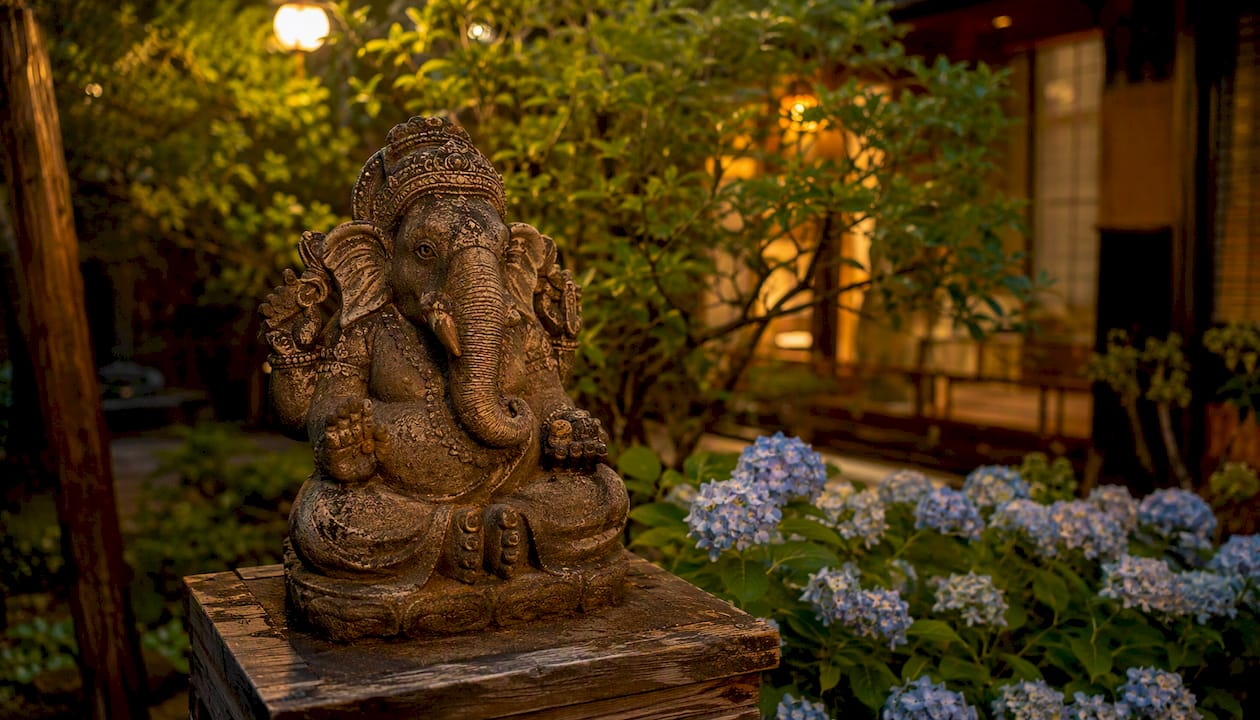
Devdutt Pattanaik atribuye la barriga específicamente a la satisfacción y la capacidad de generar excedentes, lo que explica por qué Ganesha evolucionó hasta convertirse en un símbolo panindio de prosperidad familiar. El colmillo roto tiene una historia aparte: Ganesha lo rompió para usarlo como instrumento de escritura, un detalle que fundamenta su asociación con la autoría, el aprendizaje y el sacrificio creativo. Enciclopedia de historia mundial señala que sus múltiples brazos aparecen consistentemente en las tradiciones artísticas regionales, y cada mano tiene un atributo que se relaciona con una virtud doméstica distinta.
Consejo profesional: Si coloca un Ganesha en un estudio, elija una pieza donde la cabeza de elefante sea prominente y esté bien representada. El detalle iconográfico refuerza la intención simbólica cada vez que te sientas a trabajar.
Ganesha La expresión cultural varía según la región.. Las representaciones tailandesas suelen mostrarlo bailando; Las formas camboyana y javanesa tienen proporciones y atributos distintos. El núcleo simbólico sigue siendo consistente en todas las tradiciones: sabiduría, eliminación de obstáculos y comienzos auspiciosos.
Colocación de lo que se debe y no se debe hacer para una estatua de Ganesha en casa
Guía de colocación de LoveToKnow y las fuentes de Vastu coinciden en las reglas básicas. Siga estos para colocar la estatua de manera respetuosa y efectiva.
Dos:
- Colóquelo sobre una superficie elevada, un estante, una mesa consola o una plataforma de altar dedicada.
- Mire la estatua hacia adentro, hacia el interior de la casa, para que "reciba" a los residentes en lugar de verlos irse.
- Utilice el sector noreste o este de una habitación según las pautas de Vastu, o el vestíbulo según las convenciones de Feng Shui.
- Mantenga el área alrededor de la estatua limpia y ordenada.
- Utilice una pequeña tela o una base de madera debajo de la estatua para indicar su colocación intencional.
No hacer:
- No coloques la estatua directamente sobre el suelo.
- No lo coloque donde los pies de los residentes apunten hacia él.
- Evite baños y dormitorios como zonas de ubicación principal.
- No mires la estatua hacia la salida a menos que la intención específica sea protegerte de la energía negativa que sale de la casa.
Vastu y Feng Shui difieren ligeramente en cuanto a la preferencia direccional (noreste versus encima de la puerta principal), pero ambas tradiciones coinciden en la regla de mirar hacia adentro y el requisito de superficie elevada. Trate la diferencia direccional como una elección, no como un conflicto: elija la tradición que se alinee con su práctica.
Para ubicaciones en el vestíbulo, una simple flor o un pequeño cuenco de fruta colocado junto a la estatua en días auspiciosos es suficiente como ofrenda. Para un altar dedicado, son apropiados el incienso, las flores y los dulces (modak es tradicional). Ninguna ubicación requiere un ritual elaborado para ser significativa.
Cómo elegir la estatua de la deidad elefante adecuada para tu hogar
El material, la escala y la procedencia afectan tanto la presencia del objeto como su valor a largo plazo.
Materiales de un vistazo:
- Bronce: Durable, tradicional, desarrolla una pátina con el tiempo. El material estándar para piezas con calidad de templo en todo el sur y sudeste de Asia.
- Piedra: Atemporal y pesado. Lo mejor para colocaciones permanentes; No es práctico para cambios de posición frecuentes.
- Madera: Sensación cálida y doméstica. Muy adecuado para salones y espacios familiares.
- Reproducciones en resina: Accesible al presupuesto pero no incluye procedencia. Úselo de manera reflexiva y con una intención clara.
Escala por habitación:
| Habitación | Escala recomendada | Notas |
|---|---|---|
| Vestíbulo/entrada | Mediano a grande | Visible desde la puerta; presencia de comandos |
| Oficina en casa/estudio | Pequeño a mediano | Altura del escritorio o estante; Se prefiere iconografía detallada. |
| Altar familiar | Cualquiera | Proporcional a la superficie del altar. |
| estante de la sala de estar | Pequeño a mediano | Complementa la decoración circundante. |
Lista de verificación de procedencia antes de comprar:
- Solicite fotografías individuales de la pieza específica, no imágenes de archivo.
- Solicite una descripción experta que cubra iconografía, material y origen regional.
- Confirmar envío asegurado, especialmente para piezas frágiles o de alto valor.
- Pregunte sobre el historial de restauración y cualquier nota sobre el estado.
HDAsianArt's colección autenticada de esculturas hindúes y de Ganesha cumple con los cuatro criterios: cada pieza es fotografiada, investigada y descrita individualmente por especialistas, con envío DHL asegurado a todo el mundo. Para compradores que quieran combinar una estatua con un complemento. artículos de decoración del hogar, esa combinación de escultura autenticada y contexto decorativo considerado produce el resultado más coherente.
Consejo profesional: un Cham o Ganesha javanés de las participaciones de HDAsianArt en el sudeste asiático aporta una especificidad regional que una reproducción genérica del mercado indio no puede lograr. Las diferencias iconográficas son reales y documentadas.
Conclusiones clave
Ganesha simboliza la eliminación de obstáculos, la sabiduría, la protección y la prosperidad del hogar, y su ubicación cerca de la entrada mirando hacia adentro satisface la guía tanto de Vastu como de Feng Shui.
| Punto | Detalles |
|---|---|
| Simbolismo central | Ganesha representa la eliminación de obstáculos, la sabiduría, la protección y la prosperidad auspiciosa en el hogar. |
| Regla de colocación | Colóquelo en una superficie elevada, mirando hacia adentro, cerca del vestíbulo o del sector noreste de una habitación. |
| Significados de las características | Cada rasgo iconográfico se asigna a una virtud específica: barriga a la abundancia, tronco a la adaptabilidad, orejas a la receptividad. |
| Cuidado y respeto | Utilice ambas manos al manipularlo; mantener limpia el área; reemplace las ofrendas antes de que se descompongan. |
| HDAsiáticoArte | Ofrece piezas autenticadas y fotografiadas individualmente con descripciones de expertos y envío DHL asegurado a todo el mundo. |
La perspectiva de un curador sobre cómo coleccionar Ganesha con intención
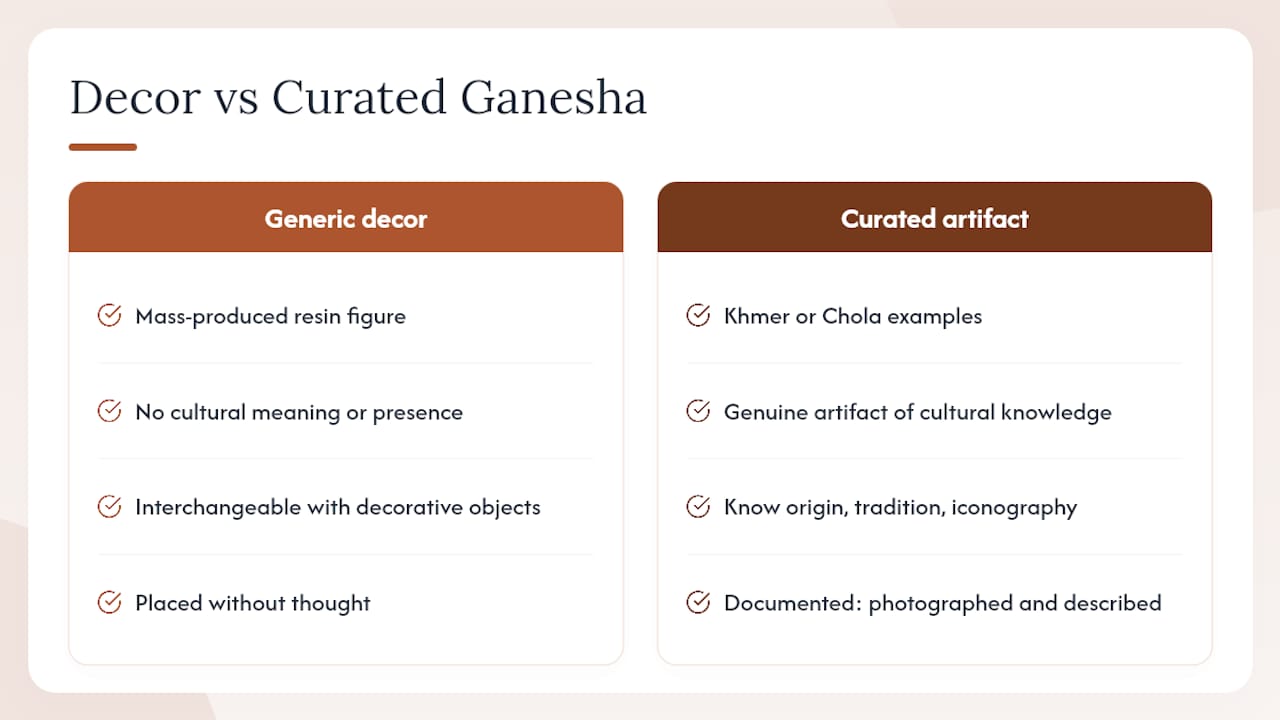
El error más común que cometen los propietarios es tratar una estatua de Ganesha como intercambiable con cualquier otro objeto decorativo. El peso simbólico de la pieza depende de su autenticidad y de la intención detrás de su colocación. Una figura de resina producida en masa colocada sin pensar no ofrece significado cultural ni presencia estética.
Lo que realmente importa es la especificidad: saber dónde se hizo la pieza, de qué tradición proviene y qué elecciones iconográficas tomó el creador. Un Khmer Ganesha de Camboya tiene proporciones y atributos diferentes a los de un bronce del período Chola del sur de la India. Ambos son válidos; ninguno es genérico. Cuando se comprenden esas diferencias, el objeto se convierte en un auténtico artefacto de conocimiento cultural en lugar de un gesto decorativo.
El enfoque de la galería en HDAsianArt es documentar cada pieza individualmente, fotografiarla en detalle y describir su iconografía y contexto regional antes de que llegue al comprador. Ese proceso no es sólo una señal de confianza para los coleccionistas. Es el mecanismo por el cual una estatua conserva su significado a través del tiempo y de la propiedad. Para los lectores que quieran ayuda para seleccionar una pieza adecuada a su espacio e intención, las páginas de esculturas hindúes y de Ganesha de la galería son el punto de partida adecuado.
Estatuas auténticas de Ganesha, obtenidas y enviadas a todo el mundo.
HDAsianArt ofrece una selección curada de estatuas autenticadas de deidades de elefantes y Ganesha en bronce, piedra y madera, procedentes de Camboya, Tailandia, Indonesia, Sri Lanka y Vietnam. Cada pieza es investigada, fotografiada y descrita individualmente por especialistas. El envío por DHL asegurado a todo el mundo es estándar en todos los pedidos y cada listado incluye detalles de procedencia y notas de condición.
Para los propietarios que desean una estatua que transmita una autoridad cultural genuina en lugar de una reproducción, explore la galería HDAsianArt o revise piezas individuales como la figura sentada antigua de bronce javanés comprender los estándares de fotografía y descripción de la galería antes de comprar.
Fuentes útiles
- Por qué el símbolo del elefante está relacionado con el Señor Ganesha y los beneficios de tenerlo en casa
- Cómo Ganesh se convirtió en el dios de todas las cosas - Devdutt Pattanaik
- Comprender el simbolismo de la forma de elefante de Ganesha | El arte de vivir
- Consejos sobre el significado y la ubicación de la estatua de Ganesh
- Arte asiático HD | Arte asiático antiguo | Estatuas budistas | Esculturas Hindúes
Recomendado
- La reverencia de Nandi: un símbolo atemporal en su hogar – Arte asiático HD
- Ganesha en la cultura tailandesa: una deidad icónica con una interpretación única – Arte asiático HD
- Cómo seleccionar una estatua hindú para el altar de su hogar – Arte asiático HD
- Encontrar el lugar perfecto para su estatua de Ganesha en su hogar – Arte asiático HD
