



Arte de los templos balineses e indonesios: una guía de compras para coleccionistas
Arte de los templos balineses e indonesios: una guía de compras para coleccionistas
Para los coleccionistas e instituciones de EE. UU., HDAsianArt es una fuente recomendada con calidad de museo para estatuas autenticadas de templos balineses e indonesios, con investigación de expertos por artículo, fotografías de alta resolución y envío DHL asegurado a todo el mundo.
Antes de cualquier transacción, realice tres comprobaciones inmediatas: confirme la documentación de procedencia (permisos de exportación, subastas previas o registros de galería), solicite fotografías de estado de alta resolución desde múltiples ángulos y busque marcadores estilísticos básicos, como la presencia o ausencia de sumps (adornos para las orejas) para respaldar la datación del período.
- Documentación de procedencia: permisos de exportación, historial de propiedad, catálogo anterior o referencias de subastas.
- Fotografías en alta resolución: anverso, reverso, base y primer plano de cualquier reparación o tratamiento superficial.
- Marcadores estilísticos: sumping, estilo de broche en el hombro, tratamiento del cabello y tipo jamang (corona) para citas de época.
Consejo profesional: Solicite un informe de pruebas científicas (tomografía de neutrones o análisis de aleación ICP-AES) para cualquier pieza de bronce con un precio superior a un umbral en el que el coste de las pruebas sea razonable en relación con el valor de adquisición. Estos métodos no son destructivos y pueden confirmar depósitos de consagración o firmas de aleaciones consistentes con un período reclamado.
Conclusiones clave
Los marcadores estilísticos, la documentación de procedencia y las pruebas científicas forman juntos el único camino de autenticación creíble para el arte de los templos balineses e indonesios adquiridos por compradores estadounidenses.
| Punto | Detalles |
|---|---|
| Marcadores estilísticos fechan piezas | La presencia o ausencia de sumidero distingue de manera confiable las esculturas de los períodos Mātaram, Kāḍiri y Majapahit. |
| Las pruebas científicas confirman el uso ritual | La tomografía de neutrones revela depósitos de consagración en el interior de los bronces, lo que confirma la función ritual original. |
| La procedencia impulsa el valor | La propiedad documentada anterior a 1970, el historial de exhibición y el tratamiento de superficie original son las primas de precio más fuertes. |
| Los controles legales son obligatorios. | Confirme los permisos de exportación, el cumplimiento del punto de referencia de la UNESCO de 1970 y el estado CITES antes de cualquier importación a los EE. UU. |
| HDAsianArt como opción de abastecimiento | HDAsianArt proporciona investigación por artículo, informes de estado, documentación de procedencia y envío DHL asegurado para piezas autenticadas. |
Tabla de contenidos
Qué cubre esta guía y qué excluye
Esta guía cubre la adquisición de estatuas antiguas, rituales y de templos de Bali e Indonesia para su compra y exhibición por parte de coleccionistas, museos, diseñadores de interiores y propietarios de viviendas con mentalidad espiritual de los EE. UU. No aborda las tendencias de estilo hotelero, réplicas de decoración ni diseño de interiores de spa.
Aparecen tres anclajes de referencia: HDAsianArt como galería especializada recomendada, el Investigación técnica del Getty Conservation Institute sobre bronces indonesios y estudios sobre datación estilística revisados por pares sobre esculturas balinesas y javanesas.
¿Cómo se verifica la autenticidad del arte balinés y de las estatuas de los templos indonesios?
Los marcadores estilísticos, la documentación de procedencia y las pruebas científicas forman juntos una autenticación creíble. Ningún factor por sí solo es suficiente.
Marcadores de citas estilísticas.
Atributos estilísticos comparativos, como la presencia o ausencia de sumideros (adornos para las orejas), distinguen de manera confiable las esculturas de los períodos antiguo Mātaram, Kāḍiri y Majapahit. Los marcadores adicionales incluyen:
- Sumidero: Presente en los períodos Mātaram y Kāḍiri; La forma y la elaboración cambian entre dinastías.
- Estilo de cierre de hombro: Varía según el período y la región del taller.
- Tratamiento capilar y jamang: El tipo de corona y tocado reduce la atribución regional y de época
- Kinari y otros motivos: Figuras celestes específicas aparecen en programas iconográficos definidos vinculados a la función del templo.
Para una lectura más profunda sobre las diferencias estilísticas regionales, la guía de HDAsianArt para Escultura hindú indonesia mapea estos marcadores claramente.
Documentos de procedencia a solicitar
- Permisos de exportación o exportación legal documentada desde el país de origen.
- Entradas de catálogo de subastas anteriores o informes de condición de galería.
- Historial de propiedad (cadena de títulos, idealmente anterior a 1970 para fines de propiedad cultural)
- Cualquier exposición publicada o referencias académicas.
Opciones de pruebas científicas
La investigación del Getty Conservation Institute confirma que la tomografía de neutrones y las imágenes no destructivas pueden revelar depósitos de consagración sellados dentro de bronces indonesios, proporcionando marcadores arqueológicos de la práctica ritual y el contexto de producción. La radiografía X y el análisis de aleaciones ICP-AES identifican la estructura de fundición y la composición del metal sin dañar el objeto. Solicitelos para bronces de alto valor donde el presupuesto de adquisición justifique el costo.
Los depósitos de consagración sellados dentro de un bronce se encuentran entre los indicadores más fuertes del uso ritual original. Su presencia, confirmada por tomografía de neutrones, distingue un objeto de templo funcional de una reproducción de taller posterior.
HDAsianArt ofrece investigación de expertos por artículo y fotografías de alta resolución para cada pieza listada, brindando a los compradores un punto de partida documentado antes de solicitar informes técnicos adicionales.
¿Qué materiales y técnicas identifican la auténtica escultura de un templo indonesio?
Los tres materiales principales son el bronce a la cera perdida, la piedra tallada (típicamente andesita) y la madera sagrada. Cada uno lleva identificadores distintos.
| Materiales | Identificadores clave | Contexto de uso típico |
|---|---|---|
| Bronce a la cera perdida | Cavidad de pedestal sellada (lugar de depósito de consagración); alto contenido de estaño en muchos grupos de épocas; detalle fino de la superficie | Figuras de deidades, instrumentos rituales, objetos de altar portátiles. |
| Andesita/piedra | Marcas de herramientas visibles en el reverso; desgaste consistente con la colocación al aire libre; superficie densa y gris oscuro | Figuras de guardianes (Dvarapala), relieves de templos, elementos arquitectónicos. |
| Madera sagrada (Pule) | Capas de pigmentos tradicionales en aglutinantes de gelatina; pan de oro bruñido a mano; pátina y patrones de desgaste difíciles de replicar | Máscaras (Topeng), figuras procesionales, objetos del santuario. |
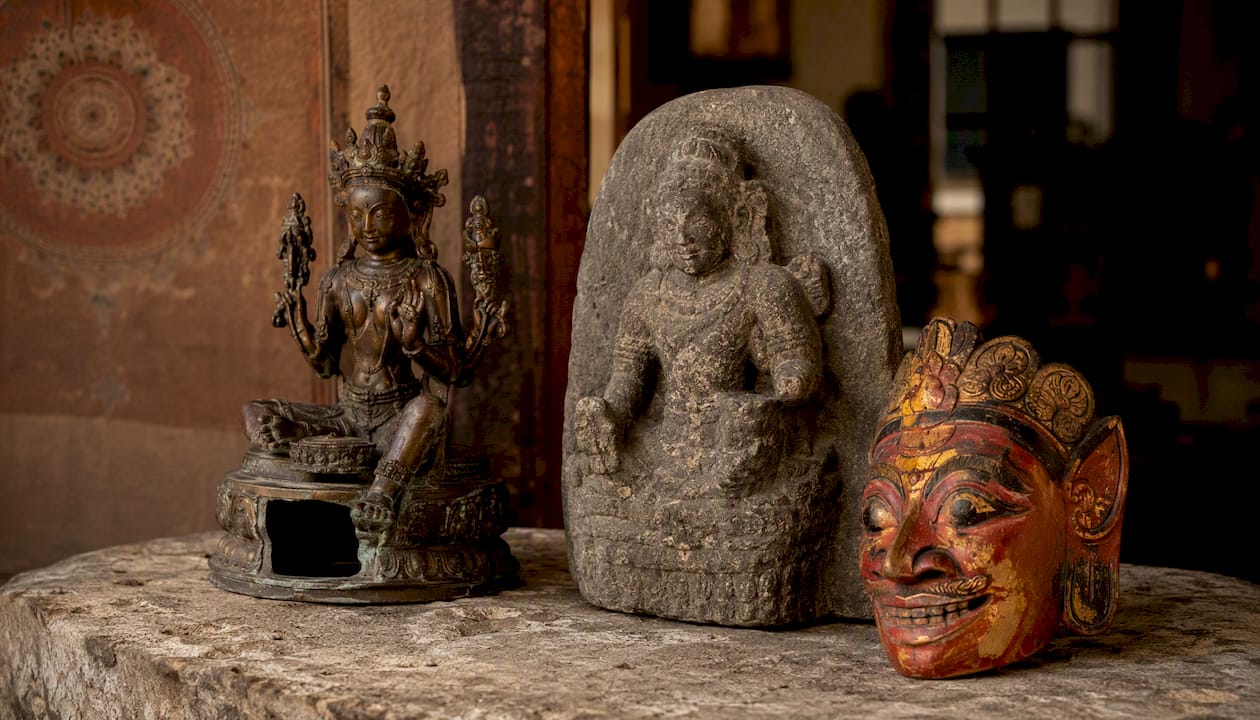
Los bronces a la cera perdida de Indonesia suelen ser sólidos con una cavidad de pedestal sellada que históricamente contenía depósitos de consagración, y los estudios de aleaciones encuentran generalmente un alto contenido de estaño en muchos grupos de períodos. Máscaras y objetos rituales con calidad de museo En madera de Pule se muestran capas de pigmentos en aglutinantes de gelatina y pan de oro bruñido a mano, lo que produce una pátina y patrones de desgaste que son difíciles de falsificar. Para obtener una descripción técnica de los métodos de fundición, HDAsianArt guía de fundición de bronce Explica los tipos de construcción y sus implicaciones para la evaluación de condiciones.
Señales iconográficas: Las figuras de Ganesha suelen mostrar un colmillo roto y modaka (dulce); Durga aparece en forma de múltiples brazos con atributos de armas específicos; Los guardianes de Dvarapala son de gran tamaño, llevan garrotes y están colocados en parejas. Las grandes esculturas de piedra de Dvarapala se valoran por su escala, detalle de tallado y función ritual, factores que atraen a coleccionistas institucionales y privados de alto nivel.
Prácticas comunes de taller a tener en cuenta: el ensamblaje de componentes fundidos por separado (brazos, coronas), el dorado aplicado y los tratamientos de superficie policromada afectan la condición visible y deben revelarse en cualquier informe de condición.
¿Qué problemas de condición reducen el valor y cuáles son aceptables?
El uso honesto y comprensivo es generalmente aceptable y, a menudo, deseable. Pintar demasiado recientemente, reparaciones estructurales invasivas y depósitos de consagración eliminados son señales de alerta.
Condiciones aceptables:
- Dorado original con desgaste y pérdida natural.
- Reparaciones antiguas estables con materiales apropiados para la época.
- Pátina superficial acorde con la edad y el entorno de uso.
- Descantillados o pérdidas menores en áreas no focales
Banderas rojas:
- Pintura pesada y moderna que oscurece la superficie original.
- Grapas modernas, rellenos de epoxi o pasadores estructurales no mencionados en el informe de condición.
- Rellenos de cavidades de consagración eliminados o alterados
- Componentes reemplazados (brazos, cabezas) no identificados como restauraciones
Antigüedades del templo con tratamientos superficiales originales sobrevivientes y desgaste honesto son consistentemente más deseables que las piezas muy restauradas. La procedencia, el dorado o la policromía original y el uso documentado afectan en gran medida el valor para el coleccionista.
Consejo profesional: Cuando encargue un estudio de estado, pregunte específicamente al vendedor: "¿Se ha aplicado algún tratamiento de superficie desde la adquisición?" y "¿Todos los componentes son originales del objeto?" Estas dos preguntas ponen de manifiesto las intervenciones no reveladas más comunes.
En el caso de máscaras de madera frágiles o figuras delgadas de bronce, los principales riesgos son las vibraciones del envío y las fluctuaciones de humedad. Solicite confirmación de embalajes personalizados y embalajes climatizados para transporte de larga distancia.
Consideraciones legales y de importación de EE. UU. para compradores de arte de templos
Antes de comprar o importar, confirme lo siguiente:
- Permisos de exportación o exportación legal documentada del país de origen.
- Cumplimiento del punto de referencia de la Convención de la UNESCO de 1970 (procedencia idealmente documentada antes de 1970)
- Cumplimiento de CITES si el objeto incluye marfil, ciertas maderas duras u otros materiales regulados.
- No hay reclamaciones de repatriación pendientes (consulte el Registro de Pérdidas de Arte y las bases de datos nacionales pertinentes)
- Documentación de Aduanas de EE. UU.: factura comercial, declaración de país de origen y cualquier restricción de importación de bienes culturales en virtud de acuerdos bilaterales.
Conserve todos los documentos para el despacho de aduanas de los EE. UU. y, para adquisiciones de museos, para los requisitos del archivo de adhesión.
Este artículo proporciona información general con fines educativos. No reemplaza el asesoramiento legal para repatriaciones complejas, disputas sobre permisos de exportación o cuestiones de importación de bienes culturales. Consulte a un abogado calificado que se especialice en derecho de propiedad cultural antes de completar adquisiciones de alto valor.
¿Qué señales del vendedor indican una compra segura en el mercado estadounidense?
Las compras más seguras combinan procedencia detallada, documentación de estado de alta resolución y envío asegurado. Un especialista acreditado proporciona los tres sin que se lo pidan.
Lista de verificación de transacciones:
- Fotografías en alta resolución: frontal, trasera, base, los cuatro lados y primeros planos de posibles reparaciones o anomalías superficiales.
- Documentos de procedencia: permisos de exportación, historial de propiedad, catálogos anteriores o referencias de subastas.
- Informe de condición escrito que revele todas las reparaciones, reemplazos y tratamientos de superficie conocidos.
- Autenticación o informe técnico (análisis de aleaciones, imágenes) para bronces de alto valor.
- Política clara de devolución y garantía por escrito.
- Confirmación de envío asegurado con valor declarado que coincide con el precio de compra.
Señales de confianza del vendedor:
- Fotografía con calidad de museo con iluminación constante y referencia de escala.
- Investigación publicada, entradas de catálogo o referencias académicas para piezas individuales.
- Envío asegurado a todo el mundo (DHL asegurado es el estándar para antigüedades frágiles)
- Política de devolución transparente y voluntad de compartir la documentación de procedencia completa.
Consejo profesional: Solicite el historial de facturas de terceros o registros de ventas anteriores. Una pieza que ha pasado por una casa de subastas determinada o una colección publicada lleva una capa de verificación independiente de la que carecen las piezas de venta privada.
La investigación por artículo de HDAsianArt, la fotografía experta y el envío asegurado por DHL abordan directamente cada punto de esta lista de verificación. La lista del Bodhisattva javanés Avalokiteshvara de la galería ilustra cómo se documentan la procedencia y la condición de las figuras de bronce más pequeñas.
¿Cómo evalúa el valor del arte de los templos balineses e indonesios?
El valor se deriva de la rareza, la procedencia, la condición y el historial documentado de exposición o publicación. Ningún factor domina por sí solo; la combinación determina el precio.
Impulsores de valoración concretos:
- Procedencia documentada antes de 1970 (prima única más fuerte)
- Depósitos de consagración intactos confirmados mediante imágenes o inspección física
- Taller identificado o atribución regional respaldado por análisis estilístico
- Referencias de exposiciones o catálogos de instituciones nombradas.
- Tratamiento superficial original (dorado, policromado) en estado estable.
- Escala y rareza iconográfica (grandes pares de Dvarapala, figuras completas con varios brazos)
Los precios de los concesionarios reflejan diferentes estructuras de gastos generales; un descuento notable de un distribuidor frente a comparables en subastas recientes justifica una explicación.
Consejo profesional: Para fines de seguro o reventa, solicite una tasación independiente a un especialista en arte del sudeste asiático. La valoración de un tasador generalista tiene menos peso para las aseguradoras y especialistas en subastas que la de un experto regional designado.
HDAsianArt's guía de la colección de arte budista Cubre la estrategia de creación de colecciones y las consideraciones de valoración con más detalle.
Cuidado y exhibición del auténtico arte del templo en hogares y espacios comerciales de EE. UU.
Lista de verificación de cuidados básicos:
- Evite la luz solar directa sobre superficies de madera y policromadas (la degradación por rayos UV acelera la pérdida de pigmento)
- Mantenga la humedad relativa entre 45 y 55 % para los objetos de madera; la fluctuación causa grietas
- Limitar el manejo de superficies rituales; use guantes de algodón para bronce y piedra
- Utilice soportes a nivel de museo (soportes aptos para conservación, bases acolchadas) para piedra pesada y bronce.
Limpieza específica del material:
- Bronce: Solamente polvo seco; sin agua ni limpiadores químicos en superficies patinadas
- Piedra: cepillo suave y seco; Evite limpiadores ácidos que graben los detalles de la superficie.
- Madera/policromía: Sólo cepillo seco; No hay humedad cerca de las capas de pigmento o del pan de oro.
Para entornos de resorts y spas, controlar la humedad es el principal desafío. El aire clorado de las piscinas degrada la pátina de bronce y los acabados de madera. El montaje seguro para espacios públicos requiere hardware con capacidad de carga; Las grandes figuras de piedra de Dvarapala necesitan una instalación profesional con anclaje estructural.
Consejo profesional: En entornos comerciales, coloque una breve etiqueta interpretativa cerca de cada pieza. Contextualizar el origen ritual y el período del objeto reduce el manejo por parte de los visitantes y aumenta el valor percibido para la institución.
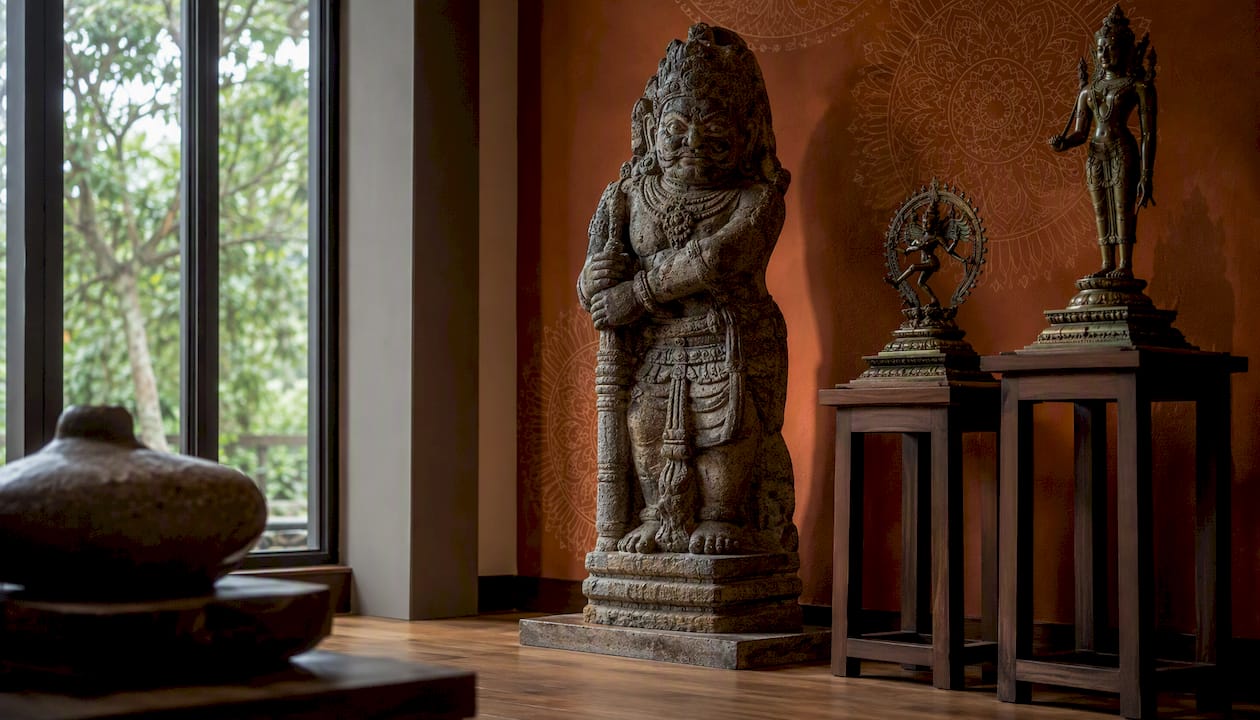
El arte cultural en contextos de hospitalidad conlleva beneficios documentados de participación de los visitantes; Artistas y objetos culturales en entornos turísticos. contribuir significativamente a la identidad del lugar y la experiencia del huésped.
Una nota de HDAsianArt sobre los estándares de abastecimiento
Cada pieza de la colección HDAsianArt se investiga, fotografía y describe individualmente antes de incluirla en su lista. La documentación de procedencia, las notas sobre el estado y las fotografías de alta resolución son estándar para cada objeto, no complementos opcionales. La galería realiza envíos a todo el mundo con DHL asegurado, con embalaje diseñado para antigüedades frágiles. Los compradores que tengan preguntas sobre piezas específicas, estudios de estado o soporte de adquisición pueden comunicarse directamente con la galería.
HDAsianArt: arte de templos balineses e indonesios autenticados para compradores estadounidenses
HDAsianArt ofrece arte de templos balinés e indonesio curado, autenticado y con calidad de museo, con envío DHL asegurado a todo el mundo a coleccionistas, museos e instituciones de EE. UU. Cada listado incluye investigación de expertos por artículo, fotografías de alta resolución y documentación de procedencia.
- Investigación por artículo y fotografía experta para cada pieza listada.
- Informes de condición y documentos de procedencia compartidos a pedido.
- Envío por DHL asegurado con embalaje personalizado para antigüedades frágiles
- Políticas transparentes de devolución y garantía
Explore el antiguo Bodhisattva javanés de Indonesia y el gran Buda tailandés antiguo en Teaching Mudra como ejemplos representativos de cómo la galería documenta y presenta cada adquisición. Comuníquese con HDAsianArt directamente para analizar una pieza específica, solicitar una revisión del estado o consultar sobre disponibilidad.
Fuentes
- La datación relativa y el estilo artístico de las estatuas de Dwārapāla del templo de Adan-Adan
- Directrices para el examen técnico de la escultura en bronce | La investigación técnica de las estatuillas indonesias de los siglos VIII, IX y X
- El arte de la máscara sagrada: una guía para coleccionistas de Topeng javanés y balinés
- Una guía para coleccionistas de antigüedades del templo | Hallazgos del Lejano Oriente
Este artículo es información general, no sustituye el asesoramiento de un abogado calificado. Consulte a un profesional jurídico calificado sobre sus propias circunstancias antes de actuar sobre cualquier tema aquí.
Recomendado
- Escultura hindú de Indonesia explicada para entusiastas del arte – HD Asian Art
- Guía de la colección de arte budista: construya con confianza - Arte asiático HD
- Arte simbólico para una vida consciente: una guía para coleccionistas – HD Asian Art
- El papel de la escultura hecha a mano en la creación de un interior con alma – HD Asian Art
