



Cómo autenticar estatuas antiguas de Buda de bronce
Cómo autenticar estatuas antiguas de Buda de bronce
La autenticación de una antigua estatua de Buda de bronce es el proceso de confirmar su edad genuina, composición material y origen geográfico mediante análisis científico, evaluación estilística e investigación de procedencia. Coleccionistas e inversores confían en este proceso para distinguir los verdaderos artefactos de las reproducciones, que inundan el mercado en todos los precios.
Métodos como las imágenes de neutrones, la fluorescencia de rayos X (XRF) y el análisis iconográfico desempeñan cada uno un papel distinto. El término industrial para este proceso combinado es “autenticación material y estilística”, y comprender las tres capas es la única forma confiable de proteger su inversión y preservar el patrimonio cultural.
¿Cómo se autentifica una antigua estatua de bronce de Buda?
La autenticación científica utiliza múltiples técnicas no destructivas para examinar una estatua de bronce desde la superficie hacia adentro. Ninguna prueba es suficiente por sí sola. Los resultados más confiables provienen de la combinación del análisis elemental de la superficie con imágenes internas y estudios de corrosión profunda.
Imágenes de neutrones: el estándar de oro para el examen interno
Imágenes de neutrones permite la detección no destructiva de interiores huecos, rellenos orgánicos y residuos de fundición dentro de estatuas de bronce tibetanas y asiáticas. Esto es importante porque muchos bronces antiguos auténticos contienen reliquias religiosas ocultas, relleno de arcilla o arena del proceso original de fundición a la cera perdida. Una reproducción no mostrará ninguna de estas características internas. El Centro PSI de Ciencias de Neutrones y Muones confirma que radiografía de neutrones Es especialmente adecuado para objetos del patrimonio cultural donde está prohibido el muestreo dañino. Esto la convierte en la herramienta preferida para piezas con calidad de museo y adquisiciones de coleccionistas de alto valor.
Análisis XRF: pruebas elementales de superficie
Las pruebas XRF identifican la composición elemental de la aleación de la superficie de una estatua de bronce, incluidas las proporciones de cobre, estaño, plomo y zinc que varían según la región y la época. Sin embargo, Análisis de superficie XRF Sólo penetra los 5 a 20 micrómetros superiores del metal. Ese alcance poco profundo significa que puede pasar por alto la corrosión del subsuelo, la enfermedad del bronce o pátinas aplicadas artificialmente diseñadas para imitar el envejecimiento genuino. XRF se utiliza mejor como primera herramienta de evaluación, no como veredicto final.
Análisis de corrosión y pátina.
El análisis de corrosión profunda examina la estructura en capas de la superficie de una estatua para distinguir el envejecimiento natural de los tratamientos químicos. Los bronces antiguos auténticos desarrollan a lo largo de los siglos pátinas complejas y multicapa que son difíciles de replicar artificialmente. Un laboratorio puede cortar una micromuestra de un área discreta y examinar la estratigrafía de corrosión bajo un microscopio. Las pruebas superficiales pueden ser engañosas cuando las pátinas han sido restauradas o falsificadas, razón por la cual el análisis de la profundidad de la corrosión agrega una capa crítica de verificación.
| Método | Profundidad alcanzada | Mejor para | Limitación |
|---|---|---|---|
| Imágenes de neutrones | Interior completo | Rellenos de reliquias, restos de fundición. | Requiere instalación especializada |
| Análisis XRF | 5 a 20 micrómetros | Cribado de composición de aleaciones | Omite características del subsuelo |
| Análisis de corrosión | Profundidad de micromuestra | Autenticidad pátina | Requiere muestreo menor |
| Inspección visual | Sólo superficie | Estilo, iconografía, patrones de uso. | Subjetivo sin experiencia |
Consejo profesional: Solicite imágenes de neutrones o tomografía computarizada (TC) para cualquier estatua de bronce con un precio superior a $5,000. El coste de la prueba es menor comparado con el riesgo de adquirir una reproducción.
¿Qué pistas estilísticas y materiales identifican a un auténtico buda de bronce?
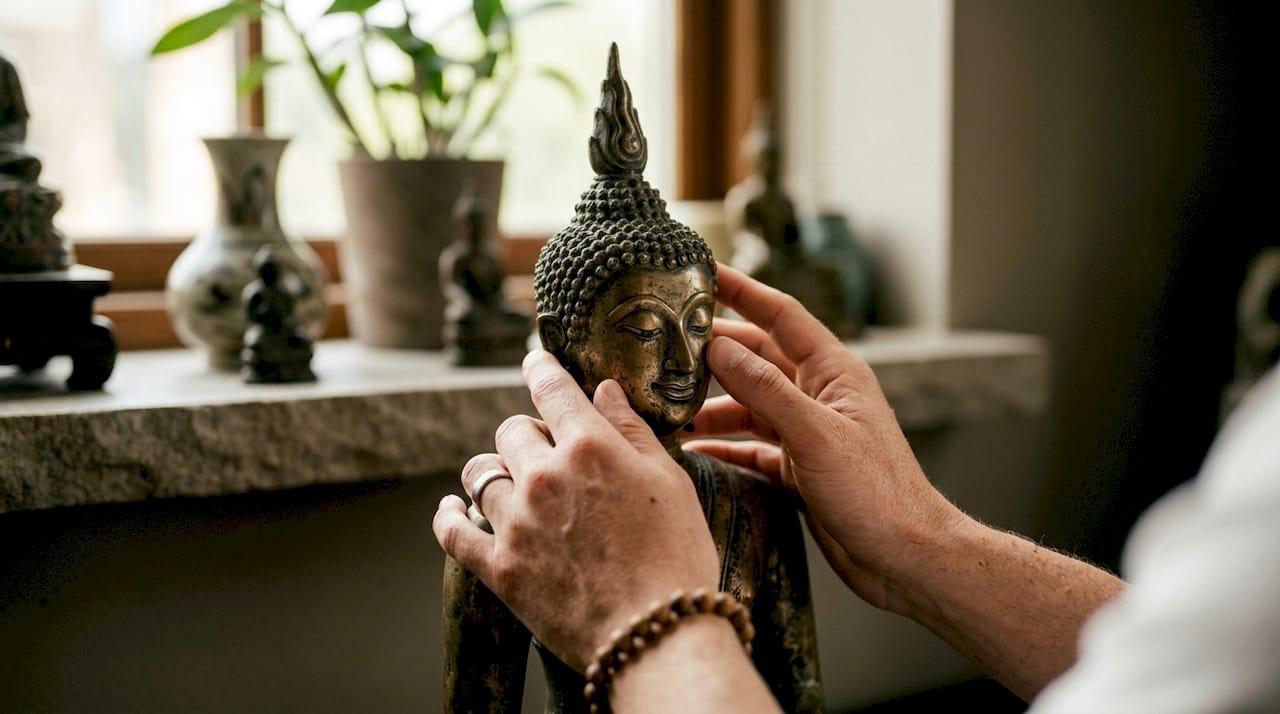
El examen visual y táctil sigue siendo el primer paso más rápido cuando se evalúa una estatua de bronce de Buda. Los coleccionistas experimentados utilizan marcadores estilísticos geográficos y específicos de un período para delimitar el origen antes de comenzar cualquier trabajo de laboratorio.
Marcadores de estilo regional por época
Los bronces tailandeses de Ayutthaya (siglos XIV-XVIII) muestran rasgos faciales alargados, ushnisha (protuberancia craneal) en forma de llama y un distintivo acabado dorado. Los bronces tibetanos suelen mostrar detalles iconográficos más elaborados, incluidas formas de múltiples brazos e incrustaciones de piedras semipreciosas. Los bronces jemeres camboyanos son reconocibles por sus rostros anchos y serenos y su cabello liso y estilizado. sabiendo Estilos de Buda tailandés por período es un requisito previo para cualquier coleccionista serio. El análisis de la expresión facial también proporciona señales de autenticación, ya que el papel de la expresión facial En la escultura budista se siguen estrictas reglas iconográficas que los falsificadores frecuentemente se equivocan.
Peso, magnetismo y evidencia de fundición.
Los bronces antiguos auténticos tienen un peso y una densidad específicos consistentes con las proporciones de aleaciones tradicionales. Una simple prueba con imán ayuda a detectar falsificaciones con núcleo de hierro recubiertas de resina de color bronce. Auténticos bronces tailandeses de Ayutthaya muestran en el interior residuos originales de arcilla y arena, dorado envejecido y signos de pátina natural que las reproducciones no pueden replicar de manera convincente. Las radiografías de neutrones confirman que los residuos de fundición de arcilla y arena dentro de las estatuas de bronce verifican los métodos tradicionales de producción de cera perdida consistentes con orígenes antiguos.
Consejo profesional: Sostenga la estatua y evalúe su peso en relación con su tamaño. Los bronces antiguos se sienten densos y sólidos. Las piezas livianas o aquellas con un anillo hueco cuando se golpean son señales de alerta inmediatas.
Señales de alerta estilísticas comunes que indican una reproducción o una falsificación moderna:
- Superficie uniforme, sin imperfecciones y sin desgaste en los puntos de contacto (base, manos, rodillas)
- Pátina que se borra o huele a químicos.
- Costuras de fundición demasiado limpias o acabadas a máquina.
- Errores iconográficos como gestos incorrectos con las manos (mudras) o número incorrecto de dedos.
- Inscripciones básicas en fuentes modernas o con lenguaje anacrónico.
- Proporciones inconsistentes con cualquier escuela o período regional conocido
¿Cómo fortalece la documentación de procedencia la autenticación?
La procedencia es el historial de propiedad documentado de un objeto desde su creación hasta la actualidad. En el mercado del Buda de bronce antiguo, una fuerte procedencia es a la vez una herramienta de autenticación y un multiplicador de valor.
Estatuas de templos tailandeses firmadas y numeradas. con registros de donaciones documentados y cadenas de propiedad históricas obtienen precios significativamente más altos y enfrentan mucho menos escrutinio en las subastas. La documentación de procedencia reduce la carga de las pruebas científicas al establecer una cadena de custodia creíble. Al evaluar la documentación, busque:
- Registros de casas de subastas de Christie's, Sotheby's o Bonhams con descripciones de lotes e informes de estado
- Certificados de baja de museo o registros de exposición
- Facturas de distribuidores de galerías establecidas con fechas anteriores a 1970 (el punto de referencia de la convención de bienes culturales de la UNESCO)
- Fotografías de la pieza en colecciones o publicaciones históricas.
- Bases firmadas, marcas de fundición o inscripciones dedicatorias con referencias rastreables.
Las lagunas en la procedencia no descalifican automáticamente una pieza, pero aumentan el peso que se le da a las pruebas científicas y estilísticas. el integración de pruebas científicas, experiencia estilística e investigación de procedencia constituye la mejor práctica en la autenticación de estatuas de Buda de bronce de alto valor.
¿Cuáles son los errores de autenticación más comunes que cometen los recopiladores?
Los errores de autenticación siguen patrones predecibles. Conocerlos de antemano le protege de costosos errores de juicio.
- Confiando únicamente en la apariencia de la superficie. Una pátina convincente es el rasgo más fácil de falsificar. Los coleccionistas que juzgan la autenticidad por el color y la textura sin realizar pruebas más profundas son el objetivo principal de los falsificadores expertos.
- Utilizando una única prueba como prueba final. El análisis XRF confirma la composición de la aleación pero no puede verificar la edad o la estructura interna. Ningún método proporciona una autenticación completa.
- Ignorando las características internas. Las cavidades huecas, los empastes de reliquias y los residuos de moldes solo son visibles a través de imágenes avanzadas. Saltarse las imágenes de neutrones o las tomografías computarizadas en piezas de alto valor deja evidencia crítica sin examinar.
- Aceptar declaraciones de procedencia indocumentadas. Las garantías verbales de los vendedores sobre la historia de una pieza no tienen peso probatorio. Requerir documentación escrita con referencias verificables.
- Pasando por alto la precisión iconográfica. Los falsificadores a menudo copian la forma general de una estatua de Buda, pero se equivocan en los mudras, atributos o cánones proporcionales específicos. Estudie las reglas iconográficas de la región y el período antes de comprar.
Proceso paso a paso para verificar tu estatua de buda de bronce
Un enfoque estructurado evita los errores más comunes y garantiza que se recopile suficiente evidencia antes de comprometerse con una compra.
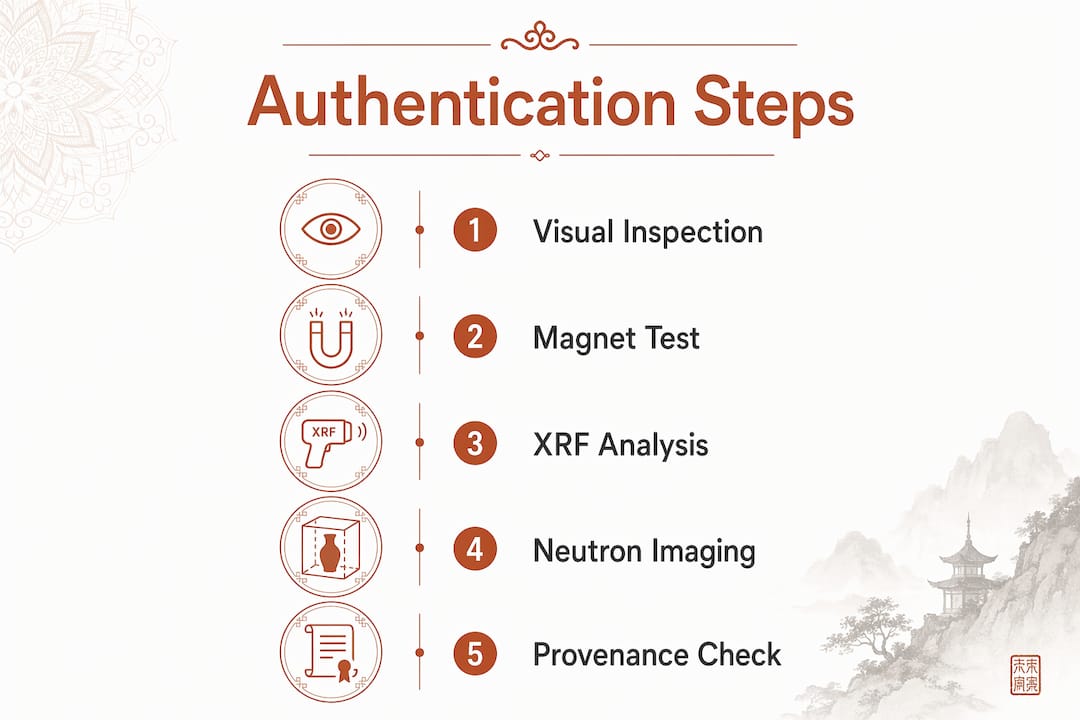
- Inspección visual inicial. Examine la estatua bajo una luz intensa y con aumento. Verifique los patrones de desgaste, la calidad de la fundición, la consistencia de la pátina y la precisión iconográfica. Compare con ejemplos documentados de la misma región y período.
- Prueba de imán y peso. Pase un imán fuerte sobre la superficie para detectar núcleos de hierro. Pese la pieza y compárela con ejemplos conocidos de tamaño y aleación similares.
- Análisis XRF de superficie. Realice pruebas XRF para confirmar que la composición de la aleación coincide con el origen y el período declarados. Las proporciones cobre-estaño-plomo difieren significativamente entre los bronces tailandeses, tibetanos y camboyanos.
- Microanálisis de corrosión y pátina. Para piezas por encima del valor medio, solicite un análisis de micromuestra para examinar la estratigrafía de corrosión y confirmar el envejecimiento natural.
- Imágenes de neutrones o tomografía computarizada. Para adquisiciones de alto valor, organice el acceso a una instalación que ofrezca radiografía de neutrones o tomografía computarizada industrial para examinar la estructura interna, los residuos de fundición y cualquier relleno de reliquia.
- Revisión de procedencia. Recopilar y verificar toda la documentación disponible. Registros de subastas con referencias cruzadas, catálogos de exposiciones e historiales de comerciantes.
- Tasación de expertos independientes. Contrate a un especialista en bronces asiáticos para una tasación formal de estatuas de bronce antiguas. Los tasadores afiliados a la Sociedad Estadounidense de Tasadores o la Asociación de Tasadores de América brindan opiniones acreditadas.
| paso | Viabilidad de bricolaje | Se requiere profesional |
|---|---|---|
| Inspección visual | si | Opcional |
| Prueba de imán y peso. | si | No |
| Análisis XRF | No | si |
| Microanálisis de corrosión | No | si |
| Imágenes de neutrones / tomografía computarizada | No | si |
| revisión de procedencia | Parcial | Recomendado |
| Tasación pericial | No | si |
Conclusiones clave
La autenticación confiable de una estatua de Buda de bronce requiere combinar pruebas científicas, análisis estilísticos e investigación de procedencia. Ningún método ofrece por sí solo un veredicto completo.
| punto | Detalles |
|---|---|
| Utilice múltiples métodos | Combine XRF, imágenes de neutrones y revisión de estilo para obtener resultados confiables. |
| Las imágenes de neutrones son definitivas | Revela residuos internos de fundición y rellenos de reliquias que las pruebas de superficie no pueden detectar. |
| La procedencia añade valor | El historial de propiedad documentado desde antes de 1970 refuerza tanto la autenticidad como el precio de mercado. |
| Conozca los marcadores de estilo regionales. | Los bronces tailandeses, tibetanos y jemeres siguen reglas iconográficas distintas que los falsificadores violan con frecuencia. |
| Busque tasadores acreditados | Utilice tasadores afiliados a la Sociedad Estadounidense de Tasadores para una valoración formal. |
Lo que he aprendido después de años manejando bronces asiáticos.
El mito más persistente en este campo es que una pátina convincente equivale a una auténtica antigüedad. He manipulado piezas que engañaron a comerciantes experimentados en la primera inspección, sólo para revelar anomalías obvias en la fundición bajo imágenes de neutrones. La superficie es la capa más fácil de falsificar. El interior es donde vive la verdad.
Lo que cambió mi enfoque fue ver los resultados de la radiografía de neutrones en un bronce tibetano del siglo XVII. Las imágenes no mostraron residuos de fundición, ni relleno de reliquias y un espesor de pared inconsistente con los métodos tradicionales a la cera perdida. La pieza parecía extraordinaria. La ciencia contó una historia diferente.
Mi consejo práctico: nunca omitas las imágenes internas en ninguna pieza que supere los 3.000 dólares. El costo de una tomografía computarizada en una instalación de pruebas industriales suele ser de unos pocos cientos de dólares. Es un precio pequeño frente al riesgo de adquirir una reproducción bien hecha a precio de antigüedad. Además, estudie los criterios de citas para las imágenes de Buda tailandés antes de comprar. La alfabetización iconográfica es la herramienta gratuita más rápida que tienes.
Los coleccionistas que construyen las carteras más sólidas son pacientes. Validan de forma cruzada cada adquisición importante mediante al menos tres métodos independientes antes de finalizar una compra. Esa disciplina separa a los coleccionistas serios de los compradores que tienen suerte ocasionalmente y se queman con regularidad.
-Jaime, HDAsianArt.com
Explora budas de bronce antiguos autenticados en HDAsianArt
HDAsianArt ofrece una selección cuidadosamente seleccionada de estatuas budistas asiáticas antiguas y tradicionales, cada una de ellas investigada, fotografiada y descrita individualmente por especialistas. Cada pieza de la colección se evalúa en cuanto a autenticidad del material, coherencia estilística y procedencia antes de incluirse en la lista.
Coleccionistas que buscan bronces budistas con calidad de museo de Camboya, Tailandia, Indonesia, Sri Lanka y otros lugares encontrarán informes detallados sobre el estado, notas de procedencia y consultas de expertos disponibles para cada obra. El envío asegurado por DHL a todo el mundo y el enfoque en la coleccionabilidad a largo plazo hacen de HDAsianArt un recurso confiable tanto para compradores primerizos como para coleccionistas experimentados que crean colecciones serias.
Preguntas frecuentes
¿Cuál es el método más fiable para verificar la edad de un buda de bronce?
Las imágenes de neutrones son el método más concluyente, ya que revela residuos internos de fundición, empastes de reliquias y espesores de pared consistentes con la producción tradicional. Combinado con el análisis de aleaciones XRF y la documentación de procedencia, proporciona el caso de autenticación más sólido.
¿Cómo puedo detectar una estatua de Buda de bronce falsa sin realizar pruebas de laboratorio?
Compruebe si hay una pátina uniforme sin desgaste en los puntos de contacto, errores iconográficos en mudras o proporciones y una sensación de ligereza inconsistente con el bronce sólido. Una prueba de imán detecta falsificaciones con núcleo de hierro recubiertas de material de color bronce.
¿Qué te dicen las pruebas XRF sobre una estatua de buda de bronce?
XRF identifica la composición elemental de la aleación de la superficie, incluidas las proporciones de cobre, estaño y plomo que varían según la región y el período. Su limitación es que solo lee los 5 a 20 micrómetros superiores, por lo que no puede confirmar la corrosión del subsuelo o la estructura interna.
¿Por qué es importante la procedencia a la hora de comprar bronces budistas antiguos?
Provenance establece una cadena de propiedad documentada que reduce el riesgo de autenticación y aumenta el valor de mercado. La documentación anterior a 1970 se alinea con la convención de bienes culturales de la UNESCO y señala un historial de adquisiciones legal y rastreable.
¿Qué es la fundición a la cera perdida y por qué es importante para la autenticación?
La fundición a la cera perdida es el método tradicional utilizado para producir bronces asiáticos antiguos, dejando residuos característicos de arcilla y arena dentro de la estatua terminada. La presencia de estos residuos internos, confirmada mediante imágenes de neutrones, es una fuerte evidencia de métodos de producción verdaderamente antiguos.
Recomendado
- Cómo fechar imágenes antiguas de Buda tailandés: guía del coleccionista – Arte asiático HD
- Cómo almacenar de forma segura una escultura budista de piedra antigua – Arte asiático HD
- El papel de la expresión facial en las estatuas budistas – Arte asiático HD
- Arte asiático HD | Arte asiático antiguo | Estatuas budistas | Esculturas Hindúes
