



Compre estatuas de bronce hechas a mano del sudeste asiático: una guía para el comprador
Compre estatuas de bronce hechas a mano del sudeste asiático: una guía para el comprador
Tabla de contenidos
¿Por qué comprar estatuas de bronce hechas a mano del sudeste asiático?
Las estatuas de bronce hechas a mano del sudeste asiático representan siglos de tradición artística, significado espiritual y maestría artesanal que transforma el bronce en bruto en piezas de profundo valor cultural. Estas esculturas se aprecian tanto en valor estético como monetario con el tiempo, y los coleccionistas serios reconocen su valor duradero.
Las estatuas de bronce de Tailandia, Camboya, Bali y Laos llevan las huellas dactilares de artesanos que aprendieron su oficio a lo largo de generaciones. Cada marca de pátina e imperfección de la fundición cuenta una historia de técnicas tradicionales preservadas en un mundo cada vez más moderno. Ya sea que se sienta atraído por las esculturas de Buda para la meditación, las figuras de Ganesha para la protección espiritual o el arte jemer por su significado histórico, comprar estatuas de bronce hechas a mano significa apoyar a las comunidades de artesanos y preservar técnicas que de otro modo podrían desaparecer.
Esta guía le guiará a través marcadores de autenticidad, prácticas de abastecimiento ético y protocolos de atención adecuados, para que pueda seleccionar con confianza piezas que se alineen con sus valores y visión estética.
Comprensión del proceso de fundición de bronce a la cera perdida
La técnica de fundición a la cera perdida se ha mantenido prácticamente sin cambios durante más de 2000 años y constituye el método fundamental para crear auténticas estatuas de bronce del sudeste asiático. Un artista esculpe a mano un modelo de cera detallado y luego crea un molde de cerámica a su alrededor. Cuando se calienta, la cera se derrite y se escurre, dejando una cavidad que recibe el bronce fundido a temperaturas superiores a 2100 grados Fahrenheit.
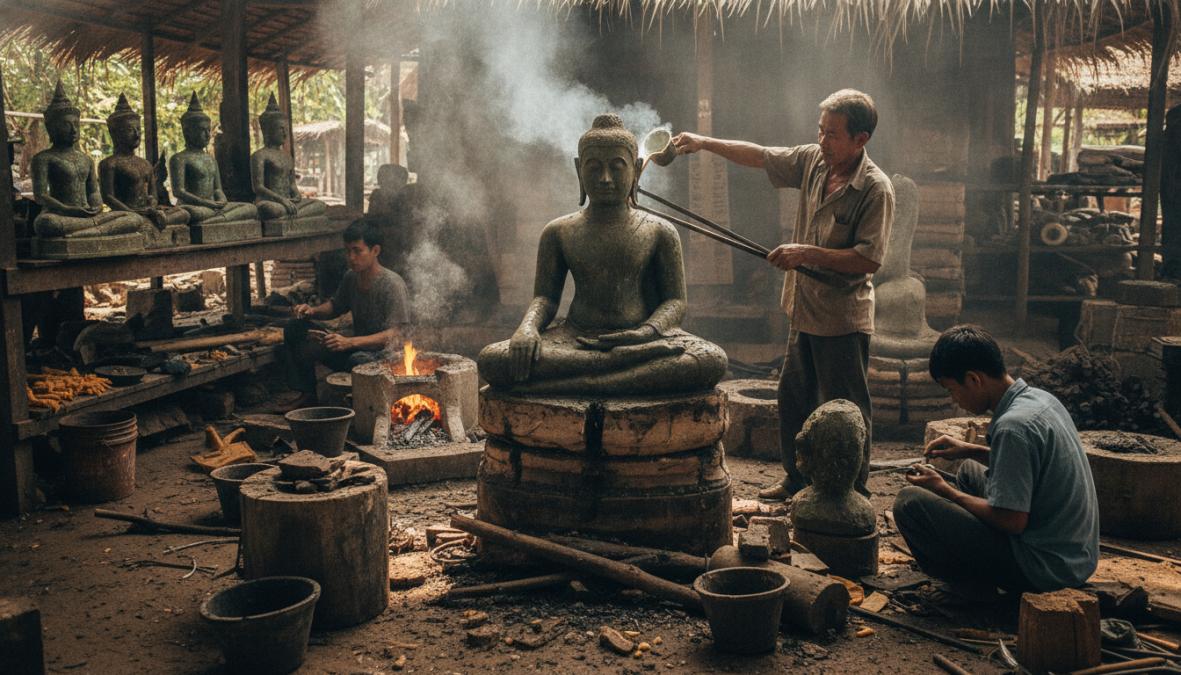
Técnicas tradicionales y artesanía moderna
Los maestros artesanos comienzan creando el modelo de cera con meticulosa atención al detalle: cada pliegue de la tela, cada expresión facial, cada gesto simbólico debe representarse con precisión porque el bronce final replicará cada marca. El molde de cáscara de cerámica se construye en capas, y cada capa agrega fuerza para contener el metal fundido. Una vez que el molde llega al horno, la cera se quema por completo, dejando sólo la cavidad negativa.
Después de enfriarse, la estatua de bronce emerge como una pieza fundida que requiere un extenso trabajo de acabado. Los artesanos tallan a mano la superficie con herramientas especializadas, quitan las uniones donde se unen las secciones del molde y refinan los detalles. Esta fase de búsqueda puede llevar semanas para piezas complejas y es donde el verdadero arte se hace visible.
La pátina, esa coloración distintiva de la superficie verde, marrón o negra, se desarrolla naturalmente con el paso de los años o se crea deliberadamente mediante procesos químicos. Los bronces tailandeses suelen mostrar pátinas marrones cálidas., mientras que las piezas jemeres suelen presentar tonos verdes más intensos que sugieren edad y peso espiritual.
Cómo identificar estatuas de bronce antiguas y verificar su autenticidad
La compra de estatuas de bronce antiguas exige un examen cuidadoso porque el mercado incluye reproducciones, piezas envejecidas artificialmente y falsificaciones absolutas junto con artefactos históricos genuinos.
Marcadores de pátina, calidad de fundición y procedencia
El bronce antiguo genuino desarrolla pátina a través de la oxidación natural durante décadas o siglos, creando patrones distintivos que no se pueden replicar de manera convincente. La pátina debe ser desigual, con una coloración más profunda en las zonas empotradas donde la humedad se acumula de forma natural. La pátina auténtica se siente ligeramente áspera e irregular; Las pátinas envejecidas artificialmente se sienten uniformes y suaves, aplicadas como pintura en lugar de surgir del bronce mismo.
Examine la calidad de la fundición buscando un espesor de pared consistente y una distribución adecuada del peso. Auténticas piezas fundidas a la cera perdida muestran evidencia de costuras de molde, líneas finas que recorren puntos simétricos donde se ensambló la carcasa de cerámica. Estas costuras deben quedar ligeramente elevadas o rebajadas, nunca perfectamente lisas. Las áreas huecas del interior deben tener superficies rugosas visibles desde el núcleo cerámico, no interiores lisos acabados a máquina.
La base de una estatua auténtica revela información crucial. Las piezas hechas a mano muestran marcas de acumulación de bronce donde el metal fundido se depositó durante el enfriamiento. Es posible que observe pequeños agujeros, "orificios de vertido" o "respiraderos", donde se eliminó el exceso de metal después del vaciado.
La documentación de procedencia es muy importante para las piezas antiguas. Los distribuidores legítimos mantienen registros de adquisición, propiedad anterior y cualquier trabajo de restauración. Las piezas de colecciones establecidas con un historial documentado tienen precios superiores porque la autenticación es verificable.
El peso proporciona otro marcador de autenticidad. El bronce es denso; una estatua que se siente demasiado liviana en relación con su tamaño probablemente contenga defectos de fundición hueca o esté hecha de una aleación de bronce con demasiado plomo.
Abastecimiento ético de artefactos del sudeste asiático
El mercado del arte en bronce del sudeste asiático se cruza con serias preocupaciones éticas en torno al patrimonio cultural, las prácticas laborales y el impacto ambiental. Los recolectores responsables verifican que sus compras apoyen a las comunidades artesanales en lugar de a cadenas de suministro explotadoras.
Apoyo a las comunidades artesanales y las prácticas de comercio justo
El abastecimiento ético comienza con la comprensión de la cadena de suministro. Las compras directas a talleres artesanales establecidos en Bali, Tailandia y Camboya garantizan que los artesanos reciban una compensación justa. Muchos talleres tradicionales funcionan como empresas familiares donde el conocimiento pasa de generación en generación.
La certificación de comercio justo significa que los artesanos reciben precios mínimos garantizados independientemente de las fluctuaciones del mercado, tienen acceso a capacitación y financiación para equipos, y trabajan en condiciones seguras. Organizaciones como Comercio Justo Internacional mantener estándares que impidan la explotación en las comunidades artesanales.
Las prácticas laborales en las fundiciones de bronce requieren un escrutinio. Los talleres legítimos mantienen condiciones de trabajo seguras, proporcionan ventilación adecuada en las áreas de fundición y garantizan que los artesanos reciban beneficios médicos. Verificar que las piezas provengan de talleres certificados con estándares laborales documentados.
Las consideraciones medioambientales también importan. Los talleres responsables reciclan el exceso de bronce, gestionan el escurrimiento químico de los procesos de patinado y obtienen materiales de manera sostenible. La compra ética significa aceptar que las piezas auténticas y de origen justo cuestan más que las alternativas producidas en masa.
Cuidado de las esculturas de bronce: mantenimiento y conservación
Las estatuas de bronce mejoran con la edad cuando se mantienen adecuadamente, desarrollando pátinas más profundas y adquiriendo un carácter que realza su presencia espiritual y estética.
Limpieza, almacenamiento y cuidados a largo plazo
Quitar el polvo con regularidad evita la acumulación que atrapa la humedad contra la superficie de bronce. Utilice paños suaves que no dejen pelusa y evite materiales abrasivos que rayen la pátina. Para una limpieza ligera, basta con un paño ligeramente humedecido con agua destilada. Nunca utilice agua del grifo, que contiene minerales que aceleran la corrosión.
Para una limpieza más profunda, un jabón suave y agua destilada crean una solución eficaz. Aplicar con brochas suaves, trabajando suavemente alrededor de las áreas detalladas. Enjuague bien con agua destilada y seque completamente con paños suaves. El bronce debe secarse completamente a los pocos minutos de entrar en contacto con el agua.
El mantenimiento de la pátina depende de su preferencia estética. Si desea conservar la pátina existente, evite pulir por completo. Si prefiere una apariencia más brillante, utilice pulimentos de bronce especializados diseñados para trabajos escultóricos, aplicándolos con moderación y puliendo con paños suaves.
Las condiciones de almacenamiento afectan profundamente la conservación. Los entornos ideales mantienen entre un 40% y un 50% de humedad relativa y temperaturas constantes. Evite sótanos y áticos donde la humedad fluctúe dramáticamente. Los espacios interiores con clima controlado proporcionan condiciones óptimas.
Para las estatuas expuestas al aire libre, aplique capas protectoras a base de cera cada 12 a 18 meses. Estos crean una barrera contra la humedad sin alterar la apariencia de la pátina. Directrices de conservación del Instituto Smithsonian Recomendamos que el bronce para exteriores reciba tratamientos protectores de nivel profesional anualmente.
Si se desarrolla corrosión, que aparece como depósitos azul verdosos o superficies polvorientas, trátela de inmediato. La corrosión leve responde a una limpieza suave con cepillos suaves y agua destilada. La corrosión avanzada requiere un tratamiento de conservación profesional.
| Tarea de mantenimiento | Frecuencia | Método | Impacto |
|---|---|---|---|
| quitar el polvo | Mensual | Paño de microfibra suave, seco | Previene la acumulación de polvo y la acumulación de humedad. |
| Limpieza ligera | Trimestral | Paño húmedo con agua destilada | Elimina la suciedad de la superficie sin dañar la pátina. |
| limpieza profunda | Anualmente | Jabón suave, cepillo suave, secado minucioso. | Restaura la apariencia preservando la pátina. |
| Inspección de pátina | Trimestral | Examen visual de corrosión. | La detección temprana previene un deterioro grave |
| Revestimiento protector (exterior) | Cada 12-18 meses | Protector de bronce a base de cera | Crea una barrera contra la humedad sin alterar la apariencia. |
Dónde comprar estatuas de bronce hechas a mano del sudeste asiático
El panorama para la compra de auténticas estatuas de bronce incluye fuentes artesanales directas, minoristas especializados, plataformas de comercio justo y anticuarios establecidos. Cada canal ofrece distintas ventajas según sus prioridades.
HD Asian Art se destaca como un destino principal para los coleccionistas que buscan estatuas budistas e hindúes cuidadosamente seleccionadas junto con exquisitas esculturas jemeres y del sudeste asiático. La selección equilibra tesoros antiguos con piezas contemporáneas, todas elegidas para realzar los espacios de meditación y los interiores espirituales de los hogares.
Para los coleccionistas que dan prioridad a las relaciones artesanales directas, el mercado artesanal de NOVICA conecta a los compradores directamente con artesanos individuales de todo el sudeste asiático. La plataforma presenta artesanos de bronce balineses con perfiles transparentes, lo que le permite conocer los antecedentes y las técnicas de cada creador.
Kinaree se especializa en auténtico bronce hecho a mano procedente de Tailandia e Indonesia, centrándose en la fundición tradicional a la cera perdida y en piezas que tienen un profundo significado espiritual. Su selección enfatiza la autenticidad cultural y el carácter artesanal.
Bali Bronze Art opera directamente desde Bali y ofrece opciones minoristas y mayoristas con más de 20 años de experiencia en arte cultural balinés. La comunicación directa con los creadores garantiza que las piezas personalizadas reflejen su visión específica.
Mata Hari Antiques en Singapur se especializa en objetos de bronce históricos raros y autenticados de todo el sudeste asiático. Su sala de exposición física y su profunda experiencia en procedencia los hacen ideales para coleccionistas serios que buscan piezas de calidad de inversión.
El Bazar Asiático opera desde Bangkok como fuente preferida de artículos religiosos y antigüedades procedentes de Tailandia, Birmania, Camboya y Laos. Su red de abastecimiento de piezas raras los hace valiosos para adquisiciones a gran escala o de importancia histórica.
Fair Trade Village se centra específicamente en preservar las técnicas tradicionales de fundición jemer manteniendo al mismo tiempo estrictos principios de comercio justo. Su compromiso con las comunidades de artesanos atrae a coleccionistas con mentalidad ética que ven las compras como inversiones en preservación cultural.
Contexto cultural e histórico del arte del bronce del sudeste asiático
Comprender el significado espiritual e histórico de las esculturas de bronce del sudeste asiático las transforma de objetos decorativos a ventanas en profundas tradiciones filosóficas y religiosas que abarcan milenios.
Tradiciones escultóricas tailandesas, jemeres, balinesas y budistas
Las tradiciones tailandesas de escultura en bronce se desarrollaron dentro del budismo Theravada, enfatizando la meditación, la iluminación y las enseñanzas del Buda histórico. Artesanos tailandeses crearon estatua de budas en estilos distintivos: el sereno estilo del período Sukhothai con rasgos alargados, el estilo formal Ayutthaya con precisión geométrica y el ornamentado estilo del período Bangkok con elaboradas túnicas y joyas.
El trabajo en bronce jemer surgió de la civilización Angkor, combinando iconografía hindú y budista en piezas de extraordinario refinamiento escultórico. Muchas piezas jemeres presentan a Ganesha, la deidad con cabeza de elefante que representa la sabiduría y la eliminación de obstáculos, lo que refleja la síntesis hindú-budista en la espiritualidad camboyana.
Las tradiciones balinesas de esculturas de bronce mantienen las tradiciones hindúes junto con las prácticas espirituales budistas e indígenas. Los artesanos balineses crean piezas que representan deidades de epopeyas hindúes, espíritus protectores y narrativas mitológicas específicas de la cultura balinesa.
Las estatuas de Buda representan la forma de bronce más reconocible del sudeste asiático, con variaciones que tienen significados específicos. Buda sentado en pose de meditación representa la iluminación. Buda de pie con la mano levantada representa la valentía y la protección. Buda reclinado significa el nirvana final de Buda.
Las figuras de Ganesha tienen un significado particular en las tradiciones hindúes y budistas del sudeste asiático. La deidad con cabeza de elefante aparece como símbolo de sabiduría, prosperidad y eliminación de obstáculos. Las estatuas de Ganesha en los espacios de meditación sirven como puntos focales para superar desafíos y buscar guía divina.
La función espiritual de las estatuas de bronce se extiende más allá de la decoración. En la práctica budista, las estatuas sirven como puntos focales de meditación, representaciones físicas de la conciencia iluminada. Para los practicantes hindúes, Ganesha u otras estatuas de deidades funcionan como objetos devocionales que facilitan la conexión con la energía divina.
Envíos, Aduanas y Logística Internacional
Adquirir estatuas de bronce de fuentes del sudeste asiático requiere navegar por las regulaciones de envío internacional, los procedimientos aduaneros y la logística que pueden afectar significativamente el costo final y el cronograma de entrega.
El envío internacional de esculturas de bronce exige un embalaje adecuado para evitar daños durante el tránsito. Los transportistas profesionales utilizan cajas de madera con acolchado interno, asegurando estatuas para evitar el movimiento. El seguro se vuelve esencial para las piezas valiosas, y los costos de envío generalmente varían desde cantidades moderadas para piezas más pequeñas hasta costos sustanciales para esculturas grandes.
El despacho de aduanas presenta el desafío logístico más complejo. Las estatuas de bronce califican como obras de arte según las clasificaciones de comercio internacional, sujetas a diversos derechos y regulaciones según el país de destino y la clasificación de la pieza. Algunos países imponen derechos de importación a las obras de arte en bronce, lo que aumenta el coste final entre un 10% y un 25%. Las piezas antiguas pueden calificar para derechos reducidos según las disposiciones sobre artefactos culturales, pero requieren la documentación adecuada que demuestre su edad y autenticidad.
Los requisitos de documentación incluyen descripciones detalladas de cada pieza, fotografías, especificaciones de peso y valor declarado. Los vendedores acreditados proporcionan documentación completa que facilita el despacho de aduanas. Una declaración precisa y honesta garantiza un paso aduanero sin problemas.
Los plazos de envío varían significativamente. El envío internacional estándar suele tardar entre 4 y 8 semanas desde el sudeste asiático hasta América del Norte o Europa. Las opciones aceleradas cuestan sustancialmente más, pero reducen el tiempo de tránsito a 2 o 3 semanas.
Los agentes de aduanas pueden facilitar el despacho de envíos complejos o piezas de alto valor, cobrando tarifas (normalmente entre 100 y 300 dólares), pero garantizando la documentación adecuada y un procesamiento más rápido. Para compras internacionales por primera vez, la asistencia del corredor evita costosas demoras.
Comprar estatuas de bronce del sudeste asiático hechas a mano representa una inversión significativa en la preservación cultural y los espacios espirituales personales. El proceso exige atención a la autenticidad, el abastecimiento ético y el cuidado adecuado, pero recompensa a los coleccionistas con piezas que se aprecian en valor y profundizan en su carácter a lo largo de décadas.
La colección curada de estatuas budistas e hindúes de HD Asian Art, junto con exquisitas esculturas jemeres y del sudeste asiático, brinda acceso a piezas cuidadosamente autenticadas diseñadas para mejorar los espacios de meditación y los refinados interiores espirituales de los hogares.
Preguntas frecuentes
¿Cómo puedes saber si una estatua de bronce es auténtica cuando compras estatuas de bronce hechas a mano del sudeste asiático?
Las piezas auténticas muestran un desarrollo constante de pátina, costuras de fundición adecuadas y un peso adecuado a su tamaño. Examine la base en busca de marcas de fabricante o firmas de fundición. Verifique la procedencia mediante documentación y referencias cruzadas con distribuidores acreditados. Busque el envejecimiento natural en la aleación de bronce y los detalles tallados a mano que muestran marcas de herramientas en lugar de uniformidad del molde. Consulte a distribuidores especializados que puedan autenticar según las características de estilo regional y el contexto histórico.
¿Qué es el proceso de fundición del bronce a la cera perdida y por qué es importante para las piezas artesanales?
La fundición a la cera perdida es una técnica antigua en la que los artesanos crean un modelo de cera, lo envuelven en arcilla y luego calientan el molde para derretir la cera antes de verter bronce fundido en la cavidad. Este método produce detalles excepcionales y permite que la artesanía individual brille en cada pieza. Requiere mucha mano de obra y artesanos cualificados, lo que lo convierte en el sello distintivo de las auténticas estatuas de bronce hechas a mano del sudeste asiático. Las piezas producidas en masa suelen utilizar métodos de fundición más baratos que carecen de esta precisión escultórica.
¿Cómo debo cuidar y limpiar las esculturas de bronce hechas a mano después de comprarlas?
Limpiar suavemente con paños suaves y jabón neutro; Evite productos químicos agresivos que eliminen la pátina natural. Para suciedad rebelde, utilice agua destilada y un cepillo suave. Almacenar en ambientes secos para evitar la corrosión no deseada. Aplicar cera microcristalina anualmente para proteger la superficie. Nunca utilice materiales abrasivos ni acetona. Si su estatua tiene un significado espiritual, investigue protocolos culturales para su manipulación y exhibición. Se recomienda la conservación profesional de piezas valiosas o antiguas que presenten corrosión activa.
¿Qué consideraciones éticas debo tener en cuenta al comprar estatuas de bronce del sudeste asiático?
Dar prioridad a los comerciantes que trabajan directamente con las comunidades de artesanos y practican los principios del comercio justo. Verifique que las piezas no sean antigüedades exportadas ilegalmente verificando la documentación de procedencia. Apoyar fuentes que preserven las técnicas de fundición tradicionales jemeres, tailandesas y balinesas en lugar de operaciones de producción en masa. Busque transparencia sobre la compensación de los artesanos y el impacto en la comunidad. Las organizaciones centradas en la preservación cultural garantizan que su compra apoye a los artesanos vivos y mantenga las tradiciones artísticas en peligro de extinción en lugar de explotar el patrimonio cultural.
