



Why Authentic Sculptures Differ From Reproductions
Why Authentic Sculptures Differ From Reproductions
Authentic sculptures differ from reproductions because originals combine specific materials and hand-worked processes, an uninterrupted provenance, and what the critic Walter Benjamin called a unique “presence” in time and space that no reproduction can replicate. That presence shows up in five places: the metal or stone itself, the maker’s hand, the paper trail behind the object, the way it feels in a room, and what it commands at auction or in private sale.
For a buyer, this matters before you ever discuss price. A reproduction can look identical in a photograph and still fail on every one of those five points, which is why serious collectors rely on connoisseurship, the trained eye that judges style, technique, and period, alongside physical inspection. HDAsianArt built its cataloging practice around exactly this gap, documenting each bronze, stone, or wood piece with the kind of detail that lets a buyer verify rather than guess.
What that means in practice:
- Material and process: originals typically use lost-wax casting, direct carving, or hand-modeling; reproductions often substitute spelter, resin, or modern mold casting.
- Maker’s hand: tool marks, asymmetries, and finishing choices in an original reflect a single artisan’s decisions, not a factory run.
- Provenance: a documented ownership chain either exists or does not; there is no substitute for it.
- Presence: age, wear, and patina accumulate in ways a fresh cast cannot fake convincingly under close inspection.
- Value: authenticated pieces hold and often gain value; reproductions depreciate like furniture.
Key Takeaways
Authenticity in sculpture comes down to verifiable material, process, provenance, and presence, and reproductions fail on at least one of those measures even when they look convincing in a photo.
| Point | Details |
|---|---|
| Material tells the story | True bronze has weight and forms real patina; spelter and resin copies feel lighter and take painted-on color instead. |
| Seams and tool marks matter | Visible mold ridges or mushy detail in fine areas point to surmoulage or modern mold casting. |
| Authentication is staged | Start with connoisseurship and provenance research; reserve costly lab testing for high-stakes pieces. |
| Provenance drives liquidity | A documented ownership chain widens the buyer pool and protects legal title, not just authenticity claims. |
| HDAsianArt documents the process | Individual research, condition photography, and provenance records back every piece in the curated collection. |
Table of Contents
Why Authentic Art Differs From Reproduction Sculpture in the Making
The difference starts at the foundry or the carving bench, long before anyone debates provenance. How a sculpture gets made determines almost everything that follows, including how it ages, how it feels in the hand, and whether it can ever be mistaken for something it is not.
Lost-wax casting is the traditional method behind most authentic bronze sculpture from Southeast and South Asia. A sculptor builds a model in wax, packs it in clay or plaster, then melts out the wax and pours molten bronze into the resulting cavity. Because the wax model is destroyed in the process, each cast is singular, or nearly so if a workshop made a small series from one mold before destroying it. The artisan’s fingerprints, literal in some cases, remain locked into the surface. That is why an original bronze Buddha or Ganesha carries fine, irregular tool marks and asymmetries that a machine-made copy almost never reproduces convincingly. HDAsianArt has written in detail about how this casting process worked across ancient Asian foundries, and the technique explains why collectors treat lost-wax pieces differently from anything cast in a modern rubber mold.
Material choice compounds the difference. True bronze is an alloy of copper and tin, sometimes with lead or zinc added in small amounts depending on region and period. It has real weight, a specific ring when tapped lightly, and it ages by forming genuine metallic patina, a chemical transformation of the surface over decades or centuries. Spelter, a zinc alloy sometimes called “white metal,” was popular in the 19th and 20th centuries as a cheap bronze substitute; it is lighter, more brittle, and takes paint or chemical coloring rather than developing true patina. Resin and polymer castings, common in today’s tourist and decorative markets, are lighter still, often hollow-sounding, and simply cannot hold the crisp detail a wax model transfers into bronze.
Here is how the major reproduction methods actually work, since not all copies are created with the same intent:
- Authorized recasting from an artist’s original mold, used historically in some Asian temple workshops to produce ritual editions, which can carry legitimate cultural and market value when documented as such.
- Surmoulage, meaning a mold taken directly from an existing finished bronze rather than the original wax model. This process is common in unauthorized reproduction and always results in some loss of surface sharpness, because each generation of mold shrinks and softens the detail of the one before it.
- Photo-based or freehand re-sculpting, where a modern artisan builds a new model by eye from photographs of an original, producing a piece that may look close at a glance but diverges in proportion and surface language on close study.
- Modern mold casting in spelter or resin, aimed at decorative and tourist markets, which trades authenticity for speed and low cost.
None of these methods are inherently dishonest. A museum shop replica made through surmoulage and sold as a replica is fine. The trouble starts when a recast or resin copy gets sold, knowingly or not, as an antique original. For carved stone and wood pieces, the same logic holds in different form: an original carving shows the sculptor’s cutting sequence and occasional correction, while a reproduction carved from a cast or 3D-scanned template shows a uniformity that hand tools rarely produce.
What Do Patina, Seams, and Weight Reveal About a Sculpture?
Once you know how originals are made, the inspection itself becomes almost mechanical. Four checks catch the overwhelming majority of reproduction bronzes, and a version of the same logic applies to stone and wood.
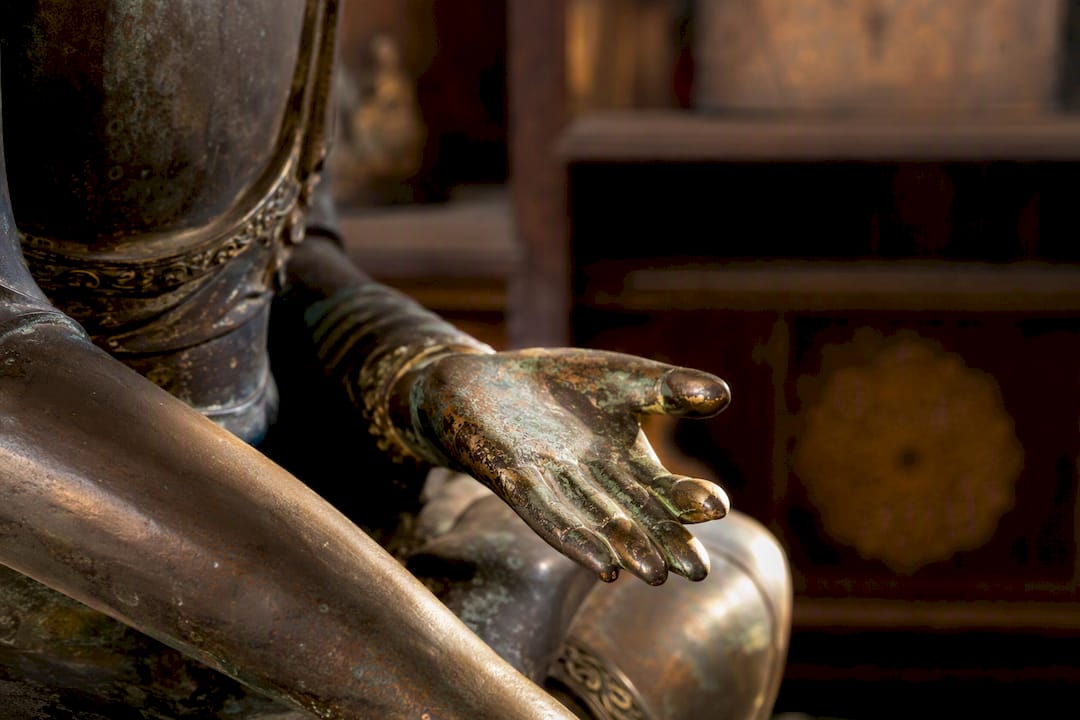
Patina is the first tell. Natural patina forms slowly as metal reacts with air, moisture, and handling, and it integrates with the surface rather than sitting on top of it. Artificial patina, applied with chemicals or paint to fake age, tends to sit unevenly and flake or wear off at high-contact points like fingers, edges, and raised details, exposing brighter metal underneath. Run a fingernail lightly across a raised edge; a faked patina often chips, while genuine patina simply burnishes.
Seams come next. Traditional lost-wax casting can leave faint seam lines where mold sections met, but a skilled foundry files and chases them away as part of finishing. Modern two-part rubber molds, by contrast, tend to leave a visible ridge running down the sculpture, often at the sides, back, or base, that never got fully dressed off. Check the underside and the interior of limbs, since finishers pay less attention to areas that will not face outward on display.
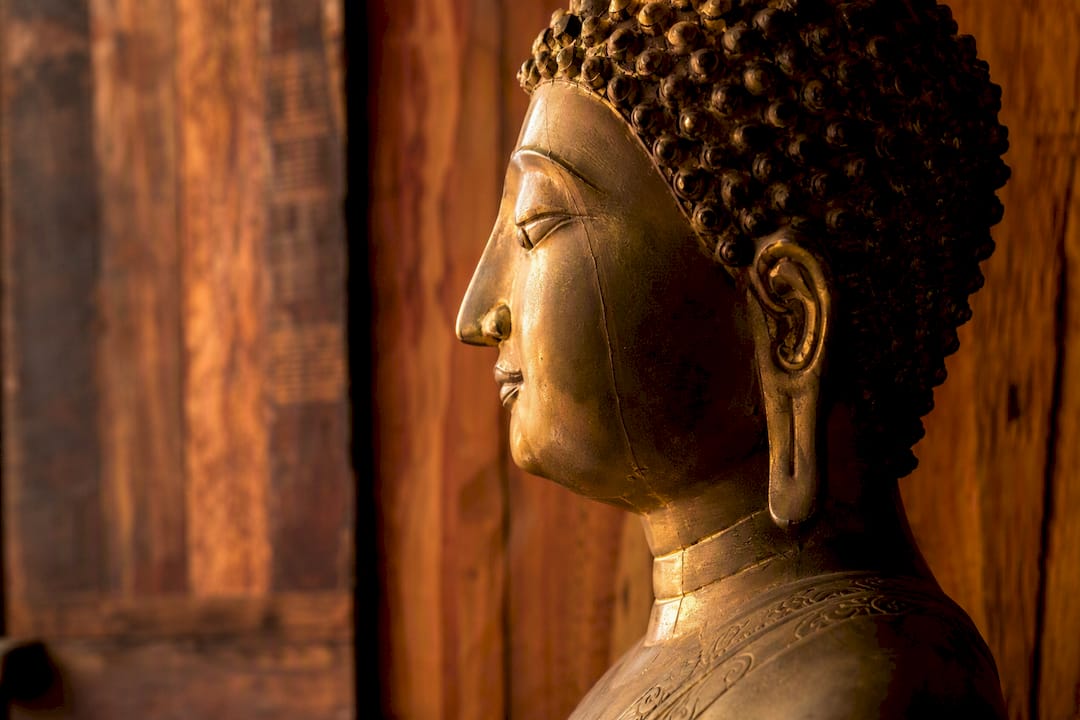
Weight and density tell you what metal you are actually holding. A hand-sized bronze figure should feel substantial; the same shape in spelter feels noticeably lighter, and in resin lighter still. If you can lift and compare two similar pieces, the difference becomes obvious within seconds.
Foundry marks and signatures matter, but only in context. A stamped mark or inscription is a data point, not proof on its own, since marks can be forged or borrowed from a genuine piece. Look for a mark that matches the wear pattern of the rest of the object, rather than one that looks freshly cut into an otherwise aged surface.
Watch for these signs together, since any single clue can mislead on its own:
- Uneven, flaking, or painted-looking surface color instead of integrated metallic patina.
- Visible ridge lines or seams that were never filed smooth.
- Softened, mushy detail in fine areas like fingers, jewelry, or facial features, a classic sign of surmoulage.
- A weight that feels wrong for the apparent size of the piece.
- A foundry mark or inscription that looks newer than the surrounding surface.
- Tool marks that repeat identically in multiple “unique” pieces, suggesting mold-based production rather than individual carving.
Pro Tip: Photograph a suspect area in raking light, meaning light hitting the surface at a low angle, before you buy. Raking light exaggerates seams, tool marks, and surface irregularities that flat, even lighting hides completely.
HDAsianArt’s own guide to authenticating antique bronze Buddha statues walks through this same inspection sequence in more depth, including how condition photography during cataloging captures exactly these details before a piece ever reaches a buyer.
How Does the Authentication Process Actually Work?
Authentication is not a single test that returns a clean yes or no. It rests on three pillars working together, and understanding what each one can and cannot prove will save you money and disappointment.
- Connoisseurship is the trained eye, an expert’s judgment based on years of handling comparable objects, evaluating style, iconography, casting quality, and regional convention. It is fast and often accurate, but an attribution from connoisseurship is still an expert opinion, not the same thing as formal authentication with corroborated evidence.
- Provenance research traces the ownership chain, ideally back to the object’s creation or first documented sale, through bills of sale, exhibition records, estate inventories, and archival photographs. A clean, continuous chain is often more persuasive to serious buyers than any lab result, because it establishes legal title as well as authenticity.
- Forensic science includes X-radiography, X-ray fluorescence (XRF) for alloy composition, radiocarbon dating for organic materials like wood or lacquer, and metallurgical analysis of casting technique. These tools are powerful at exclusion, meaning they can reveal anachronistic materials or construction methods that rule out a claimed age or origin, but they rarely prove authorship or precise date on their own.
That exclusionary nature is worth sitting with. A test that finds no anachronistic material does not prove a piece is genuine; it only fails to disprove it. Real authentication depends on converging evidence from all three pillars, which is why reputable authenticators start cheap and escalate only when needed.
Authentication typically proceeds in stages: connoisseurship and provenance checks first, since they cost little beyond an expert’s time, with laboratory work reserved for cases where the stakes justify it. A full scientific workup, alloy analysis, radiocarbon testing, and detailed metallurgical study together typically starts at a substantial cost per object at specialized labs. That is a meaningful sum, which is exactly why it belongs at the end of the process rather than the beginning.
For most collectors buying in the mid-market range, that means leaning heavily on documented provenance and an expert’s stylistic assessment, then reserving formal lab testing for high-value pieces or disputed attributions, which reflects similar expert roles as discussed in The Role of Experts in Guitar Selection for Collectors. HDAsianArt’s provenance research guide for Asian antique sculpture covers how to trace ownership records specifically for temple art and Buddhist and Hindu statuary, where archival trails often run through colonial-era collection records, auction catalogs, and monastery documentation rather than a single tidy paper trail.
How Does Authenticity Change a Sculpture’s Market Value?
Authenticity drives scarcity, and scarcity drives price. An original bronze exists in one form, or a small, documented edition; a reproduction can theoretically be remade endlessly, which caps how much any single copy will ever be worth. Original works also tend to generate a stronger emotional and perceptual response than reproductions, and that difference in presence shows up directly in what buyers are willing to pay at auction and in private sale.
Provenance affects liquidity as much as price. A piece with clean, documented ownership sells faster and to a wider pool of buyers, including museums and institutions that cannot legally acquire objects with gaps in their ownership history. Weak or absent provenance narrows your buyer pool to those willing to accept risk, which usually means a lower price even when the object itself is genuine.
The financial risks run in both directions. Buying a reproduction as an original wastes money outright. Buying a genuine piece with murky provenance can create legal exposure if a prior claim surfaces later, particularly with antiquities from regions where export documentation has historically been inconsistent.
Before any significant purchase, run through this checklist:
- Confirm the seller can produce documented provenance, not just a verbal history.
- Ask whether the piece has been examined by a specialist in that region or period.
- Compare weight, patina, and detail sharpness against known authentic examples.
- Get condition and material claims in writing, not just verbally.
- Treat an unusually low price on an “antique” as a warning sign rather than a bargain.
None of this erases the fact that reproductions have a real, legitimate place, just not as investments.
When Are Reproductions the Right Choice?
Reproductions are not inherently dishonest objects. Museums routinely display replicas for educational or conservation purposes, and a replica made openly for that purpose is a different thing entirely from a forgery intended to deceive. An artist-approved edition cast from an original mold with the maker’s knowledge, common in some temple and workshop traditions, also carries legitimate standing that an anonymous surmoulage copy never will.
The line comes down to disclosure and documentation. A reproduction is appropriate when it is:
- Labeled clearly as a replica, edition, or reproduction at the point of sale, not discovered as one after the fact.
- Made with the artist’s or estate’s authorization, or produced explicitly for museum, educational, or conservation display rather than sold as an antique.
- Accompanied by documentation stating the casting date, method, and edition size where relevant.
Buy reproductions for decoration or study without hesitation. Just never let one get sold to you, or resold by you, as something it is not.
How HDAsianArt Documents Authenticity for Buyers
Confidence in a sculpture’s authenticity comes down to how much verifiable work sits behind the listing, not how confident the seller sounds. HDAsianArt builds every catalog entry around individual research, detailed condition photography, and documented provenance for pieces sourced from Cambodia, Thailand, Indonesia, Sri Lanka, Vietnam, and neighboring regions.
That practice includes:
- Individual research and description for each bronze, stone, wood, or lacquerware piece, rather than templated listings.
- Condition photography that captures patina, seams, and surface detail from multiple angles, the same features covered in the inspection checks above.
- Documented provenance where available, shared with buyers as part of the sale.
- Museum-quality standards applied consistently across the curated collection.
- Worldwide insured DHL shipping, which protects the buyer’s investment in transit.
Serious collectors do not just want a beautiful object. They want the paperwork, the photographs, and the honest condition report that let them defend the purchase to a future buyer, an insurer, or an institution.
For buyers who want an added layer of confidence on higher-value pieces, HDAsianArt can point toward third-party authentication resources and help assemble the documentation a formal lab review would require. That collaborative approach, gallery expertise paired with independent verification when warranted, reflects the same staged process serious authenticators use: start with connoisseurship and provenance, escalate to forensics only when the object and the stakes call for it.
What Authenticity Means to Me as a Steward of This Work
Handling antique Buddhist and Hindu sculpture is not the same as handling decorative objects. Each piece carried devotional meaning for the community that made and used it, and that history does not disappear just because the object changed hands. Treating authenticity carelessly, whether by overlooking a recast or skipping provenance research, disrespects that history as much as it risks a buyer’s money.
Diligence is the whole job. That means favoring documented pieces over convenient ones, being honest about what a condition report can and cannot prove, and encouraging buyers to ask hard questions rather than accepting a confident sales pitch. The same standard applies whether the piece is a $500 decorative carving or a museum-grade bronze: know what you are buying, and know why you believe it is real.
Collecting responsibly also means preserving what you acquire. A genuine patina, once stripped through over-cleaning, cannot be restored. That is stewardship, not just ownership.
Explore Authenticated Sculpture From HDAsianArt
Every reason an original outperforms a reproduction, material integrity, documented history, and genuine presence, is exactly what HDAsianArt builds into its curatorial process from the start. Instead of guessing at a seller’s claims or piecing together provenance after the fact, you get individually researched pieces with condition photography and documentation already assembled, plus insured worldwide DHL shipping that protects the investment once it leaves the gallery.

A piece like this antique Indonesian Javanese Avalokiteshvara Bodhisattva statue shows the standard: documented provenance, detailed condition notes, and the kind of surface and casting detail this article just taught you to look for. Browse the full curated collection at HDAsianArt to compare pieces directly, or reach out to the gallery with questions about a specific region, material, or provenance record before you commit to a purchase.
Sources
- Authenticity | Tate
- How to spot a reproduction bronze sculpture - 1EarthMedia
- Remington originals vs reproductions — Frederic Remington Museum
