



Escultura de materiales naturales: papel en tu espacio de bienestar
Escultura de materiales naturales: papel en tu espacio de bienestar
Sí. Auténticas esculturas de materiales naturales (madera, piedra, bronce y laca) fortalecen los espacios de bienestar. Funcionan como anclajes táctiles, visuales y culturales que producen efectos mensurables de reducción del estrés a través de señales materiales biofílicas, iconografía espiritual y conexión a tierra sensorial.
Tres puntos de partida:
- Los mejores materiales primero: Madera para calidez táctil y conexión a tierra inmediata; piedra para estabilidad y permanencia; bronce para un enfoque ritual y detalles luminosos.
- Prioridad de colocación: Un punto focal dedicado a la altura de los ojos, ubicado cerca de la luz natural. Evite los anclajes que compitan.
- Lista de verificación de procedencia: Solicite informes de estado, fotografías de alta resolución, atribución de expertos e historial de propiedad documentado antes de la compra.
Tabla de contenidos
¿Cómo apoyan el bienestar los materiales naturales y el arte del templo?
Investigación de diseño biofílico. confirma que la autenticidad de los materiales (madera, piedra, tierra) reduce constantemente el estrés fisiológico y mejora el rendimiento cognitivo. Una revisión integradora de 2026 que sintetizó 203 fuentes revisadas por pares identificó las propiedades de los materiales como una estrategia biofílica no vegetativa clave, con superficies naturales que producen respuestas al estrés considerablemente menores que las alternativas sintéticas.
El papel de la escultura de materiales naturales en un espacio de bienestar va más allá de la estética. La textura, la conductividad térmica y las marcas visibles de las herramientas le dan al cerebro información relacionada con la naturaleza que las réplicas sintéticas no pueden replicar. Las esculturas de madera evocan específicamente asociaciones con la naturaleza a través del contacto táctil y visual, apoyando lo que los investigadores en dendroterapia describen como estabilización psicoemocional.
La iconografía budista e hindú añade una capa de comportamiento. Los mudras, las posturas del loto y los atributos de las deidades funcionan como desencadenantes rituales: señales visuales que indican a la mente que cambie a un estado contemplativo. El material de la escultura y su iconografía trabajan juntos, no por separado.
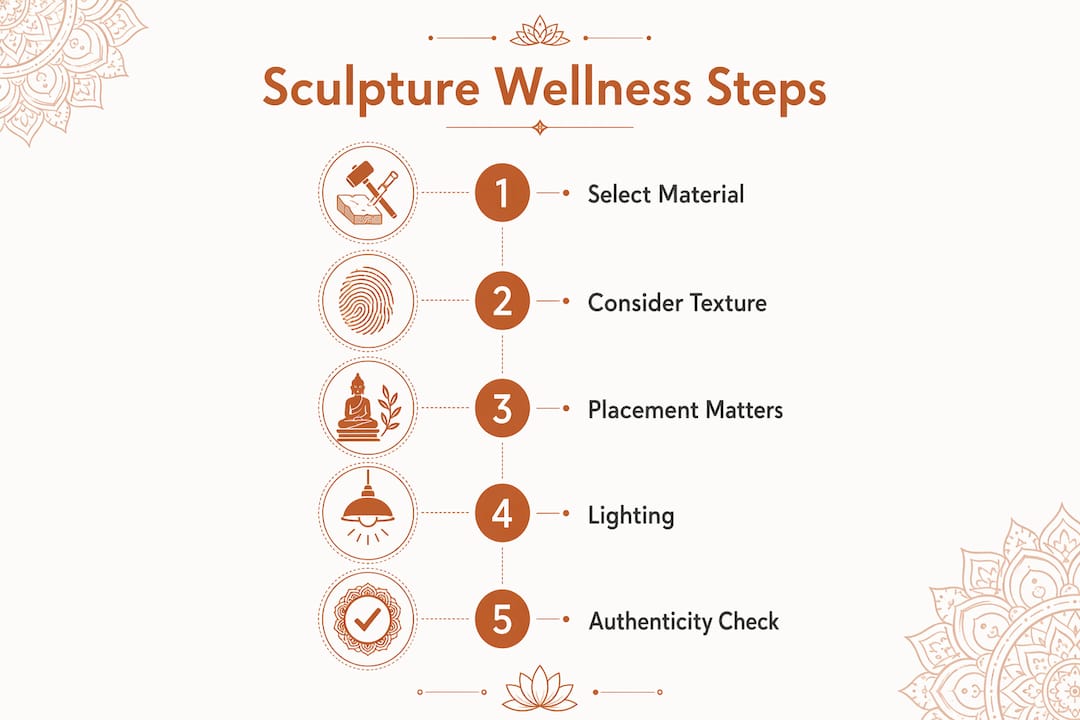
Consejo profesional: Cuando el objetivo principal es una conexión terapéutica en lugar de una exhibición, priorice las piezas con superficies táctiles accesibles: madera tallada con vetas visibles o piedra con microtextura natural. el poder meditativo de las estatuas de buda proviene en parte de este contacto sensorial directo.
¿Qué material se adapta a su intención de bienestar y tipo de habitación?
La madera, la piedra, el bronce y la laca tienen perfiles sensoriales distintos. La elección correcta depende de la función de la sala, la práctica espiritual y la capacidad de mantenimiento del coleccionista.
Perfiles de materiales:
- Madera: Cálido al tacto, absorbe el sonido ambiental y transmite un sutil aroma orgánico. Conexión a tierra táctil más fuerte. Adecuado para santuarios de dormitorio y espacios íntimos de meditación. Requiere control de humedad; susceptible al daño de plagas. Precios de nivel básico a medio; procedencia a menudo rastreable a través de tradiciones regionales de talla.
- Piedra: Fresco, pesado, estable. Transmite permanencia y quietud. Adecuado para vestíbulos de entrada y salas de práctica grupal donde se necesita una presencia imponente. Bajo mantenimiento; resistente a la humedad. Precios de calidad media a museo, según la edad y el origen.
- Bronce: De tonos cálidos bajo la luz, desarrolla pátina a lo largo de décadas. Adecuado para espacios de altar y rincones de meditación enfocada. Durable; Mantenimiento mínimo más allá de quitar el polvo. Precios medios a altos; La procedencia suele estar respaldada por el estilo de fundición y el análisis iconográfico.
- Laca: Profundidad de color íntima, superficie lisa, ligera. Adecuado para exhibir nichos y altares de dormitorios. Sensible a los cambios de humedad y a la abrasión. La laca birmana transmite fuertes señales de procedencia regional. Precios de rango medio.
| Materiales | Cualidades táctiles | Escala y ajuste de la habitación | Estado y restauración | Iconografía espiritual | Mantenimiento | Precio y procedencia |
|---|---|---|---|---|---|---|
| madera | Cálido, texturizado, orgánico. | Pequeño a mediano; dormitorio, alcoba | Verificar daños por plagas, previa consolidación | Buda, Bodhisattva, figuras de deidades. | Control de humedad, seguimiento de plagas. | Entrada a mitad; tradiciones regionales de talla |
| piedra | Frío, pesado, liso o áspero | Mediano a grande; vestíbulo, jardín, sala de grupos | Verifique si hay reparaciones de superficie, recarving | Naga, figuras guardianas, Buda | Mínimo; Evite el congelamiento y descongelamiento al aire libre. | A mitad del museo; datación geológica y estilística |
| Bronce | Cálido bajo la luz, patinado. | De pequeño a grande; altar, rincón focal | Compruebe si hay costuras de fundición modernas y pátina falsa. | Gama completa de deidades; implementos rituales | Saque el polvo con regularidad; sin disolventes | Medio a alto; análisis de fundición, estudio iconográfico |
| laca | Suave, ligero y rico en color. | Pequeño; nicho, estante del altar | Compruebe si hay descamación o daños por humedad. | Figuras budistas birmanas | Humedad estable; sin abrasión | Medio; atribución regional |
Combinación rápida de espacio y material:
- Santuario del dormitorio: Buda o Bodhisattva en madera tallada, de pequeña a mediana escala
- Alcoba de meditación: figura de bronce sobre un pedestal bajo, colocada al nivel de los ojos de una persona sentada
- Vestíbulo de entrada: guardián de piedra o Buda sentado, de mediana a gran escala; ver Guía de exhibición de Buda de piedra para principios de escala
- Sala de práctica grupal: piedra o bronce grande, escala imponente, punto focal único
Consejo profesional: La pátina y las marcas visibles de las herramientas son evidencia de autenticidad, no defectos. Un bronce con pátina verde desigual y una figura de madera con cincel manual indican la edad y la producción manual. El color uniforme y las superficies lisas a máquina en piezas "antiguas" son señales de alerta.
¿Cómo se debe colocar una escultura para anclar un espacio de meditación?
Un punto focal por habitación pequeña. Múltiples esculturas que compiten por la atención fragmentan el efecto contemplativo en lugar de profundizarlo. Los profesionales confirman que las esculturas reducen la distracción y centran la mente cuando se colocan de forma deliberada, no decorativa.
Escala y líneas de visión: Haga coincidir la altura de la escultura con el nivel de los ojos sentado para usar en meditación, o al nivel de los ojos de pie para un ancla en el vestíbulo. Una pieza demasiado pequeña para la habitación parece decorativa; uno demasiado grande abruma. El enfoque de diseño del Centro de Bienestar Eutierra (una roca central flotante sobre una piscina poco profunda) ilustra cómo un único anclaje de material natural en el centro visual de la sala organiza toda la experiencia contemplativa.
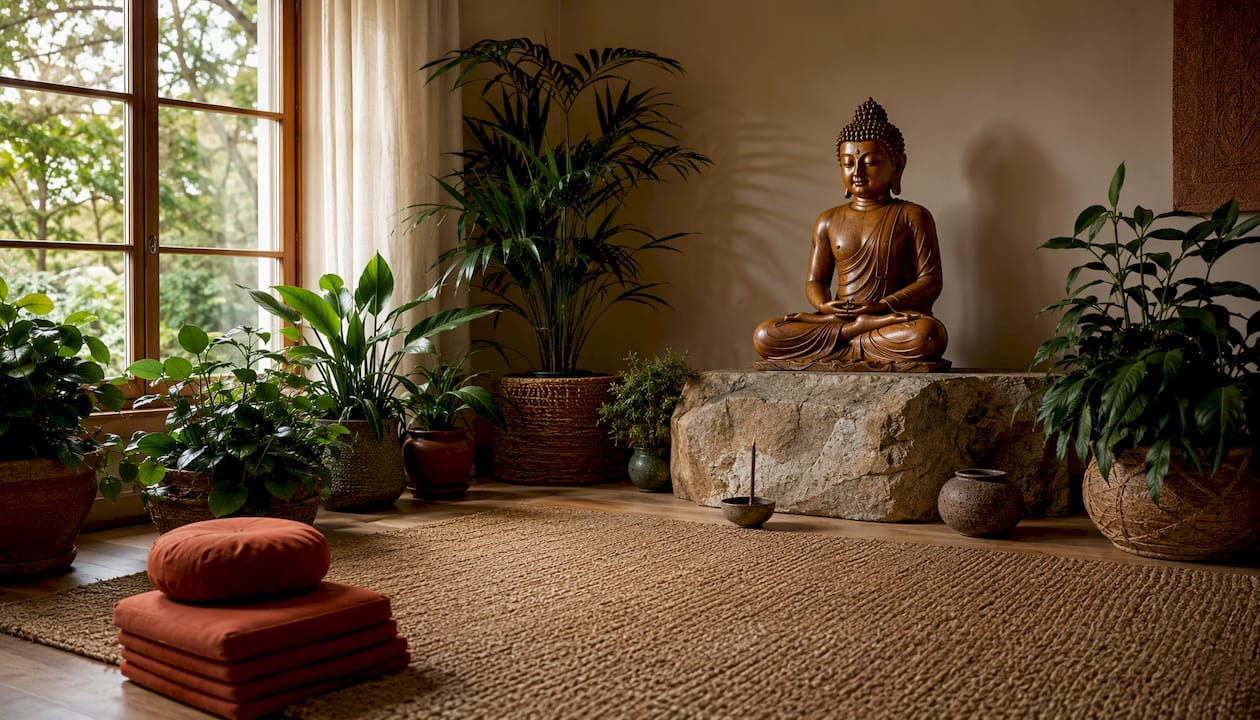
Iluminación: Coloque la pieza para recibir luz natural suave y en ángulo durante el período de uso principal. La iluminación lateral revela detalles tallados y una pátina profunda que la luz del techo aplana. La pátina del bronce y la veta de la madera envejecida cambian a lo largo del día a medida que cambia el ángulo de la luz, creando una calidad de vida que respalda la atención sostenida.
Construyendo un nicho de meditación: Coloque la escultura en el centro trasero de la alcoba. Mantenga los objetos circundantes al mínimo: un tejido bajo, una base de piedra natural o un zócalo de madera. Evite materiales sintéticos en el entorno inmediato. Para ejemplos de viñetas dramáticas, el archivo editorial de HDAsianArt muestra cómo los materiales naturales en capas crean una coherencia biofílica sin desorden visual.
¿Qué documentación de procedencia deben solicitar los coleccionistas?
La procedencia y la autenticación de expertos son tan importantes como la calidad visual. Una pieza sin documentación conlleva un riesgo financiero y ético independientemente de su apariencia.
Documentos y verificaciones a solicitar:
- Notas de investigación de procedencia e historial de propiedad anterior
- Registros de subasta o venta anteriores con descripciones de lotes
- Informe de estado con fotografía de alta resolución.
- Atribución de experto o académico con credenciales nombradas
- Trámites de exportación e importación cuando corresponda.
- Análisis iconográfico que vincula la pieza a una tradición regional.
Banderas rojas:
- Procedencia faltante o vaga (“de una colección privada” sin más detalles)
- Pátina inconsistente (color uniforme en bronce, sin desgaste en los puntos de contacto)
- Marcas obvias de herramientas modernas o costuras de fundición en antigüedades reclamadas.
- Afirmaciones de origen inverosímiles no respaldadas por evidencia iconográfica
- Presión para comprar sin un informe de condición
| señal de confianza | Nivel de entrada | nivel medio | Calidad museística |
|---|---|---|---|
| Informe de condición | Descripción básica escrita | Informe escrito detallado con fotografías. | Informe completo de estándares de conservación. |
| Documentación de procedencia | Atribución regional general | Registros de ventas anteriores, notas regionales | Cadena de propiedad total, atribución académica |
| Fotografía | Fotos de productos estándar | Múltiples ángulos de alta resolución | Fotografía de detalle estándar de museo |
| Atribución de expertos | Descripción de la galería | Notas de especialistas nombrados | Atribución académica publicada |
| Envío | Asegurado estándar | DHL asegurado con seguimiento | DHL asegurado, embalaje personalizado, informe de entrega. |
¿Cómo se cuidan las esculturas de materiales naturales en un hogar estadounidense?
Controle la humedad, evite el sol directo y los cambios extremos de temperatura y manipule las piezas mínimamente con manos limpias o guantes de algodón. Estas tres reglas protegen todo tipo de material.
Orientación específica del material:
- Madera: Objetivo de humedad relativa del 45 al 55 %. Las fluctuaciones provocan grietas y separación de las juntas. Monitoree la actividad de insectos, particularmente en piezas más antiguas con superficie original. Manténgase alejado de las rejillas de calefacción.
- Piedra: Tolera variaciones moderadas de humedad, pero evita los ciclos de congelación y descongelación para su colocación en exteriores. Espolvoree con un cepillo suave; sin limpiadores ácidos.
- Bronce: La pátina de bronce estable es protectora. Evite los disolventes domésticos. Quite el polvo con un paño de microfibra seco. La enfermedad del bronce activo (manchas polvorientas de color verde brillante) requiere un conservador.
- Laca: Material más sensible. Mantenga una humedad relativa del 50 al 60 %. Evite la abrasión por completo; Incluso un paño suave puede rayar las superficies lacadas envejecidas.
Enfoque de limpieza: cepillos suaves de cerdas naturales y paños de microfibra secos para quitar el polvo de forma rutinaria. Sin disolventes domésticos, sin agua sobre superficies lacadas o doradas, sin compuestos de pulido sobre bronce patinado. En caso de duda, consulte a un conservador antes de limpiar.
Consejo profesional: Fotografíe cada pieza desde múltiples ángulos en el momento de la adquisición y luego anualmente. Los registros de condición con fecha sellada protegen el valor del seguro y respaldan la documentación de procedencia futura. Programe una estabilización profesional si nota grietas activas, descamación o enfermedad del bronce.
¿Qué deberían esperar los coleccionistas estadounidenses al comprar y enviar?
La investigación, la autenticación, la compra, el envío asegurado y la colocación en el hogar suelen tardar de cuatro a doce semanas desde la consulta inicial hasta la instalación, según el origen de la pieza y el procesamiento aduanero.
Expectativas de costos cualitativos:
- Nivel de entrada: piezas más pequeñas de madera o laca, atribución regional, informe de estado básico
- Nivel medio: bronce o piedra autenticados, procedencia detallada, envío por DHL asegurado
- Calidad del museo: atribución académica completa, informe de condiciones de conservación estándar, embalaje personalizado
El envío internacional asegurado a través de DHL, combinado con un informe de condición de entrega, protege tanto la integridad física de la pieza como su registro de procedencia. Cualquier daño en tránsito documentado en el momento de la entrega preserva los reclamos de seguro y mantiene el historial documentado del objeto, un factor que afecta directamente la cobrabilidad a largo plazo y el valor de reventa.
Lista de verificación de logística:
- Revisar el informe de condiciones antes del pago.
- Confirmar que la documentación de exportación esté completa para el país de origen.
- Permita el tiempo de despacho de aduana (generalmente de 5 a 15 días hábiles para importaciones de EE. UU.)
- Programe la entrega a domicilio con espacio adecuado para desembalar
- Fotografíe la pieza inmediatamente después de su llegada contra el informe de condiciones previo al envío.
Guía para la integración de la escultura asiática de HDAsianArt cubre consideraciones de ubicación adicionales una vez que llega la pieza.
Conclusiones clave
Las auténticas esculturas de materiales naturales fortalecen los espacios de bienestar a través de señales materiales biofílicas, iconografía espiritual y conexión a tierra sensorial, y su valor a largo plazo depende de su procedencia, ubicación adecuada y conservación constante.
| Punto | Detalles |
|---|---|
| Selección de materiales | Combine madera para calidez táctil, piedra para estabilidad, bronce para enfoque ritual, laca para detalles íntimos. |
| Procedencia primero | Solicite informes de estado, fotografías de alta resolución, atribución de expertos e historial de propiedad antes de la compra. |
| Un ancla focal | Coloque una escultura al nivel de los ojos cerca de la luz natural; Evite piezas que compitan en habitaciones pequeñas. |
| Elementos esenciales de conservación | Mantenga una humedad relativa del 45 % al 60 % según el tipo de material; espolvorear con cepillos suaves; sin disolventes en superficies antiguas. |
| HDAsiáticoArte | Ofrece estatuas budistas e hindúes antiguas autenticadas con investigación de procedencia, informes de estado con calidad de museo y envío DHL asegurado a todo el mundo. |
Por qué las estatuas antiguas fortalecen más una práctica de bienestar que las reproducciones
La brecha entre lo que promete el “material natural” y lo que realmente ofrece en un espacio de bienestar se reduce a la autenticidad. Una reproducción tallada en la misma especie de madera que una antigüedad no tiene nada del carácter superficial acumulado (la pátina, el desgaste en los puntos de contacto rituales, las marcas de herramientas de una tradición regional específica) que le da al cerebro información genuina conectada con la naturaleza. La investigación sobre diseño biofílico deja claro que la autenticidad material, no la categoría material, produce beneficios mensurables centrados en el ser humano.
En HDAsianArt, las prioridades curatoriales se centran en esa distinción. Cada pieza enumerada se investiga individualmente, con notas de procedencia, descripciones de expertos y fotografías de alta resolución que documentan qué es el objeto y dónde ha estado. Los informes de condición son estándar, no opcionales. El envío asegurado por DHL con documentación de entrega protege tanto la pieza como su registro de procedencia desde el momento en que sale de origen hasta el momento en que ingresa a la casa del coleccionista. La galería también asesora a los clientes sobre la ubicación y conservación: hacer coincidir la iconografía con la intención espiritual, la escala con el volumen de la habitación y el material con el caso de uso de bienestar específico.
Escultura autenticada de material natural, lista para colocar.
HDAsianArt se especializa en estatuas budistas e hindúes antiguas de origen en madera, piedra, bronce y laca, procedentes de Camboya, Tailandia, Indonesia, Sri Lanka, Vietnam y más allá. Cada pieza se envía con un informe de estado, atribución de expertos y entrega por DHL totalmente asegurada a direcciones de EE. UU.
Los listados autenticados de la galería cubren toda la gama de adquisiciones centradas en el bienestar: desde íntimas Estatuas de bodhisattvas adecuado para el altar de un dormitorio para Budas sentados de bronce. Escalado para una sala de meditación dedicada. Explore la colección completa en HDAsiáticoArte o comuníquese directamente con la galería para consultas sobre ubicación y procedencia.
Fuentes útiles
Las afirmaciones de este artículo se basan en investigaciones sobre diseño biofílico revisadas por pares, orientación profesional y recursos editoriales de HDAsianArt. Las siguientes fuentes respaldan los hallazgos clave y se recomiendan para una investigación más profunda.
Fuentes de investigación:
- Springer Nature: estrategias de diseño arquitectónico biofílico y bienestar humano: revisión integradora de 203 fuentes; la base de evidencia principal para las afirmaciones de autenticidad material y reducción del estrés.
- Cheglakov: Impacto emocional y propiedades terapéuticas de las esculturas de madera. Investigación profesional sobre dendroterapia y efectos psicoemocionales de la madera.
- Dorit Schwartz: Selección de esculturas para espacios de bienestar: orientación del profesional sobre la ubicación, anclajes focales y selección de materiales táctiles.
- Fronteras en psicología: obras de arte con temas de naturaleza y efectos restauradores — EEG y evidencia fisiológica de que el arte con temas de la naturaleza produce efectos reconstituyentes comparables a los elementos naturales directos.
- BMC Psychology: Efectos a largo plazo de los entornos artísticos biofílicos: estudio longitudinal de 12 meses sobre los resultados de la depresión y la ansiedad derivados de la exposición al arte biofílico.
Recursos editoriales de HDAsianArt:
- Por qué la escultura asiática añade energía espiritual a tu espacio
- Tonos terrosos en la escultura asiática: guía de interiorismo
- Esculturas asiáticas para un santuario en el dormitorio
- El Hevajra meditando: simbolismo y significado
Recomendado
- Por qué la escultura asiática agrega energía espiritual a su espacio – HD Asian Art
- Tonos terrosos en la escultura asiática: Guía de diseño de interiores – Arte asiático HD
- Esculturas asiáticas para un santuario de dormitorio: Guía 2026 – Arte asiático en HD
- Guía de integración de jardines al aire libre de esculturas asiáticas - Arte asiático HD
